Prof. Gabriele Schrag holds the Professorship of Microsensors and Actuators at the Technical University of Munich (TUM), within the TUM School of Computation, Information and Technology. Her research focuses on MEMS (Micro-Electro-Mechanical Systems), including microsensors, actuators, and their applications in acoustics, microfluidics, and bioengineering. She has pioneered work in virtual prototyping for system-level modeling to enhance device robustness and performance. Education: PhD (summa cum laude) from TUM on 'Modeling coupled effects in microsystems' Habilitation in sensor systems technology (2018) Acting head of the Chair of Technical Electrophysics (2018-2023) Research emphasizes acoustic MEMS transducers , electrohydrodynamic printing , and physics-based modeling . Notable projects include developing piezoelectric MEMS microphones with corrugated membranes and integrated micropump systems. Awards include the Bavarian Prize for Good Teaching (2021) and Eurosensors Fellow Award (2019). Her work bridges virtual prototyping with real-world applications , addressing challenges in miniaturization, energy efficiency, and sensor integration for medical and industrial systems.
Prof. Dr.-Ing. Martin Hoffmann is a Professor of Microsystems Technology at the Faculty of Electrical Engineering and Information Technology, Ruhr University Bochum. His academic career began at the University of Dortmund, where he earned his doctorate in high-frequency technology and later habilitated in microsystems technology (2003). He held roles as a private lecturer and industry researcher before becoming a university professor at TU Ilmenau (2006). He joined Ruhr University in 2017, specializing in cutting-edge microsystems research. His research focuses on MEMS, THz technology, microactuators, and nanoimprint lithography. Key projects include cooperative microactuator systems, THz biosensors, and energy-autonomous sensors. He collaborates with institutions like TU Ilmenau, Purdue University, and Nagoya University through international programs like Double Degree and Erasmus. His work spans academic advising, grants, and industry partnerships (e.g., HL Planartechnik GmbH, Silicon Manufacturing Itzehoe GmbH). Notable contributions include silicon grass nanostructuring, palladium-based gas sensors, and wafer-scale MoS₂ deposition. His lab develops micromechanical systems for biomedical, environmental, and defense applications.
Prof. Mathias Beyerlein is a Professor in the Department of Applied Natural Sciences at Technische Hochschule Lübeck. His expertise includes optics, particularly ophthalmotechnology, technical optics, optical measurement techniques, and optical design. He has held academic and industry roles since 1995, including founding companies such as VisioCraft GmbH and Optocraft GmbH. His research focuses on adaptive optics, Shack-Hartmann sensors, and optical metrology with applications in medical and industrial contexts. Education : 1993–1996: Diploma in Physics, Friedrich-Alexander Universität Erlangen-Nürnberg (FAU) 1995–2001: PhD studies and research at the Optics Chair under Prof. G. Leuchs, FAU Research Interests : Medical Optics: Eye topography measurement, ophthalmic lens testing Adaptive Optics: Wavefront correction using MEMS and sensor integration Optical Metrology: Hyperspectral imaging, industrial quality assurance Publications : Over 20 patents and articles from 1996–2021, emphasizing optical sensor development, lens system testing, and biomedical applications. Recent work includes patents on hyperspectral imaging and eye topography measurement. Entrepreneurial Contributions : Co-founded Optocraft GmbH (2001–2014) and VisioCraft GmbH (2010–2014), focusing on optical measurement technologies. Labs/Teams : Leads the Applied Photonics and Medical Optics Divisions at TH Lübeck, collaborating on projects involving adaptive optics, medical imaging, and sensor innovation.
Prof. Dr. Bert Hecht is a Professor and Head of Experimental Physics V at the University of Würzburg's Faculty of Physics and Astronomy. He leads the Nano-Optics and Bio-Photonics group within the Chair of Experimental Physics (Biophysics). His research focuses on plasmonics, quantum optics, and nanophotonics, with applications in nanoantenna design, nonlinear optics, and bioimaging. He is affiliated with the Department of Experimental Physics V and oversees activities in the P1 building (Room B-040a). Research interests include nanoscale optical manipulation, coherent light-matter interactions, and fabrication of advanced nanostructures using helium ion milling and two-photon polymerization. He collaborates on projects such as magnetic particle imaging and traveling wave MPI. His lab is equipped for ultrafast spectroscopy, photoemission electron microscopy (PEEM), and nanofabrication. Notable contributions include work on electrically driven optical antennas, quantum plasmonic circuits, and all-optical magnetic domain switching. He supervises graduate students like Robert Zürl and participates in international conferences like the 18th ICMRM. Contact details include bert.hecht@uni-wuerzburg.de and ORCID 0000-0002-4883-8676.
Dr. Lior Medina is a Senior Lecturer at the School of Mechanical Engineering, Tel Aviv University, specializing in nonlinear meta-micro-structures (MMS) and their applications in micro-electro-mechanical systems (MEMS), multistable structures, and energy harvesting. Education: B.Sc. and M.Sc. Magna Cum Laude in Mechanical Engineering from Tel Aviv University (2010, 2012). Postdoctoral Fellowships: Israel Ministry of Science, Broadcom, Israel Science Foundation, Tel-Aviv–Northwestern joint fellowship, Blavatnik fellowship. His research combines theoretical and experimental approaches to study coupled microstructures under electrostatic actuation, with a focus on stability properties and characterization methods. Recent work includes investigations into Kirigami-based nanoscale 3D configurations and bistable/tristable microbeams. Scientific Awards: Israel Ministry of Science Fellowship Broadcom Grant Israel Science Foundation Grant Tel-Aviv–Northwestern Postdoctoral Fellowship Blavatnik Postdoctoral Fellowship
Schmalkalden University of Applied SciencesGermany
Prof. Dr.-Ing. Roy Knechtel is a Professor at the Faculty of Electrical Engineering, Schmalkalden University of Applied Sciences. His research focuses on MEMS technologies, semiconductor wafer bonding, and sensor systems, with extensive applications in industrial microsystems. He leads investigations in wafer-level encapsulation, CMOS-MEMS integration, and reliability testing for microsensors. Research Interests: Knechtel specializes in intelligent autonomous sensors, micro-electro-mechanical systems (MEMS), and semiconductor processing techniques. His work emphasizes wafer bonding methodologies (glass frit, anodic, direct bonding), MEMS packaging, and sensor integration for automotive, biomedical, and industrial applications. Key areas include hermetic sealing, process optimization, and 3D heterogeneous integration. Publication Trends: Over 50 publications (2000–2020) demonstrate sustained focus on wafer bonding physics, MEMS fabrication robustness, and microsystem encapsulation. Recent works explore edge effects in bonding, adhesive techniques for lab-on-chip devices, and acoustic MEMS. His articles consistently address industrial scalability and reliability challenges in semiconductor microsystems. Patents & Innovations: Holds patents including: Method for hermetic sealing of MEMS structures (DE112007001698A5) Wafer-level chip separation with micromechanical structures (EP1599412A1) Electrical connection methods for bonded wafers (DE10350460A1) Laboratory Leadership: Directs research in wafer bonding characterization and MEMS process development, collaborating with industry partners like X-FAB and Fraunhofer on production-scale microsystem technologies.
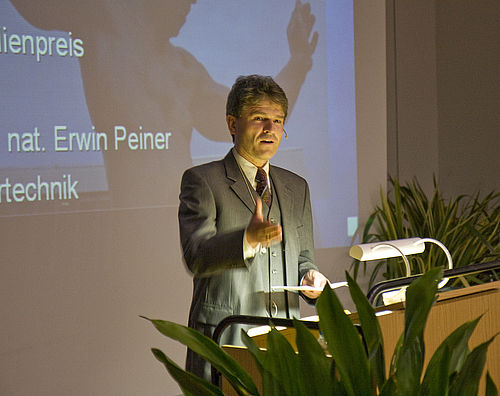
Erwin Peiner is a Professor at the Institute of Semiconductor Technology , Technische Universität Braunschweig. His research focuses on MEMS (Micro-Electro-Mechanical Systems) and semiconductor sensors, particularly in applications for surface metrology, air-quality monitoring, and energy harvesting/storage. Piezoresistive MEMS cantilever sensors Tactile microprobes for surface metrology (form, roughness, viscoelasticity) MEMS resonant sensors for air-quality monitoring (nano aerosols, exhaust gases) Nanowire arrays for energy harvesting and storage He teaches courses on Electronic Packaging , Semiconductor Sensors - Basics and Applications , and Semiconductor Metrology . Contact: e.peiner@tu-braunschweig.de
Dr. Robert Kirchner serves as Group Leader at the Center for Advancing Electronics Dresden (cfaed) at Dresden University of Technology, where he heads the Mesoscopic 3D Systems Group. Since 2017, he has held a prestigious DFG Heisenberg Stipendiat position, focusing on advanced 3D fabrication technologies. His research group is closely associated with the HETEROMERGE startup project, which develops innovative hardware solutions for multi-material 3D printing on two-photon systems with unprecedented precision and speed. Dr. Kirchner's academic journey includes: PhD (Dr.Ing.) in Electrical Engineering from Dresden University of Technology and Fraunhofer Institute for Photonic Microsystems (2007-2011) Diploma in Electrical Engineering from Dresden University of Technology and Chalmers University of Technology in Gothenburg, Sweden (2001-2007) His research program centers on high-resolution 3D lithography techniques including electron beam lithography (EBL), two-photon polymerization (2PP), and extreme ultraviolet (EUV) lithography. He investigates self-optimization and self-organization processes in mesoscopic systems, particularly Micro-Electro-Mechanical Systems (MEMS) and Nano-Electro-Mechanical Systems (NEMS). His work explores material characterization and the modification of polymer properties through high-energy radiation exposure, along with computational modeling of surface effects on polymer melts. The Kirchner Group develops novel approaches to 3D micro- and nanofabrication with applications spanning micro-optics, plasmonics, and multi-material integration for advanced devices. Analysis of Dr. Kirchner's publication record reveals a clear trajectory from fundamental fabrication techniques toward increasingly complex multi-material systems and commercial applications. His early work focused on basic lithography and surface modification techniques, while recent publications emphasize practical implementations in multi-material 3D printing, plasmonic structures, and MEMS integration. The establishment of HETEROMERGE represents a significant commercialization effort translating academic research into industry-ready technology for multi-material 3D printing at nanoscale resolution. Dr. Kirchner's most significant recognition is the DFG Heisenberg Stipendiat award, which supports exceptional researchers on the path to professorship in Germany. His work has secured substantial research funding, including affiliation with Research Training Group 2767 "Supracolloidal Structures: From Materials to Optical and Electronic Devices" funded by the Deutsche Forschungsgemeinschaft. DFG Heisenberg Stipendiat (2017-present) Dr. Kirchner actively mentors multiple PhD students and postdoctoral researchers in his group. His HETEROMERGE startup project demonstrates successful technology transfer from academic research to commercial application, offering hardware solutions that enable multi-material 3D printing at highest resolution with 10 nm placement accuracy. The group maintains active collaborations with institutions including Paul Scherrer Institute in Switzerland and participates in multiple research consortia focused on advanced micro- and nanofabrication techniques. The Mesoscopic 3D Systems Group operates within the Center for Advancing Electronics Dresden (cfaed), one of Germany's Clusters of Excellence. The group maintains state-of-the-art facilities for micro- and nanofabrication and collaborates closely with the HETEROMERGE startup team. Their research environment fosters innovation in 3D fabrication technologies, with particular emphasis on overcoming current limitations in multi-material integration, resolution, and printing speed for applications in micro-optics, integrated photonics, and MEMS/NEMS devices.
Prof. Hans Zappe is a Full Professor in the Institute of Microsystem Technology at Albert-Ludwigs-Universität Freiburg, Germany. He holds the Gisela-und-Erwin-Sick-Professur für Mikrooptik (Microoptics). His primary affiliation is with the Faculty of Engineering, focusing on advanced optical systems, MEMS, and medical optoelectronics. Areas of Expertise include Optics, Micro-Optics, Optical MEMS, Photonics, and Medical Optics. He leads Research Area B and oversees the IDEASfactory@FIT innovation hub. Current projects include the 'Autonomous Eyeball' initiative exploring light-driven optical systems and V4DA actuators for programmable materials. His research emphasizes liquid crystal-based actuators, adaptive optical systems, and optofluidic devices. Over 150 peer-reviewed articles demonstrate expertise in tunable microlenses, endoscopic imaging probes, and bio-inspired optical systems. Notable collaborations include DFG-funded livMatS projects and high-throughput glass fabrication innovations. Dr. Zappe advises current PhD candidates Sruthy Dinesh and Shalini Soman, with former student Dr. Jasleen Kaur Lall contributing to liquid crystal actuator research. His work bridges fundamental optics research with practical applications in biomedical devices and smart manufacturing systems. Labs/Teams: IDEASfactory@FIT (innovation lab), livMatS core team, and Advanced Optical Microsystems Group. Active in academic outreach through workshops like Core Lectures and Master Lab programs.
Ben Steinberg is a Professor at the School of Electrical Engineering within the Faculty of Engineering at Tel Aviv University. His work focuses on Electromagnetics , Wave propagation and scattering , and Photonic Crystals , with applications in Artificial materials and Plasmonic structures , as well as Propagation in complex (multi-scale) medium and effective properties. He has held major roles in TAU's academic governance, including heading the Engineering Faculty's PhD Students Committee and serving on the TAU Promotion & Nomination Committee. Education: 1985-1989: PhD in Electrical Engineering, Tel Aviv University 1989-1991: PostDoc at The Catholic University of America, Washington DC Research interests span Electromagnetics Wave propagation and scattering Photonic Crystals, artificial materials, plasmonic structures Propagation in complex (multi-scale) medium and effective properties Article trends emphasize Electromagnetics , Photonics , and Condensed Matter Physics , with subfields like Non-Reciprocal Waveguides , Photonic Crystal Devices , Plasmonic Structures , Wave propagation in multi-scale medium , Green's Function Theory , and Effective Properties of Materials . Advising includes PhD and MSc students such as Yarden Mazor , Yakir Hadad , Roman Novitski , and Vitaliy Lomakin , with research topics in Plasmonics , Clustering , and Waveguide Sensitivity . He has also co-supervised projects on Optical Gyroscopes and Disordered Photonic Crystals . Academic roles include: Head of Faculty of Engineering Admission Committee (2001-2005) Head of Faculty of Engineering PhD Students Committee (2006-2009) Member of TAU Promotion & Nomination Committee (2010-2013) Industry contributions include co-founding XellAnt Inc. as CTO (2001-2004) and consulting for high-tech companies.
Leibniz Institute for Agricultural Engineering and BioeconomyGermany
Mostafa Shokrian Zeini is a researcher at the Leibniz Institute for Agricultural Engineering and Bioeconomy (ATB) , specializing in the Agromechatronics Department . His work bridges control theory, robotics, and agricultural technology, with a focus on Model-in-the-Loop (MIL) , Software-in-the-Loop (SIL) , and Hardware-in-the-Loop (HIL) systems. Research Interests: Agricultural Robotics Visual Servoing Nonlinear Control Synthesis Uncertain Complex Systems Recent Projects: foodChain – 5G integration in the Golßen-Mittenwalde-Schönefeld region Development of robotic harvesting systems for sweet peppers, apples, and blueberries Review of field robots for potato cultivation Collaborations: 43rd GIL Annual Conference Joint work with institutions like Shiraz University of Technology and Hamedan University of Technology
Stefan Heiserer is a researcher at the Professorship for Sensor Technologies at Universität der Bundeswehr München, where he contributes to advancements in sensor development and microsystem applications. He is based in Building 37, Room 037/0106, and can be reached at +49 (0)89 6004-3974 or via email at stefan.heiserer@unibw.de. His research focuses on sensor technologies, encompassing areas such as microelectronics, embedded systems, and instrumentation. This work aligns with applications in engineering and applied physics, particularly in the design and integration of smart sensing solutions. The body of his recent publications indicates a strong focus on semiconductor-based sensors, signal processing, and MEMS (Micro-Electro-Mechanical Systems), although specific articles are not listed in the current data source. Scientific Awards: No awards listed in available text. There is no public information available regarding student supervision, grants, or funding activities. He does not appear to lead a lab or research team independently, but rather works within the framework of the Sensor Technologies professorship under Prof. Düsberg.
Prof. Dr. Jens Hoßfeld is a faculty member at the Technical University of Central Hesse (THM) , working in the Department of Mechanical Engineering and Energy Technology. His research spans microsystem technology, optics, and optical measurement systems, with a focus on MOEMS (Micro-Opto-Electro-Mechanical Systems) and computer-generated holography . He has contributed extensively to the fabrication of microcomponents using LIGA techniques , optical interconnection systems, and polymeric MEMS applications. Hoßfeld teaches courses such as Microtechnology , Microsystem Technology , and Optoelectronic Systems . He is affiliated with the Institute of Optics and Microsystems (IOM) and has been involved in the development of optical components for parallel optical networks, fast-switchable diffraction gratings, and low-cost multiplexer systems. His work includes publications on topics like rectangular beam shaping , ferroelectric liquid crystals , and excimer laser ablation .
Jan Niklas Haus, M.Sc. , is a research assistant at the Institute of Microtechnology within the Faculty of Mechanical Engineering at Technische Universität Braunschweig . He holds a Master of Science in Mechanical Engineering from TU Braunschweig (2014-2017) and a Bachelor of Science in Mechanical Engineering from Hochschule Ostwestfalen-Lippe (2010-2014). Research Interests : Development of MEMS embedded in composite materials, pressure sensor arrays for aircraft, integration of pressure and hot-film sensors, microsystems fabrication, and ultrasonic monitoring of materials. Projects : Key contributor to DFG-funded project FOR 3022 (2020-2022) on ultrasonic monitoring of fibre metal laminates using integrated sensors. Technical Expertise : Design of evaluation electronics, calibration systems for pressure/temperature environments, and protective processes for sensors in harsh conditions.
Prof. Dr.-Ing. habil. Uwe Marschner is a faculty member at Technische Universität Dresden , holding the Chair of Microsystems . His work focuses on microsystem technologies and their interdisciplinary applications. Institution : Technische Universität Dresden Department : Chair of Microsystems Research Interests : Prof. Marschner's research spans microsystems engineering , microelectronics , and MEMS (Micro-Electro-Mechanical Systems) , with applications in sensor systems and biomedical microdevices . His group explores nanoscale fabrication and integration of smart devices for industrial and medical use. Labs & Teams : As Chair of Microsystems, he leads a research group focused on microfabrication and system design at TU Dresden.