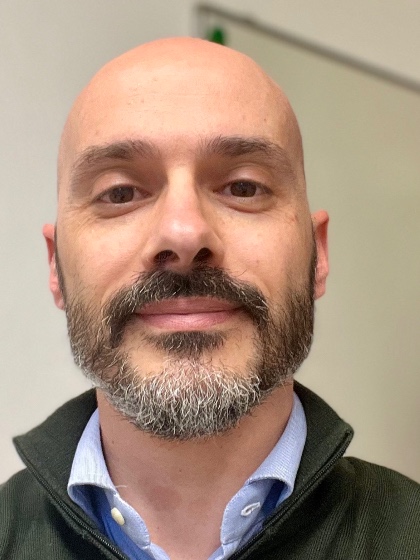
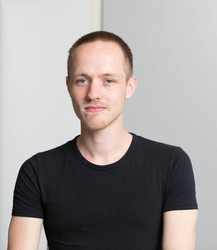
Maarten de Rijke is a Professor at the University of Amsterdam's Informatics Institute, leading the Information Retrieval Lab (IRLab). He specializes in information retrieval, machine learning, and recommendation systems, focusing on neural ranking models, fairness, and conversational search. His work bridges theory and practice, addressing challenges in reproducibility, robustness, and ethical AI. He supervises numerous PhD students and postdocs, including recent defenses by Barrie Kersbergen, Antonis Krasakis, and Vera Provatorova. His lab collaborates internationally, organizing events like SIGIR workshops and the Search Engines Amsterdam (SEA) meetup. Key awards include the Best Reproducibility Paper Award (2025) and Best Paper at WSDM 2021. Research interests span generative retrieval, adversarial robustness, and fairness in ranking. Notable projects include the FULTR dataset, FairDiverse toolkit, and studies on empathetic conversational systems. He actively promotes open science through reproducible methodologies and community-driven benchmarks.
Andreas Weber is an Associate Professor at the University of Twente's Digital Society Institute , specializing in the Knowledge, Transformation & Society (KiTeS) research group . His work examines the long-term historical and global relationship between Science, Technology, and Society , with particular focus on colonial histories of natural history, chemistry, and sustainability , as well as computational technologies for contextualizing digitized archives . He leads the HAICu project (2023–2029) on digital cultural heritage and coordinates STS PhD training for the Netherlands Graduate Research School (2019–2024). MA & PhD in History (2005 & 2012), Leiden University Assistant Professor (2017–2023), University of Twente Andreas' research integrates digital humanities with colonial science history , emphasizing global histories of minerals , digital humanism , and AI's societal context . His 15 most recent publications (2016–2025) explore topics like colonial bias in natural history collections , FAIR data implementation , and semantic annotation of handwritten archives , spanning disciplines from history of science to computer science and museum studies . He has received 7 scientific awards , including multiple Best Teacher Awards (2020–2023) and the IEEE eScience Best Poster Award (2018). Andreas supervises PhD and postdoctoral projects while engaging in media commentary on colonial heritage issues and co-organizing international conferences like Hydrogen Pasts and Futures (2024).
Anna Wilbik is a Professor in Data Fusion and Intelligent Interaction at the Department of Advanced Computing Sciences, Faculty of Science and Engineering, Maastricht University (The Netherlands). Her research bridges data understanding and human-machine synergy in complex systems, focusing on multi-criteria decision making, explainable AI, and data fusion techniques. PhD in Computer Science (with honors), Systems Research Institute, Polish Academy of Science (2010) Postdoctoral Fellow, University of Missouri (2011) Stanford University TOP500 Innovators Program Alumnus Research Pillars: Intelligent human-machine interaction for joint decision making Data fusion methods for heterogeneous data integration Contextualized multi-criteria decision frameworks Fuzzy logic and linguistic summaries for explainability Federated learning systems Article Trends: Recent work focuses on intuitionistic fuzzy sets for knowledge-intensive processes, federated learning with uncertainty handling, and linguistic summarization techniques for interpretable AI. She actively explores explainability , collaborative business models , and driver behavior analysis through attention-based models. Professional Leadership: Vice-chair of IEEE Fuzzy Systems Technical Committee Organizer of IEEE World Congress on Computational Intelligence (2024)
Aaqib Saeed is an Assistant Professor in the Department of Industrial Design at Eindhoven University of Technology. His research focuses on Human-Centric AI, Federated Learning, Self-Supervised Learning, and Audio Understanding, with applications in Personal Health. He holds a PhD (cum laude) from TU/e and an MSc (cum laude) from the University of Twente. Education: PhD in Computer Science (cum laude), TU/e (2021) MSc in Computer Science (cum laude), University of Twente (2018) Research Interests: Development of robust federated learning frameworks for decentralized data Self-supervised learning for audio and physiological signal analysis AI-driven solutions for healthcare monitoring Key Contributions: DeltaMask: Reducing communication overhead in federated fine-tuning FedNS: Mitigating noisy decentralized data in federated learning Labeling Chaos to Learning Harmony: Handling label noise in FL Professional Experience: Visiting Industrial Fellow, University of Cambridge (2023) Research Scientist, Philips Research (2019–2023) Research Internships: Google Research, TNO/EIT Digital Awards: UT Scholarship (MSc) Cum Laude awards for both PhD and MSc Labs/Teams: EAISI Health, EAISI Foundational, Computational Design Systems.
Arianna Bisazza is an Associate Professor in the Computational Linguistics Group at the University of Groningen, where she leads the InClow research group focused on Interpretable, Cognitively inspired, Low-resource language models. Her work bridges computational linguistics, cognitive science, and language acquisition to develop more robust and interpretable language processing algorithms that can adapt to diverse linguistic phenomena worldwide. Dr. Bisazza's research interests span statistical modeling of human languages in multilingual contexts, with particular focus on improving language model performance for "challenging" or low-resource languages. Her work explores how insights from human language acquisition can inform better language modeling techniques, and she investigates methods to make state-of-the-art NLP systems more interpretable and transparent. As a cross-disciplinary researcher, she actively seeks to enhance our understanding of human language processing and evolution through computational modeling tools. Her recent publications reveal a strong emphasis on multilingual evaluation frameworks (like TurBLiMP and MultiBLiMP), interpretability of language models, and connections between human language acquisition and neural network learning. Her work consistently addresses the challenge of making language technology more robust across diverse linguistic structures and typological features. Outstanding Paper Award at the BabyLM Challenge (CoNLL'24 Shared Task) for "BabyLM Challenge: Exploring the Effect of Variation Sets on Language Model Training Efficiency" Dr. Bisazza currently leads a Vidi project funded by the Dutch Research Council (NWO) on improving low-resource language modeling through child language acquisition insights. She is also part of two national consortium projects funded by NWA-ORC initiatives: InDeep (Interpreting deep learning models for language, speech & music) and LESSEN (Low Resource Chat-based Conversational Intelligence). She supervises multiple PhD students, including two China Scholarship Council (CSC)-funded researchers working on simulating human patterns of language learning and change. Her earlier research was supported by a Veni grant (2017-2021) focused on understanding and improving the encoding of linguistic structure in Neural Machine Translation models. As head of the InClow research group, Dr. Bisazza oversees a team investigating interpretable, cognitively inspired approaches to low-resource language modeling. The group's work combines insights from cognitive science and linguistics with cutting-edge NLP techniques to develop language models that better reflect human language processing capabilities, particularly in resource-constrained settings.
National Research Institute for Mathematics and Computer ScienceNetherlands
Karl Aberer is a full Professor for Distributed Information Systems at École polytechnique fédérale de Lausanne (EPFL) since 2000. From 2005 to 2012, he led the Swiss National Research Center for Mobile Information and Communication Systems (NCCR-MICS). Currently serving as Vice-President of EPFL responsible for information systems, he contributes to academic leadership while maintaining an active research profile. His research spans Distributed Systems Data Mining Machine Learning Social Computing Web Science Graph Neural Networks with recent work focusing on multimodal learning, federated unlearning, and social media analysis. He serves on the editorial boards of the VLDB Journal ACM Transactions on Autonomous and Adaptive Systems World Wide Web Journal and contributes to PeerJ Computer Science.
Prof. Antske Fokkens is a Full Professor in Computational Linguistic Methods at Vrije Universiteit Amsterdam, with joint appointments in the Faculty of Humanities and the Network Institute. She directs the Text Mining/Language and AI track in the Linguistics Master's program and serves as Vice Dean of Research. Her research investigates methodological aspects of computational linguistics, focusing on language models, interpretable AI, and digital humanities. She develops tools to extract patterns from large text corpora for applications in social science and history, emphasizing transparency and interdisciplinary collaboration. Current projects include analyzing perspective expression in media and semantic modeling for biographical data. Recent publications examine shortcut learning in text classification, persona-driven content generation, hate speech model alignment, and cross-disciplinary approaches to stance detection. Her work integrates NLP with social science theories to analyze discourse on sustainability, polarization, and media framing.
Dr. V. Menkovski serves as an Associate Professor in Data Mining at Eindhoven University of Technology's Department of Mathematics and Computer Science. He also holds associate professor positions with EAISI Health and EAISI High Tech Systems, and is an ICMS Affiliated member. His work spans multiple domains of artificial intelligence and computational physics, with significant contributions to fusion energy research. Mathematics and Computer Science, Data Mining (Primary Appointment) EAISI Health (Associate Professor) EAISI High Tech Systems (Associate Professor) ICMS (Affiliated Member) Menkovski's research focuses on Graph Neural Networks, Machine Learning, Deep Learning, and their applications in diverse fields from plasma physics to metamaterials. His work demonstrates strong interdisciplinary connections, particularly between computer science and fusion energy research. He has developed novel approaches for crowd simulation, tokamak plasma monitoring, and metamaterials homogenization using advanced neural architectures. His fingerprint reveals expertise in Quality-of-Experience, Autoencoders, Neural Networks, Annotation, Graph Neural Networks, Video Streaming, Adversarial Machine Learning, and Anomaly Detection. Analysis of his recent publications (2023-2025) shows a clear trend toward applying Graph Neural Networks to complex physical systems, particularly in fusion energy research and materials science. His work increasingly integrates symmetry principles with neural architectures, as seen in his research on equivariant networks for metamaterials and symmetry-informed networks for zeolite analysis. There's also significant focus on practical applications in fake news detection, anomaly detection, and plasma state monitoring. Best Paper Award ICPM 2021 (with Sommers and Fahland) Best Paper Award of LoG 2022 (with multiple co-authors including Huang, Chen, Fang, Zhao, Yin, Pei, Mocanu, Wang, Pechenizkiy, and Liu) Menkovski teaches several advanced courses including Deep Learning, Advanced Topics in Artificial Intelligence, and Sociophysics 2, which runs through August 2025. His supervised work portfolio includes 79 projects, indicating substantial mentorship activity. He has received significant media attention for his research, including coverage by 11 news outlets, blog posts, and mentions on social media platforms. His work on 'Supervised Learning of Process Discovery Techniques Using Graph Neural Networks' was particularly noted in media coverage. His research involves collaboration with multiple institutions and teams, particularly in fusion energy research (Eurofusion Tokamak Exploitation Team, ASDEX-Upgrade team, EUROfusion MST1 Team). He works closely with researchers across disciplines, including physicists working on tokamak plasma and materials scientists studying metamaterials and zeolites.
Tommaso Caselli is an Assistant Professor in the Faculty of Arts at the University of Groningen, specializing in Computational Linguistics. His work focuses on advanced NLP techniques including event extraction, storyline analysis, sentiment detection, and generative AI applications. He leads the 'AI and Language' theme at the Jantina Tammes School of Digital Society and contributes to initiatives like the Dutch Abusive Language Corpus (DALC) and the Event Storyline Corpus (ESC). His research addresses societal challenges such as climate communication, misinformation detection, and ethical AI use. Caselli has received awards for his contributions to NLP, including the Outstanding Area Chair (2023) and Best Paper Awards at COLING 2022. His recent projects explore generative AI's potentials and risks in healthcare and social media contexts. Affiliations: Faculty of Arts, Computational Linguistics Department, University of Groningen External Roles: Theme Coordinator (Jantina Tammes School), Former Board Member (Senso Comune) Research Interests: Event processing, temporal reasoning, causal relation extraction, abusive language detection, and the societal impact of NLP technologies. His work intersects with UN Sustainable Development Goals related to climate action and responsible innovation. Key Contributions: Developed benchmark corpora like EXCEPTIUS for legal texts analysis and TEXT-CAKE for evaluating language models. Active in CLEF labs (CheckThat!) addressing misinformation and check-worthiness detection. Supervised datasets such as the Dutch Abusive Language Corpus and the Content Type Dataset. Awards & Recognition: Recipient of multiple academic accolades including Outstanding Paper Awards (2022-2023), Best Student Paper (2022), and leadership in organizing NLP workshops (e.g., CLEF, CASE).
J.C. Scholtes is an Extra-ordinary Professor of Text Mining at the Department of Knowledge Engineering, Faculty of Science and Engineering, University of Maastricht. He is also a Senior Research Fellow at the Dutch School for Information and Knowledge Systems (SIKS), a Board Member at IPRally, and a Venture Partner at ENDEIT Capital. M.Sc. in Computer Science from Delft University of Technology Ph.D. in Computational Linguistics from University of Amsterdam His research expertise spans Natural Language Processing, Machine Learning, and Artificial Intelligence, with applications in legal, medical, business, and regulatory domains. He focuses on text mining, machine translation, question-answering systems, and information extraction from unstructured data. Recent publications (2024–2025) emphasize context-aware machine translation, misinformation detection in recommendation systems, healthcare data analysis, and food science applications. Key themes include integrating deep learning architectures (e.g., Transformers), optimizing search and translation efficiency, and leveraging hybrid human-machine approaches. He has collaborated widely in industry and academia, notably deploying e-discovery software for institutions like the UN War Crimes Tribunals and FBI-ENRON. His career history includes leadership roles at ZyLAB (1987–2021) and prior service in the Royal Dutch Navy.
Gerasimos (Jerry) Spanakis is an Assistant Professor at the Department of Advanced Computing Sciences and Maastricht Law+Tech Lab, Faculty of Law, both at Maastricht University in the Netherlands. His research focuses on Social Computing, including computational social media modeling, dialogue systems, information retrieval, and multimodal pattern discovery using Large Language Models. Member of Cognitive Systems research area at DACS/UM Member of Maastricht Law and Tech Lab Principal Investigator for EU project VOXReality Researcher for NSMD, HumanAds, RegTech4AI Technical expert for European Commission E-enforcement academy project Coordinator of MaastrichtNLP reading group Jerry leads the supervision of bachelor's and master's theses across various computational topics and has advised numerous ongoing and completed students. His work intersects AI ethics, legal tech, and behavioral modeling, with a focus on responsible AI deployment and social bias detection in language models. Technical expert for European Commission Co-organizer of the Natural Legal Language Processing (NLLP) Workshop Active in Open Science Community Maastricht
Rotterdam University of Applied SciencesNetherlands
Dr. Martine van der Pluijm is Professor at Rotterdam University of Applied Sciences, leading the lectorate Working together towards a Language-rich Environment for Young Children . Her research focuses on addressing language inequality through school-home collaboration and design-based research. Rotterdam University of Applied Sciences Knowledge Centre for Talent Development Research Interests: Martine develops frameworks like the Thuis in Taal (Home in Language) approach to bridge gaps between schools and families with limited educational resources. Her work emphasizes: Language-rich environments Equity-focused educational design Teacher-parent partnerships Multilingualism integration Formative evaluation methods Publication Trends: Recent articles (2024-2020) demonstrate her expertise in: Collaborative program development Home language utilization Teacher professionalization Low-literacy parent support Scientific Recognition: Martine received the Teacher-Researcher of the Year 2020 award. Her work has been featured in media outlets like NRC Handelsblad and Arnhem Courier. Supervision: She supervises bachelor's and master's students at the Institute for Social Studies and Teacher Education, focusing on pedagogical issues and teacher-researcher collaborations.
Marijn Schraagen is an Assistant Professor in Natural Language Processing at Utrecht University's Faculty of Science, specifically within the Information and Computing Sciences department. His academic work bridges computational linguistics with practical applications across multiple domains including healthcare, law, and cultural heritage. His research interests focus on the application of machine learning methods to large collections of text and speech data. Schraagen has developed expertise in Dutch language processing with specific applications in clinical settings, legal contexts, and historical language analysis. Notably, within the Goallab at the department of Social, Health and Organizational Psychology, he contributes to developing machine learning models for detecting and preventing low literacy among Dutch children. His publication record demonstrates consistent research activity from 2010 through 2025, with recent work showing particular strength in legal text analysis, clinical NLP applications, and historical language processing. His articles reveal a pattern of interdisciplinary collaboration, working with researchers from psychology, public health, law, and social sciences to address real-world problems through NLP solutions. Schraagen has received research funding from diverse sources including Anders AI Lab, NWO Ai-NEDXS, the National Police, and the Royal Library. His projects include developing AI tools for literacy detection, analyzing protest events in social media, and creating systems for processing historical Dutch texts. He teaches courses in computational thinking, knowledge-intensive process analysis, and methods in AI research, contributing to both the theoretical and practical education of students in the field of artificial intelligence and natural language processing.
Jerry Spanakis is an Assistant Professor at Maastricht University with dual affiliations: the Department of Advanced Computing Sciences (Faculty of Science and Engineering) and the Maastricht Law+Tech Lab (Faculty of Law). His roles include leading the EU Horizon project VOXReality, researching for NSMD/HumanAds/RegTech4AI initiatives, and serving as a technical expert for the European Commission’s e-enforcement academy. He coordinates MaastrichtNLP (NLP research group) and participates in the Open Science Community Maastricht. Education: PhD in Computational Intelligence (2007–2012) from the National Technical University of Athens, School of Electrical & Computer Engineering. Research Focus: Social Machine Learning: Developing responsible AI systems for societal challenges, including interpretable models for consumer protection and regulatory compliance. Computational Social Media: Analyzing social media data to detect online harms (e.g., misleading ads, content moderation failures) and model user behavior. Structuring Unstructured Data: Semantic organization of legal texts, social media, and multimodal data for applications in law, aviation, and public health. Publication Trends: Jerry's recent work (2023–2025) emphasizes NLP innovations for legal and regulatory domains, multilingual information retrieval, and ethical AI frameworks. Key themes include Large Language Model applications in law, influencer marketing compliance, and cross-lingual neural machine translation. Scientific Awards: None reported. Advising & Grants: Jerry supervises 7 PhD candidates and 100+ Master’s/Bachelor’s students in NLP, machine learning, and social computing. He leads the €2.8M EU project VOXReality (voice-driven XR interactions) and contributes to NWO/Philips grants on mental health analytics. Current grants focus on: AI-driven legal process automation (RegTech4AI) Dark pattern detection in e-commerce (NSMD) Influencer marketing transparency (HumanAds) Labs & Teams: Jerry founded MaastrichtNLP, a university-wide NLP research group, and co-leads the Law+Tech Lab, which develops computational tools for legal compliance. His teams collaborate with Deloitte, the European Commission, and healthcare institutions on applied AI projects.
Mart Lubbers is an Assistant Professor at Radboud University , focusing on Computer Science . He transitioned from a PhD candidate (2018–2023) and Researcher roles to his current faculty position, with a research emphasis on Task-Oriented Programming and IoT systems . Academic affiliations: Radboud University (current), Netherlands Defence Academy (2017), Max Planck Institute for Psycholinguistics (2013–2015) Teaching: Compiler Construction , New Devices Lab , and Sustainable IoT workshops in SusTrainable summer schools His research bridges Embedded Systems , Functional Programming , and Green Computing , particularly through the development of the mTask framework for IoT orchestration. Publications highlight innovations in DSL design , low-power computing , and tierless language architectures . Current supervision includes PhD candidates Niek Janssen and Benedikt Rips , alongside BSc advisees. He actively contributes to conferences as PC member/chair (TFP, IFL, CompSys).