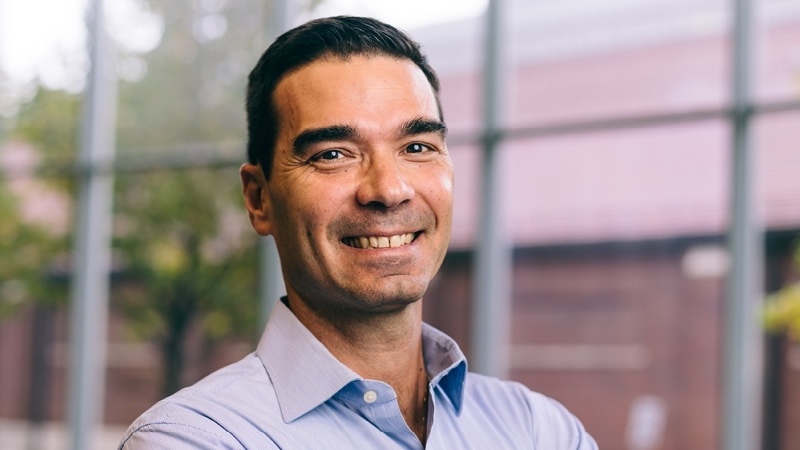
Kamiar Rahnama Rad is an Associate Professor at the Zicklin School of Business , Baruch College (CUNY), affiliated with the Paul H. Chook Department of Information Systems and Statistics . His research focuses on scalable high-dimensional inference , machine learning , and computational neuroscience .
Mathews Jacob is an Adjunct Professor in the Electrical and Computer Engineering department at the University of Iowa College of Engineering . He holds a PhD in Biomedical Imaging from the Swiss Federal Institute of Technology (2003), an MS in Signal Processing from the Indian Institute of Science (1999), and a BSE in Electrical & Communication Engineering from the National Institute of Technology (1996). Jacob joined the University of Iowa in 2011 and is affiliated with the IEEE and IEEE Signal Processing Society. PhD, Biomedical Imaging – Swiss Federal Institute of Technology, 2003 MS, Signal Processing – Indian Institute of Science, 1999 BSE, Electrical & Communication Engineering – National Institute of Technology, 1996 Jacob’s research focuses on Medical Imaging , particularly Imaging Processing and Inverse Problems , with applications in MRI reconstruction, cardiac imaging, and dynamic speech imaging. His work emphasizes Deep Learning and Structured Low-Rank Algorithms for accelerating and improving image quality in clinical settings. Recent publications highlight trends in MRI Reconstruction , Deep Learning , and Medical Image Analysis , including advancements in Cardiac MRI , Diffusion MRI , and Manifold Modeling . Notably, his work spans both Biomedical Engineering and Signal Processing , with some interdisciplinary applications in Marketing and Business Studies . Jacob’s scientific contributions include algorithm development for MRI Acceleration , Motion Compensation , and Image Denoising . He has pioneered frameworks like MuSE , DMoCo , and DEEPEN , which integrate deep learning with mathematical optimization for robust imaging solutions.
Dr. Alexander Shaposhnikov is a researcher affiliated with the Faculty of Mathematics at the University of Bielefeld, a leading institution known for its interdisciplinary research in the Mathematical World strategic area. His work aligns with Bielefeld's strong focus on fundamental mathematical concepts and their applications to complex problems in economics and natural sciences. The Faculty of Mathematics at Bielefeld is part of a dynamic research ecosystem that includes collaborative projects like CRC 1283 and CRC TRR 358, which explore uncertainty, randomness, and low regularity in analysis, stochastics, and geometry. The university is ranked 5th in Mathematics (DFG Funding Atlas 2024), reflecting its international reputation in the field. Strategic research areas include spectral structures, topological methods, economic behavior, and mathematical finance Interdisciplinary initiatives connect mathematics with theoretical physics, bioinformatics, and business administration
Alec Jacobson is an Associate Professor in the Department of Computer Science at the University of Toronto, with a courtesy appointment in Mathematics. He holds the Canada Research Chair in Geometry Processing and serves as a Senior Research Scientist at Adobe Research Toronto. Located at the Bahen Centre, he leads research in computer graphics and geometry processing as part of the Dynamic Graphics Project lab. His research focuses on Geometry Processing , Discrete Differential Geometry , and Computer Graphics , with applications in 3D reconstruction, computational fabrication, and neural representations. Key areas include mesh processing algorithms, physics-based simulation, and differentiable rendering techniques that bridge theoretical foundations with practical implementations. Recent publications demonstrate strong trends in neural field optimizations, robust 3D reconstruction, and physics simulation. His team frequently combines machine learning with geometric methods to solve challenging inverse problems in computer vision and graphics, with consistent innovation in computational efficiency and mathematical foundations. Scientific Awards: Canada Research Chair in Geometry Processing AXL Faculty Fellow Best Paper Honourable Mention (SGP 2024) Best Paper Award (SIGGRAPH 2022) Test of Time Award (SIGGRAPH 2024) He leads the Third Space research group advising numerous graduate students and postdocs. Current research infrastructure includes collaborations with the Vector Institute and Adobe Research, supported by grants focused on geometric algorithms and neural representations.
Jan Rotter is affiliated with the Faculty of Mathematics at the University of Bielefeld, Germany. He is associated with the WE IDM research group within the faculty and maintains active academic engagement in mathematical research. His research interests align with the Mathematical World strategic research area at Bielefeld University, which focuses on regular and irregular structures in mathematics. This encompasses spectral structures and topological methods, stochastics and modeling of real systems, randomness and low regularity, as well as economic behavior and mathematical finance. The faculty has a strong international reputation in mathematics research, ranking 5th in absolute terms according to the DFG Funding Atlas 2024. The Faculty of Mathematics at Bielefeld participates in several major research initiatives including the Collaborative Research Centre 1283 (Taming uncertainty and profiting from randomness and low regularity), CRC TRR 358 (Integral Structures in Geometry and Representation Theory), and the Research Training Group 2865 (Coping with Uncertainty in Dynamic Economies). These projects involve close cooperation between researchers working in mathematics, theoretical physics, bioinformatics, and business administration and economics. Faculty of Mathematics, University of Bielefeld WE IDM research group Dr. Rotter's work contributes to Bielefeld University's strong mathematical research profile, which emphasizes both developing fundamental mathematical concepts and applying these to long-standing open problems in economics and the sciences. The university maintains close connections with the Institute of Mathematical Economics (IMW) and the Research Centre for Mathematical Modelling (RCM²), creating an interdisciplinary environment for mathematical research.
Zachary Sharp serves as Director of the Center for Stable Isotopes (CSI) and holds the rank of Distinguished Professor in the Department of Earth and Planetary Sciences at the University of New Mexico. He leads advanced stable isotope research infrastructure including laboratory facilities for sample preparation and analysis. His research specializes in high-precision stable isotope techniques, particularly oxygen and chlorine isotope geochemistry. Key innovations include laser extraction systems and the δ 17 O-δ 18 O single mineral thermometer method for reconstructing paleotemperatures and fluid compositions. Applications span high-temperature igneous/metamorphic petrology, planetary science (Moon/Mars studies), and low-temperature environmental systems including soil carbonates, water cycles, and atmospheric vapor dynamics. As CSI Director, Sharp manages radiocarbon dating services and stable isotope analysis facilities that support interdisciplinary research through pilot grants. His work demonstrates significant impacts in reconstructing Earth's historical ocean composition (Archean to Phanerozoic), glacial-interglacial climate transitions using Valles Caldera diatoms, and planetary material analysis.
Zeyu Guo is an Assistant Professor in the Department of Computer Science and Engineering at The Ohio State University , based in Dreese Laboratories, Columbus, Ohio. He earned his Ph.D. in Computer Science from the California Institute of Technology in 2017 under the supervision of Chris Umans, followed by postdoctoral appointments at the University of Texas at Austin, the University of Haifa (Israel), and the Indian Institute of Technology Kanpur (India). Research Interests Theoretical Computer Science Computational Complexity Pseudorandomness and Derandomization Coding Theory Algebraic Complexity Theory Algebraic Algorithms His work explores deep interplay between algebra and computation, designing efficient algorithms, constructing pseudorandom objects, and establishing fundamental limits in error-correcting codes. Recent Publication Landscape Across 2021-2025, Guo’s papers predominantly target list decoding capacity for Reed–Solomon and Gabidulin codes, polynomial identity testing for restricted circuit classes, and fast algebraic algorithms such as multivariate multipoint evaluation. A recurring theme is leveraging algebraic geometry and additive combinatorics to derandomize constructions and achieve optimal parameters. Awards & Funding NSF CAREER Award (current support) Advising & Mentoring PhD student: Zihan Zhang Postdoc mentee: Ashish Dwivedi (2023–2024) Teaching & Course Development Guo regularly teaches core graduate and undergraduate courses including Algorithms, Computability and Complexity, and specialized topics in algebraic complexity theory and error-correcting codes.
Benoit Combès is a Research Scientist at Inria, affiliated with the Empenn Team. His work bridges Computer Science , Machine Learning , and Medical Imaging to develop and assess tools for Multiple Sclerosis (MS) patient follow-up and clinical decision-making. Current Research : Focuses on image processing and statistical analysis of MRI data to optimize MS lesion detection and spinal cord imaging. Past Roles : Post-doctoral research in quantitative MRI, statistical modeling, and macrophage activity analysis for MS. His research spans Neurology , Medical Imaging , and Data Analysis , with recent publications in deep learning for lesion segmentation , MRI reproducibility , and spinal cord damage assessment . Collaborations include neurology departments and clinical teams across France, with a focus on clinical translation of automated tools. Supervisions include PhD students and engineers working on spinal cord databases , machine learning for MRI , and clinical studies . Current students: Malo Gicquel, Mathilde Liffran, Nolwenn Jégou, and Ricky Walsh.
Dr. Eamonn Weitz serves as a Researcher in the Faculty of Physics at University of Bielefeld, with dual affiliations in Elementary Particles and Quantum Fields and Cosmology and Astroparticle Physics research groups. His work contributes to Bielefeld's strategic research area in the Mathematical World, which emphasizes transcending disciplinary boundaries between physics and advanced mathematics. As a doctoral-level researcher, Dr. Weitz participates in Bielefeld's internationally recognized mathematical physics research environment, which ranked 5th in Mathematics according to the DFG Funding Atlas 2024. His research interests focus on the intersection of theoretical physics and mathematical structures: Mathematical aspects of quantum field theory Analysis of complex physical systems with randomness and low regularity Topological methods applied to particle physics Cosmological models requiring advanced mathematical techniques Stochastic processes in fundamental physics Dr. Weitz contributes to major collaborative research initiatives including CRC 1283 'Taming uncertainty and benefiting from randomness and low regularity,' CRC TRR 358 on integral structures in geometry, and IRTG 2235 analyzing singular and random systems. His work benefits from Bielefeld's interdisciplinary research culture connecting the Faculty of Physics with the Faculty of Mathematics and the Institute of Mathematical Economics. Based in office UHG D6-142, Dr. Weitz operates within Bielefeld's strong mathematical physics community that has produced significant collaborative projects with international partners including Seoul National University. The university's research profile emphasizes solving long-standing open problems through fundamental mathematical concepts applied to physical phenomena.
Alessio Pomponio is a Full Professor in the Department of Mechanics, Mathematics & Management at the Polytechnic University of Bari (Politecnico di Bari). His research focuses on nonlinear partial differential equations, variational methods, and mathematical physics, with applications to quantum mechanics and nonlinear optics. Academic Rank: Professor Institution: Polytechnic University of Bari Email: alessio.pomponio@poliba.it His work spans nonlinear scalar field equations, Schrödinger-type systems, Born-Infeld theory, and Chern-Simons models. He investigates existence, multiplicity, and asymptotic behavior of solutions using variational techniques, often addressing criticality and geometric constraints. Recent publications highlight normalized solutions for quasilinear problems, saddle-point semiclassical states, and mixed-dispersion nonlinear Schrödinger equations. His studies frequently involve competing nonlinearities, point interactions, and zero-mass scenarios.
Marcellin Atemkeng is an Associate Professor in the Department of Mathematics at Rhodes University , with concurrent research roles at the Rhodes Centre for Radio Astronomy Techniques & Technologies and the National Institute for Theoretical and Computational Sciences (NITheCS) . He leads the Rhodes AI Research Group (RAIRG) , focusing on AI/ML applications to radio astronomy, marine ecology, and medical imaging. Education: MSc (University of Dschang), PhD (Rhodes University), PGDHE (Rhodes University) His research spans big data analytics , statistical signal processing , and deep learning , with applications in radio interferometry , medical imaging , and agricultural monitoring . His recent work emphasizes explainable AI , quantum NLP , and anomaly detection in ecological and industrial datasets. Key trends in his publications include data compression for radio astronomy, clustering algorithms for environmental monitoring, and hybrid AI architectures in precision agriculture and cybersecurity. His interdisciplinary approach bridges computational methods with real-world challenges in marine ecology and power generation . Awards: NRF Y rating (2022) Mathematical Sciences Early Career Fellowship (2022) Kambule Doctoral Award (2019, Deep Learning Indaba) SKA SA Best Poster Award (2013) He actively mentors graduate students across Africa through the African Institute for Mathematical Sciences (AIMS) network and contributes to NRF grant reviews , journal refereeing, and international conference keynotes.
Petros S. Drineas is a Professor and Department Head of Computer Science at Purdue University. He holds a PhD from Yale University (2003) and a BS from the University of Patras (1997). His research focuses on Randomized Numerical Linear Algebra (RandNLA), its applications to data science, and computational biology. He has pioneered methods like CUR matrix decomposition and applied RandNLA to genomic studies, disproving hypotheses about Minoan and Mediterranean population origins. Education: PhD in Computer Science (Yale, 2003); BS in Computer Engineering (University of Patras, 1997). Research highlights include: RandNLA's foundational contributions, genetic studies on Crete and Peloponnese populations, and scalable algorithms like TeraPCA. He has advised numerous PhD students who have joined institutions like IBM, Oak Ridge National Lab, and academia. Awards include SIAM Fellow (2023), NSF CAREER Award, and Purdue Faculty Scholar. Awards: SIAM Fellow (2023), Purdue Faculty Scholar (2022), College of Science Diversity Award (2023). His work has been featured in Nature Communications , PNAS , and media like National Geographic. Labs/Teams: Leads Purdue's Computer Science department and collaborates on projects with IBM, Sandia National Labs, and international institutions. His group focuses on algorithmic foundations for big data and genomics.
Rong Ge is the Cue Family Associate Professor of Computer Science at Duke University's Trinity College of Arts & Sciences, also serving as Director of Graduate Studies for the Computer Science PhD program since 2023. His research focuses on theoretical computer science and machine learning, with contributions to non-convex optimization, neural networks, and algorithm design. Ge holds a PhD from Princeton University (2013) and was a Microsoft Research postdoc before joining Duke. His work bridges foundational theory with practical machine learning challenges, emphasizing provable guarantees for algorithms in settings like sparse coding, phase retrieval, and transformer models. Recent grants include leadership of the THEORINET initiative (Simons/National Science Foundation) and NSF CAREER funding. Ge advises multiple PhD students and teaches courses in algorithms and machine learning theory. Education: PhD in Computer Science (Princeton University, 2013) Awards: Alfred P. Sloan Research Fellowship (2019-2023) Key Research Areas: Optimization landscapes, neural network theory, self-supervised learning, and robust statistical methods Publications emphasize theoretical insights into neural networks' behavior, including calibration mechanisms, depth separation, and edge-of-stability dynamics. His work frequently combines mathematical rigor with real-world applicability in areas like natural language processing and vision-language models. Grants include $2.5M THEORINET collaboration (2020-2025) and NSF-funded projects addressing non-convex optimization landscapes. Advising focuses on developing students' capacity for theoretical innovation with practical impact.
Mark Anastasio is the Donald Biggar Willett Professor in Engineering and Head of the Department of Bioengineering at the University of Illinois Urbana-Champaign (UIUC). He holds affiliate faculty positions in the Department of Computer Science, Beckman Institute, Carle-Illinois College of Medicine, and Department of Electrical and Computer Engineering. His research focuses on bioimaging at multi-scales, biophotonics, and medical imaging technologies. He earned his Ph.D. in Medical Physics from the University of Chicago in 2001. Dr. Anastasio’s work spans image reconstruction, signal processing, and machine learning applications in biomedical optics. He leads the Anastasio Lab, pioneering advancements in photoacoustic tomography, quantitative phase imaging, and AI-driven medical imaging tools. Notable contributions include AI models for embryo health assessment and breast cancer imaging innovations. He is a Fellow of IAMBE and IEEE. Professionally, he serves on committees such as the Big Ten Chairs, BMES Council of Chairs, and Carle-Illinois AI Working Group. His service includes leadership roles in academic governance and imaging technology development. Key achievements include a $1.7M NIH grant for computational tool development and leadership in virtual imaging trials using stochastic digital human phantoms.
Yoram Bresler is a GEBI Founder Professor of Engineering at the University of Illinois at Urbana-Champaign, affiliated with the Departments of Electrical and Computer Engineering, Bioengineering, and the Coordinated Science Laboratory. His research focuses on biomedical imaging systems, statistical signal processing, and compressed sensing. He has held academic positions since 1987 and is also the founder and CTO of InstaRecon, Inc., commercializing tomographic reconstruction technologies. Dr. Bresler has authored numerous influential papers, including work on identifiability in bilinear inverse problems and blind deconvolution. He has received prestigious awards such as the IEEE Fellow and AIMBE Fellow recognitions. His work bridges theoretical advancements with practical applications in medical imaging and signal processing. Education: B.Sc. (cum laude), M.Sc., and Ph.D. in Electrical Engineering from Technion (1974–1986) and Stanford University (1986). Professional roles include editorial board memberships at IEEE Transactions on Signal Processing and SIAM Journal on Imaging Sciences. He has advised over 20 graduate students and holds patents in imaging and signal processing technologies. Research Interests: Biomedical imaging, inverse problems, compressed sensing, sparse representations, machine learning, and tomographic reconstruction. His contributions span theoretical foundations and practical algorithms, with applications in MRI, CT, and ultrasound imaging. Awards: Multiple Best Paper Awards from IEEE Signal Processing Society, NSF Presidential Young Investigator Award, and Xerox Faculty Research Award. Recognized as a University Scholar and NCSA Faculty Fellow. Grants and Labs: Active in interdisciplinary research through collaborations with the Beckman Institute, NCSA, and industry partners. His lab develops cutting-edge techniques for dynamic imaging and sparse signal recovery.


_(1)-267x315.jpg)