Heidi Samuelsen Nygård is an Associate Professor in Energy Physics at the Department of Physics, Faculty of Natural Sciences and Technology, Norwegian University of Science and Technology (NTNU). She holds a PhD (2014) from the Norwegian University of Life Sciences (NMBU) on thermochemical biomass conversion in molten salts and has conducted postdoctoral research on CO2 capture in molten salts. Her research focuses on: Sustainable power systems and renewable energy integration Smart grids and power flexibility Molten salt technology for CO2 capture and energy applications Convection dynamics in porous media Recent publications highlight advancements in: Electric vehicle grid integration and demand flexibility Battery energy storage optimization Molten salt-based carbon capture systems Renewable energy forecasting algorithms She supervises master’s and PhD students in topics spanning grid frequency prediction, EV scheduling, thermal energy storage, and molten salt chemical processes.
Yichuang Sun is a Professor of Communications and Electronics at the University of Hertfordshire, leading the Communications and Intelligent Systems Research Group and the Electrical and Electronic Engineering Department. He holds a PhD from the University of York (1996) and has over 450 peer-reviewed publications, 5 authored books, and 40+ supervised PhD students. His research focuses on wireless communications (5G/6G, RIS-aided systems), RF/microwave circuits, neuromorphic computing, and machine learning applications. He serves as Editor or Guest Editor for 12+ IEEE/IET journals and chairs technical committees for IEEE conferences. Notably ranked in the World's Top 2% Scientists since 2019, he also advises global institutions like Oxford and the Royal Academy of Engineering. Education: PhD in Electronics, University of York, UK (1996) Research Interests: Wireless/Mobile Communications and Networks RF and Microelectronic Circuits Neuromorphic Computing and Machine Learning Memristor-based Systems Secure and Energy-Efficient Communications Grants & Projects (selected): Advanced mmWave MIMO 4D Radar for Traffic Detection (2024–2027) Wireless Power Transfer for Implantable Medical Devices (2023–2025) RFID System for Sample Management (2021–present) Labs/Teams: Leads the Communications and Intelligent Systems Research Group, collaborating on 6G, neuromorphic hardware, and IoT systems.
Dr. Tianqi Hong is an Assistant Professor at the University of Georgia, affiliated with the School of Electrical & Computer Engineering and the Department of Electrical and Computer Engineering. He holds a B.Sc. from Hohai University (2011), an M.Sc. from Southeast University and NYU (201?), and a Ph.D. from NYU (2016). Prior to his academic role, he served as a Principal Energy System Scientist at Argonne National Laboratory and a Senior Research Scientist at Unique Technical Services, LLC. His research focuses on power systems, power electronics, renewable energy integration, and AI-driven solutions for smart grids. Dr. Hong’s work emphasizes cybersecurity for power infrastructure, nonlinear dynamics in microgrids, and advanced control strategies. He actively contributes to IEEE Transactions across multiple journals and chairs the IEEE IAS Industrial Power Converters Committee. His recent publications address topics like AI-based photovoltaic inverter modeling, cyberattack mitigation in smart grids, and voltage regulation using distributed optimization. He has authored over 60 peer-reviewed articles, spanning from 2014 to 2025, with a focus on energy system stability, renewable integration challenges, and data-driven methodologies. His professional service includes editorial roles in top-tier journals and leadership in industry-research collaborations.
Professor Omid Kavehei is a Professor of Intelligent Microsystems in the Faculty of Engineering at the University of Sydney, serving as Deputy Head of the School of Biomedical Engineering. Previously, he held roles as a Research Fellow at the University of Melbourne and Lecturer at RMIT University. His research focuses on biomedical microsystems, nanotechnology, and brain-inspired hardware for healthcare applications, particularly epilepsy monitoring and seizure prediction. Education: PhD (specific institution not explicitly stated) His work bridges nanoelectronics and healthcare, aiming to develop low-power, brain-inspired devices for sensory perception and medical diagnostics. Key interests include neuromorphic engineering, wearable sensors, and AI-driven medical systems. Awards include the Ramaciotti Biomedical Research Award (2021), Microsoft AI for Accessibility Grant (2019), and multiple teaching/research excellence awards from the University of Sydney. His recent work explores neuromorphic cytometry for cell analysis, edge AI for ECG/EEG diagnostics, and closed-loop neurostimulation systems. Collaborations include the Sydney Nano Institute, Brain and Mind Centre, and industry partners like Microsoft. Current research students are advancing topics like bio-inspired algorithms for seizure detection, hardware-friendly machine learning models, and flexible sensor systems for aquatic environments. Grants include funding for neurophysiology platforms, quantum sensors, and semiconductor design. Labs/teams: Involved in the Centre for Drug Discovery Innovation and collaborations across engineering, neuroscience, and clinical domains.
Ingrid De Smet is Professor of French and Neo-Latin Studies at the University of Warwick, affiliated with the School of Modern Languages and Cultures and the Centre for the Study of the Renaissance. She has held significant leadership roles, including Director of the Centre for the Study of the Renaissance (2007–2010, 2014–2018) and School Director of Graduate Studies (2019–2023). She was Academic Director of Warwick in Venice (2015–2018) and remains an active scholar with international recognition. Her research focuses on the intellectual culture of early modern Europe, particularly France, Italy, and the Low Countries (c. 1550–1650), with a strong emphasis on Neo-Latin literature, satire, humanism, and the Republic of Letters. She explores themes such as political polemics, print culture, gender, and the cultural history of hunting. Her work is interdisciplinary, combining literary analysis with historical and philosophical inquiry. The trend in her publications reveals a deep engagement with Latin as a pan-European scholarly language, especially in the works of figures like Jacques Auguste de Thou. Her scholarship bridges literary criticism, intellectual biography, and cultural history, often uncovering overlooked texts and intellectual networks. She has contributed significantly to the understanding of satire, obscenity, and subversion in early modern print and manuscript culture. Her scientific honors include being a Leverhulme Major Research Fellow, Fellow of the British Academy, and member of the Academia Europaea. She has held visiting positions at Villa I Tatti (Harvard) and the Ludwig Boltzmann Institute. Leverhulme Major Research Fellow (2011–2014) Fellow of the British Academy (elected 2014) Member of the Academia Europaea (2019) Visiting Fellow, Ludwig Boltzmann Institute (2022) Robert Lehmann Visiting Professor, Villa I Tatti (2023) Ingrid De Smet has supervised numerous MA and PhD students in Renaissance and Early Modern studies, with topics ranging from gender and political thought to the history of science and book history. Her research has been funded by the British Academy, AHRC, Andrew W. Mellon Foundation, and MHRA. She has served as editor-in-chief of RSA Texts and Studies and co-edits the Warwick Studies in Renaissance Thought and Culture series. She is actively involved with major academic organizations, including the International Association for Neo-Latin Studies (Past President 2018–2022), Society for Neo-Latin Studies, FISIER, and the Renaissance Society of America. She also serves on editorial boards of Lias, Renaissance Studies, and Chartae Neolatinae.
Julie Sze is a Professor of American Studies at the University of California, Davis, where she is also the founding director of the Environmental Justice Project within the John Muir Institute for the Environment. Her work bridges environmental studies, urban studies, and ethnic studies, with a focus on environmental justice, inequality, race, gender, and urban health. University: University of California, Davis School: College of Letters and Science Department: Department of American Studies Position: Professor Her research explores the intersections of culture, environment, and power, particularly in urban contexts across New York, California, and Shanghai. She employs interdisciplinary methods, collaborating with scientists, engineers, social scientists, humanists, and community organizers to address environmental inequalities and policy impacts. Professor Sze’s publications include three influential books: Noxious New York (2007), Fantasy Islands (2015), and Environmental Justice in a Moment of Danger (2020), along with an edited volume on sustainability and over 70 scholarly articles. Her recent work emphasizes climate justice, public scholarship, and the role of humanities in shaping equitable environmental futures. The trends in her publications reflect a consistent commitment to political ecology, urban environmental health, and grassroots activism, with increasing attention to transnational perspectives, climate crisis narratives, and the democratization of environmental knowledge. Her research has influenced public policy in California and has been supported by major grants from the Ford Foundation, UC Humanities Institute, and AAUW. She is a sought-after speaker, having delivered keynotes in Germany, China, Italy, France, Canada, and Japan, and presented at over 80 U.S. universities. Her public engagement extends to institutions like the SF MOMA, New York Academy of Medicine, and the Asia Society. Deep commitment to public scholarship Active mentor for first-generation and low-income students 20+ year involvement with the UC President’s Postdoctoral Fellowship Program Grants from Ford Foundation, UC Humanities Institute, American Studies Association, AAUW As founding director of the Environmental Justice Project, she has built collaborative networks across disciplines and communities, fostering research that is both academically rigorous and socially transformative.
Ga Wu is an Assistant Professor in the Faculty of Computer Science at Dalhousie University, where he leads the Applied Machine Learning Research Lab (DAMLR). His research spans machine learning, artificial intelligence, recommender systems, and large-scale data analytics, with strong industry and interdisciplinary collaborations. Research Interests: Machine Learning and Large-scale Data Analysis Recommender Systems and Personalization AI Safety, Fairness, Accountability, and Transparency Generative AI and Large Language Models Computer Vision (Object Detection on Low-power Devices) AI for Healthcare and Mental Health Physical Dynamic Modeling with ML Bioactive Peptides and Protein Property Understanding His recent publications have been accepted at premier venues such as SIGIR and ICLR, reflecting impactful contributions in information retrieval and deep learning. His work is increasingly focused on ethical, safe, and interpretable AI systems with real-world applications. Scientific Awards & Grants: NSERC RTI Award (2025) Mitacs Elevate Grant (awarded multiple times in 2024–2025) Transforming Climate Action Research Program (TCA) Support (2025) Advising and Funding: Dr. Wu actively supervises graduate students, including PhD candidates and Master’s students like Naihe Feng and Mahtab Sarvmaili. His lab is fully funded and currently recruiting PhD students for projects in computer vision and big data infrastructure in collaboration with industry partners. Labs & Teams: He founded and directs the Applied Machine Learning Research Lab (DAMLR) , which fosters collaboration between academia and industry to advance theoretical and applied AI research.
Paul Evans is a Professor in the Department of Materials Science & Engineering at the University of Wisconsin-Madison, College of Engineering. His research focuses on nanoscale materials synthesis, ultrafast dynamics, and advanced X-ray characterization techniques. PhD, Harvard University (2000) MS, Harvard University (1996) BS, Cornell University (1994) Evans investigates solid-phase epitaxy of complex oxides, strain imaging in acoustic devices, and optically driven phase transitions. His work combines experimental and computational approaches, including deep learning for diffraction data analysis. His recent publications highlight breakthroughs in nanoscale crystallization, ultrafast magnetization dynamics, and hybrid magnon-phonon systems. Awards include the Bascom Professorship and Vilas Mid-Career Award. Surface Science and Technology Bascom Professorship (2022) Vilas Associate Award (2019) Polygon Engineering Outstanding Instructor Award (2006) Evans teaches courses in materials structure, advanced X-ray methods, and thesis research. His lab enables scalable synthesis of perovskites and defect-minimized oxide heterostructures.
Valeria Castellucci is a Senior Lecturer and Associate Professor in the Department of Electrical Engineering at Uppsala University, Sweden, affiliated with the Division of Electricity. She holds the title of Docent in Engineering Science with Specialisation in Science of Electricity, reflecting her advanced academic standing and research contributions. Her research focuses on renewable energy systems, particularly wave energy and the integration of electric vehicles into power grids. Key areas include demand-side flexibility, peak load management, load shifting, and the optimization of wave energy parks. Her work combines theoretical modeling with real-world applications, often based on case studies in Uppsala, such as microgrid operations and EV charging infrastructure in parking garages. The recent publications highlight a strong trend toward smart grid technologies, grid stability, and the role of distributed energy resources in modern power systems. Her research emphasizes practical solutions for integrating variable renewable sources and managing electricity demand efficiently. Docent in Engineering Science with Specialisation in Science of Electricity Valeria Castellucci is actively involved in research collaboration, particularly with colleagues such as Carl Flygare, Alexander Wallberg, and Rafael Waters. Her work has been cited in policy sources and referenced in Wikipedia, indicating broader impact beyond academia. She contributes to both journal publications and conference proceedings, maintaining a high level of scholarly output in energy and electrical engineering. She is based at Ångströmlaboratoriet in Uppsala and is a key contributor to Uppsala University's wave energy research, including work at the Lysekil Research Site. Her doctoral thesis, Sea Level Compensation System for Wave Energy Converters (2016), laid the foundation for much of her ongoing research in marine renewable energy systems.
Zoltán Sütő is an Associate Professor at the Budapest University of Technology and Economics, affiliated with the Department of Automation and Applied Informatics. His research focuses on advanced power electronics and control systems, with expertise in real-time implementation using FPGA technology. He maintains an active presence through institutional contacts at Budapest 1117, Magyar tudósok krt. 2., Q.B114, and can be reached via phone (+36 1 463-2337) or email (Suto.Zoltan@aut.bme.hu). Dr. Sütő's research encompasses: Design and optimization of power converters (dual active bridge, multilevel inverters) Real-time control algorithms for grid-connected systems and microgrids FPGA-based hardware-in-the-loop simulation methodologies Nonlinear dynamics in power electronic systems Artificial intelligence applications for fault diagnosis in drive systems His work bridges theoretical control models with practical implementations in renewable energy integration and power quality management. Recent publications demonstrate a strong focus on predictive control techniques, adaptive compensation methods, and optimization of power converter topologies. Research trends emphasize real-time validation, FPGA implementation, and AI-enhanced diagnostics across applications ranging from energy storage systems to industrial drives. Articles consistently address efficiency improvements, stability challenges, and novel modulation strategies in power conversion.
Yves Blaquière is a Professor in the Department of Electrical Engineering at École de Technologie Supérieure. He is affiliated with the Communications and Microelectronic Integration Laboratory (LaCIME), focusing on microelectronics, integrated circuit design, and power integrity in advanced electronic systems. His research spans VLSI/ASIC design, FPGA-based reconfigurable computing, MEMS for avionics, and radiation effects on electronics. Aeronautics and Aerospace Intelligent and Autonomous Systems Microelectronics and VLSI Power Integrity Modeling MEMS Switch Design Radiation-Resilient Circuits His recent publications highlight innovations in GHz-range power integrity for SiP, FPGA-based SHEPWM inverters, and MEMS switches for avionic power systems. Collaborations with researchers like Frédéric Nabki and Nicolas Constantin reflect his focus on industrial applications and technology transfer. Professor Blaquière co-supervises PhD candidates including Hachem Bensalem, Gabriel Nobert, and Abdurrashid Hassan Shuaibu, covering topics such as heterogeneous optimization, power converter modeling, and MEMS switch development. His work contributes to wafer-scale prototyping platforms like WaferBoard and advanced tools for radiation testing in FPGAs. LaCIME, under his involvement, emphasizes equity, diversity, and inclusion, offering students opportunities to engage in cutting-edge projects from materials to communication protocols. The lab's expertise includes micro/nanofabrication, photonic microsystems, and signal processing.
Batuhan Sesli is a Researcher at the Department of Computer Science 12 (Hardware-Software-Co-Design) at Friedrich-Alexander University Erlangen-Nuremberg (FAU), Germany, since July 2024. His work focuses on embedded systems with emphasis on hardware acceleration for machine learning and efficient deployment of TinyML applications on resource-constrained devices. His educational background includes: M.Sc. in Information and Communication Technology from FAU (2022-2024) B.Sc. in Electrical & Electronics Engineering from Istanbul Ozyegin University, Turkey, with a minor in Computer Science (2016-2021) Research interests span acceleration techniques for machine learning workloads via RISC-V ISA extensions and specialized hardware accelerators, efficient deployment of TinyML on low-power devices, and co-design of AI algorithms and hardware. His work optimizes the synergy between algorithmic requirements and hardware capabilities in embedded systems, targeting practical solutions for edge AI applications. His recent DATE 2024 publication on DNN acceleration through weight clustering on RISC-V custom functional units exemplifies the trend toward energy-efficient specialized hardware, reflecting his focus on bridging algorithmic demands with hardware constraints in real-world embedded scenarios. He teaches a tutorial on Embedded Systems for Winter Semester 2024/2025 and offers thesis opportunities in his research domain, though no current open theses are listed.
Kamil Futyma is a researcher and lecturer at the Institute of Heat Engineering (IHE) at Warsaw University of Technology, specializing in mathematical modeling of thermal machines and energy systems. He holds an academic position as Assistant Professor and is actively engaged in both teaching and research activities. His research focuses on advanced energy systems including mathematical modeling of thermal machines and power plants, CO 2 separation technologies using molten carbonate fuel cells, optimization of district heating systems, and waste heat utilization. His work demonstrates a strong emphasis on improving energy efficiency in industrial and power generation applications through innovative engineering solutions. Dr. Futyma's publication record shows consistent contributions to the field of energy engineering, particularly in the areas of flue gas heat recovery, molten carbonate fuel cell applications for carbon capture, and optimization of thermal systems. His research often addresses practical challenges in power plant operations and district heating networks. He teaches courses on Theory of Thermal Machines and Contemporary Energy Systems, providing students with knowledge of fundamental and advanced energy conversion technologies. His professional activities include supporting industrial partners through mathematical modeling, energy efficiency audits, and training on engineering software such as Ebsilon Professional, GateCycle, and Aspen Hysys.
Ahmed Ahmed, an associate professor in the Department of Computer Science at Prairie View A&M University (PVAMU) , shapes tech leaders through innovative teaching and research. His work spans IoT, AI, and ML applications across agriculture, infrastructure monitoring, and healthcare. Key research areas include: IoT and AI for sustainable agricultural practices LoRa-based location tracking in constrained environments Secure blockchain-federated learning systems Geofencing for community safety With over 50 peer-reviewed publications and a $300k NSF grant (2023), Ahmed develops hands-on learning tools like a Special Interest Group for IoT and live programming demonstrations. His global journey—from Cairo University to a PhD at the University of Saskatchewan—fuels his commitment to empowering underrepresented students. Scientific awards include the PVAMU Faculty Service Award . He advises students like Kritika Singh (2022 graduate) and advocates for continuous refinement of teaching as a craft.
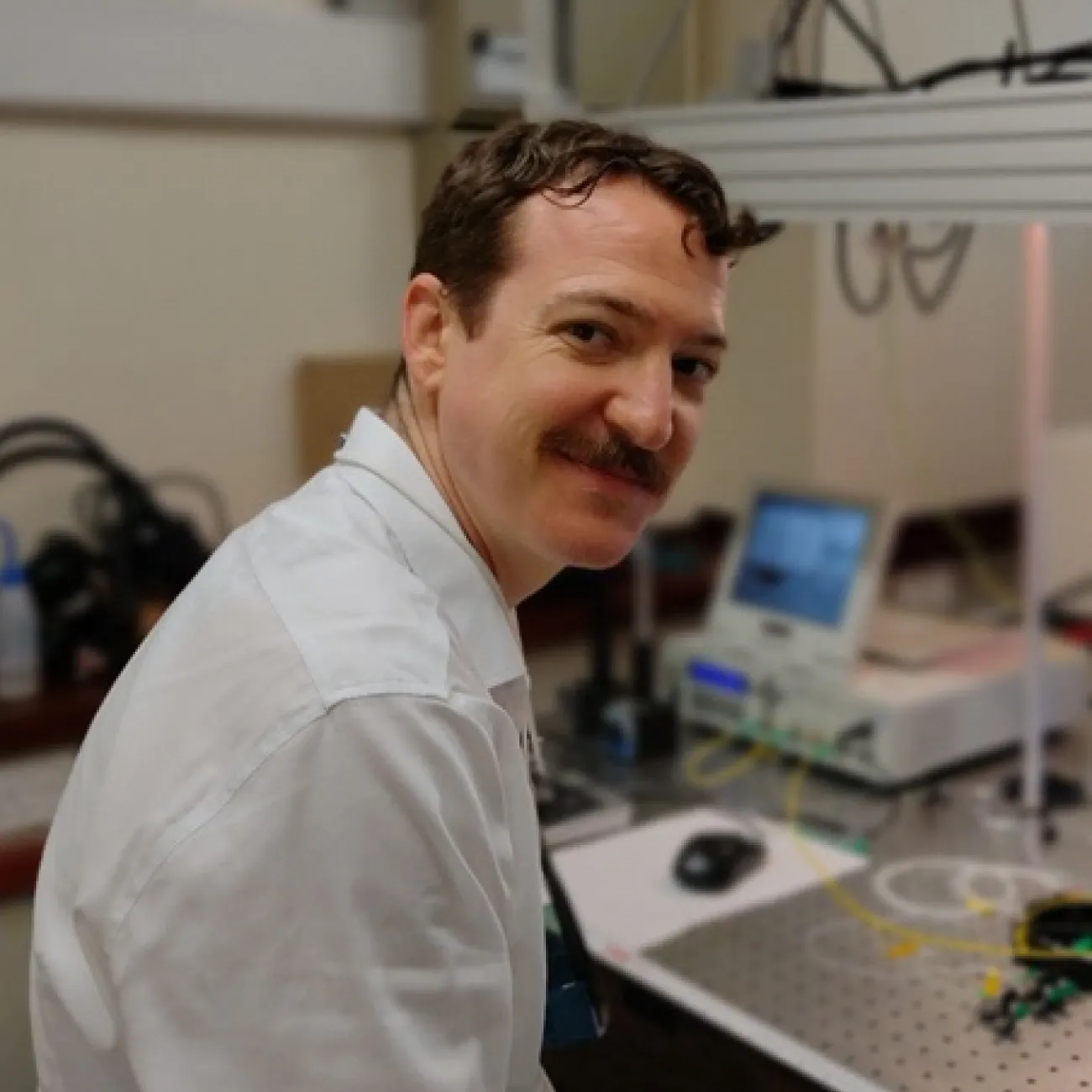
Austin Taranta serves as a Professor at the University of Southampton's Optoelectronics Research Centre (ORC), where he leads research and enterprise initiatives within the Hollow Core Fibres Group. Since joining the ORC in 2016, he has driven advancements in hollow core fibre technology for defence and space applications, authored over 50 peer-reviewed publications, secured significant research funding, and manages key industrial partnerships including a Microsoft research contract. His work bridges fundamental fibre physics with practical sensor development. His academic background includes a BSc in Chemical Engineering from the Massachusetts Institute of Technology (2006) and a PhD in Optoelectronics from the University of Southampton (2024). Prior to academia, he gained industry experience as Senior Optical Engineer at Honeywell Aerospace's Strategic Sensors Group developing fibre-optic gyroscopes. Taranta's research focuses on exploiting the unique properties of hollow core fibres for next-generation sensing systems. Key areas include: Hollow core antiresonant fibre guidance physics Gas pressure and temperature dynamics in hollow fibres Polarization behavior in nodeless antiresonant structures Novel sensor architectures for defence applications Bend-insensitive fibre designs for telecom integration Non-destructive characterization methodologies Analysis of his 2023-2024 publications reveals concentrated efforts on solving manufacturing challenges, environmental stability issues, and sensor integration barriers in hollow core fibre technology. His work demonstrates strong industry alignment through Microsoft collaborations and defence-focused applications, particularly in distributed sensing systems and next-generation gyroscopes. No specific scientific awards or medals are listed in the provided text, though his profile notes responsibility for multiple research awards and patent holdings including optical time domain reflectometry innovations. Taranta actively supervises PhD candidates Amalie Gjelsvik and Chiang Ping Saw (part-time), while managing industrial research contracts and academic partnerships. His funding portfolio includes strategic defence projects through Honeywell Aerospace and Microsoft collaborations, supporting the Hollow Core Fibres Group's translational research pipeline. He leads the Hollow Core Fibres Group within the ORC, focusing on commercializing hollow core antiresonant fibre technology through the Hollow Core Fibres Group. Current work targets polarization control, environmental resilience, and sensor integration with industry partners to develop deployable systems for aerospace and defence sectors.