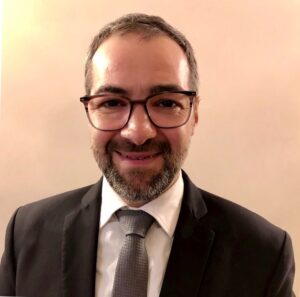
Martin Radetzki is a full Professor at the Institute for Computer Architecture and Parallel Systems (University of Stuttgart) , specializing in Embedded Systems . His work focuses on network-on-chip (NoC) design, fault tolerance, memory optimization, and simulation frameworks. Key research areas: NoC synthesis, deadlock-free routing, performability analysis, and power-efficient memory subsystems Recent publications emphasize integer linear programming frameworks for co-designing floorplanning and routing, chiplet-based systems , and machine learning-enabled performance evaluation His methodologies address cross-layer challenges in NoC design, combining formal optimization with practical implementation for heterogeneous processing elements. Collaborative projects include fault resilience analysis, parallel simulation techniques, and memory allocation strategies for SoCs. Dr. Radetzki supervises research with students like Shuang Liu and Manuel Strobel , contributing to IEEE Transactions on Computers , ACM TECS , and conferences such as DATE and MCSoC . Current work explores optimal routing topologies for emerging chip architectures.
Gilbert Bernstein is an Assistant Professor at the University of Washington in the Computer Science & Engineering department within the Paul G. Allen School of Computer Science & Engineering . He specializes in Computer Graphics and Programming Languages , with a focus on high-performance domain-specific languages (DSLs). Postdoctoral scholar at UC Berkeley and MIT with Jonathan Ragan-Kelley PhD from Stanford University under Pat Hanrahan His research spans Human-Centered Computing , Interaction with the Physical World , and Software & Hardware Systems , including projects in: Compiler design for knitting machines using knot theory Differentiable rendering of neural signed distance fields Hardware DSLs for accelerator programming Geometric pattern completion for quilting Responsive web retargeting His recent publications demonstrate expertise in combining Mathematical Modeling with Language Design for applications in Graphics , Simulation , and Fabrication .
Dongmei Gao is a Doctoral Researcher in the Department of Computer Science at Aalto University, working under Professor Fabian Fagerholm's supervision. Her research sits at the intersection of software engineering and human-computer interaction, with a specialized focus on low-code development platforms and end-user development methodologies. Her core research interests include: Software Engineering Human-Computer Interaction End-User Development Low-Code Development Platforms Developer Experience Measurement Gao's recent publications analyze episodic experiences of developers using low-code platforms through empirical studies, examining how these tools impact workflow efficiency and user satisfaction for non-professional developers. This work contributes to optimizing platform design for diverse user skill levels. As a doctoral researcher, she is advised by Professor Fabian Fagerholm and does not currently supervise students or hold independent research grants. She actively participates in Professor Fagerholm's research group at Aalto University, contributing to ongoing projects in human-centered software engineering.
Dr. Frank Hannig is a Professor at the Department of Computer Science, Friedrich Alexander University Erlangen-Nuremberg (FAU), Germany. He serves as the Head of the Architecture and Compiler Design Group within the Hardware-Software-Co-Design department (Department 12). With a career spanning over two decades at FAU since 2003, he has established himself as a leading researcher in hardware-software co-design, compiler design, and embedded systems. Dr. Hannig received his Diploma degree in Electrical Engineering/Computer Science from the University of Paderborn in 2000, followed by his Dr.-Ing. degree in Computer Science from FAU in 2009 with a thesis on "Scheduling Techniques for High-Throughput Loop Accelerators." He completed his habilitation (Dr.-Ing. habil.) in 2018 with a thesis titled "Domain-specific and Resource-aware Computing," which qualifies him for a full professorship in the German academic system. His research focuses on hardware-software co-design, compiler design for embedded systems, reconfigurable computing, parallel systems, and machine learning acceleration. Dr. Hannig has made significant contributions to domain-specific and resource-aware computing, with applications in image processing, automotive systems, and edge AI. His work bridges the gap between high-level programming models and efficient hardware implementations, particularly for resource-constrained environments. Dr. Hannig's recent publications reveal a strong trend toward efficient machine learning deployment on embedded devices and microcontrollers, with particular emphasis on memory optimization, hardware acceleration, and low-precision computing. His research spans multiple domains including computer architecture, machine learning, and embedded systems, with a focus on practical implementations for real-world applications. Dr. Hannig serves as an Associate Editor for IEEE Embedded Systems Letters and the Journal of Real-Time Image Processing. He has organized numerous prestigious conferences including SLOHA 2021, ARC 2021, and Euro-Par 2021, demonstrating his leadership in the academic community. As an educator, Dr. Hannig teaches courses on Domain-Specific and Resource-Aware Computing on Multicore Architectures, Parallel Systems, and Embedded Systems. He has supervised numerous students through lectures, exercises, and seminars covering electronic system level design and multi-core architectures. Dr. Hannig leads several significant research projects including InvasIC (DFG Transregional Collaborative Research Centre), ExaStencils (Advanced Stencil-Code Engineering), and HBS (DFG Research Training Group on Heterogeneous Image Systems). His work with the HIPAcc open-source project has contributed to domain-specific language and compiler development for image processing applications.
Vincent St-Amour is an Associate Professor of Instruction in the Department of Computer Science at Northwestern University's McCormick School of Engineering. His research focuses on programming languages, compilers, and performance tools, particularly within the Racket ecosystem. He has contributed to projects like the Racket compiler and optimization tools, and is a core developer of the Racket language. Education: Ph.D. in Computer Science, Northeastern University (2015) B.Sc. in Computer Science, Université de Montréal (2009) Research Interests: Vincent's work emphasizes tools for non-experts, compilers, and language design. He actively contributes to open-source projects and has developed tools like the Performance Report DrRacket tool and optimization coaching systems for JavaScript. His research bridges theoretical language concepts and practical software engineering challenges. Key Contributions: Core developer of Racket, focusing on performance tools and the Typed Racket dialect Co-developer of optimization coaching frameworks Recipient of the 2018 SIGPLAN Software Award for Racket Awards: Faculty Service Award (2024) Peter J. Landin Award (2009) Multiple teaching awards including Associated Student Government Faculty Honor Roll Teaching & Service: Vincent teaches courses in programming languages, software engineering, and data structures. He chairs the Computer Science Curriculum Committee and advises student groups like Emerging Coders.
Russ Joseph is an Associate Professor in both the Department of Electrical and Computer Engineering and the Department of Computer Science at Northwestern University. He holds a Ph.D. in Electrical Engineering from Princeton University (201?), an M.A. in Electrical Engineering from Princeton, and a B.S. in Electrical and Computer Engineering from Carnegie Mellon University. His research focuses on computer architecture innovations, particularly in microprocessor design for reliability, variability tolerance, and power efficiency. Current projects include co-designed systems software for multi-core architectures, variability-tolerant architectures, and dynamic power management solutions. Education highlights include Princeton University (Ph.D., M.A. in Electrical Engineering) and Carnegie Mellon University (B.S. in ECE). His research explores adaptive clock management, compiler-assisted timing speculation, and embedded system design. Notable contributions include the NCPU architecture and Cocoa cache compression techniques. Teaching responsibilities include courses on computer engineering fundamentals and parallel architectures. Research interests emphasize hardware-software co-optimization, ultra-dynamic clock management, and energy-efficient computing. Projects address challenges in multi-core resource management, thermal efficiency, and parameter variation mitigation. His work bridges theoretical computer architecture with practical embedded system applications.
Ann Ramirez is an Associate Professor in the Department of Electrical and Computer Engineering at the University of Florida . She specializes in Computer Engineering , focusing on low-power design, reconfigurable computing, and blockchain technology in IoT devices for enhanced data privacy and security. Her work spans system-level layouts, SOC architectural designs, and dynamic optimizations. Education: Dr. Ramirez holds a PhD in Computer Science and Engineering (2007) and a BS in Computer Science and Engineering (2000), both from the University of California-Riverside. Research Interests: Her research integrates blockchain applications in IoT for privacy, security, and ownership, alongside low-power embedded systems, cache optimization, and multi-core architectures. She emphasizes holistic system design and energy-efficient solutions. Awards: NSF CAREER Award (2010) Best Paper Award at the International Conference on Mobile Ubiquitous Computing (2010) Best Paper Award at the ACM Great Lakes Symposium on VLS (2010) Advising & Grants: While no specific advising roles are detailed, her publications reflect collaborations with students and researchers. No explicit grant information is provided here.
Christophe Bobda is a Citi Endowed Professor in Advanced Technologies and Associate Chair for Academics at the University of Florida's Department of Electrical & Computer Engineering within the Herbert Wertheim College of Engineering. His research focuses on FPGA-based systems, cybersecurity, embedded systems, and resilient architectures. He holds a Ph.D. from the University of Paderborn, Germany, and degrees from Universities in Germany and Cameroon. Research interests include System-on-Chip design, reconfigurable computing, and robotics. Notable contributions span secure cloud FPGA deployment, multi-tenant hardware security, and near-sensor processing architectures. He received the HWCOE International Educator of the Year award in 2024. Recent work emphasizes FPGA security in cloud environments, with projects like CIVIC-FPGA and ISO-TENANT addressing isolation and attack mitigation. His lab explores embedded imaging and robotics applications, leveraging low-power and high-performance FPGA solutions. NSF grants support his research in FPGA acceleration and datacenter infrastructure. Publications highlight advancements in event-based vision systems, 3D semantic modeling, and hardware trojan detection. Ongoing projects include chiplet interfaces for on-device AI and galvanic isolation for physical attack prevention. His work bridges theoretical cybersecurity with practical FPGA implementations for resilient systems.
Umut Acar is an Associate Professor in the Computer Science Department at Carnegie Mellon University. His research focuses on programming languages, parallel computing, and algorithms, with an emphasis on raising the level of abstraction for software development while ensuring efficiency. He leads efforts in dynamic and incremental computation, parallelism optimization, and quantum computing systems. His work spans theoretical foundations and practical implementations, including systems like Atlas for quantum circuit simulation and Atomique for neutral atom quantum compilers. He advises students on advanced topics such as quantum algorithms and parallel programming models. Notable awards include Best Paper and Distinguished Paper recognitions at top conferences like SC and ISCA. Education: PhD in Computer Science (University of Chicago, 2005) Key Projects: Development of self-adjusting computation frameworks, parallel algorithms for dynamic data, and quantum compiler optimization tools. Grants: Collaborative research grants from NSF for parallelism and quantum computing initiatives. Dr. Acar’s contributions bridge theory and practice, enabling scalable software systems for modern hardware architectures and emerging technologies like quantum computing.
Haizhao Yang is an Associate Professor of Mathematics and Computer Science at the University of Maryland College Park (UMCP). He holds affiliate appointments in the University of Maryland Institute for Advanced Computer Studies (UMIACS) and the Applied Mathematics and Scientific Computation (AMSC) program. Previously, he served as an Assistant Professor at Purdue University and the National University of Singapore, and as a Visiting Assistant Professor at Duke University (2015–2017). His education includes a B.Sc. from Shanghai Jiao Tong University (2010), M.Sc. from The University of Texas at Austin (2012), and Ph.D. from Stanford University (2015). Yang's research focuses on machine learning theory, scientific computing, and applied mathematics. Key areas include AI for scientific discovery, high-performance computing, and algorithm development for differential equations. His work bridges mathematical rigor with practical applications, such as developing neural network-based solvers for high-dimensional PDEs and quantum computing integration for uncertainty quantification. He leads a dynamic research group with over 30 students and postdocs across PhD, master's, and undergraduate levels. Notable achievements include the NSF CAREER Award (2020), ONR Young Investigator Award (2022), and DARPA Young Faculty Award (2024). His laboratory collaborates with institutions like Lawrence Berkeley National Lab and Duke University, emphasizing interdisciplinary projects in data science and computational physics. Recent publications highlight innovations in operator learning for PDEs, quantum algorithm integration, and adversarial reinforcement learning. His group actively explores AI-driven approaches to overcome computational bottlenecks in scientific simulations, with techniques like the Finite Expression Method and OptimAI framework for automated problem-solving.
Stephen Torri is an Associate Professor and holds the Mary Lyn and Niles Moseley Endowed Chair in Cybersecurity at Mississippi State University's Department of Computer Science and Engineering. His research focuses on cybersecurity, reverse engineering, software engineering, high performance computing, and compiler analysis. He earned his Ph.D. in Computer Science from Auburn University (2009), M.S. from Washington University in St. Louis (2004), and B.S. in Accounting, Finance, and Computer Science from Lancaster University (2001). Education: Ph.D., Computer Science, Auburn University, 2009 M.S., Computer Science, Washington University in St. Louis, 2004 B.S., Accounting, Finance, and Computer Science, Lancaster University (UK), 2001 His research interests emphasize malware analysis, compiler-based reverse engineering techniques, and cybersecurity solutions. Notable work includes frameworks for compiler classification, control flow graph analysis using machine learning, and real-time middleware systems. He has contributed to foundational studies on software sustainment, Java obfuscation, and distributed computing performance optimization. His research bridges theoretical software engineering principles with practical applications in embedded systems and high-performance computing environments. Recent publications (2023-2024) highlight advancements in malware detection using neural networks, comparative mobile security analyses, and software maintainability studies. His work spans over two decades with contributions in both cybersecurity and systems software domains.
Robert Rinker, Ph.D., is an Associate Professor and Associate Chair in the Department of Computer Science at the University of Idaho, part of the College of Engineering. His office is located in Hedlund Building 202D, and he can be reached at rinker@uidaho.edu. Rinker holds a Ph.D. in Computer Science from Colorado State University, and both Master's and Bachelor's degrees in Electrical Engineering from the University of Idaho. His teaching responsibilities include courses such as Computer Science I (CS 120), Computer Organization and Architecture (CS 150), System Software (CS 270), Advanced Computer Architecture (CS 451/551), and Real-Time Operating Systems (CS 452/552). His research focuses on reconfigurable computing, embedded systems security, computational biology pipelines, and hardware compilation techniques. Specific contributions include work on FPGA-based systems, resilient multi-core architectures, and formal verification methodologies. Rinker’s research trends emphasize the intersection of hardware-software co-design and cybersecurity, with notable contributions to VANET security and computational density optimization in embedded systems. His publications span topics from workflow automation in bioinformatics to compiler-driven FPGA optimization strategies. While no formal awards or grants are listed, his extensive academic service as Associate Chair highlights his leadership in departmental operations. He advises courses but no listed students or active lab teams are mentioned in the provided materials.
Meridith Joyce is an Assistant Professor at the University of Wyoming, jointly appointed in the School of Computing and the Department of Physics & Astronomy within the College of Engineering and Physical Sciences. She holds a Ph.D. in Physics and Astronomy from Dartmouth College (2018) and B.Sc. degrees in Mathematics and Physics from Bucknell University (2013). Her research focuses on computational stellar astrophysics, including stellar structure and evolution, asteroseismology, and precision modeling using the MESA software. She has led international collaborations, including work at the Konkoly Observatory (Budapest) under a Marie Sklodowska-Curie Fellowship. Her expertise spans convection in stellar interiors, Galactic archaeology, and the development of numerical methods. Dr. Joyce's awards include the American Astronomical Society Chambliss Award (2016) and the Marie Curie Fellowship (2022–2024). She is actively involved in advocating for diversity and inclusion in STEM, having led gender-equity initiatives and served on multiple advisory boards. Her lab at UWYO focuses on high-performance computing and machine learning applications in astrophysics. Key contributions include studies of evolved stars, Galactic chemical evolution, and the dynamics of Betelgeuse. She has advised students at undergraduate and graduate levels, fostering their academic and professional growth through mentorship and collaborative research opportunities.
Ronald F. DeMara is a Professor in the Department of Electrical and Computer Engineering at the University of Central Florida's College of Engineering and Computer Science. He holds a Ph.D. in Computer Engineering from the University of Southern California (1992). His research focuses on adaptive hardware systems, energy-efficient computing architectures, and educational innovations in STEM fields. Current research explores machine learning accelerators, hardware security, and reconfigurable computing fabrics. He leads projects on adaptive rate/resolution designs for spectral signal acquisition and probabilistic spin logic for low-energy computing. DeMara's publication trends focus on hardware-software co-design, educational technology innovations, and emerging memory technologies. Recent work integrates AI/ML techniques with hardware optimization for applications ranging from cybersecurity education to efficient neural network implementations. Honors include: Online Learning Consortium Effective Practice Award (2018) IEEE Outstanding Engineering Educator (2008) Multiple Teaching Incentive and Research Incentive Awards He directs educational initiatives including the Digitally-Mediated Team Learning project and Digitizing STEM Assessments program, securing funding from NSF, Semiconductor Research Corporation, and technology grants.
Luigi Alfredo Grieco is a Full Professor in Telecommunications at the Polytechnic University of Bari's Department of Electrical and Information Engineering (DEI), where he has served since December 2018 after progressing from Assistant Professor (2005-2014) to Associate Professor (2014-2018). He holds editorial leadership roles as Founder Editor-in-Chief of Internet Technology Letters (Wiley), Editor-in-Chief of Transactions on Emerging Telecommunications Technologies (Wiley), and Associate Editor for IEEE Transactions on Vehicular Technology. His research spans Internet of Things (IoT) , Information Centric Networking (ICN) , Network Security , Low Power Wide Area Networks , Network Performance Evaluation , and Nanocommunications . Recent publications demonstrate a strong focus on 6G-integrated terrestrial and non-terrestrial networks, drone-based emergency response systems, and UAV-mounted wireless technologies, reflecting evolving trends toward heterogeneous network architectures and IoT scalability. His scholarly impact includes over 150 publications with 6,000+ citations and significant contributions to internet standards as author of RFC 7554 for industrial IoT applications. Awards highlight his influence: Best Impact Contribution runner-up at RESTART Workshop (2024) Multiple Best Paper awards (2010-2024) including IEEE SDS and Computer Networks Top Associate Editor for IEEE Transactions on Vehicular Technology (2012, 2017) IEEE VTS Distinguished Lecturer since 2016 Grieco maintains active research collaborations through visiting positions at INRIA (Sophia Antipolis) and LAAS-CNRS (Toulouse), and contributes to standardization efforts within the Internet Engineering Task Force. His work bridges theoretical innovation with practical implementations in next-generation networking systems.