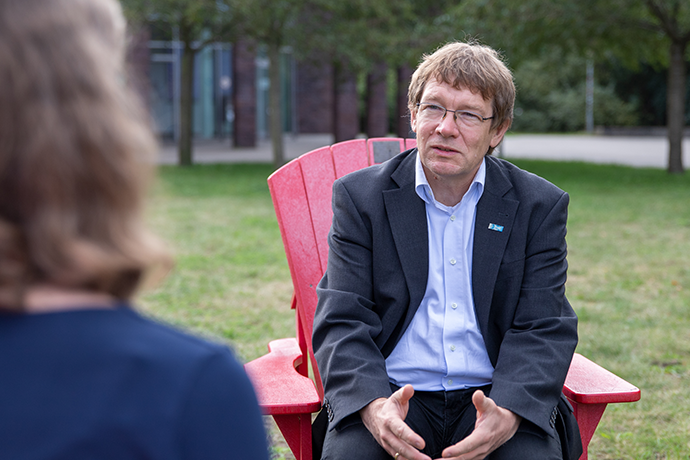
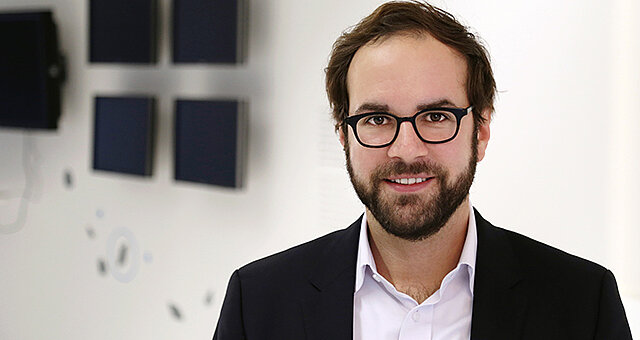
Christoph Lüth is a Professor of Computer Science at the University of Bremen and Deputy Head of the Cyber-Physical Systems research group at the German Research Center for Artificial Intelligence (DFKI) in Bremen. He has been affiliated with DFKI since 2006 and focuses on constructing provably correct software through theoretical foundations and practical tool development. Doctorate from University of Edinburgh Habilitation from University of Bremen His research spans advanced systems engineering , formal methods , and functional programming , with applications in robotics and hardware security. Recent work emphasizes open-source chip design , post-quantum cryptography , and memory protection for RISC-V architectures . Lüth contributes to projects like PROTECT (cybersecurity resilience), EASEPROFIT (post-quantum secure protocols), DI-OCDCPro (open-source chip design education), and SIGN-HEP (hardware security modules). He has authored over eighty scientific papers. At the University of Bremen, he teaches courses on functional programming , programming languages , and formal methods .
Prof. Dr. Katharina Frosch holds the professorship for General Business Administration with a focus on Human Resource Management at the Brandenburg University of Technology since March 2015. She also serves as the overall project leader for the SCALE-C initiative and has held a research professorship in the field of "Digital- and AI-supported learning at the workplace" since September 2024. Additionally, she has been a member of the Senate of the Brandenburg University of Technology since October 2023. Her research focuses on digitally supported human resource management tools for small and medium-sized enterprises (SMEs), human resource economic analyses in knowledge-intensive sectors, and AI-supported workplace learning. Key research areas include testing digitally supported onboarding processes in SMEs, hybrid approaches to work-integrated learning, and developing low-threshold digital HR tools for the Brandenburg-Berlin metropolitan region. Her work emphasizes professionalizing interactions between HR managers and employees at critical points to improve recruitment, motivation, and retention of skilled workers. Prof. Frosch's recent publications demonstrate a strong trend toward AI-enhanced learning solutions, particularly in microlearning, conversation training, and cybersecurity education. Her research increasingly examines how AI technologies can transform workplace learning while maintaining human elements of communication and trust. The SCALE-C project represents a significant interdisciplinary effort combining cybersecurity, artificial intelligence, and learning design to create semi-automated microlearning content. Best Paper Award at eLmL 2023 for 'Scan to Learn: A Lightweight Approach for Informal Mobile Micro-Learning at the Workplace' Best Paper Award at ICDS 2023 for 'Taking the Matter in Their Own Hands – Can Business Unit Developers Fullfill their Digital Demands with Low-Code Development Platforms?' Prof. Frosch actively collaborates with SMEs and public institutions in the Brandenburg-Berlin metropolitan region, leading a community of researchers, students, and HR practitioners developing Open HRM tools. She offers numerous opportunities for students to participate in research through project work, theses, and the SCALE-C initiative. Her teaching portfolio includes courses on Human Resources and Organization, Strategic Personnel Management, and Applied Research in Personnel Psychology, with a special focus on the Open HRM Hackathon. She leads the Open HRM Community, which conducts regular hackathons to develop functional HR app prototypes. Current projects include scientific support for the Federal Office for Foreign Affairs in implementing psychologically supported digital onboarding approaches, developing digital learning laboratories for workplace competence acquisition in SMEs, and implementing digital HR processes for companies like Autohaus Mothor GmbH.

Dr. Shashikant Ilager is an Assistant Professor at the Informatics Institute (IVI) , University of Amsterdam. His research focuses on distributed systems , energy efficiency , and machine learning , with a specific emphasis on sustainable large-scale AI platforms. Current affiliation: University of Amsterdam (Oct 2024–present) Previous roles: Postdoctoral Researcher at TU Wien; Visiting Research Scientist at IBM PhD: CLOUDS Lab, University of Melbourne Research Focus Dr. Ilager develops data-driven approaches to optimize cloud/edge platforms for environmental and economic sustainability , particularly in AI workloads. His work bridges system characterization with learn-centric optimization techniques. Recent Publications 2025: ACM e-Energy (LLM carbon amortization), TAAS (self-adaptive edge monitoring), CCGRID (code generation efficiency). 2024: ICSOC (edge time series classification), EdgeSys (federated learning with GANs). Awards Best Paper Award @ ACM/IEEE UCC 2023 Community Engagement Organizer of the GreenSys workshop (2025) at EuroSys. Member of HPDC 2025 Technical Program Committee.
Dr. Carsten Lange is a faculty member at the Chair of Hydrogen and Nuclear Energy within the Institute of Process Engineering and Environmental Technology at Technische Universität Dresden . Since 2010, he has led the Reactor Dynamics workgroup and has served as Head of the nuclear training reactor AKR-2 since 2015. His research focuses on nonlinear stability analysis of boiling water reactors (BWR) , model order reduction techniques , neutron noise analysis , and non-invasive reactor monitoring . Dr. Lange earned his PhD in 2009 from Technische Universität Dresden with a dissertation titled Advanced nonlinear stability analysis of boiling water nuclear reactors . He has contributed to projects like GRE@T-PIONEER and international initiatives such as the OECD/NEA Zero Power Reactors Task Force . His work includes experimental reactor physics , nuclear safety , and reactor instrumentation development. His research spans nuclear reactor stability , neutron imaging , and advanced simulation techniques . Key publications analyze PWR power fluctuations , coupled fuel assembly vibrations , and reduced-order models for online monitoring . Dr. Lange actively mentors students in reactor physics and reactor training assignments.
Thomas Clauß is Professor and WIFU Endowed Chair for Corporate Entrepreneurship and Digitalization in Family Businesses at the University of Witten/Herdecke's Faculty of Business and Society. He serves as Vice Dean for Research and Adjunct Professor for Business Model Innovation at the University of Southern Denmark. Education Diplom in Wirtschaftsingenieurwesen (summa cum laude), University of Kassel (2008) Dr. rer. pol., University of Hamburg (2012) Postdoctoral habilitation-equivalent evaluation (2016) Research Focus His work examines digital transformation, business model innovation, and sustainability in SMEs and family businesses. Current projects analyze AI adoption, cybersecurity challenges, and startup collaboration in family firms, while his book projects address family businesses and UN Sustainable Development Goals. Award Highlights 2024: IEEE TEM Best Publication Award 2023: Schulze Publication Award 2022: Best Paper on IFERA Conference Theme 2017: Best Young Researcher Award Academic Leadership He co-edits the International Journal of Entrepreneurial Behavior and Research , contributes to editorial boards, and organizes R&D Management conference sessions on SME innovation dilemmas. His teaching includes Digital Transformation of Organizations, Business Model Innovation, and Strategic Entrepreneurship at multiple institutions.
Oliver Bringmann is a full Professor and head of the Chair of Embedded Systems at the University of Tübingen, Germany, and a member of the board of directors at the FZI Research Center for Information Technology. His research integrates embedded-system design, energy-efficient AI accelerators, dependable automotive perception, and medical AI for capsule endoscopy. Education & Career Ph.D. in Computer Science, University of Tübingen, 2001 Diploma in Computer Science, University of Karlsruhe (KIT) Head, Chair of Embedded Systems, University of Tübingen (since 2012) Deputy spokesperson & spokesperson, Dept. of Computer Science, University of Tübingen (2014-2022) Board of Directors, FZI Research Center for Information Technology Research Interests Bringmann’s group pioneers hardware/software co-design for ultra-low-power Edge-AI , developing RISC-V based accelerators, compiler-aware neural-architecture search, and real-time perception systems for autonomous driving and medical devices. Key topics include: Energy-efficient AI architectures (“Edge AI”) and custom accelerator generation Robust collective perception under adverse weather (LiDAR, camera, V2X fusion) Timing/power-predictable embedded software and system-on-chip design automation Hardware-assisted security and safety for automotive & IoT systems AI-driven capsule endoscopy localization and anomaly detection Recent Publication Trends His 2024-2025 articles reveal a strong shift toward robust multimodal perception for automated driving (snow, fog, collective LiDAR fusion) and Edge-AI medical devices (capsule endoscopy with multi-task CNNs). Core contributions span dataset generation (SCOPE, SnowyLane), safety metrics (LSM), and fast performance modeling for DNN accelerators. Professional Service & Projects Executive/Steering Committees: IEEE/ACM DATE, CODES+ISSS, CASES, ITSS conferences EU CATRENE EDA roadmap chapter lead (Embedded Software & ESL-to-RTL) Principal investigator in Scale4Edge, OCEAN12, enerDAG and other national projects on energy-efficient sensorics and secure energy trading. His group maintains extensive collaborations with automotive and semiconductor industry, focusing on dependable, energy-aware embedded intelligence.
David Schug is a Group Leader in PET detector research at the Chair of Imaging and Image Processing, RWTH Aachen University, Germany. He is also Co-Founder and Co-Director of Hyperion Hybrid Imaging Systems GmbH and serves as a Radiation Safety Officer. His research is centered on advancing positron emission tomography (PET) technology, particularly in detector design, time-of-flight performance, depth-of-interaction encoding, and integration with MRI systems. He is actively involved in both academic and industrial innovation in medical imaging. B.Sc. Physics, RWTH Aachen University (2006–2009) M.Sc. Physics, RWTH Aachen University (2009–2011) Dr.rer.nat., RWTH Aachen University (2012–2015) David Schug's research focuses on medical imaging physics , particularly PET detector development , hybrid PET/MRI systems , and advanced calibration techniques . His work integrates machine learning with physics-based models to enhance timing resolution and image quality. Key areas include ASIC-based readout electronics, RF shielding for MRI compatibility, and real-time data processing. He has made significant contributions to improving coincidence time resolution beyond 200 ps in clinical and preclinical systems. His recent publications demonstrate a strong trend in high-resolution PET detector design , with emphasis on time-of-flight capabilities , depth-of-interaction encoding , and in-system calibration methods . Articles frequently involve machine learning (e.g., gradient tree boosting), ASIC integration (TOFPET), and MRI compatibility. The research spans both preclinical and clinical applications, including breast cancer imaging, brain PET, and proton therapy monitoring. David Schug has not been publicly awarded any scientific prizes or fellowships based on available information. He advises several researchers and students involved in PET detector projects, as evidenced by co-authorship on numerous publications. His team develops cutting-edge detector platforms like the Hyperion series and collaborates on EU projects such as HYPMED. While specific grant details are not listed, his sustained research output and entrepreneurial activity suggest successful funding acquisition. His work bridges academia and industry through Hyperion GmbH. David Schug leads the PET detector research group at the Chair of Imaging and Image Processing, RWTH Aachen. He is part of AG START at Uniklinik RWTH Aachen and collaborates extensively with Prof. Volkmar Schulz. His team focuses on the Hyperion detector platform, developing inserts for simultaneous PET/MRI, with applications in oncology, neurology, and cardiology.
Dr. Tim Happel is a leading researcher in plasma physics and fusion energy, affiliated with the Max Planck Institute for Plasma Physics (IPP) in Garching, Germany, where he serves as Head of the Plasma Dynamics Division and a Scientific Member of the Max Planck Society since 2024. He also lectures at the University of Ulm, contributing to academic education in plasma physics. His research focuses on turbulence, confinement regimes, and advanced tokamak operation, particularly using the ASDEX Upgrade device. His research interests center on plasma turbulence in tokamaks, with a special emphasis on the Improved Energy Confinement Mode (I-mode) and discharges with negative triangularity, which are promising for future fusion reactors. He investigates turbulence-flow interactions, develops diagnostics like Doppler reflectometry, and validates gyrokinetic simulations against experiments. His work bridges theoretical modeling and experimental validation to improve predictive capabilities for ITER and DEMO. The 15 most recent publications highlight a strong trend toward predictive fusion science, with studies on gyrokinetic code validation (e.g., GENE), edge-localized modes, pedestal physics, and negative triangularity configurations. These works are published in top journals like Nuclear Fusion and Nature Communications , reflecting his leadership in advancing core and edge plasma physics for next-generation fusion devices. Itoh Prize for Plasma Turbulence (for doctoral work on Doppler reflectometry) Dr. Happel leads the Turbulence research group at IPP since 2023 and has been instrumental in major collaborative efforts, including the EUROfusion Tokamak Exploitation programme. His work is supported by extensive experimental campaigns and international grants, though specific funding sources are not detailed. He collaborates widely across institutions, as seen in co-authorship with teams from EUROfusion, ASDEX Upgrade, and other tokamak facilities. He heads the Plasma Dynamics Division at IPP, overseeing research on turbulence, transport, and confinement optimization in fusion plasmas. His team integrates experimental diagnostics, advanced data analysis, and high-performance simulations to tackle key challenges in plasma physics.
Manuel V. Hermenegildo is a Professor at the Universidad Politécnica de Madrid, Spain. He is a prominent researcher in the field of programming languages and static analysis, with significant contributions to logic programming, program verification, and formal methods. His work focuses on advancing static analysis techniques, compiler optimization, and energy-efficient computing. He has co-authored numerous papers and organized international conferences such as LOPSTR and SAS, demonstrating his leadership in academic and research communities. His research explores topics including abstract interpretation, runtime checking, and parallel logic programming systems. He is a key contributor to the Ciao Prolog system, emphasizing comprehensive tool integration and formal methods. His research interests span static analysis frameworks, program verification, resource usage analysis, and energy efficiency in computing. He has developed methodologies for optimizing program performance while ensuring correctness, with applications in both theoretical and applied domains. His work often bridges the gap between high-level program analysis and low-level hardware constraints, particularly in embedded systems. Recent trends in his publications include advancements in static cost analysis, dynamic inference of invariants, and tools for incremental assertion checking. His collaborations with institutions like the University of Copenhagen and the University of Kent reflect a global network in advancing computational logic and software engineering. He has been actively involved in academic service, including editorial roles for conference proceedings and journals. His contributions highlight a commitment to both foundational research and practical tools for the programming language community.
Gerard de Melo is a Professor and Chair of Artificial Intelligence and Intelligent Systems at the Hasso Plattner Institute (University of Potsdam, Germany). He also serves as a member of the Cognitive Sciences Research Focus and ELLIS Unit Potsdam . Research Interests: AI and Machine Learning Natural Language Processing Cross-modal AI (vision-language models, knowledge graphs) Societal and philosophical aspects of AI Medical Informatics Recommendation Systems Graph Neural Networks Recent Article Trends: His work spans generative AI (Vector Grimoire), medical LLM evaluation (CliMedBench), distributed training (Efficient Parallelization), and social media analysis (WallStreetBets) with a focus on multimodal systems and ethical AI . Scientific Recognition: Rutgers CSGSS Best Professor Award (Teaching, Advising) Best Paper Awards: NeurIPS Workshop, CIKM, EACL LANTERN IEEE TCSE Distinguished Paper Award First Runner-Up ACM WebSci Advising & Grants: Mentored students like Rohan Sawahn (Better World Award) and Maximilian Schall (IEEE TCSE Award). Secured major funding including German BMBF Grant for AI Service Center Berlin-Brandenburg and DARPA SocialSim Program support.
Prof. Dr. Britta Nestler serves as a Research Unit Chair at the Institute of Nanotechnology (INT) within the Karlsruhe Institute of Technology (KIT), Germany. Leading the Microstructure Simulations research group (INT-MSS), she focuses on computational modeling of mechanical and microstructural properties in materials, with significant contributions to phase-field methodologies for microstructure evolution and materials design. Her research spans computational materials science, phase-field modeling, and multiphysics simulations for energy storage systems. Key interests include chemo-mechanical coupling in multiphase systems, solid-state dewetting phenomena, battery electrode optimization, and microstructure-property relationships in polycrystalline materials. She integrates machine learning and data management frameworks to advance virtual materials design, particularly for post-lithium battery technologies. Recent publications reveal a strong emphasis on phase-field applications for energy materials, with 15+ 2025 articles addressing battery electrode design, structural optimization of porous materials, and multiphysics coupling in electro-chemo-mechanical systems. Her work bridges fundamental thermodynamics with industrial applications, notably in the POLiS Cluster of Excellence for post-lithium storage. Prof. Nestler actively shapes the field through leadership in the GAMM Workshop on phase-field modeling and the Materials/Microstructure Modeling conference. As part of KIT's Institute of Nanotechnology, her INT-MSS group collaborates on virtual materials design initiatives within the MaTeLiS Focus Field and NFDI4Ing research data infrastructure, driving digitalization in engineering sciences.
Prof. Dr. Gero Holthoff serves as Professor for Controlling at the THM Business School (Technische Hochschule Mittelhessen) in Giessen, Germany, a position he has held since 2018. Additionally, since 2023, he leads the Master's program in Corporate Management. Prior to his academic career, Dr. Holthoff worked in Strategic Group Controlling at Bayer AG (2013-2018) and completed his doctoral studies in Controlling at the Justus Liebig University, Giessen, where he also earned his business administration degree (2003-2009). Dr. Holthoff's research program explores the intersection of accounting systems, language, and business analytics. His scholarly work investigates how cognitive styles and linguistic elements impact management accounting communication, the practical implementation of predictive analytics in corporate forecasting, and the challenges organizations face with translated financial reporting standards. His research demonstrates particular expertise in corporate performance management systems and the integration of technical language in business contexts, often drawing from his industry experience at Bayer AG. His publication record reveals an evolving research trajectory from foundational work on accounting language and cognitive aspects of management accounting toward more recent applications of business analytics and predictive modeling in corporate settings. This progression reflects the growing importance of data-driven approaches in controlling functions while maintaining his focus on practical implementation challenges in real-world business environments. Dr. Holthoff actively contributes to business education innovation, with recent work focusing on teaching code-free business analytics using platforms like KNIME. His industry background informs his practical approach to both academic research and teaching in controlling and corporate management, bridging theoretical concepts with real-world business applications.
Dr. Yulia Sandamirskaya is the Head of Research Center "Cognitive Computing in Life Sciences" at Zurich University of Applied Sciences (ZHAW), focusing on neuromorphic computing applications for embodied artificial intelligence. Her work bridges computational neuroscience and robotics, emphasizing neural-dynamic architectures for real-time decision-making, learning, and sensorimotor integration in autonomous agents. Key Research Areas: Neuromorphic hardware, dynamic neural fields, spiking neural networks, spatial language modeling, and autonomous sequence generation. Projects: Developed controllers for UAVs and robotic arms using event-based vision sensors, explored on-chip unsupervised learning, and designed models for spatial language interpretation in robots. Scientific Contributions: Her publications span robotics conferences and journals like Science Robotics and Frontiers in Neurorobotics , addressing topics such as path integration, obstacle avoidance, and cognitive architectures. Recent work (2024) includes visual odometry with resonator networks and hyperdimensional scene factorization on neuromorphic chips. Advising: Supervised multiple MSc theses at ETH Zurich and NSC/INI programs, mentoring students on neuromorphic navigation, spiking networks, and tactile learning. Collaborated with institutions like ETH Zurich, University of Queensland, and INI Bochum. Labs & Collaborations: Leads the "Neuromorphic Computing Applications: Embodied AI" group at ZHAW, partnering with INIvation (Zurich) and Jörg Conradt (KTH) on neuromorphic hardware implementations. Projects integrate cognitive models with robotic platforms, emphasizing energy efficiency and low-latency interaction.
Benjamin Bross is a part-time lecturer at HTW University of Applied Sciences Berlin and heads the Video Coding Systems group at Fraunhofer Heinrich Hertz Institute. He specializes in video coding standards, including HEVC (H.265) and VVC (H.266), contributing to their development and standardization. His work emphasizes open-source implementations like VVenC and VVdeC, deployed in broadcast and streaming systems. Education: Dipl.-Ing. in Electrical Engineering (RWTH Aachen University, 2008). Active in ITU-T VCEG and ISO/IEC MPEG since 2010, leading core experiments and editing key standards. Recognized with IEEE Best Paper (2013), SMPTE Merit (2014), and an Emmy (2017) for HEVC contributions. Research focuses on advanced compression techniques, machine learning integration, and real-time encoding. His team develops VVC tools for 4K/UHD, low-latency streaming, and adaptive bitrate systems. Recent work includes optimizing partitioning strategies and reducing encoding complexity in VVC implementations. Awards highlight his impact on video technology: IEEE Consumer Electronics Best Paper (2013), SMPTE Journal Certificate (2014), and an Emmy for HEVC (2017). Teaching emphasizes practical coding standards and their applications in multimedia systems.
Parminder Bhatia is a prominent research scientist at Amazon with over 49 publications and 1,400+ citations spanning natural language processing, vision-language models, and medical AI. As a key contributor to Amazon's AI research initiatives, Bhatia has developed influential frameworks including A³Tune for medical vision-language alignment, SIMA for visual-language modality improvement, and ReCode for evaluating code generation robustness. Their work bridges theoretical advances with practical applications across healthcare, software engineering, and multimodal systems. Bhatia's research primarily focuses on enhancing large language models through innovative alignment techniques, efficient fine-tuning strategies, and robustness evaluation frameworks. Key contributions include solving attention distribution challenges in medical VLMs, improving cross-file context understanding for code completion, and developing self-improvement mechanisms for visual-language alignment without external dependencies. Their work demonstrates consistent innovation in addressing fundamental limitations of current AI systems while maintaining practical applicability across diverse domains. Analysis of Bhatia's 15 most recent publications reveals a strong emphasis on medical AI applications (40%), code generation/analysis (30%), and foundational LLM improvements (30%). The research shows an evolving trajectory from basic NLP tasks toward complex multimodal integration, with increasing focus on practical constraints like computational efficiency, robustness to perturbations, and adaptation to specialized domains. Notably, over 60% of recent work involves medical applications, establishing Bhatia as a leader in healthcare AI.