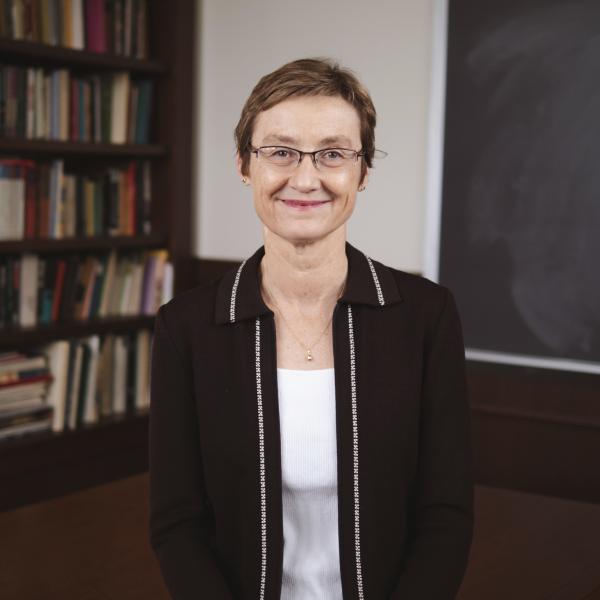
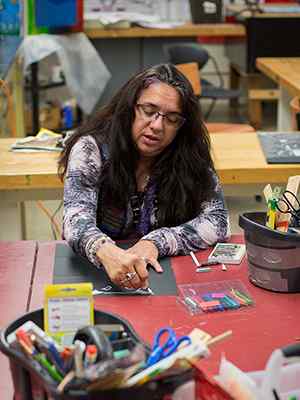
Lori Escallier, PhD, RN, CPNP-PC, FAAN is a Professor and Dean at the College of Nursing, Downstate Health Sciences University. With over 36 years of experience in nursing education, she is recognized nationally for developing innovative mentorship models and educational engagement strategies that have significantly impacted underrepresented and minority nursing students. Academic Qualifications BSN from Salve Regina College (1980) MSN from SUNY Stony Brook (1988) PhD from Adelphi University (1995) Her research focuses on diversifying the nursing workforce, addressing healthcare disparities, and leveraging veteran experiences in academic settings. She pioneered the Veteran to BS Program, translating military experience into academic credit, and co-authored the award-winning RWJF/AACN Transition to Practice Toolkit. Scientific Awards RWJF Innovation Award Above and Beyond Award (2015) Fellow of the American Academy of Nursing (FAAN) Her publications emphasize nurse mentorship, veteran healthcare transitions, and digital tools for reducing disparities. She has secured over $9M in grants from RWJF and HRSA to support these initiatives.
Yasmin B. Kafai is the Lori and Michael Milken President's Distinguished Professor at the University of Pennsylvania's Graduate School of Education. Her work focuses on empowering students through computational tools such as Scratch, electronic textiles, and biomaking, aiming to broaden participation in computing and promote equity in STEM education. Affiliations: Editor of the Journal of the Learning Sciences Former President of the International Society of the Learning Sciences Recipient of NSF Early Career Award and Rosenfield Community Prize Her research explores youth engagement with digital media, including gaming, coding, and creative technologies. She co-developed Scratch, a foundational platform for youth programming, and pioneered curricula integrating electronic textiles and biodesign in K-12 education. Key contributions include analyzing the societal impacts of virtual worlds, algorithmic literacy, and culturally responsive pedagogy. Publications & Awards: Author of award-winning books like Connected Gaming and Makeology Contributed to national policy reports, including the 2010 U.S. Department of Education's National Educational Technology Plan Recognized as a Fellow of the American Educational Research Association Her outreach initiatives include mentoring partnerships with the City of Los Angeles and collaborations with community tech centers like the Computer Clubhouse network. Current projects emphasize algorithmic justice, AI literacy, and equity-focused maker education.
Loris D'Antoni is an Associate Professor in the Department of Computer Science and Engineering at the University of California at San Diego (UCSD) . He is also a Visiting Academic at Amazon Web Services (AWS) . His research focuses on helping people write trustworthy software through techniques in program synthesis, formal verification, and machine learning robustness. Bachelor and Master in Computer Science from University of Torino (2008, 2010) PhD in Computer Science from University of Pennsylvania (2015) His research integrates programming languages , automata theory , and formal methods to ensure software reliability. Recent work explores semantics-guided synthesis and specification-aligned LLMs , with applications in network security, machine learning fairness, and automated code repair. Key trends in his publications include program synthesis , formal verification , and trustworthy AI systems . He has contributed to tools like AutomataTutor and SemGuS , a framework for customizable synthesis problems using constrained Horn clauses. Phillip R. Certain-Gary D. Sandefur Distinguished Faculty Award NSF CAREER Award Microsoft Research Faculty Fellowship Google and Facebook Faculty Awards Best Paper Award at ICDCN 2023 Distinguished Paper Award at SBES 2021 D'Antoni actively contributes to academic community service as a committee member in PLDI , OOPSLA , POPL , and CAV . He leads the Programming Systems Group at UCSD and collaborates with SemGuS research team on synthesis frameworks.
Lori Snyder Bennear is a Professor of Environmental Economics and Policy at Duke University’s Nicholas School of the Environment, where she also serves as Interim Dean. She holds secondary appointments in the Sanford School of Public Policy and the Department of Economics (Trinity College of Arts & Sciences). Her work focuses on evaluating environmental policies, particularly their effectiveness, strategic responses, distributional impacts, and adaptability. Bennear earned a Ph.D. in Public Policy from Harvard University (2002), an M.A. in Economics from Yale (1996), and a B.A. in Economics and Environmental Studies from Occidental College (1995). Research & Grants Grants include NSF-funded studies on drinking water disclosure and NOAA-supported research on Gulf of Mexico fisheries. Explores energy justice, decarbonization, and the economic impacts of ecological disturbances like hypoxia. Professional Activities Leadership in Bass Connections projects addressing energy transitions and environmental justice. Service roles include Theme Leader for Energy & Environment at Duke and participation in National Academies committees on offshore drilling and pipeline safety. Awards & Recognition Recipient of multiple teaching awards (2010, 2010). Named Juli Plant Grainger Associate Professor (2018–2023) and appointed Stanback Dean (2025). Teaching Teaches graduate courses on energy economics and policy, including ENVIRON 635 and ECON 530.
Dr. Holger Scheib is an Honorary Associate Professor in the School of the Environment at The University of Queensland. His research focuses on venom evolution, toxinology, and biomedical applications, particularly in reptiles, cnidarians, and other venomous organisms. He collaborates extensively with international researchers on projects involving venom structure-function relationships, evolutionary biology, and clinical implications of venom variation. Research interests span venom evolution, toxin structure and function, and their applications in biomedical contexts. He investigates venom diversity across species, including reptiles, sea anemones, and cnidarians, focusing on how these toxins interact with biological systems. His work also explores the intersection of venom components with allergens and their structural similarities, contributing to a deeper understanding of venom’s ecological and medical significance. His recent publications highlight advancements in understanding venom evolution, toxin structures, and clinical implications. Studies include comparisons of venom proteins with allergens, analyses of venom variation in rattlesnakes, and investigations into the molecular mechanisms of bacterial secretion systems. These works contribute to both basic biological research and potential applications in medicine and biodiscovery. No scientific awards or grants are explicitly mentioned in the provided text. Dr. Scheib’s research is primarily conducted through collaborations within the School of the Environment and international academic networks. No specific lab or team affiliations are detailed.
Lori Passmore is a Research Fellow at the Medical Research Council Laboratory of Molecular Biology (MRC-LMB), part of the University of Cambridge's School of Clinical Medicine. Her work focuses on understanding the molecular mechanisms of multi-protein complexes involved in gene expression regulation and DNA repair. Studied pre-mRNA 3′-end processing via the Cleavage and Polyadenylation Factor (CPF) complex Investigated DNA crosslink repair through the Fanconi Anemia pathway Developed cryo-EM methodologies for structural analysis Her laboratory employs a hybrid approach combining electron cryo-microscopy , X-ray crystallography, biochemical assays, and genetic techniques to elucidate complex architectures and functional dynamics. Notable discoveries include structural insights into the FANCD2-FANCI complex and mechanisms of poly(A) tail length regulation. Current research spans topics such as: 3′-end processing coordination mRNA deadenylation pathways DNA replication stress responses Protein complex assembly principles Lori Passmore's group includes trainees and staff studying these fundamental biological processes. Their work contributes to understanding gene regulation, RNA metabolism, and DNA repair mechanisms critical for preventing diseases like cancer.
Lori Sisk is an Associate Professor of Teaching in Global Supply Chain Management at the Mike Ilitch School of Business, Wayne State University. She brings over 28 years of industry and consulting experience in supply management to her academic role, where she teaches strategic procurement, operations, and supply chain courses. She also serves as Program Coordinator for the WSU/AIAG Supply Chain Certificate Program, Advisor to student organizations, and member of multiple academic and industry committees. Education: MBA, Bowling Green State University BSBA, Bowling Green State University (Major: Procurement) CPSM, Institute of Supply Management Six Sigma Green Belt Certified, Delphi Corporation Lori's teaching and research focus on applied, experiential learning in supply chain and procurement. Her courses emphasize solving real-world business problems, and she integrates industry challenges into classroom learning. Her research interests include applied decision-making tools for supply chain executives, strategic sourcing, risk management, and lean operations. She is passionate about preparing students for careers in supply chain through hands-on education and mentorship. Her publications reflect a practitioner-oriented approach, covering topics such as crisis recovery, strategic sourcing, and total cost of ownership. The articles show a consistent focus on operational resilience, cost optimization, and strategic procurement across manufacturing and global supply chains. Scientific Awards: Inspirational Teacher of the Year Award, Wayne State University (2019) Service Award, Wayne State University Mike Ilitch School of Business (2020) Teacher of the Year Award, Denver Transportation Club (2018) Leadership District Person of the Year, ISM Public Relations District Person of the Year, ISM Troy Volunteer of the Year Award (nominated, 2020) Lori is deeply involved in academic and industry service. She advises student organizations including the Global Supply Chain Management Association (GSCMA) and Warrior Consulting Group (WCG). She co-leads the Supply Chain Advisory Council and is a member of the AIAG SC Steering Committee. She has delivered over 200 training sessions for professionals at global automotive OEMs and aerospace firms and has presented at international conferences including ISM, APICS, and PMAC. She has also developed and delivered curriculum for the AIAG/WSU Automotive Supply Chain Certificate Program since 2013. Lori leads initiatives that bridge academia and industry, particularly through the WSU/AIAG partnership. She has designed and facilitated workshops for suppliers and corporate teams on JIT, cost reduction, and risk management. Her work enhances workforce development and strengthens industry-academic collaboration in supply chain education.
Andrea L. Eisfeldt holds the Laurence D. and Lori W. Fink Endowed Chair in Finance and serves as Professor of Finance at UCLA Anderson School of Management, where she has been teaching since 2010. Prior to UCLA, she spent 10 years as an assistant professor and then tenured associate professor at Northwestern University's Kellogg School of Management. Her educational background includes: Ph.D. Economics (2000), University of Chicago M.A. Economics (2000), University of Chicago B.S. Economics with highest honors (1994), University of Illinois, Urbana-Champaign Eisfeldt's research focuses on the intersection of financial markets and macroeconomics, with particular expertise in market liquidity, intangible assets valuation, bank valuation, and over-the-counter markets. Her recent work examines how equity-based pay impacts measures of labor share and income/wealth inequality, challenging conventional wisdom about technological progress and economic disparity. She has conducted significant research on how equity compensation for non-executive employees affects standard labor compensation data and conclusions about income distribution. Her scholarly contributions have earned recognition through prestigious awards: Smith Breeden Distinguished Paper prize (2004) Jensen Prize (second place, 2008) Smith Breeden First Place Paper award (2013) Amundi Smith Breeden prize (twice) Edwin Mills best paper award from Real Estate Economics Research grants from National Science Foundation and Banque de France Eisfeldt maintains significant professional engagement beyond academia, having served on the board of the American Finance Association (Investments, Strategic Planning and Ethics Committees), currently serving on the UCLA Investment Company board, and acting as academic advisor to Vise, a FinTech investment management firm. Her research on valuing intangible assets informs institutional investment portfolios and the Simplify NEXT Suite of ETFs. She has held industry positions including Chief Economist at Structured Portfolio Management and consultant to AQR Capital Management, demonstrating her commitment to bridging academic research with practical applications in asset management.
Lori L. Holt is a Professor of Psychology at the University of Texas at Austin (UT-Austin), where she leads the Holt Lab. Previously, she served as faculty at Carnegie Mellon University (1999–2023), contributing to the Center for the Neural Basis of Cognition. Her research focuses on auditory cognitive neuroscience, exploring how learning, attention, and neural mechanisms shape speech perception and communication. She holds a BS and PhD in Psychology from the University of Wisconsin-Madison (1995, 1999). Her work investigates the neural foundations of listening, emphasizing adaptive plasticity in speech perception, statistical learning dynamics, and the interplay between sensory input and cognitive processes. Recent studies examine how short-term sound statistics influence perceptual weighting, the impact of accent exposure on speech production, and neural correlates of auditory category learning. The Holt Lab, equipped with EEG facilities, advances understanding of voice perception, speech motor control, and neurocognitive adaptation. Dr. Holt teaches courses such as Behavioral Neuroscience (PSY 332) and Biopsychology (PSY 308), reflecting her expertise in linking biological mechanisms to psychological processes. Her research has been published in leading journals, with a focus on auditory neuroscience, statistical learning, and neurorehabilitation.
Dr. Lori McKee is an Associate Professor and Graduate Chair in the Department of Curriculum Studies at the University of Saskatchewan's College of Education. With 20 years of elementary teaching experience, her work bridges classroom practice and academic research in literacies, pedagogies, and teacher professional learning. She specializes in multimodal pedagogies, intergenerational learning, and equity-centered literacy instruction. Education: Ph.D. in Multimodal Pedagogies, Western University (2018) M.Ed. in Multiliteracies and Multilingualism, Western University (2013) B.Ed. in Primary-Junior Education, Queen’s University (1997) B.A.Sc. in Child Studies, University of Guelph (1996) Research Interests: Dr. McKee’s research focuses on literacies education across diverse contexts, including: Intergenerational learning programs connecting elders and children Equitable pedagogical strategies for literacy instruction Professional development for teacher educators Integration of digital and multimodal tools in teaching Teaching Contributions: She teaches graduate courses in curriculum research and project design, as well as undergraduate courses in elementary English Language Arts and literacy assessment. Her pedagogy emphasizes reflective practice and adapting instruction to contemporary educational challenges. Collaborations: Engages with schools, elder care facilities, and teacher communities to co-design curricula. Active in national and international research networks, including the Reading Pedagogies of Equity Project.
Lori Beth De Hertogh is an Associate Professor and Director of the WRTC Graduate Program at James Madison University (JMU), where she has been since 2016. She holds a Ph.D. in English with a specialization in Scientific and Technical Communication from Washington State University (2015), an M.A. from Appalachian State University (2008), and a B.A. from the University of Southern Mississippi (2004). Her research focuses on healthcare communication, women’s health, scientific and technical writing, content strategy, and project management. She explores feminist approaches to health communication, digital rhetorics, and participatory pedagogy. Her work frequently intersects with reproductive justice, feminist health literacy, and intersectional methodologies. Her publications include contributions to journals such as Rhetoric of Health & Medicine , Reflections , and Peitho , where she examines topics like feminist digital methodologies and rhetorics of reproductive justice. She also co-edited special issues on these themes. Her research highlights the ethical implications of health communication and the role of technology in feminist activism. No scientific awards are explicitly listed in the provided text. While her advising and grant activities are not detailed here, her work emphasizes collaborative projects and community engagement. She is affiliated with the School of Writing, Rhetoric, and Technical Communication at JMU and maintains a professional presence on LinkedIn.
Dr. Lori Watt is Associate Professor of History and Global Studies at Washington University in St. Louis. Her scholarship examines 20th-century Japanese history with focus on empire dissolution, decolonization processes, and Allied-managed population transfers following World War II. Her award-winning book When Empire Comes Home analyzes repatriation and social reintegration in postwar Japan. Current research investigates the dismantling of Japan's settler colonial project under American occupation, exploring how humanitarian efforts shaped emerging concepts of sovereignty and human rights. Watt's work illuminates connections between decolonization, international humanitarianism, and the formation of ethno-national states. She welcomes doctoral students researching political and social history of modern Japan, particularly empire transitions and internationalism.
Lori Graham-Brady is a Professor in the Department of Civil and Systems Engineering at Johns Hopkins University's Whiting School of Engineering. She serves as Vice Dean for Faculty and directs the Center on AI for Materials in Extreme Environments (CAIMEE), while also holding secondary appointments in Mechanical Engineering and Materials Science and Engineering. Her research focuses on stochastic mechanics, multiscale modeling, and machine learning applications for understanding material variability under extreme conditions. Research areas include probabilistic mechanics, AI-driven materials design, and fragmentation modeling. Leadership roles: Director of CAIMEE, former Director of Center for Materials in Extreme Dynamic Environments, founding Director of HT-MAX, and founding Associate Director of HEMI (2012-2024). Education: PhD in Civil Engineering and Operations Research from Princeton University. Her recent work emphasizes AI for multiscale mechanics, error propagation in material characterization, and digital microstructure generation. Publications highlight stochastic modeling of ceramics, composites, and metals under impact and high-strain-rate loading. Scientific awards include the Presidential Early Career Award, Huber Civil Engineering Research Prize, and Fellowships in ASCE EMI and USACM. She led NSF IGERT programs and serves as Associate Editor for the ASCE Journal of Engineering Mechanics.
Lori Santos is an Associate Professor of Art Education at Wichita State University's College of Fine Arts, within the School of Art, Design and Creative Industries (ADCI). Her work emphasizes inclusive pedagogical practices, encouraging students to engage as community agents through creative projects. She focuses on cultural curriculum development, cross-cultural and indigenous arts, diversity in teacher training, and social justice theories in art education. Her research and teaching span museums, community centers, schools, and universities. She actively participates in national and state art education conferences, including those organized by NAEA and UAEA. Santos' recent scholarship includes a collaborative article in the 2019 Visual Arts journal and a chapter in the 2018 NAEA publication Culturally Sensitive Art Education in a Global World: A Handbook for Teachers . She has received the UAEA Art Education Higher Educator Award for her contributions in Utah, reflecting her impactful work in multicultural and community-driven art education.
Lori Rosenkopf serves as the Simon and Midge Palley Professor and Vice Dean of Entrepreneurship at the Wharton School of the University of Pennsylvania, where she also directs Venture Lab and Wharton San Francisco. Since joining the faculty in 1993, she has held key leadership roles including Vice Dean of the Undergraduate Division (2013-2019), during which she redesigned curricula and expanded student pathways while receiving the David Hauck Teaching Award. Her academic credentials include a B.S. in Operations Research and Industrial Engineering from Cornell University, an M.S. in Operations Research from Stanford University, and a Ph.D. in Management of Organizations from Columbia University, preceded by industry experience at Eastman Kodak and AT&T Bell Laboratories. Rosenkopf's research investigates knowledge flows in technological communities across high-tech industries, with core interests in innovation diffusion, interorganizational networks, and evolutionary dynamics. Her recent work bridges academic theory and practice through entrepreneurship studies, culminating in the 2025 book Unstoppable Entrepreneurs which identifies seven distinct entrepreneurial pathways beyond Silicon Valley stereotypes. Analysis of her publication history reveals consistent focus on network structures, technological evolution, and strategic decision-making across top journals like Strategic Management Journal and Organization Science , with increasing emphasis on practical entrepreneurship frameworks since 2020. Her scientific recognition includes: Fellow of the Academy of Management (2023) Wharton Teaching Excellence Award (2018-2020) Elected member of Macro-Organizational Behavior Society (2008) Best Management Paper Award, SDA Bocconi (2007) David Hauck Award for Outstanding Undergraduate Teaching (2006) In advising and institutional leadership, Rosenkopf mentors through Venture Lab's startup incubator supporting over 20,000 students, serves as Faculty Director for Wharton San Francisco, and contributes to national policy as a National Academy of Sciences consultant. Her editorial roles include Senior Editor at Organization Science and leadership in the Academy of Management's Technology and Innovation Management Division. She actively shapes entrepreneurial ecosystems through Venture Lab's accelerator programs and Wharton San Francisco's executive education initiatives, while her research on network dynamics informs both academic theory and practical venture development strategies.