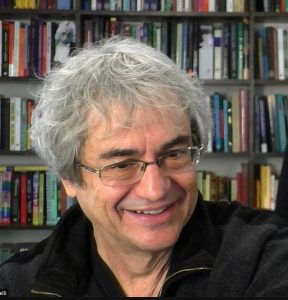
Carlo Rovelli is a Professeur de classe exceptionnelle in the Department of Physics at Aix-Marseille University, holding adjunct roles at Western University's Department of Philosophy and a Distinguished Visiting Research Chair at the Perimeter Institute. He founded the quantum gravity group at the Centre de Physique Théorique (CPT) and is an associate member of the Rotman Institute of Philosophy. His research focuses on loop quantum gravity, relational quantum mechanics, and the history/philosophy of science. He authored influential popular science books including Seven Brief Lessons on Physics (41 languages, 1M+ copies sold) and Helgoland: Making Sense of the Quantum Revolution . Rovelli's work bridges theoretical physics with philosophical inquiry, exploring foundational questions in quantum mechanics, spacetime structure, and the interpretation of physical theories. His recent publications address topics like quantum information theory, gauge symmetries, black hole evaporation, and cosmological implications of quantum gravity.
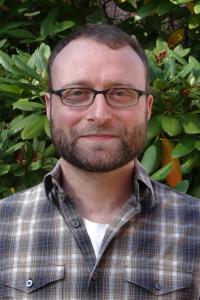
Tim Cohen is an Associate Professor of Physics at the University of Oregon, with affiliations at CERN and EPFL's Lausanne Theory Physics Laboratory. He is based at the Institute for Fundamental Science within the Department of Physics at the University of Oregon's College of Arts and Sciences. His research focuses on theoretical particle physics, particularly exploring phenomena beyond the Standard Model. Dr. Cohen's research interests center on particle physics beyond the Standard Model, with specific expertise in Large Hadron Collider phenomenology, effective field theory, electroweak naturalness, and dark matter. His work bridges theoretical frameworks with experimental possibilities at major particle physics facilities. His research program encompasses both theoretical developments in quantum field theory and practical applications to collider physics and cosmology. Analysis of his recent publications reveals a strong focus on effective field theory applications, de Sitter space physics, and dark sector phenomenology. His work demonstrates sophisticated mathematical approaches to problems in quantum field theory while maintaining connections to observable phenomena at particle colliders and in cosmological settings. He frequently collaborates with researchers across institutions including CERN, EPFL, and various US universities. Dr. Cohen serves as a senior researcher with active roles at multiple institutions, contributing to major collaborative efforts such as the Snowmass community planning process for particle physics. His work appears in leading journals including Journal of High Energy Physics, Physical Review D, and Physics Letters B, demonstrating consistent productivity and impact in the field. His research group operates within the Institute for Fundamental Science at the University of Oregon, with additional connections to theoretical physics groups at CERN and EPFL. This international collaboration network enables him to work at the intersection of theoretical developments and experimental frontiers in particle physics.
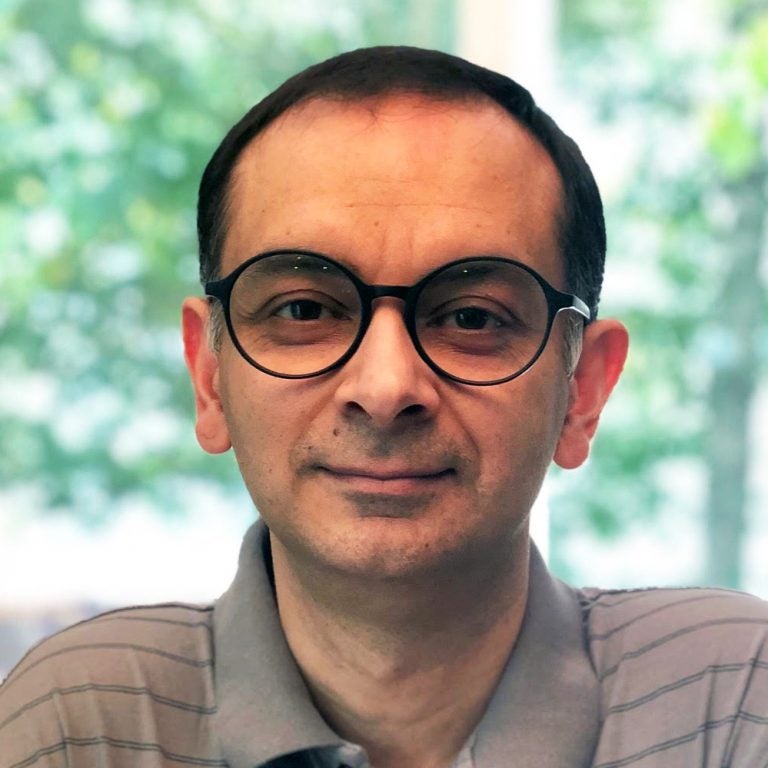
Professor Kellogg Stelle is a distinguished academic in the Department of Physics at Imperial College London, affiliated with the Faculty of Natural Sciences. He holds the title of Professor of Physics and is part of research groups including the Physics of Universe and Theoretical Physics. His academic career includes a PhD from Brandeis University (1972–1977) and an AB in History and Science from Harvard University (1966–1970). His research focuses on Atomic, Molecular, Nuclear, Particle and Plasma Physics; Mathematical Physics; Quantum Physics; Astronomical and Space Sciences; Pure and Applied Mathematics. He has made significant contributions to supergravity, string theory, and cosmology, exploring topics like higher-order gravity, braneworld models, and quantum gravity phenomena. His work often bridges theoretical frameworks and cosmological implications, emphasizing unification theories and symmetry principles. Professor Stelle’s publications reflect a deep engagement with advanced topics such as compactification on Calabi-Yau manifolds, localized gravity in braneworld scenarios, and the ultraviolet problem in supergravity. His research often intersects with cutting-edge areas like quantum geometry and holography, contributing to foundational debates in theoretical physics. Affiliations include the Physics of Universe and Theoretical Physics groups at Imperial College, reflecting his interdisciplinary approach to fundamental physics. He is fluent in French, Russian, Italian, and German, enhancing his international collaborations.
Antonio Vairo is a full Professor at the Department of Physics, TUM School of Natural Sciences, Technical University of Munich, where he holds the Chair of Theoretical Physics - Applied Quantum Field Theory (T39) at the James-Franck-Str. 1/I campus in Garching bei München. His research focuses on the theoretical foundations of quantum chromodynamics with emphasis on heavy quark systems and non-perturbative phenomena. Professor Vairo's primary research interests include Quantum Chromodynamics (QCD), Heavy Quark Physics, Lattice Gauge Theory, Effective Field Theories, and Exotic Hadron Spectroscopy. His work bridges computational approaches with analytical frameworks to investigate quarkonium dynamics in extreme environments like the quark-gluon plasma, while developing novel applications of Born-Oppenheimer effective theory to multi-quark systems. Recent investigations extend into dark matter bound state formation in the early universe, demonstrating interdisciplinary reach across particle physics and cosmology. Analysis of his 2024-2025 publications reveals three dominant research thrusts: (1) quarkonium suppression mechanisms in heavy-ion collisions using open quantum systems approaches, (2) high-precision lattice QCD computations of static forces and chromoelectric correlators, and (3) systematic development of effective field theories for exotic hadrons and dark matter pairs. His work on pNRQCD (potential non-relativistic QCD) provides critical connections between lattice results and experimental observables in heavy-ion physics. Professor Vairo maintains active research leadership through collaborations with international groups including the Belle II experiment, as evidenced by his contributions to 'The Belle II Physics Book'. His methodological innovations in applying quantum trajectory methods to quarkonium evolution and developing FeynOnium computational tools for effective field theories demonstrate significant technical contributions to the field. Current research directions emphasize next-to-leading order corrections in heavy quark dynamics and Debye mass effects in dark matter bound state formation.
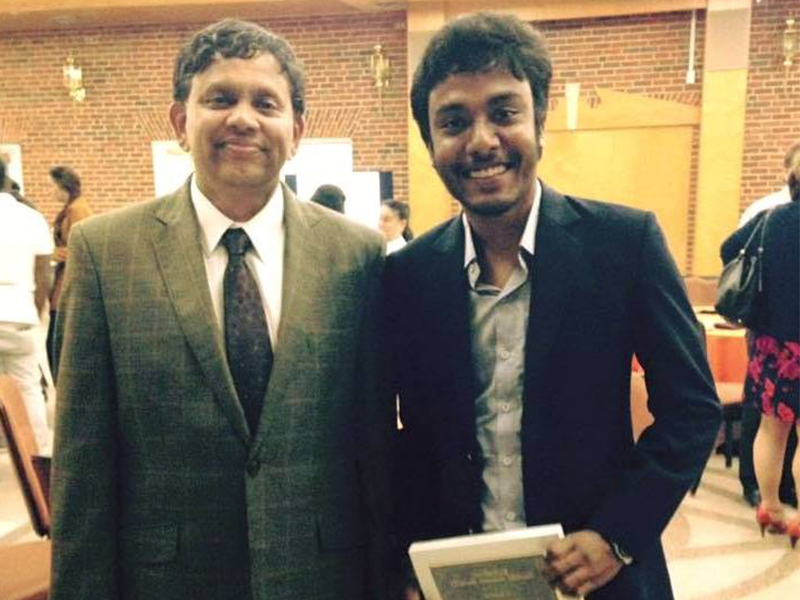
Gaurav Khanna is a Professor in the Department of Physics at the University of Rhode Island (URI) and serves as the Director of Research Computing at URI. He is a key member of the UMass-URI Gravity Research Consortium (U²GRC), a collaborative effort between the gravity research groups at URI and the University of Massachusetts Dartmouth focused on gravitational physics research. Dr. Khanna earned his Ph.D. in Physics from Pennsylvania State University in 2000 and his B.Tech. in Electrical Engineering from the Indian Institute of Technology Kanpur, India in 1995. His academic journey reflects a strong foundation in both theoretical physics and engineering principles that inform his current research. His primary research focuses on theoretical and computational aspects of gravitational physics, particularly the coalescence of binary black hole systems using perturbation theory and estimation of emitted gravitational radiation properties. This work is directly relevant to the NSF LIGO laboratory and upcoming space-borne gravitational wave detection missions. His research spans black holes, gravitational waves, quantum gravity, and high-performance scientific computing. Dr. Khanna has developed advanced computational techniques for modeling extreme mass ratio inspirals and has made significant contributions to understanding black hole singularities in both classical and quantum gravity frameworks. Dr. Khanna has published nearly 100 research papers in top international journals and secured over $2 million in research funding. His work has been featured in prominent media outlets including Nature Magazine, Quanta Magazine, and Physics World. He has advised numerous graduate students, with Tousif Islam (Ph.D. '24) receiving an honorable mention in the GWIC-Braccini Thesis Prize, and Som Bishoyi earning UMass Dartmouth's Research in the Media Award. American Physical Society Fellow As Director of Research Computing, Dr. Khanna oversees high-performance computing resources and provides expertise in parallel and scientific computing. His work with the U²GRC involves collaboration with major research groups including the Simulating Extreme Spacetimes (SXS) Collaboration, Kavli Institute for Astrophysics at MIT, Black Hole Initiative at Harvard, and the Max Planck Institute for Gravitational Physics in Germany. The consortium's research is funded through multiple National Science Foundation grants, NASA, and private foundations.
K.S. Babu, Ph.D. , is a Regents Professor in the Department of Physics at Oklahoma State University . His research focuses on theoretical physics beyond the Standard Model, particularly in neutrino mass models, grand unification, and baryon/lepton number violation. Email: kaladi.babu@okstate.edu Contact: 405-744-5810 | 232 Physical Sciences, OSU Dr. Babu's work spans several key areas: Grand Unified Theories (GUTs): Studies of SO(10), SU(5), and E6 unification frameworks. Neutrino Physics: Development of models like the Zee-Babu mechanism for neutrino masses and research on oscillations. Dark Matter & Cosmology: Proposals for dark matter candidates and connections to inflation and baryogenesis. CP Violation & Leptogenesis: Mechanisms for generating matter-antimatter asymmetry. His recent publications highlight advancements in: Spontaneous CP violation in SO(10) (2025) Left-right symmetric models for leptogenesis (2025) Ultraviolet-completed two-loop neutrino mass models (2025) Probing baryon number violation at IceCube and LHC (2024) Accidental Peccei-Quinn symmetry for axion models (2024) Dr. Babu actively collaborates on international initiatives such as the Center for Theoretical Underground Physics (CETUP) and contributed to the Snowmass 2013 Community Planning Study. His lab has mentored numerous graduate and postdoctoral researchers, including Kirtiman Ghosh, Sudip Jana, and Shaikh Saad.
Professor Ivo Sachs is a distinguished theoretical physicist at the Ludwig-Maximilians-Universität München (LMU), where he holds a position at the Arnold Sommerfeld Center for Theoretical Physics with a Chair on Cosmology. His research spans multiple areas of theoretical physics with a particular focus on string theory, quantum field theory, and cosmological applications. He maintains an active research program with numerous recent publications in prestigious journals. Professor Sachs' research interests center around fundamental theoretical physics, with significant contributions to string field theory, cosmological perturbation theory, and the mathematical structures underlying quantum gravity. His work often bridges abstract mathematical concepts with physical applications, particularly in understanding the early universe and quantum aspects of gravity. He has developed innovative approaches to studying cosmological correlators, spinning particles, and the relationship between quantum field theory and gravitational physics. Analysis of his recent publications reveals a strong focus on the intersection of cosmology and string theory, with particular attention to mathematical structures in quantum gravity. His work demonstrates consistent exploration of how quantum field theory techniques can be applied to cosmological problems, especially regarding correlation functions in the early universe. He frequently collaborates with researchers across Europe, indicating an active international research network. Martín Enríquez Rojo (PhD, 2022): Asymptotic symmetries in FLRW and deformations of gravitational symmetry algebras
Claus Kiefer is a Professor at the University of Cologne, affiliated with the Mathematical Institute. His research focuses on quantum gravity, cosmology, and the interplay between quantum mechanics and general relativity. He holds a PhD from Heidelberg University (1988) and has been a faculty member at Cologne since 2001. Kiefer's work explores foundational questions in quantum cosmology, black hole physics, and the emergence of classical behavior from quantum systems. He has contributed to topics like gravitational collapse, time's arrow, and wormhole dynamics. His publications span theoretical frameworks, including quantum geometrodynamics and modified gravity theories. Kiefer has collaborated extensively with researchers globally and edited volumes honoring pioneers in the field. His research bridges mathematical rigor and physical interpretations, addressing challenges in unifying quantum theory with gravity.
Professor James Drummond is a leading theoretical physicist affiliated with the School of Physics and Astronomy at the University of Southampton . His research spans quantum field theory, string theory, and integrable systems, with a focus on scattering amplitudes and holography. He is a member of the Southampton High Energy Physics (SHEP) group and the Southampton Theory Astrophysics and Gravity (STAG) Research Centre , contributing to interdisciplinary projects on particle physics, cosmology, and gravity. His recent work addresses quantum gravity, AdS/CFT correspondence, and mathematical structures in field theory. Research Interests Quantum field theory String theory Scattering amplitudes Integrable systems Holography Mathematics of quantum field theory Awards ERC Consolidator Grant (648630, 2015-2021) Advising : Supervising current PhD students in physics, including Matthew Anthony Ward, Pratyusha Chowdhury, Rowan Wright, Matthew Joseph Rochford, and Yuheng Lin. Labs & Teams : Active in the SHEP and STAG research groups, collaborating on projects funded by the Science and Technology Facilities Council and European Union grants.
Nishant Agarwal is an Associate Professor in the Department of Physics & Applied Physics at the University of Massachusetts Lowell (UML). He is affiliated with the Kennedy College of Sciences, contributing to theoretical cosmology and quantum field theory research. His academic background includes a Ph.D. in Astronomy and Space Sciences from Cornell University (2011), and prior degrees from institutions like the Indian Institute of Technology Kanpur and St. Stephen's College, Delhi. Agarwal's research focuses on theoretical cosmology, particularly inflationary models, dark energy, quantum field theory in curved spacetime, and large-scale structure formation. His work explores the interplay between quantum mechanics, gravity, and cosmological observations, with contributions to understanding cosmic microwave background anisotropies and non-Gaussian features in the early universe. His publications span topics ranging from open quantum cosmological systems to constraints on massive gravity theories, reflecting his expertise in both theoretical frameworks and observational implications. Notable contributions include studies on cosmic expansion dynamics and the development of novel methods for analyzing large-scale structure surveys. Education: Ph.D., Astronomy and Space Sciences, Cornell University, 2011 M.S., Astronomy and Space Sciences, Cornell University, 2009 M.S., Physics, Indian Institute of Technology Kanpur, 2006 B.S., Physics, St. Stephen's College, Delhi University, 2004 Agarwal has received several honors, including the Institute for Gravitation and the Cosmos Postdoctoral Fellowship (2014) and a Gravity Research Foundation essay award (2013). His research is supported by grants such as the Templeton Foundation-funded 'CosmoArchaeology: Digging for the Initial State' (2012), emphasizing interdisciplinary exploration of cosmic origins. His work bridges fundamental physics and cosmological observations, with ongoing projects addressing quantum gravitational effects, early universe dynamics, and observational tests of gravity theories. Agarwal collaborates widely, contributing to initiatives like the Sloan Digital Sky Survey III and advancing theoretical methods in cosmology.
David Lowe is a Professor of Physics at Brown University, where he has been a faculty member since 1997. His academic journey includes a B.A. and M.A. from Cambridge University and a Ph.D. in theoretical physics from Princeton University (1993), followed by postdoctoral research at UC Santa Barbara and Caltech. His research focuses on string theory applications to gravitational physics , particularly black hole thermodynamics, quantum gravity, and cosmological implications of holographic principles. Key contributions include foundational work on AdS/CFT correspondence, black hole information paradox resolution, and de Sitter space holography. His publications span high-impact journals including Journal of High Energy Physics and Physical Review D , with recent emphasis on quantum information aspects of black holes. Richard B. Salomon Faculty Research Award BSF Research Grant NSF Travel Award Lowe has maintained extensive international collaborations, holding visiting positions at U. Tokyo, Max Planck Institute, CINVESTAV, KITP, and Aspen Center for Physics. His teaching portfolio includes graduate courses in general relativity, quantum field theory, and advanced electrodynamics, reflecting his expertise in theoretical physics.
Anastasia Volovich is a Professor of Physics at Brown University, specializing in theoretical physics with a focus on quantum field theory, string theory, general relativity, and their mathematical foundations. Her research explores hidden mathematical structures in scattering amplitudes to advance understanding of gauge and gravity theories. B.A. and M.A. in Physics, Moscow State University (1999) Ph.D. in Theoretical Physics, Harvard University (2002) Her work on scattering amplitudes involves cluster algebras, polylogarithms, and celestial holography. Recent publications address symbol alphabets, Landau singularities, and Yangian invariants in high-energy physics. Notable honors include: APS Fellowship (2019) IBM Einstein Fellowship (2017) Blavatnik National Finalist (2016-2018) Simons Investigator Award (2015) DOE Early Career Award (2011) NSF CAREER Award (2007) White House PECASE (2008) She has held editorial roles at Letters in Mathematical Physics and Physics Letters B , and her research is funded by the Department of Energy and Simons Foundation.
Andrew F. Heckler is a Professor and Vice Chair for Administration in the Department of Physics at The Ohio State University, within the College of Arts and Sciences. He holds a B.S. in Physics from Ohio State (1986) and a Ph.D. in Physics from the University of Washington (1994). His research focuses on Physics Education Research and Astrophysics/Cosmology, emphasizing cognitive processes in STEM learning, assessment methodology, and educational equity. Key areas include student response time analysis, mastery-based learning, and curriculum design. He leads initiatives in digital education tools, such as online vector practice platforms and equitable assessment instruments. His work explores how self-efficacy and social comparison impact academic performance, particularly in physics courses. Heckler has developed frameworks to improve graduate-level physics instruction, addressing misconceptions in quantum mechanics and materials science. Publications highlight analysis of procrastination patterns, pandemic-era digital divides, and the role of concreteness in educational examples. His research bridges educational psychology with physics pedagogy, aiming to enhance student success through evidence-based interventions. He actively contributes to national projects like QuSTEAM, advancing quantum information science education.
Keith Olive is a Distinguished McKnight University Professor in the School of Physics and Astronomy at the University of Minnesota, holding the Gloria Becker Lubkin Chair in Theoretical Physics at the William I. Fine Theoretical Physics Institute and serving as a Member of the Minnesota Institute for Astrophysics. His work bridges fundamental particle physics with cosmological phenomena, addressing core questions about the universe's origin and structure. Professor Olive's research spans cosmology and particle physics , with primary focus on big bang nucleosynthesis (explaining light element formation up to 7Li), particle dark matter , big bang baryogenesis (resolving matter-antimatter asymmetry), and inflation theory (solving standard cosmology's outstanding problems). His theoretical frameworks integrate supersymmetry, grand unified theories, and early universe dynamics to model cosmic evolution from primordial conditions. Recent publications (2024-2025) reveal concentrated exploration of dark matter detection mechanisms, inflationary model refinements, and string theory-cosmology intersections. Key trends include gravitational portal dynamics during reheating, R²-inflation derived from 4D string frameworks, curvaton behavior post-Planck data, and electroweak corrections in wino dark matter detection—highlighting his leadership in connecting quantum gravity, particle phenomenology, and observational cosmology. Honors include: Distinguished McKnight University Professor Gloria Becker Lubkin Chair in Theoretical Physics Professor Olive actively mentors graduate researchers and leads the DOE-funded project "Theoretical High Energy Physics at the University of Minnesota" (2014-2026), securing $X million for dark matter and particle cosmology research. This initiative fosters collaboration with co-investigators Gherghetta, Peloso, and Voloshin across theoretical frameworks and observational constraints. He directs research within the William I. Fine Theoretical Physics Institute and Minnesota Institute for Astrophysics, coordinating the High Energy Theory group and Particle Data Group contributions. These teams drive interdisciplinary work connecting string theory, collider physics, and cosmic microwave background analysis to decode fundamental universal laws.
Dr. Debtosh Chowdhury is an Assistant Professor in the Department of Physics at the Indian Institute of Technology Kanpur, where he has been serving since January 2020. His research focuses on theoretical particle physics, cosmology, and astroparticle physics, with particular expertise in Standard Model phenomenology. Dr. Chowdhury received his educational qualifications as follows: PhD from Indian Institute of Science, Bangalore, India (2013) MS from Indian Institute of Science, Bangalore, India (2009) B.Sc. from Scottish Church College, University of Calcutta, Kolkata, India (2007) Dr. Chowdhury's research spans theoretical particle physics with a focus on beyond Standard Model physics, dark matter phenomenology, and connections to cosmology. His work bridges high-energy theory with potential experimental signatures at colliders like the LHC. He has made significant contributions to understanding constraints on supersymmetric models, dark matter candidates, and the theoretical consistency of particle physics models in light of quantum gravity considerations. His research often involves precision calculations at multiple loop levels to provide testable predictions for current and future experiments. Dr. Chowdhury has received several prestigious fellowships including a post-doctoral fellowship from CEFIPRA (France), a post-doctoral fellowship from INFN (Italy), and a Junior Research Fellowship from CSIR, Government of India. These awards reflect the international recognition of his research contributions in theoretical particle physics. As a member of the High Energy Physics research group at IIT Kanpur, Dr. Chowdhury contributes to the vibrant theoretical physics community at the institute, collaborating with researchers both nationally and internationally. His work continues to address fundamental questions at the intersection of particle physics, cosmology, and theoretical physics.