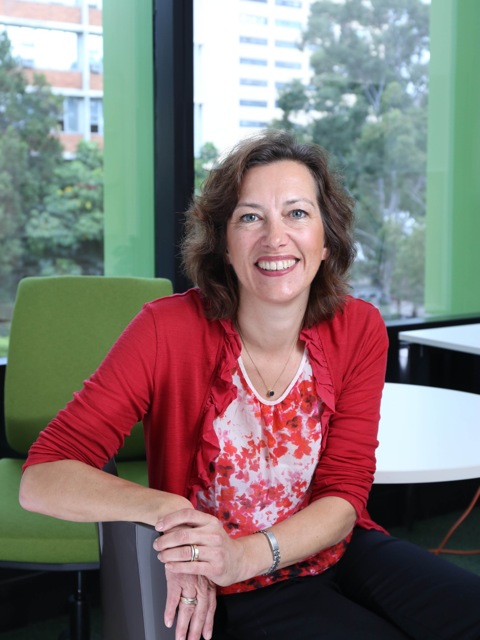
Professor Emma Thomas is a leading social psychologist at Flinders University in the College of Education, Psychology and Social Work , where she holds the Matthew Flinders Professorship and an Australian Research Council (ARC) Future Fellowship (2025-2030). She directs the Flinders Social Influence and Social Change Lab and contributes to leadership roles in the Jeff Bleich Centre for Democracy and Disruptive Technologies and the Flinders Institute for Mental Health and Wellbeing. Education: BA (Hons) and PhD in Psychology (2005, 2009) from the Australian National University Her research bridges social and political psychology, focusing on collective action , political engagement , and extremism dynamics. Key areas include: Emotional drivers (anger, hope) in social change Online radicalization and misinformation Democratic resilience amid technological shifts UN Sustainable Development Goals (SDGs) contributions Recent publications examine: Politicization in digital democracies Conspiracy beliefs' impact on political systems Intergroup cooperation in cross-cultural contexts Psychological implications of minority rights Awards include the South Australian Tall Poppy Science Award (2018) . She serves as Associate Editor at Political Psychology and previously at British Journal of Social Psychology , with ARC-funded projects on radicalization and civic engagement.
Rachel Henderson serves as an Assistant Professor in the Department of Physics & Astronomy at Michigan State University, where she conducts physics education research focused on equity and inclusion through quantitative methodologies. Her work targets improving learning outcomes for all students while increasing representation of women and historically marginalized groups in physics. Her academic credentials include: Ph.D. in Physics Education Research from West Virginia University (2018) M.S. from West Virginia University (2014) B.S. from Slippery Rock University (2012) Dr. Henderson's research integrates two primary strands: developing next-generation physics assessments and enhancing STEM student retention from diverse backgrounds. She investigates how inclusive assessments impact student success, designs evaluation tools to promote diversity, and establishes equitable practices to cultivate future scientists. Her methodologies combine rigorous quantitative analysis with mixed-methods approaches to address systemic barriers in physics education. Analysis of her recent publications reveals concentrated efforts on self-efficacy measurement among transfer students, redesign of assessment instruments using evidence-centered design, and integration of quantitative-qualitative data to capture complex student experiences. Her work consistently examines demographic factors including gender, race, and prior preparation in physics education contexts. Associated with the Learning Machines Lab for innovative educational data analysis, Dr. Henderson actively contributes to the field through peer mentor program development and physics graduate program assessment research. While specific awards aren't documented in available materials, her publications in Physical Review Physics Education Research demonstrate scholarly impact.
Xuming He is an Associate Professor at the School of Information Science and Technology (SIST), ShanghaiTech University, where he leads the PLUS Lab. His research spans computer vision and machine learning with a focus on developing algorithms that operate effectively under limited supervision and evolving data conditions. His core research interests include weakly-supervised and few-shot learning for scenarios with sparse annotations, continual learning frameworks for knowledge retention during sequential task acquisition, semantic segmentation techniques for scene understanding, and multimodal vision-language representations. He emphasizes interpretable machine learning to build transparent AI systems capable of human-understandable reasoning, addressing critical challenges in model trustworthiness and deployment reliability. Recent publications reveal strong trends toward novel class discovery in long-tailed recognition scenarios, physics-informed generative modeling for scientific applications, and robust segmentation under distribution shifts. His work increasingly integrates large language models for multimodal reasoning while maintaining focus on efficiency in resource-constrained environments like robotic grasping and medical imaging analysis. He actively mentors students, having supervised Qian He to PhD completion and Chuanyang Hu to Master's degree in 2023. He welcomes prospective graduate students through ShanghaiTech's Computer Science & Technology program and offers undergraduate research projects requiring minimum six-month commitments. The PLUS Lab under his direction drives innovation in learning under supervision constraints, with recent work spanning medical tumor analysis, cross-view geolocation, photonic computing, and semiconductor design verification. The lab's research bridges theoretical advances with practical applications across healthcare, robotics, and scientific discovery domains.
Dr Rachel King is a Lecturer in Nursing at the University of Sheffield's School of Allied Health Professions, Nursing and Midwifery. With a PhD, MMedSci, and BSc, she holds Fellow status with the Higher Education Academy (FHEA) and maintains an active clinical background as a former primary care advanced nurse practitioner. University of Sheffield, School of Allied Health Professions, Nursing and Midwifery Lecturer in Nursing Room 206A, 362 Mushroom Lane, Sheffield S10 2TS Contact: rachel.king@sheffield.ac.uk | +44 114 222 2626 Dr King's research focuses on emerging healthcare roles, particularly nursing associates and advanced clinical practitioners. Her work examines workforce issues, knowledge mobilization in clinical decision-making, and the impact of the COVID-19 pandemic on healthcare roles. She employs diverse qualitative methodologies including ethnography, interviews, and focus groups, with recent work funded by the Cancer Alliance and supported by a Florence Nightingale Foundation Scholarship. Her publication record demonstrates consistent scholarly output across nursing workforce issues, advanced practice roles, and clinical decision-making, with numerous publications spanning 2020-2025. Her research shows particular strength in examining nursing associate roles, advanced practitioner well-being, and knowledge mobilization in emergency settings. Florence Nightingale Foundation Scholarship (2022) Member of Athena Swann committee in ScHARR (2016-2018) Member of academic board for Sheffield Teaching Hospitals' combined community and acute care group Scientific committee member for RCN international research conference (2019) As an educator, Dr King teaches research methods, healthcare ethics, and advanced practice, while providing dissertation and PhD supervision. She contributes to module leadership and serves as co-chair of the school's ethics committee, demonstrating significant institutional engagement alongside her research activities.
Professor Andrew Singleton is a leading sociologist at Deakin University's School of Humanities and Social Sciences , with expertise in religion, spirituality, and social research methodologies. His career spans over two decades at Deakin, where he has held progressively senior roles since 2000. Education: PhD in Sociology from Monash University (2000) Research Interests include: Spirituality in contemporary society New Religious Movements (particularly Spiritualism) Global Christianity and secularisation Quantitative and qualitative methods Research Trends show extensive work on Australian teen spirituality, Holocaust education impacts, marine conservation policy, and historical religious studies. His 2024 article on marine protected areas revealed majority Australian support for expanding ocean protections. Scientific Awards include multiple teaching accolades, though specific prizes aren't listed in the source material. Supervision covers diverse topics like neurodivergent birthing experiences, church hurt recovery, and honor-based violence support. He has taught sociology of religion and methods courses. Grants include Australian Research Council funding for Holocaust education studies ($305k+) and spiritual wellness research ($420k+), plus DFAT Korea Foundation support ($39k).
Elizabeth Brown is an Associate Professor in the Department of Sociology at the University of Massachusetts Boston, where she has served since 2014 after previously teaching in Niagara University's Criminology and Criminal Justice department. Born in Senegal, Zaire (now DRC), and Bangladesh, she attended high school in Amherst, MA and holds a B.A. in Psychology from Tufts University (2000) and a Ph.D. in Criminal Justice from SUNY Albany (2009). Her educational background includes: B.A. in Psychology, Tufts University, 2000 Ph.D. in Criminal Justice, State University of New York at Albany, 2009 Dr. Brown's research expertise spans law and society, moral politics, and the social determinants of public opinion regarding crime and justice. She investigates punishment mechanisms, societal precarity, and U.S. state-level penal policy evolution, with current work examining how meritocratic beliefs and personal economic insecurity shape public perceptions of social class. Her scholarship reveals deep engagement with the moral and political foundations of punitive attitudes in American society. Analysis of her 15 publications (2009-2025) demonstrates consistent focus on criminological methodology and public opinion dynamics. She employs experimental designs and longitudinal analysis to study collateral consequences, gun ownership metrics, and political rhetoric's impact on crime control policies. Key trends include historical examination of presidential platforms (1968-2020), racial bias in punitive views (1974-2014), and economic influences on incarceration during the Great Recession. Information regarding Dr. Brown's graduate student mentoring, grant funding, laboratory affiliations, or research teams is not documented in the available sources.
Zorana Jovanovic Andersen is an Associate Professor at the University of Copenhagen, Department of Public Health, Section of Environmental Health, specializing in Environmental and Occupational Epidemiology. Her research focuses on health impacts of air pollution , noise exposure , and lifestyle factors across large cohorts including the Danish Nurse Cohort and Diet, Health, and Cancer cohort. Primary research areas: Environmental Epidemiology, Breast Cancer Risk, Air Pollution, Noise Studies, Physical Activity Interactions Key projects: Hyperion (road traffic noise), ELAPSE (low-level air pollution), TAPAS (climate-transportation health risks) Research Themes She investigates long-term exposure to air pollution and noise in relation to breast cancer , diabetes , cardiovascular disease , and brain cancer , while exploring how factors like physical activity modify these risks. Recent work includes dementia and COVID-19 mortality analyses. Scientific Contributions Her 15 most recent publications address: 1) Air pollution disparities in Europe 2) Dementia-air pollution links 3) Stroke-noise interactions 4) Airport ultrafine particle exposure 5) Asthma-COPD overlap 6) Breast cancer-mammographic density relationships. Major Grants Danish Working Environment Research Fund (1.79M DKK, 2017) Danish Heart Association (433K DKK, 2016) Danish Council for Independent Research (1.93M DKK, 2015) Teaching & Leadership Course Leader for Data Processing in Health Care and Public Health Informatics at UCPH since 2011. Organized Danish Health Registries seminars and served on scientific committees for environmental conferences.
Heather O'Brien is a Professor at the School of Information , University of British Columbia, specializing in user engagement with digital technologies , information retrieval , and knowledge exchange . Her work bridges human-computer interaction and health informatics through projects like the User Engagement Scale (UES) and the PolarUs app for bipolar disorder management. Education: MLIS and PhD from Dalhousie University Research: Focuses on engagement theory, digital health, and university-community knowledge exchange Her STOREE project (SSHRC-funded) develops frameworks for open scholarship and community-centered metadata practices. She co-developed the internationally adopted UES tool for measuring technology engagement, translated into French, German, Italian, and Portuguese . Scientific Awards: 2022 ASIS&T Research in Information Science Award 2018 ASIS&T SIG USE Best Paper Award Professor O'Brien mentors graduate students in information behavior and digital health while leading interdisciplinary collaborations with institutions like CREST.BD and BC Centre on Substance Use .
Krish Singh is a Professor and Head of Human Electrophysiology at Cardiff University's School of Psychology. He holds a BSc from Durham University and a PhD from the Open University. As a leader at the Cardiff University Brain Research Imaging Centre (CUBRIC), he drives multimodal neuroimaging research, focusing on MEG/EEG methodologies for clinical and cognitive neuroscience. His work spans epilepsy, schizophrenia, and Alzheimer’s disease, including studies on electrophysiological genetic risk markers. His research bridges physics and neuroscience, emphasizing non-invasive brain imaging (MRI/MEG) to explore neural mechanisms in health and disease. Key interests include: Cortical oscillations and neurophysiological biomarkers Genetic influences on brain networks in psychiatric disorders Multimodal integration of MEG with MRI/PET data Clinical applications in neurodegeneration and epilepsy Publications demonstrate consistent focus on neurophysiology, schizophrenia, Alzheimer’s, and methodological innovations in MEG analysis. Trends include genetic risk modeling, pharmacological modulation of neural oscillations, and longitudinal biomarker discovery. He leads the undergraduate module Introduction to Neuroimaging Methods and Applications , covering MRI, fMRI, EEG/MEG, TMS, and clinical applications. As a supervisor, he supports postgraduate projects in neuroimaging and collaborates internationally via the MEG-UK Partnership to standardize MEG methodologies. He directs research at CUBRIC and collaborates with Cardiff's Neuroscience and Mental Health Innovation Institute, fostering cross-disciplinary studies with medicine and biosciences.
Liam Riley is an Adjunct Professor at the Balsillie School of International Affairs (Wilfrid Laurier University). His research focuses on urban food security, gender dynamics, and development challenges in African cities. PhD in Geography (2013), Western University His work combines participatory GIS and mixed-methods fieldwork in Malawi, Cameroon, South Africa, and Botswana to analyze: Gendered household food strategies Political economic dimensions of urban food security Informal settlement food environments Secondary city food systems Liam leads the SSHRC-funded project Mapping African Urban Foodscapes and contributes to Consuming Urban Poverty 2 and the Hungry Cities Partnership . His publications examine urban poverty, corruption perceptions, and cross-cultural food security comparisons. Scientific awards include: SSHRC Impact Award (Talent Competition): Finalist Banting Postdoctoral Fellowship SSHRC Postdoctoral Fellowship African Geographical Review Paper of the Year Joseph-Armand Bombardier CGS Doctoral Award International Development Research Centre Doctoral Research Award As Co-Editor of the Hungry Cities Partnership reports, he produces open-source information for Global South practitioners and researchers.
Associate Professor Sally Ann Nathan is a public health social scientist at the School of Population Health, UNSW Sydney, specializing in youth and vulnerability, drug and alcohol treatment for young people, and community engagement in health service development. She actively partners with non-government organizations, including the Aboriginal Community Controlled Health Sector, to improve health equity for young people and marginalized communities. Her educational background includes a PhD (awarded 2013), Master of Public Health (1996-1999), and Bachelor of Science (Psychology) with Honours (1985-1988), all from the University of New South Wales. Professor Nathan's research program is characterized by innovative use of multiple methods to examine complex psychological, behavioral, community, and socio-political change. Her work focuses on consumer/community participation in health service decision-making, advocacy by the non-government sector, capacity building for health development, refugee settlement, Aboriginal health and wellbeing, and adolescent drug and alcohol treatment. She has published 74 peer-reviewed articles with an H-index of 23 and has secured over $4 million in research grants, including $2.6 million in Category 1 grants. Her research has significant impact across refugee health, Aboriginal health services, youth drug treatment, and community engagement. Recent publications demonstrate methodological diversity with emphasis on mixed methods approaches, data linkage studies, and participatory research with vulnerable populations. 2024 UNSW School of Population Health Excellence in HDR Mentoring 2020 Australian Therapeutic Communities Association Excellence in Research and Evaluation award 2019 UNSW Vice Chancellors Award for Excellence in Teaching Multiple awards for research supervision excellence (2018) Professor Nathan currently supervises six higher degree research students across diverse topics including mental health for psychosocial workers working with refugees, health policy evaluation in rural Australia, and Aboriginal experiences accessing rheumatology services. Her previous students have completed research on NGO drug and alcohol treatment performance measurement, teaching Aboriginal health in public health education, and adolescent health services. She convenes Foundations in Public Health & Health Systems and Qualitative Research Methods courses in postgraduate programs at UNSW.
Allison J Carroll, PhD is an Assistant Professor at Northwestern University Feinberg School of Medicine with primary appointment in Psychiatry and Behavioral Sciences, and secondary appointments in Medical Social Sciences and Preventive Medicine (Behavioral Medicine). She serves as a core faculty member in the Center for Dissemination and Implementation Science (CDIS) and is affiliated with the Institute for Public Health and Medicine (IPHAM) and the Northwestern University Clinical and Translational Sciences Institute (NUCATS). Dr. Carroll is a clinical health psychologist and implementation scientist whose research focuses on psychological (e.g., depression) and behavioral (e.g., cigarette smoking) contributors to chronic disease (e.g., cardiovascular disease), particularly for disadvantaged and historically underresearched populations. Her current research includes a K23 career development award to inform and pilot test the implementation of a culturally adapted depression intervention for Black adults with hypertension, with training aims in implementation science, community engaged research, and health informatics. Dr. Carroll also serves as an implementation science co-investigator/consultant on externally funded research projects and clinical initiatives in healthcare settings. Her publication record shows a clear focus on implementation science methods applied to cardiovascular disease prevention, depression treatment, and health disparities reduction, with numerous recent publications (2024-2025) in high-impact journals spanning implementation frameworks, community-based interventions, and integrated care models. Scientific Awards: Citation Abstract Award, Society of Behavioral Medicine (2025) Teacher of the Year, Clinical Psychology MA & PhD Programs, Northwestern University Feinberg School of Medicine (2024) Outstanding Abstract Award, Multimorbidities and Multiple Health Behavior Change Special Interest Group, Society of Behavioral Medicine (2022) Early Career Boot Camp, Association of Psychologists in Academic Health Centers 10th National Conference (2021) Fellow, Ten-Day Seminar on the Epidemiology and Prevention of Cardiovascular Disease and Stroke (2019) Dr. Carroll maintains active professional service as Secretary of the Health Research Council for the Society for Health Psychology (2023-present), Research Communication Liaison for the same council (2017-present), and previously served as Membership Coordinator for the Cardiovascular Disease Special Interest Group of the Society of Behavioral Medicine (2022-2024). She is an active member of multiple professional societies including the Association of Psychologists in Academic Health Centers, Society of Behavioral Medicine, American Heart Association, and Society for Health Psychology. Her educational background includes a BA from Monmouth College (2009), MS (2014) and PhD (2018) from Northwestern University, followed by an internship at Medical University of South Carolina in Clinical Psychology/Behavioral Medicine (2018) and a fellowship at Northwestern Medicine in Cardiac Behavioral Medicine (2020).
Niklas Mattsson-Carlgren serves as an Associate Professor and Senior Lecturer at Lund University's Faculty of Medicine, Department of Clinical Sciences. He holds multiple significant roles including Deputy Research Team Manager and Principal Investigator for several major research projects. His affiliations extend to the Wallenberg Centre for Molecular Medicine (WCMM), LU Profile Area: Proactive Ageing, and MultiPark: Multidisciplinary Research Focused on Parkinson's Disease. Dr. Mattsson-Carlgren's research primarily focuses on Alzheimer's disease and other neurodegenerative conditions, with additional work on acute brain injuries such as those following cardiac arrest. His expertise spans neurochemistry, including the regulation of pain and sleep. He employs biochemical measurements, neuroimaging, and cognitive testing to study disease processes in vivo across the spectrum from preclinical disease to advanced dementia. His work aims to improve diagnostic and prognostic methods in clinical practice, enhance clinical trial design for novel therapies, and deepen understanding of disease mechanisms. His recent publications demonstrate a strong emphasis on plasma biomarkers for Alzheimer's disease detection and monitoring, with particular focus on tau and amyloid pathology. The research shows increasing integration of machine learning approaches with traditional biomarker analysis, reflecting a trend toward more sophisticated diagnostic tools that combine multiple data sources for improved accuracy in predicting disease progression. As Principal Investigator for multiple significant projects including 'Longitudinal plasma biomarkers, cognitive data and amyloid PET to improve early prevention of Alzheimer's disease' and 'Validation of an MTBR tau immunoassay for CSF and plasma,' he leads substantial research efforts funded by organizations including Familjen Rönströms stiftelse, Eli Lilly and Company, and the Knut and Alice Wallenberg Foundation. He also serves as supervisor for PhD students, notably for 'Studies of induced neuronal cells in Alzheimer's disease.' Dr. Mattsson-Carlgren is actively involved in the neuroscience community, serving on the program committee for Neuroscience Day 2025. His research contributes to UN Sustainable Development Goals related to health and wellbeing. His work has gained significant attention, with multiple papers being picked up by news outlets and referenced across social media platforms including X (Twitter) and Bluesky.
Jean-Luc Arregle is a Professor in the Strategy & Organization department at emlyon business school , where he has served since 2012. He previously held a professorship at EDHEC Business School (2010-2011) and served as Director of the PhD Program at emlyon (2015-2018). Arregle is also an Associate Dean for Research at emlyon business school. PhD in Management Sciences (1992, IAE Aix-en-Provence) Accreditation to Supervise Research (1998, IAE Nice) His research focuses on semi-globalization strategies , family firm strategic choices , and institutional influences on multinational enterprises . Publications analyze: organizational autonomy dynamics, family firm internationalization patterns, institutional complexity in foreign investment, multilevel strategic analysis, and resource orchestration in mergers. He serves on editorial boards of Journal of International Business Studies , Strategic Organization , and Entrepreneurship Theory & Practice . Notable works include longitudinal studies of Lamborghini's post-acquisition autonomy management and meta-analytic reviews on family firm uniqueness. Recent publications emphasize: Dynamic frameworks for subsidiary autonomy (2024) Family business-international business integration (2024) Host country politics in multinational strategy (2023) Autonomy oscillation mechanisms (2022) Scientific contributions include Editorial board memberships across 5 journals International Teachers Program (EFMD, 1990) Keynote presentations at Academy of International Business and Strategic Management Society conferences Arregle's work combines theoretical rigor with practical insights from automotive industry case studies (Audi-Lamborghini integration), demonstrating how organizational identity preservation and resource orchestration enable sustained competitive advantage in multinational contexts.
Dr. Francine Laden is a renowned Professor of Environmental Epidemiology at the Harvard T.H. Chan School of Public Health , where she serves as Associate Chair of the Department of Environmental Health and Director of the NIH/NIEHS T32 Training Program in Environmental Epidemiology. She concurrently holds the title of Associate Professor of Medicine at Harvard Medical School and Brigham & Women’s Hospital. Her research program bridges environmental exposures with chronic disease epidemiology. ScD in Epidemiology and MS in Environmental Health from Harvard T.H. Chan School of Public Health Past President of the International Society of Environmental Epidemiology Former member of the EPA Science Advisory Board Dr. Laden's research focuses on environmental determinants of chronic diseases , including cancer, cardiovascular conditions, and respiratory illnesses. Her work systematically examines air pollution (ambient and occupational), persistent organic pollutants, secondhand smoke, temperature variations, and built/green environments using geographic information systems and large cohort studies such as the Nurses’ Health Study series and Health Professional Follow-Up Study. Recent publications demonstrate her expertise in environmental mixture effects on health outcomes, including air pollution and diabetes, greenspace and mental health, and noise exposure and hypertension. Her methodological innovations span digital phenotyping , spatial analysis , and multi-exposure modeling across life stages. 2023 John Goldsmith Award 2022 Marianne Wessling-Resnick Mentoring Award 2019 John A. Rock Scholar honorarium 2011 Alice Hamilton Lectureship As principal investigator on multiple NIH grants, Dr. Laden leads studies on environmental and social determinants of mammographic features , early-life exposure impacts on hypertension , and multi-stressor health disparities . She mentors through the T32 training program and collaborates across institutions on cardiovascular and ecological health research initiatives.