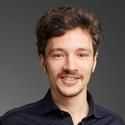
Francesco Findeisen is a Postdoctoral Researcher at the Hertie School's Center for Sustainability and an Associate Researcher at Sciences Po's Centre for European Studies and Comparative Politics (CEE), affiliated with the Observatory of Market Society Polarization (AXPO). His work bridges climate governance, state capacity reconfiguration, and territorial policy analysis. Published in European Journal of Sociology, Competition & Change, and Territory, Politics, and Governance Focuses on multi-level climate governance systems Investigates political economy of subnational climate action Analyzes infrastructure and housing policy dynamics Employs qualitative comparative case study methodologies His research particularly examines how market-based finance mechanisms interact with state capacity in implementing large-scale infrastructure projects like the Thames Tideway Tunnel, and tracks longitudinal developments in French housing policy instruments.
Dr Mairead Black is a Reader in the School of Medicine, Medical Sciences and Nutrition at the University of Aberdeen, affiliated with the Institute of Applied Health Sciences and the Aberdeen Centre for Women’s Health Research. She is an honorary consultant obstetrician at Aberdeen Maternity Hospital, where she holds leadership roles in labour ward, quality, risk, and governance. Dr Black is academic lead for the Aberdeen Maternity and Neonatal Databank and co-leads the Aberdeen Clinical Academic Training pathway. She has served on the NICE Antenatal Care guideline committee (2018–2021) and is a member of an NHS England working group developing decision aids for maternity care. Dr Black’s research is centered on improving maternity care through informed decision-making and reducing health inequalities. Her work integrates qualitative and quantitative methods, including systematic reviews, cohort studies, consensus methods, and health services research. Key areas include birth mode planning, induction of labour, maternal epilepsy, multimorbidity, polypharmacy, and care for refugee and asylum-seeking women. She has led and contributed to numerous studies using large linked datasets and evidence synthesis to inform clinical practice and policy. Her recent publications highlight a strong trend in improving communication and decision-making in maternity care, particularly around caesarean birth and induction of labour. She has published on pharmacoepidemiology, perinatal outcomes, and the impact of the COVID-19 pandemic on maternity services. Her work often involves multi-stakeholder collaboration and the development of tools such as decision aids and core outcome sets to standardize and improve care. Scientific Awards: HDRUK Research Team Award (2022) – MuM-Predict consortium Dr Black supervises and mentors early-career researchers and contributes to clinical academic training. She has secured research funding and collaborates widely across the UK and internationally. Her work is supported by extensive datasets and collaborations, including with Public Health Scotland and national guideline bodies. She is actively involved in co-designing safer, more accessible maternity care through evidence-based innovation. Dr Black leads and contributes to multiple research teams and initiatives, including the MuM-Predict consortium and the Aberdeen Maternity and Neonatal Databank. These teams focus on data linkage, multimorbidity, and improving outcomes for vulnerable populations. Her leadership in research infrastructure enhances the capacity for high-quality maternal and neonatal health research.
Dr SJ (Ash) Summers is a Senior Lecturer and Programme Director for the Doctorate in Clinical Psychology at Teesside University, within the School of Social Sciences, Humanities and Law. She is an HCPC-registered Practitioner Psychologist with extensive clinical and academic experience in learning disabilities and mental health. She previously held leadership roles in disability services in Queensland, Australia, and contributed to the Master's Programme in Clinical Psychology at CQ University. Undergraduate Degree: University College London, 1990 Clinical Psychology Training: Teesside University, 2000 Post-Qualification Training: Leadership, Management, Family Therapy, Systemic Approaches, Dialectical Behaviour Therapy Her research focuses on intellectual and learning disabilities across the lifespan, with particular attention to minority ethnic communities, ethical decision-making, mental capacity, and clinical psychology training. She employs qualitative and systematic review methodologies, contributing significantly to understanding the psychological needs of vulnerable populations. Her recent publications highlight a strong trend in qualitative and systematic research on trauma, pain, and therapeutic processes in people with intellectual disabilities. She frequently uses interpretative phenomenological analysis and grounded theory to explore lived experiences and clinical challenges. Dr Summers has played a key role in clinical psychology education, supervising doctoral trainees and contributing to curriculum development both in the UK and Australia. She has led initiatives to reduce restrictive practices in disability services and improve psychological care standards. She has been instrumental in advancing research on intergenerational trauma, pain perception in intellectual disability, and the psychological effects of chronic illness. Her work bridges clinical practice and academic inquiry, emphasizing evidence-based, scientist-practitioner models.
Nyla Branscombe serves as a University Distinguished Professor in the Department of Psychology at the University of Kansas, where she has established herself as a leading scholar in social psychology with a focus on intergroup dynamics. Her academic home resides within the university's psychological sciences infrastructure, contributing significantly to both undergraduate and graduate education through specialized courses in social psychology, intergroup relations, and prejudice studies. As a core faculty member, she actively shapes the department's research trajectory and mentorship culture. Her educational foundation includes: Ph.D. in Social Psychology from Purdue University M.A. in Social Psychology from the University of Western Ontario B.A. in Psychology from York University Branscombe's research program centers on how group memberships shape individual experiences, particularly examining the psychological consequences of prejudice, discrimination, and victimization across gender and ethnic identities. She investigates how collective guilt operates in intergroup contexts, how individuals cope with pervasive discrimination through identity-based strategies, and how group processes influence psychological well-being. Her work bridges theoretical social psychology with real-world applications in organizational settings, trauma recovery, and social justice initiatives, often employing both experimental and field methodologies to capture authentic social dynamics. Analysis of her recent publications reveals an evolving research trajectory emphasizing gender equality interventions, collective trauma responses, and identity management during life transitions. Her 2022-2025 work increasingly focuses on practical applications of social identity theory in workplace inclusion, retirement adaptation, and measuring collective post-traumatic growth. This shift demonstrates her commitment to translating fundamental social psychological principles into actionable frameworks for improving group relations and individual well-being across diverse contexts. While specific awards aren't detailed in available materials, her University Distinguished Professor title represents a significant institutional honor recognizing exceptional scholarly contributions. Her research impact is evident through extensive citations and editorial roles in major handbooks like The SAGE Handbook of Gender and Psychology . Branscombe's scholarly influence extends through mentorship and collaborative networks, though specific student names aren't publicly listed. Her research has secured substantial funding enabling longitudinal studies on discrimination's psychological impacts and interventions for group-based trauma. She maintains active research partnerships across North America, particularly with Canadian institutions given her educational background. Though specific laboratory affiliations aren't detailed in the source material, her work appears connected to broader university initiatives on social identity and intergroup relations. Her recent retirement transition research suggests engagement with aging and identity adaptation programs, while her gender studies work likely intersects with campus diversity initiatives and organizational partnerships focused on workplace equity.
Prof. Dr. Katharina Maag Merki serves as Professor of Educational Science with focus on Theory and Empirical Research on Educational Processes in Schools at the University of Zurich's Institute of Educational Science. Her work centers on improving educational quality through rigorous theoretical and empirical research on school processes, with particular emphasis on reducing educational disadvantages and promoting equal opportunities. Maag Merki's research interests focus on the theoretical and empirical analysis of students' educational processes in school, with special attention to self-regulated learning. She investigates how students plan, monitor, and modify their learning when goals aren't met, examining the conditions that enable optimal educational processes and their effects on student outcomes. Her work spans school quality and development research, educational governance, and strategies for reducing educational disparities. Her recent publication trends reveal a strong emphasis on collaborative approaches to school improvement, particularly examining teacher collaboration networks and their impact on student achievement. She has conducted significant research on how schools adapt to challenging situations, including the pandemic, with a focus on routine regulation strategies and brokerage in educational change. Her work increasingly integrates longitudinal and mixed-methods approaches to understand the dynamic nature of school development. UZH Mentoring Award 2021 - Recognizing outstanding doctoral supervision and support for young researchers Highly Commended Paper Award from the 2015 Emerald Literati Network Paper Awards for Excellence for her work on intervention studies in school improvement Maag Merki actively mentors doctoral students across multiple institutions, supervising projects examining academic optimism in teaching development, self-regulation training for new teachers, and strategies for promoting self-regulated learning among students. Her research portfolio includes significant SNSF-funded projects such as 'The Art of Managing Oneself as a Teacher' and 'Regulation of Routines in Teaching Development' (R2), demonstrating her leadership in securing competitive research funding. She leads the Chair for Theory and Empiricism of School Educational Processes, coordinating a research team focused on understanding educational processes in schools through multiple methodological approaches. Her work examines not only the actions of teachers, parents, and students but also their motivations, goals, and strategies for adapting to new challenges, with the ultimate goal of using research findings to improve concrete school practice and the education system.
Rachel E Sturm serves as Associate Dean at Wright State University's Raj Soin College of Business, affiliated with the Department of Supply Chain Management, Marketing, and Management. Previously Chair of the Management and International Business Department, she joined the university in 2014 as Assistant Professor and received the 2016 university-wide Presidential Award for Early Career Achievement. Her educational background includes a Ph.D. in Business Administration from the University of Houston and a B.A. in Psychology (summa cum laude) with Business Management minor and International Studies certificate from Binghamton University. Prior to academia, she gained industry experience in sales, marketing, and food services, complemented by research roles in psychopathology and leadership labs. Dr. Sturm's research critically examines leadership dynamics , character development , and workplace gender issues . Her work explores interpersonal power structures, self-awareness in leadership, and organizational responses to movements like #MeToo. Current projects investigate counter-normative gender expressions in professional settings and character-driven organizational learning. Publication trends reveal consistent contributions to top-tier journals including Journal of Management , Leadership Quarterly , and Harvard Business Review , with recent emphasis on gender dynamics, ethical leadership, and pandemic-era organizational adaptation. Her 2025 forthcoming article extends gender norm analysis to male professionals. 2016 Presidential Award for Early Career Achievement Four-time Departmental Outstanding Teacher Award Two-time MBA Teaching Excellence Award Journal of Management Scholarly Impact Award (2020) Nature citation and multiple highly-cited paper recognitions As a certified professional coach through the Institute of Professional Excellence, Dr. Sturm integrates coaching methodologies into leadership development. Her industry background informs practical applications of research, particularly in sales and marketing contexts. Current work focuses on sustainable leadership change and character activation in engineering projects. She maintains active roles as former Associate Editor of The Leadership Quarterly and contributor to major management handbooks, while leading college-level academic initiatives as Associate Dean.
Samah Senbel is an active faculty member in the School of Computer Science & Engineering at Sacred Heart University , specializing in interdisciplinary data science applications. Her research bridges computer science with sports analytics, healthcare diagnostics, and social systems through advanced machine learning techniques. Her research interests focus on predictive modeling and performance analytics , particularly examining athletic performance metrics in Division 1 women's basketball through physiological monitoring (sleep, mental state, jump height). Additional research areas include healthcare diagnostics (liver disease prediction), social media analysis (COVID-19 vaccine sentiment), and agricultural/energy economics. Her methodology emphasizes Python-based data processing and visualization for real-world problem solving. Publication trends reveal strong expertise in Sports Science : 7 articles (2021-2025) on basketball performance, weightlifting analytics, and Olympic participation Health Informatics : 4 articles on disease prediction, physical activity monitoring, and pandemic impacts Social Systems : 4 articles covering visa applications, traffic safety, and gender disparities Her scientific contributions demonstrate consistent output with 12 peer-reviewed publications in 2025 alone, primarily in computer science and sports medicine journals. Dr. Senbel leads research on athlete monitoring systems, developing methodologies to correlate training metrics with competitive outcomes. Her current projects include dynamic dashboards for basketball performance tracking and machine learning models for early disease detection.
Dr. Elsje van Bergen is an Associate Professor at Vrije Universiteit Amsterdam's Department of Biological Psychology and a Visiting Professor at the University of Oslo (2024-25 academic year). She leads an interdisciplinary research team investigating why neurodevelopmental conditions and educational outcomes run in families, bridging genetics, psychology, psychiatry, education, and public health through the Netherlands Twin Register. Her academic background includes: PhD in Child Development and Education from University of Amsterdam (2013) Postdoctoral Fellowship at University of Oxford (2012-2015) Bachelor's and Master's in Human Movement Sciences from VU Amsterdam ( cum laude ) Van Bergen's research disentangles genetic and environmental influences on learning differences across language, reading, and mathematics, with focus on dyslexia, dyscalculia, ADHD, and autism. Her work examines how these conditions relate to mental health and educational outcomes through twin studies, polygenic scores, and large cohorts like Norway's MoBa study. Her recent publications reveal dominant genetic influences in educational inequality and neurodevelopmental condition comorbidity. Methodologically innovative works leverage polygenic scores to resolve cultural transmission pathways, while meta-analyses quantify parent-offspring resemblance in reading. These studies, published in Nature Human Behaviour and Psychological Science , demonstrate interdisciplinary approaches to gene-environment interplay. Major recognitions include: ERC Starting Grant (2023) NWO VIDI Talent Grant (2021) Jacobs Foundation Research Fellowship (2020) NWO Rubicon (2012) and VENI (2016) Talent Grants Early-career awards from Society for Scientific Study of Reading, Association for Psychological Science, and Federation of Associations in Behavioral & Brain Sciences Fellow of Young Academy of Europe (2019) She mentors Master's and PhD students while securing major grants to investigate intergenerational educational cycles. Her ERC-funded project examines how parental genotypes influence offspring education through dynastic social processes. She co-leads Amsterdam Young Academy initiatives supporting early-career researchers and interdisciplinary collaboration. Based in VU Amsterdam's Department of Biological Psychology, she collaborates with LEARN! and Amsterdam Public Health research institutes. Her Oslo-based work with CREATE and PROMENTA centres leverages Norwegian registry data to study education-mental health intergenerational transmission across 114,000 families.
Dr. Teresa Katthagen serves as a Postdoctoral Research Fellow and Psychologist within the Department of Psychiatry and Neurosciences at Charité – University Medicine Berlin's Campus Charité Mitte. Based in Ward 154T and actively contributing to the Research Group Learning and Cognition, her clinical and research activities center on understanding the pathophysiology of schizophrenia and related psychotic disorders through advanced neuroimaging and computational methodologies. Her research program critically examines the neural substrates of motivation deficits (apathy), reward processing abnormalities, and belief formation in psychosis. Utilizing functional MRI, computational modeling of decision-making, and longitudinal study designs, she investigates how striatal-cerebellar circuits, dopamine signaling, and uncertainty processing contribute to symptom dimensions such as negative symptoms and delusions. This work bridges cognitive neuroscience with clinical psychiatry to identify transdiagnostic mechanisms. Recent publication trends demonstrate a sustained focus on schizophrenia spectrum disorders, particularly the computational and neurobiological basis of apathy and negative symptoms. Her work frequently employs fMRI to study striatal prediction error signaling, cerebellar-ventral tegmental area connectivity, and the impact of stress on cognitive flexibility. A notable emphasis exists on methodological rigor through longitudinal designs, multi-site validation, and reproducibility frameworks. Scientific awards and honors were not documented in the provided materials. Details regarding graduate student mentorship and externally funded research grants are not specified in the available information. As a key member of the Learning and Cognition Research Group, Dr. Katthagen collaborates within a multidisciplinary team that integrates computational psychiatry, cognitive neuroscience, and clinical research. The group maintains strong methodological expertise in fMRI data acquisition and analysis, computational modeling of behavioral tasks, and longitudinal study design to advance mechanistic understanding of psychiatric disorders.
Dr. İbrahim Hakkı Acar is a Professor at Özyeğin University, specializing in Child, Youth and Family Studies. He earned his B.A. in Elementary Teaching from Trakya University (2010), Fulbright M.S. in Child, Youth and Family Studies (2013), and Ph.D. in Human Sciences (2016) from the University of Nebraska-Lincoln. Postdoctoral research at the Center for Brain, Biology and Behavior (2016-2017) focused on temperament and executive functioning. Research Focus: Protective/risk factors for child development, self-regulation, nature-based interventions, and cross-cultural studies. Students: Mentored 18 graduate and undergraduate assistants, including Zeynep Beken and Selin Ünser. Awards: Silver Award (NAEYC, 2018) and First Place Prize (Çiğdem Kağıtçıbaşı Festival, 2020). His lab collaborates with international researchers like Dr. Kathleen Rudasill (VCU) and Dr. Samuel Putnam (Bowdoin College). Publications span developmental psychology, educational practices, and environmental influences on early childhood cognition.
Mario Jokisch is a Professor at the Faculty of Social Sciences and Health at Kempten University of Applied Sciences. He leads research initiatives at the Bavarian Center for Digital Care and Institute Management , focusing on digital literacy, eHealth services, and human-computer interaction in aging populations. His research spans Gerontechnology , Technology Acceptance Models , and Digital Inclusion Strategies . He has developed frameworks for assessing digital competence in elderly populations and investigates the psychological impacts of technology adoption in later life. Key article trends include eHealth literacy (2025), digital alienation theories (2024), and longitudinal studies of technology acceptance (2023-2022) Focus on ICT volunteering and digital competence frameworks for caregivers Examines rubber hand illusion applications in rehabilitation (2012)
Alireza Mohammadinodooshan is a Postdoctoral Fellow at Linköping University's Department of Computer Science (IDA), Sweden, working within the Database and Information Technology (ADIT) research group. He contributes to the Wallenberg AI, Autonomous Systems and Software Program (WASP) – Sweden's largest individual research initiative – focusing on data-driven analysis of social media engagement dynamics across Twitter, Facebook, and Instagram platforms. His research centers on quantifying how political bias, news reliability, and content-agnostic factors shape temporal user engagement patterns. Key interests include social media analysis, user engagement dynamics, data mining, information systems, network science, and artificial intelligence, with emphasis on cross-platform comparative studies and algorithmic amplification effects in news consumption. Analysis of his 15 most recent publications reveals consistent focus on temporal modeling of engagement decay, multi-format content interaction (photos/videos/albums), and the interplay between news source characteristics and user behavior. His methodological approach combines large-scale dataset analysis with network theory to identify virality predictors and platform-specific engagement mechanics. No scientific awards were documented in available sources. No advising roles or research grants were referenced in the provided materials. He operates within the ADIT research group at Linköping University, which specializes in advanced database and information systems for the digital society. This group forms part of IDA's broader WASP-affiliated ecosystem focused on AI-driven autonomous systems, enabling interdisciplinary collaboration on large-scale data challenges in social computing.
Collaborations: Worked extensively with scholars like Kemal Doymuş (30 joint publications) and Tufan İnaltekin (14 joint publications), contributing to 711 total citations (h-index: 14).
Shawn Loewen serves as Professor and Associate Chair for Graduate Studies in Michigan State University's Department of Linguistics, Languages, and Cultures within the College of Arts & Letters. He directs the Second Language Studies (SLS) program and teaches second language acquisition and quantitative research methods courses. His educational background includes an MA from Temple University and PhD from the University of Auckland. Loewen's research centers on instructed second language acquisition (ISLA) , second language interaction , and quantitative methodology , with particular focus on bridging SLA research and classroom practice. He investigates how teachers engage with research and how mobile-assisted language learning impacts pedagogy. His recent publications reveal strong trends in mobile language learning effectiveness (Duolingo/Babbel studies), research-practice interface challenges, and methodological rigor in SLA. He examines nonverbal feedback mechanisms, synchronous communication platforms, and pronunciation acquisition through both empirical and theoretical lenses. His scientific recognition includes: Fulbright award for Polish University collaboration (2021) As SLS program director, Loewen fostered the graduate community that earned MSU's 2018 Outstanding Graduate Program Community Award. Since 2018, he has served as associate editor of The Modern Language Journal while securing research grants including the Fulbright. Though specific advisees aren't listed, his leadership roles indicate active graduate mentorship across second language studies. Loewen maintains active involvement in the SLS program and collaborates on language learning technology projects, frequently addressing media inquiries about language app efficacy as seen in Kiplinger's 2024 coverage.
Paula Winke is the Inaugural Arts & Letters Professor in the College of Arts & Letters at Michigan State University, where she teaches in the Second Language Studies Ph.D. Program and the MA TESOL & Applied Linguistics Programs within the Department of Linguistics, Languages, and Cultures. Currently on sabbatical at the Universität Innsbruck in Austria, she serves as Director of the Second Language Studies Program and holds a distinguished position as Co-Editor of the journal Language Testing. Her professional appointments include significant recognition through the prestigious Arts and Letters Professorship awarded in 2022. Dr. Winke's research centers on foreign and second language assessment, with particular focus on individual differences that affect assessment processes and outcomes. She has made significant contributions to understanding captioning as 'glasses for your ears,' the hardest questions on the U.S. citizenship test, and technology applications in less commonly taught language programs. Her work bridges theoretical language assessment with practical applications in educational settings, immigrant integration, and accessibility. Her recent publications reveal strong trends in language assessment validity, individual differences in language learning, and technology-enhanced language instruction. Winke frequently investigates self-assessment methodologies, proficiency trajectories, and the cognitive aspects of language testing. A notable pattern shows her increasing focus on less commonly taught languages and the application of multimodal learning approaches, particularly through captioning technology. International Language Testing Association (ILTA) Best Article Award (2025) Leopold-Franzens-University of Innsbruck Guest Professorship (2024-2025) Arts and Letters Professorship (2022) Fulbright Scholar (2022) ACTFL-NFMLTA/MLJ Paul Pimsleur Award (2021) AAAL Research Article of the Year Award (2020) TESOL Award for Distinguished Research (2012) Professor Winke has advised numerous doctoral students including Dylan Burton, Xiaowan Zhang, and Magdalyne Oguti Akiding, with research often supported by Fulbright Scholarships and institutional grants. Her work with the National Academies of Sciences, Engineering, and Medicine demonstrates significant impact on language assessment policy. She has led major projects on language proficiency in higher education and the effects of captioning on language learning. Winke collaborates extensively with the Language Testing Research Group Innsbruck (LTRGI) during her sabbatical and maintains active partnerships with researchers globally. Her work at the Herder Institut in Leipzig and with the European Association of Language Testing and Assessment (EALTA) demonstrates her international research network and influence in the field of language assessment.