Peter Hastie is a Wayne T. Smith Distinguished Professor in the School of Kinesiology at Auburn University. With over 224 peer-reviewed publications, he is recognized as the top physical education scientist in the United States and ranks fourth globally. His work focuses on innovative pedagogical approaches, particularly the Sport Education Model, and has been adopted internationally across diverse educational contexts. Expertise: Sport Education Model, physical education curriculum design, teacher development, and motor skill progression in children. Global Impact: Implemented educational frameworks in Saudi Arabia, Russia, Spain, Ireland, Portugal, and China, contributing to widespread curriculum adaptations and teacher training programs. Hastie’s research emphasizes student engagement, inclusive education, and interdisciplinary integration (e.g., combining mathematics with PE). He co-created Auburn’s ActiveU and ActiveMe online physical education resources, now adopted by institutions nationwide and in multiple languages. Awards & Recognition: 2024 Creative Research and Scholarship Award from Auburn University. Inducted into the National Academy of Kinesiology, reflecting his status as a leading scholar and practitioner. Hastie has delivered keynote speeches on six continents, advanced the understanding of skill development in children with disabilities, and contributed to policy discussions on health-related fitness education. His work bridges research and practice, influencing both academic discourse and real-world teaching methodologies.
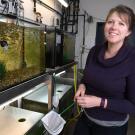
Kate Laskowski is an Associate Professor in the Department of Evolution and Ecology at University of California, Davis , focusing on behavioral diversity and plasticity. Her research explores how evolutionary processes shape developmental mechanisms generating individual variation. Education: B.S. in Biological Sciences (2006, UMBC), Ph.D. in Integrative Biology (2013, University of Illinois) Her work integrates ultimate and proximate perspectives to analyze how genetic, parental, and experiential cues build phenotypes. Recent research emphasizes clonal fish models to study non-genetic origins of behavior, eco-evolutionary dynamics, and collective behavior across scales. Publications from 2023-2025 highlight themes in behavioral repeatability , predation risk responses , genetic life-history trade-offs , and social conformity vs. individuality . Her methods combine experimental studies with statistical modeling and meta-analytic frameworks. Scientific Awards: Sloan Fellow (2023) Kate collaborates with the Center for Population Biology and advises in the Animal Behavior and Population Biology graduate programs. Her lab investigates behavioral individuality in clonal systems, with applications to conservation and evolutionary theory.
Kristine Beate Walhovd is a Professor at the Department of Psychology , University of Oslo, and co-leader of the Center for Lifespan Changes in Brain and Cognition (LCBC) . She is affiliated with the UiO:Life Science initiative and has led major projects like Lifebrain (€2.5M) and Neurocognitive Plasticity (ERC Starting Grant, €1.5M). Current roles: Professor (since 2016), Co-leader of LCBC Key affiliations: University of Oslo, Lifebrain Consortium, UiO:Life Science Her research focuses on lifespan brain and cognitive changes , examining both positive/negative developmental trajectories from age 4 to 90. She studies interactions between biomedical risks (e.g., Alzheimer's, fetal drug exposure) and cognitive outcomes, employing MRI , DTI , and ERP methodologies. Recent publications highlight work on Alzheimer's biomarkers , sleep-brain interactions , memory consolidation , and fetal brain influences . Her 2025 papers in Scientific Reports and Neurobiology of Aging examine hippocampal stability and brain network segregation. Awards include: 2015 University of Oslo Research Prize (shared with Anders Fjell) 2011 Member, Norwegian Academy of Sciences and Letters 2006 His Majesty the King's Gold Medal for best doctoral thesis She supervises doctoral candidates and teaches cognitive neuroscience , experimental methods , and thesis writing .
Elizabeth "Beth" Mayer-Davis is the Dean of The Graduate School and the Cary C. Boshamer Distinguished Professor of Nutrition and Medicine at the University of North Carolina at Chapel Hill. She holds joint appointments in the Gillings School of Global Public Health and the School of Medicine, where she previously served as Chair of the Department of Nutrition for eight years. As Dean of The Graduate School, she oversees more than 160 degree-offering programs and over 10,000 graduate students at UNC Chapel Hill. Dr. Mayer-Davis earned her educational credentials from prestigious institutions: Ph.D. in Epidemiology from the University of California, Berkeley (1992) Master of Public Health with honors from the University of Colorado School of Medicine (1986) B.S. in Dietetics from the University of Tennessee (1980) Dr. Mayer-Davis is an internationally recognized expert in diabetes research with a career focused on the epidemiology and natural history of type 1 and type 2 diabetes in children and adults. Her research addresses how nutrition impacts diabetes risk and complications, with particular emphasis on culturally and regionally diverse populations. Her primary current focus is on type 1 diabetes in youth and young adults, examining diabetes self-management and energy balance/weight management for individuals with type 1 diabetes. She employs innovative methodologies including large epidemiological studies, clinical trials, and adaptive intervention designs, often incorporating communication technologies to enhance patient-centered care. Analysis of Dr. Mayer-Davis's recent publications reveals consistent focus on diabetes epidemiology across diverse populations, with particular attention to youth-onset diabetes, health disparities by race and ethnicity, and innovative interventions for diabetes management. Her work frequently addresses the intersection of obesity and diabetes, particularly in type 1 diabetes where this comorbidity has been historically understudied. The research demonstrates methodological sophistication through the use of advanced statistical techniques, continuous glucose monitoring data, and adaptive trial designs to address complex questions in diabetes care. Dr. Mayer-Davis has received numerous professional honors and appointments: Cary C. Boshamer Distinguished Professorship at UNC President for Health Care and Education for the American Diabetes Association (2011) Member of the 2020 Dietary Guidelines Advisory Committee Appointee to President Obama's Advisory Group on Prevention, Health Promotion and Integrative and Public Health Co-director of the Nutrition Obesity Research Center funded by NIH Throughout her career, Dr. Mayer-Davis has been deeply committed to mentoring the next generation of researchers, having supervised dozens of graduate students. She has secured over $45 million in research funding, including as Principal Investigator for the Carolina site of the landmark SEARCH for Diabetes in Youth study and the Nutrition for Precision Health Consortium initiative. Her leadership extends to national scientific committees and professional organizations, where she has shaped diabetes research and care standards. She is particularly dedicated to promoting diversity, equity, and inclusion in graduate education and research. Dr. Mayer-Davis co-directs the UNC Nutrition Obesity Research Center, a NIH-funded center that has received continued support through multiple funding cycles. She also leads the Carolina site of the SEARCH for Diabetes in Youth study, a large multi-center national study that has been tracking diabetes incidence and trends in youth for over two decades. Her research team includes epidemiologists, nutritionists, statisticians, and clinicians working collaboratively to address critical questions in diabetes prevention and management.
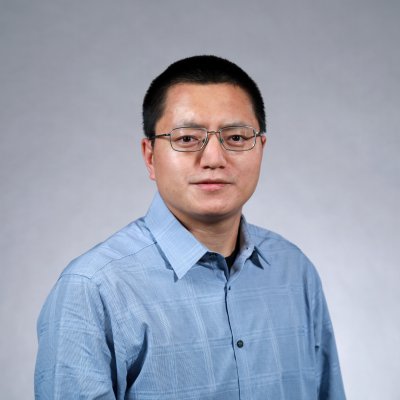
Xiaobo Li is a Professor in the Department of Bio-Medical Engineering at New Jersey Institute of Technology. Holding a Ph.D. in Computer Aided Geometric Design from the University of Birmingham and a B.S. in Automation from Nanjing University of Aeronautics, their research bridges computational methods with neuroimaging and psychiatric disorder analysis. Ph.D., University of Birmingham (Computer Aided Geometric Design, 2004) B.S., Nanjing University of Aeronautics (Automation, 1999) Dr. Li’s work focuses on applying machine learning and graph theory to understand brain network abnormalities in conditions like ADHD , schizophrenia , and traumatic brain injury . Their studies analyze structural-functional connectivity , reward processing , and gut-brain axis interactions using fMRI , fNIRS , and diffusion tensor imaging . Recent publications highlight their development of tools like the GAT-FD MATLAB toolbox for brain network analysis and their exploration of multimodal MRI in schizophrenia diagnosis. They also investigate the neurobiological effects of photobiomodulation and vision therapy interventions.
Shiguo Jiang is a tenured Associate Professor in the Department of Geography, Planning, and Sustainability at the University at Albany's College of Arts and Sciences. Currently on sabbatical during Fall 2025, he maintains active research leadership through the Spatial Analysis Laboratory. His affiliations extend to the PhD Program in Information Science (College of Emergency Preparedness, Homeland Security and Cybersecurity) and the MS Program in Biodiversity, Conservation, and Policy (Department of Biological Sciences), reflecting his interdisciplinary approach. Dr. Jiang's educational background includes a PhD from Ohio State University (2012), an MS from Peking University (2004), and dual BS/BA degrees from Peking University (2001). His research integrates geospatial technologies with spatial statistics to investigate land use dynamics, forest ecosystems, and human-environment interactions. Key application areas include urban systems analysis, climate change modeling, and crime pattern detection, with notable fieldwork in the Maya Forest of Belize. His publication portfolio reveals an evolution from urban fractal analysis (early Beijing studies) toward integrated socio-ecological research, with recent emphasis on crime geospatial modeling and climate-ecosystem interactions. The 15 most recent articles demonstrate methodological innovation in remote sensing reconstruction and spatial statistics, applied across environmental, criminological, and public health domains. Dr. Jiang actively mentors graduate students across departments including Geography, Sociology, Information Science, and Criminal Justice. While currently unable to fund Graduate Research Assistants, he collaborates with students who secure external funding. His Spatial Analysis Laboratory requires technical proficiency in programming (Python/R/Matlab) and geospatial software, welcoming undergraduates through postdoctoral researchers with relevant skills.
Dr. Shakhawat Hossain is a Professor of Statistics at the University of Winnipeg, serving as Chair starting July 2025. He holds adjunct positions at the University of Manitoba and University of Regina. His academic journey includes a PhD from the University of Windsor (2008), postdoctoral training at the University of Alberta's School of Public Health (2008–2010), and prior faculty roles at Alabama A & M University. He specializes in advanced statistical methodologies with applications in health sciences and epidemiology. Dr. Hossain's education includes: Ph.D. in Statistics, University of Windsor M.Sc. in Statistics, University of Alberta M.Sc. in Mathematics, Jahangirnagar University, Bangladesh B.Sc. (Hons.) in Mathematics, Jahangirnagar University, Bangladesh His research focuses on shrinkage estimation techniques , longitudinal data analysis , survival analysis , and health services research . He actively applies these methods to study dengue transmission dynamics, neuroimaging correlates of developmental disorders, and clinical outcomes in pediatric populations. His work bridges theoretical statistical innovation with real-world public health challenges. Dr. Hossain currently holds an NSERC Discovery Grant supporting student research. His 2023-2024 publications emphasize spatial epidemiology, advanced survival models, and dengue fever dynamics. He serves as Associate Editor of the Journal of Statistical Computation and Simulation . His advisory and grant activities include mentoring students in statistical modeling and securing funding for interdisciplinary health projects. While specific lab affiliations are not explicitly stated, his collaborations span departments in statistics, public health, and biomedical sciences.
Igor Francetic is a Research Fellow at the Division of Population Health, Health Services Research & Primary Care at the University of Bristol. He holds a PhD in Public Health from the University of Basel (2019) and has expertise in health economics, applied microeconomics, and econometric analysis. His research focuses on healthcare organization, health behaviors, and policy evaluation, with a particular emphasis on emergency care prioritization, primary care workforce dynamics, and health inequalities. He has contributed to policy-oriented projects in Switzerland and Tanzania, including studies on hospital networks, patient safety, and health systems governance. **Education**: PhD in Public Health (University of Basel, 2019) MSc in Economics (University of Lausanne, 2016) BA in Economics (University of Lugano, 2012) BSc in Business Administration (SUPSI, 2011) **Research Interests**: His work explores cancer screening, spillover effects in healthcare, emergency care disparities, and primary care networks. He employs microeconometric and network analysis tools, leveraging platforms like R and Stata. Recent studies include evaluating skill-mix changes in primary care (England), socioeconomic disparities in emergency care access, and the impact of social accountability monitoring in Tanzania. **Awards & Fellowships**: SSPH+ Fellow, Swiss School of Public Health (2024–) SNSF Ambizione Fellow, SUPSI (2024–) **Teaching**: Co-lecturer for the Health Economics unit (ECON 32202) at the University of Bristol. **Professional Memberships**: Health Economists' Study Group UK (HESG) Royal Economic Society (RES) Swiss Society of Health Economics (sggö) Croatian Health Economics Association (CHEA) – Co-founder and board member
Michele Jonsson-Funk, PhD, is an Associate Professor in the Department of Epidemiology at the UNC Gillings School of Global Public Health and Director of the Center for Pharmacoepidemiology. She leads the Pharmacoepidemiology Program within the Department and serves as an Affiliate Faculty member at the Injury Prevention Research Center. Dr. Jonsson-Funk is also a Fellow of the International Society for Pharmacoepidemiology and holds leadership roles in several professional organizations, including the Board of the International Society for Pharmacoepidemiology and advisory roles in epidemiology and clinical research networks. Dr. Jonsson-Funk holds a PhD in Epidemiology from the University of North Carolina at Chapel Hill (2003), a Master of Science in Public Health (MSPH) in Epidemiology from UNC Chapel Hill (2000), and a BA in Psychology from Reed College (1994). Her research focuses on pharmacoepidemiology, methods for estimating treatment effects in observational data, and women’s health. She examines topics such as sex differences in medication safety and efficacy, maternal and child health outcomes, and the application of electronic health records for population-level analyses. Her work integrates data from Medicare, Marketscan, and the Carolina Data Warehouse for Health to evaluate treatment effectiveness and safety. Dr. Jonsson-Funk has received several honors, including: Fellow, International Society for Pharmacoepidemiology (2018–present) Research Fellow, Sheps Center for Health Services Research, UNC Chapel Hill (2005–present) Member, Delta Omega Honorary Public Health Society, Theta Chapter (2004–present) Her research portfolio includes grants such as an R01 evaluating treatment effect heterogeneity in cardioprotective medications. She advises on interdisciplinary teams through her leadership roles in the Building Interdisciplinary Research Careers in Women’s Health (BIRCWH) Program and the Observational Pharmaco-Epidemiology Research & Analysis (OPERA) network. She also leads the Pharmacoepidemiology Research Lab Network under BIRCWH. Dr. Jonsson-Funk collaborates with clinical colleagues on studies addressing pelvic floor disorders, medication use during pregnancy, and diabetes-related cancer risks. Her methodological contributions include improving propensity score techniques and addressing confounding by frailty in observational studies.
Professor David Gillatt is a leading urological oncologist and robotic surgeon at Macquarie University, specializing in prostate and bladder cancer treatments. He holds roles as Director of Medical and Surgical Services at MQ Health, Head of Urology Clinical Discipline, and Professor of Urological Oncology and Robotics. With over 25 years of experience, he has performed over 2,000 major resections and pioneered the Enhance Recovery program for cystectomy, a globally recognized innovation. His clinical expertise includes robotic surgery training programs and advanced pelvic cancer surgery. Education and Qualifications: Gillatt holds a Bachelor of Surgery and Medicine from the University of Manchester (1980), Fellowships from the Royal College of Surgeons of England (1993), Edinburgh (1984), and the Royal Australasian College of Surgeons (2015). Research Focus: His work spans clinical trials and basic science, including biomarker discovery for prostate cancer (e.g., IGFs and volatile diagnostics) and the impact of ketamine abuse on bladder function. He led the Bristol Chief Investigator role for the national PROTECT study and established the Prostate Cancer Care and Research Centre in the UK. Projects and Collaborations: Key projects include robotic surgery training methodologies, high-dose vitamin D trials for prostate cancer (Pros-D), and molecular imaging advancements for bladder cancer using upconversion nanoparticles. Awards and Recognition: His fellowships (FRCS, FRACS) and contributions to global urological advancements highlight his expertise. He is recognized for strengthening Macquarie’s multidisciplinary prostate cancer care model. Labs and Teams: He leads surgical and research teams at Macquarie University Hospital, collaborating on bioreactor technologies and cancer radioimmunotherapy initiatives.
Yves Rosseel is a Professor at Ghent University (UGent) specializing in Structural Equation Modeling (SEM) , Psychometrics , and Statistical Methodology . With over 15 recent publications (2024-2025), he focuses on small-sample SEM solutions, factor score regression, measurement error, and Bayesian extensions. His work bridges Statistics with applications in Psychology , Education , and Neuroimaging . Research Trends Developed Mixture Multigroup SEM for cross-group comparisons Proposed Information-Theoretic Hypergraphs in psychometrics Advanced Two-Stage Estimation for round-robin data Created blavaan R package for Bayesian SEM Investigated Measurement Error in hypothesis testing Scientific Contributions Published 84 Social Sciences papers, 37 Statistics works, and 11 Neuroimaging studies Promoted 8 PhDs including Sara Dhaene and Julie De Jonckere Co-authored 12+ works with Marijke Welvaert and 10+ with Stijn Vanheule
Lawrence D. W. Schmidt is the Victor J. Menezes Career Development Assistant Professor of Finance at the MIT Sloan School of Management. He holds a PhD and MA in Economics from the University of California, San Diego, and previously served as an Assistant Professor at the University of Chicago’s Kenneth C. Griffin Department of Economics. His research bridges finance and macro-labor economics, focusing on household risk exposures, institutional investor behavior, and labor market dynamics. Key areas include human capital valuation, asset pricing implications of labor market risks, and the design of retirement savings institutions. Education: BA, University of California, Santa Barbara; PhD and MA, University of California, San Diego. Research Interests: Human capital risk and asset pricing Income inequality and retirement savings disparities Big data analysis of labor and financial markets Policy design for financial welfare Recent Trends in Publications: Schmidt’s work increasingly emphasizes the interplay between technological change and labor market outcomes, particularly in quantifying risks faced by workers and the implications for financial markets. His studies on retirement savings inequities highlight racial and socioeconomic disparities in wealth accumulation, informed by large-scale administrative datasets. Awards: 2024 Dimensional Fund Advisors Prize 2015 AQR Top Finance Graduate Award Advising & Grants: Collaborations with institutions like NBER and MIT Sloan reflect his focus on policy-relevant research. His work often involves interdisciplinary teams, as seen in co-authored papers on employer 401(k) practices and technology-driven labor displacement. Labs/Teams: Active contributor to the MIT Sloan Consumer Finance Initiative, which explores household finance and policy solutions for economic stability.
Clinical Associate Professor Therese McGee is affiliated with the Westmead Clinical School, part of the Sydney Medical School at the University of Sydney. Her work focuses on maternal and neonatal health, particularly in obstetrics and gynaecology, with a strong emphasis on clinical research and guideline implementation. She investigates diverse topics such as perinatal outcomes, pandemic impacts on healthcare, and optimizing healthcare delivery models. Her research often addresses challenges in multiethnic populations and evaluates interventions to improve patient care and reduce healthcare costs. Her research interests include perinatal care, gestational diabetes, hypertensive disorders in pregnancy, and the validation of hospital data to ensure accurate reporting of maternal medical conditions. She also explores fetal surveillance techniques, neonatal jaundice management, and the efficacy of midwifery-led care models. Her work frequently employs mixed-methods and cohort study designs, reflecting a commitment to evidence-based practice. Therese has contributed to studies on uterine rupture, anaemia in pregnancy, and the use of rapid diagnostic tests for preventing neonatal infections. Her articles highlight a focus on healthcare quality, patient-centered care, and improving clinical guidelines through rigorous analysis. The scope of her research spans both clinical and public health dimensions, addressing issues such as antibiotic exposure reduction and maternal morbidity in Australian contexts. Grants: Efficacy and safety of vaccination in at-risk pregnant women and impact on infant immune responses (2017) Are we there yet? Optimising timing of planned birth to improve newborn outcomes and reduce health service costs (2017) Therese is involved in collaborative projects through Sydney Health Partners, focusing on applied research with real-world healthcare implications. Her studies often involve interdisciplinary teams, reflecting her role in bridging clinical practice and academic research. While no formal student advisees are listed, her publications suggest active participation in mentoring research cohorts.
Bård Erlend Solstad is an Associate Professor at the Department of Sport Science and Physical Education, University of Agder. His research focuses on youth sports psychology, athlete development, and coach education, with a particular emphasis on the impact of training loads, motivation, and injury prevention in young athletes. He holds a postdoctoral fellowship from the Norwegian Research Centre for Children and Youth Sports (2017–2020) and was a Research Fellow at the Norwegian School of Sport Sciences (2012–2017). Key affiliations: ROPE (Research in Outdoor and Physical Education), SPADE (Sports Performance and Athlete Development Environments). Research interests include the psychological aspects of sport injury, perfectionism in elite performers, and the motivational climate in youth sports. His work integrates qualitative and quantitative methods to address issues like athlete well-being, coaching practices, and retention in organized sports. Recent studies have explored factors influencing dropout rates in youth soccer and the efficacy of interventions like the FUEL program for female endurance athletes. Solstad has advised on coach education initiatives, emphasizing empowering coaching behaviors and the psychological needs of athletes. He collaborates with multidisciplinary teams to advance athlete development programs and policy recommendations.
Prof. Dr. Steffi Pohl holds the Chair of Methods and Evaluation/Quality Assurance at the Faculty of Education and Psychology, Freie Universität Berlin since 2019. Previously, she was a Junior Professor (2013-2019) and researcher at institutions including Friedrich-Schiller University Jena and University of Bamberg. She earned her PhD in Psychometrics from Friedrich-Schiller University Jena (2010) and holds a Diplom in Psychology (2004) from Freie Universität Berlin. Her research focuses on advanced statistical methods in educational and psychological testing, including response time modeling, missing data mechanisms, and causal inference in assessment. She has pioneered work on test engagement detection via response patterns and log数据分析. Awards include the 2020 Psychometric Society Early Career Award and 2011 Gustav A. Lienert Dissertation Prize. Pohl serves on editorial boards of Psychometrika , Journal of Educational and Behavioral Statistics , and Zeitschrift für Psychologie . She chairs the Berlin School of Mind and Brain faculty and holds governance roles in academic senates. Her research projects include the National Educational Panel Study (NEPS) and collaborations on test design innovations. Current teaching includes advanced courses in empirical research methods, multivariate statistics, and educational measurement. She actively develops methodologies for analyzing log数据 from digital testing platforms and improving assessment reliability in large-scale studies.