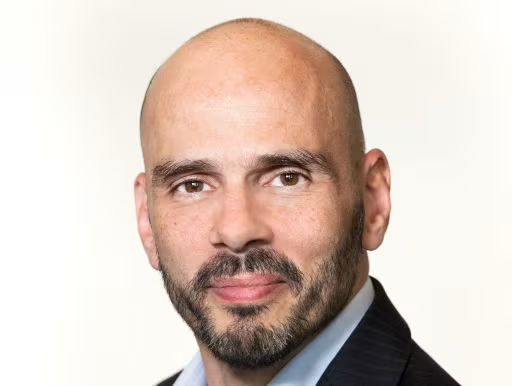
Prof. Sergio Ginebri is an Associate Professor at the Department of Jurisprudence, University of Rome Tre. He holds a PhD in Economics from Sapienza University of Rome and has extensive experience in fiscal policy, pension systems, and public finance research. His work focuses on topics like pension sustainability, social inequality, and the political economy of public debt. Education: PhD in Economics, Sapienza University of Rome (1988–1992) MA in Economics, University of Warwick (1987–1988) Laurea in Statistics and Demography, Sapienza University of Rome (1977–1984) Research Interests: Prof. Ginebri specializes in public policy, fiscal sustainability, and the social impacts of pension reforms. His research explores how demographic trends, wealth distribution, and political dynamics shape economic policies. Recent work includes analyses of longevity risks, pension equity, and fiscal policy integration in the EU. Key Projects: Coordinated studies on pension system sustainability (2002–2018) Developed models for forecasting public pension expenditure Contributed to EU tax policy observatories Awards: Recipient of the national PhD award (1994) and recognition for academic excellence in tax policy research (2001). Teaching: Teaches courses in political economy, public finance, and macroeconomics at undergraduate and graduate levels.
Jillian Bohlen is an Associate Professor at the University of Georgia within the College of Agricultural & Environmental Sciences , specifically the Department of Animal and Dairy Science . Her work focuses on dairy cattle reproduction, teaching, and youth development in agricultural sciences. Education: B.S. in Dairy Science, University of Georgia (2003) M.S. in Dairy Science, University of Georgia (2005) Ph.D. in Animal Sciences, Clemson University (2012) Dr. Bohlen's research emphasizes applied reproduction in cattle , including synchronization techniques, ultrasound applications in reproductive programs, and embryo competency. She integrates students into all research projects despite lacking a formal research appointment. Her teaching interests span dairy cattle production , reproductive management , and contemporary agricultural issues , with courses like ADSC 3620 (Dairy Cattle Production), ADSC 4010 (Issues in Animal Agriculture), and ADSC 4410 (Applied Reproductive Management). Scientific awards include: Student Career Success Influencer Award (2024) Russell Award for Excellence in Undergraduate Teaching (2023) UGA Creative Teaching Award (2022) CAES Early Career Teaching Award (2022) Hoard's Dairyman Youth Development Award (2021) Larry Benyshek Teaching Award (2017) She actively promotes agricultural education through programs like the Commercial Heifer Project , Dairy Cattle Judging , and Dairy Quiz Bowl . Additionally, she participates in funded projects related to methane emissions , heat stress mitigation , and antibiotic alternatives in dairy farming.
David Landriault is a Professor in the Department of Statistics and Actuarial Science at the University of Waterloo, Canada, and a Canada Research Chair in Risk Theory. His research focuses on Actuarial Science, Quantitative Risk Management, Applied Probability, and Stochastic Processes, particularly in ruin theory, drawdown analysis, and stochastic control for insurance and finance applications. Education: PhD in Mathematics (2005), MSc in Mathematics (2003), BSc in Actuarial Science (2002) from Laval University. Affiliations: University of Waterloo (postdoctoral fellowship, 2006); Canada Research Chair in Risk Theory. Research Interests Risk and Ruin Theory Stochastic Control in Insurance and Finance Drawdown and Occupation Time Analysis Regime-Switching Models Reinsurance Design and Optimization Time-Dependent Risk Models Scientific Awards Fellow of the Canadian Institute of Actuaries (F.C.I.A.), 2009 Fellow of the Society of Actuaries (F.S.A.), 2006
Dr. Christina Allen is a Professor of Orthopaedics & Rehabilitation at Yale School of Medicine, where she serves as Chief of Yale Sports Medicine and Vice Chair of Athletic Medicine and Community Outreach. She is the Orthopaedic Team Physician for Yale Athletics and has extensive experience with U.S. national teams, including U.S. Soccer and USA Taekwondo. Education: BS in Biomedical Engineering, Duke University (1983); MD, UCLA School of Medicine (1995) Training: Orthopaedic Residency and Sports Medicine Fellowship, University of Pittsburgh Research Interests focus on: Revision ACL reconstruction outcomes and predictors Meniscus transplantation and cartilage repair Proximal hamstring avulsion repair Quantitative MRI for joint kinematics and cartilage changes Post-ACL revision infection risk factors Scientific Awards include: Kappa Delta Ann Doner Vaughn Award (2019) NIH R01 Competitive Renewal Grant (2017) AOSSM O’Donoghue Award (2014) Clinical Roles span: Team physician for U.S. Soccer (Women's/Men's National Teams) Former team physician for San Francisco Deltas (NASL Champions 2017) Medical Board member, World Taekwondo (London Olympics 2012, Rio Olympics 2016) Publications highlight a 20-year longitudinal focus on: Machine learning models for surgical outcome prediction Graft choice impact on revision ACL longevity Cartilage degeneration after meniscectomy Biomechanical MRI analysis of joint kinematics Infection rates in revision surgeries Return-to-sport protocols for athletes
Owen O'Donnell is a Full Professor of Applied Economics at the Erasmus School of Economics and Erasmus School of Health Policy & Management , Erasmus University Rotterdam. He is a Research Fellow at the Tinbergen Institute and an Editor of the Journal of Health Economics . Education: DPhil, University of York (UK) Research Interests: His work focuses on health economics, including health inequality, health insurance, financial protection, and labor economics, with applications in low-, middle-, and high-income countries. He employs cross-sectional analyses, equity-sensitive frameworks, and global health policy evaluation. Publications & Collaborations: He has published extensively in top journals like Lancet , PLOS Medicine , and Demography , addressing cardiovascular disease, hypertension screening, and healthcare access in India, Philippines, and Sub-Saharan Africa. His recent research emphasizes equity-sensitive welfare weights and treatment gain inequality. Professional Activities: He has served as an Editor for the Journal of Health Economics since 2007 and is actively involved in peer-review and editorial work until 2026.
Sarah Harper is the Clore Professor of Gerontology at the University of Oxford and Director of the Oxford Institute of Population Ageing. She was appointed a CBE in 2018 for services to Demography and serves as Chair of HelpAge International. Professor Harper has held numerous influential positions including serving on the Prime Minister's Council for Science and Technology and as Director of the Royal Institution of Great Britain. Her educational background includes an MA from Cambridge and a DPhil from Oxford. Prior to her academic career, she trained with the BBC as a News and Current Affairs Reporter and Producer. She subsequently held academic positions at the University of London and the University of Chicago before returning to Oxford to found the Oxford Institute of Population Ageing. Professor Harper's research focuses on demographic change, particularly the implications of falling fertility and increasing life expectancy. Her work examines life course factors in healthy ageing, social and economic drivers of health and well-being, with emphasis on life transitions. She has conducted significant research on eldercare in China, fertility patterns in sub-Saharan Africa (revealing that ideal family size remains high despite girls' education), and demographic changes in Vietnam and Myanmar affecting agricultural production and food security. Her publication record demonstrates consistent focus on global demographic trends, with recent work increasingly addressing the intersection of population change with environmental challenges. She has authored influential books including 'How Population Change Will Transform Our World' (Oxford University Press, 2016) and is working on a new book for Cambridge University Press on Population and Environmental Change. Scientific Awards and Honors CBE (Commander of the Order of the British Empire) in 2018 for services to Demography Royal Society for Public Health: Arts and Health Research Award (2011) Fellow of the Academy of Medical Sciences Fellow of the Royal Anthropology Institute Professor Harper has supervised numerous PhD students across diverse topics from biodiversity conservation in Southeast Asia to intergenerational solidarity in Turkey. Her advisory work extends globally, having served on the Scientific Advisory Board of Natural England, the Royal Society's Working Group on Population and Environment, and as an advisor to governments including the UK, Malaysia, Singapore, and the European Commission. She has received research funding from organizations including the US National Institutes of Health, which supported the founding of the Oxford Institute of Population Ageing. As Director of the Oxford Institute of Population Ageing, Professor Harper leads a multidisciplinary team examining demographic trends and their societal implications. The Institute serves as a hub for international collaboration on ageing research, working with organizations including Population Europe and the International Association of Research Universities. She also serves as founding editor of the Journal of Population Ageing and editor of the Handbook of Ageing and Public Policy.
Dr. Alister Smith is a Reader (Associate Professor) in Geotechnics at Loughborough University, where he directs the £1M National Engineered Slope Simulator (NESS) – the world’s first climate-controlled facility testing clay slope deterioration. His £6.7M research portfolio addresses geotechnical infrastructure resilience under climate change. Innovations include acoustic emission (AE) landslide early warning systems deployed across five continents, with the Community Slope SAFE project recognized in REF2021. Current work includes the RAINDROP doctoral training cluster on infrastructure prognosis and the £4.9M EPSRC ACHILLES programme on climate impacts. Awards: Philip Leverhulme Prize, ICE Thomas Telford Premium (twice), and Hawley Award for Engineering Innovation. He serves on the Lilly Fellows Program Board and edits for the International Journal of Christianity and Education.
Anita Zehrer is a Professor at the MCI Management Center Innsbruck, serving as Head of the MCI Management Center and the MCI Family Business Center. She holds a habilitation in Business Administration from the Catholic University of Eichstätt-Ingolstadt and a PhD in Social and Economic Sciences from the University of Innsbruck. Her academic career includes adjunct roles at institutions like the University of Notre Dame and the University of Canberra. Her research focuses on tourism management, family business dynamics, entrepreneurship, and risk management. Notable contributions include studies on family firm succession, destination competitiveness, and volunteer tourism. She has supervised numerous PhD students across topics like innovation in SMEs and female leadership in digital industries. Zehrer has been recognized with awards such as the AIEST 2021 Best Contribution Award and the Emerald Literati Award. She contributes to academic governance through editorial roles in journals like Journal of Family Business Management and TA | Tourism Analysis . Her work bridges academic research and practical application, addressing challenges in tourism destinations, family enterprise resilience, and sustainable development. Recent projects explore generational shifts, employer branding in family firms, and resilience strategies post-pandemic.
Detlef F. Sprinz is a Senior Scientist at the Potsdam Institute for Climate Impact Research (PIK) and a Professor at the Faculty of Economics and Social Sciences of the University of Potsdam, Germany. During 2024-2025, he leads the project "AMaReNa - A Market for the Restoration of Nature" , focusing on carbon removals. His academic background includes a Ph.D. and M.A. in Political Science from the University of Michigan and an M.A. in Economics from the University of the Saarland. Research Interests: Climate policy at multiple levels, long-term policy design, evaluation of international/national institutions, European/international environmental policy, and modeling political decisions for sustainability. Notable Projects: Tandem Fellowship (2020-2022) for interdisciplinary course development, Visiting Researcher at University of Lund (2022-2023), and coordination of research at the Käte Hamburger Kolleg (2017). Publications emphasize climate cooperation under the Paris Agreement, effectiveness of environmental regimes, and predictive modeling for climate negotiations. His work spans empirical analyses of acid rain regulation, Kyoto Protocol implementation challenges, and bioenergy accounting errors. Scientific Awards & Memberships: Tandem Fellowship (German Stifterverband) Member, European Academy Co-founder, Ecologic Institute Teaching includes courses on global climate governance, political decision modeling, and environmental policy at the University of Michigan, Yale, University of Oslo, and University of Potsdam. He has contributed to IPCC’s Sixth Assessment Report as a Lead Author. Advisory Roles: Chairmanship of the European Environment Agency’s Scientific Committee (2009-2012), Senior Research Fellow at CICERO (2011-2013), and consultancy for governments, corporations, and think tanks.
Jeffrey T. Jensen, M.D., M.P.H., is the Leon Speroff Professor and Vice Chair for Research in the Department of Obstetrics and Gynecology at Oregon Health & Science University (OHSU). He holds joint appointments as Professor of Public Health and Preventive Medicine and serves as a Core Scientist at the Oregon National Primate Research Center (ONPRC). Dr. Jensen completed his medical degree at Emory University, a Master of Public Health at the University of Washington, and residency training at OHSU. Research Focus: Dr. Jensen leads translational and clinical research programs focused on contraceptive innovation. His work emphasizes nonhuman primate models to develop: Novel contraceptive agents targeting oocyte-specific pathways Non-surgical permanent contraception methods Optimized emergency contraception for diverse populations He directs OHSU's Women’s Health Research Unit and the Gates Foundation-funded Oregon Permanent Contraception Research Center (OPERM). Recent Publications: His 15 most recent articles (2023-2025) demonstrate concentrated expertise in: Advanced hormonal contraceptive formulations (IUDs, vaginal rings, oral agents) Weight-adjusted dosing strategies for emergency contraception Biomarker validation for contraceptive efficacy monitoring Real-world assessment of bleeding pattern management Leadership & Collaboration: Dr. Jensen is Principal Investigator of the NICHD Contraception Clinical Trials Network and collaborates with global health organizations (CONRAD, FHI360, Population Council). He serves as Deputy Editor for the journal Contraception and consults for multiple pharmaceutical companies on product development.
Professor Francisco Gomes is a Professor of Finance at the London Business School , where he has been a faculty member since 2000. His research focuses on capital markets, asset allocation, household finance, and macroeconomics , with a particular emphasis on life-cycle investing, retirement policy, and risk-sharing mechanisms. BA - Universidade Nova de Lisboa MA/PhD - Harvard University His work has been published in top-tier journals like The Journal of Finance , The Review of Financial Studies , and The American Economic Review . Recent publications analyze automation's impact on wealth dispersion, yield-chasing behavior in household investments, and optimal target-date fund strategies for retirement planning. Professor Gomes is a Research Affiliate of the Centre for Economic Policy Research (CEPR) and co-founded the CEPR Network on Household Finance. His research bridges theoretical models with empirical analysis, often incorporating computational methods (e.g., Fortran/Matlab code for life-cycle models).
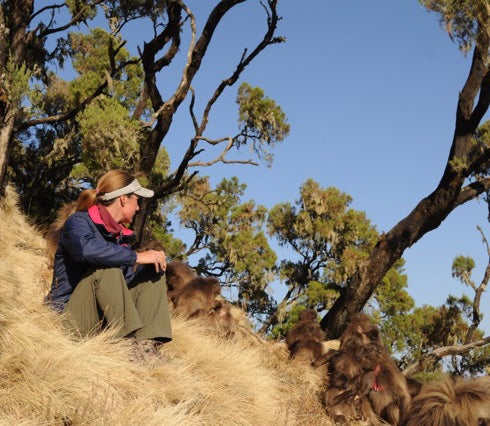
Dr. Jacinta C. Beehner is an Associate Professor in the Department of Anthropology & Psychology at the University of Michigan. Her research focuses on sexual conflict theory, reproductive strategies in primates, and the physiological and behavioral mechanisms underlying these dynamics. She directs the Core Assay Facility/Beehner Endocrine Laboratory and co-directs the Simien Mountains Gelada Research Project, Capuchins at Taboga, and the Evolution and Human Adaptations Program. Her work examines non-human primates like geladas, capuchins, and baboons in natural African and American habitats. Key themes include infanticide avoidance, hormonal responses to environmental stress, and the evolutionary implications of reproductive trade-offs. Recent studies highlight the impact of climate change on primate health, the role of social status in parasite resistance, and hormonal adaptations to high-altitude environments. Beehner has contributed to over 60 peer-reviewed articles since 2015, spanning topics from primate social networks to genomic adaptations. Her fieldwork emphasizes integrative methods combining endocrinology, genetics, and behavioral observation. She has presented at international forums like the National Geographic Explorer’s Festival and collaborates across disciplines to advance primate conservation and evolutionary biology.
Linda J. Harris, Ph.D., is a Distinguished Professor of Cooperative Extension in Microbial Food Safety at the University of California, Davis, within the Department of Food Science and Technology. She served as Department Chair from 2016 to 2021. Her research focuses on microbial food safety, particularly in fresh produce and tree nuts, emphasizing pathogen behavior, antimicrobial treatments, and standard microbiological methods validation. She collaborates with food producers, processors, and government agencies to address food safety challenges. Dr. Harris earned her Ph.D. in Food Science from North Carolina State University in 1991. Her work integrates laboratory studies with extension activities to ensure practical applications in food safety. Key areas include evaluating pathogen survival on produce, developing sanitation protocols, and assessing risks associated with low-moisture foods. Her research trends highlight advancements in pathogen detection (e.g., MALDI-TOF technology), contamination prevention in postharvest handling, and consumer practices affecting food safety (e.g., homemade nut-based products). Recent articles address Salmonella and Listeria survival on produce, irrigation impacts on pathogens, and validation of pathogen reduction processes. Awards: 2021 AAAS Fellow 2018 Institute of Food Technologists Fellow 2004 Elmer Marth Educator Award Her advising and grants focus on low-moisture food safety, extension education, and industry partnerships. She leads initiatives like the Scientific Integrity Consortium and collaborates on national food safety guidelines. Dr. Harris is affiliated with the Robert Mondavi Institute for Wine and Food Science at UC Davis.
Mark S. Hoddle is a Professor of Entomology and Biological Control Specialist at the University of California, Riverside (UCR), where he has headed research in his laboratory since 1997. He serves as the Director of the Center for Invasive Species Research and is a Principal Investigator focusing on biological control of invasive pests. His work bridges academic research with practical applications for California agriculture. Education: D.Sc. Zoology (2018), University of Auckland, New Zealand Ph.D. Entomology (1996), University of Massachusetts, Amherst M.S. Zoology (1991), University of Auckland, New Zealand B.S. Zoology (1988), University of Auckland, New Zealand Dr. Hoddle specializes in biological control, the intentional use of host-specific natural enemies to suppress pest populations. His research focuses on identifying pest problems amenable to biological control, locating and releasing natural enemies, and evaluating their impact on pest population growth. He works extensively with invasive species affecting California agriculture, particularly pests of citrus, avocado, palm trees, and other crops. His approach combines field evaluations with laboratory studies of pest and natural enemy biology and behavior. Analysis of Dr. Hoddle's recent publications reveals a strong focus on invasive species threatening California agriculture, particularly the Asian citrus psyllid, red palm weevil, and brown marmorated stink bug. His research integrates field and laboratory approaches, with emphasis on phenology modeling, natural enemy evaluation, and innovative control methods. Much of his work addresses the economic and ecological impacts of invasive pests on specialty crops. Scientific Awards: Entomological Society of America, Pacific Branch Entomology Team Leader Award (2023) UC-ANR Distinguished Service Award for Outstanding Research (2022) Fellow, Entomological Society of America (2018) California Department of Pesticide Regulations IPM Achievement Award for Asian Citrus Psyllid Biocontrol (2018) IOBC Distinguished Scientist of the Year (2015) Multiple awards from the Entomological Society of America (2007, 2012, 2013, 2014) Dr. Hoddle has mentored numerous students and researchers throughout his career, including postdoctoral scholars and specialists who contribute to his laboratory's work on invasive species. His research has been supported by various granting agencies, private institutions, and commodity boards, enabling extensive international projects focused on identifying and implementing biological control solutions for invasive pests. He has facilitated the Harry Scott Smith Scholarship Fund to support graduate students in biological control. Dr. Hoddle directs the Center for Invasive Species Research at UCR and leads a productive laboratory team that includes postdoctoral scholars, specialists, and students. The lab conducts research on multiple invasive species threatening California agriculture and natural ecosystems, with particular emphasis on citrus, avocado, and palm tree pests. Current projects include proactive biological control of the spotted lanternfly and research on invasive palm weevils, avocado pests, and other emerging threats.
Dr. Justin Gerlach is a Fellow at Peterhouse College and an Academic Associate at the University Museum of Zoology, University of Cambridge. He specializes in broad-spectrum ecology, integrating conservation biology, evolutionary studies, and biodiversity analysis with a focus on island ecosystems in the Indian and Pacific Oceans. His research has pioneered invertebrate reintroduction programs and revealed groundbreaking insights into giant tortoise behavior. Education: DPhil in Zoology from Oxford University Current projects: Biodiversity assessment across Cambridge colleges, Partula snail reintroduction, tortoise aging studies Research interests center on preventing species extinction through conservation, studying species interactions, and evolutionary dynamics. Key initiatives include saving island invertebrates, investigating tortoise predation, and environmental DNA applications for ecosystem reconstruction. Recent publications highlight island conservation challenges, evolutionary patterns, and ecological innovations. Themes include biodiversity preservation, species reintroduction, and interdisciplinary approaches to conservation biology.