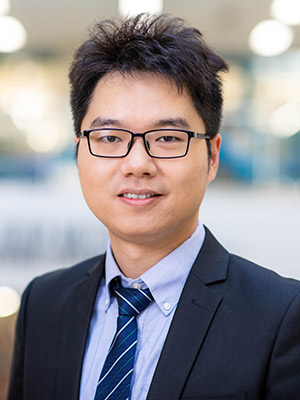
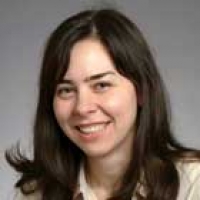
Cheng Zhang is an Assistant Professor in the Department of Computer Science & Engineering at Texas A&M University. His research focuses on computer vision, machine learning, artificial intelligence, and cyber-physical systems. He holds a Ph.D. from The Ohio State University (2022), an M.S. from Beijing University of Posts and Telecommunications (2016), and a B.Eng. from Tianjin University (2013). His work emphasizes high-fidelity 3D garment generation, text-to-image systems, and addressing challenges in long-tailed data for instance segmentation. Key achievements include the 2023 Best Paper Finalist at ICCV and the 2022 Ohio State University Graduate Research Award. Selected publications span top venues like ACM SIGGRAPH Asia, ECCV, and ICCV, showcasing contributions to generative models, view synthesis, and calibration techniques in computer vision.
Dr. Konstantin Bauman is an Associate Professor in the Department of Management Information Systems at Temple University's Fox School of Business. He holds a PhD in Mathematics (Geometry and Topology) from Moscow State University and dual Master’s degrees in Mathematics and Machine Learning from prestigious Russian institutions. His research focuses on machine learning, data science, and context-aware recommender systems, emphasizing novel methods for predicting customer preferences and designing personalized recommendation frameworks. Education: PhD in Mathematics (Geometry and Topology), Moscow State University MS in Mathematics, Moscow State University MS in Machine Learning, Moscow Institute of Physics and Technology/Yandex School of Data Analysis Research Interests: Data Science and Analytics Machine Learning and Recommender Systems Context-Aware Systems and Text Mining Technology-Enhanced Learning Recent Work Trends: His publications emphasize context-aware recommendation algorithms, privacy concerns in personalized systems, and applications of hyperbolic embeddings. He also explores device impact on employee feedback and cryptocurrency investor behavior using multimodal data analysis. Awards: None explicitly listed in the provided materials. Advising/Grants: No formal advisees listed; his work at Yandex and NYU involved leading machine learning teams and tackling large-scale data science challenges. Labs/Teams: Active in the MIS department at Temple, contributing to research on adaptive learning systems and enterprise machine learning applications.
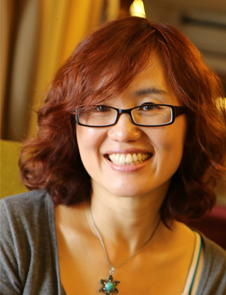
WonSook Lee is a tenured Full Professor in the School of Electrical Engineering and Computer Science at the University of Ottawa’s Faculty of Engineering. Her expertise spans medical imaging, machine/deep learning, computer graphics, and computer vision. She earned her Ph.D. in Computer Science from the University of Geneva (Switzerland) and holds degrees from POSTECH (Korea) and NUS (Singapore). Before academia, she worked at Korea Telecom, Samsung Advanced Institute of Technology, and Eyematic Interfaces Inc. (USA). Her research focuses on applications such as virtual/augmented reality, MRI/CT/Ultrasound analysis, and 3D mesh modeling. She has authored over 130 publications, including 30+ journal papers, and serves on conference committees and editorial boards. Lee has secured major grants (NSERC, CFI, ORF) as Principal Investigator and contributed to global initiatives like South Korea’s National Research Foundation. Her lab explores cutting-edge techniques in medical imaging, AI-driven object detection, and multimodal systems. Notable projects include adversarial perturbation analysis for model robustness, cross-domain GANs for semantic segmentation, and real-time ultrasound-enhanced pronunciation training. She actively promotes interdisciplinary research in healthcare technology and autonomous systems.
Yuzhe Yang is an Assistant Professor of Computational Medicine and Computer Science at UCLA, with a visiting research scientist role at Google Health. He holds a PhD in Computer Science from MIT (2024), advised by Dina Katabi, and a B.S. with honors from Peking University. Research Focus: Machine learning for healthcare, medical AI fairness, and AI-driven biomedical discovery Key Contributions: Ten Notable Advances (Nature Medicine) and Ten Crucial Advances (The Lancet Neurology) His lab develops Trustworthy Learning Algorithms and Generalist Health Models that integrate Multimodal Data for personalized health coaching. Notable projects include AI-based Parkinson's Disease Biomarkers via nocturnal breathing and Foundation Models for Equitable Medicine . Recent publications at ICLR 2025 (wearable foundation models), Nature Medicine 2024 (medical AI fairness), and Science Advances 2025 (vision-language medical bias) highlight his interdisciplinary work. He serves on ML4H workshops and reviews for top conferences like NeurIPS and ICML. Awards include Forbes 30 Under 30 , Takeda Fellowship , and Baidu PhD Fellowship . Advising opportunities: Recruiting PhD students (CS/CompMed) and postdocs in AI for health. Lab: Health Intelligence Lab (HAIL)
Dewei Yi is a Senior Lecturer (Associate Professor) in the Department of Computing Science, School of Natural and Computing Sciences at the University of Aberdeen, UK. He holds a PhD from Loughborough University and is an active researcher in AI, computer vision, and intelligent systems. He serves as Director of the MSc AI and MSc Robotics and AI programmes. Research Interests: His research spans AI-enabled healthcare, medical image processing, intelligent vehicles, robotics, precision agriculture, remote sensing, and applied machine learning. He focuses on hybrid intelligent systems, personalised AI, federated learning, fairness, and explainability. Recent Publication Trends: His latest work includes medical image quality evaluation using contrastive learning, federated learning for diabetic retinopathy, UAV-based solar panel inspection, vascular image analysis, and emotion recognition from ECG data, reflecting a strong trend toward healthcare and intelligent systems with real-world impact. Scientific Awards: Fellow of the Higher Education Academy (FHEA) Outstanding Reviewer, Transportation Research Part C (TRC) Advising and Grants: Dr Yi supervises multiple PhD students in AI, computer vision, and machine learning. His graduated PhDs include Debinal Bakyavathi Rajan, Sami Hamid Al Sulaimani, and Adinath Abhimanyu Ghadage. He has secured significant funding as PI and Co-PI, including a £408K Smartawl 5.0 project and a £794K Cancer Research UK grant (Co-PI). Labs and Teams: He leads research in AI for healthcare and intelligent vehicles, collaborating with institutions like University of Warwick, Loughborough University, and industry partners such as AVL Powertrain Ltd. His work is supported by interdisciplinary teams focusing on embedded AI, medical applications, and sustainable technologies.
Kaize Ding is an Assistant Professor in Statistics and Data Science at Northwestern University, leading the REAL Lab and affiliated with the IDEAL Institute. He holds a Ph.D. in Computer Science from Arizona State University (2023) under Prof. Huan Liu, with prior degrees from Beijing University of Posts and Telecommunications. His research focuses on reliable AI systems for autonomous decision-making, knowledge-guided algorithms using GNNs/LLMs, and applications in healthcare, environmental science, and cybersecurity. Collaborations include Google Brain, Microsoft Research, and Amazon Alexa AI. Education: Ph.D. in Computer Science, Arizona State University (2023) M.S. and B.S., Beijing University of Posts and Telecommunications Research Interests: Developing robust AI for decision-making under uncertainty Graph-based machine learning for anomaly detection and network analysis Large language models (LLMs) integrated with domain-specific knowledge Cross-domain applications in healthcare diagnostics, environmental monitoring, and cybersecurity Recent Activities: Received Amazon Research Award and Google Research Grant NeurIPS 2025 Area Chair and ARR Area Chair Postdoc opening in AI4Health for swallowing disorder research Recent publications at AAAI, NeurIPS, EMNLP, and KDD Lab & Team: The REAL Lab focuses on advancing AI through interdisciplinary projects. Current students include Ruiyao Xu (PhD), Qingcheng Zeng (co-advised), and over 10 master's/undergraduate researchers. Alumni have moved to top PhD programs at UVa, UIC, and JHU.
Dina Katabi is the Thuan and Nicole Pham Professor of Electrical Engineering and Computer Science at MIT, leading the Katabi Lab and directing the MIT Center for Wireless Networks and Mobile Computing. Her research bridges AI, wireless systems, and digital health, focusing on non-invasive health monitoring via wireless signals and machine learning. She is a MacArthur Fellow and holds the Andrew & Erna Viterbi Professorship. Key research areas include emotion recognition (EQ-Radio), sleep posture monitoring (BodyCompass), and through-wall human pose estimation. Her lab develops AI systems for biosensors, leveraging RF signals to detect diseases like Parkinson's and Alzheimer's. Notable awards include the ACM Prize in Computing and SIGCOMM's Lifetime Achievement Award. Publications span wireless networks, computer vision, and health tech, with impactful work in CVPR, ECCV, and Nature Medicine. She advises over 20 students/postdocs and collaborates on technologies like in-body backscatter communication and AI-driven drug development monitoring. Labs: Katabi Lab (MIT CSAIL) and the MIT Wireless Center. Ongoing work explores digital biomarkers, self-supervised learning, and scalable health monitoring systems for chronic diseases.
Christopher Zach is a Research Professor at Chalmers University of Technology, affiliated with the Signal Processing and Medical Technology department within the Digital Image Systems and Image Analysis research group . His work focuses on 3D reconstruction , real-time computer vision , and numerical optimization for machine learning. Develops 3D image understanding techniques Specializes in robust optimization for vision systems Leads research in medical image analysis Recent publications demonstrate expertise in low-light text enhancement , out-of-distribution detection , and domain adaptation for industrial applications. Active in Chalmers' Wallenberg AI and ÅForsk funded projects. Collaborates with researchers from Volvo Group , Volvo Cars , and SAFER Vehicle Safety initiatives.
Luming Tang is a Research Scientist at Google DeepMind in New York City. He earned his Ph.D. in Computer Science (2024) from Cornell University under Professor Bharath Hariharan, and a Bachelor's in Mathematics and Physics from Tsinghua University (China). Educational Background Ph.D. in Computer Science, Cornell University (2024) Bachelor's in Mathematics and Physics, Tsinghua University (China) His research spans Computer Vision , Generative Models , Multimodal Learning , and AI Systems , with notable work on image diffusion , 3D content creation , few-shot learning , and visual prompt tuning . Publications highlight advancements in autoregressive visual generation , cosine few-shot learners , and spatial-temporal reasoning . His academic service includes peer-review roles at conferences (CVPR, ICCV, NeurIPS) and journals (TPAMI, IJCV), alongside teaching assistantships at Cornell University for courses like CS 4787 Principles of Large-Scale Machine Learning and CS 6670 Graduate Computer Vision . Personal interests include soccer and gaming (FIFA series), though an ankle injury temporarily sidelines him from play.
Shichao Zhang is a Professor at Qingdao University's College of Computer Science and Technology, Remote Sensing Information and Digital Earth Center. His research spans Graph Neural Networks, Recommendation Systems, Image Processing, and Quantum Machine Learning. Research Trends & Fields: His recent work focuses on Contrastive Learning and Fair Graph Representations Quantum Algorithms for Noisy Data Classification Advanced Hashing Techniques for Cross-Modal Retrieval Multi-Causal Analysis in Recommender Systems Transformer-Based Models for Vision Tasks Long-Tailed Data Handling in Image Classification
Shaoyu Zhang is a researcher affiliated with the Institute of Automation at the University of Chinese Academy of Sciences . His work focuses on machine learning techniques for addressing data imbalance in visual recognition tasks. Research interests include: Long-tailed learning and imbalanced data handling Mixup and data augmentation strategies Knowledge distillation mechanisms Visual recognition and object detection Key publication trends (2020-2024) show expertise in: Developing teacher-student learning frameworks Designing probability space alignment methods Improving model robustness through balanced training Advancing few-shot representation learning
Guansong PANG is a full-time Assistant Professor at the School of Computing and Information Systems , Singapore Management University (SMU) , where he leads the Machine Learning & Applications (MaLA) Lab . He holds a PhD from University of Technology Sydney (2019) and has previously served as a Research Fellow at the Australian Institute for Machine Learning , University of Adelaide. Research Interests : His work centers on machine learning and data mining , particularly focusing on anomaly detection , open-world learning , and foundation models for graphs, time series, and tabular data. He investigates security and safety in foundation models , including hallucination mitigation and AI-generated content detection , with applications spanning network intrusion detection , fraud detection , industrial defect detection , and biometric anti-spoofing . Recent Awards : Lee Kong Chian Fellowship (2024-2026) World's Top 2% Scientists (2022-2024) DSAA 2023 Best Paper Award (Applications Track) Most Influential KDD 2023 Paper Professional Roles : Area Chair for NeurIPS, ICLR, ICML, CVPR, KDD, PAKDD, IJCAI, and AAAI; Associate Editor for IEEE Transactions on Neural Networks and Learning Systems and Pattern Recognition ; Editorial Board member for IEEE Intelligent Systems and International Journal of Data Science and Analytics .
Dr. Andy Guo is a Senior Research Fellow at the Data Science Institute within the Faculty of Engineering and Information Technology at the University of Technology Sydney (UTS). With extensive experience in data science and machine learning applications, he collaborates closely with industry partners on critical infrastructure projects including transportation systems, water management, and financial markets. His work bridges advanced AI research with practical industry solutions. Dr. Guo received his PhD in Computer Science from the Faculty of Engineering and Information Technology at UTS between April 2012 and November 2015. Prior to his current position, he worked at several prestigious research institutions including Data61, CSIRO, and NICTA, building a strong foundation in both theoretical and applied data science. His research focuses on deep learning, graph-based learning, and infrastructure failure prediction, with particular expertise in developing solutions for railway operations optimization, water infrastructure management, and financial market analysis. Dr. Guo's work combines advanced machine learning techniques with domain-specific knowledge to address complex real-world problems across multiple sectors. His research has significant practical implications for improving infrastructure reliability and operational efficiency. Analysis of Dr. Guo's recent publications reveals a strong focus on applying graph neural networks and spatio-temporal modeling to infrastructure and transportation challenges. His work consistently demonstrates how machine learning can be deployed in real-world settings to solve complex problems in railway systems, sewer infrastructure, and financial markets. The trend shows increasing sophistication in handling imbalanced data and developing consensus-based recommendation systems that address both accuracy and fairness concerns. Best Overall Paper Award at PAKDD 2021 Sydney Trains project selected as finalist for ITS Australia National Award 2020 Dr. Guo actively supervises Masters and PhD students and serves on program committees for prestigious conferences including ICDM, IJCAI, KDD, and AAAI. His funded research portfolio includes multiple projects with iMOVE CRC, Sydney Water, Sydney Trains, Telstra, and NBN, focusing on infrastructure analytics, railway operations, and financial market analysis. These projects demonstrate his ability to secure competitive funding and translate research into practical applications. As a core member of the Data Science Institute at UTS, Dr. Guo collaborates with cross-disciplinary teams to develop innovative AI solutions for infrastructure management. His work with industry partners has led to deployed systems that improve railway punctuality, predict sewer failures, and enhance financial market monitoring, demonstrating the real-world impact of his research.
Ee-Peng Lim is a Professor at the School of Information Systems, Singapore Management University. His research spans artificial intelligence, data mining, natural language processing, and computer vision, with applications in healthcare, education, finance, and food computing. He leads projects developing AI systems for behavioral counseling, educational analytics, and multimodal food recognition. Research Interests: Dr. Lim's work focuses on conversational AI for mental health interventions, educational data mining for student performance prediction, food computing for nutrition analysis, and multimodal learning frameworks. His recent projects leverage large language models for complex reasoning tasks and develop robust computer vision systems for real-world applications. Publication Trends: Recent articles (2024-2025) show strong emphasis on multimodal AI systems, large language model applications in behavioral science and healthcare, educational analytics, and advanced food computing techniques. His work increasingly integrates cognitive science principles with deep learning architectures. Leadership: Dr. Lim collaborates extensively with international researchers and has co-organized academic workshops including the International Workshop on Talent and Management Computing (TMC) at KDD.
Xinchao Wang is an Assistant Professor and Presidential Young Professor in the Department of Electrical and Computer Engineering at the National University of Singapore (NUS), College of Design and Engineering. He leads the xML Lab, focusing on machine learning and artificial intelligence. Prior to joining NUS, he was an Assistant Professor at Stevens Institute of Technology in the Department of Computer Science and a Postdoctoral Researcher at the Beckman Institute, University of Illinois Urbana-Champaign, under the late Professor Thomas Huang. He earned his Ph.D. in Computer Vision from École polytechnique fédérale de Lausanne (EPFL) under Professor Pascal Fua and a B.Sc. in Computing from the Hong Kong Polytechnic University with first-class honors and a perfect GPA. His research spans machine learning, computer vision, and artificial intelligence, with a focus on diffusion models, vision-language models, 3D generation, and dataset distillation. His recent publications demonstrate strong trends in efficient generative modeling, including acceleration techniques for diffusion models, 3D scene reconstruction, and novel architectures for vision and language tasks. His work frequently appears in top-tier conferences such as CVPR, NeurIPS, ICCV, ECCV, and ICLR. AI's 10 to Watch, IEEE (2025) Young Research Award, NUS (2025) Young Research Award, NUS CDE (2024) Best Paper Award, IEEE VCIP 2022 Outstanding Early Career Award, NUS CDE (2023) College Teaching Excellence Award, NUS CDE (2023) He actively advises Ph.D. students, many of whom have received prestigious awards including the Google Fellowship and ByteDance Scholarship. He has served as an Associate Editor for IEEE Transactions on Image Processing since 2023. His lab is actively recruiting Ph.D. students, postdocs, visiting scholars, and research assistants in machine learning and AI. He teaches core courses at NUS including Introduction to Machine Learning, Deep Learning, and Pattern Recognition.