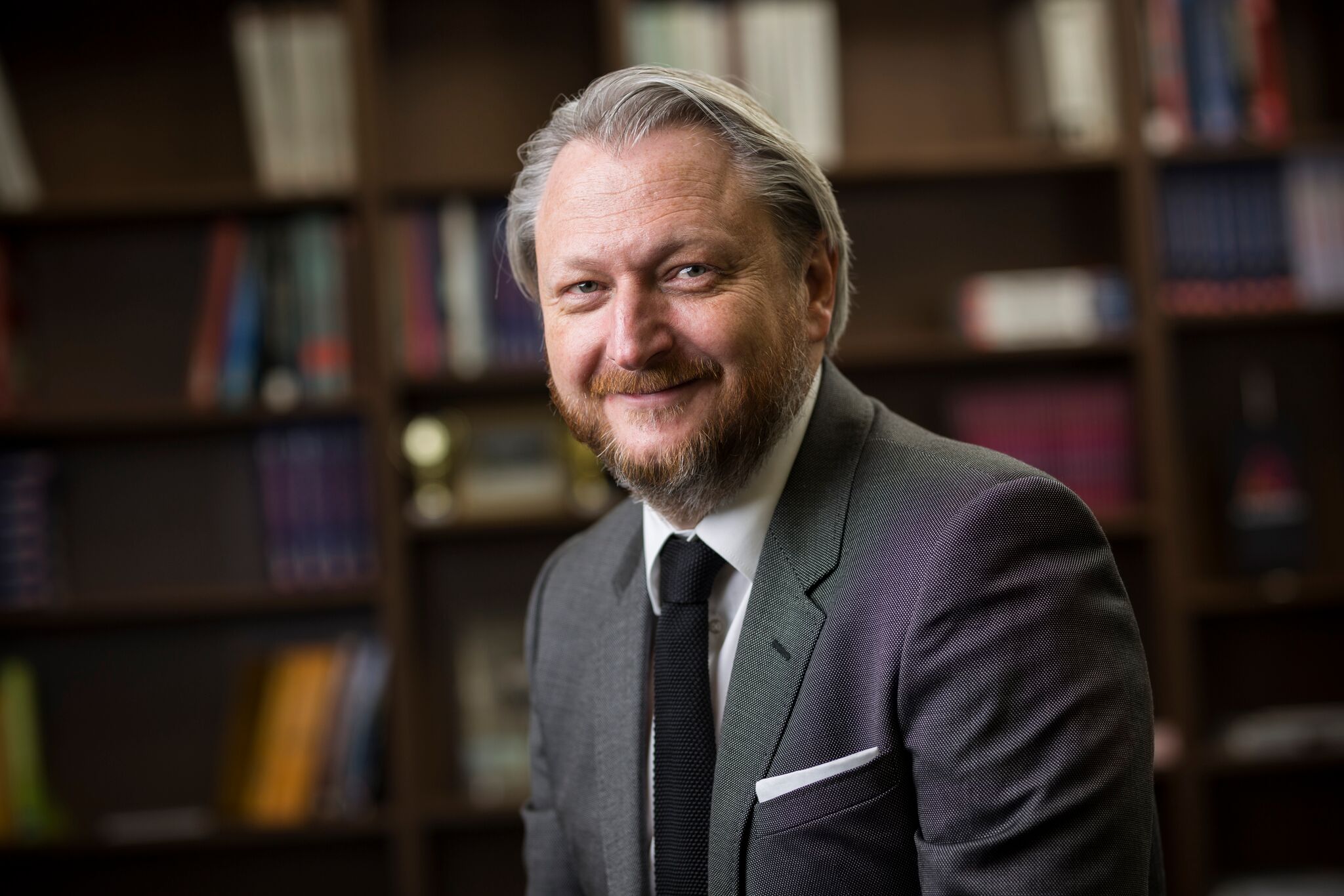
Johannes Borgström is an Associate Professor in the Department of Computer Science at Uppsala University, Sweden. He serves as the program director for the Bachelor's program in Computer Science and has been actively involved in numerous academic conferences including ESOP, POPL, and FASE as a committee member. His research spans theoretical computer science with practical applications in programming language design and analysis. Borgström's research primarily focuses on semantics for programming languages and process algebras , with significant contributions to both theoretical foundations and practical applications. His work centers on two major strands: probabilistic programming languages for statistical models and Bayesian inference, and psi-calculus as a framework for modeling communicating systems. His research integrates formal methods with practical programming language implementation, creating bridges between theoretical computer science and real-world applications in statistical computing and distributed systems. Analysis of Borgström's recent publications reveals a strong trajectory in probabilistic programming and formal verification. His 2021 work demonstrates applications of probabilistic programming to statistical phylogenetics, while his foundational work on lambda-calculus for universal probabilistic programming (2016) established important theoretical frameworks. The research shows increasing integration of statistical methods with programming language theory, particularly in Bayesian inference techniques. His work on psi-calculi continues to evolve with applications to wireless protocols and higher-order systems, demonstrating the versatility of process calculi approaches. Borgström has served on program committees for numerous prestigious conferences including ESOP, POPL, ICFP, and FASE, demonstrating his standing in the programming languages research community. His service includes roles as committee member for NWPT 2023, ESOP 2019, POPL 2017-2018, and ICFP 2016. His research laboratory appears to be part of Uppsala University's Department of Information Technology, with collaborations extending to Microsoft Research (Andrew Gordon appears as frequent co-author) and other international institutions. Borgström's work on the Psi-Calculi Workbench suggests active development of practical tools for formal verification, bridging theoretical research with software engineering applications. His current research trajectory indicates continued exploration of probabilistic programming semantics and their applications to statistical modeling across diverse domains.