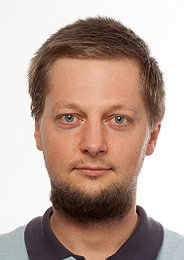
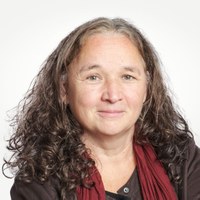
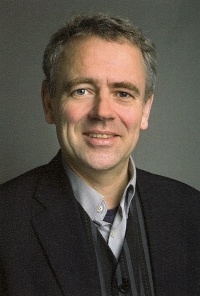
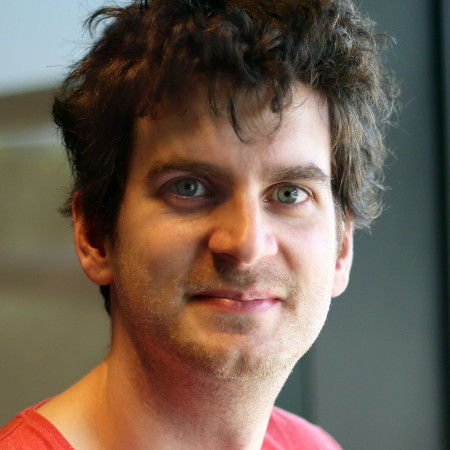
Cezary Kaliszyk is a Professor in Theoretical Computer Science at the University of Melbourne, previously affiliated with the University of Innsbruck. He is actively involved in research and leadership in formal methods, automated reasoning, and machine learning for theorem proving. Research Interests: Automated Reasoning and Interactive Theorem Proving Formalized Mathematics and Proof Automation Machine Learning for Logic and Theorem Proving Integration of AI with Proof Assistants (Coq, Isabelle) Dependent Type Theory and Higher-Order Logic His recent publications (2023–2025) span topics in dependently-typed logic, learning for proof guidance, formalization of surreal numbers, and blockchain-based formal methods. The works consistently bridge formal logic with machine learning, emphasizing automation, explainability, and cross-system integration. Scientific Leadership and Projects: Principal Investigator, ERC project FormalWeb3 Lead Developer, CoqHammer , Tactician , ProofWeb WG5 Leader, COST Action EuroProofNet (until 2024) Contributor to HOL(y)Hammer , Isabelle Enigma He supervises multiple PhD students and has mentored several graduates in formal methods and AI. He teaches courses in theoretical computer science, logic, and machine learning. There are no listed awards in the provided data, but his extensive publication record and project leadership indicate significant recognition in the field. Labs and Research Groups: He leads a research group focused on formal methods and learning-based reasoning, collaborating internationally on projects involving proof automation, formal libraries, and semantic technologies.
Juan Camilo Gómez is an Associate Professor with tenure at the University of Washington Bothell's School of Business, specializing in game theory, bargaining, and microeconomic theory. He earned his Ph.D. in Economics from the University of Minnesota and his B.Sc. in Mathematics from Universidad de los Andes in Colombia. Education: Ph.D. Economics (1998–2003), University of Minnesota, Minneapolis, MN B.Sc. Mathematics (1990–1996), Universidad de los Andes, Bogotá, Colombia Research Interests: His research focuses on foundational and applied aspects of game theory, including bargaining models, coalition formation, cooperative solution concepts, and general equilibrium. He explores how efficiency can be achieved in strategic interactions, especially when agents may behave manipulatively or when traditional balance conditions do not hold. His work contributes to understanding how coalitions form and how outcomes can be predicted or designed to ensure equitable and efficient allocations. He also investigates the implications of reference points in bargaining and the role of aspirations in shaping cooperative behavior. Publications Overview: Across his publications, a clear trajectory emerges from foundational theoretical work—such as axiomatizing core extensions in cooperative games—to applied models that predict coalition formation and bargaining outcomes. His research consistently bridges rigorous mathematical frameworks with practical economic questions, including market interpretations of cooperative solutions and strategic pricing models like 'Pay What You Want'. Awards and Honors: 2010 MBA Professor of the Year, University of Washington Bothell Teaching and Advising: Gómez has taught a wide range of courses from undergraduate calculus and mathematical economics to graduate-level game theory and quantitative methods for business. He has held teaching roles at institutions including Macalester College, University of Copenhagen, Universidad de los Andes, and University of Minnesota. He has also co-directed undergraduate theses, such as that of Santiago Saavedra, and served on numerous academic committees including MBA Admissions and faculty hiring. Labs and Teams: While no specific lab is mentioned, his collaborative working papers with researchers like Camelia Bejan and P.V. Balakrishnan suggest active participation in research networks focused on game theory and economic modeling.
Susanne Prediger is a Professor at the Institute for Development and Research in Mathematics Education (IEEM) at Technische Universität Dortmund and Vice Director of the Department of Subject-Related Knowledge Transfer at the Leibniz Institute for Science and Mathematics Education (IPN). She directs the DZLM research network (German Center for Mathematics Teacher Education) and holds leadership roles in mathematics education research. Her research focuses on: Design and Research on Professional Development of Mathematics Teachers and Facilitators Topic-Specific Design Research in Mathematics Education for Secondary Schools Diversity in Classrooms (especially Language Diversity) Empirical Studies on Students' Conceptions in Arithmetic, Algebra, and Stochastics Networking of Theories in Mathematics Education Research Recent work explores AI-driven formative assessment, educational innovation implementation, and inclusive pedagogical strategies for teaching percentages. She leads projects like ALwAI, Startchancen-Kompetenzzentrum Mathematik, and DigiProMIN. Current roles include: Vice Director (half-time), Department of Subject-Related Knowledge Transfer, IPN Director of DZLM Research Network, IPN (since 2021) Full Professor at IEEM, TU Dortmund University (since 2006) Her academic background spans Mathematics and History studies at Technical University of Darmstadt and Université Bordeaux I, a PhD in Mathematical Logic and Universal Algebra (1998), and a Habilitation in Mathematics Education (2004).
Raphaël Beuzart-Plessis is a CNRS Research Fellow affiliated with Aix-Marseille University and the Institute of Mathematics of Marseille (I2M) at Luminy Campus. He specializes in advanced areas of mathematics, including harmonic analysis, automorphic forms, representation theory, and number theory, with a focus on unitary groups and conjectures like Gan-Gross-Prasad. His work bridges algebraic geometry, differential geometry, and operator theory. Arithmetic, Geometry, Logic and Representations Group (AGLR) 2022-2027 ERC RELANTRA grant recipient Research interests span automorphic representations, L-functions, periods of automorphic forms, and harmonic analysis on real spherical spaces. He works extensively on the local and global Gan-Gross-Prasad conjectures, endoscopy, and supercuspidal representations. His recent publications analyze Plancher1el formulas, spherical characters, and congruences of automorphic forms. His 15 most recent publications (2014-2022) address topics such as the Gan-Gross-Prasad conjecture, Jacquet-Rallis's fundamental lemma, and the Asai Rankin-Selberg integrals. These works reflect his expertise in automorphic forms, representation theory, and number theory, often involving collaborations with leading mathematicians. 2016-2017 Peccot Prize for young mathematicians under 30 2022-2027 ERC RELANTRA grant for research in automorphic forms and representation theory Beuzart-Plessis has no listed students or laboratory teams but participates in the AGLR-RGR (Reduction Group Representations) team and has been an invited speaker at the 2022 International Congress of Mathematicians. His career includes guest lectures at Collège de France, including four sessions on Period factorizations and Plancherel formulas in 2017.
Tal Simons is Professor of Organization Theory in the Department of Organisation and Personnel Management at Rotterdam School of Management (RSM), Erasmus University Rotterdam, and has been an ERIM Fellow since 2019. His research examines organizational responses to societal pressures through institutional and behavioral lenses. Simons' work centers on institutional theory applications in regulatory resistance, ideological dynamics, and organizational authenticity. He investigates how firms navigate social movements, media scrutiny, and moral legitimacy challenges across diverse sectors including tobacco, wine, and contemporary dance. His methodology blends historical analysis with qualitative case studies to uncover patterns in community cohesion, aesthetic innovation, and cross-cultural collaboration. Publication trends reveal an evolution from foundational studies on kibbutzim and Israeli wine industry transformation (1997-2010) toward contemporary analyses of CSR-media relationships, regulatory compliance, and authenticity construction (2015-2024). Recent work emphasizes ideological imperatives in news coverage and moral legitimacy frameworks, while maintaining consistent theoretical grounding in institutional logics and organizational ecology. Professional recognition includes: ERIM Fellow (2019–present) As an active doctoral supervisor, Simons mentors nine PhD candidates across organization theory and behavior domains. His advisees explore cross-cultural collaborations, multi-stakeholder organizing, sustainability-focused community enterprises, and societal change mechanisms. Supervision spans 2015 to present with roles as promotor and committee member, reflecting sustained commitment to developing organizational scholarship through next-generation researchers.
Dr. Kamran Sedig serves as a Professor in the Department of Computer Science and the Faculty of Information and Media Studies at Western University, where he directs the Insight Lab. His research focuses on designing interactive technologies to enhance human cognitive activities involving data and information, including decision making, problem solving, and learning across domains like healthcare, finance, and scientific discovery. His academic credentials include: Ph.D. in Computer Science (Human-Computer Interaction) from The University of British Columbia under Prof. Maria Klawe, with dissertation nominated for the Governor General’s Gold Medal M.Sc. in Computer Science (Artificial Intelligence) from McGill University under Prof. Renato De Mori B.Sc. in Computer Engineering and Science from Concordia University as Valedictorian with The Most Great Distinction Sedig’s research synthesizes computer science, information science, cognition theory, and game studies to develop frameworks for interactive visual tools (IVTs). He investigates human-data interaction, visual reasoning, and interactivity design to support complex cognitive tasks like medical diagnosis, financial analysis, and scientific exploration. His human-centered approach emphasizes how computational tools and humans form coordinated cognitive systems for optimal task execution. Analysis of his recent publications reveals dominant trends in health informatics applications (drug safety analytics, electronic health records) and foundational work on human-information interaction frameworks. His visual analytics systems consistently bridge theoretical models with practical tools for ontology exploration, document triage, and explainable AI, demonstrating strong interdisciplinary collaboration across medical and computational domains. Key recognitions include: Governor General’s Gold Medal nomination for doctoral research Valedictorian honors at Concordia University As Insight Lab director, Sedig mentors graduate students through courses like Human-Computer Interaction, Information Visualization, and Design of Digital Cognitive Games. His teaching philosophy emphasizes how cognitive technologies mediate human thinking processes in professional and private contexts. While specific grant details aren’t provided, his lab’s sustained output in health analytics and visual interfaces indicates robust research funding. The Insight Lab operates as a collaborative hub for developing and evaluating IVTs, with current projects including VICTORIOUS for document scoping reviews and VISEMURE for multimorbidity analysis. Sedig’s team prioritizes empirical validation of how interaction design affects cognitive load and task efficiency in real-world data-intensive environments.
James Conant is the Chester D. Tripp Professor of Humanities, Professor of Philosophy, and Professor in the College at the University of Chicago. He also served as Humboldt Professor of Theoretical Philosophy at Leipzig University (2017–2022). He holds a BA (1982) and PhD (1990) from Harvard University. His academic roles include Interim Chair of the Department of Philosophy at the University of Chicago (2014–2015, 2025–2026), co-director of the Forschungskolleg Analytic German Idealism, and director of the Center for German Philosophy at Chicago. Education: Bachelor of Arts, Harvard University (1982) Doctor of Philosophy, Harvard University (1990) Research Interests: Focuses on Philosophy of Language, Philosophy of Mind, Aesthetics, German Idealism, and the History of Analytic Philosophy. He explores themes such as skepticism, Wittgenstein’s methods, rule-following paradoxes, and the interplay between German Idealism and analytic philosophy. Publications Trends: Conant’s recent work includes monographs on skepticism and film aesthetics, co-authored volumes on Wittgenstein, and edited collections of Hilary Putnam’s papers. His articles often critically engage with figures like Kant, Wittgenstein, Nietzsche, and Frege, emphasizing methodological rigor and historical context. Scientific Awards: Anneliese Meier Research Award (2012) Humboldt Prize (2017) Neubauer Collegium Award Grants and Advising: Co-recipient of Mellon Sawyer Seminar Grants (2006–2008) and Humboldt TransCoop Awards. Advised numerous postdoctoral and doctoral researchers through initiatives like the Leipzig-Chicago collaborative projects. Labs/Teams: Leads the Center for German Philosophy at Chicago and co-directs the Center for Analytic German Idealism in Leipzig. Collaborates internationally on projects bridging analytic and continental philosophy.
Shanna Swan is a renowned epidemiologist and Professor of Environmental Medicine and Public Health at the Icahn School of Medicine at Mount Sinai. She holds a PhD in Statistics from UC Berkeley (1963), an MA in Biostatistics from Columbia University, and a BA in Mathematics from City College of New York. Her career spans academia, public health institutions, and research on environmental health impacts. Notable roles include work at Kaiser Permanente, California Department of Health Services, University of Missouri, and University of Rochester. Her research focuses on endocrine-disrupting chemicals (EDCs), sperm count decline, and reproductive health. Her groundbreaking 2017 study revealed a 50% sperm count drop in Western men over 40 years, later updated to show acceleration since 2000. She authored the influential book Count Down (2021), addressing environmental threats to human fertility. Key contributions include forming California’s reproductive health group and leading National Academy of Sciences committees on EDCs. Swan advocates for science-driven public health policy, emphasizing the need to address chemical exposures. Her work bridges statistical rigor with real-world impact, influencing global discussions on fertility and environmental safety. Awards include the Ward Medal in Logic (CCNY). She remains active in advancing research, education, and community action to safeguard human health and reproduction.
Manfred Droste is a Professor at the Institute of Computer Science of the University of Leipzig, where he leads the Research Group on Automata and Formal Languages. He serves as Director of the Graduate Centre Mathematics, Computer Science and Natural Sciences and is Vice-speaker of the DFG-Research Training Group Quantitative Logics and Automata. His academic career spans decades of research and leadership in theoretical computer science and algebra. Prof. Droste's research focuses on theoretical computer science, particularly automata theory, logic, algebraic models for concurrent systems, and domain theory. In algebra, his interests include model theory, automorphism groups, and ordered algebraic structures. His work bridges theoretical foundations with practical applications in formal language theory and quantitative systems. His extensive publication record demonstrates a consistent focus on weighted automata, formal languages, and their logical characterizations. Over the years, his research has evolved to address increasingly complex quantitative models, with recent work focusing on weighted complexity classes, weighted linear dynamic logic, and decidability boundaries for weighted automata. Prof. Droste has received significant recognition including election to Academia Europaea, an honorary doctorate from Immanuel Kant Baltic Federal University, and fellowship in the Asia-Pacific Artificial Intelligence Association. These honors reflect his substantial contributions to theoretical computer science. He has supervised numerous PhD students including Dietrich Kuske, Paolo Boldi, and Karin Quaas, many of whom have become prominent researchers. His extensive grant portfolio includes multiple DFG projects on weighted automata and international collaborations through DAAD funding. Prof. Droste leads a vibrant research team including Andrea Hesse, Karin Quaas, Erik Paul, and others. He has organized the international workshop series "Weighted Automata: Theory and Applications" since 2002, fostering global collaboration in this specialized field.
Ruben Verborgh is a Professor of Decentralized Web Technology at the Ghent University – imec and a Visiting Fellow at the Oxford Martin School (University of Oxford). He leads the Internet Technology and Data Science Lab (IDLab) and co-founded the Solid platform with Tim Berners-Lee to re-decentralize the Web. His research focuses on Linked Data Fragments , a paradigm for Web-scale query execution, and explores decentralized data governance , user-controlled data ownership , and rule-based Web agents for policy enforcement. He has co-authored two books on Linked Data and contributed to over 250 publications. Recent articles highlight trends in decentralized data ecosystems , including ODRL policy interoperability , event notification systems , and personal data vaults . His work bridges Linked Data , hypermedia APIs , and privacy-preserving technologies . Verborgh collaborates with institutions like MIT, Oxford, and the European Commission, and advises companies through Inrupt . His labs ( IDLab , Solid Ecosystem ) focus on sustainable data-driven societies.
Charles Baden-Fuller is the Centenary Professor of Strategy and leader of the Strategy Group at Bayes Business School , City St George’s, University of London . He is concurrently a Senior Fellow at the Wharton School, University of Pennsylvania . Recognised among the world’s top strategy scholars, he has directed major multi-institutional research initiatives and served as Editor-in-Chief of Long Range Planning (1999-2010). Education & Qualifications BA (Oxon) – University of Oxford MA Economics – Cornell University PhD – London School of Economics Research Interests Charles’s work lies at the intersection of strategic management , business model innovation and digital transformation . His early research explained how mature firms can be rejuvenated and how alliances create competitive advantage. More recently he has advanced the concept of business models , investigating what they are, how they evolve, and how managerial cognition shapes their deployment in increasingly digitalised environments. Empirical settings span biotechnology, financial services, automotive software ecosystems and creative industries. Publications & Impact With over 80 refereed journal articles and five influential books—including the seminal Rejuvenating the Mature Business (Harvard Business Press)—his scholarship has shaped both academic theory and managerial practice. Recent articles (2021-2025) focus on digital platform alliances, entrepreneurial networking logics, and AI-enabled business model design. Honours & Awards Fellow of the Strategic Management Society (SMS Fellow, 2009) Fellow of the British Academy of Management Fellow of the British Academy Fellow of AACSB Doctoral Supervision & Research Funding He has supervised to completion more than six PhD students, many now faculty at leading universities. His research has attracted over £4 million in grants from the European Union , UK ESRC , EPSRC and the Mack Institute-Wharton , supporting multi-university teams at Bayes, Sussex, LSE, CREATE-Glasgow, Grenoble EM and Wharton. Professional & Outreach Roles Beyond academia, Charles serves as director or strategic advisor to several high-technology start-ups and as trustee of a major charity. He is a frequent keynote speaker for industry and policy audiences, and his research findings have been featured in the Financial Times , Management Today and other leading media.
Demirdache Hamida is a Full Professor of Linguistics at Nantes University and Director of the Nantes Linguistics Lab (LLING UMR 6310, CNRS). She holds a PhD from MIT (1991) and Habilitation à diriger des recherches from Nantes University (2003). Her research focuses on syntax-semantics interfaces, linguistic diversity, and formal syntactic theory with emphasis on Semitic languages and under-represented languages like Salish. She has pioneered experimental methodologies to probe logical form syntax, particularly in studies of temporal anaphora, distributivity, and quantification. Leadership roles: Founded LLING lab in 2004, elevated to CNRS status in 2016 Research grants: Coordinator of ANR-DFG projects (2022-2025), CHILL serious game initiative (2018-2021) Awards: Palmes académiques (2011), Descartes-Huygens Prize (2003), multiple PEDR/PES excellence awards Her experimental work bridges theoretical syntax and empirical child language studies, with recent focus on cross-linguistic variation in telicity and scalar implicatures. Supervised 15 PhD theses (including 3 double-doctorates) and 54 master’s theses. Active in international research networks including the Van Riemsdijk Foundation and Carnot Cognition Institute. LLING lab specializes in formal linguistics with particular expertise in: syntax-semantics interfaces, multilingualism, and experimental methods. Current projects investigate Boolean connectives (FRAL project), heritage language maintenance (AThEME EU project), and logical language acquisition through game-based learning (Cool Boole School).
Kyojin Choo is a Tenure Track Assistant Professor at the Swiss Federal Institute of Technology Lausanne (EPFL) in the School of Engineering , affiliated with the Mixed-Signal Integrated Circuits Lab (MSIC-LAB). He also holds teaching roles in Microengineering and Electrical and Electronics Engineering at EPFL. B.S. and M.S. in Electrical Engineering from Seoul National University (2007, 2009) Ph.D. in Electrical Engineering from the University of Michigan (2018) His research focuses on charge-domain analog/mixed-signal circuits , low-power sensor interfaces , and compact ADCs for IoT, wearables, and millimeter-scale systems. He has pioneered charge-injection cell techniques for energy-efficient circuits in energy management, sensor front-ends, and communication. His work emphasizes reducing power consumption to nanowatt levels while enabling ultra-compact designs. His recent publications highlight advancements in compact SAR ADCs , low-power MEMS accelerometers , millimeter-scale imaging systems , and ultra-low-power timing generators . His research integrates charge-domain circuit design with sensor interface optimization , energy harvesting , and high-speed link architectures . He holds over 20 US patents and has taught courses in Microengineering and Electrical Engineering at EPFL. His group (MSIC-LAB) addresses challenges in battery-free sensor design, power-constrained system scaling, and commercialization of wearables with unconventional form factors.
Eliza Little is an Assistant Professor of Philosophy at the University of Warwick. Her research focuses on post-Kantian European philosophy, particularly Hegel's theories of self-consciousness and perception, and Simone de Beauvoir's aesthetics. She explores the role of art and literature in shaping human experience. Education includes a PhD from the University of Chicago (2020), MA from St. John’s College Annapolis, and BA from Oberlin College. Prior roles include Postdoctoral Fellow at Auburn University. Education: PhD in Social Thought, University of Chicago (2020) MA in History of Western Thought, St. John’s College BA in Politics, Oberlin College Her interdisciplinary work bridges philosophy with literary studies and social theory. Recent publications analyze Hegel's critiques of Schelling, Kant's influence on Hegel, and the social dimensions of aesthetic perception. She is completing a book manuscript on Beauvoir's aesthetics titled *The Aesthetic Lives of Others*. Teaching includes courses on philosophy and tragedy, and 20th-century French philosophy. Supervises projects on Kant, Hegel, Beauvoir, and aesthetics.
Professor Katja Vogt is a distinguished faculty member in the Department of Philosophy at Columbia University's Faculty of Arts and Sciences. She serves as Professor of Philosophy, Director of the M.A. Program in Philosophy, and Chair of the Climate Committee. Additionally, she is an Affiliate of the Data Science Institute and has affiliations with Computing Systems for Data-Driven Science, Data, Media and Society, and Health Analytics. Professor Vogt joined Columbia University in 2002 after teaching at Humboldt University Berlin, both in the Philosophy Department and at the Charité Medical School. Professor Vogt specializes in ancient philosophy, ethics, and normative epistemology, with particular expertise in Plato, Aristotle, Stoicism, and Pyrrhonian skepticism. Her research explores fundamental questions that bridge ancient and contemporary philosophical discussions: What are values? What kind of values are knowledge and truth? What does it mean to want one's life to go well? She has developed significant work on the role of knowledge in ethics, generics and generalizations, and is currently finalizing a monograph entitled The Original Stoics . Her approach combines careful historical scholarship with contemporary philosophical analysis, creating dialogues between ancient texts and modern debates in metaethics, epistemology, and philosophy of action. Professor Vogt's scholarly output reveals consistent engagement with ancient philosophical frameworks while addressing contemporary concerns. Her recent work shows a particular focus on Stoic philosophy, with multiple papers examining Stoic logic, physics, and ethics. She also maintains a strong interest in skepticism, particularly Pyrrhonian approaches, and has made significant contributions to understanding how ancient philosophical concepts can inform current debates about generics, value theory, and the relationship between knowledge and virtue. Her collaborative work with Jens Haas on topics like ignorance, love, and hatred demonstrates her interdisciplinary approach that connects ancient philosophy with contemporary philosophical issues. Columbia Distinguished Faculty Award Class of 1932 Fellow in Classical Philosophy at Princeton University Fellowships from the Templeton Foundation, Maimonides Centre in Hamburg, Center for Advanced Studies in Munich, DFG (German Research Association), and Columbia University-Paris 1 Alliance Program Professor Vogt is actively involved in mentoring students and developing innovative educational approaches. She serves as academic sponsor for "Logic Made Accessible," a project mentored with Columbia College student Jonathan Tanaka that has reached students in over 30 countries. The project makes ancient logic freely accessible to learners of all ages, backgrounds, and interests. She has also served on numerous university committees including the Provost's Faculty Committee on Educational Innovation, Policy and Planning Committee, Committee on Instruction, and as Acting Director of the Center for the Ancient Mediterranean. Her grant work includes support from major foundations that have enabled her to pursue research at the intersection of ancient philosophy and contemporary epistemology. Professor Vogt collaborates with photographer and artist Jens Haas on the "On the Road" project, which combines artistic photography with philosophical reflection. She is also involved in "Movies and Morals," a collaboration with H8URS that provides philosophical commentary on contemporary film and television. These projects demonstrate her commitment to making philosophical inquiry accessible beyond traditional academic settings.