Professor Ian Horrocks FRS is a distinguished academic in Computer Science at the University of Oxford, holding the position of Professor of Computer Science and a Fellowship at Oriel College. His research focuses on knowledge representation, ontologies, description logics, automated reasoning, and their applications in the Semantic Web and e-Science. He leads the Data and Knowledge Group, developing tools like HermiT, ELK, and RDFox, and has pioneered ontology languages and reasoning systems. Education: Not explicitly detailed in text, but his academic contributions suggest a strong background in Computer Science and Logic. Research interests include foundational work on description logics, ontology languages, and scalable reasoning systems. He is Editor-in-Chief of the Transactions on Graph Data and Knowledge, and founder of Oxford Semantic Technologies. His work emphasizes practical applications in industry and academia, with contributions to semantic technologies for big data and AI. Key publications span foundational theory (e.g., description logics) to applied systems like ontology alignment and knowledge graph completion. He advises numerous doctoral students, many of whom have gone on to prominent roles in industry and academia. Awards: Fellow of the Royal Society (FRS), highlighting his significant contributions to computer science and AI. Labs/Teams: Leads the Data and Knowledge Group at Oxford, collaborating on projects like Optique and Semantic Technologies. Maintains a repository of ontologies and datasets for research.
Claire Cardie is a Professor in the Departments of Computer Science and Information Science at Cornell University, and the inaugural Associate Dean for Education in the Ann S. Bowers College of Computing and Information Science. She holds the John C. Ford Professorship of Engineering. Her research focuses on natural language processing (NLP), including information extraction, opinion analysis, and machine learning methods. Cardie has pioneered Cornell’s Information Science programs and served as Department Chair. She is a Fellow of ACL (2015), ACM (2019), and AAAS (2021), reflecting her seminal contributions to NLP. Her teaching includes courses like CS4740/5740 (Intro to NLP) and CS6740/INFO6300 (Advanced Language Technologies). She has led major conference roles (e.g., ACL 2018 General Chair) and contributed to datasets like Fashionpedia and GRIT. Education: B.S. in Computer Science (Yale), M.S. and Ph.D. in Computer Science (University of Massachusetts) Research Interests: Cardie’s group develops NLP systems and machine learning techniques for large-scale text analysis, balancing theoretical advances with real-world applications. Current work emphasizes reasoning, robustness in retrieval-augmented generation, and ethical AI evaluation. Publications: Over 100+ articles since 2016, with recent focus on multi-hop reasoning, adversarial attacks on NLP systems, and AI ethics. Notable contributions include the FAIRY dataset for commonsense reasoning and GRIT for event extraction. Awards: AAAI Fellow (2021), ACL Fellow (2015), ACM Fellow (2019) Advising & Service: Mentor for numerous students and researchers. Currently oversees educational initiatives as Associate Dean, emphasizing interdisciplinary computing education and student success.
William Regli is a Professor at the University of Maryland's Clark School of Engineering, holding appointments in Computer Science, Electrical and Computer Engineering, and the Institute for Systems Research. He also directs the Applied Research Laboratory for Intelligence and Security (ARLIS), overseeing over 75 researchers focused on defense and intelligence challenges. Regli's career spans academia, government leadership (including DARPA's Defense Sciences Office), and industry, with over 250 publications and five foundational U.S. patents in 3D CAD search. His research integrates AI, robotics, and computational modeling to address interdisciplinary problems in engineering, materials science, and national security. Education: Ph.D. and B.S. in Mathematics from the University of Maryland and Saint Joseph's University, respectively. He is a Fellow of AAAS and IEEE, recognized for contributions to 3D search and intelligent manufacturing. Research interests include AI agents, cyber-infrastructure for engineering data sustainability, advanced materials design, and robotic interoperability using category theory. His recent work emphasizes applying AI to national security, including trustworthy AI evaluation and social science integration. Awards include the DARPA Meritorious Public Service Medal (2018), AAAS Fellowship (2020), and IEEE Fellowship (2017). His articles reflect a focus on multi-agent systems, robotic task planning, and formal methods in autonomous systems. He advises multiple PhD students and has spun off two tech startups. Regli's laboratories include ARLIS, where he develops solutions for defense missions, and collaborates with the Maryland Robotics Center. His work bridges academia and government, emphasizing real-world impact through innovative computing research.
Professor Mohand Tahar Kechadi is a Full Professor at the School of Computer Science, University College Dublin (UCD), where he has been since 1999. His research focuses on Data Mining, Distributed Systems, Digital Forensics, and Healthcare Informatics. He has published over 260 articles and serves on editorial boards of journals like Future Generation Computer Systems and IST Transactions . He also holds roles in academic leadership, including directing UCD’s international BSc program in Sri Lanka and previously serving as Head of Teaching and Learning (2007–2012). Education: PhD and DEA (MSc) in Computer Science from the University of Lille, France; HDip in University Teaching & Learning from UCD. Research: Explores challenges in big data processing, including distributed data mining, cloud computing, and privacy-preserving techniques. Recent work addresses applications in healthcare (e.g., wearable devices, medical imaging), agriculture (precision farming), and cybersecurity (blockchain, IoT trust management). Grants: Led a grant on evaluating sugar-sweetened beverage taxes (2018–2019). Collaborates on projects like BigO, a public health decision support system for pediatric obesity. Teaching: Coordinates modules in Cloud Computing, Data Mining, and Distributed Systems. Developed a code-free cloud service for biomedical signal processing and advocates inclusive assessment strategies. Awards: None explicitly stated. Recognized for contributions to interdisciplinary research and education.
Dr. Anna-Maria Asunta Eder is a Research Fellow at the Chair of Epistemology, Philosophy of Science, and Logic in the Department of Philosophy at the University of Cologne's Faculty of Arts and Humanities. For the winter term 2024/2025, she is substituting for the Chair of Epistemology and Philosophy of Language at Heinrich Heine University Düsseldorf. Previously, from April 2022 to March 2023, she served as the Eleonore-Trefftz Visiting Professor at TU Dresden. She maintains extensive collaborative relationships as an external member of the Center for Philosophy, Science, and Policy at the Marche Polytechnic University in Ancona, board member of the Center for Language, Information, and Philosophy at the University of Cologne, member of the DFG network 'Thinking about Suspension,' and external member of the DFG Emmy-Noether research group 'From Perception to Belief and Back Again' at Ruhr-University Bochum. Dr. Eder completed her doctoral studies at the University of Konstanz and earned her MA from the University of Salzburg, with additional academic experience at institutions including Leuven, Berkeley, Munich, Duisburg-Essen, and Boston. Her scholarly trajectory demonstrates deep engagement with both formal and social dimensions of philosophical inquiry. Her research program spans multiple interconnected domains: In epistemology , she investigates epistemic disagreement, pluralism, normativity, justification theories, evidential support, and expertise. Her philosophy of science work examines trust dynamics in scientific communities, the influence of values on scientific reasoning, inquiry aims, and probability interpretations. In metaphilosophy , she explores conceptual clarification methods and the role of formal modeling in philosophical practice. Her philosophy of logic research addresses the normative status of logical principles in reasoning. She also maintains significant interests in social ontology, philosophy of mind (particularly doxastic states and bounded rationality), and conceptual engineering in philosophy of language. Dr. Eder's recent publications reveal a cohesive research agenda focused on rational response to evidence in social contexts. Her work consistently bridges formal precision with real-world epistemic challenges, developing sophisticated models for understanding suspension of judgment, higher-order evidence, and the impact of non-epistemic values on evidential reasoning. This integrative approach has positioned her at the forefront of contemporary debates in social and formal epistemology. Eleonore-Trefftz Visiting Professor at TU Dresden (2022-2023) Member of DFG network 'Thinking about Suspension' External member of DFG Emmy-Noether research group 'From Perception to Belief and Back Again' Board member of Center for Language, Information, and Philosophy Dr. Eder actively collaborates across international boundaries and regularly organizes academic workshops. Her current major projects include co-editing 'The Epistemology of Experts: New Essays' with Routledge, contributing to the 'Blackwell Companion to Epistemology,' and developing her higher-order credal account of suspension. She serves as a referee for leading philosophy journals including the British Journal for the Philosophy of Science, Erkenntnis, and Synthese, demonstrating her standing within the philosophical community. Her ongoing research continues to advance our understanding of rational belief formation in increasingly complex epistemic environments.
Sergio Greco is Full Professor at University of Calabria's DIMES Department, Coordinator of the Computer Engineering Degree, and Vice-president of the Computer Engineering national Group. His research spans database theory, data integration, inconsistent data processing, and computational logic. Research Focus: Development of theoretical frameworks for data management including argumentation frameworks, knowledge base querying under inconsistency, and decentralized learning systems. Recent work integrates machine learning with formal reasoning methods. Honors: Best Paper Award at International Conference on Logic Programming (2020) Best Paper Award at RuleML Symposium (2014) Leads projects on cybersecurity and data management funded by EU and Italian Ministry of Research, coordinating national and international research groups.
Professor Mark Jenkins is an expert in strategic management at Cranfield University, specializing in business lessons from high-performance environments like Formula 1 racing. His research examines organizational strategy, innovation, and cluster dynamics within knowledge-intensive industries. Key research areas include the evolution of industrial clusters (notably Motorsport Valley), leadership under extreme constraints, and the intersection of technology and competitive strategy. His work has developed frameworks like the 'Performance Pyramid' to analyze organizational capabilities. Professor Jenkins regularly contributes to executive education through initiatives like the Inspired Leaders Network and maintains active industry engagement with Formula 1 teams including Mercedes AMG and Williams Racing.
Dr. Daniel Huang is an Assistant Professor in the Department of Computer Science at San Francisco State University. His research focuses on quantum computing, probabilistic programming, machine learning, and theoretical computer science. He explores interdisciplinary areas such as hybrid classical-quantum systems, Gaussian process optimization, and computational chemistry modeling. His work bridges algorithmic design with practical applications, including quantum circuit simulation and molecular geometry optimization. Dr. Huang’s recent publications highlight advancements in GPU-based quantum computing, gradient-constrained neural networks, and probabilistic programming languages like Push. He emphasizes the integration of physical priors into machine learning models and explores disruptive technologies like quantum visualization tools. His research often involves collaborative projects, as seen in works on meta-Gaussian processes and data-parallel inference algorithms. His academic contributions span over a decade, with notable papers in probabilistic program semantics, logic in linear spaces, and compiler optimizations for probabilistic models. Though no awards or grants are explicitly listed, his active publication record reflects sustained scholarly engagement. Contact: danehuang@sfsu.edu , Thornton Hall 906.
Marty Allen is an Associate Teaching Professor and Director of Online Programs in the Department of Computer Science at Tufts University's School of Engineering. He holds a PhD in Computer Science from the University of Massachusetts Amherst (2009), with earlier degrees in Philosophy from Simon Fraser University (1996 B.A.) and the University of Pittsburgh (2001 M.A.). His research focuses on multiagent reinforcement learning and applications of AI to biological systems, including influenza phenotype prediction and complex ecological modeling. He has authored or co-authored over 40 publications across journals like Emerging Microbes and Infections and conferences such as AAAI and NIPS. Allen has led multiple grants including a $1.2M REU program and a Disc Seed Grant for AI-driven viral research. He teaches courses in discrete mathematics, algorithms, and capstone projects, and has held leadership roles in curriculum development including the Strategic Planning Transformational Education Action Group at University of Wisconsin–La Crosse (2016–2019). Professional activities include service on Tufts' Computer Science External Advisory Board and equity initiatives as Department Equity Liaison. His work bridges theoretical computing with interdisciplinary applications in both natural and social sciences.
William Rapaport is an Eminent Professor Emeritus in the Department of Computer Science and Engineering at the University at Buffalo, with affiliated roles as Emeritus Associate Professor in Linguistics and Philosophy. His research focuses on artificial intelligence, cognitive science, computational linguistics, and philosophical issues in computer science. He holds a PhD in Philosophy with a Mathematics minor from Indiana University (1976). His work bridges computer science, philosophy, and linguistics, exploring topics like the Turing Test, computational semantics, and the philosophical foundations of AI. Notable contributions include theories on contextual vocabulary acquisition and critiques of computationalism. Rapaport has received prestigious awards, including the American Philosophical Association Barwise Prize (2015) and the SUNY Chancellor's Award for Excellence in Teaching. His recent publications (2025–2017) address AGI feasibility, syntax-semantics interfaces, and the nature of computation. He maintains active engagement with interdisciplinary debates, particularly on AI ethics and the limits of computational cognition. Rapaport's legacy includes foundational contributions to the SNePS knowledge representation system and pedagogical innovations in computer science education.
Associate Professor Georg Grossmann is affiliated with the School of IT and Mathematical Sciences at the University of South Australia (UniSA), within the Advanced Computing Research Centre. He holds roles as the Research Degree Coordinator for Maths & Stats and Systems Engineering at UniSA STEM, and co-directs the Digital Health Innovation and Clinical Informatics (DHICI) Lab. His research focuses on Digital Health, Artificial Intelligence (AI), Industry 4.0, and interoperability solutions for complex systems. He is also a member of the AI & Software Engineering Lab in the Industrial AI Research Centre, addressing challenges in data integration and business process modeling. Research Interests: Georg's work spans process and data interoperability, AI-driven systems, generative AI (GenAI), and digital transformation. He explores applications in healthcare (e.g., clinical decision support systems), industrial IoT (IIoT), and cultural heritage management. His methodologies include multi-level modeling, knowledge graphs, and semantic frameworks to enhance system interoperability and decision-making. Labs & Collaborations: He leads the DHICI Lab and collaborates with institutions like MIMOSA, Practera, and BAE Systems. His projects include frameworks for predictive maintenance in Industry 4.0, adaptive clinical decision systems, and NLP-based artifact management in museums. He has secured grants from the South Australian Premier’s Research and Industry Fund and the Australian Government’s Department of Industry. Teaching & Supervision: As a Research Degree Supervisor, he guides students in areas like enterprise modeling, software engineering, and AI applications. He also contributes to courses on Business Process Management and Software & Data Modeling.
Eugenio Di Sciascio is a Full Professor and Scientific Coordinator at Politecnico di Bari. His research spans artificial intelligence, semantic web technologies, machine learning, and explainable AI, with applications in recommender systems, healthcare, and cybersecurity. As evidenced by 413+ publications, his work frequently bridges theoretical computer science with practical implementations. Recent research trends focus on trustworthy AI systems, particularly in healthcare diagnostics and recommendation security. His 2024-2025 publications demonstrate strong emphasis on explainable AI methodologies in medical applications (e.g., BRAINEX for brain age prediction, MORIX for mortality inference) and adversarial robustness in recommender systems. Additional work explores neurotechnology interfaces and semantic web foundations.
Dinesh Verma is a Professor and Executive Director of the Systems Engineering Research Center (SERC) at Stevens Institute of Technology. He previously served as Founding Dean of the School of Systems and Enterprises (2007–2017). His roles include adjunct positions at Georgetown University (Visiting Professor, Department of Biochemistry), and advisory roles at institutions like the Embedded Systems Institute (Eindhoven, Netherlands) and the Defense Science Board (U.S.). Education and Professional Background: Verma’s career spans academia and industry, including roles at Lockheed Martin, Virginia Tech (Systems Engineering Design Laboratory), and as an Invited Lecturer at the University of Exeter (1995–2000). Research Interests: Focus on systems engineering fundamentals, including conceptual design evaluation, system architecture, life cycle costing, and supportability engineering. Recent work emphasizes digital engineering integration, ontology-based model interoperability, and systems security for modular open systems. Grants & Patents: Directed over $175M in academic/research programs. Holds patents in life-cycle costing, fuzzy logic for design evaluation, and collaborative engineering tools. Awards: Honorary Doctorate (Linnaeus University, 2007) and Honorary Master’s (Stevens, 2008). INCOSE Fellow (International Council on Systems Engineering). Key Contributions: Authored 100+ publications, including textbooks on Maintainability, Economic Decision Analysis, and Space Systems Engineering. Co-founded the Defense Science Board’s Digital Engineering initiative and chairs DoD/MITRE mission engineering collaborations.
Dr. Guiling Wang is a Distinguished Professor of Computer Science and Associate Dean of Research and External Relations at New Jersey Institute of Technology (NJIT). She holds a Ph.D. in Computer Science and Engineering from The Pennsylvania State University (2006) and a B.S. in Software Engineering from Nankai University, China (2002). Her research focuses on machine learning, blockchain technology, deep learning, and intelligent transportation systems. Dr. Wang’s work spans interdisciplinary areas such as: Machine Learning and Reinforcement Learning Blockchain-based systems and decentralized applications Intelligent traffic signal control and autonomous systems Data privacy and cybersecurity Generative adversarial networks (GANs) and vision-language models Her recent research emphasizes practical solutions for: Optimizing traffic management through multi-agent reinforcement learning Developing robust watermarking techniques for digital security Applying LLMs for financial decision-making and portfolio management Designing blockchain frameworks for vehicular networks and edge computing Notable contributions include: Proposing novel architectures like MCFN for high-performance watermarking Advancing RAGIC for risk-aware stock interval construction Developing PairUpLight for multi-intersection traffic coordination Pioneering blockchain-based systems iBCTrans and VDKMS for vehicular networks Dr. Wang’s research is supported by grants from federal agencies and industry collaborators, with applications in smart cities, financial technology, and healthcare systems.
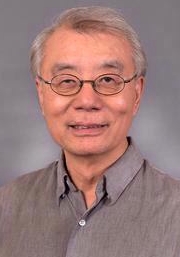
Yizong Cheng is Associate Professor in the Department of Computer Science at the University of Cincinnati's College of Engineering and Applied Science. His research develops self-organizing algorithms and machine learning methods for computational biology and pattern recognition. He holds a PhD from Purdue University (1986). Research interests include self-organizing algorithms, similarity and uncertainty representations, computational biology, machine learning, digital libraries, computer networks, and compilers. His foundational work includes contributions to mean shift clustering and Kohonen's self-organizing maps. Recent applied research focuses on wireless sensor networks and gene network analysis.