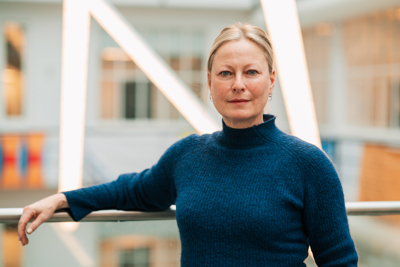
Daniel M. Roy is a Full Professor at the University of Toronto, with cross-appointments in the Department of Computer Science, Department of Statistical Sciences, and Department of Electrical and Computer Engineering. He serves as Research Director at the Vector Institute and holds the CIFAR Canada AI Chair. Research Focus: Foundational principles of prediction, inference, and decision-making under uncertainty across machine learning, statistics, mathematical logic, applied probability, and computer science. Scientific Contributions: Key work in learning theory, statistical network analysis, probabilistic programming, and information-theoretic frameworks for generalization. Awards: ICML 2024 Best Paper Award for "Information Complexity of Stochastic Convex Optimization" and promotion to Full Professor in 2024. Student Advising: Actively mentors Ph.D. candidates and postdoctoral researchers with strong quantitative backgrounds, particularly at the intersection of machine learning, statistics, and computer science. Email: daniel.roy@utoronto.ca
Habib Ullah is an Associate Professor in Data Science at the Norwegian University of Life Sciences (NMBU), Norway, where he conducts research at the intersection of computer vision and machine learning. He is affiliated with the Institute of Data Science under the Faculty of Science and Technology. He has previously held academic positions at COMSATS University Islamabad, Pakistan, and the University of Ha'il, Saudi Arabia, and served as a postdoctoral researcher at The Arctic University of Norway. Educational Background: PhD in Information and Communication Technology (Computer Vision), University of Trento, Italy (2011–2015) MSc in Electronics and Computer Engineering, Hanyang University, South Korea (2007–2009) BSc in Computer Systems Engineering, NWFP University of Engineering and Technology, Pakistan (2002–2006) Habib Ullah's research is primarily focused on computer vision and machine learning, with applications in aquaculture, agriculture, and human behavior analysis. He investigates underwater fish feeding sounds using audio classification, develops zero-shot learning models for recognizing unseen classes, and applies deep learning to detect stress in salmon via skin dot patterns. He also explores AI-driven controlled environment agriculture, leveraging sensors and automation for optimal crop growth. His work emphasizes practical AI solutions for real-world challenges in environmental and biological domains. The recent publications highlight a strong trend in leveraging deep learning for zero-shot and semi-supervised learning, particularly in computer vision tasks such as sea ice classification, crowd anomaly detection, and agricultural monitoring. His research spans remote sensing, biomedical signal processing, and human activity recognition, demonstrating interdisciplinary versatility. The keywords reflect a focus on robust feature representation, knowledge transfer, and model generalization. Scientific Awards and Funding: Industrial PhD grant 'Advancing Controlled Environment Agriculture AI' from The Research Council of Norway (Project number 354125, 2 million NOK, 2024) Team member (Coordinator-Participant) in the Battery Cell Assembly Twin (BatCAT) project funded by Horizon Europe (7 mEuro, 2023–2027) Development of an AI-Based Image Analysis System for Monitoring Plant Status (Funding: 1.8 mNOK, starting 2025) Habib Ullah actively supervises PhD projects and contributes to academic service through editorial and organizational roles. He has served as an Associate Editor for IEEE Access, Guest Editor for MDPI Remote Sensing, and Editor of the Springer book Machine Learning Techniques and Sensor Applications for Human Emotion, Activity Recognition, and Support (ML-SHEARS) . He has also been a Track Chair and Program Committee Member for several international conferences, reflecting his leadership in the academic community. His research is supported by significant grants and collaborative projects, indicating strong institutional and international engagement. He is involved in multiple research teams and projects, including the BatCAT project on battery manufacturing and AI applications in controlled environment agriculture with RIFT LABS AS. His lab work integrates deep learning, sensor fusion, and data analytics for environmental and biological monitoring systems.
Swati Aggarwal is a Professor in Artificial Intelligence at the Faculty of Logistics, Molde University College (HiMolde). Her research focuses on AI applications in healthcare, ethics, cognitive development, and neural networks. She holds a PhD in Neutrosophic Neural Networks, a Master's in Information Technology, and a Bachelor's in Computer Science and Engineering. Previously, she was a Marie Curie Postdoc Fellow at NTNU, working on AI models for cognitive assessment in infants (AIM_COACH project). Research Interests - AI in Health/Medicine - Ethics in AI and Societal Impact - EEG/BCI for Cognitive Assessment - Machine Learning and Deep Learning Publications Her recent work spans AI ethics, BCI applications, adversarial attacks, and healthcare diagnostics. Notable contributions include EEG-based infant perceptual monitoring (2025) and malaria detection via EfficientNet (2023). She also explores cross-lingual adversarial robustness and blockchain in hospitality systems. Labs/Teams - ABC-AI: Applied, Basic, and Conscientious AI Group - Virtual Technologies and Learning Research Group
Dieu Tien Bui is a Full Professor in the Department of Business and IT at the University of South-Eastern Norway (USN) School of Business. His research focuses on Geospatial Artificial Intelligence Machine Learning GIS and Remote Sensing Natural Hazard Modeling Environmental Problems (landslides, floods, soil salinity, biomass) . He has contributed to over 15 recent publications in journals like Science of the Total Environment , Remote Sensing , and Geomorphology , emphasizing hybrid AI models for landslide and flood susceptibility. His work spans Vietnam, India, China, and Iran with applications in climate change adaptation and disaster management. Scientific Awards: Global Highly Cited Researcher PhD Supervision: He has supervised 8 PhD students at institutions including USN, NTNU, and Vietnamese universities.
Eduard Kamburjan is a Researcher at the University of Oslo , affiliated with the Reliable Systems (PSY) and Data and Knowledge Systems (DKM) research groups. His work bridges formal methods , digital twin engineering , and knowledge graph applications . Research interests include: Formal verification of hybrid systems using deductive methods Digital twin architecture with compositional correctness guarantees Semantic lifting and ontology-driven modeling for complex systems Concurrency analysis and non-determinism in program verification Interactive visualization as serious games for formal methods His 2024-2023 publications demonstrate expertise in digital twin reconfiguration , semantic interoperability , and knowledge-based runtime enforcement . Key contributions include Crowbar for active object verification and ABS simulator toolchain for model-driven engineering. Collaborations span institutions like Springer , ACM , and IEEE , with work featured in Lecture Notes in Computer Science (LNCS) , Software and Systems Modeling (SoSyM) , and Science of Computer Programming . His research integrates RDF data management , behavioral contracts , and modular analysis for distributed systems.
Egor Kostylev serves as an Associate Professor in the Department of Informatics within the Faculty of Mathematics and Natural Sciences at the University of Oslo. His research focuses on the theoretical foundations connecting symbolic and sub-symbolic artificial intelligence, particularly examining relationships between formal logic systems and machine learning approaches. His educational background includes an MSc (Specialist, 2005) and PhD (Candidate, 2009) from Lomonosov Moscow State University under Prof. Vladimir A. Zakharov. He subsequently held research positions at the University of Edinburgh (2010-2013) and the University of Oxford (2013-2020) before joining the University of Oslo in 2020. Kostylev's research interests center on bridging symbolic AI formalisms with sub-symbolic approaches. He investigates connections between various logics (Description Logics, Temporal Logics, Datalog), query languages (SPARQL, Regular Path Queries, OTTR), and machine learning formalisms (Graph Neural Networks, Markov Logic Networks). His work addresses critical challenges in Explainable, Trustworthy, and Green AI through theoretical foundations that connect different AI paradigms. His publication record demonstrates consistent high-impact contributions in theoretical computer science and AI, with numerous publications in top venues including AAAI, LICS, Journal of the ACM, and ICLR. His recent work shows a clear trajectory toward unifying logical reasoning with neural network approaches, particularly through graph neural networks and their connections to logical formalisms. The research spans theoretical foundations of knowledge representation, temporal reasoning in knowledge bases, and the logical expressiveness of modern neural architectures. As a research leader, Kostylev supervises multiple PhD students including Shuwen (Aurora) Liu, Maximilian Pflüger, Roxana Pop, Dongzhuoran Zhou, and Erik Snilsberg. He serves as a Research Theme Leader for the Integreat SFF: Norwegian Centre for Knowledge-driven Machine Learning. His teaching responsibilities include IN3020/4020 Database Systems courses. He leads the Data and Knowledge Management (DKM) research group at the University of Oslo, which focuses on foundational aspects of knowledge representation, database theory, and the intersection with modern machine learning techniques. The group actively collaborates with international researchers and contributes to advancing theoretical understanding of how symbolic and neural approaches to AI can complement each other.
Lars Kristiansen is Professor II (part-time Professor) at the Department of Mathematics, University of Oslo . His research centres on the intersection of mathematical logic, computability theory, and computational complexity, with recent emphasis on computable analysis, weak first-order theories, subrecursive degree structures, and implicit computational complexity. Research Interests Computable Analysis: Representations and computational complexity of irrational and real numbers. Weak First-Order Theories: Decidability, interpretability and fragments of concatenation theories. Subrecursive Degree Theory: Fine structure of honest subrecursive degrees and the Grzegorczyk hierarchy. Implicit Computational Complexity: Reversible computing, type systems that capture complexity classes, and resource-bounded program analysis. Across more than 50 refereed publications since 1996, a clear trend emerges: an early focus on subrecursive hierarchies and honest degrees evolved into an intensive study of the computational content of real number representations and the logical strength of weak arithmetics. Recent work (2023-2025) deepens this agenda, analysing the complexity of converting between alternative representations of reals and the degree structures that these induce. Scientific Output While no named awards are listed, Kristiansen’s contributions are disseminated in top venues such as Bulletin of Symbolic Logic , Annals of Pure and Applied Logic , Archive for Mathematical Logic , Science of Computer Programming , and leading LNCS conferences. His work is frequently co-authored with Amir Ben-Amram, Jakob Grue Simonsen, Juvenal Murwanashyaka, Ivan Georgiev, and Neil D. Jones, indicating active collaborative networks in both logic and theoretical computer science. Research Groups & Collaborations Logic research group at the University of Oslo Data and Knowledge Management (DKM) group
Dr. Ngoc Nha Vi Tran is an Associate Professor of Computer Science at UiT The Arctic University of Norway. She holds a PhD from UiT and was a visiting scholar at Rutgers University, USA. Her research focuses on high-performance and energy-efficient computing, machine learning, and bioinformatics. She is a member of the NORA.startup Steering Group and leads the Arctic Green Computing Group. Education: PhD in Computer Science (UiT), M.Sc. in Software Engineering via Erasmus Mundus (Blekinge Institute of Technology, Sweden & Technical University of Kaiserslautern, Germany). Research interests include energy-efficient algorithms, bioinformatics tools (e.g., vCOMBAT), and applications of machine learning in healthcare and robotics. She teaches courses such as INF-2200 Computer Architecture, INF-2900 Software Engineering, and INF-2202 Concurrent Programming. Her work spans computational models for antibiotic target-binding, runtime energy optimization (REOH framework), and power models for embedded systems (RTHpower/ICE). She contributed to the EXCESS project on energy-efficient computing systems. Labs/Teams: Arctic Green Computing Group, EXCESS consortium.
Mina Mirhosseini is a Research Fellow at the Faculty of Logistics, Molde University College, Norway. She holds a PhD in Computer Science from Shahid Beheshti University of Tehran, Iran, and has prior academic experience as a faculty member and lecturer in Iran and as a remote teaching assistant at the University of Hertfordshire, UK. Her primary research interests include Optimization Methods, Metaheuristics, Heuristics, Linear Integer Programming, Parallel Processing, Machine Learning, Artificial Intelligence, and Logistics. She has made significant contributions to solving complex computational problems such as the n-similarity problem and Mixed Integer Linear Programming (MILP) models using hybrid and parallel algorithms, particularly in the context of high-level synthesis and wireless sensor networks. The analysis of her recent publications reveals a strong focus on developing and applying advanced optimization techniques, especially quantum-inspired gravitational search algorithms and parallel genetic algorithms, to real-world engineering and computational challenges. Her work consistently emphasizes performance improvement, scalability, and load balancing in distributed and heterogeneous computing environments. Mina Mirhosseini has an extensive publication record in high-impact journals such as IEEE Transactions on Parallel and Distributed Systems, Journal of Parallel and Distributed Computing, Journal of Supercomputing, and Computers and Electrical Engineering. Her research has been published across a range of venues, reflecting interdisciplinary work at the intersection of computer science, electrical engineering, and applied optimization. She has actively contributed to the academic community through roles such as program committee member and executive committee member for conferences on fuzzy systems, swarm intelligence, and evolutionary computation. Her academic journey includes teaching and research roles in Iran, demonstrating a sustained commitment to higher education and scientific inquiry. Mina Mirhosseini is part of the research group focused on Planning, Optimization and Decision Support at Molde University College. Her current work continues to advance the state-of-the-art in parallel and metaheuristic optimization methods, with applications in logistics, synthesis, and sensor network design.
Magne Haveraaen is a Professor in the Department of Informatics at the University of Bergen, where he leads the Bergen Language Design Laboratory (BLDL). He is actively engaged in research on programming theory, formal methods, language design, and high-integrity systems. His work centers on algebraic specifications, generic programming, domain engineering, and the design of the Magnolia programming language. He has been a long-standing instructor of key courses such as INF220 (Program Specification) and INF222 (Programming Languages), and contributes to national and international academic forums. University: University of Bergen School: Faculty of Mathematics and Natural Sciences Department: Department of Informatics Academic Rank: Professor Email: magne.haveraaen@uib.no His research interests include programming language design, formal specifications, generic and mouldable programming, multicore and GPU computing, and algebraic methods in software development. He emphasizes correctness, reuse, and high-integrity software through theoretical and practical innovations. He has contributed extensively to the literature on algebraic reasoning, array programming, and domain-specific abstractions. The recent publications highlight a consistent focus on algebraic semantics, language design (especially Magnolia), array programming, and formal verification. Themes across these works include correctness by design, specification-driven development, and adapting programming models for modern architectures. His involvement in workshops like ARRAY, WGP, and CALCO underscores his leadership in programming language theory. No scientific awards are listed in the provided texts. He advises students and welcomes collaboration in programming theory, language design, and formal methods. He has led funded projects such as MoSIS and SHIP and is involved in the High Integrity Systems Forum. He organizes and participates in key conferences including NWPT, GPCE, and SCAM. He leads the Bergen Language Design Laboratory (BLDL), which focuses on experimental language design, and contributes to the SAGA initiative on scientific computing with algebraic abstractions. His work integrates theory with practical tooling and language implementation.
Professor Bård Tronvoll is a prominent academic in marketing and business administration at the University of Innlandet, serving as Director of CREDS (Center for Research on Digitalization and Sustainability). He holds a professorship at Karlstad University's CTF - Center for Service Research and has been a visiting professor at HANKEN School of Economics. His research focuses on digitalization, sustainability, and service innovation, emphasizing value co-creation within service ecosystems. Tronvoll earned a doctorate in Business Administration from Karlstad University, alongside degrees from the University of Oslo, University of Essex, and BI Norwegian School of Business. Education: PhD in Business Administration (dr. ek.), Karlstad University MSc in Political Science (cand.polit), University of Oslo MA in Applied Statistics, University of Essex Bachelor of Business Administration, BI Norwegian School of Business Research Interests: Tronvoll explores digital transformation, service ecosystems, and sustainable business models. His work challenges traditional market concepts using social theories and employs mixed-methods research (qualitative interviews and quantitative surveys). Key themes include circular economy, service recovery, and institutional logics in resource integration. Publications & Projects: Tronvoll has over 60 publications in journals like Journal of Service Management and Marketing Theory , co-editing The Palgrave Handbook of Service Management . He leads projects such as CIRIS (Interregional Circularity in Scandinavia) and Smarter Greener Innovation (SGI) research groups. Professional Roles: Former Director of the Master's program in Business Management at Inland Norway University Past Rector of Oslo School of Marketing Board member in Norwegian companies
Dr. Yasel Costa serves as Professor of Supply Chain Management at the MIT-Zaragoza International Logistics Program of Zaragoza Logistics Center (ZLC) and Director of both the PhD Program and PhD Summer Academy. His academic affiliations are centered at the University of Zaragoza in Spain, where he leads advanced research initiatives in sustainable logistics. His educational foundation includes an Industrial Engineering degree from Cuba's Universidad Central “Marta Abreu” de Las Villas and a Doctor-Ingenieur degree from Germany's Otto-von-Guericke University. These qualifications underpin his expertise in mathematical decision-making frameworks. Dr. Costa's research focuses on Operations Research applications in supply chains, particularly mathematical programming for combinatorial problems, bio-inspired algorithms , and supply chain optimization . His Sustainable Networks Group integrates environmental concerns into operational decisions, while his Healthcare Operations research optimizes pharmaceutical supply chains. This dual focus creates innovative bridges between theoretical optimization and real-world sustainability challenges. Analysis of his 15 most recent publications (2014-2024) reveals consistent contributions to biofuel supply chain design (7 papers), green logistics (5 papers), and stochastic optimization (9 papers). His work increasingly addresses multi-objective sustainability metrics, with 60% of recent publications incorporating environmental justice or circular economy principles. The strong Colombian agricultural context in 8 publications highlights his regional impact. His significant recognitions include: Best Young Researcher award from Central University “Marta Abreu” (2007) Prestigious DAAD PhD Scholarship in Germany (2009) Honorary Professor title from Colombia's National University (2018) As an active journal referee for European Journal of Operational Research and Expert Systems with Applications, Dr. Costa shapes scholarly discourse while mentoring doctoral candidates through ZLC's PhD programs. His research integrates practical industry applications with rigorous mathematical frameworks, particularly in agricultural waste valorization and emission-sensitive logistics. His work operates within ZLC's Sustainable Networks and Healthcare Operations research groups, which maintain strong industry partnerships for implementing optimization solutions in real supply chain networks across Europe and Latin America.
Ragnhild Kobro Runde is an Associate Professor in Computing Education at the Department of Informatics, University of Oslo. Her work focuses on software engineering methodologies, formal methods in system design, and computing education at both secondary and undergraduate levels. She is affiliated with the Computing Education research group. Her research explores topics such as UML sequence diagram semantics, formal specification techniques (Event-B/STAIRS), and the transition from block-based programming (Scratch) to text-based languages (Python) in schools. She also investigates how ICT exposure impacts mathematics self-belief and academic performance in PISA assessments. Runde has contributed to over 30 peer-reviewed publications since 2005, appearing in journals like Formal Aspects of Computing and Software and Systems Modeling. Her work frequently addresses challenges in software design, security risk analysis, and service-oriented architecture modeling using UML extensions. Key contributions include developing pattern languages for web application security risk analysis, analyzing nondeterminism in sequence diagrams, and creating methodologies for dynamic service composition using UML 2.x. She has collaborated with international researchers on computing education initiatives and formal methods applications.
Petr Golovach is a Research Professor at the Department of Informatics, University of Bergen. His research focuses on Discrete Mathematics and Theoretical Computer Science, particularly graph theory, algorithms, parameterized complexity, and clustering. He has held academic positions at Syktyvkar State University (1991–2007), Durham University (2009–2011), and currently teaches advanced courses like Advanced Algorithms Techniques and Enumeration Algorithms at the University of Bergen. His research interests include graph algorithms, parameterized complexity, matroid theory, and algorithmic enumeration. He has organized notable events like the Dagstuhl Seminar 2018 and serves on program committees for STACS, IPEC, and SWAT. Notable contributions include work on hybrid clustering algorithms, graph cuts under matroid constraints, and parameterized tractability of path and cycle problems. He has supervised PhD students like Nidhi Purohit and master’s students including Øyving Stette Haarberg and Andreas Steinvik. His publications span over 200 peer-reviewed papers in top venues such as Journal of the ACM and conferences like SODA and ICALP. His research bridges extremal combinatorics with algorithm design, emphasizing practical and theoretical advancements in graph-based problems.
Synne Skjulstad is a Professor at Kristiania University of Applied Sciences, specifically within the Westerdals Department of Creativity, Storytelling and Design at the School of Arts, Design and Media. She holds a Ph.D. from the Department of Media and Communication, University of Oslo and teaches across various programmes including design communication with an emphasis on fashion as artistic cultural expression. Her educational background includes a doctoral degree from the University of Oslo's Department of Media and Communication, providing her with a strong foundation in media theory that informs her interdisciplinary approach to fashion, design, and digital media studies. Professor Skjulstad's research spans the intersection of media aesthetics, platform studies, design studies, and fashion studies. Her work focuses on visual communication, the relationship between communication and design in the arts and wider cultural field, and Norwegian independent fashion practice. She has a strong interest in artistic research methods and incorporates these into her work. Her ongoing research seeks to unpack Norwegian fashion history, contributing significantly to the understanding of fashion as cultural expression. Her research demonstrates how fashion brands engage with contemporary internet cultures and social media platforms, particularly examining the role of internet memes in fashion media. Her publications in journals such as Fashion Theory, International Journal of Fashion Studies, and Kunst og Kultur demonstrate her expertise in the evolving landscape of fashion media in the digital age, with particular attention to how fashion brands like Vetements leverage social media platforms to create participatory fashion experiences. She was the lead researcher for the project 'Norwegian Fashion: Cultural Production and Aesthetic Media Practice,' which investigated the relationship between fashion design, aesthetics, and social media practices in Norway. Her work bridges theoretical frameworks from media studies, fashion theory, and design research to create a comprehensive understanding of contemporary fashion media practices. Professor Skjulstad collaborates with institutions such as the Oslo National Academy of the Arts and has contributed significantly to the development of design research methods at the Master's program in Design at Kristiania. Her approach integrates artistic research methods with traditional academic inquiry, creating innovative pathways for understanding the complex relationship between fashion, media, and digital culture.