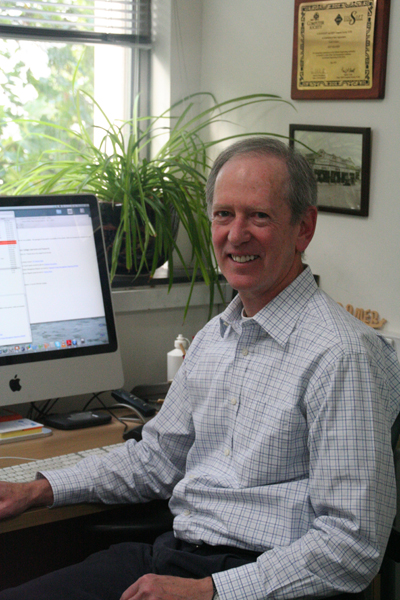
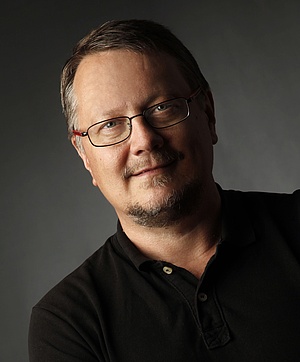
Andreas Rauber is an Associate Professor in the Department of Data Science at Technical University of Vienna. He serves as Curriculum Coordinator for Bachelor and Master programs in Business Informatics and Data Science, and chairs the Curriculum Commission for Business Informatics. His research focuses on Information Systems Engineering, Logic and Computation, and Visual Computing, addressing challenges in data management, digital preservation, and reproducibility in e-science. He leads projects like OS Trails and FAIR-AI, emphasizing FAIR principles and trustworthy research infrastructures. Rauber has contributed to over 150 publications, including works on data citation frameworks, adversarial ML defenses, and reproducibility in IR. His work bridges technical innovation with policy, exemplified through roles in the EOSC Support Office Austria and RDA Austria initiatives. Key projects include establishing FAIR data practices across universities and advancing digital preservation through repositories like DBRepo. He coordinates international collaborations, such as the EU-funded EOSC-Life and EGI Advanced Computing projects. His teaching spans courses in machine learning, information retrieval, and research methods, fostering next-generation data scientists.
Nelson Nicolas Higuera Ruiz is a PreDoc Researcher at the Vienna University of Technology, affiliated with the Faculty of Informatics' Knowledge-Based Systems research group. His work bridges logic programming and deep learning for explainable AI. Research Focus: Neurosymbolic AI, Visual Question Answering (VQA), Answer Set Programming (ASP), and hybrid reasoning systems Projects: Leads optimization research in the LCS (2017–2025) project, developing neurosymbolic approaches for intelligent systems Key Contributions: Pioneering adaptive large-neighbourhood search algorithms for ASP optimization, modular neurosymbolic architectures, and contrastive explainability frameworks for VQA Collaborations: Active in international workshops and conferences including IJCAI, AAAI, and CLeaR, frequently collaborating with researchers like Thomas Eiter and Johannes Oetsch Publications: Focus on neurosymbolic integration, optimization algorithms, and explainability across AI, logic programming, and computer vision domains
Joost-Pieter Katoen is a full Professor at RWTH Aachen University and Head of its Computer Science Department since 2012. He also holds a part-time (20%) Professorship at the University of Twente . His research focuses on model checking , probabilistic verification , formal semantics , and software verification , with applications in aerospace systems. His work has led to significant tools like MRMC (probabilistic model checker), COMPASS (AADL analysis tool-set), and libalf (learning automata library). He has authored over 18 international projects (total €5.2 million) and graduated 12 PhD students. Scientific Awards : Member, German National Academy of Sciences (Leopoldina), 2024 ACM Fellow, 2020 ERC Advanced Grant, 2018 Honorary doctorate, Aalborg University, 2017 Teaching Award, RWTH Aachen, 2010 Philips Early Career Development Award, 1988 Research Trends (from articles): His recent work spans probabilistic program verification , quantitative game theory , Markov chain analysis , and parameter synthesis for stochastic systems, with applications in AI, quantum computing, and fault tree analysis. Leadership & Service : Katoen co-founded the QEST conference , chairs ETAPS steering committee, and has led numerous program committees (CONCUR, TACAS, QEST). He has served on editorial boards and organized conferences/seminars globally.
Axel Polleres is a full professor at the Institute for Data, Process and Knowledge Management in Vienna University of Economics and Business (WU Wien). He leads the department of Information Systems and Operations Management while maintaining active research in knowledge graphs, semantic web technologies, and ontology engineering. PhD and Habilitation from Vienna University of Technology Former positions at University of Innsbruck, Universidad Rey Juan Carlos, DERI Ireland, and Siemens AG Co-chair of W3C SPARQL working group Editorial board member for Semantic Web Journal and IJSWIS His research focuses on: Querying and reasoning over ontologies Graph schema languages (SHACL, SPARQL) Wikidata constraint formalization Ontology reuse in collaborative platforms Crisis management knowledge graphs FAIR data principles implementation Recent publications analyze knowledge graph evolution, constraint validation methodologies, and semantic web standardization efforts. Key topics include: OWL/RDF interoperability solutions Unit conversion systems for Wikidata Partition-based query processing frameworks Network resilience analysis for urban planning Open data platform discovery tools Temporal analysis of collaborative knowledge graphs He has co-organized major conferences like ISWC2023 and ESWC workshops while maintaining active roles in European research projects. Current work involves spatiotemporal knowledge graphs for city resilience and semantic web infrastructure development.
Dr. Adel Aazami is an Assistant Professor at the Institute of Transport Economics and Logistics at Vienna University of Economics and Business (WU Vienna) since 2023. His academic journey began with a B.Sc. in Industrial Engineering from University of Tehran (2010-2014), followed by an M.Sc. (2014-2016) and Ph.D. (2016-2021) from Iran University of Science and Technology (IUST), Tehran. Prior to his current position, he worked as a Postdoctoral Researcher at Sharif University of Technology (2021-2022) and was a Visiting Researcher at the University of Toronto (2020). His educational background includes: Ph.D. in Industrial Engineering (2016-2021) - Iran University of Science and Technology (IUST), Tehran, Iran M.Sc. in Industrial Engineering (2014-2016) - Iran University of Science and Technology (IUST), Tehran, Iran B.Sc. in Industrial Engineering (2010-2014) - University of Tehran, Tehran, Iran Dr. Aazami's research spans multiple interconnected domains within operations research and supply chain management. His primary focus areas include Operations Research and Optimization, Supply Chain and Logistics, Production and Distribution/Transportation Planning, Competition and Game Theory, Stochastic Programming, and Decomposition Algorithms. His work demonstrates a strong emphasis on developing mathematical models and optimization algorithms for complex supply chain problems, particularly those involving perishable goods, competitive environments, and sustainability considerations. He has made significant contributions to integrating environmental factors into traditional logistics problems and developing robust optimization approaches for supply chain networks. Analysis of Dr. Aazami's publication record reveals a consistent trajectory of increasingly sophisticated research in supply chain optimization. His work shows a clear progression from foundational mathematical optimization techniques to increasingly complex integrated problems involving multiple stakeholders, uncertainty, and environmental considerations. A notable trend is his focus on perishable products within supply chains, developing models that account for limited product lifetimes while optimizing across multiple echelons of the supply chain. More recently, his research has expanded to incorporate green logistics considerations, developing algorithms that balance economic and environmental objectives in transportation and distribution problems. His notable scientific achievements include: Winner of the 'Best Student' award among nationwide students evaluated by the Iranian Ministry of Science (2020) Winner of the Iranian Nobel Prize (known as the Alborz National Foundation Prize) (2019) Winner of the Best Student Award at IUST (2018) Winner of the Top Researcher Award at IUST (2018) Annual Awards of the National Elites Foundation Iran (2015-2020) Dr. Aazami has extensive teaching experience across multiple Iranian universities including Tehran University, Amirkabir Technical University, Isfahan University, Yazd University, Zanjan University, Damghan University, Abrar University and Iran Technical University. His peer review activities include reviewing for prestigious journals such as Soft Computing, Expert Systems with Applications, and Annals of Operations Research. While specific grant information isn't detailed in the provided text, his research output suggests active engagement with complex optimization problems relevant to transportation and logistics industries. At WU Vienna, Dr. Aazami is part of the research team at the Institute of Transport Economics and Logistics, working alongside other faculty members including Prof. Kummer and Prof. Wakolbinger. His research integrates theoretical optimization methods with practical applications in transportation and logistics, contributing to the institute's focus on sustainable and efficient supply chain solutions.
Patrick Holzmann is a Postdoctoral Research Associate at the Institute for Strategy and Competitiveness (ISM) at Vienna University of Economics and Business (WU). Previously, he served as Deputy Head of the Department of Innovation Management and Entrepreneurship at the University of Klagenfurt, where he also earned his Doctorate. His research focuses on the intersection of digitalization and sustainability, exploring how digital technologies can drive sustainable business model innovation. He combines quantitative, qualitative, and systematic literature review methods, with interdisciplinary influences from business, economics, sociology, and psychology. Key research areas include: Technology adoption antecedents Environmental entrepreneurship Institutional logics in business models Platform ventures and sustainability His work has been published in leading journals such as Journal of Cleaner Production , Business Strategy and the Environment , and International Journal of Information Management . Notable contributions include frameworks for measuring sustainability-related product satisfaction and systematic reviews of digital sustainable entrepreneurship. Professional experience includes a Visiting Scholar position at RWTH Aachen University. His research agenda emphasizes bridging digital innovation and environmental sustainability through actionable business strategies.
Ulrich Schmid is a Full Professor and Head of the Research Unit for Embedded Computing Systems at TU Wien. He holds a position in the Faculty of Informatics and leads the department of Embedded Computing Systems (E191-02). His roles include Curriculum Coordinator for the Bachelor and Master programs in Computer Engineering, as well as the Excellence Program Bachelor with Honors. He is also the Chair of the Curriculum Commission for Computer Engineering and a Substitute Member of the Informatics Commission. His research focuses on fault-tolerant distributed algorithms, digital integrated circuits, and topology-based approaches to distributed systems. He coordinates major projects such as the FWF-funded DMAC (2019–2024) and ByzDEL (2020–2025), which integrate topological semantics and hybrid delay models for robust hardware design and distributed system analysis. Schmid has contributed to groundbreaking work in Byzantine fault tolerance, epistemic logic for system recovery, and real-time scheduling through collaborations with researchers like Chatterjee, Függer, and Rajsbaum. Notable awards include the 2018 Edsger W. Dijkstra Prize and the 2021 Principles of Distributed Computing Doctoral Dissertation Award. His research also bridges formal verification techniques with physical hardware implementations, exemplified by projects like HEX (a Byzantine-tolerant clock distribution system) and the Involution tool for timing analysis. Schmid actively contributes to academic governance, advancing rigorous education and research standards in computer engineering. His advising and grant work involve mentoring on fault-tolerant architectures and securing funding from agencies like FWF and the European Commission. Labs and teams under his leadership include the Embedded Computing Systems group, specializing in hardware-software co-design for dependable systems-on-chip, and collaborations with institutions like GSI Helmholtzzentrum and the University of Amsterdam.
Gerhard Friedrich is a Full Professor at the University of Klagenfurt, leading the Institute for Artificial Intelligence and Cybersecurity. He previously served as Dean of the Faculty of Technical Sciences (2013–2021). His roles include Coordinator for International Relations of the Faculty of Engineering and Member of the Faculty Conference of Technical Sciences. He holds a PhD in Computer Science from Vienna University of Technology and has extensive industry experience, including heading departments at Siemens Austria and research roles at Siemens Corporate Research and Stanford Research Institute. Research focuses on knowledge-based systems, recommender systems, configuration and planning, and production informatics. His work bridges theoretical AI with practical applications in manufacturing, software development, and business processes. He has authored a book on recommender systems (translated into Japanese and Chinese) and contributed to prestigious journals like Artificial Intelligence and IEEE Transactions . He has organized major conferences such as the German Conference on Artificial Intelligence (2016) and served as editor and program committee member for leading venues. His awards include Fellowships from the European and Asia-Pacific AI Associations (2012, 2023). His advising and grants include leadership in applied AI projects and international collaborations. He directs the Intelligent Systems and Business Informatics research group, emphasizing interdisciplinary innovation.
Cezary Kaliszyk is a Professor in Theoretical Computer Science at the University of Melbourne. His research focuses on automated reasoning, formal methods, and learning for reasoning, particularly in the context of interactive theorem proving and formalized mathematics. He leads the ERC project 'FormalWeb3' and has been involved in several other significant research initiatives. Theoretical Computer Science Automated Reasoning Formal Methods Interactive Theorem Proving Machine Learning for Theorem Proving Formalized Mathematics Proof Guidance Learning for Reasoning His research explores the integration of machine learning techniques with formal reasoning systems to enhance automation in theorem proving. This includes developing systems like CoqHammer and Tactician, advancing premise selection, proof guidance, and learning-based proof search strategies. His work bridges logical foundations with practical AI-driven tools for formal verification. The recent publications demonstrate a consistent focus on advancing automated and interactive theorem proving through learning techniques, formalization of mathematical concepts (like surreal numbers), and improving reasoning systems (e.g., Prover9, tableaux methods). There is a strong emphasis on practical system development, formalization projects, and learning-based enhancements to reasoning. ERC project 'FormalWeb3' - Principal Investigator Cost Action EuroProofNet - WG5 Leader until 2024 FWF project P26201 - developing HOL(y)Hammer Other projects: JSPS P10044, NWO MathWiki, SURF WebDed, ProofWeb He has advised several PhD students to completion, including Michael Färber, Thibault Gauthier, Yutaka Nagashima, Stanisław Purgał, and Liao Zhang, and is currently supervising Daniel Ranalter and Neil Vyas. He has not received any explicitly mentioned scientific awards in the provided text. His work involves leadership in collaborative systems such as ProofWeb and HOL Import, and participation in major formalization efforts including the Mizar library integration with Isabelle. He is actively involved in the development of tool ecosystems for formal mathematics and automated reasoning.
Prof. Ulrich Schmid is a full professor at TU Wien, affiliated with the Forschungsbereich Embedded Computing Systems. His research focuses on distributed systems, fault-tolerant computing, and asynchronous algorithms. He leads projects like 'Asynchronous Distributed Algorithms in the Theta-Model' and 'Gracefully Degrading Agreement in Directed Dynamic Networks.' Prof. Schmid has received honors at TU Wien and actively supervises numerous students in PhD and Master's programs. His academic work spans theoretical foundations (e.g., epistemic logic in Byzantine systems) and practical applications (e.g., digital circuit delay modeling). Key contributions include hybrid delay models for integrated circuits and formal verification frameworks for timed circuits. Collaborations involve institutions like the Institut für Technische Informatik and the E191-02 research group. Notable research areas: Byzantine fault tolerance, consensus protocols, and embedded systems Leadership in 4 major projects addressing distributed computing challenges Recipient of TU Wien honors (2021) Prof. Schmid's lab emphasizes bridging theoretical computer science with hardware-software co-design, producing over 220 publications and 10+ supervised theses since 2000.
Prof. Gao Huijun is a Full Professor at the School of Aeronautics and Astronautics, Harbin Institute of Technology (HIT), where he also serves as Director of the Research Institute of Intelligent Control and Systems. He holds honorary positions at The University of Hong Kong and the University of Alberta. His research focuses on networked control systems, robotics, and signal processing, with over 380 SCI publications and an H-index of 120. Positions: Director of Interdisciplinary Science Research Center (2019–present), Dean of School of Science (2015–2019), and Honorary Professor at The University of Hong Kong (2009–present). Education: Ph.D. in Control Science and Engineering from HIT (2005), postdoc at University of Alberta (2005–2007). Research interests span networked control systems, multi-agent systems, and opto-mechanical integration. His work has led to 100+ patents and prestigious awards like the IEEE Fellow (2013) and National Natural Science Award (2014). Editorial roles include Co-Editor-in-Chief of IEEE Transactions on Industrial Electronics and Senior Editor roles in multiple journals. He has advised over 30 doctoral students, many of whom hold academic or industry leadership roles. Key Awards: National Natural Science Award (2014), China Youth May Fourth Medal (2011), Highly Cited Researcher (2014–2020). Grants: Chief Scientist of National Key R&D Programs, Director of China Postdoctoral Science Foundation. Labs/Teams: Leads the Research Institute of Intelligent Control and Systems, focusing on interdisciplinary projects like AOI systems and industrial robotics.
Wei Li is a Professor at the School of Computer Science and Engineering, Beihang University (since 1986), and Director of the State Key Laboratory of Software Development Environment (since 1992). He has held visiting positions at institutions including the University of Minnesota and Universität Saarlandes. Education: Ph.D. in Computer Science, University of Edinburgh (1979–1983) B.Sc. in Mathematics, Peking University (1961–1966) Research Interests span Mathematical Logic, Concurrent Programming Languages, Satisfiability Problems, Artificial Intelligence, Software Crowdsourcing, and Big Data. His work includes foundational contributions to logical frameworks for belief revision and specification evolution, with applications in software trustworthiness and constraint satisfaction. Publication Trends reveal a focus on formal methods (R-calculus, open logic systems), software crowdsourcing, and phase transitions in constraint satisfaction problems. His research integrates theoretical rigor with practical applications in information science and engineering. Scientific Awards include: Chinese Government Award for Publishing (2017) Tsiolkovsky Medal (2007) National Prize of First Class for Achievements in Education (2005) Ho Leung Ho Lee Prize (1998) Academician, Chinese Academy of Sciences (1997) He also supervised 8 post-docs, 52 Ph.D., and over 100 graduate students.
Professor Jeffrey Kramer is a distinguished academic at Imperial College London, where he currently serves as Professor in Distributed Computing within the Department of Computing, Faculty of Engineering. With a career spanning over four decades at Imperial College, he has held numerous leadership positions including Senior Dean (2009-2012), Dean of the Faculty of Engineering (2006-2009), and Head of the Department of Computing (1999-2004). Professor Kramer's research focuses on software engineering, particularly in distributed computing, requirements engineering, software architecture, and self-managing adaptive systems. His work on the Darwin Software Architecture led to commercial implementation by Philips in consumer television products. He has been a principal investigator in research projects developing the CONIC and DARWIN environments for distributed programming. His publication portfolio includes over 200 refereed journal and conference papers along with two influential books: 'Distributed Systems and Computer Networks' (1986) and 'Concurrency: State Models & Java Programs' (1999, 2nd ed. 2006). His most cited works address software architecture, dynamic reconfiguration, and adaptive systems, demonstrating a consistent research trajectory focused on foundational aspects of distributed software systems. FREng Fellow of the Royal Academy of Engineering (2008) ACM SIGSOFT Outstanding Research Award (2005, joint with Prof. Magee) ACM SIGSOFT Distinguished Service Award (2011) Editor-in-Chief of IEEE Transactions on Software Engineering (2006-2009) Most Influential Paper Award at ICSE 2003 IEE Informatics Premium prize (1998/99) Professor Kramer has served on over 50 international conference committees in the last decade and has delivered numerous keynote addresses globally. His industrial collaborations include work with BP, BT, NATS, Fujitsu, Barclays Capital, QinetiQ, Kodak, Microsoft, and Philips. He has also served as an expert witness for major law firms and has been involved in numerous research collaborations and consulting engagements.
Marlies Temper is a Professor at St. Pölten University of Applied Sciences, serving as Academic Director for the Data Intelligence (MA) and Data Science and Artificial Intelligence (BA) programs. She is Deputy Head of the Department of Computer Science and Security and a member of the UAS Board from 2023 to 2026. Her roles include leading educational initiatives, conducting research, and managing continuing education programs. Academic Director, Data Intelligence (MA) Academic Director, Data Science and Artificial Intelligence (BA) Deputy Head, Department of Computer Science and Security Continuing Education Officer Marlies Temper's research focuses on Artificial Intelligence , Cybersecurity , and Big Data Analytics . She explores the ethical implications of AI, develops gamified models for security training, and investigates continuous biometric authentication methods. Her work bridges the gap between theoretical advancements and practical applications in AI-driven security solutions. Her recent publications highlight trends in AI Security (e.g., risk frameworks), Biometric Authentication (e.g., touch dynamics), and Cybersecurity Education (e.g., gamified simulations). She emphasizes the responsible use of AI and Big Data while addressing technical and ethical challenges.
Franz Wotawa is a Professor of Software Engineering at Graz University of Technology. He holds a M.Sc. (1994) and PhD (1996) from Vienna University of Technology. He has served as head of the Institute for Software Technology from 2003–2009 and since 2020. His research focuses on model-based reasoning, software testing, autonomous systems, and diagnosis, with over 390 peer-reviewed publications. He founded Softnet Austria (2006) to bridge research and industry. He leads the Christian Doppler Laboratory for Quality Assurance Methodologies for Autonomous Cyber-Physical Systems since 2017 and has supervised 90+ master and 36+ PhD students. His awards include the 2016 Lifetime Achievement Award from the International Diagnosis Community. He is a member of Academia Europaea, IEEE, and AAAI. **Education**: M.Sc. in Computer Science, Vienna University of Technology, 1994 PhD, Vienna University of Technology, 1996 **Research Interests**: Model-based reasoning, qualitative reasoning, theorem proving, mobile robotics, verification/validation, software testing/debugging, AI, and autonomous systems. **Notable Projects**: A-IQ Ready (2022–2026): Quantum sensing for autonomous systems. ALFA (2024–2027): AI for smart diagnosis in building automation. Bilateral AI (2024–2029): Combining symbolic and sub-symbolic AI. VARCOS (2025–2028): Vehicle-road cooperative systems for autonomous driving. **Awards & Memberships**: Lifetime Achievement Award (2016, International Diagnosis Community) Senior Member, AAAI Member of Academia Europaea, IEEE, ACM, and Austrian Computer Society **Labs/Teams**: Christian Doppler Laboratory for Quality Assurance Methodologies (since 2017). Active in Cluster of Excellence “Bilateral AI” at TU Graz.