Professor Howard Schwartz is a distinguished academic in Electrical and Computer Engineering at Carleton University , with a career spanning academia, industry, and robotics research. He earned his BEng in Civil Engineering from McGill University (1982), followed by MSc (1984) and PhD (1986) in Aerospace and Mechanical Engineering from MIT. His academic leadership includes serving as Department Chairman (2009-2013) and authoring the seminal text Multi-Agent Machine Learning: A Reinforcement Approach (Wiley, 2014). As an Associate Editor for IEEE Transactions on Cybernetics , he shapes discourse in cybernetic systems and machine learning. Research Focus Professor Schwartz's research bridges theoretical and applied domains: Machine learning for robotics and autonomous systems Adaptive control theory and multi-agent systems Reinforcement learning algorithms with fuzzy logic integration Real-time video analytics and GPS receiver development Nonlinear control systems for UAVs and wind energy optimization Industry Experience His career includes impactful industry engagements: Early development of high-performance GPS receivers at Canadian Marconi Co. (1982-1984) Sabbatical at March Networks (2001-2002) for video analytics Software quality control at CMC Electronics (2008) Software development for TV set-top boxes at Espial Inc. (2014-2015)
Khalil Esper is a Researcher at the Department of Computer Science, Faculty of Engineering, Friedrich-Alexander-University Erlangen-Nuremberg (FAU), where he works at the Chair of Computer Science 12 (Hardware-Software Co-Design). His research focuses on verification, energy optimization, and runtime requirement enforcement in embedded systems and MPSoCs. His educational background includes: Informatics Engineering from Aleppo University, Syria (2010-2015) European Master in Embedded Computing Systems (EMECS) from Rhineland-Palatinate University of Technology Kaiserslautern-Landau (Germany) and Norwegian University of Science and Technology (Norway) (2017-2019) Esper's research interests center around verification and model checking, energy optimization on MPSoC, real-time systems and embedded systems, and autonomic computing. His work particularly focuses on runtime requirement enforcement mechanisms for non-functional properties in multi-processor systems-on-chip, with applications extending to medical devices and human-robot interaction systems. He has developed approaches using finite state machines, reinforcement learning, and evolutionary algorithms to ensure system properties are maintained during execution. His publication record shows a strong trend toward applying formal methods and runtime enforcement techniques to increasingly complex systems, with recent work expanding into safety-critical applications like orthoses and human-robot interaction. The interdisciplinary nature of his research bridges computer science, embedded systems engineering, and biomedical applications. Esper has supervised multiple theses including: Sascha H.: Runtime Requirement Enforcement of Non-Functional Requirements on MPSoCs Using Fuzzy Logic (2022) Iana S.: Feedback-Based Control of Non-functional Program Execution Properties on Linux (2023) Philipp L.: Runtime Requirement Enforcement of Functional and Non-Functional Requirements of a Knee Orthosis Based on a Digital Twin (2024) Avinash N.: Runtime Requirement Enforcement of Safety Properties of an Ankle Orthosis Based on a Digital Twin (2024) Zhiyi T.: Generation of Environment FSMs Using Machine Learning Techniques (2025) Moustafa A.: Runtime Requirement Enforcement of Safety Properties of Human-Robot Interaction Based on a Digital Twin (2025) Florian K.: Runtime Requirement Enforcement of Safety Properties of Human-Robot Interaction (2025) He has been actively teaching courses on Approximate Computing and Embedded Systems since the 2021/2022 academic year, demonstrating his commitment to academic instruction alongside his research activities. Esper is involved in the InvasIC research project, part of the DFG Transregional Collaborative Research Center 89 on Invasive Computing, which explores novel approaches to resource management in parallel computing systems.
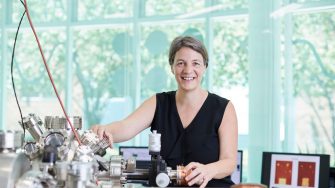
Professor Michelle Simmons is the Director of the ARC Centre of Excellence in Quantum Computation and Communication Technology at the University of New South Wales (UNSW Sydney). Her work focuses on advancing silicon-based quantum computing through atomic precision engineering, including projects on 2-qubit gates and logical qubit architectures. Involves cryogenic measurement and microwave spin control Collaborates with Silicon Quantum Computing Pty. Ltd. Her research spans fundamental quantum mechanics, device fabrication in CMOS cleanrooms, and error correction for scalable quantum systems. Recent publications highlight trends in quantum dot arrays, spin readout sensitivity, and interdisciplinary applications of quantum technologies. Professor Simmons received the Esther Hoffman Beller Lectureship (2022) for her contributions to qubit manufacturing. She leads a dedicated team at UNSW, working toward the development of high-fidelity quantum processors and exploring the intersection of quantum materials and computational innovation.
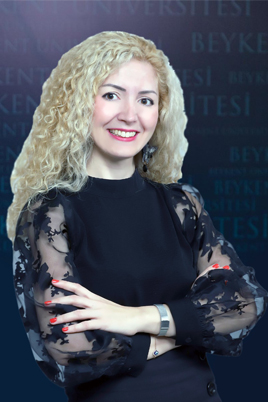
Sevgi AYDIN serves as an Assistant Professor in Logistics Management at Beykent University's Faculty of Business. Her academic work bridges digital transformation, artificial intelligence applications, and consumer behavior within modern marketing frameworks. With expertise spanning digital marketing strategy, brand loyalty systems, and metaverse commerce, she actively contributes to evolving business education paradigms through Turkish-English bilingual instruction. Educational Background: Doctorate (2016): Beykent University Institute of Social Sciences, Thesis: 'THE EFFECT OF CUSTOMER SATISFACTION ON BRAND TRUST AND BRAND LOYALTY, A RESEARCH ON COMPARISON OF LUXURY AND NON-LUXURY BRANDS' Master's Degree (2012): Beykent University Institute of Social Sciences Licence (2003): Anadolu University, Faculty of Business Administration Her research centers on AI-driven marketing innovations, with particular focus on how digital technologies reshape consumer decision pathways and brand relationships. Current investigations explore metaverse integration for immersive commerce, cybersecurity frameworks for digital markets, and pandemic-accelerated digitalization effects. Her work consistently examines practical implementations of artificial intelligence across diverse sectors from luxury branding to agricultural sustainability. Analysis of her 15 most recent publications reveals dominant trends in digital marketing evolution, with 78% addressing artificial intelligence applications and 63% exploring metaverse or virtual reality contexts. Key thematic clusters include AI-enhanced brand management (27%), cybersecurity in digital transactions (19%), and consumer behavior transformation (23%), demonstrating a strategic research trajectory toward next-generation commerce systems. Academic Supervision: SEVİL AYDIN (2024): 'THE USE OF SOCIAL MEDIA IN HOSPITAL CHOICE AND THE EFFECT OF WORD-OF-MOUTH MARKETING ON BRAND LOYALTY' RUKEN BAYONET (2021): 'The role of the food engineer in ensuring occupational health and safety management in food businesses producing hot meals' MERYEM BALTACI (2023): 'The Future of Graphic Design and the Impact of Artificial Intelligence on Graphic Design: Maw Agency Client Applications'
Valeriya Nikolaeva Simeonova is an Associate Professor at the Faculty of Mathematics and Informatics, University of Sofia, specializing in Information Technologies . Her research focuses on interdisciplinary applications at the intersection of Bioinformatics , Machine Learning , and Parallel Computing , particularly for error discovery in metagenomics data and QSAR modeling in plant biology. Her work emphasizes Next-Generation Sequencing (NGS) data analysis, where she develops algorithms for error detection and correction. She has contributed to optimizing genome assembly techniques through soft computing approaches and explored distributed computing for financial time series forecasting. Notable publications include studies on Golden Root in vitro culture growth (2013) and metagenomics NGS error detection (2015) in journals like BIOTECHNOLOGY & BIOTECHNOLOGICAL EQUIPMENT . Her collaborations span institutions in Bulgaria, France, and Belgium.
Olga Ilieva Georgieva is a Professor at the Faculty of Mathematics and Informatics (FMI) , Sofia University , specializing in Software Technologies . She has held academic positions at the Bulgarian Academy of Sciences and Technical University of Sofia , and is actively involved in research, teaching, and national/EU-funded projects. Education: 1986 – Faculty of Automatics, TU-Sofia 1995 – PhD, Institute of Control and System Research, Bulgarian Academy of Sciences 2000 – Associate Professor, Institute of Control and System Research, Bulgarian Academy of Sciences 2008 – Associate Professor, Faculty of Mathematics and Informatics, Sofia University Research Interests: Her work spans Artificial Intelligence , Machine Learning , Data Mining , and Soft Computing Methods . She applies these to domains such as emotion recognition from EEG , QoS in web services , educational data mining , and industrial energy modeling . Scientific Awards: Best Paper Award, IEEE 8th International Conference on Intelligent Systems (2016) Teaching & Projects: She teaches courses including Requirements Engineering , Models of Software Systems , Fuzzy Sets and Applications , and Professional Ethics at Sofia University, and previously taught at TU-Sofia. She leads or co-leads multiple national and EU projects such as GATE: Big Data for Smart Society , ITDGate , and Modelling of Voluntary Saccadic Eye Movements .
Professor Ben Anderson is a cultural-political geographer in the Department of Geography at Durham University, where he has held academic positions since 2004. His work spans affective geographies, emergency governance, and contemporary political conditions including Brexit and populism. He currently serves as joint REF coordinator and has previously directed BA/MArts programmes and convened research clusters. Anderson's research centers on affective life and its political dimensions, with three primary strands: (1) The politics of affect in relation to contemporary conditions like populism and precarity, including ongoing work on boredom under neoliberalism; (2) Governing emergencies through anticipatory practices like scenarios and exercises, examining how 'emergency' has expanded as a governing logic; (3) Transformations in cultural geography, particularly regarding concepts of culture, materiality, and non-representational theories. His theoretical contributions include the monograph Encountering Affect: Capacities, Apparatuses, Conditions (2014) and development of concepts like 'affective atmospheres' and 'structures of feeling'. His recent publications reveal strong thematic trends across political geography, affect studies, and emergency governance. Work increasingly examines slow emergencies and racialized biopolitics, while connecting boredom studies to climate politics and financialization. A significant portion engages with Brexit's affective dimensions and right-wing populism, often through collaborative projects. The scholarship demonstrates sustained innovation in conceptualizing affective life while maintaining empirical grounding in contemporary political struggles. Anderson has supervised 19 PhD students throughout his career, with current supervisees including Tilly Hall, Cecilia Zhu, and Hannah Morgan. His administrative service includes significant roles in programme leadership and research coordination. He is actively involved in research clusters including Urban Worlds, Politics-State-Space, and Economy & Culture, contributing to Durham's vibrant interdisciplinary research environment through collaborations across geography, political theory, and cultural studies.
Dr. José Luis Calvo Rolle serves as a Professor in the Department of Industrial Engineering at the School of Engineering, Universidade da Coruña (UDC), specializing in Systems Engineering and Automation. His research focuses on intelligent control systems, fault detection, and virtual instrumentation within the Cybernetic Science and Technology Research Group. Teaches across multiple programs including Master's in Industrial Computing and Robotics, Textile Technology, and Occupational Risk Prevention Coordinates thesis supervision across Industrial Engineering and related disciplines His research spans intelligent control systems and optimization, with significant contributions in virtual sensors, fault detection, and AI-driven modeling for industrial applications. Current projects integrate machine learning with industrial processes for naval construction, wastewater treatment, and precision livestock farming, demonstrating cross-disciplinary impact from energy systems to agricultural technology. Recent publications reveal strong trends in applying deep learning to industrial metaverse frameworks, wastewater optimization, and livestock monitoring systems. His work bridges theoretical control engineering with practical implementations in energy management, naval manufacturing, and sustainable agriculture, frequently utilizing dimensionality reduction and one-class classification techniques. Dr. Calvo Rolle actively mentors students through thesis supervision across multiple engineering disciplines and coordinates research projects with diverse funding sources including the European Commission, Spanish National Research Agency, and industrial partners like Navantia and Telefónica. His laboratory work centers on the Cybernetic Science and Technology Research Group, developing testbeds for industrial automation, virtual instrumentation, and AI-driven monitoring systems. Current initiatives include digital twin implementations for naval manufacturing and smart energy management systems.
Arnulf Jentzen is a distinguished mathematician holding dual positions as Presidential Chair Professor at the School of Data Science and Shenzhen Research Institute of Big Data at The Chinese University of Hong Kong, Shenzhen, and as Full Professor at the Faculty of Mathematics and Computer Science at the University of Münster, Germany. His research spans multiple institutions with significant contributions across mathematical disciplines. His primary research interests include dynamical systems and gradient flows (particularly geometric properties, domains of attractions, blow-up phenomena), analysis of partial differential equations, stochastic analysis (including stochastic calculus and well-posedness analysis), machine learning (with focus on mathematics for deep learning and stochastic gradient descent methods), and numerical analysis (particularly computational stochastics and computational finance). His work demonstrates a strong interdisciplinary approach bridging pure mathematics with practical computational applications. Jentzen's publication record shows a clear trend toward machine learning applications in solving complex mathematical problems, particularly in overcoming the curse of dimensionality in high-dimensional PDEs through deep neural networks. His research group actively publishes on optimization methods like Adam, convergence analysis, and applications of deep learning to partial differential equations and optimal control problems. ICBS Frontier of Science Award in Mathematics (2024) Fellow, Lamarr Institute (2023) ERC Consolidator Grant (2022) Joseph F. Traub Prize for Achievement in Information-Based Complexity (2022) Felix Klein Prize, European Mathematical Society (EMS) (2020) Professor Jentzen advises numerous PhD students across both institutions and serves on multiple editorial boards including SIAM Journal on Numerical Analysis, Journal of Complexity, and Communications in Computational Physics. His research group at Münster and CUHK-Shenzhen focuses on developing mathematical foundations for machine learning with applications to scientific computing problems. He has received significant research funding including an ERC Consolidator Grant, supporting his interdisciplinary work at the intersection of mathematics and artificial intelligence.
Spyros Reveliotis is a Professor at the Stewart School of Industrial & Systems Engineering within the College of Engineering at Georgia Institute of Technology. His work bridges theoretical advancements with practical applications in automation and control systems. Education : PhD in Industrial Engineering (University of Illinois at Urbana-Champaign), B.Sc. in Electrical Engineering (National Technical University of Athens), M.Sc. in Computer Systems Engineering (Northeastern University) Reveliotis focuses on discrete event systems theory , emphasizing control of flexible automation and traffic management for multi-agent systems. His research integrates machine learning and Markov decision processes to optimize scheduling and coordination in complex environments like robotics and manufacturing systems. Recent trends in his publications address deadlock avoidance , min-time coverage in constrained spaces, and liveness enforcement for transport systems. These works often leverage combinatorial optimization and graph theory for scalable solutions. Scientific Awards : IEEE Fellow As a core faculty member of the Institute for Robotics and Intelligent Machines (IRI) , Reveliotis contributes to interdisciplinary robotics research. His affiliations with professional societies like INFORMS reflect his impact on operations research and automation fields.
Miltos Alamaniotis is an Associate Professor and GreenStar Endowed Fellow in the Department of Electrical and Computer Engineering at the University of Texas at San Antonio (UTSA). His research focuses on applied artificial intelligence in nuclear security, smart grids, and radiation detection systems, with a particular emphasis on maritime nuclear applications and nonproliferation. Academic Appointments: Associate Professor (2023–Present), UTSA Education: Ph.D. in Applied Intelligent Systems, Purdue University Research interests include: Nuclear Security and Nonproliferation Smart Grids and Distributed Energy Systems Explainable AI for Radiation Detection Quantum Machine Learning Applications Intelligent Control of Nuclear Reactors Fuzzy Logic in Energy Management Recent publications highlight trends in AI-driven nuclear security systems, matrix profile methods for radiation anomaly detection, and quantum neural networks for thermographic image analysis. His work bridges nuclear engineering, cybersecurity, and smart city technologies. Scientific honors include: Top 0.5% ScholarGPS Ranking (2024) Best Paper Award at IEEE Texas Power and Energy Conference (2025) Luthcher Brown Fellowship (2023) GreenStar Endowment Fellowship (2023) NAE Frontiers of Engineering Symposium Selection (2023) UTSA President’s Distinguished Achievement Award (2022) He has supervised PhD students like Thanos Arvanitidis and secured over $15M in grants from DOE, NSF, and NRC for projects including the $25M NNSA Consortium. His AI Lab at UTSA collaborates with Argonne, Idaho, and Los Alamos National Laboratories.
Madhusudan Parthasarathy is a Professor in the Department of Computer Science at the University of Illinois at Urbana-Champaign, College of Engineering. His research focuses on software verification, formal methods, and logic in computer science, with significant contributions to trustworthy AI systems, program synthesis, and security. Ph.D. in Theoretical Computer Science (2002), Institute of Mathematical Sciences, University of Madras Research interests include automating software verification, building correct-by-design systems, and exploring synergies between machine learning and program synthesis. He pioneered visibly pushdown languages , impacting XML processing and program verification. His tools like VEX and Strand advanced security and heap reasoning. Recent articles focus on blockchain verification, timed automata, and learning logics from data. His work has been widely cited, with the visibly pushdown language paper alone generating over 940 scholarly entries. Best Paper Award, 19th USENIX Security Symposium (2010) He has advised numerous students and postdocs, with former advisees now at institutions like Purdue University and Google. His outreach initiatives include the ConTraIL privacy-preserving contact tracing project and the MASSIVELY EMPOWERED CLASSROOMS MOOC platform for Indian undergraduates. He teaches courses like CS 521: Advanced Topics in Programming Systems and CS 474: Logic in Computer Science , while actively serving on program committees for top-tier conferences such as POPL and PLDI.
Michael M. Zavlanos is the Yoh Family Professor in the Thomas Lord Department of Mechanical Engineering and Materials Science at Duke University's Pratt School of Engineering. He also holds secondary appointments in the Department of Computer Science and the Department of Electrical and Computer Engineering. Currently serving as the Director of the Healthcare Systems Optimization program with Duke AI Health and as an Amazon Scholar with Amazon Robotics, his academic career spans control theory, optimization, and artificial intelligence with applications across multiple domains. Dr. Zavlanos received his educational foundation from prestigious institutions: Diploma in Mechanical Engineering from the National Technical University of Athens (NTUA), Greece (2002) M.S.E. in Electrical and Systems Engineering from the University of Pennsylvania (2005) Ph.D. in Electrical and Systems Engineering from the University of Pennsylvania (2008) His research program spans multiple interconnected domains, with a strong foundation in control theory, optimization, and learning methodologies . This theoretical work directly enables applications in robotics and autonomous systems , where his team develops algorithms for multi-robot coordination, motion planning under complex constraints, and network connectivity maintenance. A significant portion of his work addresses networked and distributed control systems , focusing on how multiple agents can coordinate effectively with limited communication. More recently, he has expanded his research into cyber-physical systems with healthcare applications, leveraging his expertise to optimize healthcare delivery systems through the Duke AI Health initiative. Dr. Zavlanos' work demonstrates a consistent trajectory from theoretical foundations to real-world applications. His early work established fundamental principles for maintaining connectivity in mobile robot networks, which evolved into more sophisticated approaches for temporal task planning and risk-averse decision making in uncertain environments. The most recent phase of his research integrates machine learning with traditional control theory to address complex healthcare system optimization problems. His significant contributions to the field have been recognized through prestigious awards: Office of Naval Research Young Investigator Program (YIP) Award (2014) National Science Foundation Faculty Early Career Development (CAREER) Award (2012) National Science Foundation Faculty Early Career Development (CAREER) Award (2011) Duke University Distinguished Faculty Rank (2019) Duke University Distinguished Professor designation (2018) As an educator, Dr. Zavlanos has taught courses including ME 627: Linear System Theory, ME 592: Research Independent Study, ECE 391/291: Projects in Electrical and Computer Engineering, and CEE 627: Linear System Theory. His research program has been supported by multiple grants from the National Science Foundation and the Office of Naval Research, enabling him to mentor numerous graduate students and postdoctoral researchers in the development of cutting-edge control and optimization algorithms. Dr. Zavlanos leads research efforts at the intersection of control theory, optimization, and artificial intelligence, with particular focus on translating theoretical advances into practical applications. His recent work with Duke AI Health represents a strategic expansion of his research portfolio into healthcare systems optimization, where he applies his expertise in algorithmic decision making to improve patient scheduling, resource allocation, and operational efficiency in medical settings. Through his Amazon Scholar role, he also contributes to advancing robotics technologies for real-world applications.
Asier Perallos Ruiz is a Professor in the Faculty of Engineering at the University of Deusto, specializing in the Department of Computing, Electronics and Communication Technologies. His research focuses on RFID technology, wireless sensor networks, and computational intelligence applications with significant contributions to intelligent transport systems and antenna design. Dr. Perallos Ruiz's research interests span multiple domains with a focus on RFID technology , Wireless sensor networks , Internet of Things (IoT) , Computational intelligence , Evolutionary algorithms , and Intelligent transport systems . His work bridges theoretical advancements with practical applications, particularly in transportation systems, healthcare, and industrial automation. His research often involves interdisciplinary collaboration across engineering disciplines. His publication portfolio shows a consistent trend toward improving RFID systems, developing efficient anti-collision protocols, and applying computational intelligence to real-world problems. Recent work has focused on polarization-diversity rotation sensing, customizable RFID platforms, and the integration of RFID with IoT applications. His research demonstrates a progression from foundational RFID technology to more complex system integration and application-specific solutions. Dr. Perallos Ruiz has supervised several graduate students including Muralter Florian (2021), Arjona Aguilera Laura (2018), Cmiljanic Nikola (2018), Lopez Garcia Pedro (2016), and Moreno Emborujo Asier (2016). His research has been supported by various projects focusing on RFID technology, intelligent transportation systems, and wireless communication applications. He leads research teams focused on RFID systems development, wireless sensor networks, and computational intelligence applications. Current work appears to be advancing RFID sensing capabilities, energy-efficient protocols, and system integration for practical applications in transportation and industry.
Raine Viitala is an Assistant Professor at Aalto University's Department of Energy and Mechanical Engineering. His research focuses on mechanical vibration analysis, electromagnetic influence in rotating systems, and sustainable energy management in industrial applications. Aalto University Department of Energy and Mechanical Engineering His work spans mechanical engineering , fluid dynamics , and machine learning applications . Recent publications address torsional vibration modeling, aerostatic bearing design, and AI integration in pulp & paper industry energy systems. Viitala's research trends include digital twin technology for collaborative design, eddy current sensing for tool monitoring, and nonlinear damping solutions for mechanical systems.