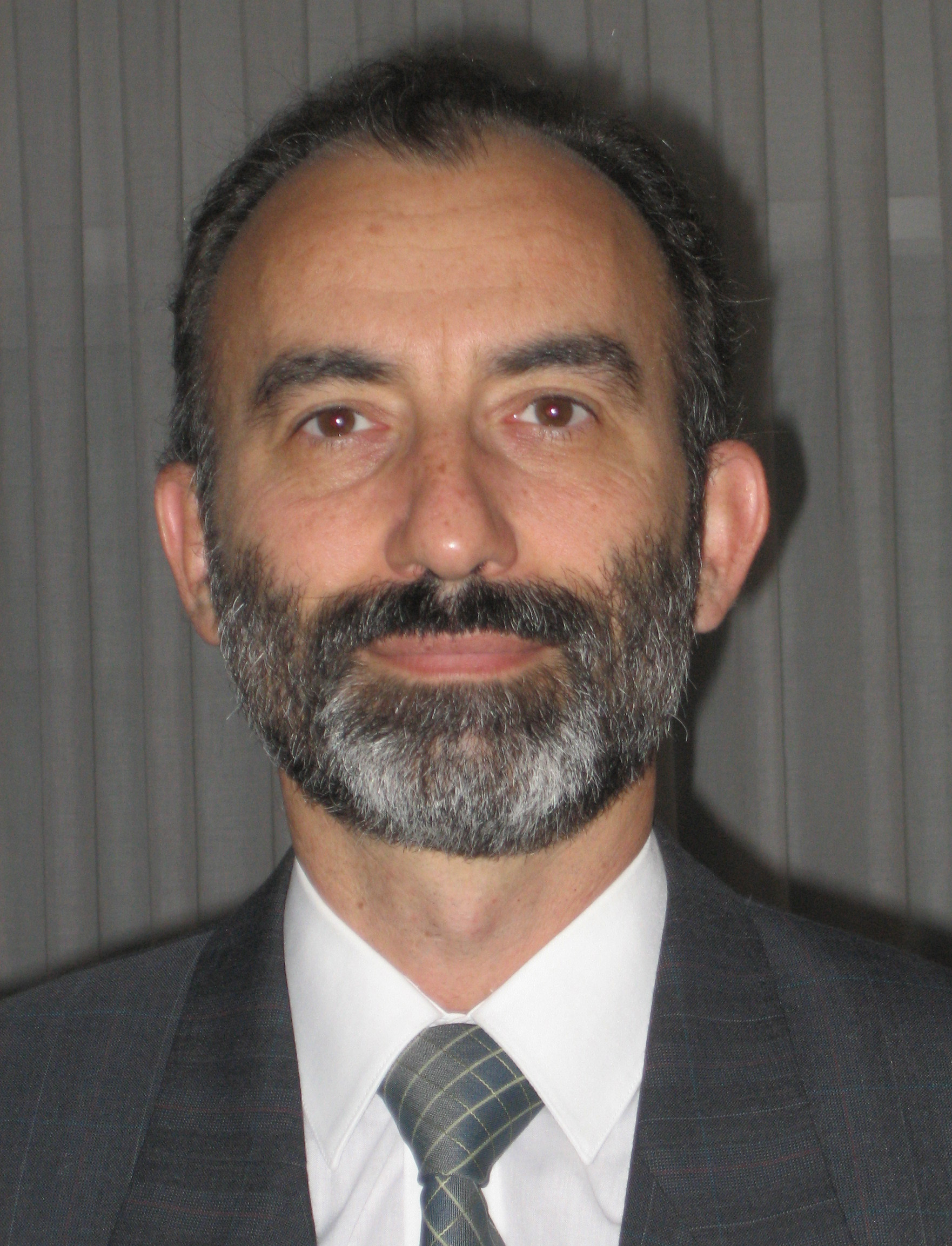
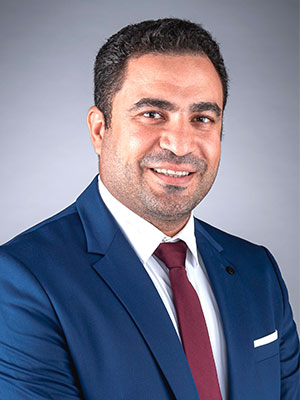
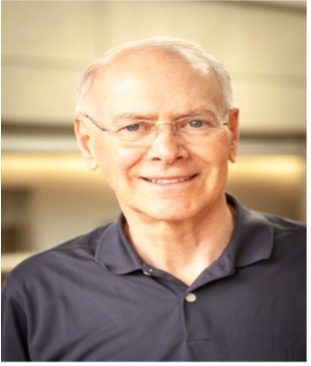
Pedro U. Lima is a Full Professor at Instituto Superior Técnico (IST), University of Lisbon, and President of the Institute for Systems and Robotics (ISR/IST), coordinating the Intelligent Robots and Systems group (IRSg). He holds a Ph.D. in Electrical Engineering from Rensselaer Polytechnic Institute (1994). His research focuses on intelligent control systems, multi-robot coordination, and human-robot interaction, with contributions to robotics competitions like RoboCup and initiatives like the European Robotics League (E.R.L.). Lima has served as Vice President of the RoboCup Federation, Trustee of IEEE Portugal RAS Chapter, and Portuguese National Delegate to the European Space Agency’s Human Spaceflight Program Board. He led the Cátedra de Excelencia sabbatical at UC3M (2010), contributing decision-theoretic approaches to human-robot interaction. His work integrates robotics with societal impact, including outreach through the Pavilhão do Conhecimento and media appearances. He coordinates large projects like euROBIN (EU Horizon Europe) and CRAI (Portugal’s PRR), advancing robotics in domains like autonomous delivery and social robotics.
Paul Franzon is the Cirrus Logic Distinguished Professor and Associate Department Head for Graduate Affairs at the Department of Electrical and Computer Engineering, North Carolina State University. He holds a PhD and Bachelor's in Electrical Engineering and a Bachelor's in Physics/Mathematics from the University of Adelaide, Australia. His research focuses on quantum information science, machine learning-driven hardware design, 3D integration, and high-speed systems. Education: PhD in Electrical Engineering, University of Adelaide (1988) Bachelor's in Electrical Engineering, University of Adelaide (1984) Bachelor's in Physics and Mathematics, University of Adelaide (1982) Research Interests: Quantum computing and algorithm optimization AI-driven design automation for 3D integrated circuits High-speed communication systems Hardware security and FPGA acceleration Awards & Honors: IEEE Fellow (2006) Alcoa Foundation Distinguished Engineering Research Award (2005) NC State Alumni Distinguished Undergraduate Professor Award (2003) NSW Australia Expatriate Scientist Award (2003) Advising & Grants: Advised PhD student Priyank Kashyap (2023 graduate) Recipient of NSF Young Investigators Award (1993) Labs & Collaborations: Center for Advanced Electronics Through Machine Learning (CAEML) IEEE EPS Society (Associate Editor)
Prof. Dr. Markus List is a Professor of Data Science of Systems Biology at the TUM School of Life Sciences, Technical University of Munich (since 2023). He previously served as Group Leader at the Chair of Experimental Bioinformatics (2018–2023) and held a PostDoc position in Computational Biology at the Max-Planck Institute for Informatics (2015–2018). His educational background includes a PhD in Molecular Oncology, an MSc in Bioinformatics from the University of Southern Denmark, and BSc and further studies in Bioinformatics at Eberhard-Karls Universität Tübingen. Current Role: Professor of Data Science and Systems Biology Previous Roles: Group Leader, PostDoc, and Academic Researcher His research focuses on interdisciplinary applications of data science to systems biology, bioinformatics, and molecular oncology. He also explores organizational theory, innovation processes, and the dynamics of routines in management contexts. His work bridges computational methods and organizational challenges, addressing topics like digital twins, distributed innovation, and strategic adaptation. Key contributions include studies on organizational imprinting, digital transformation in firms, and the role of routines in institutional dynamics. His research has been published in top-tier journals and presented at international conferences.
Summary Raúl Suárez Feijóo is a Researcher at the Universitat Politècnica de Catalunya (UPC) in the Institut d'Organització i Control de Sistemes Industrials (IOC). Born in Asturias, Spain (1959), he holds an Electronic Engineering degree from the National University of San Juan, Argentina (1984), and a Doctorate in Engineering from UPC (1993). His research focuses on robotized assembly, fine motion planning, grasping, and multi-robot systems. He has led the IOC as Deputy Director (2003–2009) and Director (2009–2016). He coordinates doctoral programs in Automation and Robotics at UPC. Suárez has authored numerous publications and received awards including the Best Paper Award at IEEE ISATP (1995) and the Best Reviewer Award at ICRA (2015). Education: Electronic Engineer (1984, Argentina), Doctor Engineer (1993, UPC) Leadership Roles: Director of IOC (2009–2016), Coordinator of Doctoral Programs Research: Over 100 publications in robotics, emphasizing grasping, manipulation, and industrial automation. His work includes contributions to robotic hands, motion planning, and collaborative robotics. Notable projects involve 5G-enabled robotic systems and multi-AGV traffic management. Awards highlight his impact in both international and national robotics communities.
Dr. Mohamed Gharib is an Instructional Associate Professor in the Department of Engineering Technology and Industrial Distribution at Texas A&M University's College of Engineering. He also serves as Program Coordinator for Multidisciplinary Engineering Technology and holds affiliated faculty status in Multidisciplinary Engineering. His roles include teaching, research leadership, and academic program development. Educational Background: Ph.D., Mechanical Engineering, Southern Methodist University (2011) M.S., Aerospace Engineering, Cairo University (2007) B.S., Aerospace Engineering, Cairo University (2002) Research Interests: Dr. Gharib focuses on advanced engineering systems and education innovation. His technical work spans vibration control , robotics systems design , and impact mechanics , with notable contributions to drill string vibration suppression and novel damping technologies. In education, he pioneers STEM outreach programs and curriculum development, including initiatives like the Awesome STEM Lab and e-STEM programs . His COBOTICS Lab integrates robotics research, undergraduate training, and community engagement. Research Impact: Recent work addresses dexterous robotics (via NSF's HAND ERC), adaptive control algorithms for drilling systems, and advanced composite coatings for tribological applications. His publications emphasize real-world applications in oil well operations, structural acoustics, and educational technology. Awards: Francisco José de Caldas Award for Sustainable Excellence (2021) Excellence in STEM Implementation Award (ASME, 2020) Outstanding Graduate Student Awards (2010) Labs & Programs: Director of the COBOTICS Lab , which develops robotic systems, control technologies, and STEM education tools. Active in multidisciplinary projects like the NSF-funded Human Augmentation via Dexterity (HAND ERC) collaboration.
Robert 'Corky' Cartwright is a Professor of Computer Science at Rice University, specializing in programming languages and software engineering. His research focuses on parallel programming extensions for Java/Scala/Swift, smart programming environments for error-free code, pedagogic tools like DrJava, and intent-driven programming in the FAST language. He has contributed to cyber-physical systems modeling through frameworks like Acumen and DrHJ. Education: PhD (Computer Science, Stanford University, 1976), BA (Applied Mathematics, Harvard College, 1971). Awards include ACM Fellow (1998). Teaching emphasizes principles of programming languages and program design. His work bridges theoretical foundations (domain theory, formal semantics) with practical tools for education and industry.
Dr. Charlotte Godziewski is a Senior Lecturer in International Politics at City, University of London, where she teaches Global Governance and Global Health Policy. She is a leading researcher in the politics of health, with a focus on EU health governance, health promotion, and the interplay between knowledge, evidence, and policy. She is a coordinator of the UACES-funded EU Health Governance (EUHealthGov) Research Network and has held visiting fellowships at the Australian National University. Her work bridges political science, public health, and global governance, with a strong commitment to equity and transdisciplinary collaboration. Fellow of the Higher Education Academy (FHEA), Advance HE (2022) Postgraduate Certificate in Higher Education, Aston University (2021–2022) PhD in Political Science, University of Sheffield (2016–2020) MSc Global Health, Maastricht University Charlotte's research centers on the politics of health promotion in the EU, analyzing the tensions between social and economic logics in integration. She investigates how knowledge production and evidence shape policy, and more recently, how health security governance constructs human-nature dichotomies. Her work extends to planetary health equity, commercial determinants of health, and policy integration across trade, energy, and urban planning. Her recent publications, including in Earth System Governance , Journal of Health Politics, Policy and Law , and Critical Policy Studies , reflect a growing agenda on structural drivers of health inequity, discursive legitimation of health authorities, and transdisciplinary solutions. She co-authored a major perspective on future directions for early career researchers in planetary health equity, emphasizing epistemic inclusivity and justice. University Association for Contemporary European Studies (UACES) Best PhD Thesis Prize (2021) Charlotte is an Associate Editor for Health Promotion International and advises the Centre for European Policy Studies (CEPS) on global health and HERA institutional design. She has contributed to policy reports on equitable pharmaceutical strategies in the EU and is actively involved in shaping health governance through research networks and international collaboration. Her prior experience includes working as a dietitian in Nepal and a policy intern at the European Public Health Alliance, grounding her academic work in real-world health challenges.
Umang Mathur is an Assistant Professor at the National University of Singapore's School of Computing, where he leads the FOCS Lab and is affiliated with PLSE@NUS. His research focuses on Formal Methods , Concurrency , and Decidability in Programming Languages and Software Engineering . PhD in Computer Science from the University of Illinois at Urbana-Champaign (advisor: Prof. Mahesh Viswanathan) Former Research Scientist at Facebook Inc. and Research Fellow at the Simons Institute Recipient of Google PhD Fellowship, 2024 CPP Distinguished Paper Award, 2023 ACM SIGPLAN Award, and ASPLOS 2022 Best Paper Award His recent work explores algorithmic techniques for detecting concurrency bugs , decidable program verification , and synthesis , with a focus on weak memory models, predictive monitoring, and automata-theoretic approaches. Articles span topics like causal concurrency, tree clock data structures, and probabilistic counting algorithms, reflecting interdisciplinary intersections of logic and systems research. Scientific Awards Google PhD Fellowship 2024 CPP Distinguished Paper 2023 ACM SIGPLAN Distinguished Paper 2022 ASPLOS Best Paper 2018 ESEC/FSE Distinguished Paper He advises PhD students in Formal Methods and supervises teams in the FOCS Lab. Teaching includes advanced modules on Automata Theory, Logic, and Verification at NUS.
Gabriel Uzquiano is a Professor of Philosophy at the University of Southern California (USC), holding tenure in the Department of Philosophy. His academic journey includes roles as Lecturer at the University of Oxford (2006–2011), where he was also a Fellow and Tutor at Pembroke College. Previously, he served as Associate Professor at The Ohio State University (2005–2006) and Assistant Professor at the University of Rochester (1999–2005). He earned his Ph.D. from MIT’s Department of Linguistics and Philosophy in 1999. Uzquiano’s research focuses on Philosophical Logic , Philosophy of Logic and Mathematics , Metaphysics , and Philosophy of Language . His work explores topics such as mereology, modal systems, semantic paradoxes, and the foundations of mathematics. Notable contributions include addressing Russell’s paradox, analyzing plural quantification, and developing frameworks for modal metaphysics. His publications span prestigious journals like Philosophical Studies , Journal of Philosophical Logic , and Mind , with a monograph The Mereology of Classes (Cambridge, 2024) and co-edited volume Absolute Generality (Oxford, 2006). His articles often intersect formal logic with metaphysical questions, particularly in resolving paradoxes and clarifying ontological commitments. Uzquiano has held visiting appointments at institutions like the University of St Andrews (2014–2019). His work reflects a rigorous engagement with both technical logic and broader philosophical inquiries, emphasizing the interplay between formal systems and conceptual analysis.
James O. Fiet is a Professor of Management and the Brown-Forman Chair in Entrepreneurship at the University of Louisville College of Business . His work bridges strategy and entrepreneurship , with over 175 publications and leadership roles in academia. Education : PhD in Entrepreneurship & Strategic Management (Texas A&M), MBA in Entrepreneurship (USC), BA in English (Brigham Young University) His research spans entrepreneurship theory , strategic management , and social enterprises , focusing on institutional logics, poverty alleviation, and time-space dynamics. Recent publications include Time, Space and Entrepreneurship (2021) and Poverty Alleviation and the Science of What's Possible (forthcoming 2022). Scientific recognition includes being ranked 5th most productive U.S. entrepreneurship researcher (2009) and 8th globally . He served as editor of Entrepreneurship Theory and Practice , the #2 cited business journal globally. Awards: Top 1% entrepreneurship researcher (2021), Top 2% scientist worldwide (2021), Emerald Certificate of Excellence (2017).
Dr. Valentina Tamma is a Lecturer in the Department of Computer Science at the University of Liverpool. Her research focuses on ontologies in open and distributed environments, including Semantic Web, Multi-Agent Systems, and Knowledge Graphs. She leads the Knowledge-Based Agents research group and serves as Area Editor for the Transactions on Graph Data and Knowledge journal. Her recent work explores the intersection of Generative AI and Semantic Web technologies, including competency question engineering, ontology alignment, and knowledge evaluation frameworks. She has co-authored 15+ publications (2023-2025) on topics like ontology reuse, question difficulty prediction, and autonomous agent governance. Dr. Tamma has held significant editorial and organisational roles, including Programme Co-Chair for ISWC 2020 and co-chair of the Alan Turing Institute's Knowledge Graphs Interest Group. She teaches modules such as Ontologies and Semantic Web (COMP598) and Planning Your Career (COMP221). Scientific contributions include: Ontology modularization techniques Negotiation protocols for semantic alignment Knowledge evaluation frameworks AI-driven competency question generation Knowledge Graph applications in life sciences
L. Thomas van Binsbergen is a Professor in the Department of Computer Science & Computer Engineering at the University of Wisconsin-La Crosse, affiliated with the College of Science & Health. His work focuses on language design, formal methods, and policy-based systems. His research explores Executable formal specifications of programming languages Modular meta-language frameworks (e.g., iCoLa+, eFLINT) Data-dependent grammars for network protocols Purpose-based access control derived from GDPR Functional parsing algorithms (GLL, Happy-GLL) Policy enforcement in distributed systems Recent publications (2020-2025) demonstrate trends in language parametric design, security policy formalization, and exploratory programming environments. Notable collaborations include Damian Frölich, Tim Müller, and Tom M. van Engers. Van Binsbergen earned his PhD from Royal Holloway, University of London (2019) and contributes to conferences like GPCE, SLE, and workshops on programming language theory and data security.
Lola C. Duque serves as a Professor in the Department of Business Economics within the School of Business at Carlos III University of Madrid (UC3M). Her institutional affiliation is deeply integrated with the university's research initiatives, particularly through her leadership role in the Institute for the Development of Enterprises and Markets (INDEM). She maintains an active presence in both academic and research communities as evidenced by her continuous publication record and Google Scholar profile. Her educational foundation includes: PhD in Business Studies (Cum Laude, University of Barcelona, 2005) Master's Degree in Economics and Business (Pompeu Fabra University, 2000) Degree in Business Administration and Management (National University of Colombia, 1998) International research experience spans the Norwegian Business School (BI), San Diego State University, and Vienna University of Economics. Professor Duque's research program centers on consumer behavior dynamics within service contexts, with particular emphasis on wellbeing outcomes and perceived innovativeness. Her work bridges theoretical marketing frameworks with practical applications in tourism, education, and corporate social responsibility. Notable contributions examine how firm size influences cause marketing effectiveness, psychological pricing mechanisms, and stress moderation in negative service encounters. Recent publication trends (2020-2024) reveal three dominant streams: (1) Spanish Innovation Index development (24 reports through 2024), (2) Cause-related marketing across international contexts, and (3) Higher education performance metrics. Her work appears consistently in leading journals including Journal of Retailing, International Marketing Review, and Journal of Service Research, demonstrating methodological rigor across quantitative, qualitative, and mixed-method approaches. As co-director of the Spanish Innovation Index through INDEM, she contributes significantly to national economic policy discussions. Her teaching portfolio spans undergraduate and graduate marketing courses, connecting classroom instruction with real-world enterprise challenges. While specific grant details aren't provided, her sustained publication output and institutional leadership suggest active research funding support. The INDEM research unit serves as her primary collaborative environment, where she develops innovation metrics that influence Spanish business policy. Her international research stays indicate strong global academic networks that inform both her teaching and publication strategies, particularly regarding cross-cultural consumer behavior.
Steven O. Kimbrough is a Professor of Operations, Information and Decisions at the Wharton School, University of Pennsylvania. His research spans artificial intelligence, computational rationality, and strategic optimization with applications to political science, economics, and service innovation. He teaches courses like Agents, Games, and Evolution and Thinking With Models , focusing on experimental approaches to bounded rationality and uncertainty in decision-making. Primary Email: kimbrough@wharton.upenn.edu Office: 3730 Walnut Street, 565 Jon M. Huntsman Hall, Philadelphia, PA 19104 His research interests include: Artificial intelligence and metaheuristics for constrained optimization Evolutionary computation in electoral redistricting Agent-based modeling of market dynamics Logic modeling for normative reasoning Text mining applications in event analysis Publications demonstrate expertise in computational economics, political modeling, and service analytics. Recent work focuses on: Empirical validation of electoral compactness Strategic learning in oligopolies Multi-objective matching algorithms Feasible-infeasible solution spaces Service network optimization Teaching emphasizes: Game-theoretic approaches to strategic behavior Modeling life-cycle for energy sustainability Computational experiments in social science
Professor Akkelies van Nes is a leading Space Syntax expert at the Department of Civil Engineering and Environmental Sciences, Faculty of Engineering and Business, Western Norway University of Applied Sciences (HVL). She has chaired multiple International Space Syntax Symposia, including the 5th (2005) and 13th (2022) editions, and organized the first international online Space Syntax PhD Congress (2021). Key Affiliation: Western Norway University of Applied Sciences, Bergen, Norway Research Leadership: Chair of Space Syntax symposia Consultancy: Bergen Municipality's densification strategies Her research focuses on spatial analysis tools for understanding the relationship between urban form and socio-economic/energy dynamics. She applies Space Syntax across disciplines like Urban Geography Criminology Real Estate Development Strategic Planning and has led EU-funded projects including RUFUS (2008-2012), NODES (2012-2016), and SPACERGY (2016-2019). The article trends demonstrate her expertise in spatial analysis of urban environments, with recurring themes like Walkability and cycling infrastructure Urban crime patterns Historic urban morphology Transport energy efficiency Public space accessibility Densification strategies Her work spans theoretical development (e.g., modal logics in urban theory) to practical applications in cities like Bergen, Delft, Rome, and Istanbul. Current teaching activities include New textbook: Space Syntax in Urban Studies (Springer, 2020) Course leadership: Urban Transformation (BYG130), Theory and Methods of Science (MOA256), Urban Planning (MOA272), and MSc Thesis (MOA300) She has contributed to urban regeneration projects through spatial analysis tools and served as a reviewer for academic journals. Key research groups include Spatial Planning and Urban Studies Space Syntax in Norway Her consultancy work focuses on applying Space Syntax to Bergen's urban densification challenges, as documented in open-access publications.