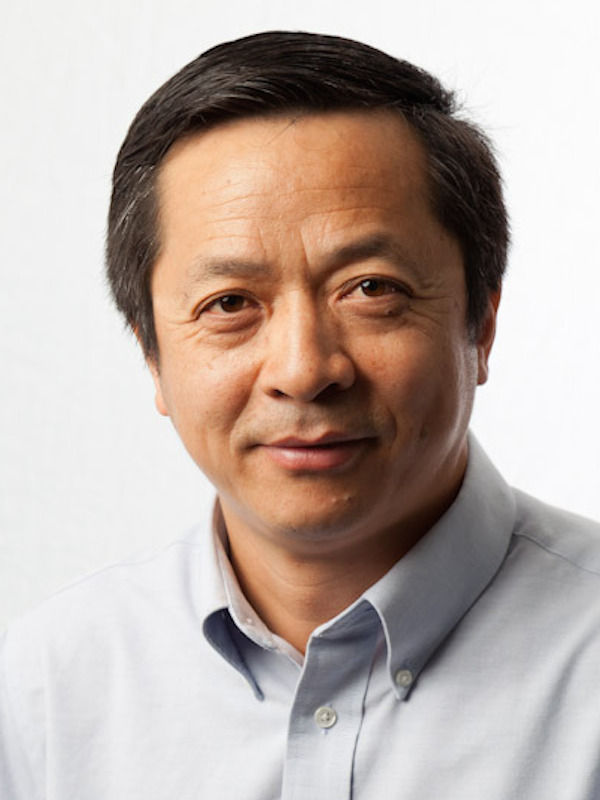
Dr. Thomas Demmel is a Researcher at the Hydrogeology Department of RWTH Aachen University , where he has worked since 2006. He serves as Deputy Head of the Hydrogeology Teaching and Research Area and coordinates the "groundwater modelling" working group. Research Areas Geogenic and anthropogenic groundwater contamination Hydrogeological and numerical groundwater modeling Transport dynamics of contaminants (uranium, nitrate, heavy metals) Contaminant retention in aquifers Key Projects 2023-ongoing: Modeling water balance and Rhenania tailings pile 2017-2022: Remediation studies at Bergehalde Beythal 2016-2020: Preferential flow paths in loess soils 2012-2014: Uranium contamination in Southern Bavaria
Helen Roberts is a Professor in the Department of Geography and Earth Sciences at Aberystwyth University , where she has been a key figure since joining as a post-doctoral researcher in 1998 and becoming a Lecturer in 2005. She currently serves as Co-Director of the Aberystwyth Luminescence Research Laboratory (ALRL) and holds leadership roles in international bodies such as INQUA’s Stratigraphy and Geochronology Commission. PhD, University of Liverpool Her research focuses on luminescence dating of Quaternary sediments , with applications in understanding geomorphic change, coastal dynamics, paleoclimate, and human evolution . She has led major projects such as EQUATE and CREDit , funded by Horizon Europe and NERC, and has been involved in international drilling initiatives in Ethiopia and Italy. Her work integrates fieldwork, laboratory innovation, and data modeling to reconstruct environmental change over hundreds of thousands of years. Analysis of her recent publications reveals a strong emphasis on refining luminescence techniques (e.g., pIRIR, TL in calcite), applying them to critical paleoenvironmental archives (lake sediments, loess, glacial deposits), and linking climate variability to human evolution. Her interdisciplinary approach spans geochronology, sedimentology, and paleoanthropology. Fellow of the Learned Society of Wales (2023) Professor Roberts has supervised PhD students, including Svenja Riedesel, and secured significant research grants from NERC, UK Space Agency, and the Welsh Government. She actively contributes to scientific discourse through media engagement and public outreach. Her work supports UN Sustainable Development Goals related to climate action and life on land. She leads and participates in numerous international collaborations and professional committees, reflecting her standing in the Quaternary science community. She is involved in several research groups and laboratories, most notably the Aberystwyth Luminescence Research Laboratory , where she co-directs methodological development and application of luminescence dating techniques. Her team collaborates globally on projects involving terrestrial archives, paleoclimate modeling, and human evolution.
Robert Peticzka serves as Assistant Professor in the Department of Geography and Regional Research at the University of Vienna, where he also directs geography studies. His research integrates physical geography, soil science, and geoecology with specialized focus on loess regions of Lower Austria. His primary research domains include: Loess-paleosol stratigraphy and quaternary landscape evolution Soil hydrology and microdialysis techniques in dry soils Geoarchaeological investigations of anthropogenic landforms Peatland carbon cycling and root exudate dynamics Environmental monitoring in urban and agricultural settings Recent publications reveal methodological innovation in soil solution analysis and paleoenvironmental reconstruction, with strong emphasis on interdisciplinary approaches combining geological, archaeological, and hydrological perspectives. His work frequently examines human-environment interactions in Central European landscapes. Professor Peticzka supervises bachelor and master students through dedicated preparatory seminars while teaching core courses in soil geography, geoecology, and field methods. He maintains active affiliation with the Physiogeographical Laboratory (http://www.univie.ac.at/physiogeographisches_labor/), conducting field research in the Vienna Basin and Lower Austrian loess regions.
Jordan Abell serves as an Assistant Professor in the Department of Earth and Environmental Sciences at Lehigh University. His research integrates geochemical methods with Earth system modeling to investigate past climate dynamics, atmospheric circulation, and marine sediment processes. Education: Ph.D., Earth and Environmental Sciences, Columbia University (2021) M.Phil., Earth and Environmental Sciences, Columbia University (2020) M.A., Earth and Environmental Sciences, Columbia University (2018) B.S., Geosciences, University of Arizona (2016) Abell's research focuses on paleoclimatology and paleoceanography using noble gas mass spectrometry and elemental geochemistry applied to marine sediments and geological archives. His interdisciplinary work examines atmospheric-ocean circulation responses to warm climates, dust-climate interactions, marine sediment accumulation processes, and archaeology-climate linkages. The GP3 Laboratory (Geochemical Perspectives on Paleoclimatology & Paleoceanography) employs geochemical tracers across the Cenozoic to address fundamental Earth system questions. His publication record shows strong emphasis on Pliocene climate dynamics, North Pacific sedimentation processes, Asian dust systems, and novel proxy development. Recent work combines sediment geochemistry with climate models to investigate westerly wind behavior, dust flux mechanisms, and paleoproductivity patterns during past warm periods. Scientific Recruitment: Ph.D. candidates studying Earth System history Lehigh undergraduates seeking 2025-2026 research experience Abell maintains active research programs investigating climate-geomorphology interactions in Asian desert basins, Southern Ocean biogeochemistry, and archaeological applications of geochemistry. His laboratory combines field sampling, advanced geochemical analysis, and climate modeling to reconstruct past environmental conditions and test Earth system hypotheses.
David Barbeau is an Associate Professor in the School of the Earth, Ocean and Environment at the University of South Carolina, within the College of Arts and Sciences. He leads the Geology & Geophysics program and serves as Director of the Geology Field Camp. His research integrates field geology and U-Pb zircon geochronology to investigate Earth system evolution across geologic time. Research Interests: Sedimentology & Stratigraphy: Analysis of sedimentary records to reconstruct tectonic, climatic, and biogeographic history. Tectonics & Provenance: Use of detrital zircon geochronology to trace sediment sources and evaluate terrane collisions. Climate Change: Study of eolian systems (e.g., Pampean loess) to understand paleoclimatic drivers and global climate linkages. Geochemistry & Geochronology: Application of U-Pb zircon dating to refine chronostratigraphy and petrogenetic models. His recent publications reveal a consistent focus on high-resolution geochronology applied to critical stratigraphic sections in Argentina, the western U.S., and India, often addressing large-scale questions about climate evolution, faunal turnover, and tectonic history. These works frequently appear in top-tier journals such as Nature Communications and Geological Society of America Bulletin , demonstrating strong interdisciplinary impact. Scientific Awards and Honors: Pearce Faculty Fellow, South Carolina Honors College Editorial Board Member, Geology Dr. Barbeau is actively engaged in academic service and mentoring. He teaches field-based courses and leads the Geology Field Camp. He advises students, as indicated by his reference to "my students" in research descriptions, and collaborates widely across institutions. His lab work is centered in the Center for Elemental Mass-Spectrometry and the Rock Preparation Facility, which he oversees. He is involved in grants supporting fieldwork and analytical work, particularly in Argentina and the western U.S., though specific grant titles are not listed. Laboratories and Research Teams: Leads Team Barbeau, focused on sedimentary records and Earth system evolution. Utilizes the Center for Elemental Mass-Spectrometry for laser-ablation U-Pb zircon analysis. Manages the Rock Preparation Facility at the University of South Carolina.
Dr. Yi Wang is a Reader in Climate Sciences within the Department of Geography at the School of Global Studies, University of Sussex. He also holds a Visiting Professor position at the Department of Earth System Science of Tsinghua University since 2019. With nearly 30 years of experience in climate and Earth system sciences, Dr. Wang has established himself as a leading researcher in monsoon dynamics, climate modeling, and hydrological systems. PhD from McGill University (Montreal, Canada) Postdoctoral fellow at Centre for Climatic Research, University of Wisconsin-Madison Research experience at Pacific Northwest National Laboratory (PNNL) Visiting scientist at National Center for Atmospheric Research (NCAR) Dr. Wang's research spans a wide range of climate science topics with particular expertise in Asian and African monsoon systems, land-atmosphere interactions, and climate modeling. His work combines paleoclimate reconstruction with modern observational data to understand long-term climate patterns and their societal impacts. He has published extensively in high-impact journals including Nature Scientific Reports, Climate Dynamics, and Journal of Climate, with particular focus on abrupt climate changes and their historical implications. His recent publications demonstrate consistent research productivity across multiple climate science domains. The articles reveal a strong focus on monsoon dynamics across different time scales (from seasonal to millennial), with particular attention to East Asian and Sahelian climate systems. There's a clear methodological pattern combining observational data, paleoclimate proxies, and climate modeling to address questions about climate variability, extremes, and human-environment interactions. Fellow of the Higher Education Academy (HEA) Postgraduate Certificate in Learning and Teaching in Higher Education Editorial Board member for Asia-Pacific Journal of Atmospheric Sciences Committee member of International CLIVAR/PAGES Working Group Dr. Wang actively supervises PhD students and has secured multiple research grants including the NERC, ESRC, and The Newton Fund funded 'Thai Coast' project. His research collaborations span multiple countries including USA, China, and Nigeria. He is affiliated with several research centers at Sussex including the Sussex Centre for Coastal Research, Sussex Centre for World Environmental History, and Sussex Asia Centre.
Jakob Bergman serves as Senior Lecturer, Associate Professor, and Director of Studies at Lund University's Department of Statistics. His academic profile demonstrates significant expertise in compositional data analysis, where he studies vectors of proportions (compositions) that arise across diverse fields including geochemistry, household economics, and political science. His research focuses on developing innovative statistical methodologies, particularly his compositional loess method for smoothing compositional time series data. Bergman maintains active interdisciplinary collaborations with archaeologists like Mikael Larsson (on cereal grain analysis and early farming practices) and philosophers like Martin Jönsson (on post-hoc interventions and gender bias in research funding systems). Bergman's scholarly output reveals strong interdisciplinary trends, with recent publications bridging statistics with archaeology, political science, and philosophy. His work consistently addresses practical methodological challenges while maintaining theoretical rigor, particularly in analyzing party shares over time and archaeological specimen compositions. As an educator, Bergman teaches theoretical and applied statistics across undergraduate, advanced, and PhD programs, with special emphasis on sampling/survey research and regression analysis. His outreach extends to providing statistical expertise to numerous NGOs, authorities, and companies. His research contributes to UN Sustainable Development Goals related to quality education and gender equality. Bergman has led significant projects including 'Post-hoc Interventions' at Pufendorf IAS and 'Manure matters' investigating early farming practices through nitrogen analysis of archaeological crop assemblages.
Phillip H. Larson is a Full Professor and Co-Director of the EARTH Systems Laboratory at Minnesota State University, Mankato , with a joint appointment as Graduate Faculty in the Department of Earth and Environmental Sciences at the University of Minnesota-Twin Cities . His work bridges geomorphology, climate change, and human-environment interactions through field and laboratory research. PhD and MA in Geography from Arizona State University (2013, 2011) BS in Geography-Resource Management and Geology from University of Wisconsin-Eau Claire (2008) Research Interests focus on: Climate change impacts on geomorphic systems Geoarchaeology of river valleys and sand stringers Drainage integration mechanisms in tectonic settings Aeolian and periglacial processes in the upper Midwest Quantifying erosion rates via OSL and cosmogenic nuclide dating Human-river interactions and invasive species management Publications highlight his expertise in river systems (Salt/Verde Rivers, Chippewa River, Whitewater River), glacial meltwater impacts, and aeolian landforms (cliff-top dunes, sand stringers). Key journals include Geomorphology , Quaternary Research , and Annals of the American Association of Geographers . Awards include: GK Gilbert Award – American Association of Geographers (2016) Douglas R. Moore Research Lectureship – Minnesota State University (2022) He mentors graduate students in field methods, geochronology, and fluvial processes, with 15+ peer-reviewed publications and $3M+ in grants (NSF, Environment and Natural Resources Trust Fund). His work often integrates ground-penetrating radar , GIS/GNSS , and remote sensing to address environmental hazards and watershed management.
Luuk Fleskens is an Associate Professor in Soil Physics and Land Management at Wageningen University & Research, Netherlands. He is affiliated with WIMEK (Wageningen Institute for Environment and Climate Research) and has established himself as a leading researcher in sustainable land management, soil conservation, and climate change adaptation across multiple geographic contexts including China, Ethiopia, Tunisia, and various European countries. His educational background includes a doctoral degree (dr.ir.) in environmental sciences or related field, though specific details of his academic training are not provided in the available information. Dr. Fleskens' research focuses on the intersection of soil science, land management, and socio-economic factors. His work spans: Soil degradation and restoration processes Economic valuation of ecosystem services Climate change adaptation strategies for agriculture Cost-benefit analysis of sustainable land management practices Water resources management in dryland regions Policy implementation for sustainable land use His recent publication record demonstrates strong engagement with pressing global challenges, particularly around land restoration in the Chinese Loess Plateau, watershed management in Ethiopia, and conservation agriculture in Tunisia. The research shows a consistent methodological approach combining spatial analysis, economic modeling, and field-based empirical studies to evaluate the impacts of land management interventions. Dr. Fleskens has received recognition through multiple research projects and collaborations, with significant funding for his work on desertification resilience, soil health assessment, and farming system transformations. His research has practical applications for policymakers and land managers working on sustainable development challenges. As an academic supervisor, he has guided numerous PhD candidates through their research, focusing on topics related to sustainable land management across different global contexts. His collaborative network spans multiple continents, reflecting the global nature of land degradation challenges.
Prof. Dr. Jian Peng is a W3 Professor for Hydrology and Remote Sensing at the University of Leipzig and Head of the Remote Sensing Department at the Helmholtz Centre for Environmental Research (UFZ) since January 2020. He holds a joint appointment between these institutions and serves as Editor-in-Chief of the Geoscience Data Journal for the Royal Meteorological Society. His academic career spans prestigious institutions including the University of Oxford, University of Munich, and the Max Planck Institute for Meteorology. Education: Postgraduate Certificate in Teaching and Learning in Higher Education, University of Oxford (2018-2020) PhD in Earth Science, Max Planck Institute for Meteorology (2010-2013) Professor Peng's research focuses on the intersection of hydrology, remote sensing, and climate science. His work centers on the quantitative extraction of land surface parameters from remote sensing data, assimilation of this data into climate and land surface models, understanding land-atmosphere interactions, and quantifying climate change impacts on water resources. He has particular expertise in estimating high-resolution land surface water and energy fluxes from satellite observations and investigating hydrological and climatic extremes. His research employs both process-based modeling and data-driven approaches to address critical questions in Earth system science. Professor Peng's recent publications (2021-2025) demonstrate a strong focus on soil moisture monitoring, drought assessment, climate extremes, and land-atmosphere interactions. His work increasingly integrates multi-source satellite data with advanced modeling techniques to produce high-resolution environmental datasets. A significant portion of his research addresses the impacts of climate change on water resources and agricultural systems, with particular attention to regional studies in China and global applications. His collaborative approach is evident in the extensive co-authorship networks spanning multiple continents and disciplines. Scientific Awards and Recognition: 2019 Remote Sensing Young Investigator Award, MDPI Featured as 'promising future leader in climate science' by the World Climate Research Programme (WCRP) Professor Peng leads an active research group within the Remote Sensing Department at UFZ, supervising PhD candidates through programs like MoDEV and mentoring early-career researchers. His team has secured funding from major organizations including the EU and the German Research Foundation (DFG). The group maintains strong international collaborations, particularly with institutions in China, the UK, and the US. Current research directions include developing high-resolution environmental monitoring systems, improving drought prediction capabilities, and understanding the complex interactions between climate change, water resources, and ecosystem functioning. Professor Peng's research group, part of the Remote Sensing Department at UFZ, includes researchers such as Daniel Doktor, Almudena García-García, Maximilian Lange, Anne Reichmuth, Andreas Schmidt, Elisabeth Rahmsdorf, Mohammad Hajeb, and Xueying Li. The department is embedded within UFZ's broader research framework focusing on 'Smart Models / Monitoring' and contributes to multiple interdisciplinary research units including Ecosystems of the Future, Water Resources and Environment, and Compound Environmental Risks. The team operates within the Remote Sensing Center for Earth System Research (RSC4Earth), which facilitates cutting-edge Earth observation research.
Dustin Sweet is an Associate Professor at the Department of Geosciences , Texas Tech University , specializing in Sedimentology and Stratigraphy . He earned his Ph.D. from the University of Oklahoma in 2009 and previously worked as an exploration geologist at Chevron Energy Technology Company , focusing on basins in West Africa, Greenland, and Colombia. Education: Ph.D., University of Oklahoma, 2009 Research Interests: Late Paleozoic Ancestral Rocky Mountains: Tectonic and Climatic Evolution SEM Analysis of Quartz Grains for Transport Histories Quaternary Climate Records of the Southern High Plains Digital Archiving of Permian Basin Biostratigraphic Data Students: Current: John Brotherton (PhD), Garrett Williamson (PhD) Former: Valerie Tewell, Cameron Ramsey, and 7 others Courses Taught: GEOL 4325: Sedimentation & Stratigraphy GEOL 5426: Sequence Stratigraphy GEOL 5422 (even years): Sedimentary Geology of Carbonates GEOL 5322 (odd years): Sedimentary Processes Projects: PABZT Project : Digitizing biostratigraphic data from >7,000 Permian Basin wells Quaternary climate studies via SHP sediment cores Collaborations: Center for the Geologic Storage of CO2 (GSCO2) High-Resolution Age Dating Projects Publications: 15+ recent articles on topics spanning from Permian eolian systems to Quaternary climate proxies
Dr. Hongbin Zhan is a Professor of Geology & Geophysics at Texas A&M University, holding the Dudley J. Hughes '51 Chair. His research focuses on subsurface hydrology, environmental fluid mechanics, and geothermal energy. He teaches courses like Hydrogeology and Contaminant Hydrogeology. Dr. Zhan's work addresses groundwater flow, contaminant transport, and energy applications. Notable achievements include AAAS Fellowship (2023) and multiple awards for research and teaching. He advises numerous graduate students and has authored/co-authored over 200 publications. His lab explores topics such as aquifer thermal energy storage, qanat systems, and microplastic pollution. Education: PhD (1996) Hydrology/Hydrogeology, University of Nevada, Reno Affiliations: Energy Institute, Water Management & Hydrological Science Program Labs/Teams: Zhan Hydrogeology Research Group, Texas A&M Geosciences Research Interests: Non-Darcian flow in low-permeability media, coupled unsaturated-saturated systems, geothermal storage, and environmental remediation. Recent work includes studies on arsenic migration, carbon sequestration, and qanat discharge dynamics. Grants & Awards: Over 10 major awards including AAAS Fellowship, GSA Fellow, and Dean’s Research Awards. Active in funding from NSF and industry partnerships.
Mehdi Taheri is a Research Associate in Geomorphology at the College of Arts, Technology and Environment, University of the West of England (UWE) in Bristol. His work focuses on reconstructing past climate changes in regions like Tunisia and Libya, with a particular emphasis on assessing climate impacts on cultural heritage through multiproxy analyses and climate modelling. PhD in Soil Science MSc in Soil Science BSc in Soil Science Mehdi's research integrates paleoclimatology, soil science, and geospatial technologies. He utilizes paleomagnetic techniques, micromorphology, clay mineralogy, and stable isotope analysis to study Quaternary-era climate shifts. His expertise in Remote Sensing (RS) and Geographic Information Systems (GIS) enables erosion mapping and sedimentation rate estimation, contributing to understanding long-term environmental dynamics. Recent publications highlight his focus on loess deposits in Iran, Tunisia, and Central Asia, analyzing their mineralogical and geochemical properties to infer paleoclimatic conditions. His work bridges geomorphological studies with heritage conservation, emphasizing climate change's role in shaping cultural landscapes. Mehdi's expertise spans: Climate Modelling Paleoclimate Reconstruction Soil Science Remote Sensing (RS) Geographic Information Systems (GIS)
Piotr Demczuk is a Lecturer at the Department of Geomorphology and Paleogeography within the Institute of Earth and Environmental Sciences, Faculty of Earth Sciences and Spatial Management at Maria Curie-Skłodowska University (UMCS) in Lublin, Poland. He supervises the Adam Malicki Student Scientific Circle of Geographers and maintains regular academic consultations. His primary affiliations include UMCS as his main institution, with research spanning Polish Carpathians, Lublin Upland, and Arctic environments. Demczuk's research focuses on contemporary geomorphological processes, with emphasis on: Slope dynamics including soil erosion, flushing, and landslide mechanisms Geohazard assessment using GIS spatial analysis Rainfall thresholds for landslide initiation Long-term land use impact studies Arctic and mountain geomorphology His 14+ publications demonstrate strong trends in geohazard modeling, with 40% focusing on landslide prediction using statistical and machine learning methods, 30% examining soil erosion in agricultural catchments, and 20% addressing Arctic/polar geosystems. Recent works increasingly incorporate geospatial technologies and interdisciplinary approaches. Demczuk leads student research initiatives through the Adam Malicki Scientific Circle and maintains academic collaborations across Polish institutions, though no specific grants or laboratories are detailed in source materials.
Joe Mason is a Professor in the Department of Geography at the University of Wisconsin-Madison. His research focuses on eolian and hillslope geomorphology, loess stratigraphy, soils and paleosols, and Quaternary landscape evolution, particularly in the Midwest, Great Plains, and northern China. He leads the Mason Lab, which investigates soil carbon dynamics, sedimentology, and paleoenvironmental reconstruction. His research explores loess-paleosol sequences as archives of climate change, aeolian sediment transport, and soil hydrology. Recent work includes studies on carbon stabilization in buried soils, luminescence dating of loess deposits, and the biogeomorphology of nebkhas. His publications span topics such as Quaternary paleoenvironments, dune dynamics, and soil response to vegetation shifts. The Mason Lab employs fieldwork, dating techniques, and environmental modeling to understand long-term landscape evolution. Collaborations involve interdisciplinary approaches to analyze dust emission mechanisms, soil aggregation, and the impacts of climate change on aeolian systems. While no explicit awards are listed, his extensive publication record highlights contributions to Quaternary science, geomorphology, and soil studies.