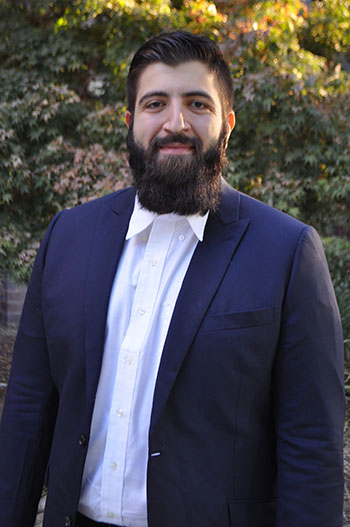
Radim Bělohradمشاهده پروفایل
دانشیار
Assoc. Prof. Radim Bělohrad, Ph.D. serves as an Associate Professor at the Department of Philosophy within the Faculty of Arts at Masaryk University in Brno, Czech Republic. His office is located at building A/A.111, Arna Nováka 1, 602 00 Brno, with contact information including phone 549 49 3086 and email belohrad@phil.muni.cz. As an active academic with over 85 publications, he contributes significantly to philosophical discourse through teaching, research, and editorial work on the scientific editorial board. Professor Bělohrad's research primarily focuses on social constructivism in disability studies, critically examining the social model of disability and its implications for understanding impairment, pain, and bodily experience. His work challenges traditional medical frameworks by exploring how social structures shape experiences of disability, with particular attention to the philosophical foundations of the social model. He investigates the boundaries between medical and social perspectives on disability, questioning concepts of harm, normalcy, and the ethical implications of various approaches to impairment. Analysis of Bělohrad's recent publications (2023-2025) reveals a concentrated research trajectory on social constructivist approaches to disability, with growing emphasis on practical ethical applications. His work demonstrates a progression from theoretical foundations of personal identity (evident in his 2011 book) toward increasingly applied ethical questions regarding disability rights, medical interventions, and social policy. The publications show a consistent engagement with critical disability theory while expanding into bioethical dimensions, particularly concerning reproductive choices and the moral status of selecting for deafness. Professor Bělohrad actively participates in academic knowledge dissemination through requested lectures, conference presentations, and popularization texts. His contributions extend beyond traditional academic publishing to include multimedia educational materials on research ethics (the INSURE project) and public engagement with philosophical questions. His work bridges theoretical philosophy with practical applications in bioethics, disability advocacy, and research integrity education.