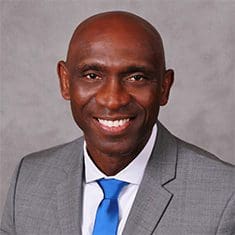
Pat Obi, Ph.D., is the White Lodging Professor of Finance at Purdue University Northwest's College of Business. He teaches corporate finance, financial markets, derivatives, and business analytics. His research focuses on financial market variables, international tourism's economic impact, and derivatives risk management. He consults for the City of Hammond and has presented in over 60 countries. Education: Ph.D. in Finance & Econometrics (University of Mississippi), MBA (Texas State University), Higher Diploma (Institute of Management and Technology, Nigeria). Research interests include valuation, econometric modeling, and financial risk mitigation. His work bridges theoretical finance with practical applications in global contexts. Key awards include the PNW Global Excellence Award and Beta Gamma Sigma honor society recognition. He advises undergraduates, directs the MBA program, and coordinates finance/economics initiatives. His office is located in Hammond's Anderson Building 333.
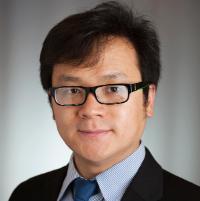
Peng Liu serves as an Assistant Professor of Marketing at Santa Clara University's Leavey School of Business, bringing expertise in digital consumer behavior and quantitative marketing strategies. His academic foundation includes doctoral training in Marketing from Indiana University. His educational qualifications are: Ph.D. in Marketing, Indiana University M.A. in Economics, Syracuse University B.A. in Economics, Nankai University, Tianjin, China Dr. Liu's research integrates structural modeling and Bayesian estimation to examine digital marketing phenomena, with particular focus on status consumption dynamics, social network influences, temporal choice patterns, and advertising effectiveness. His methodological approach bridges econometric rigor with contemporary digital marketplace challenges. Recent publications (2022-2023) demonstrate concentrated expertise in gaming ecosystems and location-based marketing, revealing consistent application of advanced statistical techniques to analyze player behavior in online games, strategic coupon deployment across market structures, and retention drivers in freemium models. No scientific awards are documented in the available materials. Information regarding student supervision and research funding remains unspecified in current records.
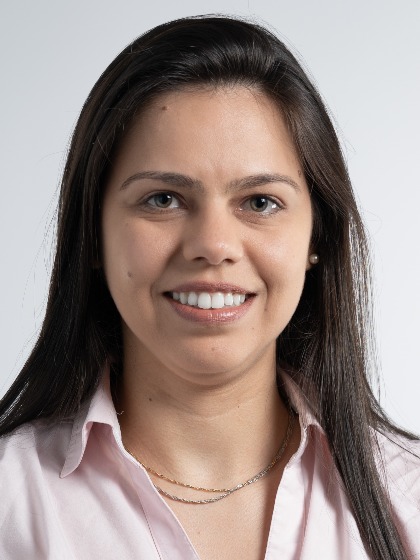
Dr Michelle Allen is a Research Fellow in Implementation Science at the School of Public Health & Social Work, Queensland University of Technology (QUT). Her work focuses on improving healthcare delivery through evidence-based interventions, with a particular emphasis on public health, chronic disease management, and patient-centered care. She holds a PhD from QUT and has extensive experience in conducting large-scale trials, including the LOCATE-NAFLD trial and the EDDIE+ study. Her research interests include implementation science, discrete choice experiments, and the co-design of healthcare interventions with community stakeholders. Recent projects include exploring preferences for mobile health technologies, optimizing liver screening programs, and reducing low-value care in healthcare settings. Dr Allen collaborates widely, contributing to national and international efforts in healthcare innovation and policy. Her publications span topics such as cancer survivorship care, virtual care models, and the integration of mobile apps into clinical practice. She actively engages in advancing health equity, particularly in Indigenous health and marginalized populations. While no specific awards are listed, her contributions to impactful health research are evident through her collaborative projects and peer-reviewed outputs.
Junzhe Ji is a Senior Lecturer in International Business at the Adam Smith Business School, University of Glasgow since 2020. Previously affiliated with University of Sheffield and Tongji University, he holds a PhD and MSc in Management from the University of Glasgow. An HEA Fellow and Research Associate at the Scottish Centre for China Research, he also serves as General Secretary of the China-UK Business Research Association and holds a visiting professorship at Guangdong University of Finance and Economics. His research focuses on international decision-making, Chinese SME internationalization, and deviant behaviours of SME owners. He has served as International Business Track Chair in the British Academy of Management Conference (2017-2019). His work appears in journals like Journal of Business Ethics and International Business Review, with notable recognition including the EIBA Best Paper Award (2010). Education: PhD in Management Studies, University of Glasgow MSc in Management (Distinction), University of Glasgow Research Interests: Exploring strategic decision-making in global contexts, particularly for Chinese SMEs. Investigates cultural dimensions influencing business ethics and international expansion. Explores digital transformation's impact on innovation and ownership strategies under uncertainty. Utilizes qualitative and quantitative methods to analyze micro-multinationals' global strategies and managerial behaviors. Key Research Trends: Recent work emphasizes digital transformation's role in high-tech firms' innovation (2025), ownership choices under uncertainty (2025), and patent uncertainty effects on new ventures (2024). Earlier studies examined Confucian cultural dynamics in internationalization (2013) and SME deviance (2019). Awards: EIBA Award on Best Paper on Emerging Markets (2010) Grants & Supervision: Secured grants including National Natural Science Foundation of China (RMB 490,000), supervised doctoral research on digital platforms' impact on SME internationalization and top management team influences. Teaches international business strategy and Chinese firms' globalization at undergraduate/postgraduate levels. Labs/Teams: Active in the School's International Business and Enterprise research cluster, collaborating with institutions in China and globally through visiting roles and research networks.
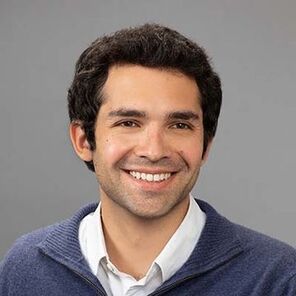
David Rey is a Professor at SKEMA Business School in Sophia Antipolis, France. His research focuses on optimization, game theory, and artificial intelligence applied to transportation and logistics. He holds a PhD in Operations Research from Université Grenoble Alpes (2012) and a Habilitation à Diriger des Recherches (2023) from Université de Toulouse. Previously, he was a Senior Lecturer at UNSW Sydney (2016–2021) and has held postdoctoral positions at rCITI UNSW. He leads the URBANE project, exploring green last-mile delivery solutions, and serves on editorial boards like Transportation Letters . Awards include multiple ARC grants and the INFORMS TSL Best Paper Award Committee role (2025). Education: Habilitation à Diriger des Recherches (2023), Operations Research, Université de Toulouse PhD (2012), Operations Research, Université Grenoble Alpes Master (2008), Sciences/Mathematics, Pontifical Catholic University of Rio de Janeiro Engineering Degrees (2004–2005), Electrical Engineering, University of Montpellier Research Interests: David’s work emphasizes optimization techniques (bilevel, stochastic, mixed-integer programming), game theory, and AI applications in transport systems. Key areas include drone delivery, autonomous vehicle integration, congestion pricing, and resilient logistics networks. His methods address real-world challenges like pandemic response, electric vehicle charging infrastructure, and fair resource allocation. Grant Highlights: URBANE (EU Horizon-funded), 2022–present 4 ARC grants as Lead Chief Investigator, including projects on concrete mixes, ethics in transport systems, and workforce logistics optimization Advising & Grants: Directed/co-directed 15+ PhD theses across SKEMA and UNSW Sydney Active in grant writing and editorial roles, including Transportation Science and Logistics Society Workshop (2024–2025) Labs/Teams: Leads the SKEMA Centre for Analytics and Management Science, focusing on analytics-driven solutions for business and urban systems.
Anupam Nanda is a Professor of Urban Economics & Real Estate (Full Professor/Chair) at the University of Manchester, UK, and serves as Co-Deputy Director of the Manchester Urban Institute. He previously held roles at the Henley Business School, University of Reading, and worked in non-academic positions at Deloitte and the National Association of Home Builders (US). His research focuses on property markets, regional and urban studies, household sentiment, cross-border investment, ESG in urban markets, and infrastructure impacts. Education: PhD in Economics (University of Connecticut, 2006), MSc in Economics (University of Calcutta), BSc (Hons) in Economics (St. Xavier's College, Kolkata). Research interests include real estate firm operations, housing policies, cross-border investment, ESG integration, and climate adaptation. He chairs the European Real Estate Society’s refereed conference section and serves on editorial boards of journals like Journal of Real Estate Research . His work contributes to UN SDGs related to sustainable cities, climate action, and responsible consumption. Major projects include studies on housing inequality, foreign investor demand, and infrastructure impacts. Awards include the 2015 Nick Tyrrell Research Prize and 2020 Harold Samuel Prize. He advises on major government projects, such as the UK’s 1.5 million homes initiative. Current PhD supervision includes topics like ESG performance in real estate and infrastructure impacts. Completed PhDs span cross-border investment, migration, and housing dynamics.
Akshay Gupte is a Professor in the School of Mathematics at the University of Edinburgh, specializing in Optimization and Operational Research. His research focuses on mathematical and algorithmic aspects of discrete and non-convex optimization, with applications in engineering, finance, and decision-making systems. He holds a PhD in Operational Research from Georgia Tech and teaches advanced courses such as Optimization Methods in Finance for MSc students. Education: BEng in Industrial Engineering from the University of Bombay MSc in Operational Research from the University of Arizona PhD in Operational Research from Georgia Tech Research Interests: Optimization problems involving discrete choices and non-convexity, with a focus on algorithm design and computational strategies. His work bridges applied mathematics, computer science, and engineering, addressing challenges in logistics, finance, and large-scale decision systems. Articles Trends: Recent publications emphasize algorithmic advancements in non-convex optimization (e.g., spatial branch-and-bound, semidefinite programming), multi-objective decision-making (e.g., biobjective programming), and stochastic frameworks for real-world problems like facility location and home service scheduling. Awards & Grants: No specific awards listed, but his research has been supported by collaborative grants in mixed-integer programming and optimization algorithms. He advises students through his teaching and research collaborations within the Optimization Group at the University of Edinburgh.
Margarida Carvalho is an Associate Professor in the Department of Computer Science and Operations Research at Université de Montréal, where she holds the FRQ-IVADO Research Chair in Data Science for Combinatorial Game Theory. She is also an Associate Academic Member at Mila (Quebec AI Institute), contributing to their research in AI for Humanity. Her academic journey spans from Portugal to Canada, where she has established herself as a leading researcher at the intersection of operations research and game theory. Carvalho earned her bachelor's and master's degrees in mathematics from the Faculty of Sciences of the University of Porto (FCUP), followed by a PhD in Computer Science from the same institution in 2016. Her doctoral work, which focused on game theory applications for kidney exchange programs, earned her the prestigious 2018 EURO Doctoral Dissertation Award, making her the first Portuguese woman to receive this honor. After completing her PhD, she worked as an IVADO Postdoctoral Fellow at Polytechnique Montréal before joining Université de Montréal as an Assistant Professor in 2018. Her research focuses on combinatorial optimization and algorithmic game theory, with applications spanning healthcare (kidney exchange programs, hospital operations), sustainable development (electric vehicle infrastructure, urban planning), and education (school choice systems). She develops novel mathematical programming approaches to model and solve problems involving multiple decision-makers with potentially conflicting objectives. Her work bridges theoretical advances in optimization with practical implementations that address real-world challenges in resource allocation and decision-making under uncertainty. Notably, her research on fairness in kidney exchange programs has contributed to more equitable organ allocation policies. Her 15 most recent publications reveal a strong trend toward integrating game-theoretic concepts with practical optimization challenges, particularly in healthcare and sustainable infrastructure. She has pioneered approaches that balance utilitarian objectives with fairness considerations, developed novel formulations for bilevel and multilevel optimization problems, and created learning-based frameworks for complex decision environments. Her work consistently demonstrates how mathematical rigor can inform practical policy decisions in critical domains. 2018 EURO Doctoral Dissertation Award for her PhD thesis on game theory applications for kidney exchange programs Mathematical Programming 2024 Meritorious Service Award Teaching Excellence Award from Université de Montréal Supervised student Maria Bazotte receiving the Dupačová-Prékopa Best Student Paper Prize in Stochastic Programming Carvalho actively advises graduate students, with Marylou Fauchard (Master's) and William St-Arnaud (PhD) among her current advisees. Her research is supported by grants from Hydro-Québec, the Natural Sciences and Engineering Research Council of Canada (Discovery grant 2017-06054 and Collaborative Research and Development Grant CRDPJ 536757–19), and FRQ-IVADO. She serves as an associate editor for INFORMS Journal on Computing, OR Spectrum, and Dynamic Games and Applications, and is a founding board member and treasurer of the Bilevel Optimization Society. She teaches courses in Mathematical Programming, Operational Research Models, and Discrete Mathematics at Université de Montréal. Carvalho is affiliated with Mila (Quebec AI Institute), where she contributes to research initiatives focused on AI for Humanity, particularly in the areas of algorithmic fairness and sustainable development. Her FRQ-IVADO Research Chair supports her work on combinatorial game theory applications, and she collaborates with researchers across disciplines through the IVADO research community. She has been instrumental in establishing the Bilevel Optimization Society, creating a dedicated forum for researchers working on hierarchical decision-making problems.
Dr. Cinara Gambirage is an Assistant Professor at the Department of Innovation Management & Strategy, Faculty of Economics and Business, University of Groningen. Her research focuses on nonmarket political strategy, international expansion of emerging market firms, and institutional environments. Education: PhD in Business Management, Regional University of Blumenau Postdoctoral in International Business, Fundação Getulio Vargas (EBAPE) PhD Visiting Scholar, Florida International University Her research contributes to the United Nations Sustainable Development Goals, particularly in mining disaster mitigation and higher education quality. Recent publications analyze institutional voids, corporate governance in SMEs, and pandemic impacts on entrepreneurship. Scientific recognition includes the 2021 AOM Best Reviewer Award and nominations for AIB SE Best Conference Paper (2018) and AIB SE Best Student Paper (2019). Her work appears in journals such as Long Range Planning , European Business Review , and Resources Policy . She teaches courses including Entrepreneurship and Small Business Strategy , Developing for Markets , and Technology-based Entrepreneurship at both pre-MSc and MSc levels. Her research collaborations span Brazil, the Netherlands, and other international institutions.
Jens Jackwerth is a Professor in the Department of Economics at the University of Konstanz, Germany, where he leads the Institute of Finance. His office is located in Room F327 (Department of Economics, Universitätsstraße 10, 78457 Konstanz), with office hours by appointment. He maintains active teaching and research responsibilities as evidenced by current course offerings for Winter Term 2025/2026 and Summer Term 2025. His research focuses on: Information content of option prices as a primary specialty Hedge funds analysis and associated market behaviors Optimal portfolio choice methodologies Empirical asset pricing models Financial econometrics applications These interests directly inform his teaching in advanced finance topics and thesis supervision. Prof. Jackwerth supervises Bachelor and Master theses with emphasis on empirical option pricing, econometrics, and asset pricing, requiring English-language submissions and independent work with limited guidance. He teaches specialized courses including Portfolio Management, Corporate Finance, Python for Finance, and International Investments, while offering research seminars to engage students in finance research. His PhD seminar in finance supports doctoral candidates in advanced financial research. The Institute of Finance under his leadership actively promotes student research participation through dedicated seminars for both undergraduate and graduate students, focusing on practical applications in financial markets and portfolio management.
Keith Weber serves as a Professor and Interim Dean within the Department of Communication Studies at Chapman University's School of Communication, maintaining an active dual role in academic leadership and scholarly research. His office is located in Doti Hall 202B, with contact available via kweber@chapman.edu and phone 714-516-5181 for media, lecture requests, and academic inquiries. His educational credentials include advanced degrees from West Virginia University, forming the foundation for his methodological expertise in communication research. Master of Arts : West Virginia University Doctor of Education : West Virginia University Dr. Weber's research portfolio emphasizes rigorous campaign design frameworks, spanning strategic message development, audience segmentation techniques, and social movement communication strategies. His work consistently bridges theoretical communication models with practical applications in critical societal domains like healthcare and environmental sustainability, demonstrating a commitment to evidence-based message efficacy. Analysis of his recent publications reveals a pronounced interdisciplinary trajectory, with studies increasingly integrating health psychology and environmental behavioral science. His methodology-focused approach—exemplified by mixed-methods investigations into psychological reactance in caregiving contexts and consumer responses to eco-labeling—highlights a specialization in measuring audience reception to strategically designed communications. No scientific awards or major recognitions are documented in the available materials. No awards cited While his faculty position implies student mentorship responsibilities, specific advisees or grant-funded projects remain unlisted in the source text. Administrative leadership as Interim Dean suggests oversight of academic operations, though granular details about advising scope or research funding are absent. The provided information does not reference any dedicated research laboratories, collaborative teams, or institutional research centers associated with Dr. Weber's work.
Philipp C. Wichardt serves as Professor and Chair of Microeconomics within the Department of Economics at the University of Rostock, Germany. His office is located in Room 106 at Ulmenstraße 69, D-18057 Rostock, with contact details including phone (+49-381-498 44 86) and email (philipp.wichardt@uni-rostock.de). He has held this chair position since April 2012, following prior appointments as Chair representative at LMU München (2011-2012) and University of Bonn (2010), plus PostDoc and Scientific Assistant roles at Bonn (2006-2012). Wichardt's research centers on Behavioral and Experimental Economics , with particular expertise in social preferences, public goods provision, game theory applications, and identity economics. His work frequently examines gender differences in strategic interactions, framing effects in decision-making, and the psychological mechanisms underlying nudging interventions. Recent investigations explore how host population concerns affect immigration attitudes and the welfare implications of conditionality in social policy. Analysis of his 15 most recent publications (2022-2025) reveals consistent methodological focus on controlled laboratory experiments, particularly dictator games, public goods scenarios, and trust games. Key thematic trends include: (1) gender-specific behavioral patterns in resource allocation, (2) transparency effects in nudge implementations, (3) social identity mechanisms in policy contexts, and (4) psychological moderators like sensation seeking in financial decisions. His work bridges economic theory with psychological realism while maintaining rigorous experimental design. Professional career since 2012: Chair of Microeconomics, University of Rostock 2011-2012: Chair representation at LMU München 2010: Chair representation at University of Bonn 2008-2012: PostDoc and Scientific Assistant at University of Bonn Wichardt leads a research team including Dr. Tobias Schütze (Scientific Assistant) and Lena von Deylen (Scientific Associate), with administrative support from Marion Hesse. His laboratory work involves student research interns and maintains active collaboration across experimental economics networks. Current projects extend into welfare conditionality mechanisms and the intersection of identity economics with immigration policy design.
Adrien Bilal is an Assistant Professor of Economics at Stanford University , specializing in Macroeconomics with emphasis on Environmental Economics, Spatial Economics , and Labor Market Dynamics . He was awarded the 2024 Excellence Award in Global Economic Affairs by the Kiel Institute for the World Economy for his climate change research. Primary Affiliation : Stanford University, Department of Economics Awards : Kiel Institute Excellence Award, NSF Grant His research bridges climate science with macroeconomic modeling, focusing on: Global warming's economic impacts Regional unemployment patterns Heterogeneous agent model solutions Outsourcing's labor market effects Recent publications examine climate change (in Quarterly Journal of Economics ), unilateral decarbonization (with Diego Känzig in AEA Papers and Proceedings ), and continuous-time sequence-space methods (with Shlok Goyal). Media coverage includes The Economist , Nature , and Le Monde . Scientific Awards: 2024 Kiel Institute Excellence Award in Global Economic Affairs 2024 NBER Working Paper Series (multiple) He maintains active collaborations with institutions like: National Bureau of Economic Research (NBER) Kiel Institute for the World Economy Harvard University Northwestern University
Marco Locatelli is a Full Professor in the Department of Computer Engineering at the University of Parma, Italy. His research focuses on Global Optimization , Operations Research , and Computational Mathematics , with applications in Robotics and Optimization Algorithms . Education: Ph.D. in Computational Mathematics and Operations Research (University of Milano/Napoli, 1997); Laurea in Computer Science (University of Milano, 1992). Positions: Post-Doc (University of Trier, Firenze); Assistant/Associate Professor (University of Torino); Full Professor (University of Parma since 2010). His research spans Global Optimization over intervals, multistart algorithms, concave optimization, packing problems, and convex underestimators. Recent work includes Multi-Agent Pathfinding and Speed Planning with energy/time optimization, leveraging Machine Learning and Dynamic Programming . He has received distinguished accolades, including the Europt Fellow (2018), Best Paper in the Journal of Global Optimization (2016), and co-authored a SIAM-published book on Global Optimization (2013). He serves on editorial boards of top-tier journals like Computational Optimization and Applications and Operations Research Letters . Scientific Awards: Al Zimmermann's Programming Contest Winner (Circle Packing) AIRO Award for Daniele Depetrini's Master Thesis (2007) Chairman's Recognition of Outstanding Paper (2009 IEEE Congress) Europt Fellow (2018) His teaching includes Operations Research and Algorithms for Decision Support across multiple Italian universities (Torino, Parma, Firenze). He has contributed to Research Projects like MoSPRAS, MOST, and COSO, addressing real-world optimization challenges in healthcare, robotics, and transportation.
Professor Alberto J. Lamadrid is a faculty member in the Economics Department at Lehigh University with a joint appointment in Industrial and Systems Engineering. He serves as Director of the Institute for Cyber Physical Infrastructure and Energy (I-CPIE) and as a Research Affiliate at MIT's Laboratory for Information and Decision Systems (LIDS). His work focuses on electricity economics, cyber-physical systems, and stochastic optimization in interdependent networks. James T. Kane Faculty Fellow Principal Investigator for $2.5M ARPA-E grant Research Affiliate at MIT LIDS His research examines resilient infrastructure design, renewable energy integration, and market mechanisms for uncertain environments. Current projects address environmental change, risk management in networks, and critical infrastructure valuation. Methodologically, he combines optimization techniques, GIS analysis, and engineering-economic modeling. Recent publications span: 2025 studies on hurricane evacuation behavior and electricity market pricing; 2024 work on smart grid-transit co-optimization; 2023 analysis of pandemic social cohesion; 2022 market convexity studies; and 2021 cybersecurity models. Articles appear in The Energy Journal , IEEE Transactions , and European Journal of Operational Research . Scientific recognition includes: James T. Kane Faculty Fellowship ARPA-E $2.5M grant for electricity risk management His extramural funding sources span NSF, DOE, EPA, EPRI, and MIT collaborations. Teaching includes PhD-level Mathematical Economics, Electricity Economics, and MBA courses in Economics & Government.