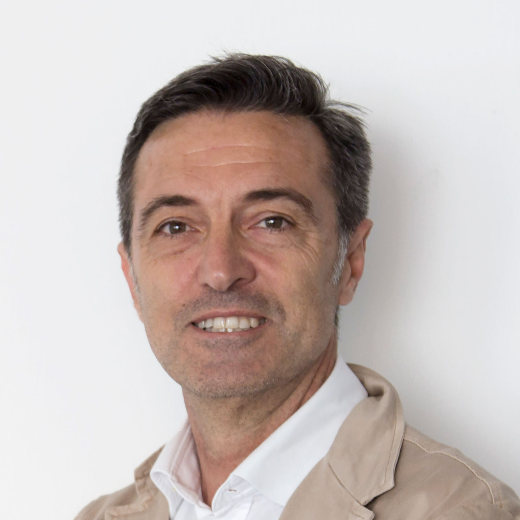
Giuseppina Emma Puglisi is an external lecturer at the Department of Energy (DENERG) of Politecnico di Torino, specializing in interdisciplinary research at the intersection of acoustics, environmental engineering, and medical technologies . Her work focuses on speech intelligibility in complex acoustic environments, particularly for cochlear implant users, and the development of multi-sensor systems for monitoring indoor environmental quality (IEQ) in university and office settings. Research Themes : Classroom acoustics, virtual reality for auditory testing, face mask noise effects, climate-responsive architecture. Leadership : Participated in organizing committees for major acoustics conferences like Forum Acusticum 2023 and serves as Associate Editor for Frontiers in Built Environment . Her recent publications validate virtual reality tools for acoustic assessment and explore cross-linguistic soundscape descriptors. Awards include the Best Paper Award (European Acoustics Association, 2021) and grants for young researchers. She supervises PhD students Virginia Isabella Fissore and Angela Guastamacchia in projects related to IEQ and clinical acoustics.
Gabriele Filipponi is a third-year Ph.D. student in Computer and Control Engineering at Politecnico di Torino (38th cycle, 2022–2025). He serves as a Part-Time Lecturer and Teaching Assistant at the Department of Control and Computer Science (DAUIN) for Operating Systems courses. His research focuses on embedded electronics testing and ultra-reliable in-field manufacturing techniques for automotive SoCs, leveraging Logic Built-In Self-Test (LBIST) and functional procedures. Research Areas: Embedded Systems Testing Automotive Electronics Computer Architecture Semiconductor Reliability Fault Diagnosis Publication Trends: His work spans 2022–2025 and addresses logic/memory BIST methodologies, in-field diagnostics for automotive SoCs, fault characterization, and firmware-controlled testing frameworks. Teaching Roles: Course Collaborator for Operating Systems (Computer Engineering, 2023–2025) Course Collaborator for Operating Systems (Computer Science Engineering, 2023–2025)
Michele Bonnin is an Associate Professor at the Politecnico di Torino , Department of Electronics and Telecommunications (DET). He contributes to teaching in Electromagnetism and Circuit Theory and Electrical Engineering courses across Computer Engineering , Electronic Engineering , and Physical Engineering programs. External Lecturer, University of Turin (2011-2017) Teaching activity at Turin Polytechnic University in Tashkent (2024) His research spans Nonlinear Dynamics , Energy Harvesting , and Stochastic Processes , focusing on: Phase Noise in Oscillators Memristor-Based Systems Ultra-Low-Voltage Circuit Reliability Stochastic Averaging Frameworks Recent work explores Nonlinear Multi-DOF Mechanisms for vibration energy harvesting and Edge of Chaos Theory in biological oscillator models. His 2025 articles highlight Memristor Amplification , SRAM Variability , and MEMS Optimization . Scientific Awards: BEST PAPER OF THE YEAR (2004), International Journal of Circuit Theory and Applications He serves as Associate Editor for Nonlinear Engineering and Computation , and contributes to doctoral programs in Sustainable Development and Climate Change (2021-2024). His research group LiNCS (Linear and Nonlinear Circuits & Systems) drives projects like RECOMMEND (2024-2027) and COMBlaser (2015-2017).
Enrico Rizzuto is an Ordinary Professor at the University of Genova , Department of Naval, Electrical, Electronic and Telecommunications Engineering (DITEN). His research focuses on naval engineering, underwater acoustics, and noise reduction technologies with environmental and operational applications. Teaches Costruzioni Navali 1/3 and Sicurezza delle Strutture Marine in the Naval Engineering undergraduate and master's programs Key research areas: ship noise emissions, hydrodynamic modeling, structural integrity, and sustainable maritime technologies Active in computational and experimental studies for underwater radiated noise reduction, airborne noise propagation, and environmental impact assessments Contributed to international conferences and collaborative projects like LIFE-PIAQUO and AQUO Current research includes hybrid propulsion systems, cabin acoustics, and maritime cyber resilience Recent Publications analyze noise patterns in ships, propeller optimization, hull structural uncertainties, and environmental protection strategies. His work bridges naval architecture with data-driven approaches for sustainable maritime solutions. Contact: enrico.rizzuto@unige.it | +39 010 33 52340
Iuri Peri is an Associate Professor of Agricultural and Food Economics, and Rural Appraisal at the University of Catania, where he also serves as Director of the Master's Degree in Viticulture, Oenology, and Oenomarketing. He is a member of the Agricultural Economics and Valuation section within the Faculty of Agriculture. Education: Diploma di laurea in Scienze Agrarie (110/110 cum laude) from University of Catania (1991/1992) Summer School in Microeconomics and Macroeconomics at London School of Economics (1994/1995) Postgraduate training at CIHEAM/IAM Montpellier, France (1996/1997) PhD in Agricultural Economics and Policy from University of Catania (1999/2000) Professor Peri specializes in qualitative and quantitative studies on EU agri-food policies, multilevel governance at regional and local levels, food security and sustainability, and rural development policy. His research focuses on socioeconomic and environmental issues within agrofood systems, bioeconomics, and geospatial analysis of local agrofood systems. With extensive international experience, he has collaborated with EU-DGSANCO, OECD, and CIHEAM, and participates in numerous international programs including AgriMundus-AgriNatura, AgTraIn, Chaire UNESCO-ADM, Tempus-QESAMed, ENPICBC-LactiMed, and UNITWIN UNESCO. Scientific Recognition: International selection winner for a Visiting Researcher fellowship at the UNESCO Chair 'Alimentations du monde' (2014) Professor Peri has served as scientific manager and committee member for numerous national and international research projects. He has supervised PhD students, including two in the international Agricultural Economics Doctoral Program (co-tutelle Italy-France) and three in the Joint Doctorate Agricultural Transformation by Innovation (Agtrain) Erasmus Mundus program. He has also been involved in international teaching activities, including as visiting professor at CIHEAM/IAM Montpellier. His institutional activities include serving as delegate for internationalization of the Di3A department since 2015 and leading the development of the International Master in Viticulture and Oenology at the University of Catania since 2017.
Alessandro Chiesa is a fixed-term researcher (equivalent to Assistant Professor) in the Department of Mathematical, Physical and Computer Sciences at the University of Parma, Italy. Since 2020 he has led theoretical activities within the spin-based Quantum Science (SQS) group, focusing on molecular nanomagnets for quantum technologies. Education & Career Master Degree in Physics, University of Parma (2012) PhD in Physics, University of Parma (2016) Visiting Scientist, Jülich Forschungszentrum, Germany (2017) Post-Doc, Molecular Magnetism group, University of Parma (2016, 2018–2019) Research Associate, University of Parma (2020 – present) National Academic Qualification as Associate Professor in Theoretical Physics of Matter (2020) Research Interests Chiesa’s theoretical work spans condensed-matter physics , quantum information science , and molecular magnetism . He develops first-principles many-body models to describe molecular nanomagnets, explores their use as spin qudits for quantum computation and simulation, and investigates chirality-induced spin selectivity (CISS) to achieve room-temperature spin readout and initialization. His studies integrate advanced spectroscopy—inelastic neutron scattering and time-resolved EPR—with quantum-error-correction schemes and fault-tolerant architectures. Scientific Awards European Award for Doctoral Thesis in Molecular Magnetism (2018) Galileo Galilei Award for Young Researchers – Rotary International (2018) Advances in Magnetism Award – AIP Advances (2021) Teaching & Advising Chiesa teaches graduate courses in Physics of Condensed Matter and Quantum Information and Computing to Physics and Computer Science master’s students. Office hours are held Monday and Tuesday 15:00–17:00 either in person at the Physics building or via Skype (appointment required). Collaborations & Facilities He collaborates closely with theorists at the Universities of Pavia and Modena, chemists and experimentalists at Manchester, Florence, Zaragoza, Barcelona, Freie Universität Berlin, and IBM, and conducts neutron experiments at the Institute Laue-Langevin (ILL) and ISIS Neutron & Muon Source.
Prof. Massimo Solzi is a Full Professor in Experimental Physics of Matter at the Department of Mathematical, Physical and Computer Sciences (SMFI) of the University of Parma. He coordinates the Physics Unit within SMFI and co-leads the Parma Research on Magnetism Laboratory (PaRMA). His research spans magnetic materials, multiferroics, and magnetocaloric effects, with a focus on energy conversion applications. Education: 1988: Diploma in Science and Technology of Materials (University of Parma, Thesis: "Coercivity mechanisms in NdFeB-type permanent magnets") 1984: Laurea in Physics (Solid State Physics, University of Parma, Thesis: "Energy transfer between dopants in alkali halogen matrices") Research Trends: Magnetocaloric materials for magnetic refrigeration Exchange-coupled hard/soft magnetic multilayers Multiferroic perovskite oxides Micromagnetic modeling of nanostructures High-pressure synthesis techniques Development of magnetic calorimeters Project Leadership: MISE "SPEED PARMA PoC - Strengthen Parma Patents" (2023-2025) POR-FESR 2014-2020 Project on Magnetic refrigeration Laboratory Involvement: Director of the PaRMA laboratory, contributing to the IMEM-CNR Institute's research programs.
Maurizio Righetti is a Full Professor at the Free University of Bozen-Bolzano within the Faculty of Agricultural, Environmental and Food Sciences. His research integrates hydraulic engineering, climate change adaptation, and sustainable water management, with a focus on Alpine environments. Research Interests: Righetti's work spans: Hydraulic systems optimization (e.g., sediment flushing, water distribution networks) Climate model bias correction for hydrological forecasting Renewable energy integration in water infrastructure Machine learning applications in ecohydraulics and resource management Impacts of hydropeaking and climate change on river ecosystems Recent Publications: His 15 most recent articles (2024-2025) demonstrate strong trends in: sediment dynamics modeling, AI-driven leak detection in water networks, climate data processing, and hybrid energy-water systems. Over 60% leverage machine learning, reflecting a shift toward data-centric environmental solutions. Engagement: He co-founded AIAQUA (unibz's water management spin-off) and leads public initiatives like "Action For Climate" to address climate-water linkages in Alpine regions.
Carlo Gioia is a PhD researcher at Kunstuniversität Linz and Research Assistant at the Interuniversity Department of Regional and Urban Studies and Planning (DIST) at Polytechnic University of Turin. He serves as an external lecturer in Film and Media Engineering, teaching Interactive Media courses and delivering lectures on New Media Art and (S)low Technologies across multiple institutions including the University of Turin and A. Casella Conservatory. Educational Background: Master's degree in Cinema and Media Engineering from Polytechnic University of Turin Currently pursuing PhD at Kunstuniversität Linz Carlo investigates the intersection of art, science, technology, and marginal territories, examining computational cultures, landscape ecologies, and collective agency. His research engages strategies such as salvage, patchwork, and redundancy, exploring experimental models of (s)low-tech and benign computing that prioritize sustainability, accessibility, and the right to opacity in digital interactions. He approaches computation as a fragmented, relational, and context-aware practice deeply embedded within social and local fabrics, rejecting linearity in favor of iterative and collectively negotiated alternatives of experimental knowledge. His recent publications reveal a strong focus on rural technologies, sustainable computing practices, and the reimagining of traditional interfaces through contemporary digital technologies. A recurring theme is the exploration of how technologies reconfigure placemaking practices, community infrastructures, and spatial computing in marginal territories, with particular attention to the relationship between traditional knowledge systems and emerging technologies. His work often transforms vernacular tools into contemporary interfaces, creating what he terms 'technological disobedience' as a form of cultural and political resistance. Research Collaborations: Interuniversity Department of Science, Project and Policies of the Territory Department of Control and Computer Engineering at Polytechnic University of Turin Carlo co-founded the Radura collective in 2025, a research and open experimentation platform operating at the intersection of artistic practices, political ecologies, and emerging technologies in rural contexts. His work takes the form of multi-channel installations and experimental projects like 'Folk Interfaces' that explore the relationship between traditional rural practices and contemporary digital technologies, emphasizing sustainability, accessibility, and community-based knowledge systems.
Francesco Fiermonte is an External lecturer and teaching assistant at the Interuniversity Department of Territorial Sciences, Planning and Policies (DIST) at the Polytechnic of Turin. With extensive experience in GIS and geomatics since the early 1990s, he specializes in open source software and open data applications for territorial planning and urban studies. Education: Graduate in Architecture Master's in Free Software Management Dr. Fiermonte's research focuses on GIS, spatial analysis, open source software, and open data applications. His work bridges technical geospatial expertise with practical urban and territorial planning needs, emphasizing community engagement and sustainable development. He is particularly interested in how open technologies can democratize access to spatial information and support evidence-based planning decisions. His recent publications demonstrate a strong focus on applying GIS to cultural heritage, urban walkability, renewable energy planning, and community resilience. The work spans interdisciplinary collaborations across computer science, geography, urban planning, and literary studies, with a consistent emphasis on open source solutions and data accessibility. Professional Activities: AICA-accredited GIS Certifier Member of GFOSS.it (Free and Open Source Software for Geospatial) Scientific Manager for multiple GIS training projects including the YOUTH project As a dedicated educator, Dr. Fiermonte teaches 'GIS, Let's (Re-) Start' courses across multiple academic years and has developed numerous specialized training programs for municipal employees and other professionals. His teaching emphasizes practical skills development using open source tools. He is associated with the S3+LAB (DIST) research laboratory, which focuses on spatial data analysis for sustainable territorial development.
Antonietta Franco is an Assistant Professor in the Department of Physiology at Humanitas University, Milan, Italy, a position she has held since March 2024. Prior to this, she served as a Research Instructor at Washington University School of Medicine (2019-2023) and Postdoctoral Research Associate (2016-2019) in the Pharmacogenomics/IM Department. Her academic credentials include a PhD in Clinical Pathology and Physiology (2016), Master's in Medical Biotechnology (2012), and Bachelor's in Biotechnology (2010), all from the University of Naples Federico II. She completed international research exchanges at Imperial College London (2011) and GSI Helmholtzzentrum (2013). Dr. Franco's research integrates cardiovascular physiology, hypertension mechanisms, and mitochondrial dynamics, with notable investigations into radiation-induced molecular changes in cardiomyocytes. Her work bridges neuroscience through neurobiological fellowship training and explores mitochondrial function via her ongoing technical consultancy with Mitochondria in Motion. Current studies focus on time-dependent cellular responses to stressors and their implications for cardiac pathophysiology. Publications demonstrate consistent focus on molecular cardiovascular responses, particularly GRK2 signaling pathways and radiation effects on cardiac cells, with emerging connections to neurological mechanisms through her neurobiology fellowship work. Major recognitions include: SIIA "Cesare Bartorelli" Postdoctoral Fellowship (2016) Mc-Donnell Center for Cellular and Molecular Neurobiology Fellowship (2017) O'Leary Competition Neuroscience Finalist (2018) Multiple travel grants and Best Poster Award for GRK2 radiation research (2014) She currently directs research in mitochondrial dynamics while maintaining active collaborations through her technical consultancy role, with teaching responsibilities spanning physiology and biotechnology domains at Humanitas University.
Alfredo Buonopane is a Temporary Professor at the University of Verona’s Department of Roman History. His research focuses on Roman epigraphy, socio-economic history of the Roman world, and the history of epigraphy, particularly in the 17th-18th centuries. He contributes to the Corpus Inscriptionum Latinarum and oversees data integration in the Epigraphic Database Rome (EDR). His work bridges archaeology and epigraphy, analyzing inscriptions to reconstruct Roman economic practices, trade networks, and social structures. Notable projects include studying funerary steles, measuring instruments, and forgeries. He also explores Theodor Mommsen’s influence on Italian scholarship and the cultural significance of ancient artifacts in modern contexts. Publications span 2023-2025, addressing topics like artisans’ roles, epigraphic falsifications, and regional archaeology in Aquileia and Verona. His interdisciplinary approach integrates art history, museum studies, and legal-historical analysis.
Francesco Pecci is a Researcher in the Department of Economics at the Università degli Studi di Verona with extensive experience in territorial economic systems and agricultural policy. His academic career spans over fifteen years, with documented teaching activities from 1999/2000 through 2015/2016. Pecci's research focuses on the intersection of regional development, agricultural policy, and spatial analysis. His work examines territorial production systems, EU agro-food policies, and rural environmental governance, with particular emphasis on the Veneto region of Italy. He has led research projects analyzing the effects of European Agricultural Policy modifications and the dynamics of quality production systems in local development. As an active member of the Consiglio dei Corsi di Laurea e Laurea Magistrale con sede a Vicenza/Consiglio Didattico del Polo Scientifico Didattico di "Studi sull'Impresa," Pecci contributes to academic governance and curriculum development. His teaching portfolio demonstrates consistent expertise in territorial economic systems across multiple degree programs. Pecci maintains regular office hours on Tuesdays from 10:00 AM to 12:00 PM in Palazzo Giuliari, Floor 4, room 0, reflecting his ongoing engagement with students and colleagues at the university.
Veronica Arioli is a Research Fellow at the University of Bergamo, specializing in product-service systems (PSS) and circular economy. She collaborates with local companies on industrial projects and teaches courses in Industrial Production Management for Computer Engineering and Mechanics programs, as well as Healthcare Operations for the Master's in Engineering and Management for Health. Her education includes a Master’s degree in Engineering and Management for Health (2021) from the University of Bergamo, with a thesis on System Dynamics simulation of the diffusion of COVID-19 . Research interests focus on sustainable PSS development, digital servitization, and lifecycle management in manufacturing. She employs methodologies like System Dynamics and Agent-Based Modelling to analyze economic and environmental impacts. Advising and grants involve tutoring students since 2022, though specific grant details are not provided. She is affiliated with the CELS laboratory at the University of Bergamo, located at Viale G. Marconi 5, Dalmine (BG), Italy. CELS (Center for Excellence in Logistics and Services) is highlighted in the footer, suggesting involvement in logistics, services, and manufacturing innovation initiatives.
Christian Micheloni is an Associate Professor at the University of Udine's Department of Mathematics and Computer Science. He holds a Laurea (cum Laude) and Ph.D. in Computer Science from the University of Udine (2002 and 2006 respectively). His research focuses on Active Vision, Pattern Recognition, and Resource Aware Networks. He has been involved in European projects like MUSAS (2008-2010) and HAMLet (2006-2008), and collaborates with international research centers and industry. Key research areas include person re-identification using neural networks, trajectory analysis, and camera network optimization. He has received the Best Paper Award at the International Conference on Distributed Smart Cameras (2014) and serves as an editor for the IEEE Journal of Selected Topics in Signal Processing. His work emphasizes real-time surveillance systems and adaptive sensor networks to manage computational and power constraints. Micheloni teaches courses like Artificial Vision and advises post-doctoral researchers. He maintains an active lab (AVires Lab) and offers post-doctoral positions. His publications span journals like IEEE Transactions on Pattern Analysis and Machine Intelligence, and conferences such as CVPR and ICCV.