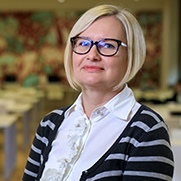
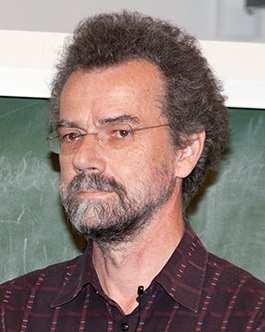
Kristina Bučar is a full Professor and head of the Department of Tourism at the Faculty of Economics and Business, University of Zagreb, Croatia. She holds a doctorate from the University of Zagreb and completed international study visits at Wirtschaftsuniversität Wien (Austria) and Faculty of Sport and Physical Education, Lille 2 (France). Professor Bučar teaches courses across all academic levels including Tourism Principles , Tourism Geography , and Resource Management in Sustainable Tourism . Her research focuses on sustainable tourism development with specific expertise in: Tourism environmental management and ecolabeling systems Spatial planning for tourism destinations Social responsibility frameworks in tourism operations Sports tourism development strategies Socio-economic aspects of Mediterranean tourism Her recent publications (2021-2024) demonstrate strong thematic consistency in sustainable tourism, with particular emphasis on environmental certification programs, gender equality in tourism employment, waste management in tourist economies, and financing models for protected areas. Over 85% of her recent work incorporates Croatian case studies examining practical implementation of sustainability principles. Professor Bučar maintains significant academic leadership roles as: Editorial board member of International Journal of Sustainable Development Research Founding member of IRNIST (International Research Network In Sport Tourism) Regular scientific committee participant for international tourism conferences
Dr. Hakan Karaosman is an Associate Professor at Cardiff Business School, Cardiff University, and a globally recognized expert in supply chain sustainability, particularly in fashion and textiles. He serves as Chief Scientist at FReSCH (Fashion's Responsible Supply Chain Hub), a UN-recognized, EU-awarded action research project hosted by University College Dublin, and holds visiting positions at University College Dublin and Politecnico di Milano. He is Chair of the Union of Concerned Researchers in Fashion (UCRF) and an advisory board member for Remake and other sustainability initiatives. His research focuses on just transition, decarbonization, social equity, and sustainable operations in fashion supply chains. He has authored numerous influential publications in top journals such as the International Journal of Operations & Production Management , and his 2025 paper 'For the many not the few: Introducing just transition for supply chain management' was among the most downloaded in its journal. His work emphasizes systemic change, stakeholder inclusion, and action research, bridging academia and industry. Hakan’s recent publications reflect a strong thematic focus on justice, equity, and systemic transformation in fashion. Key trends include critiquing greenwashing, advocating for supplier inclusion in climate action, analyzing the social dimensions of decarbonization, and promoting just transition frameworks. His research consistently addresses power imbalances, labor rights, and the need for inclusive, people-centered sustainability strategies. His scientific honors include the Financial Times Responsible Business Education Award (2025), the Cardiff University Celebrating Excellence Award for Sustainability (2023), and being named a Sustainability Thought Leader in the Vogue Business 100 Innovators (2023). He also received a prestigious Marie Skłodowska-Curie Individual Fellowship from the European Union. He is actively involved in postgraduate supervision and has delivered teaching on supply chain management and sustainability. His academic service includes roles as Area Editor for Operations Management Journals and editorial board member for several leading journals. He frequently collaborates with international organizations, including the UN, NGOs, and fashion companies, and is a sought-after keynote speaker at global events such as the Financial Times, TEDx, and the Global Fashion Summit. Hakan leads FReSCH, an international research hub focused on responsible fashion supply chains. He is also a founder and key organizer of initiatives like the Next Generation Assembly and A New Awareness, fostering collaboration among researchers, students, and industry stakeholders to drive systemic change in the fashion industry.
Prof. Dr. Peter Schneider is a faculty member at the University of Münster, affiliated with the Faculty of Mathematics and Computer Science and the Department of Mathematics and Computer Science . He is a principal investigator in the CRC 1442 Geometry: Deformations and Rigidity and contributes to the Mathematics Münster cluster. University: University of Münster School: Faculty of Mathematics and Computer Science Department: Department of Mathematics and Computer Science Academic Rank: Professor His research focuses on arithmetic geometry and representation theory , particularly the p-adic Langlands program , cohomology theories in mixed characteristics, and noncommutative algebraic structures. He investigates derived categories of p-adic representations, moduli spaces of Galois representations, and geometric approaches to automorphic forms. He has supervised numerous students, including Torsten Schoeneberg (2009), Marten Bornmann (2009), and Marius Kley (2016, 2019). His collaborative works with Rachel Ollivier, Otmar Venjakob, and Marie-France Vigneras explore modular Hecke algebras, Iwasawa theory, and (phi, Gamma)-modules. Emails: pschnei@wwu.de pschnei@uni-muenster.de Workshops Organized: Noncommutative Algebras (2006) Instructional workshop on noncommutative main conjectures (2011) International workshop on K-types for p-adic groups (2003)
Amir Mohammadi is a Professor in the Department of Mathematics at the University of California, Berkeley , appointed in 2025. He is a member of the Senate Faculty and conducts research in the College of Letters and Science. His research interests lie at the intersection of ergodic theory , dynamical systems , and discrete subgroups of Lie groups . He explores deep connections between homogeneous dynamics, number theory, and geometry, with a focus on effective equidistribution, measure rigidity, and Diophantine approximation. His recent publications reflect a strong emphasis on effective results in homogeneous dynamics, including studies on unipotent flows, quadratic forms, and geodesic planes in hyperbolic manifolds. The work often involves collaboration with leading mathematicians and appears in top-tier journals such as Inventiones Mathematicae , Duke Mathematical Journal , and the Journal of the American Mathematical Society . Research is supported in part by the National Science Foundation (NSF) .
Hossein Nami is an Associate Professor at the Department of Green Technology (IGT) and SDU Life Cycle Engineering at the University of Southern Denmark . His research focuses on Power-to-X , Hydrogen production , E-fuel , and system modeling for sustainable energy solutions. PhD, University of Tabriz (2018) Postdoc, Technical University of Denmark (2020-2022) Assistant Professor, University of Southern Denmark (2022-2025) Nami's research output includes 15 articles (2024-2026) on topics like ammonia-fueled fuel cells , geothermal cycles , chemical looping combustion , and electrolysis optimization . His work emphasizes techno-economic analysis, exergy efficiency, and multi-objective optimization for low-carbon energy systems. He leads the FLEX-ENVIRONMENT project (2024-2027) on electrolyzer integration and contributes to CARMA-Green Fuels (2023-2026) and GRACE (2025) for carbon management and grid-aware investment. His teaching includes supervision of MSc theses on renewable hydrocarbons and power-to-X technologies at SDU.
Regina Ragan is a Professor in the Department of Materials Science and Engineering at the Samueli School of Engineering, University of California, Irvine. Her research focuses on nanomaterials, self-assembly, and surface-enhanced Raman scattering (SERS) for applications in optical communication, energy systems, and biomedical diagnostics. Education: Ph.D. in Applied Physics, California Institute of Technology, 2002 M.S. in Applied Physics, California Institute of Technology, 1998 B.S. in Materials Science and Engineering, University of California, Los Angeles, 1996 Her work integrates scanning probe microscopy and first-principles calculations to study thermodynamic driving forces in self-assembly and structure-function relationships. Recent publications highlight applications in antimicrobial susceptibility testing, environmental monitoring, and plasmonic device fabrication. The Ragan group develops low-cost diagnostic tools using SERS for telemedicine applications. Current lab members include graduate students and postdoctoral researchers working on nanoscale systems from atomic to mesoscale. Scientific Awards: NSF CAREER Award for fundamental studies of biological/inorganic interfaces Research Trends: Recent articles show a focus on SERS-based diagnostics, plasmonic nanoantennas, machine learning-assisted spectral analysis, and scalable synthesis of 3D graphene architectures. Subfields span quantum plasmonics, stress-activated materials, and biofilm monitoring.
Anh Tuan Le is an Associate Professor at the Department of Electrical Engineering, Chalmers University of Technology. He holds a PhD in Power Systems from Chalmers (2004) and a Master's in Energy Economics from the Asian Institute of Technology (1997). Specializes in power grid planning, electricity market modeling, and renewable energy integration Active in electric vehicle-grid interaction and battery storage systems Develops voltage stability solutions and decentralized control strategies His recent research focuses on: Flexibility markets for congestion management Machine learning applications in load forecasting Real-time security margin control using AI Key projects include: DigiRES (2024-2027): Digital integration of multi-energy flexibility POTENT-X (2024-2027): Port energy transition hubs FLEXIGRID (2019-2023): Distribution grid flexibility solutions
Ron Peled is a Full Professor in the School of Mathematical Sciences at Tel Aviv University , currently on leave to serve as the Brin Professor in the Department of Mathematics at the University of Maryland starting summer 2024. During 2022–2024 he was a Member at Princeton University and the Institute for Advanced Study . Education & Career: While explicit degrees are not listed, his trajectory shows appointments at NYU (2009–2010), UC Berkeley and Tel Aviv University as a teaching assistant, followed by faculty positions culminating in full professorship. Research Interests: His work lies at the intersection of probability theory, statistical physics, and combinatorics . Key themes include: Disordered systems and random environments (random-field Ising, spin glasses) First-passage percolation and random metrics Random surfaces and height functions Loop models and critical phenomena Random matrices and band matrices Geometric probability and allocation problems Publications & Impact: With over 70 papers in top journals such as Annals of Mathematics , Annals of Probability , Inventiones Mathematicae , and Communications in Mathematical Physics , his recent work explores minimal surfaces in random environments, localization in random band matrices, and quantitative disorder effects in low-dimensional spin systems. Grants & Awards: Research has been continuously funded by: Israel Science Foundation (grants 1048/11, 861/15, 1971/19, 2340/23) ERC Starting Grant LocalOrder ERC Consolidator Grant Transitions Marie Skłodowska-Curie International Reintegration Grant SPTRF Teaching & Mentoring: Prof. Peled has taught a broad spectrum of courses at Tel Aviv University (Brownian motion, probability, percolation, random matrices, stochastic calculus) and NYU (combinatorics, discrete mathematics). He has supervised 13 post-doctoral fellows and 8 graduate students (PhD & MSc) to date. Service & Outreach: He co-organizes the Joint Israeli Probability Seminar and has organized numerous international workshops and conferences including at Oberwolfach, Technion, and Tel Aviv University.
Prof. Dr.-Ing. Christoph Stiller is a full professor at the Karlsruher Institut für Technologie (KIT) and serves as the director of the Institute of Measurement and Control Technology (Institut für Mess- und Regelungstechnik, MRT). His work focuses on autonomous driving, sensor fusion, probabilistic estimation, HD mapping, motion planning, and intelligent transportation systems. Education: Details on his academic degrees are not provided in the text, but he holds the title of Dr.-Ing. indicating a doctoral degree in engineering. Research Interests: Prof. Stiller's research spans a wide array of topics critical to the development of autonomous vehicles. His work includes: Sensor Fusion: Integrating data from LiDAR, cameras, and radar to create robust perception systems. HD Mapping & Localization: Developing high-definition maps and precise localization techniques for urban and highway environments. Motion Planning & Decision Making: Creating algorithms for safe and efficient trajectory planning under uncertainty. Machine Learning & AI: Applying deep learning and reinforcement learning to perception, prediction, and control tasks. Publication Trends: His recent publications (2023–2025) emphasize robust traffic light detection, image stitching for panoramic views, motion prediction using redundancy reduction, and safety-enhanced model predictive control. The work increasingly integrates learning-based methods with classical control and estimation theory. Scientific Awards: No specific awards are listed in the provided text. Teaching & Supervision: Prof. Stiller teaches foundational and advanced courses in measurement and control systems, probabilistic estimation, and autonomous driving. He holds regular office hours during both summer and winter semesters and is actively involved in advising students and researchers. Labs & Teams: He leads the Institute of Measurement and Control Technology (MRT) at KIT, which is engaged in cutting-edge research in autonomous systems. The institute collaborates with industry and academia on large-scale projects such as UNICARagil and various European initiatives.
Professor Maia Chankseliani is Professor of Comparative and International Education at the University of Oxford and a Governing Body Fellow of St Edmund Hall. She serves as Editor-in-Chief of the International Journal of Educational Research and Chair of the Executive Committee of the Education and Development Forum (UKFIET), and is a Trustee of the University of Bahrain. She leads the International Mobility and World Development research project funded by the U.S. Department of State. Her educational background includes: BA and MA from Tbilisi State University MA from the University of Warwick EdM from Harvard University PhD from the University of Cambridge Professor Chankseliani's research explores the public role of tertiary education in diverse settings, examining how universities contribute to social, economic, and political development, and how international engagement shapes both institutions and societies. Her work spans international student mobility and its developmental impact, academic freedom, university contributions to sustainable development, and higher education in post-Soviet contexts. Her monograph What Happened to the Soviet University? (OUP, 2022) offers insights beyond the former Soviet context, addressing contemporary debates around academic freedom and institutional autonomy. Her major international study International Mobility and World Development represents the first global mixed-methods project examining how international education contributes to societal development. Her recent publications (2023-2025) demonstrate a consistent focus on the ripple effects of international student mobility, particularly examining poverty reduction mechanisms, intercultural competence development, and systemic impacts on home countries. Based on extensive qualitative data from over 700 interviews across 70 countries combined with quantitative analysis, her research reveals how internationally mobile individuals become agents of change through knowledge transfer, policy influence, and institutional reform. This body of work shows that returnees adapt, translate, and embed reform through multiple mechanisms far beyond simple skill transfer. Professor Chankseliani has secured significant research funding from diverse sources including the U.S. Department of State, UKRI/ESRC, British Council, World Bank, Qatar Foundation, and European Commission. Her research has informed policy dialogue in areas such as poverty reduction, education and health systems, gender equality, and civic life. She regularly engages with governments and international audiences, and her work is frequently featured in global media outlets including Nature and University World News. At Oxford, Professor Chankseliani convenes the Comparative and International Education Research Group and previously led the department's MSc in Comparative and International Education from 2017 to 2024. She supervises multiple doctoral students and has worked on numerous externally funded research projects involving UK government departments, international organizations, and academic institutions. Her current research portfolio includes examining how international education experiences translate into societal development outcomes, with particular emphasis on poverty reduction mechanisms and the long-term impacts of mobility on home countries.
Professor Tim Dokchitser is the Heilbronn Chair in Algebraic/Arithmetic Geometry at the School of Mathematics, University of Bristol. His research focuses on algebraic number theory, elliptic curves, arithmetic of L-functions, Galois theory, and computational algebra. He actively explores connections between number theory and finite groups, using computer experiments to advance conjectures like the Birch-Swinnerton-Dyer Conjecture. BSc, Lund University MSc, Lund University PhD, University of Utrecht MA, University of Cambridge His research spans hyperelliptic curves over local fields, Weil representations, tame Galois torsion, and finite group character formulas. Recent work includes computational approaches to Frobenius traces and étale cohomology in hyperelliptic curve quotients. Articles (2023-2025) highlight advancements in arithmetic geometry, zero-knowledge cryptography, and Galois representation theory. Scientific awards include a University Research Fellowship (2011-2014) for elliptic curves and L-functions. He leads projects like the 2015-2018 study on hyperelliptic curves and contributes to collaborations across arithmetic geometry. His computational methods have inspired conjectures in motivic cohomology and modular deformations.
Rishidev Chaudhuri is an Associate Professor at the University of California, Davis in the Department of Neurobiology, Physiology and Behavior within the College of Biological Sciences. His research focuses on computational neuroscience and neural dynamics, employing mathematical models to investigate how neural circuits generate cognitive processes such as memory, perception, and decision-making. His work explores neural dynamics through models of memory systems, attentional mechanisms, and probabilistic inference. Recent publications highlight advances in understanding hippocampal memory scaffolds, parietal-frontal interactions, and neuromorphic computing inspired by brain architecture. Education: BA in Physics (Amherst College), PhD in Applied Mathematics (Yale University) Centers: Center for Neuroscience; affiliated with Applied Mathematics and Neuroscience Graduate Groups Scientific awards and honors are not explicitly mentioned in the provided materials.
Dorothea Schulz is a Professor of Anthropology at the Institute of Ethnology, University of Münster, where she has been serving since March 2018. She is a Principal Investigator in the Cluster of Excellence, a member of the Board of Directors, and a member of the General Assembly. Her research focuses on religious diversity and legal-political unity, with particular emphasis on Muslim communities in Africa. She leads two major projects: B3-48 on 'The role of social identities in interreligious arrangements' and B3-20 on 'Testing and contesting religious pluralism in Uganda'. Professor Schulz received her academic training at several prestigious institutions: 2005: Postdoctoral Degree (Habilitation), Institute of Social and Cultural Anthropology, Freie Universität Berlin 1991-1996: PhD in Anthropology, Yale University 1984-1990: Study of Anthropology, Sociology and Biology, Johannes Gutenberg-Universität Mainz 1990: Master of Arts in Anthropology, Sociology and Biology, Johannes Gutenberg-Universität Mainz 1982-1983: Study of Art History, Université Paul-Valéry, Montpellier Dorothea Schulz's research spans several interconnected fields within anthropology and religious studies. Her work primarily examines the dynamics of religious diversity, particularly focusing on Muslim communities in Africa. She investigates how religious identities intersect with political structures, social formations, and media technologies. Her anthropological approach emphasizes the lived experiences of Muslim communities, especially regarding gender relations, youth aspirations, and educational systems. Professor Schulz has made significant contributions to understanding how religious pluralism functions in contemporary African contexts, with particular attention to Uganda and Mali. Her research on media and religion explores how digital technologies reshape religious practice and authority in African Muslim communities. Professor Schulz has received numerous recognitions for her scholarly work: 2016: Fellow, Center for African Studies – Harvard University 2010: Teaching Prize – Faculty of Arts and Humanities, University of Cologne 2005: Fellow – Society for the Humanities, Cornell University 2000: Visiting Scholar – Department of Anthropology, University of Chicago 1996: Frobenius Society's Research Award – Johann Wolfgang Goethe-Universität, Frankfurt am Main Throughout her career, Professor Schulz has been actively involved in mentoring students and securing research funding for her projects. She has served on numerous academic committees and editorial boards, contributing significantly to the development of her field. Her leadership as Academic Director of the Research and Teaching Unit 'Media, Culture and Society' at the University of Cologne (2008-2018) demonstrates her commitment to interdisciplinary research collaboration. She currently oversees major research projects examining religious pluralism in African contexts, which involve international teams of researchers and provide opportunities for doctoral students. Professor Schulz co-leads research initiatives within the Cluster of Excellence, working with interdisciplinary teams to investigate religious diversity and legal-political unity. Her projects B3-48 and B3-20 bring together scholars from anthropology, religious studies, political science, and African studies to examine how social identities shape interreligious arrangements and how religious pluralism is tested and contested in specific African contexts, particularly Uganda.
Simon Chadwick is a Professor of Sport and Geopolitical Economy at Skema Business School in France. He specializes in the intersection of sports, geopolitics, and economic transformation in the Middle East, particularly focusing on Gulf states' strategic investments in global sports ecosystems. His research examines how nations like Saudi Arabia and Qatar leverage sports to diversify economies, enhance soft power, and address unemployment. Key themes include the commercialization of football leagues, privatization of sports clubs, and the role of multinational corporations in shaping regional sports markets. Chadwick’s recent articles analyze the Gulf’s pursuit of the 2036 Olympics, the integration of esports into national strategies, and the challenges of building fan loyalty in the Saudi Pro League. His work also explores the economic implications of acquiring European football clubs and the long-term sustainability of Gulf-led sports initiatives. He has contributed to debates on 'sportswashing' and argues that Gulf investments extend beyond PR to systemic economic restructuring. His insights are frequently cited in analyses of Saudi Vision 2030 and its sports-related giga-projects like Neom and Diriyah.
Dr. Chee Kiat Seow is an Associate Professor at the University of Glasgow's School of Computing Science. He holds a PhD from Nanyang Technological University (NTU) and an MSc from the National University of Singapore (NUS). His research focuses on cyber-physical security, wireless communication localization, and IoT systems leveraging AI/ML. He has led projects valued in the millions, winning awards like the IEEE Best Student Paper and National Instruments Engineering Impact Awards. Education: PhD (NTU), MSc (NUS) Research: Specializes in UWB positioning, spoofing detection, and IoT integration with 5G/GNSS. Teaching: Courses include Big Data, Software Engineering, and Data Analytics. His recent work addresses NLOS mitigation in indoor localization and cyber-physical security threats. Over 63 publications span journals like IEEE Transactions and conferences such as IPIN and WF-IoT. Supervised 6+ PhD/MSc students on topics like autonomous robotics and AI-driven localization. Grants: Includes $853K for 5G-X Smart Building projects and $797K for GNSS signal authentication. Awards: IEEE PIERS Best Student Paper (2019), NI Engineering Impact Awards (2015-2016). He advises on IoT and cybersecurity for organizations like ARTC and National Instruments. Active in IEEE Signal Processing and Computer Society.