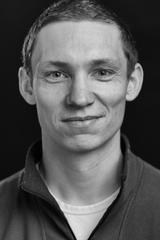
Jop Briët is a Researcher at the Department of Algorithms and Complexity at Centrum Wiskunde & Informatica (CWI) in the Netherlands. His work focuses on theoretical computer science, quantum information theory, combinatorics, and tensor analysis. He has held grants including the Veni Innovational Research Grant from NWO and a Rubicon fellowship. He has authored over 50 publications in leading venues, exploring topics such as Grothendieck inequalities, quantum computing, and additive combinatorics. His research interests span the interplay between combinatorics and computational complexity, with particular emphasis on tensor analysis, probabilistic methods, and algorithm design. Recent work includes studies on Szemerédi’s theorem with random differences and the application of quantum query algorithms to entanglement-based problems. Awards: Outstanding paper award TQC (2020), Andreas Bonn medal (2013), Stieltjesprijs (2011). Professional Activities: Editor for ERCIM News, Board Member of Koninklijk Wiskundig Genootschap, and frequent invited speaker at workshops on quantum computing and combinatorics. Grants: Veni Grant (2014), Rubicon Fellowship (2012). Current teaching includes courses on Additive Combinatorics and Quantum Information Processing, reflecting his commitment to bridging foundational theory with advanced applications in computing and mathematics.
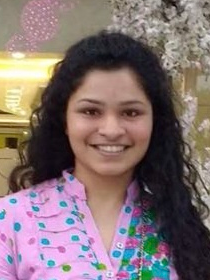
Ross J. Kang is a Canadian mathematician currently serving as an Associate Professor at the Korteweg–de Vries Institute for Mathematics within the Faculty of Science at the University of Amsterdam since 2022. He is an active member of the Discrete Mathematics and Quantum Information group and the NETWORKS consortium. Previously, he held positions as Assistant/Associate Professor at Radboud University Nijmegen (2014-2022), Assistant Professor at Utrecht University (2013), and Researcher at Centrum Wiskunde & Informatica (2012-2013). His academic journey includes postdoctoral positions at Durham University (2010-2012) and McGill University (2008-2010), where he was advised by Bruce Reed and Louigi Addario-Berry. DPhil in Mathematics, University of Oxford (2008) - Thesis: 'Improper colourings of graphs', advised by Colin McDiarmid BSc (Hons) in Mathematics and Computer Science, University of Victoria (2003) - Governor General's Silver Academic Medal recipient Ross J. Kang's research focuses on probabilistic and extremal combinatorics, random discrete structures, graph coloring, geometric graphs, and algorithms. His work bridges theoretical mathematics with practical applications, exploring fundamental questions in discrete mathematics. He has made significant contributions to understanding graph coloring problems, particularly in the contexts of list coloring, distance coloring, and strong coloring. His research often employs probabilistic methods to establish bounds and structural properties in graph theory. Kang's work on the hard-core model, local occupancy method, and triangle-free graphs has advanced our understanding of the interplay between local constraints and global structure in discrete systems. Analysis of his recent publications reveals a strong emphasis on graph coloring problems, particularly list coloring variants and their extensions. His work frequently explores the relationship between graph structure (such as degree constraints, girth, or forbidden subgraphs) and coloring properties. A notable trend is his development and application of the local occupancy method to establish improved bounds for chromatic numbers in various graph classes. His research also demonstrates a consistent interest in extremal problems, seeking optimal configurations under specific constraints, particularly in the context of triangle-free graphs and geometric representations. NWO Open Competition M-1 grant entitled 'Asymptotic triangle-free structure (3Free)', 2022-2026 NWO Vidi grant entitled 'On the edge: theory and techniques at the frontiers of edge-colouring', 2017-2023 NWO Veni grant entitled 'Generalised colouring for random graph models', 2012-2015 Van Gogh travel grants (2020-2021 with Marthe Bonamy; 2016-2017 with Louis Esperet) Governor General's Silver Academic Medal (2003) Ross J. Kang has successfully supervised multiple PhD students including Eoin Hurley (defending May 2025), Stijn Cambie (defended April 2022), and François Pirot (winner of 2020 prix Charles Delorme). His research is supported by significant grants from the Netherlands Organisation for Scientific Research (NWO), including the prestigious Open Competition M-1 grant. Kang is actively involved in the academic community through his editorial role at Combinatorial Theory, co-organization of conferences like the Dutch Days of Combinatorics, and leadership in initiatives such as Innovations in Graph Theory, a diamond open access journal he helped launch in August 2023. As a member of the Discrete Mathematics and Quantum Information group at the University of Amsterdam and the NETWORKS consortium, Kang collaborates with researchers across various institutions. He has established strong international connections through his Van Gogh travel grants and participation in collaborative projects like the Sparse (Graphs) Coalition sessions. His research group focuses on theoretical aspects of discrete mathematics with connections to quantum information science, and he maintains active collaborations with researchers across Europe and North America.
Dr. Jasmijn van Gorp is a Senior Lecturer in the Department of Media and Culture Studies at Utrecht University's Faculty of Humanities. She specializes in Digital Humanities , Audiovisual Heritage , and Digital Culture with a focus on Television History and Eastern European Media . As co-founder of the CLARIAH Media Suite, she develops digital research infrastructure for audiovisual heritage in the Netherlands. PhD in Social Sciences from the University of Antwerp (Belgium) MA in Communication Sciences from KU Leuven (Belgium) Her research examines digital methods for film and television studies , metadata in digital archives , and AI-generated analysis of broadcast schedules . She leads projects like Re-Frame (2021-2025) and AI TaDa , exploring the reuse of audiovisual archives in journalism and algorithmic metadata generation. Recent work includes tutorials on Data Visualization and Flow Analysis using the Media Suite. She advocates for critical digital tool literacy in education and co-authored the Digital Skills learning trajectory for Utrecht's BA programs. Her teaching includes Digital Television History and Programming and Curation at BA and MA levels, supervising theses in film and television studies. As workpackage leader for CLARIAH-PLUS WP5 , she integrates computer vision , automatic speech recognition , and linked data into sustainable tools for cross-media research. She trains researchers via the Media Suite Learn initiative and collaborates on digital infrastructure projects with institutions like NISV and CLARIAH.
Andreas Weber is an Associate Professor at the University of Twente's Digital Society Institute , specializing in the Knowledge, Transformation & Society (KiTeS) research group . His work examines the long-term historical and global relationship between Science, Technology, and Society , with particular focus on colonial histories of natural history, chemistry, and sustainability , as well as computational technologies for contextualizing digitized archives . He leads the HAICu project (2023–2029) on digital cultural heritage and coordinates STS PhD training for the Netherlands Graduate Research School (2019–2024). MA & PhD in History (2005 & 2012), Leiden University Assistant Professor (2017–2023), University of Twente Andreas' research integrates digital humanities with colonial science history , emphasizing global histories of minerals , digital humanism , and AI's societal context . His 15 most recent publications (2016–2025) explore topics like colonial bias in natural history collections , FAIR data implementation , and semantic annotation of handwritten archives , spanning disciplines from history of science to computer science and museum studies . He has received 7 scientific awards , including multiple Best Teacher Awards (2020–2023) and the IEEE eScience Best Poster Award (2018). Andreas supervises PhD and postdoctoral projects while engaging in media commentary on colonial heritage issues and co-organizing international conferences like Hydrogen Pasts and Futures (2024).
Dr. P.H. (Rik) Smit is a Senior Lecturer in Media Studies at the University of Groningen's Faculty of Arts. He holds positions as Program coordinator for MAs Media Studies, Board member of the Groningen Film Collective, and Board member of Paddepoel Energiek. His research focuses on Memory Studies, Platform Studies, Critical AI Studies, and Media Theory, with emphasis on digital activism, sociotechnical imaginaries, and algorithmic memory technologies. Teaches courses including Media Platforms and Industries, Technology and Creative Destruction, and Media Entrepreneurship Supervises BA and MA thesis students in Media Studies His work explores intersections between digital culture and memory practices, contributing to debates on platformization, critical AI ethics, and media historiography. Recent research includes analyses of Extinction Rebellion's memory work on Instagram and early web entrepreneurship practices. Published 24 research outputs including articles in Memory Studies and Memory Mind and Media Active in academic activities like keynote presentations and international workshops Engages with public discourse through media contributions discussing social media trends, Wikipedia independence, and digital identity design.
Monika Kuffer is a Full Professor at the University of Twente's Faculty of Geo-Information Science and Earth Observation (ITC), holding additional roles as Associate Professor in the Department of Urban and Regional Planning and Geo-Information Management. She leads research in urban remote sensing, deprived area monitoring, and sustainable urban development. Her work integrates spatial statistics, machine learning, and citizen science to inform inclusive city planning. Education: PhD in Human Geography & GIS from the University of Twente MSc in Human Geography (TU Munich) MSc in Geographic Information Science (University of London) Research Interests: Urban Remote Sensing Slum and Deprivation Mapping Climate Adaptation Strategies Citizen Science for Urban Inequalities Earth Observation Policy Support Articles Trends: Recent work emphasizes multi-city climate adaptation analyses, thermal inequality assessments in African slums, and scalable deprivation modelling frameworks like IDEAMAPS. Projects like ONEKANA and NightWatch highlight fusion of EO data with community-driven methods. Awards: 2022 EO4all Prize for innovative Earth Observation applications Advising & Grants: Supervised 3 PhD/MSc projects. Active in global initiatives like the EU's Knowledge Centre on EO and the UN's SDG frameworks. Leads datasets on deprivation (e.g., IDeAMapSudan). Labs/Teams: Core member of ITC's Urban Remote Sensing and GeoAI teams. Collaborates with the Digital Society Institute for interdisciplinary urban research.
Stefano Puntoni is a Professor of Marketing and a behavioral scientist at the Rotterdam School of Management, Erasmus University. He serves as Head of the Department of Marketing Management at RSM and as Director of the Psychology of AI Lab at the Erasmus Centre for Data Analytics. His academic journey began with a "Laurea" in Statistics and Economics from the University of Padova in 2000, followed by a Ph.D. in Marketing from London Business School in 2005. His primary research focuses on autonomous technology adoption in consumer markets and production, with particular emphasis on the value of human labor in the age of AI. Additional research areas include advertising language, consumer identity, and numerical cognition. Puntoni's work spans interdisciplinary boundaries, connecting marketing, psychology, and artificial intelligence. An analysis of his recent publications reveals a strong trend toward understanding human-AI interactions in consumer contexts. His research examines how consumers perceive decisions made by algorithms versus humans, preferences for material versus digital products in identity-based consumption, and psychological reactions to human versus robotic job replacement. These studies collectively explore the tension between technological advancement and human elements in decision-making processes. Scientist in Residence, Experiments in Arts and Economics, ZKM Centre for Art and Media (2021) Science Communication Grant, Royal Dutch Academy of Sciences (€10,000) (2021) Case Centre's Marketing Case Award (2021) EFMD Case Writing Award (2020) Case Centre's Outstanding Case Writer Award (2020) C.W. Park Award, Journal of Consumer Psychology (2019) Puntoni has mentored numerous doctoral students, including Phyllis (Jia) Gai, Eugina Leung, and Elisa Maira, many of whom have gone on to prestigious academic positions. He currently serves as Associate Editor for both the Journal of Consumer Research and the Journal of Marketing. His teaching spans marketing strategy, innovation and technology adoption, brand management, and decision making across multiple institutions including RSM, Lancaster University, London Business School, and Bocconi University. As Director of the Psychology of AI Lab at the Erasmus Centre for Data Analytics, Puntoni leads a research team exploring the intersection of human psychology and artificial intelligence in business contexts. His lab focuses on understanding consumer and worker reactions to AI implementation, with practical applications for businesses navigating the digital transformation.
Prof. Willem Trommel is a Full Professor in Political Science and Public Administration at the Vrije Universiteit Amsterdam's Faculty of Social Sciences and Humanities. He holds dual appointments in the New Public Governance (NPG) research group and teaches courses on public management, policy analysis, and social science classics. His research focuses on governance paradigms, welfare state reforms, and the societal impacts of artificial intelligence. Key areas include neoliberal governance critiques, post-neoliberal 'crafting communities,' and ethical challenges in algogovernance. Prof. Trommel earned his PhD from Leiden University in 1995. He has supervised five PhD theses and actively collaborates with international researchers. Notable projects include the SIG/Kennisatelier lokale verzorgingsstaat (2014–2016) and the Niet langer in de WAJONG research trajectory (2015–2020). His work addresses pressing issues like welfare localization, governance resilience, and the ethical use of AI in public decision-making. His research outputs span 50+ publications, emphasizing governance innovation, reflexive practices, and societal adaptation. Recent work explores how democratic principles interact with algorithmic systems. Trommel advocates for critical public administration paradigms that balance institutional accountability with societal needs.
Magnus Botnan is an Assistant Professor at the Department of Mathematics, Vrije Universiteit (VU) Amsterdam. He held a tenure-track position from 2018-2022, was a postdoc at TU Munich (2016-2018) under Ulrich Bauer, and earned his PhD at NTNU in 2015 under Nils A. Baas. His research spans topological data analysis, bridging pure mathematics (representation theory of quivers) with computational and applied aspects (persistent homology, data signatures). Education: PhD in Mathematics at Norwegian University of Science and Technology (NTNU) Research Grants: VIDI career grant (€850,000) Research Collaborations: with Mike Lesnick, Ulrich Bauer, S. Oppermann, and S. Oudot His recent work includes extremal Betti numbers, bottleneck stability, and signed barcodes for multiparameter persistence. He co-organized applied topology meetings in the Netherlands and supervises graduate students in computational topology. Key scientific contributions: Advances in Mathematics Journal of Applied and Computational Topology SoCG conference proceedings He teaches courses such as Calculus 2, Complex Analysis, and Topological Data Analysis at VU Amsterdam and Mastermath, with past courses in Differential Equations, Linear Algebra, and Modelling of Dynamical Systems.
Ayushi Rastogi is an Assistant Professor at the University of Groningen, affiliated with the Software Engineering group in the Bernoulli Institute under the Faculty of Science and Engineering. She holds a PhD from IIIT-Delhi and has conducted postdoctoral research at TU Delft and the University of California, Irvine, with additional experience as a visiting researcher at Microsoft Research. Her research focuses on data analytics and AI-driven solutions for software engineering challenges, particularly in open-source ecosystems and developer communities. Key interests include psychological safety in OSS, pull request dynamics, and fairness in software practices. She actively contributes to EDI initiatives through Informatics Europe and the Netherlands' IPN EDI committee. Her work combines empirical software engineering and repository mining to address real-world software challenges. Notable contributions include analyzing fork sustainability in developer communities and exploring code review velocity. She has received the MSR Rich Holt Early Career Achievement Award 2025 and serves as an Associate Editor for IEEE Software. Her GitHub repository 'fsoc' investigates fork impact on developer community sustainability, and she leads projects like OpenDataology for AI dataset compliance. Awards include the 2022 Best Disruptive Paper Award (ISSRE) and supervision of the MSR 2024 Distinguished Doctoral Award-winning thesis by Dr. Gunnar Kudrjavets. She chairs MSR 2025 and frequently presents on topics like gender equality in tech and burnout prevention. Her research spans compiler analysis, memory management, and EDI policy design in ICT sectors.
Raffaella Mulas is an Assistant Professor in the Department of Mathematics at the Faculty of Science, Vrije Universiteit Amsterdam. She previously served as a Group Leader and Minerva Fast Track Fellow at the Max Planck Institute for Mathematics in the Sciences, where she maintains an ongoing affiliation. Her research lies at the intersection of spectral graph theory, discrete mathematics, and network science. Research Interests: Her work focuses on the spectral theory of graphs and hypergraphs, particularly the properties of discrete Laplacians and non-backtracking operators. She investigates extremal combinatorics problems such as graph coloring and the Turán problem, often applying spectral methods to derive sharp bounds. Her research has strong applications in modeling and analyzing complex networks. Recent Research Trends: Analysis of the 15 most recent publications reveals a consistent focus on spectral characterizations of graphs and hypergraphs, including signed and complex unit hypergraphs. She frequently studies the normalized Laplacian and its extremal eigenvalues, develops non-backtracking operators, and explores measure-theoretic and geometric representations of networks. A strong thread connects spectral bounds to combinatorial invariants like chromatic number. VU Startpremie Grant Elected Member, European Mathematical Society Young Academy (EMYA) Elected Member, Elisabeth-Schiemann-Kolleg, Max Planck Society Minerva Fast Track Fellow, Max Planck Institute Advising and Grants: While no formal students are listed, she is an active researcher with significant grant funding, notably the VU Startpremie Grant. She collaborates internationally and supervises research projects in spectral graph theory and network analysis. Her affiliation with both VU Amsterdam and MPI-MiS enables broad academic mentorship and collaborative supervision. Labs and Research Groups: Raffaella Mulas leads research within the Mathematics Department at VU Amsterdam and is affiliated with the research group at the Max Planck Institute for Mathematics in the Sciences. Her work contributes to advancing theoretical foundations in discrete mathematics with applications in data science and network modeling.
Andreas Milias Argeitis is an Associate Professor in the Faculty of Science and Engineering at the University of Groningen. He leads the Milias-Argeitis Lab within the Molecular Systems Biology research unit at the Groningen Biomolecular Sciences & Biotechnology Institute (GBB). His research focuses on integrating experimental and computational approaches to understand cellular processes, particularly the coordination between cell growth, division, and metabolic dynamics in budding yeast. Key research areas include systems biology, TOR signaling pathways, cell cycle regulation, and the application of machine learning and mathematical modeling. His lab develops advanced tools like optogenetic control systems and deep learning algorithms for cell segmentation and tracking. Recent work has revealed metabolic oscillations linked to the cell cycle and explored the role of proteins like Sch9 in TORC1-dependent signaling. Notable achievements include an NWO Vidi Grant (2018) and an ENW Science-M Grant (2023) for studying how growth drives the cell division cycle. He has over 40 peer-reviewed publications, including work in Nature Communications , Nature Metabolism , and Journal of Cell Science . His research bridges fundamental biology with technological innovations in single-cell analysis and synthetic biology. Lab activities include CRISPR/Cas9 genome editing protocols, fluorescent protein maturation studies, and the development of photo-switchable enzymes. Collaborations span biochemistry, mathematics, and engineering, reflecting his interdisciplinary approach to unraveling cellular mechanisms.
Dr. Zhiming Zhao is an Associate Professor and Chair of the Multiscale Networked Systems (MNS) research group at the Informatics Institute (IvI), University of Amsterdam (UvA). He serves as the technical manager of the Virtual Lab and Innovation Center (VLIC) of LifeWatch ERIC, a European research infrastructure for ecology and biodiversity science. Zhao holds an IEEE Senior Member designation and is the Managing Editor of the Journal of Cloud Computing . He earned his Ph.D. in Computer Science from UvA in 2004. His research focuses on quality-critical distributed computing, data-intensive workflows, virtual research environments, and digital twins. He leads projects such as LTER-LIFE (Dutch research infrastructure for digital twins) and coordinates UvA contributions to EU initiatives like ENVRI-HUB Next , EVERSE , and BlueCloud-2026 . Zhao’s work spans technical development in EU projects (e.g., ENVRI-FAIR , ARTICONF , CLARIFY ) and leadership roles in international workshops and conferences. His team develops frameworks like NaaVRE (Jupyter-based collaborative environments) and CloudsStorm (dynamic infrastructure planning). Current research emphasizes trustworthy AI in cloud systems, federated learning, and edge-cloud resource optimization. Key achievements include over 150 peer-reviewed publications, supervision of numerous PhD students, and contributions to open science initiatives. His lab actively explores interdisciplinary applications in environmental science, medical imaging, and blockchain-based decentralized systems.
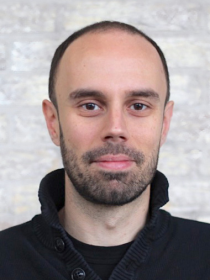
Dr. Evert van Nieuwenburg is an Assistant Professor at Leiden University, affiliated with both the Leiden Institute of Advanced Computer Science (LIACS) and the Leiden Institute of Physics (LION). His research bridges the fields of Quantum Physics , Machine Learning , and Condensed Matter Physics , with a focus on quantum algorithms, reinforcement learning, and quantum game development (e.g., Quantum TiqTaqToe ). He actively contributes to the Applied Quantum Algorithms (aQa) initiative and leads the QuantumPlayed subgroup for quantum games and education. Research Interests: AI-driven quantum experiment control, quantum machine learning, variational quantum circuits, and quantum games for education and intuition-building. Publications: 15+ peer-reviewed works spanning quantum error correction, phase transitions, reinforcement learning in quantum systems, and quantum dot array simulations. Community Engagement: Developer of educational quantum games, open science advocate, and active participant in interdisciplinary initiatives. Selected Trends: His work demonstrates AI's transformative role in quantum physics, from decoding error-correcting codes with graph neural networks to merging reinforcement learning with quantum control systems. Labs & Initiatives: Affiliated with the Applied Quantum Algorithms (aQa) initiative and co-founder of QuantumPlayed , where quantum mechanics meets game theory to engage diverse audiences.
Alexander Yarovoy is a Full Professor at the Faculty of Electrical Engineering, Mathematics and Computer Science at Delft University of Technology (TU Delft), specializing in Radar Systems, Antenna Design, and mm-Wave Technology. His research bridges theoretical and applied domains, with a focus on automotive radar, weather radar, and machine learning integration in radar signal processing. Active in radar, antennas, and microwave engineering Key contributions to automotive radar and human activity recognition Collaborates on datasets like RaDelft for autonomous driving Recent work explores OTFS radar for communication integration, polarimetric calibration, and high-resolution imaging algorithms. His research often addresses challenges in real-world applications, such as urban meteorology and vehicular safety. In 2023, he received the outstanding paper award at IEEE MetroAeroSpace for radar waveform coexistence studies. He participates in conferences and editorial activities, advancing radar metrology and phased array technologies.