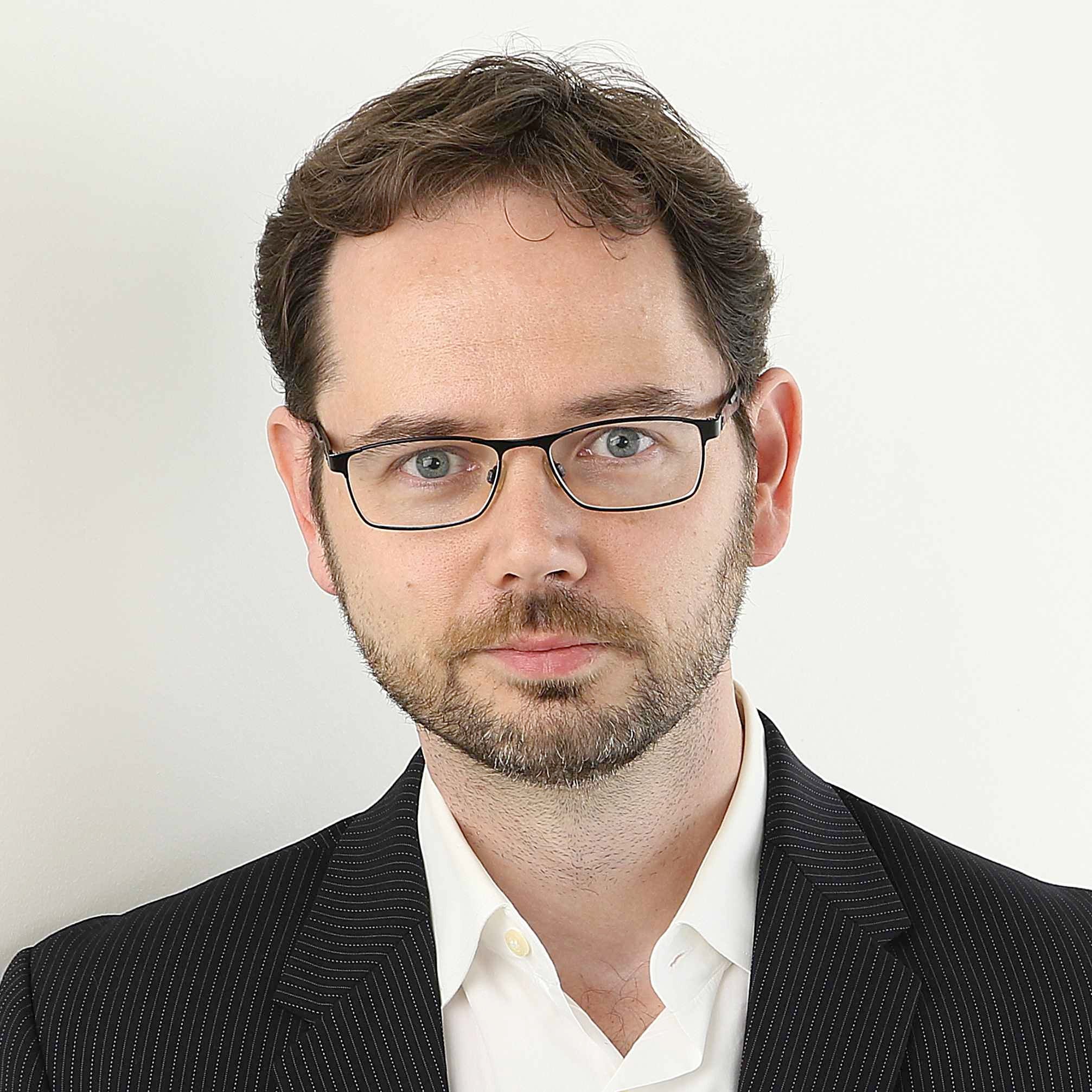
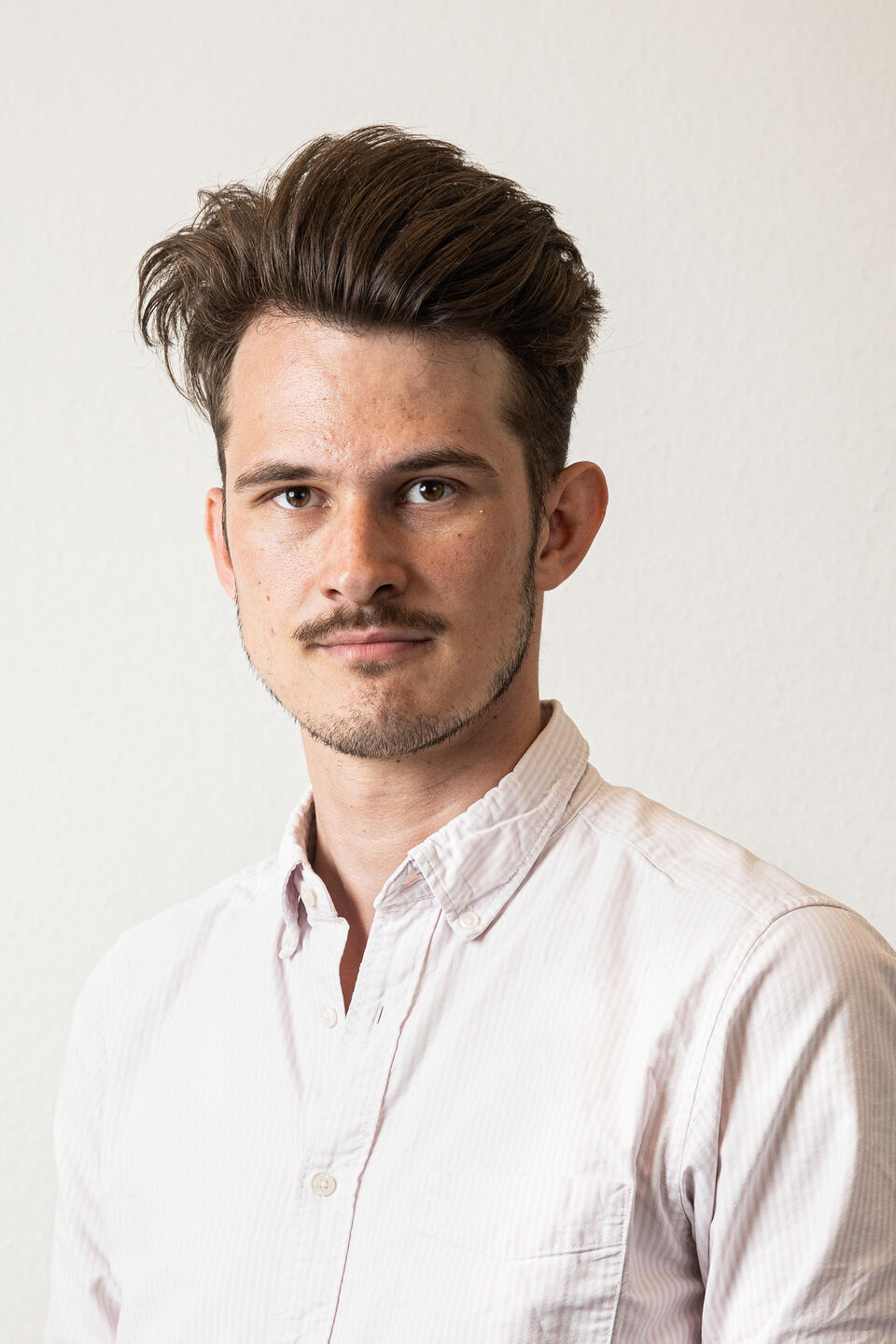
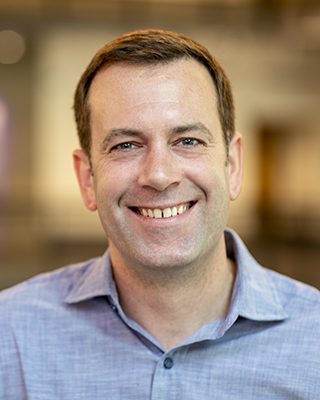
Mark Crowley is an Associate Professor in the Department of Electrical and Computer Engineering at the University of Waterloo , with a cross-appointment in the Cheriton School of Computer Science . He is actively involved in the Waterloo Artificial Intelligence Institute (WAII) , the Waterloo Institute for Complexity and Innovation (WICI) , and serves as National Secretary for the Canadian Artificial Intelligence Association (CAIAC) , coordinating the Canadian Conference on AI . Research interests span the theoretical and applied aspects of Reinforcement Learning , Deep Learning , Manifold Learning , and Ensemble Methods . His work addresses challenges in domains with spatial dynamics, multi-agent systems, and uncertainty, particularly in Computational Sustainability (forest fire management, sustainable forestry), Autonomous Driving , Medical Imaging , and Material Design . Recent research focuses on integrating causal modeling with generative representation learning to improve out-of-distribution robustness in motion forecasting applications. Key publications include foundational work on ChemGymRL environments for safe chemical process reinforcement learning, Generative Causal Representation Learning for robust forecasting, and collaborative work on multi-advisor reinforcement learning in multi-agent settings. He co-authored a textbook Elements of Dimensionality Reduction and Manifold Learning (Springer, 2023) with Prof. Ali Ghodsi and Prof. Fakhri Karray. Teaching includes graduate and undergraduate courses in Algorithm Design , Computational Intelligence , Reinforcement Learning , and Data Modeling at the University of Waterloo since 2018. His research group has produced several notable graduates including Benyamin Ghojogh (2021), who continued as a postdoc until 2022.
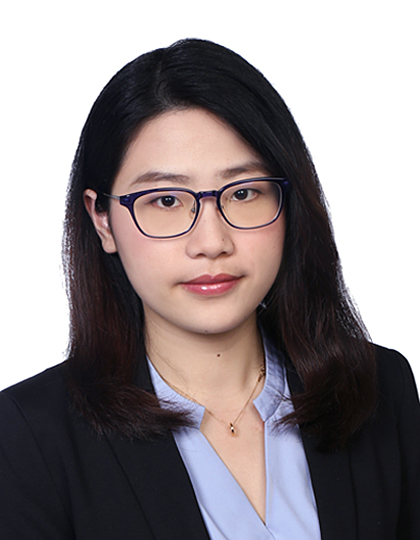
Yuan Tian is an Assistant Professor in the School of Computing at Queen's University, Faculty of Arts and Science. She holds a PhD in Information Systems from Singapore Management University (2017) and a B.Sc. in Computer Science from Zhejiang University (2012). Her research focuses on integrating heterogeneous data sources to enhance software engineering practices, including data mining, recommender systems, and social network analysis. Prior to Queen's, she was a data scientist at Living Analytics Research Centre (LARC), SMU. She has held visiting positions at Carnegie Mellon University, INRIA Paris, and SAIL Canada. Research Interests: Data Mining Software Engineering Social Network Analysis Information Retrieval Recommender Systems Computer Security Recent Research Trends: Her work emphasizes AI-driven solutions for software bug management, code translation, vulnerability detection, and developer behavior analysis. Notable contributions include leveraging LLMs for technical debt repayment and enhancing code vulnerability detection via Graph Neural Networks. Awards: SMU Presidential Doctoral Fellowship (2015-2016) Best Paper Award at SANER 2017 Grants & Advising: No formal advisees listed, but active in collaborative projects with industry and academic partners. Labs/Teams: Previously associated with SOAR Group at SMU and currently leads research in Queen's School of Computing.
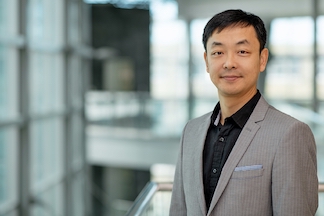
Yuanzhu Chen is a Professor in the School of Computing at Queen’s University, affiliated with the Faculty of Arts and Science. He previously served as Professor and Department Head at Memorial University of Newfoundland (2005–2021). His research focuses on computer networking, mobile computing, complex networks, and applied machine learning, emphasizing wireless innovation beyond traditional wired systems. He holds a PhD from Simon Fraser University (2004) and a B.Sc. from Peking University (1999). Education: PhD in Computing Science (Simon Fraser University, 2004); B.Sc. in Computer Science (Peking University, 1999). Earlier roles include Post-doctoral Researcher at Simon Fraser University (2004–2005) and leadership positions at Memorial University, including Department Head (2019–2021). Research Interests: Network Coding and Opportunistic Routing Mobile and Wireless Network Protocols Complex Network Analysis Machine Learning Applications Indoor Positioning Systems Social Network Dynamics Selected Awards: Recipient of Queen’s University President's Award for Distinguished Teaching. Lab Affiliation: Director of the Wireless Networking and Mobile Computing Lab (WineMocol). Active in collaborative projects involving smartphone sensors, community-based environmental monitoring, and stock market prediction using web data.
Sebastian Pokutta is a Professor at Technische Universität Berlin, Vice President at the Zuse Institute Berlin (ZIB), and Chair of the Cluster of Excellence MATH+ and MODAL. His research lies at the intersection of Artificial Intelligence, Optimization, and Machine Learning, with applications in sustainability, quantum computing, and mathematical discovery. Research Interests: Development of novel optimization algorithms, particularly Frank-Wolfe and Conditional Gradient methods. Integration of machine learning with decision-making and combinatorial optimization. AI for Science (AI4Science), including applications in quantum mechanics and ecology. AI and creativity, human-AI co-creativity, and social science modeling using multi-agent LLMs. His recent publications (2025) demonstrate a strong focus on scalable optimization, interpretability, and algorithmic foundations. The work spans theoretical advances in convergence analysis, practical implementations in Julia (FrankWolfe.jl), and real-world deployments in biomass estimation and quantum certification. Scientific Awards: Gödel Prize (2023) STOC Test of Time Award (2022) Science Prize of the Association for Pediatric Orthopedics (2025) Google Research Awards (2021, 2020) NSF CAREER Award (2015) He advises a vibrant research group, with former students and postdocs securing faculty positions at institutions like Inria, Carlos III University, and James Madison University. His group has received funding from Google, DFG, and Math+, and he leads major collaborative efforts such as the Thematic Einstein Semester on Mathematical Optimization for Machine Learning. Labs and Teams: Interactive Optimization and Learning Lab at TU Berlin and ZIB. Leadership in MODAL and MATH+ research clusters, fostering interdisciplinary collaboration in mathematical optimization and AI.
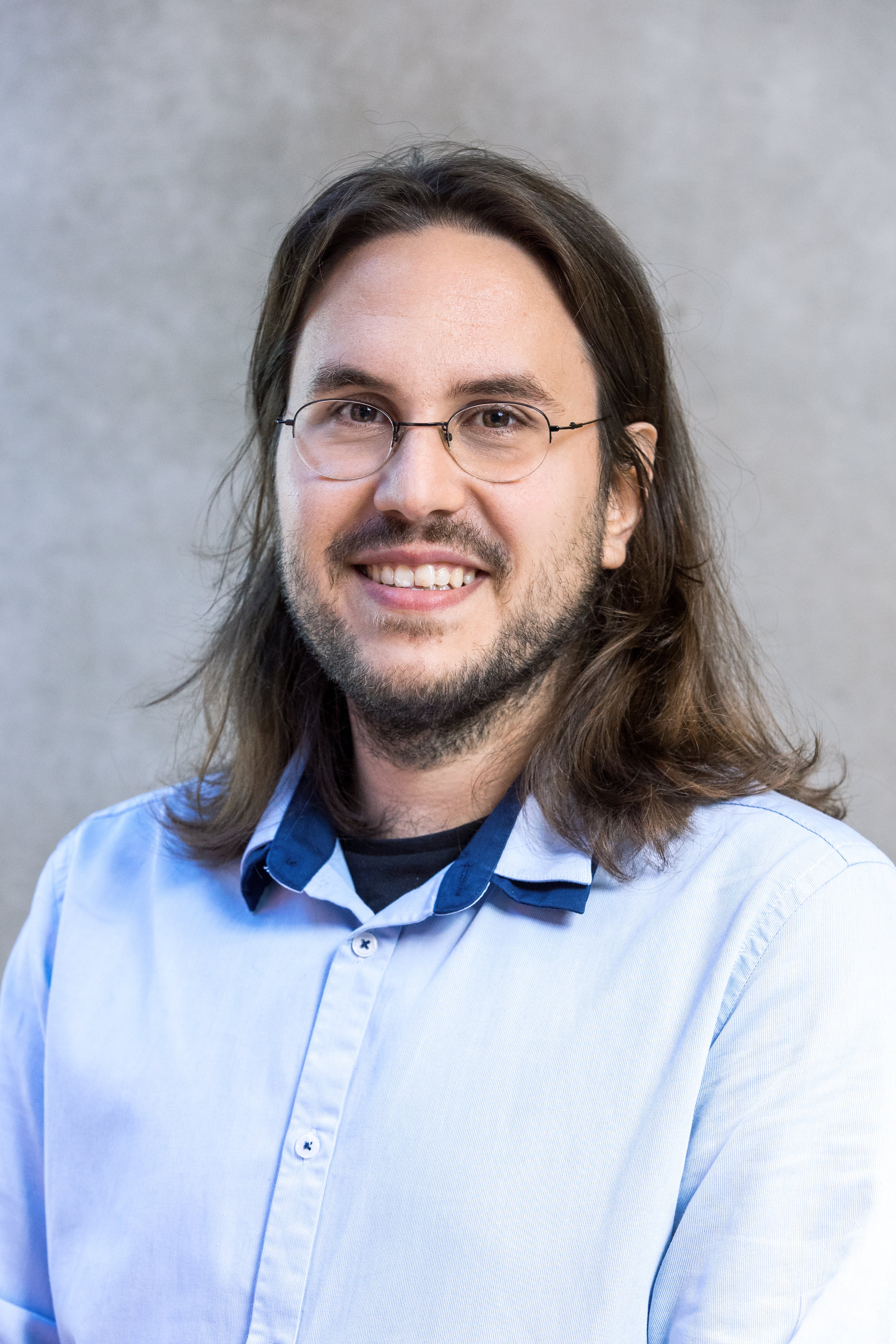
Sebastijan Dumancic is an Assistant Professor at Delft University of Technology, focusing on neuro-symbolic AI through program synthesis and probabilistic programming. He leads the RAIL lab and collaborates with institutions like Harvard, MIT, and CNRS. His research bridges symbolic AI and machine learning, applying program synthesis to scientific discovery, transportation, and robotics. He holds an FWO-funded PhD from KU Leuven and has participated in initiatives like ELLIS and the Symbolic Computation and Machine Learning Initiative. Program synthesis Probabilistic programming Neuro-symbolic AI Constraint-based learning His recent articles highlight advancements in program synthesis, neuro-symbolic integration, and constraint satisfaction. Projects like Find2Fix and Intelligent Greenhouse Horticulture (funded by NWO) demonstrate practical applications. ELLIS Membership University Teaching Qualification He supervises numerous MSc and PhD students in projects involving logic programming, program synthesis, and probabilistic modeling. Active in workshops and symposia, he contributes to neuro-symbolic AI and scientific discovery.
Wayne Springer is a Professor in the Department of Physics & Astronomy at the University of Utah, with a career spanning over 25 years. He has been actively involved in experimental particle astrophysics, ultra-high-energy cosmic ray (UHECR) physics, and gamma-ray astronomy. Ph.D. in Physics from University of Maryland (1991) B.S. in Physics from University of Maryland (1985) Postdoctoral training at University of Maryland and University of Alberta His research focuses on particle astrophysics, cosmic ray detection, and gamma-ray astronomy. He has made significant contributions to the development of the HiRes and Telescope Array cosmic ray observatories, as well as the HAWC and SWGO gamma-ray observatories. His recent work includes deployment of the Trinity neutrino detector prototype and serving as SWGO project manager for Chile site infrastructure. Article trends show strong emphasis on TeV gamma-ray observations (HAWC, SWGO), cosmic ray diffusion mechanisms, dark matter searches, and high-energy astrophysical source characterization (pulsars, microquasars, supernova remnants). He has secured multiple NSF grants for particle astrophysics research and leads detector working groups in international collaborations. Professor Springer actively participates in astronomy outreach, co-developing observatories and implementing computational physics teaching tools with Gradescope auto-graders for enhanced pedagogy. His work bridges experimental high-energy physics, detector development, and multiwavelength astrophysical studies.
Konrad Kollnig is an Assistant Professor at Maastricht University’s Faculty of Law, specializing in the intersection of law and technology. He leads the RegTech4AI project, which combines legal and technical methods to address challenges in the AI and digital platforms sector. His academic background includes a PhD and MSc from the University of Oxford and a BSc from RWTH Aachen, with his PhD thesis winning the prestigious Stefano Rodotà Award 2024. Research focuses on market power analysis in digital platforms, ethical AI governance, and privacy-preserving technologies. He developed the TrackerControl app (200,000+ downloads) to expose app tracking practices. His work has influenced EU, OECD, US FTC, and other regulatory bodies, and been featured in Forbes, Wired, and New Scientist. Key achievements include winning the United Nations Privacy Competition 2022 and the Best Student Privacy Paper Award 2022. He holds a five-year RegTech4AI project grant (€2.1M) funding six researchers. Talks and collaborations span institutions like Georgetown University, CNIL, and the Council of Europe. His interdisciplinary approach bridges computer science, law, and policy to address systemic risks in digital ecosystems.
Dr. Todd D. Murphey is a Professor of Mechanical Engineering at Northwestern University's Robert R. McCormick School of Engineering and Applied Science. He serves as Director of Transformative Research and Director of the Master of Science in Robotics Program at Northwestern, leading initiatives in computational dynamics, control systems, and robotics. His work bridges engineering, neuroscience, and biomedical applications, with a focus on developing systems that interact effectively with humans and their environments. Dr. Murphey received his Ph.D. in Control and Dynamical Systems from the California Institute of Technology in 2002, with a thesis titled "Control of Multiple Model Systems." Prior to that, he earned a B.S. in Mathematics, summa cum laude, from the University of Arizona in 1997. Dr. Murphey's research centers on computational methods in dynamics and control, with applications spanning neuroscience, health science, robotics, and automation. His work in the Interactive & Emergent Autonomy Lab focuses on computational models of embedded control, biomechanical simulation, dynamic exploration, and hybrid control. The group develops mathematical approaches that lead to orders of magnitude improvement in computational efficiency for real-time implementation. Key application areas include assistive exoskeleton control, stabilization of energy networks, bio-inspired active sensing, entertainment robots, robotic exploration, and software-enabled stroke rehabilitation. Analysis of Dr. Murphey's recent publications reveals a strong emphasis on human-swarm interaction, algorithmic matter, and control of cyber-physical systems in uncertain environments. His work increasingly integrates information theory with physical systems, exploring how both autonomous and biological systems interact with environments to learn and improve behaviors. Recent trends show growing applications in rehabilitation technology, with particular focus on human-machine interaction in biomedical devices and embodied intelligence. Dr. Murphey has received numerous honors and awards for his contributions to robotics and engineering: Named Director of Transformative Research at Northwestern University (2025) Appointed IEEE Robotics and Automation Society Vice President of Publication Activities (2022) Co-recipient of Best Paper Award for IEEE Transactions on Robotics (2020) Appointed to Air Force Scientific Advisory Board (2019) Recipient of ABB Best Student Paper Award for CPL-SLAM research (2019) Cole-Higgins Award from Northwestern Engineering (2015) Dr. Murphey has supervised numerous graduate students including Taosha Fan, Giorgos Mamakoukas, and Ian Abraham, with research spanning robotic exploration using electrosense and mechanical contact, human-in-the-loop control, and shared control for rehabilitation devices. His lab has secured significant funding from the National Science Foundation, DARPA, and industry partners including Siemens and Ekso Bionics, supporting research in algorithmic matter, emergent behavior, and human-swarm collaboration. The Interactive & Emergent Autonomy Lab, led by Dr. Murphey, investigates how both autonomous systems and biological systems interact with their environments to learn and improve behaviors. Current projects include active learning and data-driven control, active perception in human-swarm collaboration, algorithmic matter and emergent computation, control for nonlinear and hybrid systems, cyber physical systems in uncertain environments, harmonious navigation in human crowds, information maximizing clinical diagnostics, reactive learning in underwater exploration, robot-assisted rehabilitation, and software-enabled biomedical devices. The lab collaborates with researchers across Northwestern and institutions including Georgia Tech, MIT, and industry partners.
Dr. Song Jiang is a Professor in the Department of Computer Science and Engineering at The University of Texas at Arlington (UTA). He holds a PhD from the College of William and Mary (2004) and has held academic positions at institutions such as Wayne State University and Los Alamos National Laboratory. His research focuses on system infrastructure for large language models (LLMs) and big data processing, including GPU/CPU memory systems, file and storage systems, and high-performance computing (HPC) I/O systems. He has received significant funding from the National Science Foundation (NSF) and industry partners like VMware and Tencent. Education: B.S. and M.S. from University of Science and Technology of China (1993, 1996), Ph.D. in Computer Science from College of William and Mary (2004). Postdoctoral research at Los Alamos National Laboratory (2004–2006). Research interests include file and storage systems, data management, big data analytics, and optimizing computing architectures for AI/ML. Key contributions include the LIRS replacement algorithm (adopted in MySQL and NetBSD), CLOCK-Pro page replacement (used in Linux), and swap token algorithms (Linux kernel). Awards include the 2022 ACM SIGMETRICS Test of Time Award and 2009 NSF CAREER Award. His work has led to 15+ patents and impactful industry collaborations with Facebook, Baidu, and others. Advising: Supervised 14+ PhD/Master’s students, including current advisees Chen Zhong and Sujit Maharjan. Active roles in doctoral committees and thesis supervision. Grants: Over $2.5M in NSF funding for projects like 'Software Defined Cache for Index Search' and 'Taming Small Data Writes'. Industry grants include VMware’s $240K project on distributed key-value storage. Labs/Teams: Leads research on persistent memory systems, key-value stores, and LLM infrastructure through UTA’s CSE department and collaborations with industry partners.
Abdullah Muzahid is an Associate Professor in the Department of Computer Science and Engineering at Texas A&M University (since August 2024), previously serving as an Assistant Professor there since August 2018. Prior, he held an Assistant Professor role at the University of Texas at San Antonio (2012-2018). He earned his Ph.D. from the University of Illinois at Urbana-Champaign (2012), focusing on architectural support for debugging concurrency bugs under Prof. Josep Torrellas. Education: Ph.D., Computer Science, University of Illinois at Urbana-Champaign (2012) M.S., Computer Science, University of Illinois at Urbana-Champaign (2009) B.S., Computer Science and Engineering, Bangladesh University of Engineering and Technology (2005) Research Interests: His work spans Computer Architecture , Systems , and Artificial Intelligence , with focus on multiprocessor architecture, parallel programming, debugging, and applying machine learning to system optimization. Recent projects include cache indexing via entropy estimation, DNN training acceleration, and hardware-software co-design for security. Awards: NSF CAREER Award (2017) Excellence in Research Award (UTSA, 2015 & 2017) W. J. Poppelbaum Award (UIUC, 2012) Intel Ph.D. Fellowship (2011) Grants & Advising: He leads NSF-funded projects on robust deep learning and stream processing systems. Advised 5 PhD graduates and currently mentors 4 PhD students. Served on program committees for ISCA, HPCA, MICRO, and as NSF panelist. Labs/Teams: Active in Texas A&M’s Computer Architecture group, collaborating on machine programming, hardware security, and AI-driven systems optimization.
Matias Zaldarriaga is the Richard Black Professor in the School of Natural Sciences at the Institute for Advanced Study (IAS), Princeton. His research focuses on theoretical cosmology, gravitational waves, and the Cosmic Microwave Background (CMB). He has held previous faculty positions at Harvard University (2003-2009) and New York University (2001-2002). Education: Ph.D. in Physics, Massachusetts Institute of Technology, 1998 Licenciado en Ciencias Físicas, Universidad de Buenos Aires, 1994 Zaldarriaga's work centers on decoding the early universe through CMB analysis and gravitational-wave astrophysics. He investigates inflation, large-scale structure formation, and black hole dynamics, leveraging advanced statistical methods to probe fundamental physics from cosmological data. His recent publications (2023-2025) demonstrate a strong focus on gravitational-wave data analysis, including novel algorithms for detecting binary black hole mergers, constraints on inflationary physics from large-scale surveys, and modeling supermassive black hole evolution. Key themes include higher-order waveform harmonics, pulsar timing arrays, and computational innovations for gravitational-wave astronomy. Awards and Honors: Gruber Cosmology Prize (2021) MacArthur Fellowship (2006) European Physical Society Gribov Medal (2005) Sloan Fellowship (2004) Helen B. Warner Prize, American Astronomical Society (2003) Packard Fellowship (2001) He collaborates extensively with international teams (e.g., LIGO-Virgo-KAGRA, DESI) and mentors researchers in cosmology and astrophysics. His group develops open-source tools for gravitational-wave inference and cosmological parameter estimation.
Hassan Z. Ashtiani is an Associate Professor in the Department of Computing and Software within the Faculty of Engineering at McMaster University. His academic profile shows consistent engagement in both teaching and research activities, with evidence of active participation in major machine learning conferences and journals through 2025. Dr. Ashtiani's research focuses on the theoretical foundations of machine learning, with particular expertise in privacy-preserving algorithms, Gaussian mixture models, and adversarial robustness. His work bridges statistical learning theory with practical algorithm design, often addressing fundamental questions about sample complexity and computational efficiency in learning systems. A significant portion of his recent work explores the intersection of differential privacy with statistical learning, developing methods for private density estimation and distribution learning. Analysis of his publication record reveals a strong trend toward increasingly sophisticated theoretical frameworks for private and robust learning. His work consistently appears in top-tier venues including NeurIPS, ICML, COLT, and ALT, with recent contributions extending into agnostic private density estimation and robust learning with tolerance. The research demonstrates progression from foundational work on nearest neighbor search and clustering algorithms toward more complex problems in private learning of high-dimensional distributions. Dr. Ashtiani teaches across multiple levels of computer science education, including undergraduate courses in Automata and Computability (COMPSCI 2AC3) and Principles of Programming (COMPSCI 2S03), as well as graduate-level courses such as Fundamentals of Machine Learning (COMPSCI 4ML3) and Theoretical Foundations of Unsupervised Learning (CAS 775). His teaching portfolio shows consistent involvement in machine learning education since at least 2019, with evidence of teaching multiple sections each academic year. His scholarly impact is reflected in mentions across 3 news outlets, reference in 1 policy source, engagement from 7 X users, and 90 readers on Mendeley, suggesting growing recognition of his contributions to theoretical machine learning.
Byron Boots is the Amazon Professor of Machine Learning in the Paul G. Allen School of Computer Science and Engineering at the University of Washington, where he directs the UW Robot Learning Laboratory. He also serves as a Principal Research Scientist in the Seattle Robotics Lab at NVIDIA Research and co-chairs the IEEE Robotics and Automation Society Technical Committee on Robot Learning. Dr. Boots received his Ph.D. from the Machine Learning Department in the School of Computer Science at Carnegie Mellon University, where he was a member of the Sense, Learn, Act (SELECT) Lab co-directed by Carlos Guestrin and his advisor Geoff Gordon. Prior to joining the University of Washington faculty, he was an Assistant Professor in the School of Interactive Computing within the College of Computing at Georgia Tech, and before that, he completed a post-doc in the Robotics and State Estimation Lab directed by Dieter Fox at the University of Washington. Professor Boots' research focuses on the intersection of machine learning, artificial intelligence, and robotics, with particular emphasis on developing theory and systems that tightly integrate perception, learning, and control. His work spans computer vision, state estimation, localization and mapping, high-speed navigation, motion planning, and robotic manipulation. His group develops algorithms drawing from deep learning and neural networks, nonparametric statistics, graphical models, nonconvex optimization, quantum physics, online learning, reinforcement learning, and optimal control. The research demonstrates a strong theoretical foundation while maintaining practical relevance to real-world robotic systems. His recent publications reveal a clear trend toward integrating advanced machine learning techniques with robotics, particularly in model predictive control, motion planning, and learning-based approaches to robot control. His work shows increasing focus on developing theoretically grounded methods that can handle the complex, nonlinear dynamics of real-world robotic systems while maintaining computational efficiency. The publications span top venues including ICRA, CoRL, IROS, and NeurIPS, demonstrating broad impact across multiple subfields of robotics and AI. Finalist for Best Systems Paper at Conference on Robot Learning (CoRL-2021) Multiple papers selected for oral presentations at top robotics conferences Work recognized for theoretical contributions and practical applications in robot learning As director of the UW Robot Learning Laboratory, Boots leads a vibrant research group focused on fundamental and applied research in robot learning. The lab maintains strong collaborations with NVIDIA Research and has produced numerous high-impact publications that bridge theory and practice. Professor Boots teaches courses in autonomous robotics, machine learning, and reinforcement learning, contributing to both undergraduate and graduate education at the University of Washington.
Maciej Zięba is an academic researcher affiliated with the Faculty of Information and Communication Technology at Wrocław University of Science and Technology, specifically within the Department of Artificial Intelligence . His work spans machine learning, deep learning, and computer vision, with a focus on hyperspectral imaging, autonomous systems, and 3D modeling. Recent research includes uncertainty-aware sensor deployment for autonomous vehicles, low-light image enhancement algorithms, and probabilistic regression frameworks for tabular data. He has co-authored publications on flow-based models, hypernetworks, and neural radiance fields (NeRF) applied to 3D face rendering. Contact: maciej.zieba@pwr.edu.pl
Xiaowen Zhang is a Professor of Computer Science at the College of Staten Island (CSI), City University of New York (CUNY), and a Doctoral Faculty Member at the CUNY Graduate Center. His academic work bridges theoretical and applied research in cybersecurity, information systems, and network technologies. Dr. Zhang holds a Ph.D. in Computer Science from the CUNY Graduate Center (2007) and a Ph.D. in Electrical Engineering from Northern Jiaotong University (1999), along with an M.A. from CUNY Queens College, an M.S. from Northern Jiaotong University, and a B.S. from Shanxi University. His research focuses on Cryptography, Information Security, Cybersecurity, Secure Biometrics, RFID Security & Privacy, Information Retrieval, and Wireless Sensor Networks . He explores both foundational cryptographic methods—such as secret sharing schemes and hash functions—and their practical implementations in secure systems, including RFID authentication protocols and data visualization platforms for sensor networks. The analysis of his recent publications reveals a consistent focus on security mechanisms in distributed and wireless environments . His work frequently combines cryptographic theory with system-level implementations, particularly in RFID and sensor networks. There is a strong trend toward privacy-preserving protocols, efficient data retrieval, and secure information sharing , often leveraging mathematical structures like Latin squares and Bloom filters. Dr. Zhang has been actively involved in mentoring students, as evidenced by numerous co-authored publications with graduate and undergraduate researchers. His contributions span journals such as Security and Communication Networks , Journal of Applied Security Research , and International Journal of Security and Networks , as well as major conferences including IEEE LISAT, ACM CODASPY, and IEEE Sarnoff Symposium.