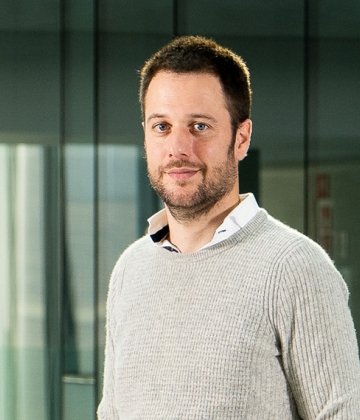
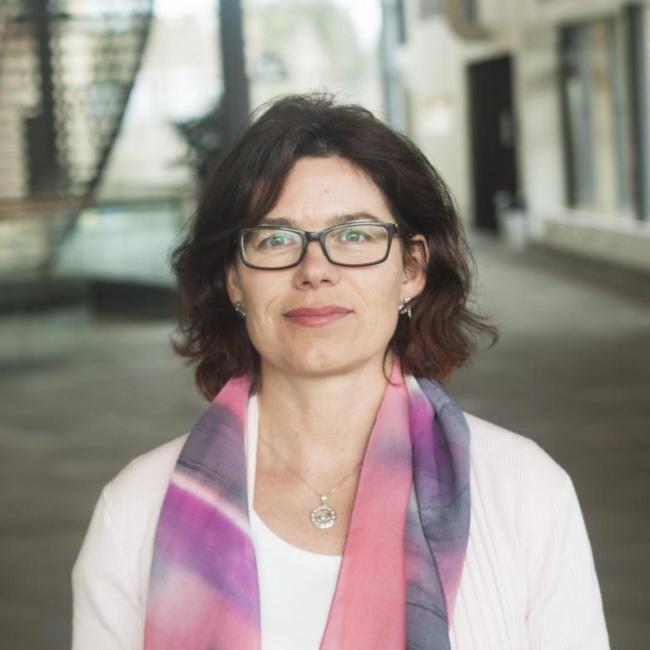
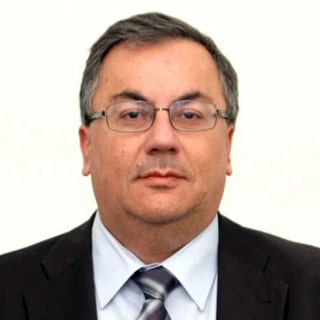
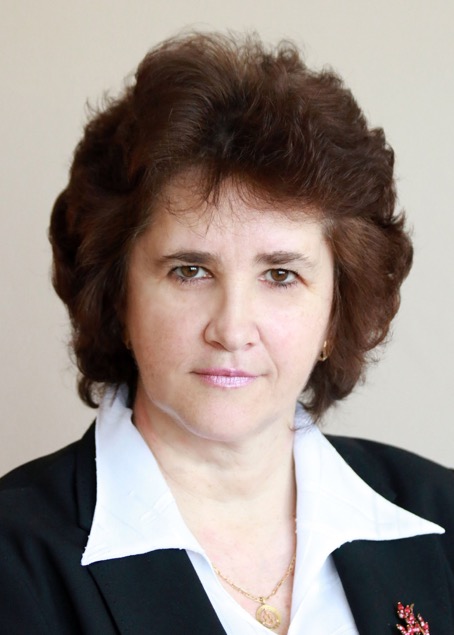
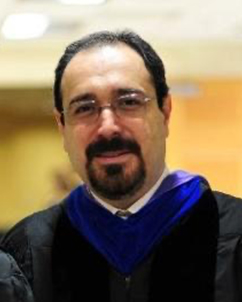
Dr. Awais Mashkoor is a Lecturer in Collaborative Health and Social Care at the University of the West of Scotland, specializing in governance, leadership, and policy implementation within integrated care systems. His research focuses on health and social care integration, workforce development, and collaborative governance, with particular emphasis on equity and sustainability. He holds a PhD examining the role of local political leaders in shaping Scotland’s health and social care integration policies. Dr. Mashkoor collaborates with key stakeholders including the Scottish Government, NHS Scotland, and the Convention of Scottish Local Authorities (COSLA). His teaching integrates scenario-based learning and digital tools, contributing to programs like the Master of Public Administration (MPA). He actively advises on workforce challenges and anticipatory care models within Scotland’s National Care Service (NCS). His research spans qualitative methods (elite interviews, documentary analysis), policy impact assessment, and knowledge mobilisation. Current projects explore leadership in NCS development and digital tools for public participation in care decisions.
Julien Sauvagnat is a Professor in the Department of Finance at Bocconi University and a Research Affiliate at CEPR. He holds a Master’s from HEC School of Management and a Ph.D. from Toulouse School of Economics. His research focuses on corporate finance, production networks, and international trade. He has published in top-tier journals like the Journal of Finance and Quarterly Journal of Economics . Education: Ph.D. in Economics, Toulouse School of Economics Master’s in Economics, HEC School of Management Research Interests: His work explores how corporate finance interacts with real economic factors, including production networks’ effects on policy and trade dynamics. Recent studies analyze labor market impacts of loan programs, executive talent scarcity, and carbon taxation. Publications Trends: His 2020s research emphasizes pandemic economic responses, overconfidence in corporate lending, and gender dynamics in politics. Earlier work focused on leniency programs in antitrust contexts and CEO pay structures. Awards & Grants: No specific awards listed, but his work has been cited in major policy discussions. Active in grant-funded projects related to labor markets and environmental economics. Labs/Teams: Collaborates extensively with CEPR networks and maintains affiliations with global finance research groups.
Linda Lundgaard Andersen is Professor at Roskilde University's Department of People and Technology, where she directs research on social innovation, welfare systems, and organizational ethics. Her academic leadership includes heading the PhD School for People and Technology. Research examines social entrepreneurship, co-production in public services, civil society dynamics, and learning processes within welfare organizations, utilizing ethnographic and psychoanalytic methodologies. Her work critically evaluates neoliberal transformations in public sector governance. Recent publications analyze collaborative governance in Nordic welfare states, arts-based social innovation, and voluntary sector infrastructures. Article trends reveal consistent engagement with institutional change, participatory methodologies, and critical analyses of welfare transformations. Journal of Research Practice, Best Reviewer Award (2012) Roskilde Universitets pris i socialt entreprenørskab og social innovation (2013) Leads international projects including NOS (Coproduction in Nordic Welfare States) and directs CDL-SQI research on software quality. Supervises doctoral candidates and develops curricula in social entrepreneurship and organizational studies.
Artem Korzhenevych is a Professor of Economics with a focus on Environmental, Urban, and Regional Economics at the Technical University of Dresden. He serves as Editor-in-Chief of the Review of Regional Research / Yearbook for Regional Science . His research spans regional economics, transport policies, environmental modeling, and sustainability transformations. PhD from Kiel University (2002-2004), supervised by Prof. Johannes Bröcker Master's and Bachelor's in Economics and Business Administration from Kyiv-Mohyla Academy (Ukraine) His work emphasizes CGE modeling and spatial economic analysis , with projects on marine spatial planning (MSP-SpaCeParti), transformative innovation (SOT-INNO), climate adaptation (Klimakonform), and sustainable transport (InfairCom). The 15 most recent articles highlight his expertise in environmental policy, regional development, fisheries economics, and climate-resilient urbanization. His professional experience includes roles at the Leibniz Institute of Ecological Urban and Regional Development (IOER Dresden) since 2014, DIW econ GmbH (2010–2011), and the Kiel Institute for the World Economy (2005–2011).
Jurgita Joniškienė is an Associate Professor at Šiauliai University's Faculty of Social Science, Humanities and Arts, Department of Business and Public Management. She holds a PhD in Social Sciences (2017) and has extensive experience in academic and applied research focusing on cross-sectoral partnerships, NGO roles in civil society, and regional governance. Her career includes roles as a lecturer, project coordinator for international joint programs, and North Lithuanian Programme Leader at SOS Children's Villages Lithuania. Her research emphasizes collaborative value creation in partnerships between NGOs, businesses, and public institutions, with notable contributions to studies on regional innovation systems, e-governance, and democratic participation. She has coordinated EU-funded projects enhancing social support services and internationalizing academic programs. Key projects include developing the 'Regional Socio-economic Policy and Governance' joint master's program and analyzing municipal cooperation in CEE countries. Her work often bridges theoretical frameworks with practical policy implementation, particularly in Lithuania and comparative contexts like Slovakia and Poland. She has presented at international conferences such as the NISPAcee Annual Conference and authored/co-authored over 20 peer-reviewed articles and books on governance, innovation systems, and public administration reforms. Her teaching focuses on methodologies for social research, EU policy, and NGO management.
Nadir Kinossian is a Researcher at the Leibniz Institute for Regional Geography (IfL) in Leipzig, Germany, where he has been employed since March 2015. He serves as Project Manager in the Department of Regional Geography of Europe, focusing on Multiple Geographies of Regional and Local Development. His academic career spans institutions across Europe and Russia, with significant contributions to post-socialist urban studies and Arctic geography. Education: PhD in Urban Planning from Cardiff University (2010), dissertation: "Governing a regional capital in Russia. The pursuit of competitiveness and identity: A case study of Kazan" MA in Political Science from University of Missouri, St. Louis (2005) MA in Urban Planning from Cardiff University (2002) Diploma in Architecture from Kazan State Academy of Architecture and Civil Engineering, Russia (1996) Kinossian's research centers on spatial planning, urban governance, cultural landscapes, and theoretical aspects of spatial polarization and peripherization, with particular expertise in post-socialist urban development and Arctic geography. His work critically examines urban transformations in Russia and comparative urbanism across the Global East, often focusing on the interplay between state power, urban identity, and spatial restructuring. He has made significant contributions to understanding how post-socialist cities navigate global influences while maintaining local identities. His publication record shows consistent output in top geography journals, with recent work focusing on post-socialist urban theory, Londongrad's financial geography, Arctic cultural landscapes, and the concept of 'left behind places.' Kinossian's research demonstrates a clear trajectory from studying specific post-socialist urban contexts toward broader theoretical contributions in comparative urbanism, with increasing attention to global connections and geopolitical dimensions. Academic Service: Co-editor of Raumforschung und Raumordnung | Spatial Research and Planning Co-editor of Eurasian Geography and Economics Editorial Board member for Urban Development Issues Committee member for Regional Studies Association Publications Committee Board member of Regional Studies Association Russia Division Editorial committee member for Geography Compass Kinossian has led and contributed to significant research projects including "Beyond 'Left Behind Places'," "Agents of Change in Old-Industrial Regions of Europe (ACORE)," and "Cities 'after decline': Urban Revival in the USA and Russia." His work bridges academic research with policy relevance, particularly in regional development and urban governance contexts. At the IfL, he contributes to the research workshop on Multiple Geographies of Regional and Local Development and participates in the EEGA Science Campus initiative.
Inga Narbutaite Aflaki is a Senior Lecturer in Political Sciences at Karlstad University's Department of Political, Historical, Religious and Cultural Studies within the Faculty of Arts and Social Sciences. Her research focuses on governance innovation, public sector partnerships, and social policy reforms. She has published extensively on co-creation frameworks, asylum-seeking children's integration, and political entrepreneurship theories. Key areas include analyzing collaborative governance models between public and civil society sectors, particularly in contexts of refugee reception and policy implementation challenges. Her work emphasizes institutional adaptability and frontline management strategies, with notable contributions to understanding how partnerships can drive social innovation. Recent publications address governance resilience in the face of systemic risks (2024), co-creation's role in public service transformation (2022-2024), and cross-national welfare system responses to asylum seekers (2019). Key Themes: Policy implementation, intersectoral collaboration, migrant integration Awards: None explicitly stated Labs/Teams: Engaged with public sector innovation networks in Gothenburg and regional policy think tanks
Pantelis Sklias is a Professor of International Political Economy and has served as the Rector of Neapolis University Pafos since 2018. He holds a Ph.D. in International Relations and International Political Economy (IPE) from the University of Sussex (UK). His academic career includes teaching roles at institutions such as the University of Macedonia, Democritus University of Thrace, and the Hellenic Open University. Sklias has also held leadership positions, including Dean of the School of Security and Global Studies at the American University in the Emirates (2017–2018) and President of the Rectors’ Conference for Cypriot Universities since 2020. His research focuses on international political economy , with particular emphasis on European integration, economic crises, and regional development in Southeastern Europe. Key areas of interest include the political economy of the Greek crisis, EU-CEE relations, energy security, and the impact of globalization on governance. He has authored numerous articles analyzing the effects of austerity policies, healthcare systems during the pandemic, and the geopolitical dimensions of economic power. Sklias has contributed to academic governance through roles such as Chair of the Department of Political Science and International Relations at the University of the Peloponnese (2013–2017) and membership in Cyprus’ Quality Assurance Agency (2016–2018). His work bridges theoretical frameworks with real-world policy challenges, emphasizing sustainable development and institutional resilience in crisis contexts.
Erika Neubauerová is an Associate Professor at the Department of Finance, Faculty of Economics and Finance, University of Economics in Bratislava. Her academic focus lies in Public Finance, Local Finance, Fiscal Decentralization, and Gender-Responsive Budgeting. She has held various leadership roles, including Head of the Public Finance Section and Deputy Dean for Educational Activities. Her research projects include APVV-19-0108 (2020–2023) on innovation in municipal budgeting and APVV-15-0322 (2016–2023) on regional competitiveness. She has served on numerous academic committees, including the Department of Public Administration and the Erasmus program. Her publications span fiscal policy analysis, healthcare funding, and public sector economics. Notable works include 'Financie Domácností' (2020) and 'Impact of the COVID-19 Pandemic on Slovak Local Governments' (2021). Awards include the 2015 Economics University Award for her textbook 'Financie' and the 1999 Literary Prize for contributions to financial literature. Neubauerová has international collaborations, including projects with Polish and Czech universities, and has participated in EU-funded initiatives like the Public Management Platform between Austria and Slovakia.
Aodh Quinlivan is a Senior Lecturer in the Department of Government at University College Cork (UCC), where he directs the BSc and MSc Government programs. He joined UCC in 2000 after working in Cork County Council (1994–2000), completing his PhD part-time. Promoted to 'Above the Bar' lecturer in 2005, his expertise lies in local government and public management. He has authored influential books like All Politics is Local (2009) and Innovation and Best Practice in Irish Local Government (2009), and is a leading scholar in Irish local governance. Education: BComm (1994, UCC), PhD (2000, UCC), Postgraduate Certificate in Teaching & Learning (2010, UCC). Research: Focuses on local government reform, public sector management, and multi-level governance. He chairs the Local Government Specialist Group of the Political Studies Association of Ireland. Awards: 2011 Staff Recognition Award for Enhancing the Student Experience. Consultancy: Advised Cork City Council, the Association of Municipal Authorities of Ireland, and Irish Government committees on local government reforms. Outreach: Delivered public lectures on local democracy and participated in national policy debates. His research emphasizes practical engagement with local authorities, bridging academic and policy realms. Recent work critiques local government restructuring and advocates for democratic resilience in austerity contexts.
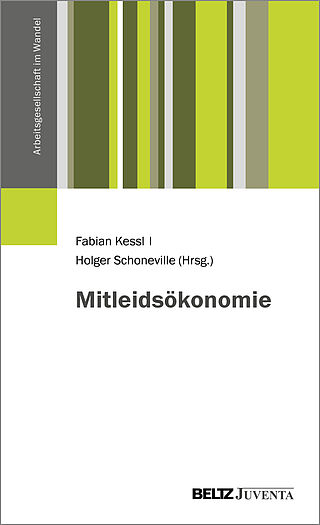
Fabian Kessl is a Professor of Social Pedagogy at the University of Wuppertal , affiliated with the Institute of Educational Science under the Faculty of Humanities and Social Sciences. His work critically examines the transformation of welfare state arrangements, focusing on education, upbringing, and care institutions within the new compassion economy , social space research , and boundary work . Research Themes: Welfare state restructuring and its impact on social pedagogy Compassion-based poverty relief systems as shadow welfare Spatial dynamics in educational and social work practices Institutional power structures and professional ethics Scientific Contributions: The Compassion Economy (2024) book co-edited with Holger Schoneville explores donation-based poverty alleviation systems like food banks. His 2022 monograph Der Gebrauch der eigenen Kräfte analyzes neoliberal activation policies in social work through governmentality theory. Articles span topics from 2011-2024, including precarization in pedagogy (2021), responsibility frameworks (2023), and spatial research (2016).
Vedat G. Diker is the Associate Dean for Academic Affairs at the College of Information Studies (iSchool) at the University of Maryland, College Park. He holds the rank of Principal Lecturer and serves as the Program Director for the M.S. in Human-Computer Interaction (HCIM). He earned his PhD from SUNY Albany and has a distinguished career in academia and research. His research focuses on modeling socio-economic systems, social impacts of information technologies, data science, and human-computer interaction. He leads the Campus Computation Center: Support, Enrichment & Computing Identity Development to Boost STEM Success project, aimed at enhancing STEM education through computational tools. Dr. Diker has taught numerous courses, including Database Design and Modeling , Managing with Data and Simulations , and Database Design . His teaching spans over two decades, emphasizing practical applications of information science principles. His publications explore system dynamics modeling, open online collaboration, and strategic decision support systems. Notable works include developing the XMILE XML standard for system dynamics models and frameworks for analyzing university management dynamics. He has advised students across various programs but maintains strict policies on reference letters, requiring direct supervision or exceptional academic performance for consideration.
Professor Jostein Rosfjord Askim is affiliated with the Department of Political Science at the University of Oslo, within the Faculty of Social Science. His academic roles include serving as a board member of the Institute for Social Research and leader of electoral boards. He holds a Dr. polit. (PhD) from the University of Oslo (2007) and advanced degrees in Political Science and Public Administration. His research spans public policy theory, political-administrative relations, and ministerial steering of agencies at the MA and executive MA levels. Education highlights include a Cand. polit. from the University of Oslo (2002) and an MSc in Public Administration from the London School of Economics (2001). His career includes roles at PwC (2009–2011), the University of Oslo (2003–2009), and the Norwegian Ministry of Local Government (2003). Research interests focus on governance structures, administrative reform, and performance management. His work examines political leadership dynamics, intergovernmental relations, and crisis governance, as seen in analyses of Norway’s policy endurance and Denmark’s Minkgate scandal. Key contributions include evaluating Norway’s pandemic response (Coronakommisjonen) and co-authoring studies on local government amalgamations and bureaucratic responsiveness. His publications span journals like Public Administration Review and Journal of Public Policy , emphasizing institutional decision-making and policy implementation challenges. Commissions include advisory roles on constitutional amendments, governance relations with courts, and disability rights. His research group, Policy, Bureaucracy, and Organization (PBO), explores governance mechanisms and political-executive interactions.
James B. Thomson is a Professor of Finance and Senior Associate Dean at the University of Akron's College of Business Administration. Previously, he served as Interim Dean and held senior roles at the Federal Reserve Bank of Cleveland, including Vice President and Financial Economist. He earned his PhD and MA in economics from The Ohio State University and a BS from The Georgia Institute of Technology. Research Focus: Financial markets and institutions, federal deposit insurance, bank regulation, small business lending, credit spreads, and financial stability. Key Publications: His work spans topics like credit market feedback, financial crisis resolution, and systemic risk mitigation, appearing in journals such as the Journal of Finance and Journal of Banking and Finance . Awards: Recognized with a Fellow designation at the FDIC Center for Financial Research and an Outstanding Paper award at the Eastern Finance Association Meetings. Service: Active in academic and professional service, including editorial roles and committee memberships at the University of Akron and the Federal Reserve Bank of Cleveland.
Aleksandra Wiącek-Burmańczuk is an Adjunct Professor at the Department of Labour Law, Institute of Legal Sciences, Faculty of Law and Administration, Maria Curie-Skłodowska University (UMCS) in Lublin, Poland. She specializes in Labour Law, Employment Law, and related legal disciplines. Current academic position: Adjunct Professor Department: Department of Labour Law University: Maria Curie-Skłodowska University Faculty: Faculty of Law and Administration Research interests include: Labour and employment law frameworks Local self-government legal mechanisms Corporate restructuring processes (mergers, splits, liquidations) Workplace transfer regulations Cultural institutions' legal operations She maintains an active academic schedule with regular office hours (in-person and via MS Teams) and has published 6 works with a total ministerial score of 396.