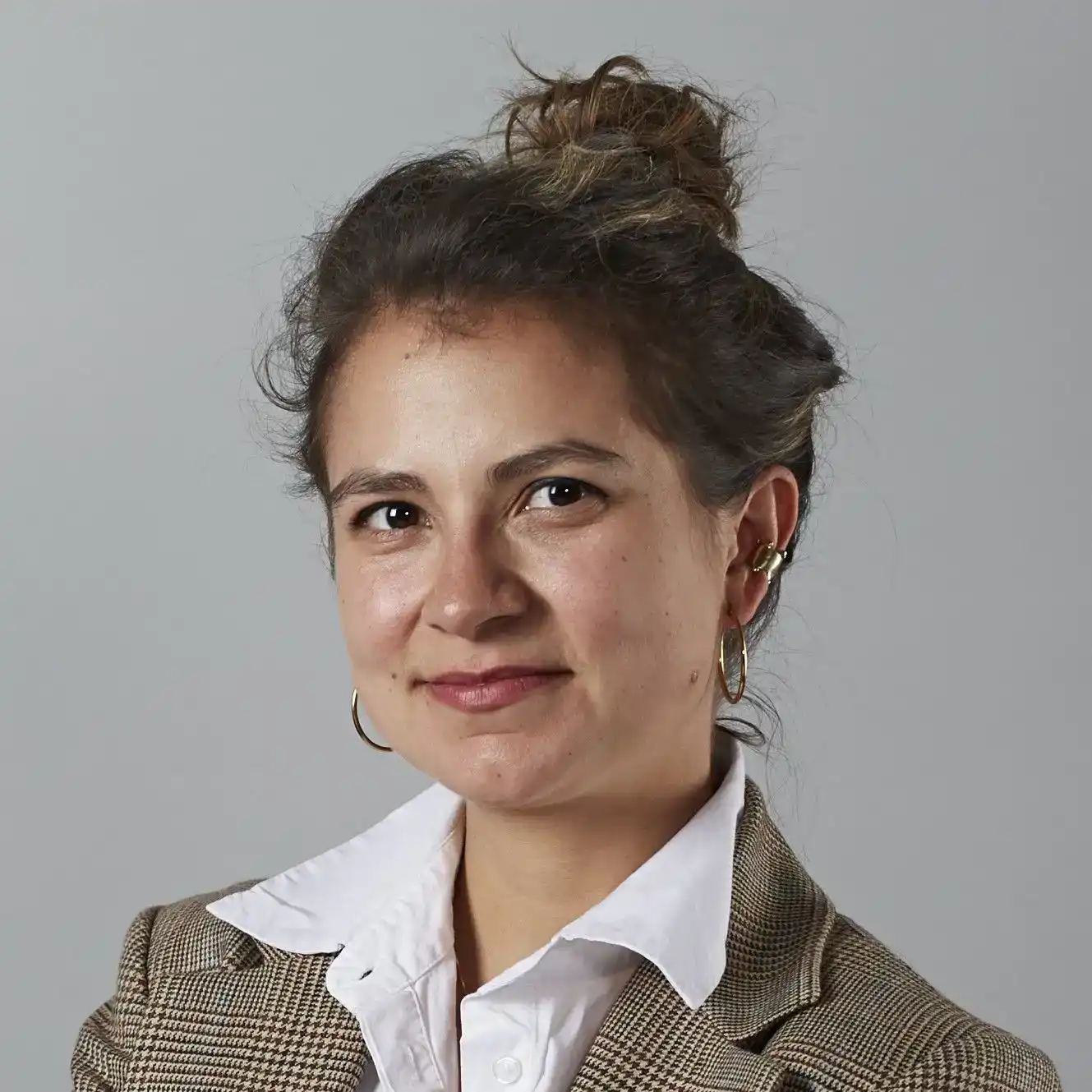
Beatriz Botero Arcila is an Assistant Professor of Law at Sciences Po Law School and a Faculty Associate at the Berkman Klein Center for Internet and Society at Harvard University. She specializes in the governance of data, artificial intelligence, and digital surveillance. LLM and Doctorate from Harvard Law School Research Focus : Law of the Digital Economy Privacy Law / Global Data Law Surveillance Law Legal Theory Scientific Awards : Future of Privacy Forum's 14th Annual Privacy Papers Award (2024) Labs & Teams : Co-founder of The Edgelands Institute, a pop-up institute incubated at the Berkman Klein Center focused on digital surveillance and cities.
Prof. Noam Noked is an Associate Professor at the Faculty of Law, The Chinese University of Hong Kong, specializing in tax law and policy. He serves as Director of the Faculty’s Ph.D. and M.Phil. programs and is an Honorary Secretary of Hong Kong’s Joint Liaison Committee on Taxation. Education: Doctor of Juridical Science (S.J.D.), Harvard Law School LL.M. (requirements fulfilled, degree waived), Harvard Law School LL.B., Tel Aviv University Faculty of Law B.A., Accounting Department, Tel Aviv University Research Interests: Tax policy and international taxation Tax administration and compliance Law and economics intersections His work focuses on combating offshore tax evasion, mandatory disclosure rules, and aligning domestic tax frameworks with global minimum standards. Scientific Awards: Research Excellence Award (2023-24) Young Researcher Award, CUHK (2020) John M. Olin Prize for Best Paper in Law & Economics (2010) Research Grants: HK$481,000 General Research Fund (2023-2025): "New Ways to Compete: How Hong Kong Can Adapt to the New International Tax Order" HK$475,000 General Research Fund (2021-2023): "Mandatory Disclosure Rules: Development, Policy Analysis, and Implications for Financial Centers" HK$470,000 Early Career Scheme (2019-2021): "Regularization of Tax Noncompliance: Comparative Legal Analysis and Proposal for China"
Prof. Walter Schwaiger is a Full Professor at TU Wien’s Faculty of Mechanical and Industrial Engineering, leading the Institute of Management Science. His academic roles include serving as Head of the Faculty Council since 2010 and holding various curriculum committee positions. He teaches critical courses such as Financial Management, Enterprise Risk Management, and IT-based Management across bachelor’s and master’s programs. His research focuses on three core areas: Financial Enterprise Management (stochastic NPV modeling for renewable energy investments), Enterprise Risk Management (risk maturity assessments via ERMMA studies), and IT-based Management (ontology-driven accounting frameworks like OntoREA). Recent work includes predictive analytics applications in credit risk scoring and pandemic-driven default prediction studies. Prof. Schwaiger has authored influential textbooks like IFRS-Finanzmanagement series and pioneered the REA-based ERP-Control system. He actively contributes to management control research, publishing in venues like Controlling and WingBusiness , and collaborates with institutions like Funk Stiftung on large-scale ERM maturity studies. His professional service includes leading faculty strategy groups and quality management initiatives at TU Wien, reflecting his commitment to institutional governance and academic excellence.
Gang Chen is an Associate Professor in the Department of Public Administration & Policy at the University at Albany's Rockefeller College of Public Affairs and Policy. He co-founded and co-directs the State and Local Government Finance Project (SLGF) at the Center for Policy Research. His research specializes in public budgeting, financial management, and fiscal policy, with emphases on pension systems, disaster resilience, and governmental transparency. Education: PhD, Public Administration, University of Nebraska at Omaha MA, Public Administration, Sun Yat-sen University, China BA, Public Administration, Sun Yat-sen University, China Research Focus: Dr. Chen investigates fiscal risks in public pensions, disaster response financing, transparency reforms, and local government financial practices. His work integrates empirical analysis with policy applications to address systemic challenges in public sector finance. Grants and Leadership: He has secured funding from the Governmental Accounting Standards Board, Society of Actuaries, Pew Charitable Trusts, and others, leading projects on pension governance and fiscal resilience. Teaching: Courses include Public Budgeting, Applied Statistics, Public Financial Management, and Advanced Quantitative Analysis. He also contributes to international capacity-building as an instructor for Zimbabwe's Parliamentary Strengthening Program.
Merve Hickok is a Lecturer at the University of Michigan's School of Information, where she teaches data ethics. She also serves as the Responsible Data and AI Advisor at the Michigan Institute for Data Science (MIDAS) and is an affiliated faculty member at the Gerald R. Ford School of Public Policy. Additionally, she is the President and Research Director at the Center for AI and Digital Policy (CAIDP), advising governments and international organizations on AI policy and regulation. Her research focuses on AI policy, ethics, and governance, with particular emphasis on fundamental rights, democratic values, and social justice. She examines the impact of AI systems on individuals, society, and organizations, exploring issues like algorithmic bias, privacy concerns, and the societal implications of emerging AI technologies. Her work bridges technical understanding with social and ethical considerations to promote responsible AI development and deployment, with special attention to employment applications, government procurement, and international policy frameworks. 100 Brilliant Women in AI Ethics™ – 2021 Runner-up for Responsible AI Leader of the Year – 2022 (Women in AI) Lifetime Achievement Award - Women in AI of the Year - 2023 Top AI Leaders in Retail (Ethics & Compliance) - 2024 Hickok provides consultancy to C-suite leaders and training services to public and private organizations on Responsible AI development, due diligence, and governance. She has provided testimony to the US Congress, State of California Civil Rights Office, New York City Department of Consumer and Worker Protection, Detroit City Council, and numerous global organizations. She founded AIethicist.org to help professionals navigate the complex landscape of AI ethics and serves on the founding editorial board of Springer Nature's AI & Ethics journal.
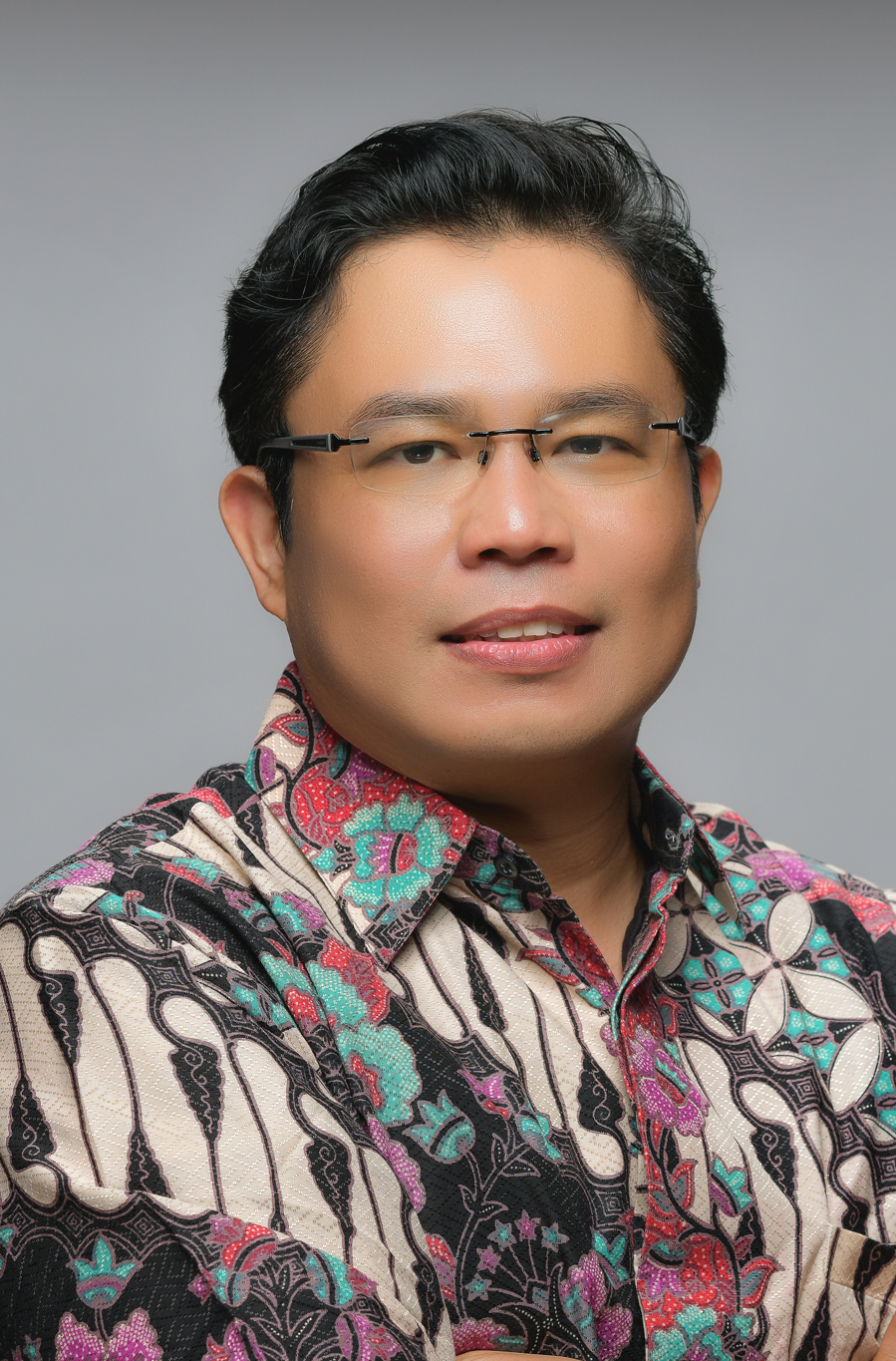
Anto Mohsin is an Assistant Professor in Residence in the Liberal Arts Program at Northwestern University in Qatar, with an affiliation to the Science in Human Culture Program at Northwestern’s Weinberg College of Arts and Sciences. His research focuses on the history and sociology of science and technology, particularly in Indonesia and Southeast Asia, examining intersections between infrastructure, energy, and society. He holds a PhD in Science and Technology Studies (STS) from Cornell University and previously held a Henry Luce Postdoctoral Fellowship. Education: PhD in Science and Technology Studies, Cornell University Affiliated with the Science in Human Culture Program (Weinberg College) Research Interests: Mohsin explores how technological systems interact with social and political dynamics through case studies like Indonesia’s electrification history, disaster responses, and energy infrastructure maintenance. His work bridges STS with environmental and disaster studies, emphasizing the sociopolitical dimensions of technological development. Key Contributions: Authored Electrifying Indonesia: Technology and Social Justice in National Development (2023), analyzing electrification from colonial to postcolonial eras. Investigates borderland electrification and labor practices in power infrastructure maintenance. Recipient of the Association of Asian Studies First Book Subvention Award. Teaching: Courses include Introduction to Science and Technology Studies , Science, Technology, and Society , and Energy, Environment, and Society . He emphasizes Asian-focused perspectives in STS education. Awards & Grants: Qatar National Research Fund Grant (2019) Cornelia Ye Outstanding Teaching Assistant Award (2013) Future Work: A new book project examines labor practices in maintaining electrical infrastructure, revealing the hidden work sustaining power systems.
Tobias Lutzi is a Junior Professor for Private Law (Tenure Track) at the University of Augsburg and an external habilitation candidate at the Institute for Private International and Comparative Law at the University of Cologne . He serves as co-editor of MMR , a journal for digitalization law , and is the General Editor of conflictoflaws.net . His affiliations include the Scientific Council of the European Association of Private International Law (EAPIL) , the Young Academy of the Bavarian Academy of Sciences , and advisory roles for journals like Juristischen Schulung (JuS) and Zeitschrift für das Recht der digitalen Wirtschaft (ZDiW) . Research Focus : Private International Law, particularly international civil procedure and CISG German and comparative private law in the context of digital technology Challenges in cross-border climate litigation , AI ethics, and platform economy regulation Article Trends : His recent work spans digital jurisdiction , crypto-asset liability , and EU digital regulation (DSA/DMA) , with a focus on conflict of laws , recognition of judgments , and comparative analysis of punitive damages across jurisdictions. Scientific Contributions : Awarded the ICC Institute of World Business Law Prize (2019) and Lehrpreis der Fachschaft Jura (2020) Recipient of the Daimler and Benz Foundation scholarship (2023) and Rhodes Scholarship (2014) Authored monograph Private International Law Online (OUP 2020) and co-edited volumes on punitive damages , non-EU jurisdiction , and digital market regulations Team and Projects : Leads the Digital Law Research Center and Research Center for Japanese Law at Augsburg. Coordinates research projects on punitive damages , non-EU judgment enforcement , and digital market regulations , funded by the Daimler and Benz Foundation.
Erich Schweighofer serves as Associate Professor at the University of Vienna within the Institute for European, International and Comparative Law, specifically affiliated with the Department of International Law and International Relations. His research activities are centered at the Juridicum building (Schottenbastei 10-16, 1010 Vienna), where he maintains an active office presence with scheduled consultation hours. His scholarly focus spans Legal Informatics , Artificial Intelligence and Law , Data Protection , and Legal Knowledge Representation , with particular emphasis on explainable AI systems for legal contexts and formal methodologies for translating legal norms into computational frameworks. This interdisciplinary work bridges jurisprudence and computer science through projects examining biometric regulation, autonomous vehicle governance, and natural language processing applications in legal domains. Analysis of his 2021-2024 publications reveals consistent thematic progression toward operationalizing legal principles in AI systems, with increasing focus on transparency mechanisms, temporal logic for dynamic regulations, and cross-jurisdictional compliance challenges. His work predominantly appears in the International Legal Informatics Symposium (IRIS) proceedings and JURIX conferences, reflecting deep engagement with the legal informatics community. Professor Schweighofer leads a dedicated research team including project assistants Mag. Jessica Fleisch, Mag. Jonas Pfister, Felix Schmautzer, and Mag. Jakob Zanol, while actively participating in the University of Vienna's Working Group on Legal Informatics (Arbeitsgruppe Rechtsinformatik). His collaborative approach extends to organizing the biennial IRIS symposium, which has established itself as a cornerstone event for European legal informatics scholarship since 1998.
Steve Salbu holds the Cecil B. Day Chair in Business Ethics and serves as a Professor at the Scheller College of Business, Georgia Institute of Technology. He joined the institution in July 2006 as Dean and Stephen P. Zelnak Chairholder, serving until July 2014 before returning to full-time faculty to lead the Cecil B. Day Program in Business Ethics established in 2013. The program instills honor, character, integrity, and ethical decision-making skills through curriculum integration and extracurricular initiatives. His academic credentials include: Ph.D. in Organization and Strategy, Wharton School of the University of Pennsylvania M.A. in Organization and Strategy, Wharton School of the University of Pennsylvania J.D., College of William and Mary M.A. in Liberal Studies, Dartmouth College B.A. in Psychology, Hofstra University Salbu's research centers on business ethics, legal environment of business, and cyberlaw, with extensive publications in top-tier journals including the American Business Law Journal and Business Ethics Quarterly. His work critically examines ethical dilemmas in international business contexts, particularly regarding bribery and corruption frameworks, insider trading regulations, and pharmaceutical marketing ethics. He has served as Editor-in-Chief of the American Business Law Journal and Advisory Editor for its editorial board. Analysis of his publication trajectory reveals consistent focus on developing practical ethical frameworks for global business challenges. Recent work emphasizes compliance defense mechanisms under the Foreign Corrupt Practices Act, extraterritorial application of anti-bribery laws, and ethical conflicts in medical judgment. His scholarship bridges theoretical rigor with actionable insights for policymakers and corporate leaders navigating complex regulatory landscapes. As director of the Cecil B. Day Program, Salbu oversees comprehensive ethics education initiatives integrating classroom instruction with real-world applications. The program cultivates ethical leadership through case competitions, speaker series, and industry partnerships focused on integrity development across all business disciplines. His extensive international engagement includes visiting professorships at Wharton, London Business School, Copenhagen Business School, and Melbourne Business School, alongside decades of business consulting in ethics, regulatory policy, and FDA compliance. Salbu's career demonstrates sustained commitment to advancing ethical business practices through academic leadership, cross-cultural dialogue, and practical industry application.
Tammy Cowart is a Professor of Business Law at the Soules College of Business , University of Texas at Tyler. She serves as Chair of the Accounting, Finance & Business Law department and holds the Bart Brooks Professor of Ethics and Leadership title. Her academic career spans over two decades, with teaching and research focusing on legal and ethical frameworks in business contexts. J.D., Texas Tech University B.S., Texas A&M University Dr. Cowart's research interests center on intellectual property , corporate governance , privacy law , and ethical leadership . Her recent publications address pressing issues in patent ethics, algorithmic pricing fairness, and tax compliance. She has pioneered business ethics curricula approved for CPA candidates. Scientific awards and recognitions include: Outstanding Faculty Award (Texas Alpha Xi Chapter of Alpha Chi) Provost’s Excellence in Teaching Award Outstanding Student Organization Advisor Dr. Cowart has held administrative roles as Director of Undergraduate and Graduate Programs at Soules College of Business. She actively contributes to community organizations and legal associations, maintaining memberships in the State Bar of Texas, Academy of Legal Studies in Business, and Association for Practical and Professional Ethics.
Prof. Dr. Gerald G. Sander is a Professor of Constitutional, Administrative, and European Law at Ludwigsburg University of Public Administration and Finance, serving as Dean for Master's programs and Head of the Institute for Public Economic Law. He holds leadership roles including University Election Officer and previously led the Institute for Applied Research (2013-2019). His academic career includes roles at Tübingen University (since 2001), Rijeka University (2016-2023), and others. Education: Juristisches Staatsexamen (1995), PhD in Law (2000), Magister Artium in Political Science (1994) Research focuses on public law interfaces with EU law, data privacy in healthcare, municipal policy frameworks, and sustainable urban development. Notable projects include studies on public security coordination in Lower Silesia (2012-2013), Croatian labor law modernization (2015-2018), and broadband regulation (2016-2018). Awards: 2021 Honorary Medal from West Bohemian University Pilsen Supervises PhD candidates addressing topics like AI liability, cultural funding policies, and sustainable urban planning. Active in international academic networks including BW-CAR and Promotionsverband Baden-Württemberg.
Michel Vols is a Professor of Public Order Law at the University of Groningen's Faculty of Law. He earned his degrees in Law and Philosophy from the same university and completed his PhD in 2013 on housing-related anti-social behavior across jurisdictions. As an academic researcher at the Centre for Public Order and Public Security (linked to the University of Groningen), he focuses on public order law, housing law, and human rights. His work includes founding the International Research Network on Law and Anti-social Behavior and conducting research for the Dutch Ministry of Interior and Kingdom Relations. Key roles include: Chair in Public Order Law Academic Researcher at the Centre for Public Order and Security Visiting Scholar at universities in Ghent, Bristol, Puerto Rico, Cape Town His research interests span public order, anti-social behavior mitigation, housing rights, and legal methodologies involving AI. Notable achievements include launching the free legal advice website overlastadvies.nl in 2019 and securing an ERC Starting Grant (€1.5M) in 2020 to study eviction protections under human rights frameworks. He has been awarded the Nicolaas Muleriusstipendium (2016) and has authored over 150 publications, including books on housing law and comparative jurisprudence. His work bridges legal theory and practice, often using interdisciplinary approaches like data science in legal analysis. He advises on policy reforms, such as exclusion orders for nuisance neighbors and drug-related property closures, and collaborates with government bodies on urban safety strategies. His research also explores the impact of evictions on vulnerable populations, including minorities and children.
Jesse M. Keenan is the Favrot II Associate Professor of Sustainable Real Estate and Urban Planning at Tulane University's School of Architecture and Built Environment. As Director of the Center on Climate Change and Urbanism, he bridges climate science, real estate, and urban policy to address climate adaptation and mitigation in the built environment. Formerly at Harvard Kennedy School, Columbia University, and Oxford University Contributor to IPCC, U.S. National Climate Assessments, and FEMA reform debates His research spans climate finance , resilient infrastructure , climate gentrification , and policy innovation . He pioneered concepts like 'Bluelining' and 'Climate Intelligence Arms Race' that influence global adaptation strategies. Media outlets like The New York Times and BBC frequently cite his work. Recent publications focus on compound climate hazards , cyber-physical resilience , and equity in adaptation planning . He has held advisory roles for the U.S. Commodity Futures Trading Commission, Federal Reserve Bank of San Francisco, and the Obama administration's Climate Action Plan. Scientific awards include PREA Scholar and Harvard Visiting Fellow Executive Producer of America Adapts podcast (Webby Honoree)
Mireia Artigot Golobardes is an Associate Professor of Civil Law at the Faculty of Law, Pompeu Fabra University, where she holds a Ramón y Cajal research fellowship. She is admitted to the bar in both New York and Barcelona and previously clerked for Hon. Edwin H. Stern at the New Jersey Appellate Division. Her interdisciplinary research examines private law through economic lenses, with specializations in contract law, consumer protection, and digital market regulation. Education: JSD & LLM, Cornell Law School Law Degree & BA Economics, Pompeu Fabra University BA Music, Conservatory of Barcelona Research Focus: Her work investigates algorithmic decision-making in consumer transactions, AI's impact on fundamental rights, sustainability in contract law, and regulatory frameworks for digital markets. She leads significant projects including: JuLIA (Justice, Fundamental Rights and AI) - EU-funded judicial training program AlgorithmLaw - Examining algorithmic transparency in legal norms iConsumers - Studying digital market impacts on consumer rights Publications: Her scholarly output demonstrates consistent focus on law-economics-technology intersections. Recent works examine algorithmic personalization in consumer contracts (2022), sustainability challenges in market regulation (2024), and limitations of data protection frameworks (2021). The publications show progressive engagement with emerging digital law challenges. Awards & Honors: Ramón y Cajal Research Fellowship (Spain's prestigious research award) Professional Activities: She maintains international connections through visiting professorships at Brooklyn Law School, University of Kassel, University of Trento, and research visits to NYU and University of Western Cape. She serves as Teaching Fellow for the Europaeum Program at Oxford University and is affiliated with UPF's Center for Studies in AI and Natural Intelligence.
Jin Li serves as Zhang Yonghong Professor in Economics and Strategy, Area Head of Management and Strategy, and Director of the Centre for AI, Management and Organization (CAMO) at Hong Kong University Business School. Previously, he held tenured positions at Kellogg School of Management and London School of Economics where he was Tenured Associate Professor of Managerial Economics and Strategy. Professor Li's research focuses on organizational economics, personnel economics, and labor economics, examining how firms design organizations to align incentives and build trust. His recent work explores digital economy topics including causality issues in machine learning algorithms, blockchain governance, and AI-organization interactions. This research demonstrates how organizational design creates competitive advantage through effective incentive structures and relational contracts. His publication portfolio shows consistent output in top-tier journals with recent emphasis on AI's organizational impact (2022-2023). Key thematic clusters include relational contracting dynamics (30% of recent work), digital transformation challenges (25%), labor market structures (20%), and blockchain governance mechanisms (15%). Management Department teaching prize at London School of Economics Associate Editor, Management Science Professor Li has advised numerous PhD students through courses like 'Economics of Organization for PhDs' at Kellogg. His service includes reviewing for 30+ top journals (AER, Econometrica, JPE, QJE, ReStud) and grant proposals for NSF and SSHRC. He serves as external PhD examiner for Norwegian School of Economics. As Director of CAMO, he leads research initiatives at the AI-organization interface, focusing on how artificial intelligence transforms workplace structures, managerial decision-making, and competitive dynamics in digital economies.