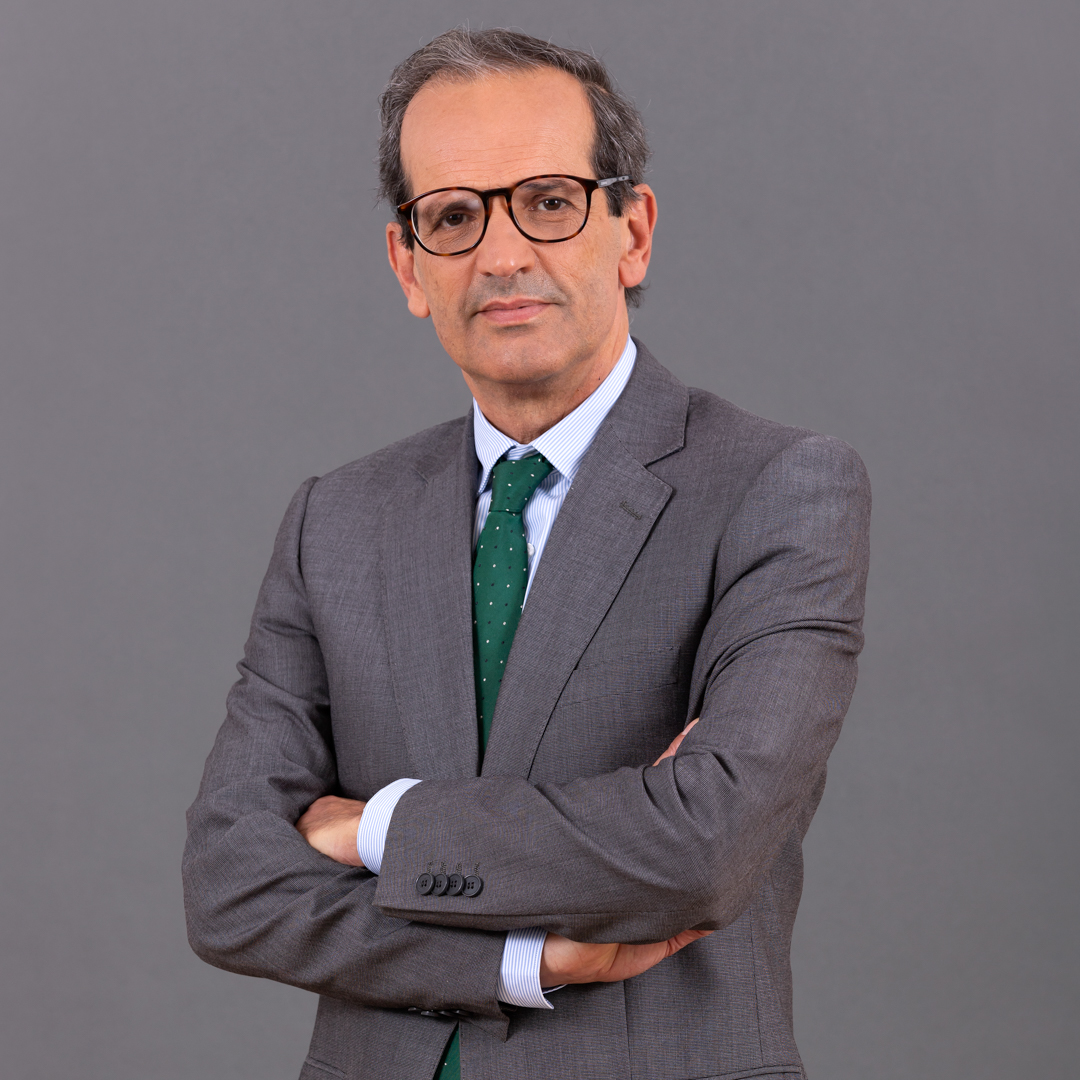
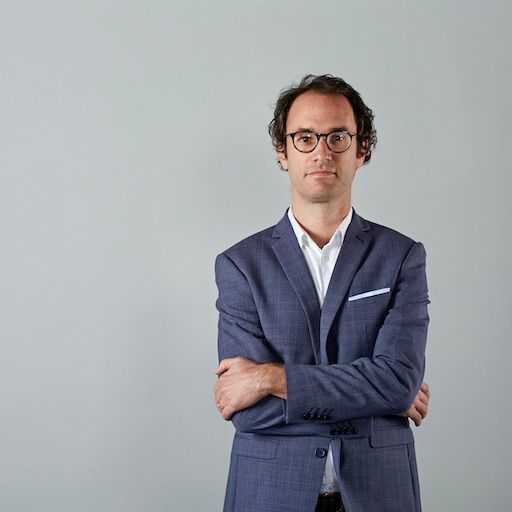
Paulo Trigo Pereira is a Full Professor at the Institute of Economics and Management (ISEG) of the University of Lisbon. He serves as President of the Scientific and Strategic Council of the Institute of Public Policy and was a Member of the Assembly of the Republic in the 13th Legislature as an independent candidate on the Socialist Party ticket. Academic Affiliation: Professor at ISEG-UL Leadership Roles: Institute of Public Policy, Assembly of the Republic Research Interests focus on Public Finance , Institutional Economics , and Local Government Reform . His work examines fiscal policy, budgetary control, democratic institutions, and sustainable development strategies in Portugal. Teaching includes courses on: Public Economics and Finance Economia e Finanças Públicas Sustainable Development Research Seminars Scientific Awards: No specific awards mentioned. Supervisions: Advised numerous Master's students on topics including municipal governance, public finance reform, health economics, and policy analysis.
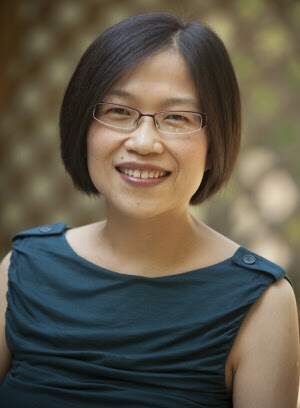
Panle Jia Barwick holds the Todd E. and Elizabeth H. Warnock Distinguished Chair Professorship in the Department of Economics at the University of Wisconsin-Madison. She maintains significant affiliations with multiple prestigious research institutions including the National Bureau of Economic Research (NBER) as a faculty research associate and the Center for Economic Policy Research (CEPR) as a research fellow. Her research spans multiple domains within economics, with primary expertise in Industrial Organization, Chinese Economy, Applied Microeconomics, Environmental Economics, and Applied Econometrics. Barwick's work demonstrates strong interdisciplinary connections between economic theory, empirical analysis, and real-world policy applications, particularly focusing on environmental challenges, industrial policy, and market dynamics in both developed and emerging economies. Her extensive publication record reveals a clear progression toward increasingly policy-relevant research, with recent work focusing on industrial policies, environmental economics, and transportation systems. She has developed sophisticated empirical frameworks to analyze network competition in airlines, the impact of pollution information disclosure, and the effectiveness of various government interventions in markets. Zellner Award for Best Dissertation, American Statistical Association Top five most cited article published in RAND from 2015-2017 As an academic leader, Barwick serves in editorial roles for several top economics journals including the American Economic Journal: Applied Economics, Journal of Economic Perspectives, Rand Journal of Economics, and International Journal of Industrial Organization. She also co-founded UW-Madison's Pan Asia Pacific Sustainability Initiative (PAPSI) and the Cornell Institute for China Economic Research (CICER), where she continues to serve on the board. Her teaching portfolio includes advanced courses in Industrial Organization and Applied Econometrics at both UW-Madison and Cornell University.
Professor Orhan KANDEMİR is a faculty member at Kastamonu University's Faculty of Economics and Administrative Sciences, Department of Economics. He currently serves as a full-time Professor (since 2024), having progressed through academic ranks from Lecturer (2008) to Assistant Professor (2011), Associate Professor (2018), and finally to Professor. He also holds significant administrative positions including Vice Dean of the Faculty (2023-present) and Director of the Research Application Center (2022-present). Dr. KANDEMİR earned his PhD in Economics from Sakarya University (2006-2010), Master's degree from Abant İzzet Baysal University (2003-2005), and BA in Economics from the same institution (1994-1997). His academic journey reflects a strong foundation in economic theory and development studies. His research focuses on Development Economy and Economic Growth, with significant contributions to International Economics, Human Development, Regional Development, and Social Policy. His work often examines Turkey's economic position within global contexts, regional development strategies, and social inequality issues. He has published extensively in these areas, with a particular emphasis on practical applications for regional development in Turkey. His recent publications demonstrate a trend toward analyzing the socioeconomic impacts of global crises, gender-related economic issues, and regional development strategies. His work combines theoretical economic frameworks with empirical analyses of Turkish and international datasets, particularly focusing on development indicators and policy implications. Best Paper Award (2017) from Azerbaijan National Academy of Sciences Professor KANDEMİR has served as main advisor for 13 Master's theses covering topics such as poverty, gender inequality, regional development, and economic policy. His administrative roles include multiple terms as Department Head (2009-2015) and Institute Director (2022-2023). He has led four research projects funded by Kastamonu University's Scientific Research Projects Unit and other national organizations, focusing on rural development, regional economic analysis, and international economic relations. His work connects academic research with practical regional development initiatives, particularly in the Kastamonu region of Turkey, where he has conducted numerous studies on local economic potential, tourism development, and agricultural strategies.
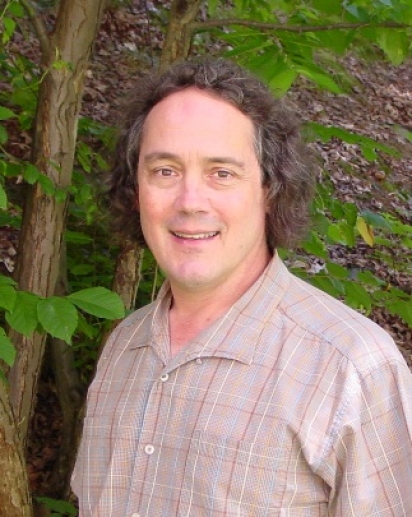
Richard B. Howarth serves as the Richard and Jane Pearl Professor of Environmental Studies at Dartmouth College, where he co-chairs the PhD Program in Ecology, Evolution, Environment, and Society (EEES). His work integrates economic analysis with ecological, moral, and social dimensions of environmental governance, positioning him at the forefront of ecological economics research and policy application. His academic foundation includes an A.B. in Biology and Society from Cornell University (1985, summa cum laude), an M.S. in Land Resources from the University of Wisconsin-Madison (1987), and a Ph.D. from UC Berkeley's Energy and Resources Group (1990). Prior to joining Dartmouth in 1998, he held research positions at Lawrence Berkeley National Laboratory and UC Santa Cruz. Professor Howarth's research centers on environmental valuation , particularly deliberative methods for ecosystem services assessment , and the ethical foundations of intergenerational justice in climate policy. His scholarship critically examines discounting theories , carbon pricing mechanisms , and the tension between economic growth and ecological sustainability , often incorporating Hans Jonas' Imperative of Responsibility as an ethical framework. Recent work emphasizes social norm dynamics in pro-environmental behavior and methodological innovations for integrating health, economic, and environmental trade-offs. Analysis of his 2020-2024 publications reveals three dominant research trajectories: (1) refinement of deliberative valuation techniques for ecosystem services, (2) dual-track approaches to global carbon pricing that address equity concerns, and (3) application of sociotechnical transition theory to climate stabilization. His work consistently bridges theoretical economics with practical policy design, particularly regarding New England's energy transition and Canadian hydropower integration. As Co-Chair of Dartmouth's EEES PhD program, Howarth mentors doctoral candidates across interdisciplinary environmental research. He taught foundational courses including ENVS 3 (Environment & Society) and ENVS 55 (Ecological Economics), and served as Editor-in-Chief of Ecological Economics for 14 years (2008-2022), significantly shaping the field's scholarly discourse. His career demonstrates sustained commitment to transforming economic paradigms through ethical engagement with sustainability challenges.
Michael B. Dwyer is an Assistant Professor in the Department of Geography at Indiana University's Hamilton Lugar School. His work bridges political ecology, development studies, and environmental governance, with a regional focus on Southeast Asia. Education: Ph.D. in Energy and Resources (University of California, Berkeley, 2011) Research: Examines land concessions, geopolitics, and socio-environmental dynamics in Laos and Cambodia Key Themes: Infrastructure development, REDD+ policies, industrial forestry, and transnational investment Dwyer's recent publications analyze the long-term impacts of large-scale land deals in the Mekong region, emphasizing conflicts between conservation, development, and local communities. His work combines historical and contemporary geopolitical frameworks. He teaches courses on Environment and Society (G208), Geography of International Development (G391), and Development Geography (G417/517), integrating fieldwork and policy analysis.
Anna Michálková is an Associate Professor at the Department of Tourism, Faculty of Commerce, Bratislava University of Economics and Business. Her expertise spans regional tourism, destination management, and tourism economics, with a focus on sustainable development and innovation. Education: Study stays at University of St. Gallen (Switzerland), University of Economics in Vienna (Austria), and University Lüneburg (Germany). Her research investigates institutional frameworks for destination management, tourism cluster dynamics, and economic impacts of tourism, particularly in crisis periods. She emphasizes stakeholder cooperation, societal value metrics, and sustainable growth strategies. Key trends in her publications include regional policy integration, gazelle enterprises in tourism, and cross-border collaboration. She has led projects like KEGA 034EU-4/2020 on innovative teaching methods and VEGA grants on competitiveness and innovation. Anna supervises bachelor and master programs in tourism management, teaches case studies in German, and collaborates with institutions across Europe. Her work bridges academia and practice through projects with local governments and tourism organizations.
Ben Gardner is an Associate Professor in the School of Interdisciplinary Arts & Sciences at the University of Washington Bothell, where he serves as Faculty Coordinator for Global Studies. He also chairs the African Studies Program in the Henry M. Jackson School of International Studies and holds an adjunct position as Associate Professor in the Department of Geography at UW Seattle. His academic work bridges cultural studies, geography, and environmental politics with a primary focus on African contexts. Dr. Gardner earned his B.A. in Anthropology from Connecticut College, followed by an M.E.S. from Yale University's School of Forestry and Environmental Studies, and completed his academic training with a Ph.D. in Geography from the University of California, Berkeley. His teaching philosophy centers on creating student-centered classrooms where students actively engage as ethnographers and critical thinkers, examining relationships among culture, power, and political-economic change. His research program focuses on three interconnected areas: the cultural politics of the environment, the political economy of development, and the post-colonial state. Through ethnographic research on transnational and trans-local aspects of development, Gardner illuminates how grounded struggles shape global phenomena. His work primarily examines Tanzania, investigating the complex intersections of tourism, conservation policies, land rights, and community politics, particularly among Maasai communities. Gardner's publications reveal a consistent scholarly trajectory examining how global conservation efforts and tourism are deeply embedded in local political and cultural contexts. His research challenges simplistic narratives about environmental protection and development, highlighting the political dimensions of landscape commodification and the enduring influence of colonial discourses on contemporary conservation practices. University of Washington Bothell Distinguished Teaching Award (2014) University of Washington undergraduate research mentor award (2017) As an educator, Gardner has received significant recognition for both teaching excellence and mentoring undergraduate research. He teaches diverse courses including Africa on Film, Globalization, Environmental Politics, and Critical Perspectives on Ecotourism in Tanzania. His commitment to public scholarship is evident through his work with the Humanities Washington Speakers Bureau, where he presents on topics related to tourism, conservation, and cultural politics. Currently, Gardner is working on projects examining how social media influences conservation ideas and policies, as well as collaborating on 'Pedagogies of Reciprocity,' which investigates the political economy and cultural politics of study abroad in higher education, building on his critical perspective about the 'romance of study abroad' experiences.
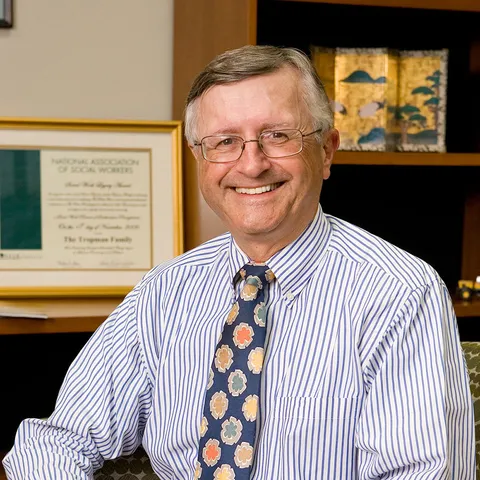
John E. Tropman is a Professor at the School of Social Work , University of Michigan, with cross-appointments in the Ross Business School and Honors College. Since 2015, he has directed the Leadership in Community Benefit Organizations program, focusing on management content for social work and policy majors. PhD (1967) and MA (1963) in Social Work/Sociology BA (1961) in Sociology from Oberlin College His research examines organizational elements driving high-performance in human service organizations, with specific interests in: Entrepreneurship Executive decision-making C-level leadership dynamics Burnout and executive failure Reward systems Organizational culture Religious value systems Recent publications highlight board-CEO relationships and information asymmetry in nonprofit governance, including case studies on executive malfeasance and leadership ethics. He maintains active research projects on: Meeting Masters : Best practices for effective group decision-making Executive Calamity : Causes of executive flameout CEO Tracker : Metrics for executive success Catholic Ethic : Religious value systems in secular contexts
Sophia Labadi is a Professor of Heritage at the University of Kent and a Professorial Fellow at the Global Heritage Lab, University of Bonn. Her work bridges heritage studies, museum practices, and global challenges, focusing on how cultural heritage can address social justice, gender equality, and sustainable development. 2023 ReimarLüst Award (Humboldt and Thyssen Foundation) 2022 European Archaeological Heritage Prize Her research explores decolonial frameworks , community-driven heritage management , and policy integration for sustainable development. Key themes include: Heritage tourism in post-COVID Sub-Saharan Africa UNESCO’s role in gender equality and development Heritage-led economic revitalization in MENA countries Globalization’s impact on museum practices She has authored 13 books and over 70 publications, advised UNESCO and the World Bank, and pioneered methodologies linking heritage to the UN Sustainable Development Goals . Her work emphasizes multilingual policy dissemination and cross-sector collaboration.
Piotr Witkowski is a Professor at the Department of World Economy and European Integration, Faculty of Economics, Maria Curie-Skłodowska University (UMCS) in Lublin. He holds a habilitation degree in humanities (political science, 2017) and has taught at multiple institutions since 2004, including the University of Entrepreneurship and Administration in Lublin and the University of International Relations and Social Communication in Chełm. Education: Master's in Political Science (1986), Inter-university Institute of Political Sciences, UMCS Postgraduate studies in Administration and Management (1997), Faculty of Law and Administration, UMCS PhD in Political Science (2001), UMCS Postgraduate studies in Transport-Forwarding-Logistics (2014), University of International Relations and Social Communication in Chełm His research focuses on customs policy , international trade , and EU integration , particularly analyzing Poland's customs strategies post-1989, Schengen Agreement implications, and transnational logistics. He has published extensively on topics like EU customs law, border control, and economic security. Key article trends include customs procedures (EU-Ukraine trade regulations), logistics frameworks , and cross-border cooperation . His work bridges law , political science , and economics , emphasizing practical trade facilitation and policy harmonization. He has organized conferences on Schengen challenges, EU customs code harmonization, and transnational security, including roles in academic councils and Senate memberships. Collaborations with institutions like the Polish Customs Chamber and Frontex-related studies highlight his policy-oriented contributions.
Mari Kaarina Vaattovaara is Professor of Urban Geography at the University of Helsinki, where she serves as Director of both the Helsinki Institute of Urban and Regional Studies (Urbaria) and the Helsinki Institute of Sustainability Science (HELSUS). Affiliated with the Department of Geosciences and Geography within the Faculty of Science, she supervises doctoral students in two doctoral programs: the Doctoral Programme in Political, Societal and Regional Change and the Doctoral Programme in Social Sciences. Professor Vaattovaara's research spans social and economic geography, urban studies, and sustainability science, with particular focus on neighborhood dynamics, housing policy, and urban development patterns. Her work examines how physical environments interact with social structures to shape community outcomes, with special attention to vulnerable populations and sustainable urban transitions. She frequently investigates the relationship between urban density, service accessibility, and quality of life in metropolitan contexts. Her recent publications reveal a consistent trajectory examining sustainable urban development through multiple lenses, including neighborhood sustainability indicators, housing policy challenges, and the impacts of urban form on social outcomes. While deeply rooted in the Finnish context, her research connects to broader European and global urban debates, with increasing attention to post-pandemic urban challenges and the implications of tourism for sustainable city development. Among her notable recognitions are: J.V. Snellman Prize (2013) Knight, First Class, of the White Rose of Finland (2016) Helsinki Medal for distinguished service to the city (2015) Ragnar Hult Medal (2014) Election to the Finnish Academy of Science (2016) Professor Vaattovaara leads multiple significant research initiatives including the MSCA-DN SUNSET project (2024-2028) funded by the European Commission, The Future of Diverse and Disadvantaged project (2022-2026) funded by Svenska Litteratursällskapet i Finland, and the Urban Academy initiative connecting academic research with practical urban development challenges. Her work bridges academic research with policy impact through external positions including External Research Fellow at University College London (since 2014), Member of the Supervisory Board at Hypoteekkiyhdistys (since 2014), and Auntosäätiö Board Member (since 2012). As Director of Urbaria and HELSUS, Professor Vaattovaara oversees interdisciplinary research hubs that bring together scholars from across the university to address complex urban and sustainability challenges. These institutes facilitate collaboration between academic researchers, municipal authorities, and community organizations to develop evidence-based approaches to urban development and sustainability transitions.
Ashton Potter serves as Executive Director of The Food Connection and Extension Specialist for Local Food Systems Leadership at the University of Kentucky's Martin-Gatton College of Agriculture, Food and Environment, responsible for strategic vision and program implementation across Kentucky's food ecosystem. Her educational background includes: Bachelor of Science in Biology from Rhodes College Master of Public Health from Georgia State University Doctor of Public Health from the University of Kentucky Her research focuses on building sustainable agricultural value chains, with expertise in farm-to-institution procurement systems and community food security initiatives that bridge public health nutrition with economic development. She leads statewide programs connecting Kentucky farmers to new markets while educating consumers about nutrient-dense local food systems. Through The Food Connection, she directs multifaceted initiatives including Culinary Medicine, Cultivate Kentucky, Growing Health, and the Kentucky Value Chain Collaborative, emphasizing practical applications of food systems knowledge in institutional settings and community health programs. Her collaborative work engages UK Dining Services, farmers, policymakers, and community stakeholders to strengthen Kentucky's local food economy through practical procurement strategies and educational outreach centered on sustainable food practices.
Yasser Arafat Payne is a Professor of Sociology & Criminal Justice at the University of Delaware's College of Arts & Sciences, with a joint appointment as an associate professor in the Department of Africana Studies. His academic work focuses on street ethnographic research examining policing and reentry, economic well-being and educational inequality, and gun violence with street-identified Black Americans through the innovative Street Participatory Action Research (Street PAR) framework. Payne earned his Ph.D. and M.Phil. from the City University of New York Graduate Center, an M.A. from Seton Hall University, and a B.A. from Wagner College. His educational background has informed his distinctive approach to studying marginalized communities through the lens of those who live within them. Payne's research program challenges dominant arguments in the literature by asserting that all of the streets of Black and Brown America are resilient. His work focuses on racial identity, street identity, school violence, physical violence, Gangster Rap music and culture, and the methodology of street participatory action research. He has developed Street PAR as a framework that includes three essential features: research orientation, intervention for Street PAR members, and a vehicle for action and activism in local communities. His recent publications reveal a consistent focus on violence exposure, police-community relations, reentry challenges, and resilience among street-identified Black populations. Payne's work spans multiple disciplines including criminology, sociology, public health, and urban studies, with particular attention to the intersection of structural inequality and individual experience. Payne actively engages with media on issues of policing and structural violence, as evidenced by his July 2024 commentary on stop-and-frisk policies for NBC News and his August 2023 presentation to the Wilmington Reparations Task Force. He co-authored the book 'Murder Town, USA: Homicide, Structural Violence and Activism in Wilmington' (Rutgers University Press, 2023), which has become a key resource for understanding gun violence in urban communities. As an educator, Payne teaches specialized courses on street ethnography, Gangster Rap Music and Culture, Racial Stratification, and core courses on Race, Class & Gender and Race, Gender & Poverty. His teaching philosophy centers on bringing the lived experiences of street-identified populations into academic discourse through innovative pedagogical approaches. Payne leads a research lab focused on Street PAR methodology, training community members to document experiences of street-identified Black populations through surveys, interviews, and dual interviews. His approach emphasizes community ownership of research and the transformative potential of participatory methodologies in addressing structural violence.
Dr. Allan Watson is a Reader in Economic Geography at Loughborough University, serving as School Director of Studies (PGT) and Programme Leader for the PGT Human Geography Programme. His academic career spans roles at Loughborough University (2016–present) and Staffordshire University (2008–2016), progressing from Lecturer to Senior Lecturer. He chairs the Royal Geographical Society’s Economic Geography Research Group (2021–2024) and serves as an Associate Director of GaWC (Globalization and World Cities Research Network). His research focuses on the spatial dynamics of creative industries, digital economies, and cultural policy, with particular attention to music, media, and regional development. Key themes include platform capitalism’s impact on creative sectors, regional music industry clusters, and the interplay between intellectual property and digital innovation. Watson’s publications analyze topics such as platformization in music industries, the geographies of transnational media corporations, and the role of ‘CreaTech’ in regional economic strategies. His work bridges economic geography with cultural studies, emphasizing policy relevance and empirical rigor. Professional engagements include editorial roles and contributions to global networks, reflecting his expertise in world city systems and creative industries’ spatial configurations.
Clément De Chaisemartin is a Professor of Economics at Sciences Po since 2021, affiliated with the National Bureau of Economic Research (NBER) and J-PAL. His work focuses on econometric methods for policy evaluation and the economics of education. He holds a PhD from EHESS and Paris School of Economics (PSE), and previously taught at the University of Warwick and University of California, Santa Barbara (UCSB). Key research includes the evaluation of educational interventions, such as boarding schools for disadvantaged students, and methodological contributions to difference-in-differences (DID) estimators. Notable awards include the AFSE-Malinvaud Prize (2019) for his work on fuzzy DID. He co-authored influential papers in American Economic Review , Econometrica , and Review of Economic Studies , and developed Stata/R packages like did_multiplegt and twowayfeweights . Current projects include a textbook on DID methods and collaborations on multi-site randomized trials. Education: PhD in Economics (2013), École des Hautes Études en Sciences Sociales (EHESS) and Paris School of Economics (PSE). Research Interests: Causal inference, policy evaluation, educational disparities, and econometric methods. Grants & Projects: Research funded by French health/education authorities, including evaluations of early childhood programs like Parler Bambin. Teams: Maintains a research team and GitHub page for open-source econometric tools. His op-eds advocate for broader use of impact evaluation in public policy, critiquing private-sector dominance in applying such tools.