Dr hab. Wojciech Janicki is a full Professor at the Institute of Social and Economic Geography and Spatial Management within the Faculty of Earth Sciences and Spatial Management at Maria Curie-Skłodowska University (UMCS) in Lublin, Poland. He serves as Director of the Institute and Head of the Department of Social and Economic Geography. Current affiliations: Governmental Council on Population (since 2024), Polish Academy of Sciences Committee on Demographic Sciences (since 2019), Polish Geopolitical Society Scientific Council (since 2024) Editorial role: Global Population Perspectives (since 2025) Research interests focus on political geography, demography, and regional development , with particular emphasis on migration studies, national/ethnic minorities, international border conflicts, and global population challenges. His work addresses demographic policy formation, migration management, and the socioeconomic impacts of population shifts in Eastern and Central-Eastern Europe. Recent publications demonstrate interdisciplinary engagement with migration policy implementation (2025), adaptive geofencing technology for transport security (2024), and demographic anxiety analysis through edited volumes (2024). Article trends show consistent focus on EU integration challenges, borderland development, and population policy contradictions. Scientific recognition includes: Governmental Council on Population membership Polish Academy of Sciences demography committee Editorial board of international journal Strategic advisory roles Advising involves directing research on migration legality frameworks, coal region transitions, and spatial management projects. Grants likely relate to EU cohesion policy and cross-border development initiatives given his publication patterns.
Prof. Katarzyna Piwowar-Sulej is a Professor of Economics in Management and Quality Sciences at Wrocław University of Economics, holding a position in the Department of Labor, Capital and Innovation. She actively contributes to academic governance as a member of the Doctoral School Council and various strategic committees. Her research focuses on sustainable human resource management, leadership, and project management, with a strong emphasis on integrating sustainability into organizational practices. Expertise: Sustainable HR Development, Green HRM, Organizational Innovation Leadership Roles: Director of 'Psychology in Management' postgraduate studies Her academic contributions span over 200 publications in top journals such as Human Resource Management and Journal of Business Ethics . She has secured EU grants and led projects addressing HR challenges in Industry 5.0 and digitalization. Notable achievements include recognition in the World's TOP 2% Scientists 2023 and second place in the 2025 Science Personality of the Year award. Awards: Medal of the National Education Commission, Emerald's Outstanding Paper Award Research trends in her work highlight the intersection of leadership, sustainability, and innovation. Recent studies explore sustainability-focused leadership, green behaviors in SMEs, and neurodiversity management. She bridges academic and business worlds through HR consulting and project management expertise in sectors like finance and manufacturing. Key Projects: Digital HR process optimization, compensation system design, post-merger integration Her teaching legacy includes pioneering postgraduate programs for business trainers and integrating design thinking into academic curricula. She advocates for sustainable HR practices, emphasizing employee development and environmental responsibility.
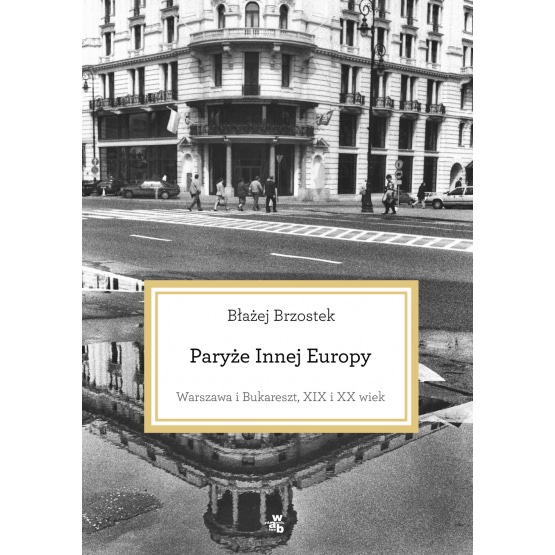
Błażej Brzostek is a Professor at the Institute of History, University of Warsaw, where he has been employed since 2005. He is affiliated with the Department of Auxiliary Sciences of History, Source Studies and Methodology of History. His academic work centers on historical methodology and urban history, particularly of East-Central European cities. His research interests lie primarily in urban history , source studies , and the methodology of history , with a regional focus on 19th and 20th century Europe. He has conducted comparative studies on cities such as Warsaw, Bucharest, and Paris, exploring their historical development and cultural interrelations. His work emphasizes rigorous historical methodology and the analysis of primary sources. The available publications suggest a strong thematic focus on the history of Warsaw, often in comparative European contexts. His works explore urban transformation, identity, and historical narrative across different periods. There are no scientific awards mentioned in the provided text. Błażej Brzostek has advised or supervised no students listed in the provided information. There is no mention of grants or funding associated with his research. No specific research labs or teams are mentioned in the provided text.
Piotr Witkowski is a Professor at the Department of World Economy and European Integration, Faculty of Economics, Maria Curie-Skłodowska University (UMCS) in Lublin. He holds a habilitation degree in humanities (political science, 2017) and has taught at multiple institutions since 2004, including the University of Entrepreneurship and Administration in Lublin and the University of International Relations and Social Communication in Chełm. Education: Master's in Political Science (1986), Inter-university Institute of Political Sciences, UMCS Postgraduate studies in Administration and Management (1997), Faculty of Law and Administration, UMCS PhD in Political Science (2001), UMCS Postgraduate studies in Transport-Forwarding-Logistics (2014), University of International Relations and Social Communication in Chełm His research focuses on customs policy , international trade , and EU integration , particularly analyzing Poland's customs strategies post-1989, Schengen Agreement implications, and transnational logistics. He has published extensively on topics like EU customs law, border control, and economic security. Key article trends include customs procedures (EU-Ukraine trade regulations), logistics frameworks , and cross-border cooperation . His work bridges law , political science , and economics , emphasizing practical trade facilitation and policy harmonization. He has organized conferences on Schengen challenges, EU customs code harmonization, and transnational security, including roles in academic councils and Senate memberships. Collaborations with institutions like the Polish Customs Chamber and Frontex-related studies highlight his policy-oriented contributions.
Michał Krzysztofik is a Professor at the Academy of Physical Education in Katowice, specializing in sports science and exercise physiology. He holds a Master's degree (2014), PhD in Physical Culture Sciences (2018), and a post-doctoral habilitation in Medical and Health Sciences (2022). His research focuses on resistance training strategies, post-activation performance enhancement (PAPE), eccentric training, and blood flow restriction techniques. He collaborates with national sports associations like the Polish Athletic Association and Handball Association, providing scientific support to elite athletes. Notable awards include the Silesian Science Award (2021) and a Ministry of Education Scholarship (2022). Research interests emphasize optimizing athletic performance through biomechanical and physiological interventions. Key areas include sprint mechanics, muscle-tendon stiffness modulation, and training protocols for combat sports. His work integrates practical applications with elite athletes in volleyball, soccer, and track & field. Over 50 peer-reviewed articles since 2021 explore topics like PAPE repeatability, plyometric-isometric combinations, and sprint performance optimization. Personal athletic achievements include Vice-Champion of Poland in Bodybuilding (2017) and Wielkopolska Champion in Bodybuilding (2017). His studies often employ crossover trials and randomized controlled designs to evaluate acute and chronic adaptations in trained populations.
Professor Paweł Kubicki is a member of the Department of Society and Cultural Heritage of Europe at the Jagiellonian University 's Institute of European Studies. His work bridges urban sociology, social movements , and the Europeanization of identities . He holds a higher doctorate ( habilitacja ) and serves as a permanent faculty member. Key Research Areas : Urban anthropology, migration studies, European cultural heritage, post-totalitarian societies. International Collaborations : Humboldt University (Berlin), University of Belgrade, Lund University, Università di Trieste, Universitat de Barcelona, and others. Recent Publications focus on: Urban resilience during migration crises (Kraków case studies) Backlash movements against progressive urban policies Migration transition in Poland (2016 onwards) Reinterpreting European cultural heritage through urban studies Comparative analysis of globalizing cities (Kraków vs. Poznań) New European Bauhaus initiatives post-pandemic Significant Projects include: 2022-2023: Strategic Program "Excellence Initiative" (principal investigator) 2018-2021: Erasmus+ curriculum development for European urban heritage 2007-2011: FP6 RECON project on urban democratization
Konrad Kowalczyk is an Associate Professor at AGH University of Science and Technology in Krakow, Poland, where he heads the Signal Processing Group within the Faculty of Computer Science, Electronics and Telecommunications. With extensive international experience from institutions including Queen's University Belfast, Stanford University, and Fraunhofer Institute, he has established himself as a leading researcher in audio and speech signal processing. His academic journey includes B.Eng. and M.Sc. degrees from AGH University (2005), a Ph.D. from Queen's University Belfast (2009), and a Habilitation in ICT from AGH University (2020). B.Eng. and M.Sc. in Electronics and Telecommunications, AGH University of Krakow (2005) Ph.D. in Electronics, Queen's University Belfast, UK (2009) Habilitation (D.Sc.) in Information and Communication Technology, AGH University of Krakow (2020) Kowalczyk's research spans multiple cutting-edge areas in audio processing, with particular focus on speech and audio signal processing enhanced by machine learning techniques. His work integrates deep neural networks with traditional signal processing methods to address challenges in array signal processing , speech enhancement , and speaker recognition . The research group he leads explores innovative applications in distributed signal processing for IoT , acoustic event detection , and spatial audio rendering , bridging theoretical advances with practical implementations. His recent publications demonstrate a clear trend toward integrating deep learning with traditional signal processing techniques, particularly in speaker diarization, source separation, and robust speech recognition. The research increasingly focuses on real-world applications requiring reverberation-robust processing , distributed microphone array systems , and end-to-end neural architectures that can operate in challenging acoustic environments. There's a noticeable shift toward more complex, integrated systems that combine multiple signal processing tasks. Stanislaw Staszic Medal for best graduate of AGH (2005) IEEE Best Student Paper Contest finalist (2007) AES Student Technical Paper Award winner (2008) Best Student Paper Award at IWAENC conference (2014) Best Paper Awards at IEEE SPA conferences (2016, 2019) Polish Ministry of Science Scholarship for Distinguished Young Scientists (2016-2019) Prime Minister Award for outstanding scientific achievements (2020) As Principal Investigator, Kowalczyk leads multiple significant research projects including "Acoustic Intelligence" (2024-2028) funded by National Science Center, and "Deep extraction for robust speech recognition" (2023-2028). He has successfully secured funding from prestigious programs including First TEAM from the Foundation for Polish Science, and EU FP7 projects. His research group actively supervises Ph.D., M.Sc., and B.Eng. students, with strong connections to international institutions including Aalto University and IEEE Signal Processing Society. The research output includes numerous journal publications, conference papers, patents, and software implementations that have advanced the field of audio signal processing. Kowalczyk leads the Signal Processing Group at AGH University, which focuses on developing innovative solutions for speech and audio processing challenges. The group maintains strong collaborations with international institutions including Aalto University (Finland), and participates in European research initiatives. Their work spans theoretical development through practical implementation, with applications ranging from medical voice assistants to distributed acoustic sensor networks.
Professor Dorota Chwieduk is a distinguished faculty member at the Division of Refrigeration and Energy in Buildings within the Faculty of Power and Aeronautical Engineering at Warsaw University of Technology. She serves as Deputy Director of the Institute of Heating Engineering and heads the Post Diploma Study program on Energy Efficient Buildings, Energy Characteristics of Buildings, Energy Auditing and Thermal Refurbishment. With a career spanning decades, Professor Chwieduk has established herself as a leading expert in solar energy applications and building energy efficiency. Her research focuses on unconventional energy conversion methods, solar technologies, heat transfer in buildings, renewable energy systems integration, thermal energy storage (including phase change materials), and energy performance assessment. She has published extensively in these fields, with numerous high-impact journal articles and book contributions. Solar Energy in Buildings: Thermal Balance for Efficient Heating and Cooling (Elsevier, 2014) Multiple publications on PV/T systems, building-integrated solar technologies, and thermal energy storage Research on high latitude building design and energy performance Professor Chwieduk's work demonstrates consistent focus on practical applications of renewable energy technologies in building systems, with particular attention to climate-specific design considerations and energy optimization. Her research bridges theoretical modeling with practical implementation, contributing significantly to advancing sustainable building technologies. Scientific Awards: Gold Medal from President of Republic of Poland for Long Service for the Country (2013) Best Scientific Achievements award from Rector of Warsaw University of Technology (2012) Pioneer of Renewable Energy award by World Renewable Energy Network (2008) Promoter of Renewable Energy award by Clean Energy magazine (2006) Throughout her career, Professor Chwieduk has actively contributed to national and international energy policy development, serving on numerous expert committees and leading significant research projects focused on renewable energy integration and building energy efficiency. Her work has influenced both academic research and practical implementation of sustainable building technologies in Poland and internationally.
Dr. Grzegorz Misiura is an Assistant Professor at the Center for Research on the History of the Catholic University of Lublin (John Paul II Catholic University of Lublin). His work focuses on the history of the Roman Catholic Church in Poland post-1918, Lublin Diocese history, and the history of the Catholic University of Lublin (KUL). Education: PhD in History from John Paul II Catholic University of Lublin His research examines clergy-organist networks in Lublin, post-war academic recovery, and institutional archival practices. Recent publications analyze collaborations between Bishop Stefan Wyszyński and organists, KUL's academic rights journey, and private archives of Catholic scholars. Key projects include: Ministry of Education-funded source edition of Rev. Prof. Józef Kruszyński's Memoirs Electronic Archive of the Center for Research on John Paul II's Thought Historical monograph of KUL's Scientific Society He serves as editorial secretary for Polish Diaspora Studies and is a member of the 'Polish Community' Association.
Monika Baer is a Professor at the University of Wrocław's Institute of Ethnology and Cultural Anthropology, Faculty of Historical and Pedagogical Sciences. Her work focuses on Central/Eastern Europe, post-socialist transformation, Europeanization, legal agency, and gender/sexuality studies, with emphasis on citizenship, civil society, and activism. She explores how emotions shape political fields and anthropological knowledge production, particularly in late industrial societies. Research Trends: 15 years of publications examine LGBTQ+ rights in Poland, gender dynamics in transitional communities, and anthropological theories of late industrialism. Her work bridges academic scholarship with direct engagement in policy debates and activist movements. Scientific Awards: Kosciuszko Foundation Fellowship (2004) Academic Roles: Co-editor of Agency at Work: Ethnographies in/of Late Industrialism (2021) Co-editor of Anthropology of Gender and Sexuality. Marginal Perspectives (2014) Membership: President, Network for Anthropology of Gender and Sexuality (EASA) Council for European Studies (Columbia University) European Association of Social Anthropologists Polish Ethnological Society Grants: "Protecting Victims of Anti-LGBT Hate Crimes" (2020-2021, EU Justice Programme) DIVERCITY: Combating Homo/Transphobia (2015-2017, EU ROC Programme) "Conflict, Tension, Cooperation" (2014-2017, Polish National Science Centre)
Andrzej Buszko is a Professor at the University of Warmia and Mazury in Olsztyn , affiliated with the Department of Finance under Economic Sciences. He specializes in Economics and Finance, with a focus on the shadow economy, institutional economics, and financial systems. His research spans tax optimization, informal economic activity, and quality management in construction industries. Academic Rank: Professor University: University of Warmia and Mazury in Olsztyn Department: Department of Finance Contact: buszko@uwm.edu.pl Research Interests: Dr. Buszko investigates the shadow economy (tax evasion, informal labor markets), financial systems (optimal currency zones, exchange rates), and institutional economics (quality management, intellectual capital). His work often intersects with political economy (populism’s role in informality) and development economics (FDI in post-transition states). Publication Trends: Over 15 years, his research emphasizes Economics and Finance , with recurring sub-fields like Shadow Economy , Tax Efficiency , Intellectual Capital , and Quality Management . Recent work (2025) explores tax optimization mechanisms in informal economies, building on earlier studies of corruption, FDI, and labor flexibility. Doctoral Supervision: Dr. Buszko has supervised 1 doctoral student and promoted 3 doctors. He welcomes both Polish and international candidates, focusing on topics like grey zone dynamics and financial systems. His department possesses infrastructure to support research in these areas.
Katarzyna Derlatka is an Assistant Professor in the Department of Recent History of Poland at the Faculty of Philosophy and History, University of Lodz. Holding a doctorate in military science, she specializes in the intersection of historical analysis and contemporary security issues. Her academic work bridges the historical perspective of Poland's recent past with modern security challenges facing nations today. Dr. Derlatka's research interests span security studies with particular focus on information security, crisis management, and communication strategies in defense contexts. She examines how propaganda and disinformation function as tools of modern warfare, analyzing both historical precedents and contemporary applications. Her work on crisis communication explores how governments and institutions can build societal resilience against information threats and hybrid warfare tactics. She investigates the role of media in shaping public perception during conflicts and emergencies, with particular attention to how digital platforms have transformed information warfare. Her publication record reveals a consistent trajectory examining security challenges through historical and contemporary lenses. Early works focused on crisis management fundamentals, while more recent publications address sophisticated topics like multidimensional disinformation in modern warfare and migration as a security threat. Her research demonstrates how historical events like Hurricane Katrina provide valuable lessons for contemporary crisis response, while her analysis of Syrian migration patterns reveals how humanitarian crises can be weaponized in geopolitical conflicts. Dr. Derlatka has supervised three theses, contributing to the development of new scholars in security studies. Her work connects academic research with practical security applications, particularly in the Polish context where historical memory intersects with current security concerns in Central and Eastern Europe.
Katarzyna Radzik-Maruszak is a Professor in the Department of Public Administration at the Faculty of Political Science and Journalism, Maria Curie-Skłodowska University (UMCS) in Lublin, Poland. She serves as both Director of the Institute of Political and Administrative Sciences and Head of the Department of Public Administration. She holds a habilitation degree (2019) and has led numerous national and international research projects, including those funded by the National Science Centre (NCN) and the German Research Foundation (DFG). PhD in Political Science, UMCS (2010) Habilitation in Political Science, UMCS (2019) LL.M. in Law, UMCS Her research focuses on comparative public administration, local governance, citizen participation, and sustainable urban development, particularly in Central and Eastern Europe and the Arctic. She has conducted extensive empirical research in countries such as Poland, Finland, the UK, Slovenia, and the Czech Republic. Her recent work explores participatory budgeting, advisory councils, and transnational cooperation in remote urban regions. She has published in journals such as Critical Policy Studies , Politics and Governance , and Studia Regionalne i Lokalne , and has co-authored a 2025 open-access monograph on sustainable urban development in the European Arctic. Her recent publications demonstrate a strong thematic focus on citizen engagement, local co-governance, and democratic innovation, with a methodological emphasis on qualitative research and comparative analysis. She investigates how local institutions evolve, how citizens participate in decision-making, and how governance models differ across national contexts. Award of the Minister of Education and Science (2021) First Prize in the Czesław Mojsiewicz Competition (2022) Multiple Rector’s Awards from UMCS for research and teaching First Prize for best doctoral dissertation from Wolters Kluwer Polska (2011) She has supervised and collaborated with numerous researchers and has led externally funded projects such as Ponad granicami (NCN OPUS-LAP, 2025–2027) on refugee integration and Milczący świadkowie (NCN OPUS, 2022–2025) on youth engagement in local governance. She has also contributed to transnational projects like SUDEA on sustainable development in the Arctic, funded by NCN and DFG. She is an active member of the Polish Political Science Association (PTNP), where she chairs the Public Administration Section, and serves on the editorial board of Ocean & Society . She has also served on expert panels for NAWA and the Polish Fulbright Commission. She is involved in several research teams and networks, including the SUDEA project team on Arctic urban development and collaborative governance research with scholars from Tampere, Prague, and other European institutions. She has participated in summer universities and Erasmus teaching missions across Central Europe.
Adam Bobryk is a Professor at the Institute of Security Studies, Faculty of Social Sciences, University of Physical Education and Sport in Siedlce. His research bridges Sociology and Security Studies , with a focus on National Minorities , Eastern Europe , and Historical Memory . His work examines: Cultural Integration of Ukrainian students in Polish schools and its implications. Educational Role of Monuments , particularly in Vilnius. Language and Identity in religious and educational contexts. Polish-Lithuanian Relations and their impact on minority autonomy. Recent publications highlight Multiculturalism , Ethnic Dynamics , and Post-Soviet Memory Politics . Despite significant citations (h-index 2 in Scopus, 1 in WoS), no explicit awards are listed. His 141 publications and editorial contributions underscore his academic influence.
Dr. Joanna Szafran is a Senior Lecturer at the Faculty of Economics , Maria Curie-Skłodowska University , specializing in European Union Cohesion Policy , Regional Development , and Public-Private Partnerships . Her research focuses on EU funding mechanisms in Poland and Central Europe, with specific emphasis on climate policy, energy transformation, and infrastructure planning. Current affiliations: Department of Economic and Regional Policy Active participation in Poland's integrated development policy through the Spatial Development Committee Her 12 publications (h-index: 1) include monographs on EU cohesion policy implementation and analyses of structural funds in Central Europe. Recent work examines hybrid development projects combining EU funding and PPP models, while the 2021 monograph covers 2021-2027 EU cohesion policy frameworks. Research highlights include: 2024 study on supra-local development strategies 2023 analysis of climate/energy transformation financing Comparative studies of Czech, Slovak, and Hungarian EU fund utilization She serves on the task force for integrated development policy at the Polish Academy of Sciences (2019-2022) and maintains active academic collaborations across Europe.