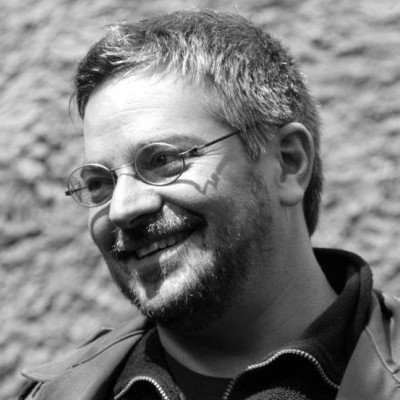
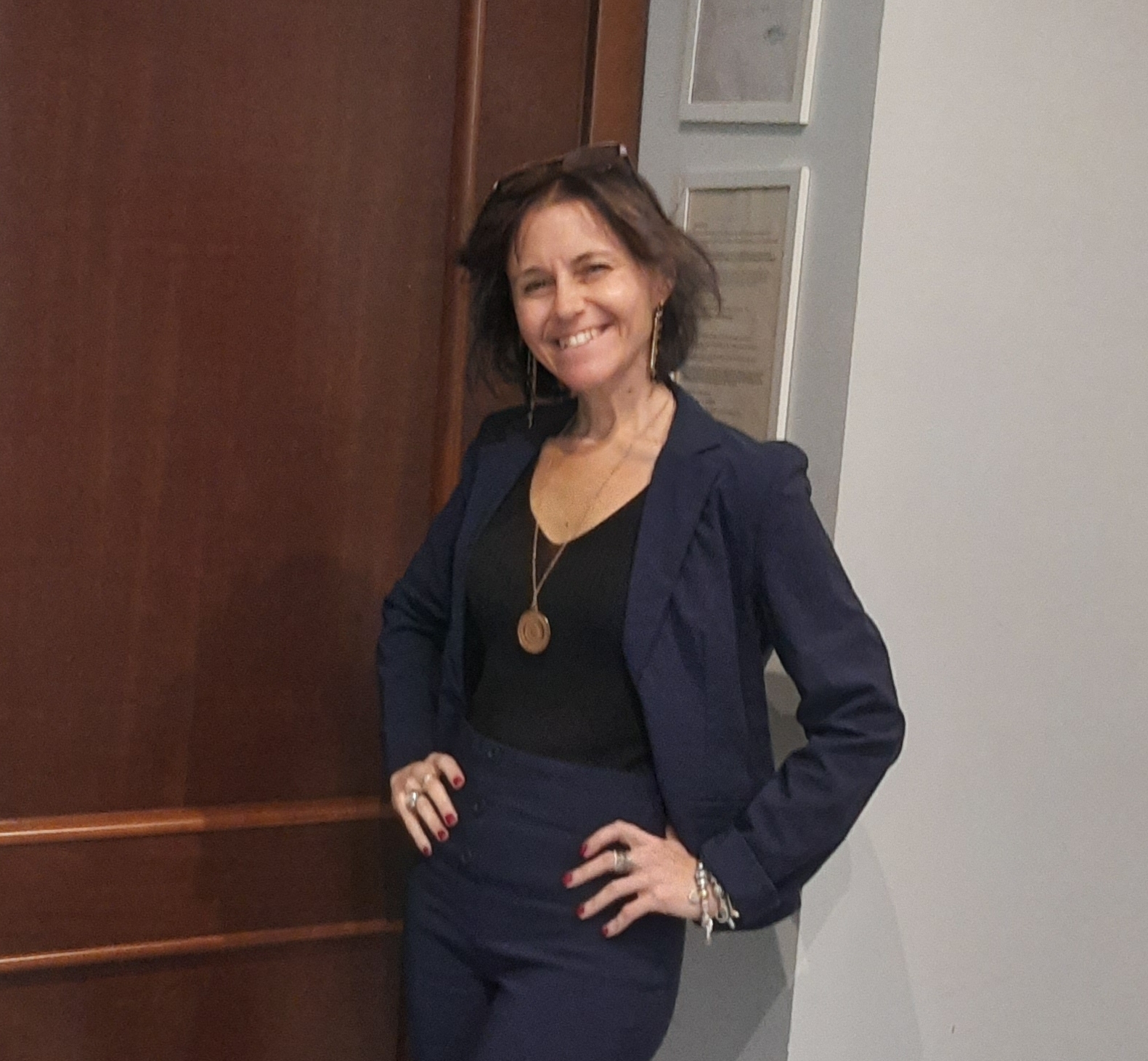
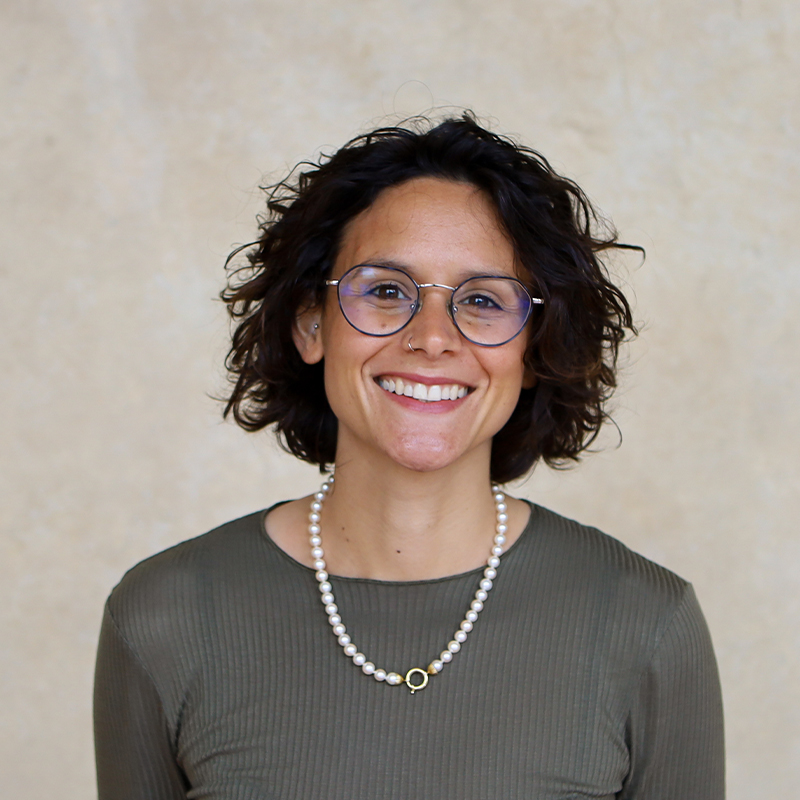
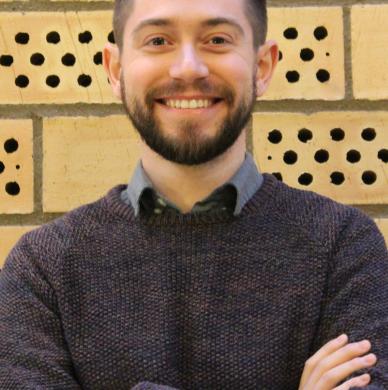
Andrea Appolloni is an Associate Professor at the Department of Management and Law, University of Rome Tor Vergata. His academic career focuses on Management with emphasis on Sustainable Supply Chain Management , Digital Transformation , and Circular Economy . His research explores the intersection of technological innovation and sustainability, particularly through topics like AI in Logistics , Green Procurement , and Policy Optimization . Publications span both theoretical frameworks and empirical studies in China, Italy, and Malaysia, with a strong focus on environmental impact and organizational performance. Recent work includes digital twin applications for human-AI collaboration, blockchain integration in sustainable supply chains, and analyzing barriers to circular economy adoption. His 15 most recent articles (2025-2022) demonstrate a trend toward combining Artificial Intelligence , Operations Management , and Environmental Governance .
Andrea Pieroni is a Full Professor of Ethnobotany at the University of Gastronomic Sciences (UNISG) in Italy. He holds a doctorate from the University of Bonn and has held academic positions at the University of London and the University of Bradford. His research focuses on cultural adaptation processes, traditional foraging practices, and biocultural diversity, with particular emphasis on the Mediterranean, Balkans, Eastern Europe, and the Greater Middle East. Professor Pieroni serves as Vice-President and former President of the International Society of Ethnobiology and is founder/Chief Editor of the Journal of Ethnobiology and Ethnomedicine. He has led research projects addressing food security, wild plant usage, and ecological sustainability, such as UNISG’s DiGe and SASS initiatives. His work bridges ethnobotanical field studies with policy advocacy, emphasizing community-centered approaches to ecological transition. Educations: Ph.D., University of Bonn; Medical Botany training, University of Pisa Research Projects: BIOESSaNS, GLN, ETHCSTWIN Grants & Awards: Leadership roles in global ethnobiology organizations, editorial roles in peer-reviewed journals His recent articles (2024-2025) explore topics such as Romani knowledge systems, desert truffle ethnoecology, and the impact of overtourism on foraging traditions. Pieroni advocates integrating traditional ecological knowledge into modern sustainability frameworks, particularly in food systems.
Luca Barra is Full Professor of Television and Digital Media at the Department of Arts, University of Bologna. His research focuses on media studies, particularly television history and contemporary evolution, transnational circulation of content, serialization, and comic/humorous genres. He has coordinated the Master's Degree in Information, Cultures and Media Organization since 2021 and serves as editor-in-chief of VIEW. Journal of European TV History and Culture. University of Bologna, Department of Arts Research areas: Television History, Transnational Media, Digital Transformation, Italian TV Production Barra's work examines the international mediation of ready-made TV formats, Italian streaming partnerships, and the cultural implications of digital television. His recent articles analyze dystopian narratives, sitcom reception in Italy, and the redefinition of celebrity during the pandemic. He contributes to academic discourse through editorial roles in journals like SERIES and Comunicazioni Sociali. His publications include monographs on Italian television programming, sitcoms, and co-edited volumes exploring European premium TV fiction and digital media frameworks. Barra has led research projects such as ATLas and F-ACTOR, and collaborates with international institutions including Brown University and NECS.
Greta Falavigna is an External Lecturer and PartTime Lecturer at the Polytechnic of Turin 's Department of Management and Production Engineering (DIGEP) , teaching Economics and Business Organization and Political Economy . She holds a Ph.D. in Economics and Technology Management and serves as Research Director (I° livello, Dirigente di ricerca) at CNR-IRCrES (National Research Council of Italy's Research Institute on Sustainable Economic Growth). Key research areas: Econometrics , Artificial Neural Networks , Work-Life Balance , Industry 4.0 , Healthcare Evaluation , and Public Research Analysis . Active in European labor policy with focus on aging populations and gender dynamics , particularly in work-life balance studies using two-step analytical approaches . Collaborates with institutions like European Commission , Italian automotive supply chain , and Italian National Research Council (CNR) . Scientific contributions include methodological innovations in non-parametric econometrics , policy evaluation frameworks for Industry 4.0 , and empirical studies on financial constraints in SMEs. Her work appears in journals like Expert Systems with Applications , European Journal of Operational Research , and Health Care Management Science . Scientific recognition includes National Scientific Qualifications for full/associate professor positions in multiple Italian disciplinary sectors (13/A2, 13/A4, 13/A3, 13/B4). Member of Italian Society of Industrial Economics and Policy (SIEPI) , European Sociological Association (ESA) , and Italian Society of Law and Economics (SIDE-ISLE) .
Martina Ferracane is a Part-time Academic at the Robert Schuman Centre for Advanced Studies of the European University Institute . She also holds an Associate Professorship in International Digital Trade at Teesside University 's School of Computing, Engineering & Digital Technologies. Her work bridges digital trade , data flows , and digital education . Education : Ph.D. in Law & Economics, Hamburg University Key Affiliations : Max Weber Fellow (EUI), Research Fellow (EUI), Policy Leaders Fellow (EUI School of Transnational Governance), Cyber Policy Fellow (Columbia University) Martina's research spans digital trade regulation , data governance , and creative digital education . Her recent publications analyze the EU's regulatory influence on global digital services and pedagogical innovations in maker education. Scientific Recognition : Forbes 30 Under 30 (2018) 2018 - 15 Most Influential Italian Women in Digital Issues Max Weber Fellowship (EUI) Postdoctoral Scholarship (Hamburg University) She founded FabLab Western Sicily and consults for the United Nations , European Commission , and other global institutions.
Enzo Mastinu is an electronic engineer specialized in embedded systems for biomedical applications, holding an Associate Professor qualification in Bioengineering. He earned his bachelor's and master's degrees in electronic engineering from the University of Cagliari and a PhD in biomedical signals and systems from Chalmers University of Technology, Sweden. His research focuses on advanced prosthetics and neuroprostheses for upper limb amputations, incorporating embedded systems design, control algorithms, sensory feedback, signal processing, AI, and osseointegration. Key projects include the HAND and HAND2 initiatives, funded by the EU and the Italian Ministry of Research, aiming to develop semi-autonomous prosthetic hands. He has published 25 journal articles (75% in Q1) and 21 conference papers, contributing to a PCT patent. Mastinu is a Senior Member of IEEE EMBS and RAS, reviews for ~90 journals/conferences, and edits Transactions on Medical Robotics and Bionics (IEEE) and Scientific Data (Nature). He has supervised ~40 students across PhD, master's, internships, and postdocs, and teaches courses in biomedical engineering and STEM education. His scientific awards include the Marie Skłodowska-Curie Fellowship (2021), National Qualification as Associate Professor (2024), and a Young Researcher Grant (2025). Research emphasizes clinical implementation of prosthetics with neural feedback and intuitive control, as highlighted in high-impact journals like the New England Journal of Medicine.
Emanuele Bracco is an Associate Professor of Economics at the University of Verona since 2018, previously serving as Senior Lecturer at Lancaster University. He holds a PhD in Economics from the University of Warwick and an MSc in Economics from the London School of Economics. His research focuses on Political Economy, particularly fiscal federalism, immigration, and social capital. He is affiliated with the Department of Economics and contributes to research initiatives at the VELE (Verona Experimental Lab in Economics) and Visual Research Lab . **Education**: PhD in Economics, University of Warwick MSc in Economics, London School of Economics **Research Interests**: Political Economy: fiscal federalism, electoral systems, and institutional accountability Public Economics: taxation, shadow economy, and intergovernmental relations Immigration Policy: migration dynamics, social capital, and policy spillovers **Teaching**: Bracco teaches advanced courses in Industrial Economics, Monetary Economics, and Political Economy at the undergraduate, master's, and PhD levels. He has contributed to programs across Business Administration, Banking and Finance, and Economics and Finance PhD programs since 2018. **Committees & Roles**: He serves on the Faculty Board of PhD in Economics and Finance , Commissione Seminari , and other academic governance bodies. His work emphasizes interdisciplinary collaboration through centers like CRIEP (Interdepartmental Research Center on Public Economics) .
Andrea Longhi is a Full Professor at the Interuniversity Department of Regional and Urban Studies and Planning (DIST) at Politecnico di Torino, where he also serves as the Rector's representative for the strategic management and conservation planning of Valentino Castle. He is a member of the Interdepartmental Center R3C (Responsible Risk Resilience Centre) and actively contributes to national and international research on cultural and religious heritage. His research interests include medieval architecture, cultural and ecclesiastical heritage, landscape history, urban history, and the historical development of settlements. He focuses on the interplay between liturgical reform and architectural practice, the resilience of religious complexes, and the adaptive reuse of decommissioned churches. His work integrates historical research with contemporary heritage policy and conservation strategies. His recent publications reflect a strong focus on civic and religious architecture, territorial history, and heritage valorization. Themes include post-conciliar religious architecture, the transformation of urban religious heritage, and the historical significance of medieval civic and defensive structures. He often collaborates on interdisciplinary projects and contributes to digital platforms for heritage mapping and resilience. Scientific Committee member - Leon Battista Alberti Study Center Foundation, Mantua, Italy (2023-) National Consultation for Liturgical Pastoral Care of the National Liturgical Office of the Italian Episcopal Conference, Italy (2022-2027) Steering Committee member - Future for Religious Heritage, Belgium (2020-) Scientific Committee member - ICOMOS Italia - PRERICO and ICORP (2020-) Effective member - ICOMOS Italia (2020-) Scientific Committee member - Observatorio de Arquitectura Religiosa Contemporánea, Spain (2019-) Founding partner - Associazione Piemontese per l'Arte Cristiana "Guarino Guarini", Italy (1999-) Andrea Longhi supervises PhD students, including Giulia Assalve, and teaches in doctoral and master's programs at Politecnico di Torino. He has been involved in evaluating cultural heritage funding programs for institutions such as Fondazione Cassa di Risparmio di Cuneo and Compagnia di San Paolo. He also leads significant research projects, including PRIN grants on civic palaces and the architectural heritage of small Italian municipalities. He is involved in multiple research collaborations and has contributed to the development of digital tools for heritage resilience, such as the Mnemonic atlas. His editorial roles include directing the journal Atti e Rassegna Tecnica and serving on the scientific committees of several academic publications.
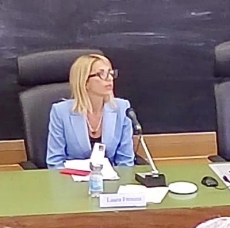
Laura Frosina is an Associate Professor of Comparative Public Law (IUS/21) at the Department of Political Science, Sapienza University of Rome. She teaches courses such as States, Autonomies and Separatisms in the Master's program in International Relations and Comparative Public Law in the undergraduate program in International Cooperation and Development. She is a member of the Doctoral Faculty in Public, Comparative, and International Law and actively participates in national and international research projects. PhD in Theory of the State and Comparative Political Institutions, Sapienza University of Rome (2005) Laurea in Political Science (with honors), Sapienza University of Rome (2000) Postgraduate Course in Assembly Consultants, Sapienza University of Rome (2001) Her research centers on comparative constitutional law, with a strong focus on Spain, Italy, and Latin America. Key themes include multilevel governance, European Union institutions, separatism, autonomy, federalism, parliamentary systems, and constitutional reforms. She analyzes political-constitutional crises, emergency powers, and the evolution of democratic institutions in pluralistic societies. Her work frequently examines the interplay between law, politics, and institutions in contexts of territorial tension. The most recent articles highlight a sustained scholarly engagement with Spanish constitutional dynamics, particularly around the Catalan independence movement, coalition governments under Sánchez, judicial-political conflicts, and broader EU institutional challenges. Trends include the analysis of secession referendums, emergency governance during the pandemic, urban constitutionalism, and the transformation of party systems. Her publications appear in specialized journals such as Nomos , Federalismi.it , and Revista de Derecho Constitucional Europeo , as well as in edited volumes from major academic publishers. Member, Editorial Board of Nomos (since 2001) Responsible, Critical Reviews Section, Nomos (since 2014) Member, Editorial Board, Federalismi.it (2006–2010) Member, Editorial Board, Focus America Latina , Federalismi.it (since 2009) Member, Editorial Board, Quaderni di Nomos (since 2012) Member, Editorial Board, Rivista di Diritto pubblico comparato ed europeo (since 2022) Principal Investigator, Cities and Models of Governance in the 21st Century (Sapienza SEED PNR Project, 2022–2025) Member, Large Ateneo Research Project Following Constitutional Law No. 1/2020, which Parliament? (Sapienza, 2022) Laura Frosina has been involved in numerous research projects funded by the Italian Ministry of Education, Universities and Research (MIUR), CNR, Sapienza University, and the European Committee of the Regions. She has served as a research fellow and principal investigator on topics including intergovernmental cooperation, EU multilevel governance, democratization in South Asia, and urban governance. She has collaborated with the Center of Excellence Integración Europea y Globalización at the University of Granada and participated in international training programs for parliaments in the Balkans. Her academic work bridges doctrinal legal analysis with political science perspectives, contributing to both theoretical and policy-oriented debates. She is affiliated with the Association of Comparative and European Public Law and has coordinated academic events and seminars, including tributes to her mentor Fulco Lanchester. Her institutional page lists regular office hours and remote availability via Google Meet, indicating active engagement with students and the academic community.
Dr. Shervin Shirmohammadi is a Professor at the University of Ottawa's Faculty of Engineering, specifically within the School of Electrical Engineering and Computer Science. With an impressive h-index of 41 and over 6,800 citations across 473 publications, his research has made significant contributions to the fields of computer vision, biomedical instrumentation, and health monitoring systems. His academic journey spans over two decades, beginning with work on communication architectures for virtual environments in 2001 and evolving toward practical healthcare applications. Dr. Shirmohammadi's research interests center on Computer Vision , Image Processing , and Embedded Systems with a strong focus on healthcare applications including nutrition monitoring, mental health assessment, and driver safety systems. His most influential work examines computer vision applications for health monitoring, particularly food calorie measurement systems that use smartphone cameras to analyze nutritional content. His research has evolved to include EEG-based systems for ADHD detection and serious games for autism therapy, demonstrating a consistent trajectory toward practical healthcare solutions using advanced instrumentation techniques. Dr. Shirmohammadi maintains active collaborations with researchers including A. Yassine (118 joint publications), D. Ahmed, Ali Asghar Nazari Shirehjini, and B. Hariri. His publications appear primarily in IEEE Transactions on Instrumentation and Measurement, reflecting his strong connection to the instrumentation and measurement community.
Michele Gattullo serves as an Assistant Professor within the Department of Mechanics, Mathematics & Management at the Polytechnic University of Bari, Italy, specializing in design methods for industrial engineering (ING-IND/15). His research bridges cutting-edge extended reality technologies with practical industrial applications, focusing on human-centered solutions for manufacturing, maintenance, and workplace design. Dr. Gattullo's research portfolio centers on Augmented Reality, Virtual Reality, and Biophilic Design, with significant contributions to Human-Computer Interaction in industrial contexts. He investigates how nature-inspired elements in virtual workspaces enhance employee well-being and productivity, while simultaneously developing practical AR tools for assembly guidance, technical documentation, and maintenance support. His work uniquely integrates ergonomics, cognitive psychology, and industrial engineering to optimize human-technology interaction in complex production environments. Analysis of his 15 most recent publications reveals two dominant research trajectories: biophilic design frameworks for virtual/metaverse workspaces (2023-2025) and industrial AR authoring methodologies. The biophilic stream establishes evidence-based guidelines for digital nature integration, while the AR stream delivers validated tools like ADAM and minimal AR approaches that streamline technical documentation creation. Both trajectories emphasize user experience validation through rigorous industrial studies, demonstrating strong interdisciplinary impact across computer science, industrial engineering, and environmental psychology. Scientific Awards: No awards or honors were documented in the available sources. Advising and Grants: The provided materials contain no information regarding graduate student supervision, research grants, or funding sources. His academic profile emphasizes publication output over mentoring activities or project financing details. Laboratories and Teams: While Dr. Gattullo's research involves advanced XR technologies, the source text does not specify laboratory facilities, research groups, or collaborative teams associated with his work at Politecnico di Bari.
Igor Simone Stievano is a Full Professor at the Polytechnic University of Turin , affiliated with the Department of Electronics and Telecommunications (DET) and the Interdepartmental Center Ec-L - Energy Center Lab . He holds a PhD in Electrical Engineering and has supervised numerous students in disciplines spanning electromagnetic compatibility, machine learning, and multi-energy networks. His research interests include: Modeling and simulation of integrated circuits Machine learning for signal integrity Multi-energy network resilience Stochastic analysis of electrical systems Electromagnetic compatibility Key projects include the EU-funded SHIMMER initiative on hydrogen injection in gas networks and commercial contracts for high-speed I/O macromodeling. He serves as a chair and committee member at major conferences like the IEEE Workshop on Signal and Power Integrity. Scientific recognitions : IEEE Senior Member Recipient of the 2013 Futuro in Ricerca grant Editorial Board member of ENERGIES (2020-) Stievano actively participates in PhD college evaluations for Mathematical Sciences and Metrology programs at Politecnico di Torino, while teaching courses in Electrical Engineering and Digital Technologies across biomedical, computer, and media engineering curricula.
Bernardo Tellini is a Full Professor of Electrical and Electronic Measurements at the Department of Energy, Systems, Land, and Construction Engineering (DESTEC) at the University of Pisa, where he also serves as Vice-Rector for Doctoral Research. He has held this institutional role since 2020, overseeing doctoral program planning, accreditation, and admission procedures. Previously, he chaired the doctoral program in Energy, Electrical, and Thermal Engineering from 2012 to 2016 and served on the Leonardo da Vinci Doctoral School in Engineering from 2008 to 2016. Education: PhD in Electrical Engineering, University of Pisa (1999) Degree in Electrical Engineering, University of Pisa (1993) Postdoctoral research at Karlsruhe Research Center for Technology and Environment Industry experience at ABB Tellini's research focuses on electrical and magnetic measurement methodologies for high-power pulsed applications, characterization of electrical and magnetic properties of materials, aging processes in battery cells, and electromagnetic emissions from power circuits. His work spans from fundamental measurement theory to practical industrial applications, particularly in railway technologies where he represents the University on the Steering Committee of the District for Railway Technologies, High-Speed, and Network Safety in Tuscany. He has served as president of the European Pulsed Power Laboratories agreement and chaired major IEEE conferences including I2MTC 2015 and MELECON 2020. His recent publications reveal a strong emphasis on RFID-based localization systems , nanoparticle-enhanced optical sensors , and advanced battery characterization techniques . The research trajectory shows increasing integration of measurement science with emerging technologies like plasmonic sensing, microwire-based transducers, and smart systems for industrial monitoring. His team has developed innovative approaches for battery health monitoring under vibration stress, temperature sensing using magnetic materials, and precise localization methods using phase-based RFID systems. Professional Service: President of Italian Section of IEEE (2019-2021) Scientific director of Pisa research unit in Association of Electrical and Electronic Measurements (GMEE) Member of Certification Committee of Italcertifer SpA (since 2019) Representative on District for Railway Technologies Steering Committee (since 2013) Tellini has authored approximately 200 publications in international journals and conference proceedings. His leadership extends to academic governance through roles on the DESTEC Department Human Resources Committee and various university committees overseeing scientific qualifications and doctoral programs. His research bridges theoretical measurement principles with practical engineering solutions for energy systems, transportation infrastructure, and industrial monitoring applications.
Philipp Wassler, PhD, is an Associate Professor at the Department of Business Sciences, University of Bergamo, Italy, since 2021. His academic career spans multiple continents, including senior lecturing at Bournemouth University (2017-2021), assistant professorship at University of Science & Technology Macau (2016-2017), and postdoctoral research at The Hong Kong Polytechnic University (2015-2016). He holds a PhD in Tourism Management from The Hong Kong Polytechnic University and a Master's from Breda University of Applied Sciences.
Manuela Fabbri is an Associate Professor in Didactics and Special Pedagogy at the Department of Education Studies 'Giovanni Maria Bertin' at the University of Bologna. She specializes in educational technology, teacher training, and inclusive education. She has been involved in projects like Cl@ssi 2.0 (ICT integration in schools) and the FIRB L4ALL initiative (innovative pedagogy). Her research focuses on E-learning environments, technologies in childhood, and socio-constructivist learning. She teaches courses in Bologna and Rimini, including Educational Technology and Special Education for Mathematics students. Education : PhD in Didactics (2004), Post-Doctoral Research (2006-2007), and extensive grant-funded research in E-learning and educational innovation. She is affiliated with SIPED (Italian Pedagogy Society), SIREM (Media Education Research), and CKBG (Collaborative Knowledge Building Group). Research Contributions : Over 50 publications on topics like AI in education, hybrid learning feedback, and digital citizenship. Her work bridges technology integration, teacher professional development, and inclusive educational practices. She has led projects in El Salvador on educational inclusion and collaborated with the Italian Ministry of Education on ICT initiatives. Grants & Collaborations : Funded by the Italian Foreign Ministry, University of Bologna, and regional educational programs. Key partnerships include the Centre for Studies and Higher Education on Addiction (CESAF) and the SINAPSI Project with Alma Mater Foundation. Labs/Teams : Active in multidisciplinary teams focusing on educational robotics, digital pedagogy, and technology-mediated learning. Her work emphasizes boundary objects (e.g., learning logs) and collaborative tools for teacher reflection.