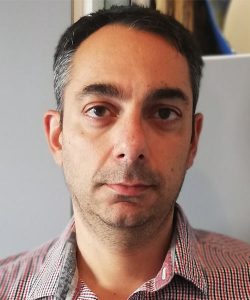
Dr. Despina Cochliou is an Assistant Professor of Social Work at the University of Nicosia since 2006, serving as Programme Coordinator for the BSc Social Work Programme. She holds a PhD from the University of Sussex, a Master's from the University of Wales, and a BSc in Social Work from the ATEI of Athens. Her research focuses on social policy planning, migration/asylum systems, unaccompanied minors, and organizational knowledge creation in social services. She has advised voluntary organizations and local authorities, emphasizing qualitative methodologies. Recent research explores hate speech in Cyprus/Greece, psychosocial needs of unaccompanied children, and Cyprus's Assisted Voluntary Return Programme. She has contributed to projects like the Living Conditions of Asylum Seekers in Cyprus and the miHUB Migrant Information Centres initiative. Notably, her work addresses social integration challenges, asylum reception structures, and the role of technology in workforce reentry. She collaborates on projects blending social work practice with organizational learning frameworks.
Professor Marina Neophytou is a distinguished academic at the University of Cyprus, currently serving as Dean of the Faculty of Engineering (2023-26) and Professor of Environmental Engineering. She leads the Environmental Fluid Mechanics (EFM) Laboratory - Isle of Excellence and coordinates three major European-funded projects: TRIGGER, EnerCMed, and CiROCCO. Her career at the University of Cyprus spans from Lecturer (2005) to Assistant Professor (2009), Associate Professor (2015), and full Professor (2020). Neophytou completed her undergraduate studies at Cambridge University (UK) on a full-expense Cambridge Commonwealth Trust Scholarship (1993-97), followed by MA and PhD degrees in Environmental Fluid Dynamics (2002). She has held visiting positions at ETH-Zurich (2014-15) and as a UNESCO Visiting Research Fellow at MIT and Los Alamos National Laboratory (2019). Her research focuses on environmental fluid dynamics, particularly urban air pollution dispersion, urban heat island effects, and climate change impacts on urban environments. She has pioneered the creation of Cyprus's first undergraduate Environmental Engineering program (to launch in 2025) and established significant international collaborations with Cambridge University, MIT, and ETH-Zurich. Neophytou has secured over 3M euros in external funding for her research and co-organizes annual Urban Physics Schools with international partners. Her work demonstrates a strong commitment to addressing climate-induced health threats and developing sustainable urban solutions through interdisciplinary research. Her recent publications show a clear trend toward climate change adaptation strategies, urban microclimate modeling, and air quality management in Mediterranean environments, with increasing focus on health impacts and policy implications. Best Paper Award in the 6th International Conference on Renewable Energy Resources and Energy Efficiency (2018) World Women's Economic Forum Award for contributions through work in academia towards Sustainable Development (2017) Best Paper Award in the 34th International Air Infiltration and Ventilative Cooling Conference (2013) As Dean and research leader, Neophytou has secured substantial external funding for her Environmental Fluid Mechanics Laboratory and established numerous international partnerships. She has initiated the creation of Cyprus's first undergraduate Environmental Engineering program and developed ERASMUS exchange programs with leading European institutions. Her research team actively investigates climate change impacts on urban environments through both laboratory measurements and computational modeling. Neophytou leads the Environmental Fluid Mechanics Laboratory (EFM) - Isle of Excellence at the University of Cyprus, which maintains active research collaborations with Cambridge University, MIT, ETH-Zurich, and Eindhoven University of Technology. The laboratory runs a joint PhD program with Eindhoven University and conducts ERASMUS exchange programs with multiple European institutions.
Niovi Santama is a Professor in the Department of Biological Sciences at the University of Cyprus, affiliated with the School of Natural and Applied Sciences. She holds a PhD in Neuroscience from the University of Sussex and has extensive postdoctoral experience at institutions like the European Molecular Biology Laboratory (EMBL) and the University of Sussex. Her research focuses on molecular and cellular biology of motor proteins, cilia formation, nuclear membrane assembly, and neurodegenerative diseases. Bachelor's in Biology (University of Athens, 1987) M.Sc. in Molecular Biology (University of Sussex, 1988) Ph.D. in Neuroscience (University of Sussex, 1992) Research interests include ribosomal RNA transcription, centrosome duplication regulation, motor protein functions in the nervous system, and nuclear membrane dynamics. She has published 36 articles in high-impact journals like EMBO Journal and Journal of Cell Science , with an H-index of 23 and over 1,300 citations. Her work has attracted funding from the EU, U.S. Muscular Dystrophy Association, and others. She has advised 26 undergraduate, 14 Master's, and 6 PhD students, along with 7 postdoctoral researchers. Her lab collaborates internationally with institutions in Germany, Spain, Italy, and the U.S. She serves as Cyprus's representative to the European Molecular Biology Conference (EMBC) and leads the Cyprus Bios-Society of Biological Sciences.
Dr. Nezire Ince serves as an Assistant Professor in the Department of Nutrition and Dietetics at Eastern Mediterranean University's School of Health Services, where she additionally holds leadership positions as Coordinator and Vice Head of Department. Based in office SBF 124, she maintains an active research and teaching profile within the university's health sciences framework, contributing to both undergraduate and graduate education in nutrition science. PhD in Nutrition and Dietetics from Eastern Mediterranean University (2019) MS in Medical Nutrition Therapy from Near East University - School of Health Sciences (2007-2010) BS in Nutrition and Dietetics from Hacettepe University Health Technology College (2001-2005) Dr. Ince's research program spans multiple critical areas of nutritional science with particular emphasis on cognitive health in elderly populations , chronobiological influences on eating behavior , and sports nutrition . Her work investigating Mediterranean diet's relationship with cognitive performance, chronotype's connection to prediabetes risk, and anthropometric measurements' correlation with athletic performance demonstrates her interdisciplinary approach. She also conducts vital research on food safety issues including heavy metal contamination from cooking utensils and traditional breastfeeding practices in Northern Cyprus, addressing both local and global nutritional challenges. Analysis of Dr. Ince's recent publications reveals a clear trajectory toward increasingly sophisticated interdisciplinary research connecting nutrition with cognitive neuroscience, sports performance metrics, and environmental health factors. Her work consistently bridges clinical practice with public health applications, with growing emphasis on chronobiological perspectives in nutritional science while maintaining focus on vulnerable populations including children, athletes, and elderly individuals across multiple geographical contexts. III. International Congress of Athletic Performance and Health in Sports (2021) 6. Ulusal Sağlıklı Yaşam Sempozyumu 1. Yaşam için Beslenme ve Spor Kongresi (2017) Dr. Ince maintains an active mentorship role with graduate students, currently supervising multiple PhD and Master's theses covering diverse topics from heavy metal contamination in frozen foods to evening meal impacts on sleep quality, nutritional status of children in special education, emotional eating related to alcohol consumption, and plant-based supplements for athletic performance. Her research portfolio includes the European Union-funded project 'Enhancing Competitiveness of Micro and Small Enterprises Through Provision of Business Support Services' (CRIS/2019/408-307). Within Eastern Mediterranean University's research infrastructure, Dr. Ince contributes to the Nutrition and Diet Polyclinic Laboratory and connects with the university's broader health science initiatives including the Healthy Life Application and Research Center (EMU-SAYMER), advancing nutritional research that addresses both regional needs in Northern Cyprus and contributes to global scientific knowledge.
Demetris Zeinalipour is a Professor of Computer Science at the University of Cyprus, where he founded and directs the Data Management Systems Laboratory (DMSL). He holds a Ph.D. (2005) and M.Sc. (2003) in Computer Science and Engineering from the University of California - Riverside, CA, USA and a B.Sc. in Computer Science from the University of Cyprus (2000). His career includes research positions at Akamai Technologies, University of Athens (as a Marie-Curie Fellow), University of Pittsburgh, and the Max Planck Institute for Informatics (as a Humboldt Fellow). He is an ACM Distinguished Speaker (2017-2020), a Senior Member of ACM and IEEE, and serves on the editorial boards of ACM Transactions on Spatial Algorithms and Systems and Distributed and Parallel Databases. His primary research spans Data Management in Computer Systems and Networks, with expertise in Mobile, Sensor and Spatio-Temporal Data Management; Big Data Management in Parallel and Distributed Architectures; Network, Blockchain and Telco Data Management; Crowd, Web 2.0 and Indoor Data Management; Data Privacy Management; Data Management for Sustainability; and AI and Data Management. His work bridges theoretical foundations with practical applications, resulting in numerous systems including Anyplace Indoor Information Service, ChatUCY, GreenCap, EcoCharge, and Triabase. His research has evolved from early work in sensor networks to current focus on sustainable computing applications addressing climate change challenges. Professor Zeinalipour's publication record shows a strong trajectory toward sustainability-focused data management, with recent work on energy management for smart homes, electric vehicle charging, and solar self-consumption. His research integrates multiple disciplines including spatial databases, mobile computing, IoT systems, and blockchain technologies, with increasing emphasis on addressing real-world environmental challenges through computing solutions. Scientific Recognition IEEE ICDE'24 Outstanding Reviewer Award IEEE MDM'21 Best App Paper Award IEEE MDM'18 Best of MDM Award and Best Demo Award Humboldt Fellow (2016) ACM Distinguished Speaker (2017-2020) ACM and IEEE Senior Member status He has advised numerous PhD students and postdocs, many of whom have established successful careers in both academia and industry. His laboratory maintains strong industry connections and contributes to open-source development. Professor Zeinalipour is deeply committed to addressing real-world challenges through computing research, with recent work focusing on climate change mitigation and sustainable energy management solutions.
Assoc. Prof. Dr. Pelin Karakuş Akalin is an academic member of the Department of Psychology at Eastern Mediterranean University (EMU) , holding an Associate Professor rank. Her research focuses on place attachment , urban identity , acculturation , and social identity , with a particular emphasis on migration and cultural integration. She has supervised multiple Master’s theses and is currently co-supervising a PhD thesis related to LGBTQ+ experiences and well-being. Education : PhD in Psychology (2014), MA in Social Psychology (2007), BA in Psychology (2003) from Ege University, Izmir . Research Interests : Her work explores the spatial dimensions of migration , examining how physical environments and cultural contexts shape personal and collective identities. She investigates heterosexism in Turkey , resilience mechanisms in migrant populations, and the psychological impacts of urban spaces , including public areas like Izmir Kültürpark. Her studies often intersect with political psychology , analyzing attitudes towards European integration and human rights. Notable Publications include research on acculturation attitudes (Migration Letters, 2016), neighborhood attachment (Turkish Journal of Psychology, 2014), and place identity in urban contexts (Turkish Psychological Articles, 2014). Recent work (2022) addresses displacement and environmental identity . Books : Co-authored chapters in volumes such as The Political Psychology of Kurds in Turkey (Palgrave Macmillan, 2023) and Nitel Araştırma Yöntemleri (Nobel Publishing, 2023).
Taraneh Foroutan Yazdian is an Assistant Professor at the Faculty of Economics and Administrative Sciences , Final University. With a PhD in Business Administration (2017) and an MBA (2012) from Eastern Mediterranean University, she focuses on organizational behavior, human resource management, and service industry dynamics. Her research explores employee psychology, workplace stressors, and crisis management in hospitality and aviation sectors. Educational Background : Doctoral and Master's degrees in Business Administration from Eastern Mediterranean University, with a Bachelor's in English Literature from Ershad Damavand Institute of Higher Education. Research Interests : High-quality workplace relationships, social loafing, mental health interventions, and co-opetition strategies in airlines. Publications : Recent works analyze pandemic impacts on restaurants, environmental awareness outcomes, job rotation complexities, and generational responses to workplace incivility. Her scholarly contributions bridge organizational psychology and service sector management, emphasizing practical applications for improving employee well-being and operational efficiency.
Dr. Eleni Gentekaki serves as an Associate Professor at the School of Veterinary Medicine, University of Nicosia, Cyprus, where she integrates veterinary science with advanced microbiological research through a One Health framework. Her work bridges human, animal, and environmental health with a focus on microbial ecology and emerging infectious diseases. Her academic credentials include: Bachelor of Science in Human Kinetics Master's degree in Immunology Doctor of Philosophy in Eukaryotic Microbiology from the University of Guelph, Canada Dr. Gentekaki's research centers on microbial diversity and ecology, with specialized expertise in protistan parasites (particularly Blastocystis), gut microbiome dynamics, and antimicrobial resistance. She employs multi-omics approaches including transcriptomics and metabolomics to investigate host-microbe interactions across diverse ecosystems. Her work consistently applies One Health principles to address complex challenges in infectious disease transmission and environmental health, with field studies conducted in Thailand, Iraq, Bangladesh, and Cyprus. Analysis of her recent publications (2023-2025) reveals a dominant focus on One Health applications, particularly in gut microbiome dynamics and protist ecology. Her research methodology emphasizes longitudinal field studies combined with advanced molecular techniques, often examining zoonotic transmission pathways and environmental reservoirs of pathogens. Geographical diversity characterizes her work, with significant contributions from Southeast Asia and the Eastern Mediterranean. No scientific awards were documented in the available information. While her extensive publication record indicates active research supervision, specific details regarding graduate student advising and research grant funding were not provided in source materials. Her collaborative publications suggest international research partnerships across multiple continents. The available documentation does not specify dedicated laboratory facilities or formal research teams, though her field-based studies imply coordination with local health authorities and veterinary services in study regions.
Birikim Özgür serves as an Assistant Professor at the Faculty of Educational Sciences, Final International University, specializing in the integration of technology within educational frameworks. His academic foundation stems from Middle East Technical University, where he earned advanced degrees directly aligned with his research focus. His educational trajectory includes: Doctoral Degree in Educational Sciences (2008) Master's Degree in Computer Education and Instructional Technologies (2001) Bachelor's Degree in Computer Education (1999) Dr. Özgür's research centers on practical applications of educational technology, particularly examining Web 2.0 tools in English language acquisition and constructivist approaches in primary science education. He investigates how digital environments reshape language learning experiences while analyzing teacher and student perceptions of technology-enhanced classrooms. His work extends to curriculum development challenges, globalization's impact on educational systems, and innovative techniques like mind mapping for instructional design, consistently drawing from empirical case studies conducted in North Cyprus and Turkish educational settings. Analysis of his 2004-2009 publications reveals a methodological emphasis on localized case studies addressing real-world classroom implementation. Key thematic threads include technology adaptation in language teaching, constructivist science education models, and systemic responses to globalization. His research demonstrates persistent attention to the practitioner perspective, particularly how educators navigate technological integration within existing curricular frameworks while addressing student engagement challenges. No formal advisees or doctoral students are documented in the available records. Similarly, the source material contains no references to research grants, funding projects, or laboratory affiliations. As an active faculty member, Dr. Özgür's current responsibilities likely encompass teaching within the Faculty of Educational Sciences, ongoing curriculum development initiatives, and potential contributions to institutional research agendas focused on educational technology.
Dr. Vasileios Balafas is an Educational Technologist at Neapolis University Pafos, with expertise spanning Information Technology, Network Technology, Political Science, and International Relations. His research focuses on the intersection of energy policy and international politics. BSc in Teleinformatics and Management from ATEI of Epirus MSc in Data Communications from Kingston University MSc in International Relations and Policies from the Department of Political Science and International Relations, University of the Peloponnese MA in Local and Regional Government and Development (joint program with University of the Peloponnese, Democritus University of Thrace, Aristotle University of Thessaloniki, and the University of Piraeus) PhD in Political Science and International Relations from the University of Peloponnese (2022), focusing on the role of Energy in International Politics Dr. Balafas has extensive experience in integrating new technologies into the learning process, particularly through certified seminars on distance education and technology use in academia. His work bridges technical innovation with political science, emphasizing energy's strategic role in global affairs. Scientific Awards Scholarship for high academic achievement during Master's studies Dr. Balafas actively contributes to advancing educational practices and is open to collaboration and discussion on his research areas.
Georgios Artopoulos is an Associate Professor at the Science & Technology in Archaeology and Culture Research Center (STARC) of The Cyprus Institute. His work focuses on immersive environments, urban modeling, and digital simulation for heritage preservation and historical narratives. He leads the Virtual Environments Lab, developing tools for social resilience in historic cities, addressing challenges like climate change and urban gentrification. His research integrates ICT, public spaces, and cultural heritage, supported by EU frameworks (H2020, ENI-CBC-MED) and the Cyprus Research and Innovation Foundation. He serves as Head of the Virtual Competency Centre e-Infrastructure at DARIAH ERIC and on the Scientific Advisory Board of JPI Urban Europe. Artopoulos holds a PhD from the University of Cambridge (2010) and has taught at institutions including Heriot-Watt University and the University of Melbourne. His work spans over 30 peer-reviewed articles and contributions to major exhibitions like the Venice Biennale and Hong Kong Bi-City Biennale. Education: MPhil in Architecture and the Moving Image (University of Cambridge, 2004); PhD in Architecture (University of Cambridge, 2010). Awards include the Best International Short Film at Mestre Film Festival. His projects emphasize digital heritage, sustainable urban development, and participatory tools for public spaces. He coordinates interdisciplinary initiatives linking technology, culture, and urban resilience.
Konstantinos Fokianos is a Professor of Statistics at the University of Cyprus. He completed undergraduate studies in Mathematics at the University of Ioannina and earned his M.A. (1993) and Ph.D. (1996) in Statistics from the University of Maryland, USA. His academic career includes positions at Ohio State University (Visiting Assistant Professor), Lancaster University (2018-2020), and the University of Cyprus where he advanced from Lecturer to full Professor. Professor Fokianos specializes in time series analysis with focus areas including integer-valued time series models, high-dimensional time series, spectral analysis, semiparametric modeling, and isotonic estimation. His methodological research encompasses network autoregression, multivariate count time series, causal inference for health questionnaires, and clustering techniques. Applied work includes epidemiological network analysis, medical prognostics for leukemia, and tourism competition modeling. He has held visiting positions at Ludwig Maximilians University, National Institutes of Health, EPFL, and other institutions. Elected member of the International Statistical Institute since 2005, he serves on editorial boards of Journal of Time Series Analysis and Statistical Modeling, and edits Springer's 'Frontiers in Probability and Statistical Sciences' series.
Christos Laoudias is a Research Lecturer at the KIOS Research and Innovation Center of Excellence and the Department of Electrical and Computer Engineering, University of Cyprus. He holds a PhD in Computer Engineering from the University of Cyprus (2014) and a Diploma in Computer Engineering and Informatics from the University of Patras (2003). His research encompasses mobile computing, positioning technologies, and cybersecurity for critical infrastructures. Current projects focus on developing secure positioning systems, indoor navigation solutions, and cyber-physical security frameworks for automated systems and healthcare data exchange. Laoudias leads research teams in EU-funded projects including CUREX (secure health data exchange) and CARAMEL (AI-based cybersecurity for connected vehicles). His publication record demonstrates consistent innovation in location-based services and infrastructure protection, with recent work expanding into drone-based safety systems and digital twins for infrastructure management.
Vasilios Raptis is a Visiting Associate Professor in Computational Chemistry at the School of Sciences, European University Cyprus. He holds a PhD in Chemistry (2004) from the National and Kapodistrian University of Athens, specializing in molecular simulation of polymers. His academic qualifications include an MSc in Polymer Science (2000) and a Diploma in Chemical Engineering (1994) from the National Technical University of Athens. His research focuses on computational methods for materials science, including molecular dynamics simulations of polymers, perovskite materials, and drug delivery systems. Key areas of interest include structure-property relations in nanomaterials, bio-plastic production from waste, and the development of computational tools like POLYANA for analyzing molecular systems. Raptis has participated in multiple research projects funded by the EU and Greek institutions, including REMAP (mask patterning), AMPERCEL (perovskite solar cells), and B2B (bio-waste to bioplastics). His work spans interdisciplinary collaborations in nanotechnology, sustainable materials, and energy harvesting. His publications highlight contributions to perovskite interface modeling, polymer synthesis, and graph theory applications in chemistry. While no awards are explicitly listed, his extensive project involvement underscores his role in advancing applied computational chemistry.
Katerina Menelaou is a Lecturer in Histology at the Department of Medicine, School of Medicine, European University Cyprus. Her research focuses on cellular and developmental biology, particularly in reproductive systems, epigenetic mechanisms, and transgenerational effects of metabolic disruptions. She has contributed to studies on adrenal gland aging, oocyte biology, and folate metabolism impacts on embryonic development. Her recent work explores how disruptions in folate pathways influence embryo growth across generations, placental transcriptome changes post-blastocyst transfer, and spindle organization in human oocytes. Research themes include cellular senescence, mitochondrial dynamics, and epigenetic inheritance patterns in mice models. Dr. Menelaou's publications highlight interdisciplinary approaches bridging histology, molecular biology, and developmental genetics. She is affiliated with EUC's School of Medicine and maintains an active Google Scholar profile.