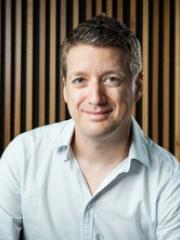
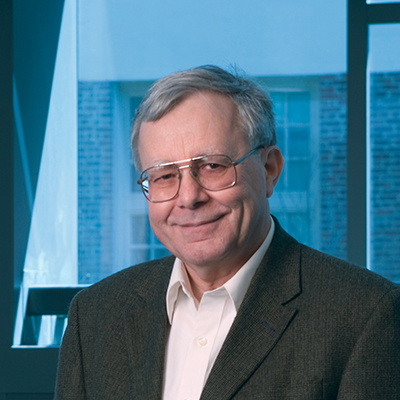
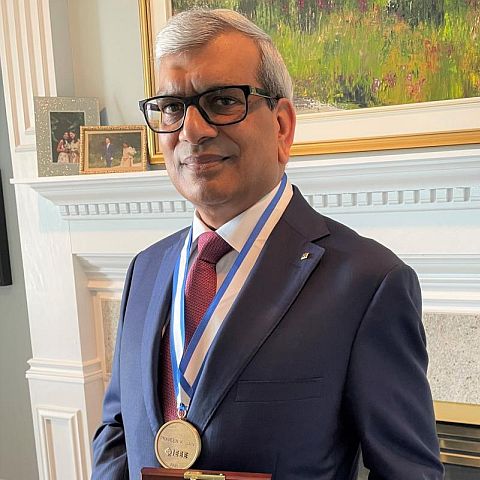
Jeanne VanBriesen is the Duquesne Light Company Professor at Carnegie Mellon University, affiliated with the Department of Civil and Environmental Engineering and the Department of Engineering and Public Policy. She serves as director of the Center for Water Quality in Urban Environmental Systems (Water QUEST) and focuses on environmental systems, urban water sustainability, and the energy-water nexus. Ph.D., Civil Engineering, Northwestern University (1996) M.S., Civil Engineering, Northwestern University (1993) B.S., Education, Northwestern University (1990) Her research explores interactions between water infrastructure, energy systems, and urban environments, with particular attention to disinfection byproducts, bromide dynamics, and climate change resilience. She has secured funding from the National Science Foundation, Department of Defense, and other foundations. VanBriesen has supervised 21 Ph.D. students and 6 M.S. theses, while serving on influential boards including the U.S. EPA Science Advisory Board and the Consortium of Universities for the Advancement of Hydrologic Sciences (CUAHSI). Fellow of ASCE and EWRI 2015 Margaret S. Peterson Woman of the Year (ASCE) 2013 Philip L. Dowd Fellowship 2015 Barbara Lazarus Award for Mentoring 2009 ASCE Pittsburgh Chapter Professor of the Year Her recent work examines climate change hazard indexes, bromide transport from power plants, and innovative water treatment technologies. VanBriesen also contributes to national discussions about hydrologic science education and research policy.
LOUPIAC Philippine is an Associate Professor in the Department of Marketing at TBS Education. Their research focuses on consumer behavior, augmented reality applications in marketing, and digital transformation in small business practices. Key Research Areas: Augmented reality in product evaluation, online-to-offline consumer expectations, social media management for SMEs, and behavioral impacts of AI in marketing. Recent Work: Investigates how immersive technologies influence decision-making, compares physical and digital product trials, and examines trust dynamics with AI-based virtual agents. Contact: p.loupiac@tbs-education.fr
Linnea Blåfield is a Postdoctoral Researcher in the Department of Geography and Geology at the University of Turku, Finland, specializing in high-latitude river systems and hydroclimatic impacts on fluvial processes. Her work bridges geomorphology, hydrology, and environmental engineering to address climate-driven river dynamics. Her research focuses on fluvial geomorphology in cold regions, examining sediment transport under ice-covered conditions, river migration mechanisms, and seasonal hydroclimatic variations. Key methodologies include particle image velocimetry, hydrological modeling, and geospatial analysis to study sediment connectivity, channel evolution, and river-ice interactions in boreal and subarctic environments. Recent publications (2021-2025) reveal consistent themes: digital twin development for river basin management, long-term morphodynamic responses to climate shifts, and sediment dynamics in ice-affected rivers. These works emphasize interdisciplinary collaboration across Nordic institutions and practical applications for river management and climate adaptation. No scientific awards were documented in the provided materials. Information regarding advised students or secured research grants was not present in the source text. Dr. Blåfield collaborates extensively with researchers from the University of Oulu (Petteri Alho, Elina Kasvi), Finnish Environment Institute, and Baltic Sea research teams, focusing on field data collection and modeling of Nordic river systems.
Dr. Amar Khennane serves as a Senior Lecturer at the University of New South Wales (UNSW) Canberra campus within the School of Engineering and Information Technology. His academic career spans multiple institutions including previous appointments as Maitre de Conferences in Tizi-Ouzou, Algeria, Research Associate in Newcastle, Australia, and Lecturer/Senior Lecturer at the University of Southern Queensland (USQ). His research interests focus on sustainable construction materials, particularly bio-cementitious materials, composite materials, timber engineering, reinforced concrete, and hybrid structures. Dr. Khennane has published extensively in these fields with 47 peer-reviewed journal papers, 33 conference papers, 6 other publications, and 2 books including the widely recognized "Introduction to Finite Element Analysis Using MATLAB (R) and Abaqus" (2013). His recent work emphasizes recycling timber waste into geopolymer cement composites, sustainable wood-geopolymer masonry units, and fire response of timber structures. His scholarly output shows a clear trend toward sustainable construction materials and advanced structural analysis techniques, with significant contributions in finite element modeling, seismic performance evaluation, and fire resistance of composite structures. The majority of his recent publications (2020-2024) focus on developing sustainable building materials using recycled components and analyzing structural behavior under various loading conditions. Dr. Khennane actively contributes to engineering education through teaching courses in Structural Analysis, Finite Element Method, Reinforced Concrete, and Stress/Strain Analysis. His educational background includes authoring textbooks that bridge theoretical concepts with practical computational tools like MATLAB and Abaqus.
Syed Noor is an Associate Professor at Louisiana State University Shreveport (LSUS) , affiliated with the College of Business Education since 2020. His research focuses on public health, psychology, and behavioral epidemiology, particularly addressing HIV/STI prevention, substance abuse, mental health, and health disparities among LGBTQ+ populations. University: Louisiana State University Shreveport School: College of Business Education Rank: Associate Professor His work explores social determinants of health outcomes, with a focus on minority stress, drug use patterns, and preventive care strategies among gay, bisexual, and other men who have sex with men (MSM). Recent studies examine PrEP efficacy , substance abuse correlations , and epidemiological trends in HIV/STI transmission across North America. The 15 most recent articles highlight a multidisciplinary approach to public health, integrating psychology for understanding behavioral risk factors and social science for methodological rigor. Key trends include syndemic theory , harm reduction strategies , and cultural competency in addressing health disparities among marginalized communities.
Associate Professor David Lange serves as Deputy Director of Higher Degree by Research at the School of Civil Engineering , University of Queensland . With academic qualifications from the University of Edinburgh (PhD and MSc), he specializes in fire safety engineering and structural engineering , focusing on timber buildings, lithium-ion battery fire safety, and risk analysis techniques. Chartered Engineer (CPEng), Fellow of Engineers Australia (FIEAust) Registered Professional Engineer of Queensland (RPEQ) APEC Engineer and International Professional Engineer (IntPE) His research explores fire behavior in mass timber structures , vertical fire spread , and infrastructure resilience . Publications highlight his expertise in probabilistic modeling, fire dynamics, and structural response to extreme conditions. Recent collaborative studies examine flame spread in ventilated façades, compartment fire behavior, and risk evaluation frameworks. He actively supervises PhD projects in areas like fire safety of low-carbon concrete, diagrid structures, and physics-informed machine learning for fire modeling.
Dr. TÓTH Csaba is an Associate Professor at the Department of Highway and Railway Engineering, Budapest University of Technology and Economics (BME), Faculty of Civil Engineering. He teaches courses such as Highway and Railway Structures (BMEEOUVAI41) and Pavement Structures (BMEEOUVMU63), while previously teaching Pavement Analysis and Design (BMEEOUVDT81) and Project Management in Transportation (BMEEOUVMU-4). His research focuses on asphalt technology, pavement diagnostics, and sustainable road construction. Phone: +36 1 463 1154 Room: ÉL. ép / 206/E Research Interests: His work emphasizes non-destructive evaluation methods (e.g., Ground-Penetrating Radar), rheological modeling of asphalt binders, recycled asphalt pavement applications, and climate-adapted pavement design. Key methodologies include the Ramberg-Osgood model for dynamic modulus prediction and the virtual inertial point method for structural diagnostics. Scientific Contributions: Recent research trends highlight sustainable road rating systems, thermal stress analysis in asphalt pavements, and advanced diagnostic techniques for infrastructure monitoring. Scientific Awards: Magyar Felvételi Scholarship (#építő250)
Mohan Kelkar serves as an Applied Professor of Petroleum Engineering at The University of Tulsa, holding a prominent position within the McDougall School of Petroleum Engineering under the College of Engineering & Computer Science. With over 60 refereed publications, 250+ technical presentations, and three authoritative books—including the SPE best-seller 'Applied Geostatistics for Reservoir Description'—he has established himself as a leading figure in petroleum engineering research and education. His academic credentials include: Ph.D. in Chemical Engineering, University of Pittsburgh (1982) M.S. in Petroleum Engineering, University of Pittsburgh (1981) B.S. in Chemical Engineering, University of Mumbai (1979) Dr. Kelkar's research centers on reservoir optimization, production modeling, and development planning for oil and gas reservoirs, with significant contributions to petroleum economics and expert consultation in oilfield legal disputes. His work bridges advanced engineering techniques with economic evaluation frameworks, particularly evident in his books 'Natural Gas Production Engineering' and 'Petroleum Economics and Property Evaluation.' Analysis of his 15 most recent publications reveals a dominant focus on reservoir simulation methodologies, unconventional resource development, and innovative optimization techniques. Key trends include the application of fast marching methods for well placement, liquid loading prediction in gas wells, and shale reservoir modeling, demonstrating consistent evolution from foundational reservoir engineering toward cutting-edge computational approaches. His exceptional contributions have been recognized through numerous prestigious awards: SPE International Honorary Member Award (2024) SPE Distinguished Service Award (2018) The University of Tulsa Outstanding Teacher Award (2014) SPE International Distinguished Member Award (2010) Tau Beta Pi Teaching Excellence Award (2001) Dr. Kelkar maintains active professional engagement through SPE leadership roles—including Board of Directors service (2010-2013) and General Chair of the SPE IOR meeting (2006)—while balancing academic responsibilities with community leadership as President of the South Asian Performing Arts Foundation. His career exemplifies the integration of scholarly rigor, industry impact, and cultural contribution within the petroleum engineering discipline.
Denny Yu is an Associate Professor at the Edwardson School of Industrial Engineering, Purdue University. His work bridges human factors, neuroergonomics, and healthcare safety through advanced sensor systems and AI. Primary Affiliation : Edwardson School of Industrial Engineering, Purdue University Research Themes : Surgical ergonomics, autonomous vehicle human factors, cognitive workload assessment, multimodal physiological sensing Dr. Yu's research focuses on neuroergonomics and human-robot interaction , particularly in surgical and transportation contexts. His team develops sensor-based systems for workload monitoring, including: EEG-eye tracking fusion for situation awareness Wearable exoskeletons for surgical posture support Computer vision tools for lifting task risk analysis Smart infusion pump usability frameworks AI-driven surgical coaching systems Recent publications emphasize deep learning applications in soft tissue deformation estimation and real-time adaptive systems for robotic surgery augmentation. His work spans both occupational health (veterinary surgeons, airport workers) and medical device innovation domains.
Éric Raufaste is a Professor in Cognitive Psychology and Ergonomics at the Université Toulouse - Jean Jaurès (UT2J), affiliated with the Cognition, Languages, Language, Ergonomics (CLLE-LTC) research unit (UMR 5263, CNRS). He has served as Director of the UFR of Psychology since November 2024 (previously 2013-2017) and Deputy Director of the Aeronautics-Astronautics Doctoral School since 2019. His research focuses on well-being , optimal cognitive functioning , diagnosis , and uncertainty reasoning . Research Themes : Psychological resources, hedonic treadmill, selflessness, cognitive workload, diagnostic error in emergency medicine Supervision : Currently supervising Elene Strayer; previously guided 8 PhD students including Nicolas Pellerin and Marion Inigo Collaborations : Works with CNRS, École Nationale d'Aviation Civile, EADS Corporate Foundation, and international institutions like University Rennes 2 Scientific Contributions : 15+ publications (2000-2024) on psychological resources, happiness modeling, and cognitive processes in air traffic control. Key journals include Journal of Positive Psychology , Journal of Happiness Studies , and Scientific Reports . His work spans cognitive science, ergonomics, and pandemic psychology.
Bettina Kubicek is Professor of Work and Organizational Psychology at the University of Graz, Faculty of Natural Sciences, where she leads research in the Smart Regulation profile area and contributes to the Human Factor in Digital Transformation and Brain and Behavior research networks. Her work bridges psychological theory with practical organizational challenges in contemporary workplaces. Her research spans work psychology, organizational psychology, and economic psychology with emphases on flexible work arrangements, work intensification, and human-robot collaboration. She investigates cognitive demands of flexible work, work-home interface dynamics, and digital transformation impacts through diary studies and experimental designs. Recent work explores telework challenges, AI in HR, and trust mechanisms in human-robot teams during disaster response. Analysis of her recent publications reveals growing focus on human-robot interaction in Industry 4.0, cognitive aspects of telework, and cross-cultural validation of work addiction scales. Her methodology combines intensive longitudinal designs with physiological measures, increasingly incorporating VR interfaces and AI-driven personnel selection experiments. Scientific awards include: Wirtschaftskammerpreis for project 'Flexible Arbeitsbedingungen und die Vereinbarkeit von Beruf und Familie' (2015) Innovationspreis der Universität Wien (2012) Multiple research stipends for University of Wisconsin-Madison stays (2005-2008) She has secured significant competitive grants including FWF-funded 'Cognitive demands of flexible work: Risks and challenges' (2017-2022) and FFG-supported 'Enabling and Assessing Trust when Cooperating with Robots in Disaster Response' (2021-2023), examining trust calibration and cognitive load in human-robot teams. Current projects address evidence-based guidelines for ICT use in work-life boundaries. As core member of the Human Factor in Digital Transformation network, she collaborates with engineers, computer scientists, and healthcare professionals to develop human-centered technological solutions, particularly in healthcare robotics and disaster response systems.
David Roueche serves as the Gottlieb Associate Professor of Structural Engineering within the Department of Civil and Environmental Engineering at Auburn University's Samuel Ginn College of Engineering. His research focuses on structural performance under extreme wind events, forensic engineering methodologies, and improving building resilience against hurricanes and tornadoes through interdisciplinary approaches. Dr. Roueche's academic foundation includes advanced degrees from the University of Florida, with complementary physics training: Ph.D. in Structural Engineering, University of Florida M.S. in Civil Engineering, University of Florida B.S. in Civil Engineering, University of Florida B.S. in Engineering Physics, Jacksonville University His primary research explores extreme wind loads on low-rise buildings , post-disaster field investigations , and performance-based wind engineering , with specialized expertise in light wood-frame structures and surge/flood modeling. He integrates engineering analysis with social science through survivor interviews to reconstruct tornado events and identify vulnerabilities in residential construction, particularly for mobile and manufactured housing in the Southeastern United States. Analysis of his recent publications reveals a dominant focus on post-disaster assessment frameworks, field data collection protocols, and performance-based evaluation methods for wind-affected structures. His work increasingly emphasizes interdisciplinary collaboration—combining engineering, social science, and geospatial technologies—to develop comprehensive disaster response systems and improve building codes. Key trends include standardization of forensic engineering practices through organizations like StEER and application of computational modeling to predict structural failures. Dr. Roueche's significant recognitions include: Ginn Faculty Achievement Fellow designation NSF CAREER Award (2020) for advancing post-windstorm assessment methodologies He directs substantial research funding including a $500,000 USDA grant for timber-steel composite research and leads the Auburn Mass Timber Collaborative—an interdisciplinary initiative uniting forestry, architecture, and engineering faculty. Through the Structural Engineering Emergency Response (StEER) network, he coordinates Field Assessment Structural Teams for disasters like Hurricane Ian and the 2022 Arabi tornado, developing standardized protocols adopted nationally for post-disaster evaluations. His mentoring extends to doctoral students in civil engineering, with recent success in securing competitive fellowships for advisees. As a core member of StEER, Dr. Roueche develops and implements field assessment protocols used in rapid disaster response. He leads FAST teams deploying UAVs, LiDAR, and ground surveys to document structural performance after hurricanes and tornadoes, with datasets informing FEMA guidelines and building code revisions. His work with the Auburn Mass Timber Collaborative advances sustainable construction methods through experimental testing of innovative structural systems.
Haim H. Bau is the Richard H. & S. L. Gabel Professor of Mechanical Engineering at the University of Pennsylvania. His research bridges mechanical engineering, biomedical applications, and nanotechnology, focusing on microfluidics and molecular detection technologies. Key affiliations: School of Engineering and Applied Science, Department of Mechanical Engineering and Applied Mechanics Research Highlights: Active Control of Flow Patterns Carbon Nanopipettes for Cellular Probes Electrokinetics and Dielectrophoresis In Situ Electron Microscopy (Nanoaquarium) Magneto-Hydrodynamics (MHD) Lab-on-a-Chip for Point-of-Care Diagnostics Scientific Awards: Richard H. & S. L. Gabel Professorship Article Trends: Recent work emphasizes portable microfluidic diagnostics (e.g., SARS-CoV-2, HIV, Zika), CRISPR-enhanced mutation detection, and biophysical studies of microswimmers like C. elegans. Keywords include Molecular Diagnostics, Microfluidics, and Nanotechnology.
Praveen Jain is a Professor of Electrical and Computer Engineering at Queen's University, where he also serves as Director of the Centre for Energy and Power Electronics Research (ePOWER) and was a Tier 1 Canada Research Chair in Power Electronics from 2001 to 2022. His career spans over 35 years of groundbreaking contributions to power electronics technology and applications. Dr. Jain received his PhD from the University of Toronto in 1987. His research interests focus on power electronics and systems, with particular expertise in resonant power conversion, renewable energy integration, photovoltaic micro-inverters, and electric vehicle power systems. His work has significantly advanced the field through both theoretical contributions and practical implementations. His extensive publication record includes over 600 papers and more than 100 patents, reflecting his sustained innovation in power electronics. These publications demonstrate a strong trend toward renewable energy integration, particularly photovoltaic systems, electric vehicle applications, and advanced converter topologies that improve efficiency and power quality. 2021 IEEE Medal in Power Engineering 2017 IEEE Canada Electric Power Medal 2011 IEEE William Newell Power Electronics Award 2004 Engineering Medal of the Ontario Professional Engineers Fellow of the IEEE Fellow of the Royal Society of Canada Fellow of the Engineering Institute of Canada Fellow of the Canadian Academy of Engineering Dr. Jain has supervised over 100 graduate students, postdoctoral fellows, and power electronics engineers throughout his career. His industry engagement is exceptional, having founded two successful startups: CHiL Semiconductor (acquired by International Rectifier) and SPARQ Systems (listed on the TSX Venture Exchange in 2022). His research has been supported by significant industry partnerships and government funding, reflecting the practical impact of his work. As Director of the Centre for Energy and Power Electronics Research (ePOWER), Dr. Jain leads a vibrant research team focused on advancing power conversion technologies for renewable energy integration, electric transportation, and next-generation power systems. The center maintains strong industry partnerships and has produced numerous commercialized technologies.
Jacek Gwizdka is an Associate Professor and Director of the Information eXperience Lab at the University of Texas at Austin's School of Information (iSchool). His research focuses on human-computer interaction, cognitive psychology applied to information retrieval, and neuro-physiological methods to assess cognitive processes during information search. He holds a PhD in Industrial Engineering from the University of Toronto and has held academic roles since 2005, including visiting appointments at Rutgers University and the University of Toronto. Affiliations: ACM Senior Member, ASIS&T Distinguished Member Key Projects: NeuroIS initiatives, health misinformation research, eye-tracking and EEG studies Research Interests: Cognitive load measurement, implicit assessment of information relevance, and neuro-physiological tools for studying human-information interaction. Active in conference organization (CHIIR, SIGIR) and editorial roles (Interacting with Computers). Recent Awards: Distinguished Fellow of the Kosciuszko Foundation, 2025 h-index=42 (Google Scholar). Grants: Google Faculty Award (2020), UT VPR grant on health search behavior & cognitive impairment. Supervises research in areas like generative AI, EEG-text bridging, and health misinformation correction. Labs/Teams: Information eXperience Lab, collaborations with UT’s Communication Sciences & Nursing departments on health search studies.