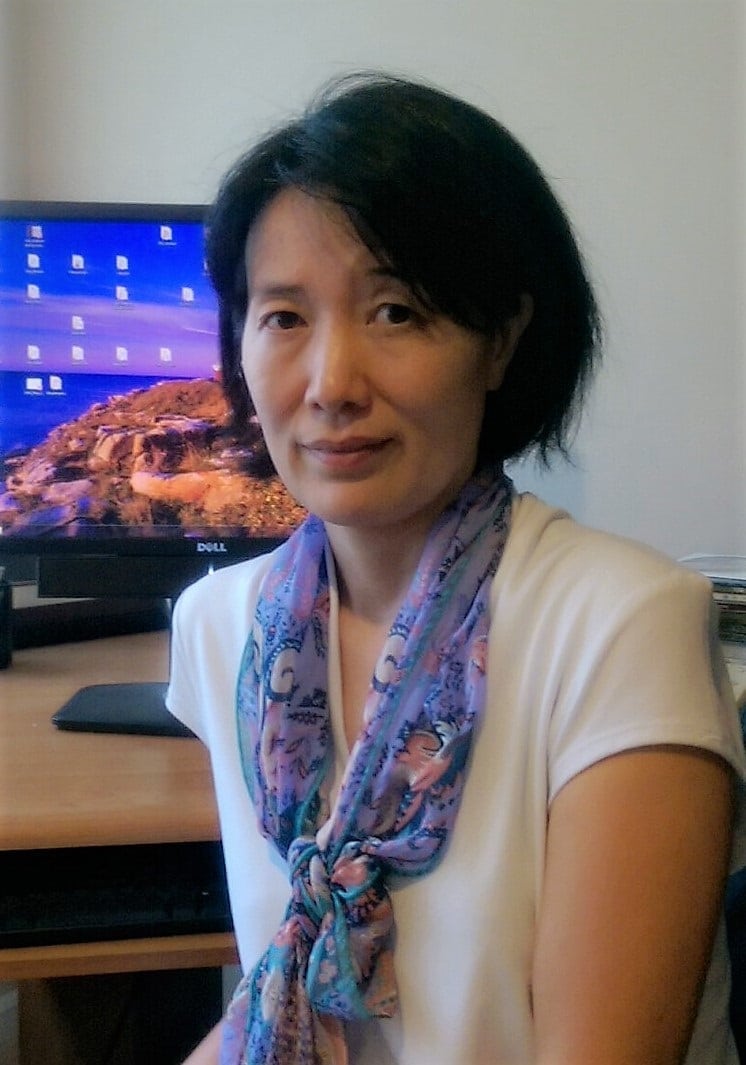
Dr. Giulia Biancon is an Assistant Professor Adjunct in the Department of Medical Oncology and Hematology at Yale School of Medicine. She holds a PhD from the University of Milan (2019) and is a member of the Halene Lab, focusing on RNA biology and hematologic malignancies. Her research combines high-throughput methodologies to study RNA mechanisms in diseases like myeloid leukemias and splicing factor mutations. Education: PhD in Molecular Biology from the University of Milan (2019). Research Interests: RNA splicing, stress granules in cancer, epitranscriptomics, clonal hematopoiesis, and the interplay between genetic mutations and cellular pathways in blood cancers. Awards: 2024 Eclipse Award, 2022 ASH Abstract Achievement Award, and 2022 RNA Society Best Poster Award. Her work has been published in journals like Cell Reports , Blood , and Molecular Cell . Labs/Teams: Principal member of the Halene Lab and coordinator at the Yale Center for RNA Science and Medicine. Collaborates with institutions like the SeroNet network for immunology studies.
Wing Lam is an Associate Research Scientist in the Department of Pharmacology at the Yale School of Medicine. He holds a BSc in Molecular Biology and a PhD in Biochemical Pharmacology from City University of Hong Kong, followed by postdoctoral training at Yale. His research focuses on developing traditional Chinese medicine (TCM) formulations as adjuvants for cancer therapy, notably YIV-906, which enhances chemotherapy efficacy and mitigates intestinal toxicity. Lam also pioneered the STAR database for herbal drug discovery and the Mechanism-Based Quality Control (MBQC) platform for botanical drug standardization. Education: BSc (Hons) Molecular Biology, City University of Hong Kong, 1995 PhD Biochemical Pharmacology, City University of Hong Kong, 1999 Postdoc, Pharmacology, Yale University, 1999-2002 His research interests span cancer pharmacology, TCM modernization, and mitochondrial toxicity mechanisms. Key projects include YIV-906’s role in enhancing anti-PD1 and CAR T-cell therapies, developing L-nucleoside analogs like troxacitabine, and investigating tylophorine analogs’ antitumor effects. Lam has co-chaired sessions at multiple Consortium for Globalization of Chinese Medicine (CGCM) meetings and contributed to patents on herbal drug formulations and quality control methods. Recent work explores YIV-906’s potential for inflammatory bowel disease (IBD) and phase II clinical trials for colon and liver cancers. Lam’s publications highlight synergistic drug interactions, mitochondrial DNA depletion mechanisms, and TCM’s evidence-based application in chronic diseases. His grants include studies on PHY906 as an adjuvant in rectal cancer therapy and collaborations with Yiviva, Inc. He maintains active roles in editorial boards, including a special issue on herbal drug quality control in Frontiers in Pharmacology . Lam’s lab is embedded within Dr. Yung-Chi Cheng’s group, focusing on translational pharmacology and botanical drug innovation.
Prof. Waldemar Kolanus leads the Molecular Immunology and Cell Biology department at the University of Bonn's Life & Medical Sciences Institute (LIMES) . His research bridges immunoregulation , stem cell dynamics , and metabolic stress responses in immune cells. Unit 2 member at LIMES Principal investigator in SFB 704 and ImmunoSensation Cluster Leads a multidisciplinary lab with postdocs, PhD students, and technical staff His work focuses on intracellular signaling pathways connecting immune activation to tissue homeostasis, particularly through: Cytohesin proteins in integrin-mediated adhesion and migration TRIM71 in stem cell regulation and congenital hydrocephalus High-salt environments affecting macrophage function Publication trends show expertise in immune cell migration , genetic models , and chemical inhibition , with frequent use of mice and zebrafish for in vivo studies. Key articles explore: TRIM71's dual role in auditory development and germ cell maintenance Cytohesin family's Golgi regulation and insulin signaling Ruxolitinib's off-target migration inhibition of dendritic cells Contact details: Address: LIMES Institute, Carl-Troll-Straße 31, Bonn Email: kolanus.sekretariat@uni-bonn.de Phone: +49 228 73-62788
Peter A. Jones is President and Chief Scientific Officer at the Van Andel Institute (VAI) in Grand Rapids, Michigan, where he leads the Department of Epigenetics. He previously served as Director of the USC Norris Comprehensive Cancer Center from 1993 to 2011 and has been a central figure in advancing epigenetics research, particularly in cancer. His laboratory investigates DNA methylation, chromatin dynamics, and epigenetic therapies. Research Interests: Dr. Jones's work centers on epigenetic mechanisms in cancer, including DNA methylation, histone modifications, nucleosome positioning, and the therapeutic potential of epigenetic drugs. His research has pioneered the use of DNA methylation inhibitors like 5-azacytidine and explored viral mimicry as a mechanism for immune activation in cancer. He also studies transposable elements and their role in gene regulation and immune response. Publication Trends: His recent publications (2021–2024) reveal a strong focus on the interplay between epigenetics and immunotherapy, particularly how DNA methyltransferase inhibitors (DNMTi) induce viral mimicry, enhance immune recognition, and improve responses to checkpoint blockade. Studies span hematological malignancies, solid tumors, and T cell biology, with frequent collaboration with Stephen Baylin and others. Scientific Awards: Member, National Academy of Sciences Member, National Academy of Medicine Fellow, AACR Academy Fellow, AAAS Fellow, American Academy of Arts and Sciences Kirk A. Landon Award for Basic Cancer Research (2009) Medal of Honor, American Cancer Society (2011) Outstanding Investigator Grant, NCI Harvey Prize (2024) Advising and Grants: Dr. Jones mentors multiple postdoctoral fellows, graduate students, and research scientists. His lab is supported by major grants, including the VAI-SU2C Epigenetics Dream Team, which has launched 15 clinical trials. He has received sustained funding from the National Cancer Institute and collaborates with institutions worldwide to advance epigenetic therapies. Labs and Teams: He leads the Peter Jones Laboratory at VAI, a multidisciplinary team investigating epigenetic regulation in cancer. The lab includes computational biologists, clinical researchers, and molecular biologists, working on both basic mechanisms and translational applications. The team is part of larger collaborative initiatives such as the VAI-SU2C Epigenetics Dream Team and the International Linked Clinical Trials Program.
Dr. Nivee Pradip Amin serves as Clinical Assistant Professor of Medicine at Weill Cornell Medical College and Assistant Attending Physician at NewYork-Presbyterian Hospital, holding leadership roles as Associate Director for Consultative Cardiology and Director of the Women's Heart Program & Preventive Cardiology. Her clinical expertise spans general cardiology, preventive cardiology, and echocardiography with focus on high-risk cardiovascular prevention. Her educational credentials include: B.A., B.S. in International Studies and Business from University of Pennsylvania (2002) M.D. from Johns Hopkins University School of Medicine (2007) M.H.S. in Clinical Investigation from Johns Hopkins Bloomberg School of Public Health (2013) Research centers on sex-based disparities in cardiovascular outcomes, women's heart health across the lifespan, and preventive strategies for coronary/valvular disease. She investigates intersections between cardiology and obstetrics/oncology, emphasizing personalized risk assessment and early intervention to improve quality of life. Analysis of her publications reveals consistent focus on women's cardiovascular biomarkers (e.g., breast arterial calcium), obstetric complications as long-term risk factors, and disparities in revascularization outcomes. Her work leverages large-scale database analysis to address gaps in preventive care for high-risk populations including cancer patients and those with cirrhosis. Dr. Amin maintains active board certifications in Internal Medicine, Cardiovascular Diseases, Nuclear Cardiology, and Echocardiography through the American Board of Internal Medicine, and holds professional memberships in the American College of Cardiology, American Society for Preventive Cardiology, and American Heart Association. She provides inpatient consultative care on cardiac telemetry units while leading the Women's Heart Program, which integrates preventive cardiology services with gender-specific treatment protocols. Fluent in Spanish, she emphasizes culturally competent care tailored to individual patient needs across diverse populations.
Barbara Given is a University Distinguished Professor in the College of Nursing at Michigan State University. Her research focuses on the interplay between formal healthcare systems and informal caregiver networks, particularly in oncology and geriatric populations. She has secured over 34 years of NIH funding, including grants from the National Cancer Institute, NIMH, and others. Dr. Given earned her Ph.D. at MSU, following a BSN and MSN from Ohio State University. Her work centers on caregiver burden, symptom management in chronic disease, and caregiver-patient communication. She developed the Caregiver Burden Instrument, widely used in research and clinical settings across multiple languages. Key research interests include: 1) caregiver stress and support systems, 2) symptom management in cancer patients, and 3) healthcare coordination challenges in aging populations. Her NIH-funded projects address adherence to oral chemotherapy, fall prevention in cancer survivors, and psychosocial outcomes post-treatment. Recent articles emphasize innovation in symptom tracking (e.g., text messaging for adherence), caregiver mental health barriers, and longitudinal symptom analysis. Awards/fellowships are not explicitly stated, though her sustained NIH support reflects significant recognition. Dr. Given advises on grants and mentors nurse researchers. She collaborates on interdisciplinary teams focused on palliative care, gerontology, and technology-based interventions. Her work bridges clinical practice and policy, advocating for integrated care models to reduce caregiver burden.
Ben Cosgrove is an Associate Professor in the Meinig School of Biomedical Engineering at Cornell University, serving as Director of Graduate Studies. His research focuses on systems bioengineering approaches to understand muscle stem cell dysfunction in aging and disease. He leads the Cosgrove Lab, a multidisciplinary group integrating biomedical engineering, stem cell biology, and systems biology to study microenvironmental signaling in muscle regeneration. His work includes developing biomimetic microenvironments for stem cell manufacturing and improving regenerative medicine therapies. Dr. Cosgrove holds a B.Eng. from the University of Minnesota (2003) and a Ph.D. in Bioengineering from MIT (2009). Postdoctoral training at Stanford University (with Dr. Helen Blau) followed. His research is supported by NIH grants (including R01, R21), the Glenn Medical Research Foundation, and others. He has been recognized with awards such as the BMES Graduate Research Award (2008), Rising Star Award (2015), and Swanson Teaching Excellence Award (2019). Research interests span bioengineering, biomechanics, computational science, and systems biology. His lab's innovations include spatial transcriptomic mapping and high-yield stem cell expansion platforms. Current projects aim to decode stem cell-niche interactions to treat muscle degeneration and aging. Grants: NIH K99/R00, R01, R21; Glenn Medical Research Foundation Labs/Teams: Cosgrove Lab (Cornell University) Future Work: Expanding applications of spatial transcriptomics and engineering regenerative therapies for muscle diseases
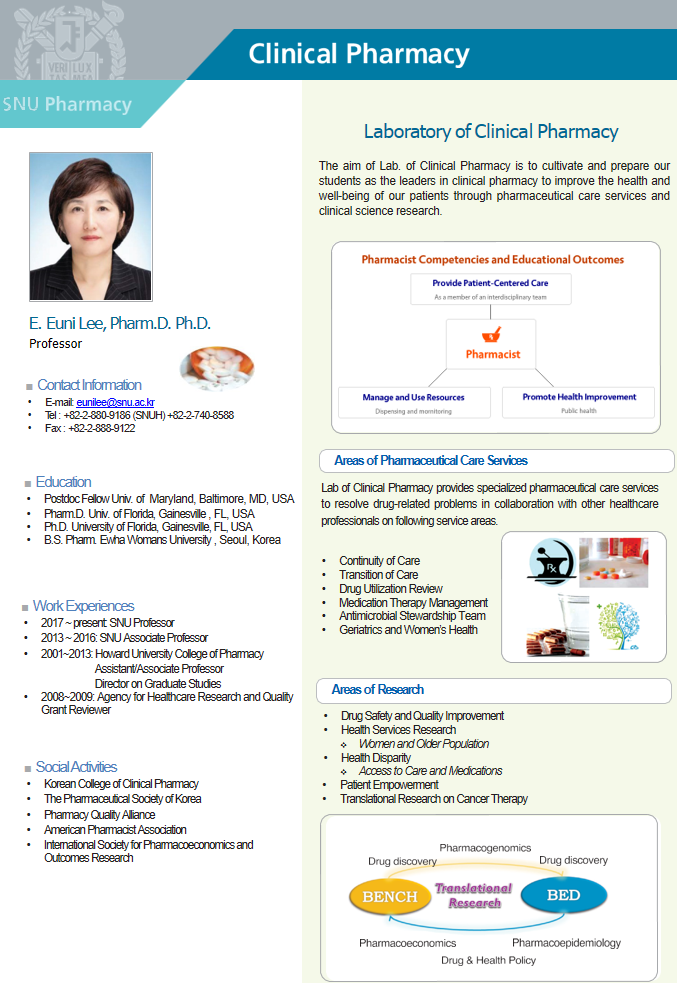
Professor Kim Eun-kyung is a full-time Professor at the College of Pharmacy , Seoul National University , South Korea. She directs patient-oriented research at the intersection of pharmacy, public health and clinical epidemiology, leading projects that range from nationwide pharmaco-epidemiologic cohort analyses to qualitative investigations of pharmacist-led care models. Education Ph.D. & Pharm.D., University of Florida, USA Research Interests Professor Kim’s research program is built on five mutually reinforcing pillars: Population-based patient care research – leveraging large national databases to understand medication utilization and outcomes in real-world settings. Drug safety and patient empowerment – identifying adverse drug reactions and developing interventions that enable consumers and clinicians to report and prevent harm. Access to care and medications in underserved and special populations – examining barriers faced by the elderly, rural residents, patients with rare diseases, and those undergoing high-cost procedures such as hematopoietic stem-cell transplantation. Disease prevention and appropriateness of therapy – evaluating preventive pharmacotherapy (e.g., anti-osteoporosis drugs, vitamin D) and ensuring evidence-based prescribing. Quality improvement in health-care delivery – designing multidisciplinary models that integrate pharmacists into care teams to optimize medication therapy and reduce drug-related problems. Publication Trends Across 2017–2020, Professor Kim has published extensively in International Journal of Environmental Research and Public Health , Clinical Nutrition , Medicina , BMC Public Health , Blood Research , Neuroepidemiology and other peer-reviewed journals. Her work characteristically combines rigorous secondary-data analyses of Korean or US national health surveys with systematic reviews/meta-analyses focusing on drug safety endpoints. Themes include neurological adverse events (trimetazidine-induced parkinsonism), hematologic toxicities (linezolid-induced thrombocytopenia), nutritional and metabolic complications in critical care, and access/utilization of medications in vulnerable populations. Scientific Awards & Honors (None listed in the provided texts) Grants & Research Support While specific grant identifiers are not detailed in the supplied pages, the breadth of large-scale database studies and multi-institutional collaborative projects implies sustained funding from national agencies such as the Korea Health Industry Development Institute (KHIDI) or the Ministry of Health & Welfare. Laboratory & Team Professor Kim leads an active research group located in Yeongeon Campus 17-201. The team integrates graduate students, post-doctoral researchers, pharmacists and biostatisticians working together on pharmacoepidemiology, patient-reported outcomes and health-services research.
Sudin Bhattacharya is an Associate Professor at the BioMolecular Science Gateway, Michigan State University, with affiliations in the Genetics & Genome Sciences Program and Cell & Molecular Biology Program. His research bridges computational biology and toxicology to understand complex biological systems. Email: sbhattac@msu.edu Research Interests Dr. Bhattacharya specializes in systems toxicology, focusing on computational modeling of gene regulatory networks, single-cell transcriptomics, and molecular dynamics in response to environmental toxicants. His work examines how chemical exposures disrupt cellular pathways and contribute to disease mechanisms. Article Trends His recent publications emphasize: Single-cell and single-nucleus RNA sequencing for toxicological profiling Computational models of circadian rhythms and intercellular communication Dose-dependent responses to environmental chemicals like TCDD and heavy metals Mechanistic studies of adipose tissue remodeling and hypertension Applications of machine learning in chemical risk assessment Integrative approaches to liver metabolism and disease modeling Scientific Contributions Dr. Bhattacharya has pioneered multiscale modeling of biological systems, particularly in hepatic and vascular contexts. His work on the aryl hydrocarbon receptor and PPARα signaling networks has advanced predictive toxicology frameworks.
Affiliations & Roles Professor of Computer and Information Science at University of Pennsylvania Faculty in Graduate Groups: Bioengineering (School of Engineering) Genomics & Computational Biology (School of Medicine) Operations, Information & Decisions (Wharton School) Psychology (School of Arts & Sciences) Research Affiliations: Annenberg Public Policy Center (Distinguished Fellow) Center for Cognitive Neuroscience Institute for Translational Medicine Research Interests Focuses on explainable AI, natural language processing (NLP), and machine learning applications in psychology and medicine. Key areas include: Language analysis for well-being and mental health Spectral methods for NLP (e.g., Eigenwords) Forecasting and decision-making models Bioinformatics and genomics Teaching Teaches advanced courses in Machine Learning, Deep Learning, and AI ethics, including: CIS 5200: Machine Learning CIS 5220: Deep Learning CIS 6200: Advanced Topics in Deep Learning Key Collaborations Works with interdisciplinary teams on projects like the Good Judgment Project (forecasting) and WWBP (Well-Being and Language). Collaborators include Martin Seligman (positive psychology), Dean Foster (statistics), and Michael Collins (NLP).
Prof. Dr. Soeren Lienkamp is an Assistant Professor at the Institute of Anatomy , Faculty of Medicine , University of Zurich . His work bridges digital education and genetic research , focusing on enhancing medical teaching through innovative formats. Research Interests : Genetics, developmental biology, kidney disease modeling, CRISPR applications, digital medical education, and advanced microscopy. Methodologies : Combines Xenopus tropicalis models, deep learning , and bioengineering to study genetic kidney disorders and improve diagnostic tools. Publication Trends : His recent articles highlight predictable genome editing , 3D imaging technologies , and mechanistic insights into kidney and eye development. Earlier works focus on ciliary function , Wnt signaling , and metabolic stress in renal cells.
Joanne Wang is Professor of Pharmaceutics at the University of Washington School of Pharmacy and an Affiliate Investigator at the Fred Hutchinson Cancer Research Center. She holds additional appointments in multiple research centers including the Obstetric-fetal Pharmacology Research Unit (OPRU), Plein Center for Aging Faculty, and Pharmaceutics Faculty. Her educational background includes: PhD in Pharmaceutical Chemistry, University of California, San Francisco (UCSF) MS in Biochemistry, University of Illinois at Chicago BS in Biochemistry, Peking University Dr. Wang's research focuses on solute carrier (SLC) and ATP-binding cassette (ABC) transporters that shuttle drugs, nutrients, neurotransmitters, and hormones across cell membranes. Her work encompasses elucidating mechanisms and clinical impact of transporters in nutrient and drug disposition and their potential as drug targets. Ongoing projects include identification and functional characterization of transporters in human placenta, mechanisms of drug secretion into breastmilk using PBPK modeling, and investigation of transporters in the disposition of meta-iodobenzylguanidine for cancer therapy. Analysis of her recent publications reveals a strong emphasis on transporter-mediated drug disposition in special populations, particularly during pregnancy and lactation, and at the blood-brain barrier. Her work spans from basic transporter characterization to clinical applications, with increasing focus on translational aspects including PBPK modeling and clinical implications of transporter polymorphisms. Dr. Wang is actively involved in mentoring, as evidenced by her lab accepting students. Her research has been supported by significant grants including a UC2 grant from NICHD for placental transporter research. Her multidisciplinary approach integrates in vitro models, in vitro-in vivo extrapolation, and PBPK modeling to address critical questions in drug disposition. She is affiliated with several research centers including the Obstetric-fetal Pharmacology Research Unit (OPRU), Plein Center for Aging, and the Washington Entrepreneurial Research Evaluation and Commercialization Hub (WE-REACH), reflecting the breadth and impact of her work across multiple domains of pharmacology and therapeutics.
Professor David Ackerley (Victoria University of Wellington) is a leading microbiologist and enzyme engineer specializing in directed evolution of bacterial enzymes for biotechnological applications. As Biotechnology Programme Director since 2006, he lectures in foundational courses like BTEC101 and BTEC201. Academic rank: Professor of Biotechnology Institutional affiliation: Victoria University of Wellington Research focus areas: Microbial Biotechnology, Drug Discovery, Synthetic Biology His research employs Darwinian evolutionary principles to engineer enzymes with enhanced activities, particularly targeting non-ribosomal peptide synthetases and nitroreductases for antibiotic development and cancer therapy. Recent work explores metagenomic domain substitution in pyoverdine biosynthesis and Purpuramine R from marine sponges. Key publications demonstrate innovations in metagenomic library construction , CRISPR screening for regeneration genes, and structural characterization of engineered enzymes. His team has developed NTR 2.0 , a high-efficacy nitroreductase for targeted cell ablation. Current research projects include: Clean solutions from dirty genes: Plastic-degrading enzyme discovery Engineering enzymes for CAR T-cell-chemotherapy synergy Repurposing niclosamide against Gram-negative superbugs Grants from the Health Research Council of New Zealand, Royal Society of New Zealand, and Cancer Society of NZ support his work. Collaborations span biomedical research, synthetic biology, and environmental applications.
Anita Rauch is a Full Professor of Medical Genetics and Director of the Institute of Medical Genetics at the University of Zurich. Her research focuses on the genetic and molecular mechanisms underlying severe neurodevelopmental disorders and hereditary breast cancer, utilizing genome sequencing and human induced pluripotent stem cell (iPSC) models. Current projects include: Genetic causes and molecular mechanisms in severe intellectual disability Praeclare (genetic variant clarification for prenatal medicine) SwissGenVar (clinical genetic variant interpretation platform) Hereditary breast cancer in Switzerland Her work is funded by the Swiss National Science Foundation (SNSF). She leads a multidisciplinary team conducting functional studies on novel candidate genes (e.g., CYFIP2, TMEM94) and exploring genotype-phenotype correlations through iPSC-derived neuronal models. Key research trends in her publications include: Clinical trials for cancer therapies (colon, esophageal, pancreatic, breast) Pharmacogenetic determinants of chemotherapy toxicity Non-inferiority trial design methodology Genetic variant interpretation in personalized medicine She mentors PhD and Master’s students in medical genetics and contributes to the advancement of precision oncology and neurogenetics through translational research.
Dr. Alison Holloway is a Professor at McMaster University's Faculty of Health Sciences, specializing in environmental toxicology and reproductive health. Her research focuses on the effects of environmental contaminants (e.g., oil sands pollutants, pesticides, endocrine disruptors) on maternal and child health, metabolic disorders, and developmental outcomes. She has conducted studies on naphthenic acids, synthetic food additives, and maternal exposure to pharmaceuticals like fluoxetine. Key research areas include: Environmental contaminants' impact on reproductive systems and placental function Metabolic disturbances caused by chemical exposures during critical developmental windows Neurobehavioral and gastrointestinal effects of prenatal drug exposure Assessment of urban air pollution on in vitro fertilization (IVF) success rates Her recent work highlights the role of the tryptophan-kynurenine pathway as a biomarker of environmental stress and the obesogenic effects of bisphenol analogs and food additives. Collaborations involve interdisciplinary teams addressing environmental health, with studies published in high-impact toxicology and public health journals. Dr. Holloway's research has informed policies on chemical safety and maternal health, emphasizing cross-species markers for organismal health and risk assessment of emerging contaminants like cannabis derivatives.