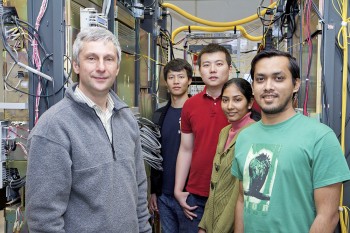
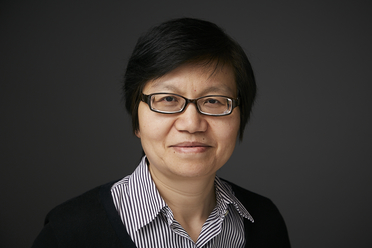
Nirupam Roy is an Assistant Professor at the Department of Computer Science, University of Maryland, College Park, and Director of the iCoSMoS research lab. His work bridges wireless networking, mobile computing, and acoustic sensing with applications in IoT, localization, healthcare, security, and wearables. Research Focus: Wireless Networking & Mobile Sensing Awards: Best paper award, MobiSys 2022 Best demo award, MobiSys 2021 CSL Ph.D. Thesis Award, UIUC 2019 Students: Nakul Garg, Yang Bai, Irtaza Shahid, Harshvardhan Takawale, Aritrik Ghosh, Ayushi Mishra, Sumbul Zehra, Justin Goodman Grants: NSF CAREER award (2023), Meta Research Award (2023)
Keely Dugan serves as an Assistant Professor in the Department of Psychology at the University of Missouri, directing the Personality, Attachment, and Change (PAC) Lab in McReynolds Hall. She holds a PhD in Social/Personality Psychology from the University of Illinois at Urbana-Champaign (2023) and completed an NIMH T32 Postdoctoral Fellowship at the University of Minnesota (2024). Her research investigates dynamic changes in personality traits and attachment styles across time, life experiences, and social contexts. Using advanced statistical methodologies, she examines how individual differences manifest in everyday environments, emphasizing how cumulative "little moments" shape long-term development. This work bridges personality psychology, attachment theory, and contextual behavioral science. Recent 2024 publications reveal three interconnected research strands: quantifying life events' impact on personality trajectories, testing attachment theory's canalization hypothesis through within-subject variations, and conducting systematic reviews of queer/minority identities in relationship science. These studies demonstrate her interdisciplinary approach combining longitudinal analysis, computational modeling, and inclusive relationship research. Dr. Dugan's scientific recognition includes: NIMH T32 Postdoctoral Fellowship (2024) She actively recruits graduate students for Fall 2025 and teaches PSYCH 9330 (Graduate Research Methods), PSYCH 8620 (Graduate Seminar in Personality Psychology), and PSYCH 2320 (Introduction to Personality Psychology). Current projects include NIH-funded personality-environment interaction studies and development of AI-assisted coding methodologies for behavioral research. The PAC Lab, located in McReynolds Hall's Lower Level, currently spearheads a groundbreaking project analyzing 3D living room scans to predict personality traits through environmental cues. This initiative employs both human coders and machine learning algorithms to examine how physical spaces reflect and influence individual differences in attachment and personality expression.
Stephen Sher is an Assistant Professor of Computer Science and Software Engineering at Rose-Hulman Institute of Technology. His research focuses on applying ethnographic methods to Human-Computer Interaction (HCI) and Computer-Supported Cooperative Work (CSCW), with particular interest in gaming communities and computer science education. He co-authored a seminal 2019 paper examining the social dynamics of video game charity marathons like Games Done Quick, which raised millions for charity through live-streamed events. Dr. Sher earned his Ph.D. in Informatics from Indiana University Bloomington, specializing in HCI Design, and holds degrees in computer engineering and computer science from the University of Southern California. His teaching spans computer architecture, software requirements engineering, and human-centered computing. He directs the Ethnography Research Group at Rose-Hulman, exploring how collaborative practices in gaming and livestreaming communities can inform interactive technology design. His work bridges academic research with real-world applications in digital communities and charitable fundraising.
Professor Christian Deutscher is a prominent sports economist at Bielefeld University's Faculty of Psychology and Sport Science, specializing in the Department of Sport Science within Division V - Sport and Business. As both Research Officer and Internationalization Officer, he leads significant work in sports economics, particularly focusing on betting markets, match-fixing detection, and sports integrity. His research has attracted funding from major institutions including the German Research Foundation. Deutscher's research interests span sports economics, betting market efficiency, match-fixing detection, sports management, and the business aspects of professional sports. His work combines advanced statistical modeling with practical applications in sports integrity monitoring. He has extensively analyzed live betting markets, Bundesliga economics, and the impact of technological innovations like VAR in football. His research often examines the intersection of sports performance, economic incentives, and market behavior. Analysis of his recent publications reveals a strong focus on empirical studies of sports betting markets, particularly live and in-play betting dynamics. His work demonstrates sophisticated use of state-space models and other advanced statistical techniques to detect market inefficiencies and potential integrity issues. Deutscher frequently collaborates with statisticians and economists to develop warning systems for match-fixing, with particular attention to German football leagues. His research bridges theoretical economics with practical applications in sports governance. Professor Deutscher actively contributes to the European Sport Economics Association (ESEA), having edited special issues of conference proceedings and serving in editorial capacities. His work has been published in leading journals including Journal of Sports Economics, Economic Inquiry, and Applied Stochastic Models in Business and Industry. As Research Officer for the Faculty of Psychology and Sport Science, Deutscher oversees research initiatives and international collaborations. His current projects include data-based fraud detection in live betting markets, funded by the German Research Foundation across multiple phases. He also serves on various university committees including the Quality Improvement Commission and Examination Board for the Department of Sport Science. Deutscher maintains strong connections with sports organizations and betting industry stakeholders, ensuring his research has practical relevance for sports integrity monitoring. His work on betting market inefficiencies has direct applications for regulatory bodies seeking to protect the integrity of sporting competitions.
Dr Glenda Cooper is Reader in Journalism Studies and Head of the Department of Journalism at City St George's, University of London , where she leads a team of 25 staff, 50 visiting lecturers, and over 500 students from 53 countries. She holds a PhD in Journalism from City and an MA in English Language and Literature from Oxford, and has played a pivotal role in elevating the BA Journalism programme to 1st place nationally in the Guardian and Complete University Guide (2023), as well as 1st for Graduate Prospects (Sunday Times 2022). Education: MA in Academic Practice, City, University of London (2022) PhD in Journalism, City, University of London MA in Creative Writing, City, University of London BA (Hons) English Language and Literature, St Hilda's College, University of Oxford PG Diploma in Newspaper Journalism, City University of London Glenda's research focuses on crisis and humanitarian reporting , journalism ethics , live journalism , and the intersection of media and politics, particularly through the legacy of Alistair Cooke’s Letter from America . She has led major funded projects with the British Academy, ESRC, Google Digital News Initiative, and HEIF. Her current research explores AI’s impact on journalism through the DMINR project and innovative storytelling formats via the News on Stage initiative and the Contemporary Narratives Lab . Her recent publications span topics such as AI in newsrooms, humanitarian scandals (#AidToo), refugee representation, and digital narrative innovation. These works reflect a strong interdisciplinary trend, combining journalism studies with media technology, ethics, performance, and political communication. The articles indicate a growing focus on digital transformation, ethical challenges in sourcing, and the evolving role of journalists in public discourse. Scientific Awards and Recognition: Laurence Stern Fellow at the Post (2001) Guardian Research Fellow at Nuffield College, Oxford (2006–2007) AURORA Role Model for Future Women Leaders in Academia (2018) Glenda has supervised PhD students on topics ranging from political communication in Istanbul to the manosphere's influence on journalism. She has been instrumental in curriculum development, notably designing a core ethics module for final-year journalism students. She also serves as Reviews Editor for Journalism: Theory, Practice and Criticism , UK Director of the European Journalism Observatory, and Board Member of The Conversation UK . She co-founded and co-presented the Knowhow podcast, bridging academia and media. She co-directs the Contemporary Narratives Lab and co-founded the News on Stage project, which merges journalism with theatre through live events such as News Cabaret and News on the Street . Her play Aid Memoir , based on her PhD research, was performed at the Pleasance Theatre and featured in the ESRC Festival of Social Science.
Alexander Stelzleni is a Professor and Graduate Coordinator in the Department of Animal and Dairy Science at the University of Georgia's College of Agricultural & Environmental Sciences. He has been with the University of Georgia since July 2007, progressing from Assistant Professor to Associate Professor in 2013, and ultimately to Professor in 2020. As Graduate Program Coordinator since January 2021, he oversees both the Animal and Dairy Science (ADSC) and Regenerative Bioscience (REBI) graduate programs. Dr. Stelzleni's research program maintains two central foci: (1) the influence of production and management on meat quality and yield with emphasis on southeastern and subtropical beef finishing systems, and (2) further processing to improve quality and safety of red meat and poultry. His lab has been particularly active in studying heat stress mitigation in Southeastern US beef finishing systems, sous vide as a consistent cookery method, further processing of poultry myopathies, and safety of low-thermal meat products. His scholarly work reflects strong expertise in meat science, with recent publications focusing on nicotinamide riboside effects, National Beef Quality Audits, dairy-beef crossbreeding, poultry myopathies, sous vide techniques, and high-pressure processing for pathogen control. The Stelzleni Lab has presented numerous studies at the Reciprocal Meat Conference in recent years, demonstrating consistent productivity and relevance to industry challenges. Student Career Success Influencer Award (2024) Multiple UGA Career Center Awards (2019, 2016, 2015, 2014, 2012) Larry Benyshek Excellence in Teaching Award (2016) ADSC 3650 recognized as top 5 college courses at UGA As an advisor, Dr. Stelzleni has mentored numerous graduate students including Clint Lee (MS thesis on heat stress mitigation), Cameron Catrett (MS 2024), and M. Junaid Nawaz (PhD student). His lab actively involves undergraduates in research and meat judging competitions, with students regularly presenting at professional conferences and winning awards in Iron Chef contests and meat judging events. Dr. Stelzleni directs the Meat Science Technology Center where his team investigates methods to improve meat quality, yield, shelf-life, and safety. The lab maintains strong industry connections with commodity groups, meat processors, and stakeholders to address current challenges in meat production and processing.
Sergey Tulyakov is the Director of Research at Snap Inc. , leading the Creative Vision team. His work focuses on enhancing creator capabilities through computer vision , machine learning , and generative AI , with applications in 2D/3D/4D video generation, editing, and personalization. He pioneered video generation frameworks like MoCoGAN and First Order Motion Model , and has been recognized for BEST IN SHOW AWARD at SIGGRAPH Real-Time Live! 2020. PhD (2012-2017): University of Trento, Italy MSc (2010): Belorusian State University of Informatics and Radioelectronics B.Eng (2009): Belorusian State University of Informatics and Radioelectronics His research interests span computer vision , generative models , 3D reconstruction , and personalization , with a focus on making large models efficient and mobile-compatible . Recent publications highlight advancements in 4D video generation , text-guided 3D composition , and lightweight architectures . Key scientific awards include the SIGGRAPH Real-Time Live! 2020 Best in Show for Interactive Video Stylization. He has also served on technical program committees for top-tier conferences like CVPR, ICCV, SIGGRAPH, and NeurIPS since 2022. His team organizes tutorials and keynotes, including courses on Deep Generative Models and Efficient Neural Networks . While no direct student names are listed, his collaborative work spans 60+ top-tier publications.
Andrea Fumagalli is a Professor in the Department of Electrical Engineering at the Erik Jonsson School of Engineering and Computer Science , The University of Texas at Dallas. He earned his Ph.D. (1992) and Laurea (1987) in Electrical Engineering from Politecnico di Torino, Italy. Research Interests: All-Optical Network Architectures, Photonic Slot Routing, Wavelength Routing and Protection, Sensor Networks, Cooperative Wireless Networks, Network Optimization, Next Generation Internet (NGI), and Multi-hop Optical Networks. Education: Ph.D., Electrical Engineering, Politecnico di Torino (1992) Laurea, Electrical Engineering, Politecnico di Torino (1987) Key Research Trends: His recent publications focus on 5G networking, optical network automation, elastic optical networks, network reliability, and cross-layer optimization. He explores FPGA acceleration in 5G Low-PHY functions, live migration of containerized network components, and spectral fragmentation mitigation in EONs. Scientific Awards: Best Teaching Award, Electrical Engineering, UTD (2002) Best Thesis Award for Ph.D. Advisee Isabella Cerutti (2002) IEEE ComSoc Distinguished Lecturer Tour (2000) Best Paper Award (1999): 'An Optimal Design Algorithm for Photonic Slot Routing Networks Migrating to Optical Packet Switching' Advising and Grants: He advised Ph.D. student Isabella Cerutti. In 2001, he secured a $300,000 grant from FUNDACAO CPqD for optical network reliability research. He leads the Optical Networking Advanced Research (OpNeAR) Lab at UTD, collaborating on international projects like the Italian government-funded grid computing initiative (2002) and the OMEGA Test-bed for differentiated reliability. Laboratories and Teams: He directs the OpNeAR Lab , which develops tools for optical network emulation and reliability testing. His projects involve partnerships with institutions in Brazil (Unicamp), Sweden (KTH), Italy (Politecnico di Torino, Scuola Superiore Sant'Anna), and CNR/CNIT.
Rosemary Morgan, PhD, MSc, is a Research Professor at Johns Hopkins Bloomberg School of Public Health in the Department of International Health. She holds primary affiliations with the International Health Department and is associated with the Johns Hopkins Center for Global Women's Health and Gender Equity and the Johns Hopkins Center for Women's Health, Sex, and Gender Research. Dr. Morgan's educational background includes a PhD from the University of Leeds (2012), an MSc from the University of Edinburgh (2007), and a BA from the University of British Columbia (2006). Prior to joining Johns Hopkins, she served as a Lecturer in Global Health Policy at the University of Edinburgh's Global Public Health Unit and as a Research and Teaching Fellow at the Nuffield Centre for International Health and Development at the University of Leeds. Her research focuses on gender inequities in health systems, women's health and wellbeing, and the impact of gender on public health interventions. Dr. Morgan specializes in qualitative research methods and has conducted extensive work on gender analysis in health systems, reproductive health, and the gendered effects of pandemics. Her work often examines how gender norms and power relations affect health outcomes and system performance, particularly in low- and middle-income countries. Dr. Morgan's publication record shows consistent scholarly output from 2014 through 2025, with a notable increase in productivity in recent years. Her research spans multiple domains including gender-responsive monitoring and evaluation, moral distress among healthcare workers, vaccine hesitancy (particularly among pregnant individuals), and the intersection of gender with various health conditions. She has developed methodologies for gender analysis in health systems research and has contributed significantly to understanding how gender influences health outcomes across diverse contexts. Faculty Advisor of the 2023-2024 academic year award from the Global Health: Policy and Evaluation DrPH Program Concentration, JHSPH Excellence in Teaching, Johns Hopkins Bloomberg School of Public Health Excellence in International COVID-19 Public Health Practice, 2021 Nominated for Canadian Women Leaders in Global Health, 2018 and 2020 Selected for 300 Women Leaders in Global Health, 2014 Dr. Morgan serves as co-Editor in Chief of the journal SSM - Health Systems and is a current board member of Health Systems Global. She has advised numerous major research projects including those funded by the Bill & Melinda Gates Foundation, CIHR, USAID, and TDR. Her current leadership roles include being Principal Investigator on the Monitoring for Action and Learning (MAGE) project supporting the Global Financing Facility for reproductive, maternal, newborn, child and adolescent health initiatives. She also leads the Gender and Health Certificate program at JHSPH and co-directs the Gender and Health Summer Institute. Dr. Morgan teaches courses on Gender Analysis in Health Research and Interventions, Foundations in Gender and Health, and Health Systems in Low- and Middle-Income Countries. Her teaching reflects her research expertise, emphasizing practical applications of gender analysis in global health settings.
Yan Chen is an Assistant Professor at the Virginia Tech College of Engineering , where he leads the PRIME Lab (Programming with Intelligent Machines & Environments) . His work focuses on creating interactive Human-AI systems to enhance real-time data analysis and programming education, particularly addressing barriers in collaborative learning environments. University of Toronto (Postdoctoral Fellow) University of Michigan (Ph.D., Information Science) University of Colorado, Boulder (BS/MS in Applied Math & Electrical & Computer Engineering) His research bridges Human-Computer Interaction (HCI) and Computer Science Education , with a focus on real-time data analysis , AI-driven programming assistance , and scalable learning tools . He employs LLMs and human-centered design to simplify complex computational processes, enabling data workers to detect critical patterns efficiently. Recent publications highlight trends in generative AI for education , proactive AI programming support , and collaborative analytics . Key themes include real-time classroom insights , intergenerational smartphone learning , and automated feedback systems . Scientific recognition includes: 🏆 Best Paper at L@S 2024 🏅 Best Paper Honorable Mention at CHI 2023 🏅 Best Paper Honorable Mention at UIST 2022 🏆 Best Short Paper at VL/HCC 2020 He mentors a team of PhD and MS students in projects spanning AI-assisted education, web automation, and collaborative coding tools, with active recruitment for future research directions.
Bei Wu is Dean’s Professor in Global Health and Vice Dean for Research at the NYU Rory Meyers College of Nursing, where she also serves as Co-Director of the NYU Aging Incubator. She holds an additional appointment as Affiliated Professor in the Ashman Department of Periodontology & Implant Dentistry at NYU, reflecting her interdisciplinary expertise. She previously held the Pauline Gratz Professorship at Duke University School of Nursing, underscoring her national prominence in gerontology and nursing science. Her educational background includes a PhD and MS from the Gerontology Center at the University of Massachusetts, Boston, and a BS from Shanghai University. These foundational qualifications have supported her extensive research career focused on aging, global health, and oral-systemic health linkages. Dr. Wu’s research is centered on gerontology and global health, with a strong emphasis on oral health, dementia, cognitive decline, caregiving, and health disparities among minority populations, particularly older Asian Americans. She is a pioneer in studying the connections between oral health and cognitive outcomes in older adults. Her work integrates interdisciplinary approaches across nursing, dentistry, public health, and social sciences, often with a focus on vulnerable and underserved communities. Her recent publications reveal a consistent focus on the biological and social determinants of cognitive aging, oral frailty, caregiving burden, and mental health in older populations. Themes include the role of toothbrushing in preventing dementia, the impact of social capital on mental health, and the development of culturally tailored interventions for dementia caregivers. Her work often employs mixed methods, including systematic reviews, cohort studies, and qualitative inquiry. Distinguished Scientist Award for Geriatric Oral Research, IADR (2017) Pauline Gratz Professorship, Duke University (2014) J. Morita Junior Investigator Award (2007) Fellow, Gerontological Society of America Fellow, New York Academy of Medicine 2022 Wei Hu Inspiration Award Honorary Member, Sigma Theta Tau International Dr. Wu has successfully mentored hundreds of early-career scientists and has secured substantial funding from the NIH, CDC, and private foundations. She currently leads multiple NIH-funded projects, including a clinical trial on oral health in dementia and a large data analysis on diabetes and cognitive decline. She co-leads the Rutgers-NYU Center for Asian Health Promotion and Equity and directs the Research and Education Core for the NIA-funded Asian Resource Center for Minority Aging Research (RCMAR), which focuses on building research capacity and addressing health inequities. Her work is conducted through key labs and initiatives including the NYU Aging Incubator, the Rutgers-NYU Center for Asian Health Promotion and Equity, and the Asian Resource Center for Minority Aging Research (RCMAR). These centers support interdisciplinary collaboration, innovation in aging research, and the development of culturally appropriate health interventions.
Judith Noorman is an Associate Professor of Early Modern Art History at the University of Amsterdam, Faculty of Humanities, Department of Art History. She serves as Director of the Amsterdam Centre for Studies in Early Modernity and leads the Dutch Research Council (NWO) project "The Female Impact" (2021-2026), which examines women's influence on the seventeenth-century art market. Dr. Noorman's research focuses on Early Modern Art History with particular emphasis on the Dutch Golden Age. Her work explores the intersection of art, gender, and economics in 17th century Netherlands, examining how women participated in and influenced the art market. She investigates household consumption patterns, religious practices under Protestant dominance, and the daily lives of women during this period, bringing new perspectives to traditional art historical narratives that have relied heavily on male accounts. Her work with Maria van Nesse's memory book reveals how an unmarried, wealthy Catholic woman from Alkmaar meticulously recorded expenses and personal events from 1623 to 1646, offering unprecedented insights into women's experiences. Her publications have established significant new directions in the field. Her 2022 book on Maria van Nesse has been praised as "a goldmine for anyone who studies seventeenth-century sources" by Gen.magazine and described as an "unbelievable" privilege to read by Lieve Declerck. Her 2020 monograph on Jacob van Loo has been recognized for its contribution to understanding Amsterdam academy practice and the theoretical frameworks guiding 17th century Dutch painters. As Director of the Amsterdam Centre for Studies in Early Modernity, she has organized the influential Object Colloquia Series, which has shaped contemporary research in early modern studies. Her leadership in this center and her NWO-funded project represent substantial contributions to scholarly infrastructure in her field. Dr. Noorman's research methodology combines meticulous archival research with innovative interpretations of historical sources, creating a more comprehensive understanding of how art functioned within 17th century Dutch society. By focusing on women's experiences and contributions, she is helping to reshape our understanding of the Dutch Golden Age beyond traditional male-centered narratives.
Dr. Andy Nguyen is a Senior Lecturer in Structural Engineering at the University of Southern Queensland, within the School of Engineering. He is an active researcher and educator, specializing in the Structural Health Monitoring (SHM) of critical civil infrastructure such as bridges, buildings, and transport tunnels. Bachelor of Engineering (BEng), NUCE, 1999 Master of Engineering (MEng), NUCE, 2003 Doctor of Philosophy (PhD), Queensland University of Technology (QUT), 2014 Dr. Nguyen's research is at the forefront of integrating advanced technologies into civil engineering. His primary focus is on developing and deploying sophisticated SHM systems that utilize sensors, data analytics, and machine learning to provide real-time insights into the structural integrity of ageing infrastructure. His work aims to enable proactive maintenance, extend the lifespan of structures, and enhance public safety. He has successfully implemented monitoring systems on major bridges and high-rise buildings in Queensland and New South Wales, with systems capable of even detecting distant earthquake events. His research interests span Structural Health Monitoring, Machine Learning for Engineering, Damage Detection, Finite Element Model Updating, Sustainable Building Materials like bamboo, and the application of AI for automated condition assessment of transport infrastructure. The analysis of his recent publications reveals a strong and consistent research trajectory centered on the application of data-driven and AI methods to solve practical problems in civil infrastructure. His work frequently combines signal processing techniques (like Stockwell Transform) with deep learning models for tasks such as crack detection in concrete and pavement. He also conducts significant research on model updating for complex structures like cable-stayed and arch bridges, using vibration data and optimization algorithms. The integration of machine learning for overload classification and the development of cost-effective, automated monitoring systems are key trends in his recent output. Advanced Queensland Fellow (2024-2027) Dr. Nguyen is actively involved in research supervision and collaboration. He is currently supervising several postgraduate students on projects related to AI-powered condition assessment, bamboo as a sustainable building material, and railway track design. He receives research funding from the Queensland Government through his Advanced Queensland Fellowship. His research has direct practical applications, as evidenced by his public engagement, such as writing for The Conversation on safeguarding ageing bridges, and his work with the Australian Network of Structural Health Monitoring. Dr. Nguyen's work embodies the development of a next-generation 'Living' Laboratory for engineering education, where research, teaching, and real-world infrastructure monitoring are integrated. His current projects involve creating smart, automated fault detection systems and advancing 'digital twin'-based monitoring platforms for infrastructure.
Prof. Dr. Beate Flath serves as Vice President for Teaching, Studies and Quality Management at the University of Paderborn since April 2025, while simultaneously leading the C:POP. Transdisciplinary Research Center for Popular Music Cultures and Creative Economies as Managing Director since June 2023. Her academic appointment is as Professor (W2) for Event Management with a focus on pop music cultures and digital media cultures within the Faculty of Arts and Humanities, Department of Music at the University of Paderborn. Her educational foundation includes: Diplomstudium (Master's equivalent) in Musicology at Karl-Franzens-University Graz (2000-2005) Doktoratsstudium (PhD) in Musicology at Karl-Franzens-University Graz (2005-2009), specializing in Systematic Musicology with Historical Musicology as secondary focus Dissertation: 'Sound und Image. Eine experimentelle Untersuchung zum Einfluss von Klangqualitäten auf die Wahrnehmung eines Produktimages im Kontext von Fernsehwerbung.' Flath's research program centers on transdisciplinary event research, examining the societal and cultural-political dimensions of event and cultural management. She investigates co-creation and participation processes in digital network media contexts and approaches music business research as music(business)culture research. Her methodology often incorporates innovative approaches like 'Sound Sculpting' to explore sensory experiences and cultural meaning. Her recent work increasingly addresses sustainability challenges in cultural contexts, reflecting her leadership in projects examining sustainable practices in cultural events and venues. Her scholarly output reveals a strong trajectory toward transdisciplinary frameworks that integrate cultural studies, musicology, and sustainability science. She examines the evolving relationship between pop culture, digital media, and event management, with particular attention to how cultural venues can adapt to ecological challenges. The recurring theme across her work is the exploration of how cultural practices intersect with economic structures in popular music contexts, often focusing on participation, accessibility, and sustainable development. Prof. Flath leads significant research initiatives including 'NachhaltigkeitsKulturOWL' (2024-2027), developing innovative sustainability strategies for the cultural event industry in East Westphalia-Lippe, and 'Datenraum Kultur' (2022-2025), focusing on networked cultural platforms. She previously directed the BMBF project 'kulturPreis' (2019-2022), which examined innovative pricing concepts to increase cultural participation. As Managing Director of C:POP, she oversees a transdisciplinary research center dedicated to studying popular music cultures and creative economies. Her leadership extends to university committees including the Commission for Teaching, Studies and Quality Management, and she serves on advisory boards for multiple research projects and academic journals in popular music studies, demonstrating her significant influence in both academic administration and cultural research.
Nica Ross is an Associate Professor of Video & Media Design and Director of The Frank-Ratchye STUDIO for Creative Inquiry at Carnegie Mellon University's School of Drama in Pittsburgh, Pennsylvania. With a background in cinema and advanced photographic studies, Ross brings a unique interdisciplinary approach to their work, blending technology, performance, and critical theory to explore how social constructions are reinforced by technology and performance. Ross holds a B.A. in Cinema from San Francisco State University and an M.F.A. in Advanced Photographic Study from The International Center of Photography-Bard College program. Their educational background has informed their practice as both an artist and educator, with a focus on critical applied learning and transdisciplinary collaboration. Through humor and play, Nica Ross creates participatory video installations and games that challenge social constructions reinforced by technology and performance. Their creative research focuses on “social machines” that reveal and interrogate cultural constructs, with particular attention to queer theory, gender non-conforming experiences, and the politics of visibility. Ross emphasizes liveness, human connection, and critical examination of tools and contexts in their teaching and artistic practice. Ross's recent work shows a trajectory moving from traditional video and media design toward increasingly interactive and participatory forms that engage audiences directly in questioning social constructs. Their projects increasingly incorporate game mechanics, queer theory, and critical examinations of surveillance technologies, often using RGB color systems and immersive environments to challenge perceptions of reality. Ross has received notable recognition including the Frank-Ratchye Fund for Art @ the Frontier, the Lighthouse Fellowship, and residency at Baxter Street CCNY. These awards support their innovative work at the intersection of technology, performance, and social critique. As Director of The Frank-Ratchye STUDIO for Creative Inquiry, Ross connects with researchers and creators across Carnegie Mellon University, fostering transdisciplinary practice and critical engagement with technology. Their leadership in this space has created opportunities for collaborative projects that challenge conventional boundaries between art, technology, and social inquiry. Ross's work often involves collaborative teams and labs, including partnerships with musicians like Geo Wyeth, artists like Ginger Brooks Takahashi, and technical collaborators at Carnegie Mellon's Panoptic Dome. These collaborations result in immersive installations, interactive games, and critical explorations of technology's role in shaping social reality.