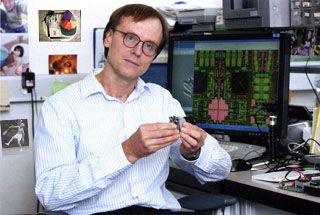
Michael McAlpine is a Professor in the Mechanical Engineering department at the University of Minnesota . He also holds affiliations with the Biomedical Engineering and Electrical and Computer Engineering departments. His research focuses on 3D printing functional materials & devices , Nanoscale inks , Biomedical devices , Bioelectronics , and Flexible Microsystems . Research Interests : 3D Printing, Biomedical Engineering, Nanotechnology, Flexible Electronics, Microfluidics Labs : ME 361/363 Contact : mcalpine@umn.edu , (612) 626-3303, ME 117 Recent Research Trends include 3D Printed Biomedical Devices , Flexible Electronics , and Bioprinting Applications . His work spans from Spinal Organoid Formation to Programmable Drug Release Capsules . Scientific Award : Circulation Research 2020 Best Manuscript Award
Alper Gürarslan is an Associate Professor in the Department of Textile Engineering at Istanbul Technical University. His research focuses on sustainable and functional textiles, biomaterials, nanomaterials, and biomedical applications. He leads several projects on electronic textiles, wound dressings, and eco-friendly materials. Key collaborations involve combining natural fibers with advanced materials. University: Istanbul Technical University Department: Department of Textile Engineering Research interests include nanowire-coated alginate films, poplar fiber composites, and smart textiles for wearable electronics. He has published extensively on topics like thermal insulation properties of nonwovens and antibacterial material integration. Notable projects include 'Regenerated Cotton for Electronic Textiles' (EU-funded) and 'Productive Catalytic Living Materials' (TÜBİTAK). He has received awards for contributions to flexible electronics and sustainable textile materials. Awards: Flexible and Wearable Electronics (2018), Smart Textiles from Sustainable Materials (2021) Current projects span biobased membranes, high-efficiency filtration systems, and medical textile applications. His work emphasizes sustainability and interdisciplinary innovation.
Andrew Spakowitz is a Professor of Chemical Engineering, Materials Science and Engineering, and by courtesy, Applied Physics and Chemistry at Stanford University. He currently serves as the Senior Associate Dean for Research and Faculty Affairs and holds the Tang Family Foundation Chair of the Department of Chemical Engineering. His academic career at Stanford spans from Assistant Professor (2006-2014) to Associate Professor (2014-2020) and now Professor since 2020. Dr. Spakowitz earned his PhD in 2004, MS in 2001 from the California Institute of Technology, and his BS in Chemical Engineering from the University of Wisconsin, Madison in 1999. He completed postdoctoral training in Molecular and Cell Biology and Biophysics at UC Berkeley from 2004-2006. His research focuses on theoretical and computational approaches to understanding biological processes and complex materials. The Spakowitz lab addresses fundamental chemical and physical phenomena through four main research themes: chromosomal organization and dynamics, protein self-assembly, polymer membranes, and charge transport in conducting polymers. His group employs diverse theoretical and computational methods including analytical theory of semiflexible polymers, polymer field theory, continuum elastic mechanics, Brownian dynamics simulation, equilibrium and dynamic Monte Carlo simulations, and reaction-diffusion modeling. Analysis of his recent publications reveals a strong emphasis on epigenetics and chromatin dynamics, with significant work on DNA methylation patterns, nucleosome clustering, and chromosome organization. His research also extends to polymer physics applications in biological systems, particularly in respiratory diseases, water purification membranes, and bacterial phage interactions with human mucus. Tang Family Foundation Chair of the Department of Chemical Engineering Professor Spakowitz mentors several graduate students and postdoctoral scholars in the Chemical Engineering and Materials Science departments. His lab members work on diverse projects spanning from chromatin dynamics to polymer membranes for water purification. He teaches multiple courses including CHEMENG 120B (Energy and Mass Transport), CHEMENG 340 (Molecular Thermodynamics), CHEMENG 466 (Polymer Physics), and CHEMENG 467 (Physics of Biomacromolecules). The Spakowitz lab operates from Clark S295 at Stanford University, conducting theoretical and computational research that bridges chemistry, physics, biology, and engineering disciplines to address complex problems across multiple length and time scales.
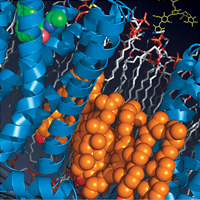
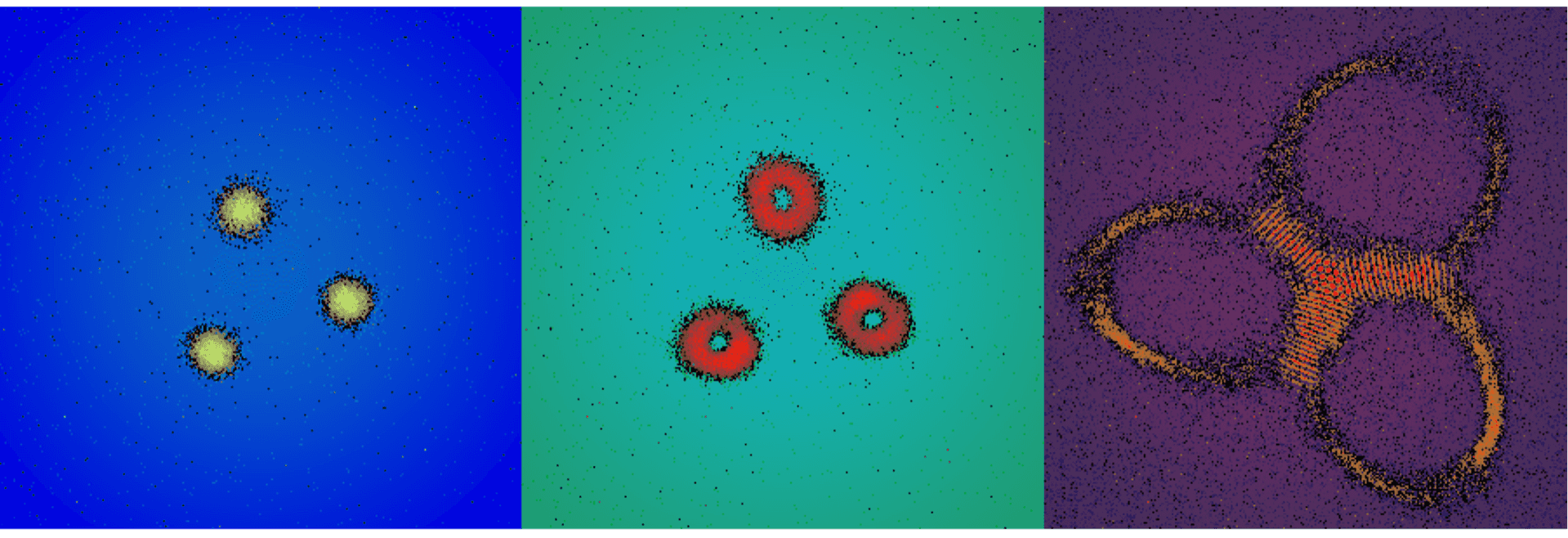
Vadim Cherezov, the Ester Dornsife Chair in Biological Sciences and Professor at the University of Southern California (USC), leads groundbreaking research in membrane protein structure and function. Affiliated with the Bridge Institute, Department of Chemistry, and Michelson Center for Convergent Bioscience, his work focuses on GPCRs, ion channels, and transporters—critical targets for drug discovery. His team leverages advanced techniques like Lipidic Cubic Phase (LCP) and Serial Femtosecond Crystallography (SFX) at XFEL facilities to solve high-resolution structures under physiological conditions. Institutional Affiliations: Bridge Institute, USC Michelson Center, Department of Chemistry, Department of Pharmacology and Pharmaceutical Sciences. Key Collaborations: Katritch Lab, Kuhn Lab, NIH, European XFEL. His research explores the role of lipids in modulating GPCR function, addressing diseases like Alzheimer’s, diabetes, and cancer. By solving the structure of the A 2A adenosine receptor via sulfur SAD phasing at XFEL, Cherezov’s lab demonstrated de novo phasing without heavy atoms. This breakthrough enables structural studies of previously intractable membrane proteins. Scientific Awards & Grants: NIH R01 GM108635, U54 GM094618, U54 GM094599, R01 GM095583 Science Signaling Breakthroughs of the Year (2014) Cherezov mentors a dynamic team, including postdocs (e.g., Dong-Gyun Kim), graduate students (e.g., Behnaz Davoudinasab), and alumni (e.g., Benjamin Stauch at Eli Lilly, Nairie Michaelian at Genentech). His lab’s publications span Nature , Science , and Cell , with recent work on Science Advances (2025) addressing ABEL-FRET for GPCR dynamics.
Yimin D. Zhang is an Associate Professor in the Department of Electrical and Computer Engineering at Temple University's College of Engineering, where he leads the Advanced Signal Processing (ASP) Lab. His research spans statistical signal processing, array processing, radar, wireless communications, and convex optimization. Research Interests: Dr. Zhang's work focuses on cutting-edge signal processing techniques including compressive sensing, sparse arrays, time-frequency analysis, and robust beamforming. These are applied to radar systems, satellite navigation, assisted living, and wireless networks. His research addresses core challenges in target localization, direction-of-arrival estimation, and spectrum-efficient joint radar-communication systems. The recent publications highlight a strong trend in exploiting sparsity, virtual arrays, and deep learning to enhance resolution and robustness in radar and communication systems. Themes include multi-frequency processing, low-rank matrix recovery, and optimized OFDM waveforms for dual-function systems. Scientific Awards: 2016 IET Radar, Sonar and Navigation Premium Award 2017 IEEE Aerospace and Electronic Systems Society Harry Rowe Mimno Award 2018 IEEE Signal Processing Society Young Author Best Paper Award (coauthor) Advising and Grants: Dr. Zhang has served as Principal or Co-Principal Investigator on over $6 million in research funding from the NSF, AFRL, ONR, and DARPA. While student advisees are not listed, his leadership of the ASP Lab suggests active mentorship of graduate researchers. He contributes extensively to the academic community as an associate editor for IEEE Transactions on Signal Processing and editor for Signal Processing journal, and serves on key IEEE technical committees. Labs and Teams: He directs the Advanced Signal Processing (ASP) Lab at Temple University, which focuses on developing novel algorithms for real-world applications in radar, communications, and navigation. Previously, he led the Wireless Communications and Positioning Lab and the RFID Lab at Villanova University.
Nathan Schine is an Assistant Professor at the University of Maryland, specializing in quantum physics and quantum information science. He leads the Schine lab, which explores controlled coherent dynamics and engineered dissipation in quantum systems, particularly using optical cavities coupled to tweezer-trapped cold atoms. His research bridges atomic physics, quantum optics, and condensed matter physics. Education: B.A. in Physics, Williams College (2013) Ph.D. in Physics, University of Chicago (2019) Research interests focus on quantum many-body systems, optical cavities, and applications such as quantum information processing and ultra-coherent atomic clocks. The lab’s work includes developing state-of-the-art strontium tweezer array apparatuses for precision metrology and quantum simulation. Recent publications highlight advancements in Dicke state preparation, optical pumping of quantum Hall states, and cavity-enhanced measurements. Advising and grants involve mentoring graduate students and postbaccalaureate researchers, including Shardul Rao and Siddharth Taneja. The lab collaborates with groups like AMPED, QuICS, and RQS at UMD. Members include postdoctoral researchers and graduate students working on theoretical quantum optics and experimental setups. Labs/Teams: The Schine lab integrates atomic, optical, and condensed matter physics approaches to address fundamental and applied questions in quantum science.
Professor Simon Fraser is a public health physician and academic at the University of Southampton , specializing in kidney disease and multimorbidity. His work integrates epidemiology, health literacy, and inequality analysis to address chronic disease burdens. Educational Background: BM (University of Southampton, 1992) MSc in Public Health DM (Doctor of Medicine, 2014) Research Focus: Fraser's research spans kidney disease , multimorbidity , treatment burden , and health inequalities . Recent projects include the NURTuRE-CKD HRQoL Study and MELD-B , examining determinants of chronic disease progression and intervention design. Academic Contributions: His publications from 2024-2025 emphasize electronic health records for multimorbidity analysis, neonatal risk factors for adult comorbidity, and deprescribing strategies for older adults. Collaborations include NIHR Applied Research Collaboration Wessex and Kidney Research UK. Scientific Recognition: Fellow of the Faculty of Public Health (FFPH) Member of the Royal College of General Practitioners (MRCGP) Fellow of the Higher Education Academy (FHEA) Mentorship: Current PhD students include Emilia Mary Holland and Keegan Guan Ru Lee . He co-leads projects with leading researchers in public health and nephrology.
Andrea Liu is the Hepburn Professor of Physics at the University of Pennsylvania, leading the Department of Physics and Astronomy. As Director of the Penn Center for Soft and Living Matter, she bridges physics, biology, and materials science. She joined Penn in 2004 after faculty roles at UCLA (1994-2004) and postdoctoral research at Exxon and UCSB. Her research focuses on theoretical studies of soft and living matter, particularly jamming transitions, glass physics, and emergent phenomena in biological systems. She pioneers the application of machine learning to physical systems, designing self-learning materials and circuits. Education Ph.D., Cornell University (1989) B.A., University of California, Berkeley (1984) Research Interests Soft matter: Glass transition, jamming, and plasticity in disordered solids Living matter: Collective behavior in tissues, fluidization mechanisms, and biopolymer networks Machine learning: Physical implementations, energy-efficient circuits, and adaptive systems Her work combines analytical theory and computation to explain how complex systems achieve functionality through structural and dynamical principles. Publications Trends Recent work emphasizes physical learning networks, clogging dynamics in granular systems, and biophysical tissue mechanics. Key themes include emergent learning in analog systems, topology-driven material design, and interdisciplinary approaches to biological and engineering challenges. Awards 2025 American Physical Society Leo P. Kadanoff Prize 2021-2025 Simons Investigator in Theoretical Physics Member, National Academy of Sciences (2017) Labs & Teams Her research group collaborates on the Center for Soft and Living Matter, advancing theoretical frameworks for adaptive materials and biological systems. Ongoing initiatives focus on machine learning-informed materials design and experimental validation of theoretical models.
Geert Deconinck is a full professor at KU Leuven , leading the Electrical Energy Systems and Applications (ELECTA) research group within the Department of Electrical Engineering (ESAT). He also serves as scientific leader of the EnergyVille research center's algorithms domain, focusing on smart electrical networks and thermal systems. M.Sc. and Ph.D. from KU Leuven Head of ELECTA since 2012 (10 professors, 8 postdocs, 70+ PhDs) Over 8 million EUR research budget in last 5 years 44 completed PhDs and 10 current advisees IEEE Transactions editorial board member His research spans smart grid architectures , distributed control , and cyber-physical security , with recent focus on EV-grid integration , renewable energy democratization , and multi-carrier energy systems . Current projects include: Smart Charging - E-Mobility meets Renewable Energy Early Detection and Defense Systems for Smart Grids Open-source P2P energy sharing platforms Microgrid control strategies for PV-battery systems Awarded IET Fellow and IEEE Senior Member status, his work combines machine learning with power systems engineering through both theoretical modeling and experimental validation . He has contributed over 575 publications with 9800+ Google Scholar citations.
Tan Chuan Hoo is an Associate Professor (tenured) and Deputy Head of the Department of Information Systems and Analytics at the National University of Singapore's School of Computing. With a distinguished academic career spanning multiple continents, he brings expertise in digital transformation, healthcare informatics, and enterprise systems to his teaching and research. His educational background includes: B.Sc. (1st Class Honours, National University of Singapore) M.Sc. (Accelerated, National University of Singapore) Ph.D. (National University of Singapore) Professor Tan's research focuses on digital transformation, particularly designing, deploying, and evaluating technological innovations. His work centers on two critical areas: digital commerce (provision of digital services such as online shopping aids) and digital organization (ensuring operational efficiency and performance). His research has significant implications for healthcare institutions, corporations, and crisis preparedness and response organizations. He conducts comprehensive analyses using various scientific methodologies including field experiments and mixed methods to understand how digital technologies reshape business operations and enhance societal well-being. His publication record shows a consistent focus on information systems, with recent articles (2020-2025) emphasizing healthcare informatics, digital transformation, and open innovation. His work demonstrates a clear trajectory toward understanding how technology intersects with organizational effectiveness and societal implications, with increasing attention to healthcare applications and digital crisis management. Professor Tan has received numerous prestigious awards for his contributions to the field: Faculty Teaching Excellence Award, NUS (2024, 2017) Information Management Research Award, China Information Economics Society (2023) Reviewer Hall of Fame, Journal of AIS (2020) Outstanding Associate Editor Award, MIS Quarterly (2016) Best Reviewer Award, Journal of AIS (2016) INFORMS ISS Design Science Award (2013) Honorable Mention, Journal of AIS (2015) He has successfully advised PhD students and collaborated with public and private entities on research projects. His editorial service as Associate Editor for Information Systems Research and MIS Quarterly, along with board memberships at other leading journals, demonstrates his significant influence in the field. Professor Tan has secured research grants supporting projects on digital crisis preparedness, disaster response technology, and healthcare digitalization. His research group focuses on understanding how technology can be designed and implemented to support organizations in crisis situations, enhance healthcare services, and improve digital commerce. Current projects include examining digital crisis management, technology for disaster response, and the digital transformation of healthcare services.
Dr. Simon A. Morrison is a Senior Lecturer in the Division of Communication, Screen & Performance within the Faculty of Arts, Humanities and Social Sciences at the University of Chester. He serves as Programme Leader for the Music Journalism degree, which he helped design, build and deliver from its first cohort in 2014. With 25 years of experience as a writer, broadcaster, and academic, Morrison brings extensive industry knowledge to his teaching and research, having worked as a music journalist reporting from locations worldwide including Beijing, Brazil, Moscow, and Marrakech. Dr. Morrison holds a PhD from the University of Leeds (completed 2018), an MA from the University of Manchester (1995-1997), and a BA Hons from the University of Manchester (1989-1992). Prior to his position at Chester, he worked as an Associate Lecturer at Manchester Metropolitan University (2012-2014) and as a Visiting Lecturer at Leeds University (2011-2013). His academic journey follows a substantial career in media where he presented TV for Rapture TV, hosted radio shows in Ibiza, produced and presented for Kiss Radio, and appeared on BBC Breakfast and BBC 5 Live. Dr. Morrison's research centers on the intersection of words and music , with particular focus on Popular Music , Musico-Literary Intermediality , and Electronic Dance Music Culture . His work explores how music subcultures, particularly rave and dance music scenes, are represented in literature and journalism. He examines the connections between different countercultural movements, notably drawing parallels between the Beat Generation writers and contemporary 'Chemical Generation' authors who write about club culture. His research also investigates the relationship between music journalism and subcultural movements across different historical periods. His recent publications reveal a clear trajectory connecting historical dance music developments across continents and eras. Morrison's work traces the evolution of electronic dance music from its American roots in Chicago and Detroit through its transatlantic journey to Europe and back again, examining how cultural exchange shaped musical innovation. His analyses of Pink Floyd demonstrate how rock bands interact with media landscapes, while his investigations of music journalism document the changing nature of music criticism in digital eras. The recurring theme across his scholarship is the examination of how subcultural experiences are translated into written form, whether through journalism, fiction, or academic analysis. Dr. Morrison actively supervises undergraduate dissertation projects and Negotiated Study production projects across all three years of undergraduate study. He has successfully supervised an MRes project to completion and examined PhDs (including one internal and two external, one being an Australian PhD by Artefact & Exegesis). He has served as an External Examiner for Music Journalism programs at Southampton Solent University (2016-2019) and BIMM London, Birmingham and Manchester (2016-2020). His teaching spans modules including Introduction to Journalism, Live Journalism, Dancing About Architecture: Popular Music Media, Histories and Technologies, The Cultural Politics of Music Journalism, The Politics of Social Media, Magazine Publishing and Music PR and Promotional Writing.
Tobi Delbruck is a titular professor of physics and electrical engineering at ETH Zurich, where he leads the Sensors Group at the Institute for Neuroinformatics (INI) in Zurich, Switzerland. He collaborates closely with Shih-Chii Liu and Giacomo Indiveri as part of the 'hardware groups' at INI. Delbruck has also served as visiting faculty at Caltech and is a Fellow of the IEEE. His work focuses on bio-inspired and neuromorphic event-based sensory processing systems. Professor Delbruck's research spans multiple areas of neuromorphic engineering, with particular emphasis on event-based vision systems and low-power analog VLSI circuits. His work has significantly advanced the field of Dynamic Vision Sensors (DVS), which mimic the human retina's response to changes in brightness rather than capturing full frames. This approach enables extremely low-latency vision processing with minimal power consumption, making it ideal for high-speed applications and robotics. His research has applications in robotics, autonomous systems, and low-power embedded vision. Delbruck is an active contributor to the neuromorphic engineering community, co-organizing the annual Telluride Workshop on Neuromorphic Engineering and serving in leadership roles with IEEE. He has authored numerous influential publications and co-authored books including "Event-Based Neuromorphic Systems" and "Analog VLSI: Circuits and Principles." His jAER (Java Address-Event Representation) project provides open-source tools for real-time event-based sensory processing. Analysis of his recent publications shows a clear trend toward integrating event-based vision with deep learning techniques and applying these systems to practical robotics problems. His scientific achievements have been recognized with multiple awards including: IEEE Fellow Winner of Best Live Demonstration award at ISCAS 2012 Honorable Mention Award from Sensory Systems Technical Committee at ISCAS 2012 Overall Best Student Paper Award and Best Paper Award from Sensory Systems Technical Committee at ISCAS 2010 Winner of the 2006 ISSCC Jan Van Vessem Outstanding European Paper Award Professor Delbruck actively mentors students and has supervised numerous PhD and Master's theses in the areas of neuromorphic engineering and event-based vision systems. His group has secured significant research funding from various sources to support their innovative work in bio-inspired sensory processing. He teaches courses on "Electronics for Physicists II (Digital)" and "Neuromorphic Engineering," helping to train the next generation of researchers in this field. The Sensors Group at INI, which Delbruck leads, operates state-of-the-art facilities for designing and testing neuromorphic vision systems. The group maintains close collaborations with researchers worldwide and has developed several important open-source resources including the jAER project and bias generator design kits. Their work continues to push the boundaries of what's possible with event-based sensory processing, with applications ranging from high-speed robotics to low-power embedded vision systems.
Dr. Daniel Roxbury is an Associate Professor and Graduate Director at the Department of Chemical, Biomolecular and Materials Engineering within the University of Rhode Island's College of Engineering. With expertise in nanoscience and carbon nanomaterials, his research focuses on nano-bio interactions, developing functionalized nanotubes for biomedical applications and environmental monitoring through his NanoBio Engineering Laboratory. His work spans multiple disciplines including: Biomedical nanosensors Smart wearable biomaterials Targeted drug delivery systems Environmental nanotechnology Single-molecule imaging Nanotoxicology Recent publications emphasize machine learning-enhanced spectral analysis, coral reef conservation nanotechnology, and wearable stress monitoring textiles. His 2024 ACS Nano study introduces AI-driven macrophage phenotyping, while 2023 Nature Nanotechnology work explores coral reef restoration strategies using nanomaterials. Awarded the 2019 NSF CAREER grant for cellular nanometrology, he leads multiple NIH-funded projects including: $820,000 NSF CAREER: Spectral Imaging for Sub-Cellular Nanometrology $140,000 Miriam Hospital COBRE: Cortisol Detection Textiles $700,000 NSF EAGER: Multiplexed Wound Biomarker Detection His laboratory houses state-of-the-art equipment including: Near Infrared Hyperspectral Microscope Custom NIR Fluorescence Spectrometer Jasco UV/VIS/NIR Spectrophotometer Biosafety Cabinet Cell Culture Incubator Cryo-Storage System
Josh Atkinson is an Assistant Professor in the Department of Civil and Environmental Engineering and the Omenn-Darling Bioengineering Institute at Princeton University. His research focuses on using synthetic biology and protein engineering to control electron transport in microbes for environmental applications, such as bioelectronic sensors and bioremediation. The Atkinson Lab investigates microbial energy processing, biofilm-electronic interfaces, and sustainable biotechnologies. Affiliations: Princeton University, Omenn-Darling Bioengineering Institute Research Interests: Microbial electron transport, bioelectronic systems, environmental monitoring, sustainable catalysis His work bridges disciplines like electrochemistry, bioengineering, and environmental science to engineer living materials for real-world challenges. The lab recruits students across levels, emphasizing diversity and interdisciplinary collaboration. Recent projects include real-time contaminant sensors and light-controlled biofilm patterning. Articles highlight innovations in bioelectronics and microbial systems engineering. The lab’s future directions involve scaling-up bioelectronic devices and enhancing microbial community understanding.
Dr. Michael Baym is an Associate Professor of Biomedical Informatics at Harvard Medical School with affiliate appointments in Microbiology and the Laboratory of Systems Pharmacology, and as an Associate Member of the Broad Institute. He leads the Baym Lab, which studies microbial evolutionary genomics and antibiotic resistance through a hybrid of experimental, computational, and theoretical approaches. His research focuses on: Antibiotic Resistance Evolution and practical interventions Mobile Genetic Elements (plasmids, phages, transposons) Computational Genomic Algorithms for big data analysis Synthetic Biology tools and technologies Key recent publications explore phage discovery systems , phylogenetic compression of microbial genomes, and RNA-guided gene drives in plasmids. His work is supported by multiple NIH/NIGMS and NSF grants including a MIRA award. Scientific honors include: Packard Fellowship (2018) Pew Biomedical Scholarship (2020) Sloan Research Fellowship (2020) A. Clifford Barger Excellence in Mentoring Award (2021) SSQBio Mentorship Award (2022) The lab actively trains PhD students and postdoctoral fellows with alumni occupying academic and industry positions globally. Current team members include researchers from interdisciplinary backgrounds working at the intersection of experiment, computation, and theory .