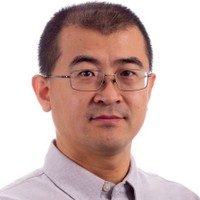
Zhibo Pang is an Adjunct Professor at KTH Royal Institute of Technology's Department of Intelligent Systems (EECS) and Senior Principal Scientist at ABB Corporate Research Sweden. His work focuses on digital transformation in industry and healthcare, spanning robotics, AI, control systems, and wireless communication. He leads projects in embodied intelligence, Industry 4.0, and Healthcare 4.0, with 23 granted patents and over 120 journal papers. Education: PhD in Electronic and Computer Systems (KTH, 2013), MBA in Innovation & Growth (University of Turku, 2012). Key Roles: IEEE Technical Committee Chair, Editor of 6 IEEE journals, ABB Inventor of the Year (2016, 2018, 2021). Research Interests: Robotics safety, wireless automation, federated learning, digital twins, and IoT security. Recent Projects: Cloud-fog automation frameworks, robot skin systems for healthcare, and latency-aware industrial control. His work bridges academia and industry through cross-functional collaborations.
Maths Karlsson is a Professor in Materials Science at Chalmers University of Technology since 2023. Previously, he worked at the European Spallation Source (2008–2011) and held visiting roles at Iowa State University (2004) and UC Santa Barbara (2012–2013). He chairs the Faculty Assembly of the Department of Chemistry and Chemical Engineering and serves on the Chalmers Faculty Senate. His research focuses on functional materials for energy applications, including proton-conducting oxides, metal halide perovskites, and inorganic phosphors. Utilizing advanced neutron and x-ray scattering techniques, his group explores structure-dynamics relationships in materials for devices like solid oxide fuel cells and solar cells. Experimental methods are emphasized, with a focus on developing novel scattering methodologies. Recent publications highlight advancements in optical communications, photonic integration, and machine learning applications in signal processing. Key themes include nonlinear optics, silicon nitride waveguide technologies, and polarization-insensitive receiver designs. His work bridges fundamental materials research with applied photonics for high-speed data transmission and network resilience. Awards: No specific prizes mentioned in the provided texts. Grants and advising details are absent from the data. Research group: Active in Chalmers' Department of Chemistry and Chemical Engineering, focusing on materials for energy and photonics. Collaborations include Institut Laue-Langevin and industry partners.
Kıvanç Tatar is an Assistant Professor in Interactive AI at Chalmers University of Technology, Sweden. His work bridges Music, Artificial Intelligence, Interactive Arts, and Virtual Reality, creating multimodal AI systems for performances, immersive environments, and generative art. Exhibited globally at events like Ars Electronica (2017, 2020) and Rio Olympics 2016 Founder of the AI in Computational Arts, Music, and Games research group Projects integrate AI with movement computation, VR, and livecoding His research focuses on musical AI , interactive systems , and creative algorithms , with applications in real-time performance, environmental art, and robotics. Recent projects include Koami 2025 (upcoming livecoding), Latent Timbre Synthesis (2021), and Brush of AI (2020 NFT series). Key Collaborations : A.I.D (Istanbul), Gold Saucer (Vancouver) Exhibition Highlights : CHI 2018, Mutek Montreal 2018, Contemporary Istanbul PlugIn 2019
James Gross is a Professor at the School of Electrical Engineering and Computer Science at KTH Royal Institute of Technology, Stockholm. He leads research in mobile systems and networks, with a focus on 5G/6G, edge computing, and performance evaluation. He is Associate Director of KTH's Digital Futures center and a board member of the Innovative Centre for Embedded Systems. Previously, he directed the ACCESS Linnaeus Centre (2016–2019) and was Assistant Professor at RWTH Aachen University. PhD, TU Berlin (2006) Studies: TU Berlin, UC San Diego His research lies at the intersection of wireless networking, edge computing, and mathematical performance modeling. Key areas include ultra-reliable low-latency communications (URLLC), age-of-information, network calculus, and resource allocation. He applies these to 5G/6G, cyber-physical systems, and industrial IoT. His work combines theoretical modeling with real-world implementation and standardization impact. The recent publications highlight a strong focus on deterministic and reliable communications for future networks. Topics include hierarchical inference at the edge, age-of-information optimization, finite blocklength coding, and integration of TSN with wireless systems. There is a clear trend towards AI/ML for resource management and semantic communications, reflecting the evolution of intelligent edge networks. Best Paper Award, ACM MSWiM 2015 Best Demo Paper Award, IEEE WoWMoM 2015 Best Paper Award, IEEE WoWMoM 2009 Best Paper Award, European Wireless 2009 ITG/KuVS Dissertation Award, 2007 James Gross has supervised PhD students such as Samie Mostafavi and advises numerous master's projects. His research has been funded by national science foundations in Germany and Sweden, the ICT TNG SRA, Linnaeus ACCESS Centre, DFG-funded UMIC Centre, German Ministry of Science, and various industry partners. His work has led to patents and influenced wireless standards. He is involved in initiatives like the TECoSA project on trustworthy edge computing and organizes summer schools on Edge AI and 6G. His lab conducts experimental research on edge computing testbeds (e.g., Ainur, ExPECA) and wireless performance evaluation.
Professor Palle Dahlstedt is affiliated with the University of Gothenburg's Interaction Design department. His work bridges music technology, live coding, and interdisciplinary performance. He specializes in gestural interactions, algorithmic creativity, and systems for collaborative improvisation. Key projects include the Bucket System, OtoKin, and research on live coding frameworks. Research interests focus on creative technologies in music and performance, with emphasis on real-time systems, human-computer interaction, and artistic collaboration. Dahlstedt has published extensively in venues like NIME, ICLC, and Evolutionary Intelligence, addressing topics ranging from hybrid piano design to generative storytelling. Notable contributions include the Biosphere Code Manifesto (2015), exploring algorithms in environmental contexts, and the Electroacoustic Modular Ecosystem (2020). His work often involves cross-disciplinary collaborations with dancers, musicians, and technologists. Performance highlights include jury-selected NIME performances (2015) and collaborations with artists like Gino Robair and Tim Perkis. Dahlstedt actively participates in international festivals and conferences, advancing the field of computational creativity and artistic research.
Lena Grip is an Associate Professor in Human Geography at Karlstad University, Department of Geography, Media and Communication. She specializes in researching gender, ethnicity, and place-based conceptions in policy implementation, focusing on integration policy, gender equality projects, and spatial planning. Her work bridges academic research with practical governance, emphasizing how everyday and working lives are shaped by institutional frameworks. Research projects include studies on remote work's impact on gender equality (2024-25), cooperation in declining municipalities (2023), and gendered occupational choices (2023). She has been funded by agencies such as the Swedish Gender Equality Agency, MSB, and Kommuninvest. Notable publications include analyses of gender-coding in labor markets, crisis management in rural areas, and immigrant entrepreneurship leveraging digital ethnicity. Her articles explore intersections of space, gender, and policy, with recent work addressing rural emergency service recruitment (2025) and digital strategies transforming ethnic disadvantage into entrepreneurial advantage (2023). She co-edited a special issue on placemaking in small towns (2024) and won the Gender, Place and Culture award (2025) for emerging scholars. Awards: Gender, Place and Culture Annual Conference Award (2025) Grants: Over 8 funded projects since 2010, including studies on rescue service gender equality (2010-14) and integration policy spatialization (2004-10). Labs/Teams: Part of Geomedia Research Group, focusing on digital media geographies and social transformations in small towns.
Jamie Fawcus serves as a Senior Lecturer in Media Arts, Aesthetics and Narration within the School of Informatics at the University of Skövde, Sweden. Their research and teaching focus on the intersection of sound, digital media, and narrative structures, with particular emphasis on affective audio experiences and interactive storytelling. Fawcus maintains an active research profile with numerous collaborative publications and artistic outputs exploring how sound shapes digital experiences and material worlds. Fawcus's research interests center on audio-based interactive digital narratives, affective computing through sound, and the material dimensions of digital storytelling. Their work examines how sound design creates emotional connections and immersive story worlds, particularly through innovative approaches to audio composition and narrative architecture. This research spans theoretical frameworks and practical artistic implementations, often addressing contemporary issues like pandemic-era digital experiences and the role of sound in human-computer interaction. Analysis of Fawcus's recent publications reveals a consistent trajectory in developing critical frameworks for audio-based narratives, with increasing sophistication in understanding affective dimensions and material interactions. The research demonstrates strong interdisciplinary connections between media arts, digital humanities, sound studies, and human-computer interaction, showing particular innovation in pandemic-era creative responses and explorations of non-human agency through sound. Fawcus collaborates extensively with Lissa Holloway-Attaway on research projects and publications exploring audio narratives and digital storytelling. Their artistic research outputs, particularly the PATTER(N)INGS series, demonstrate a commitment to experimental approaches that bridge academic research and creative practice. The PlayLab project represents a significant ongoing initiative that explores the intersection of games, game technology, and performing arts through a high-tech performance space. As an academic leader, Fawcus serves as Course Coordinator for undergraduate programs in Media Arts and Narration at the University of Skövde. Their work with PlayLab demonstrates engagement with researchers, professional cultural workers, game developers, and young people to create innovative performance spaces that push the boundaries of digital storytelling and interactive media.
Robert Ramberg is a Professor at the Department of Computer and Systems Sciences (DSV) at Stockholm University, Sweden, and serves as research director at the Swedish Defence Research Agency (FOI). His academic journey began with a PhD in cognitive psychology from Stockholm University's psychology department, establishing a strong foundation for his interdisciplinary research spanning cognitive science, educational technology, and human-computer interaction. Ramberg's research interests focus on learning analytics, AI for education, and the application of emerging technologies like IoT, VR, and MR in educational contexts. He leads the Learning Analytics and AI for Education Group and the ReVisE Research Group, which explores how technologies can enhance educational practice through innovative visualizations and real-world applications. His work bridges theoretical frameworks of socio-cultural learning with practical implementations in both educational and military training environments. His recent publications reveal a strong focus on teachers' design processes, simulation training (particularly Live-Virtual-Constructive integration for flight training), and the application of learning analytics in educational settings. His research demonstrates a consistent pattern of investigating how digital tools mediate human action, collaboration, and learning across diverse contexts from primary schools to military aviation. Ramberg teaches courses including 'Cognitive Psychology in HMI' for the bachelor program in interaction design and 'Design for complex and dynamic contexts' for the master's program in design for creative and immersive technology. His current research projects include 'Use of IoT to visualize teachers' patterns of movement in the classroom' and 'L(ive), V(irtual) & C(onstructive) for efficient flight training,' reflecting his dual focus on educational technology and military simulation training. His research methodology frequently employs participatory design approaches, collaborating with teachers, students, and military personnel to develop and evaluate technology-enhanced learning environments. Ramberg maintains active collaborations with schools, industry partners across Sweden, and international research institutions, contributing to the broader field of Technology Enhanced Learning (TEL) through both theoretical contributions and practical implementations.
Vinay Swaminathan is a Senior Lecturer and Principal Investigator at Lund University, affiliated with the Wallenberg Centre for Molecular Medicine , Lund University Cancer Centre (LUCC) , and NanoLund . His research focuses on cell mechanobiology , particularly how mechanical environments regulate cellular functions in cancer progression and tissue homeostasis. Research Themes: Mechanotransduction 3D Cancer Models Integrin-Actin Dynamics Multimolecular Adhesion Structures Quantitative Microscopy Key contributions include ECM-stiffness sensing , septin regulation in focal adhesions , and pol-diSPIM microscopy . He supervises PhD students in projects related to HER2-targeted immunotherapy and lipid-mediated siRNA delivery , funded by Mrs. Berta Kamprad's Cancer Foundation . His work aligns with UN Sustainable Development Goals for health and environmental innovation .
Dr. Emre Süren serves as a Researcher at KTH Royal Institute of Technology within the Division of Network and Systems Engineering and concurrently leads Cybercampus Sweden's Royal Hacking Lab as its Head. His dual roles position him at the forefront of national cybersecurity research with extensive collaborations across EU Horizon projects, Swedish government entities, and international academic institutions. His research spans critical domains including LLM security, IoT hacking, cyber threat intelligence, and digital forensics, with particular emphasis on AI-driven vulnerability research. Current work focuses on developing frameworks like CORTEX for AI-enhanced threat intelligence and Applied VORTEX for AI-based vulnerability discovery, supported by substantial grants from Vinnova, Swedish Research Council, and EU Horizon programs. Dr. Süren's publication portfolio demonstrates consistent innovation in security research, with recent articles exploring procedural generation for power systems security, penetration testing methodologies for connected households, and practical IoT threat research frameworks. His work increasingly integrates AI/ML techniques to address evolving cybersecurity challenges, particularly in zero-day exploit detection and IoT security. National Academic Infrastructure for Supercomputing grants (NAISS) for LLM-based threat intelligence EU Horizon funding for DFIRent (AI-assisted digital forensics) Swedish Research Council funding for Applied VORTEX (5.7M SEK) Digital Futures funding for CORTEX (3M SEK) Vinnova Cybercampus grant (17.5M SEK total) As an active educator, he supervises numerous PhD and Master's students on projects ranging from mobile application security to AI-powered honeypot architectures. His technical committee service includes NordSec, DFIR Review, and IEEE Security & Privacy, while his practical contributions include open-source tools like Memotopsy (memory forensics) and PatrIoT (IoT vulnerability research methodology).
Alina Galimshina is a Postdoctoral Researcher at Chalmers University of Technology’s Department of Building Technology (School of Architecture and Civil Engineering). Her work focuses on robust and sustainable building renovation strategies, integrating life cycle assessment (LCA), life cycle cost analysis (LCC), and uncertainty quantification. She holds a PhD from ETH Zurich (2018), an MSc from Lund University (2015), and a BSc from Nosov Magnitogorsk State Technical University (2010). Research interests include: Environmental building design Robust optimization under climate change Cost-effective renovation solutions Bio-based materials for carbon sequestration Parametric tools for real-time LCA Key contributions include the Bombyx design-integrated LCA tool and methodologies for probabilistic assessment of building renovation strategies. Her work emphasizes bridging gaps between architects, energy consultants, and policymakers through collaborative BIM tools and policy-relevant insights. Recent studies highlight the critical role of heating system replacement over traditional insulation measures, challenging conventional renovation practices. Climate change scenarios analysis reveals significant cost and emissions savings under RCP2.6 frameworks. Collaborations include the DUREE project and international institutions like the Pacific Institute for the Mathematical Sciences. She co-authored guidelines for design decision-makers under IEA EBC Annex 72, promoting standardized LCA methodologies in early-stage building design.
Mattias Kärrholm is a Professor of Architectural Theory at the Department of Architecture and Built Environment , Lund University , Sweden, since 2013. He previously served as a Senior Lecturer (2008) and Professor of Architecture (2012) at Malmö University. As a researcher, he is affiliated with the Centre for Advanced Middle Eastern Studies (CMES) , MECW: The Middle East in the Contemporary World , and Lund University Living Lab . His research spans architectural theory and history , urban studies , and urban design , focusing on territoriality , public space , building and room types , space and culture , and everyday life in cities . Recent projects include transformations of public spaces under commercialization, the evolution of residential and retail spatial types, and theoretical work on territoriology with Andrea Mubi Brighenti. Key trends in his 15 most recent publications include interdisciplinary analyses of urban justice, territorial processes, cultural politics, and Sweden-specific urban challenges, with a strong emphasis on UN Sustainable Development Goals related to sustainable cities and communities. Scientific Awards : Växjösamtalets samhällsbyggnadspris (2005) Advising includes supervising 10 PhD students to completion, such as Dr. Emma Nilsson (2010), Dr. Paulina Prieto de la Fuente (2018), and Dr. Alva Zalar (2024), with secondary supervision roles in others. Current collaborations extend across Europe, including projects like Student housing as a field of experimentation and Beyond Sacred/Secular Cities , addressing Middle Eastern nationalisms and urban sustainability.
Nicholas Leigh serves as a Senior Lecturer at Lund University's Faculty of Medicine, holding multiple prestigious research positions including Principal Investigator at StemTherapy: National Initiative on Stem Cells for Regenerative Therapy and LUCC: Lund University Cancer Centre. He also manages the Regenerative Immunology research team and is affiliated with the Lund University Bioimaging Center. Dr. Leigh's research focuses on the intersection of regeneration biology and cancer resistance, particularly examining how salamanders and newts can regenerate limbs while maintaining cancer resistance. His work explores cellular senescence, immune responses during regeneration, and the molecular mechanisms underlying tissue regrowth. He investigates how non-coding RNA landscapes and repeat elements contribute to regenerative capabilities in amphibians, with potential applications for human regenerative medicine. His recent publications demonstrate a strong trend toward understanding the genomic and molecular basis of regeneration, with particular emphasis on newt and salamander models. The research spans from fundamental genomic analysis to practical applications in cancer resistance and tissue engineering, showing increasing interdisciplinary collaboration between biology, imaging technology, and computational analysis. Docent in Molecular Medicine (2023) Roswell Park Outstanding Ph.D. Dissertation Award (2016) Dr. Leigh currently leads three active research projects totaling over three years of funded research, including 'Deciphering the balance between regeneration and tumorigenesis' funded by Cancerfonden (2024-2026), 'Identifying the origins of cancer resistance in salamanders' (2023-2026), and 'Regeneration as a cancer resistance mechanism' funded by the Crafoord Foundation (2023-2025). His work contributes to multiple UN Sustainable Development Goals related to good health and well-being. His research team operates at the intersection of molecular medicine, gene therapy, and regenerative biology, utilizing advanced imaging techniques and genomic analysis to study regeneration in non-traditional model organisms. The lab maintains strong collaborations with international researchers studying amphibian biology and cancer resistance mechanisms.
Görel Hedin is a Professor at the Department of Computer Science, Lund University, within the Faculty of Engineering, LTH. She holds key roles including Deputy Head of Department, Assistant Head of Department, and Project Manager, while leading the Software Development and Environments (SDE) division. Her affiliations include ELLIIT (Linköping-Lund IT initiative) and the Wallenberg Autonomous Systems Program (WASP). She actively contributes to UN Sustainable Development Goals through technology-driven solutions. Teaching includes courses such as EDAN65 Compilers and EDAN70 Project in Computer Science, where she supervises compiler-related projects. Her research spans object-oriented languages, domain-specific language design, generative implementation techniques, static analysis frameworks, and pervasive systems. She emphasizes agile methodologies and secure communication in healthcare and IoT contexts. Research interests include: Advanced compiler optimization Tooling for software development environments Live program analysis techniques Adaptive developer tool interactions Integration of static analysis into code analysis Cyber-physical system development She has been honored with awards such as the Distinguished Artifact and Paper Awards in 2024 for her work on fixed-point attributes and the Best Demonstration Award in 2020 for healthcare IoT contributions. Her advising includes supervision of doctoral candidates like McCabe and Kuang. Key grants involve leadership in the Swedish Foundation for Strategic Research-funded ADAPT2 project and initiatives on cloud-based language tooling. She also manages projects like Explainable Declarative Programming Analysis and Cloud Tooling for Cyber-Physical Systems. As the Head of the SDE division, she drives research in software development tools and methodologies. Her involvement extends to editorial roles at ACM SIGPLAN conferences and chairing the AITO Dahl Nygaard Prize committee.
Ann-Sofi Östlund is a Lecturer at the University of Gävle, specializing in health sciences. Her research focuses on supporting individuals living with long-term ill health and advancing care practices for the elderly. Active in projects analyzing motivational interviewing techniques in primary care Contributor to elderly care research within the 'Care and Nursing of the Elderly' profile Collaborates with Karolinska Institutet's research group on MITI coding methods Her work combines qualitative and quantitative methodologies, including patient-nurse conversation analysis and large-scale questionnaire studies.