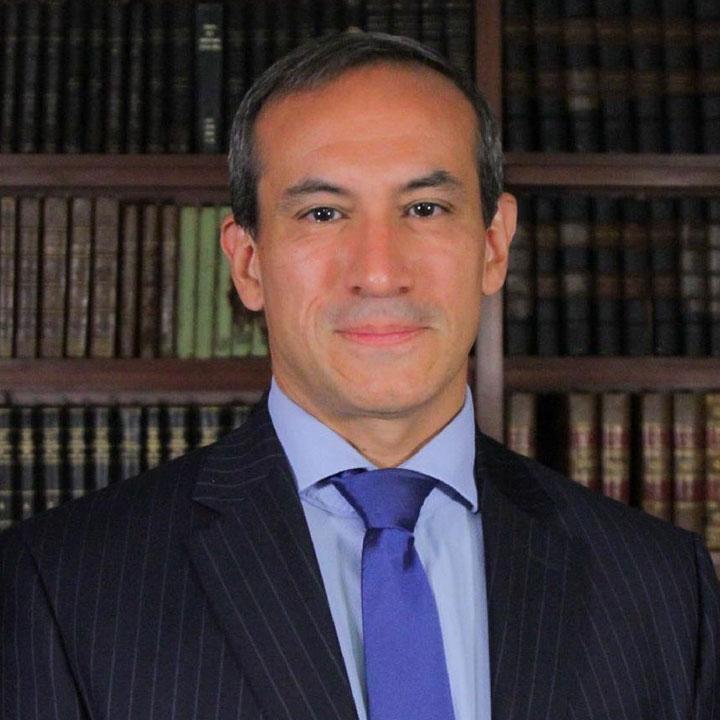
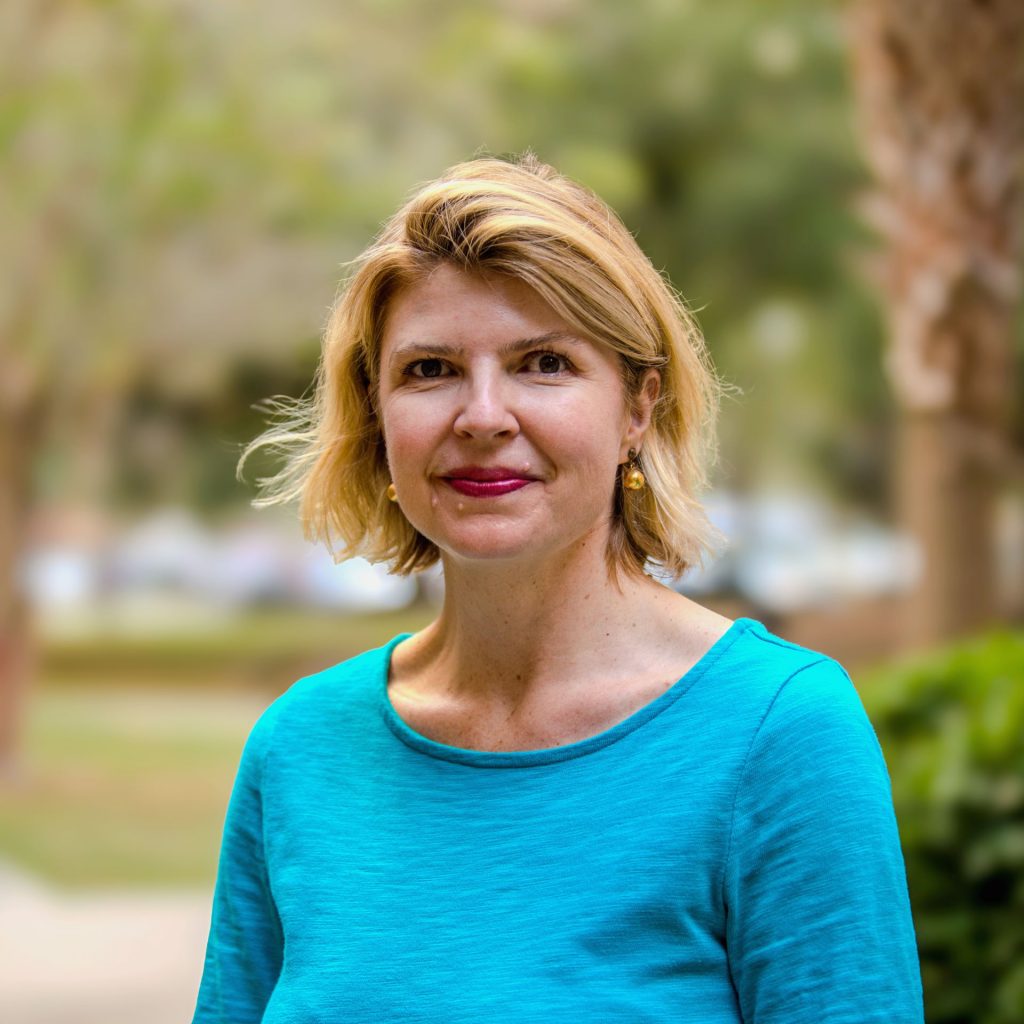
Edward R. Morrison is the Charles Evans Gerber Professor of Law at Columbia University's Columbia Law School, where he has been a full-time faculty member since 2003. His academic rank is Professor, specializing in corporate finance, bankruptcy law, and law and economics. He holds a Ph.D. in economics (University of Chicago, 2003), J.D. (University of Chicago Law School, 2000), M.A. in economics (University of Chicago, 1997), and B.S. (University of Utah, 1994). Morrison’s research focuses on corporate reorganization, consumer bankruptcy, and systemic market risk regulation. Notable work includes studies on racial disparities in Chapter 13 filings, valuation disputes in bankruptcies, and the link between financial distress and mortality. He co-edits the Journal of Legal Studies and directs Columbia’s Executive LL.M. Program. His teaching portfolio includes Contracts, Bankruptcy Law, and Corporate Finance. He co-directs the Richard Paul Richman Center for Business, Law, and Public Policy. Awards include the Willis L.M. Reese Prize (2018) for teaching excellence and the John Wesley Steen Law Review Writing Prize (2012). Morrison’s work is supported by the National Science Foundation and Pew Charitable Trusts. He previously served as Paul H. and Theo Leffmann Professor of Commercial Law at the University of Chicago (2013–2014) and has held roles on the Supreme Court’s Advisory Committee on Bankruptcy Rules and as associate editor of the American Law & Economics Review .
Lorin M. Hitt serves as the Zhang Jindong Professor of Operations, Information and Decisions at the University of Pennsylvania's Wharton School. His distinguished career spans multiple domains at the intersection of information technology, economics, and business strategy. As a leading scholar in IT productivity and innovation, he maintains an active research agenda while teaching undergraduate and graduate courses in information systems and data analysis. Professor Hitt's research interests focus on the relationship between information technology and productivity, with particular emphasis on complementary factors such as organizational design and human capital that affect the value of IT investments. His current work explores the economics of IT labor mobility, enterprise software contracting, recommender systems' influence on consumer behavior, measurement of intangible assets, and pricing information goods. His research increasingly examines IT deployment in healthcare settings and the role of the IT workforce in relation to issues like offshoring and the H1-B visa program. His research publications demonstrate consistent contributions to top-tier journals, with recent work analyzing how data analytics mitigates post-IPO innovation decline, digital capital accumulation in superstar firms, and the relationship between analytics skills and firm productivity. His publication record shows sustained scholarly output across multiple domains of information systems research. Best Paper Runner-up – Management Science, 2014 Best Paper – Information Systems Research, 2013 Multiple Wharton Excellence in Teaching Awards (2003, 2007-2008, 2011) David Hauck Award for Distinguished Teaching, 1999 National Science Foundation Career Grant Recipient, 1998 Lindback Award for Distinguished Teaching, 1998 Professor Hitt teaches multiple courses including OPIM101 (Introduction to OPIM), OPIM105 (Data Analysis in VBA and SQL), OPIM469 (Information Strategy and Economics), and OPIM955 (Doctoral Seminar in IS Economics). His teaching focuses on information systems management, economics, data analysis, and advanced analytical methods. Beyond academia, he consults on IT outsourcing agreements and IT investment evaluation, and occasionally serves as an expert witness in technology-related litigation.
Tiago de Melo Cartaxo is a Senior Lecturer in Environmental Law at the University of Exeter’s College of Humanities and Social Sciences, Cornwall Campus. He founded the Exeter Centre for Environmental Law (ExCEL) and is part of Law and Business Cornwall (LAB/C). Current roles include Associate Director for External Engagement at the Environment and Sustainability Institute (ESI) and former Director of Postgraduate Research for Humanities and Social Sciences. His research focuses on environmental rights, climate resilience justice, circular economy, energy transition, and international environmental law. He holds a European PhD in Law from Universidade Nova de Lisboa, with postdoctoral work at the University of Surrey. Tiago has advised governments and international bodies, including the Portuguese Presidency of the EU Council, and chairs the World Public Sector Integrity Initiative (WPIEI). Education European PhD in Law, Universidade Nova de Lisboa (2015–2020) LLM in Environmental Law and Planning, University of Coimbra (2012–2014) Licenciatura in Law, University of Lisbon (2000–2005) Research Interests He explores legal frameworks supporting sustainability transitions, including governance of single-use plastics, nature markets, and climate adaptation. His work bridges environmental law with social equity, focusing on resilience justice, circular economy policies, and EU environmental law. He emphasizes transdisciplinary approaches to address socio-ecological challenges in urban contexts. Notable Contributions Coordinated ESI-funded projects on regulatory frameworks for nature markets Developed academic partnerships with the Portuguese Environment Agency Chaired WPIEI during Portugal’s EU Presidency Advised on post-2011 Portuguese economic reforms Awards & Affiliations Fulbright Scholarship (USA) FCT Fellowships (Portugal) Senior Fellow of AdvanceHE Member of ILA Committees on Sustainable Development, SDGs, and ICC Environment Commission Advising & Grants Tiago welcomes PhD/Masters supervision in Environmental & Climate Law. His grants include ESI funding and collaborations with international institutions. He leads the NOVA Law Green Lab and has advised Portuguese and EU policymakers on environmental compliance and energy transitions. Labs & Networks Founder of ExCEL and NOVA Law Green Lab; collaborates with Exeter Biodiversity & People Network, Exeter Food Policy, and Environmental Intelligence initiatives.
Joel Townsend is an Associate Professor at Monash University's Faculty of Law and serves as Director of Monash Law Clinics, a community legal centre providing experiential education to law students while delivering legal assistance across multiple practice areas including social security, NDIS appeals, tenancy, and migration law. Education: Currently pursuing PhD at Monash University focusing on merits review in Australian public law Townsend's research centers on Administrative Law and Public Law , with specialized expertise in merits review mechanisms , social security law (particularly the Robodebt scheme), disability law (NDIS) , migration law , and tenancy law reform . As an Accredited Specialist in Administrative Law and co-Chair of the Law Institute of Victoria's Administrative Law Advisory Committee, his work directly influences policy development and legal practice through extensive public advocacy and law reform submissions. His scholarly output reveals a critical examination of administrative review systems across diverse contexts, consistently analyzing how automated decision-making impacts government accountability and access to justice. Recent publications demonstrate growing focus on the intersection of technology, public administration, and legal redress mechanisms. Scientific Awards: Vice-Chancellor's Award for Industry and Community Education Programs (Community) (2022) Townsend supervises law students in clinical placements at Monash Law Clinics while leading significant policy initiatives, including a 2023 expert report on third-party merits review for the EPBC Act commissioned by Lock the Gate Alliance Limited. His grant activities extend to Senate committee consultations on automated decision-making and submissions to Victoria's Administrative Reform Review. As Director of Monash Law Clinics, Townsend oversees a multidisciplinary team handling high-impact public interest litigation and community legal services, maintaining strong connections with organizations including Flemington Kensington Community Legal Centre (where he previously served as Board Chair) and Inner Melbourne Community Legal.
Martin Nesvig is a Professor at the University of Miami in the Department of History, College of Arts and Sciences. He serves as Director of Undergraduate Studies and Co-Faculty Lead for Mexico and Mesoamerica in the University of Miami’s Interdisciplinary Programs (UMIA). His research focuses on colonial Latin America, particularly religious hybridism, inquisitorial systems, and decentralized power structures in Michoacán. University of Miami, College of Arts and Sciences Department of History Director of Undergraduate Studies Mexico and Mesoamerica Co-Faculty Lead Nesvig's scholarship interrogates the complexities of religious syncretism, bureaucratic conflict, and cultural negotiation in colonial Mexico. His work challenges traditional narratives of 'spiritual conquest' by highlighting the mutual adaptation between Spanish and indigenous communities, emphasizing the role of hallucinogenic rituals, vernacular scripture, and micro-imperial governance in shaping colonial religious practices. His 2010 Charles A. Ryskamp Research Fellowship supported his project on frontier religion in Michoacán, analyzing how Spanish clergy and laity adopted indigenous practices. His publications span topics from peyote use in Catholic rituals to the political implications of prohibited books and the dynamics of postcontact cultural liminality. Notable Works: Promiscuous Power: An Unorthodox History of New Spain , Peyote, Ever Virgin: A Case of Religious Hybridism in Mexico Awards: Charles A. Ryskamp Research Fellowship Nesvig’s research reveals a colonial state perpetuated through bureaucratic litigation rather than violence, with his irreverent historiographical style challenging academic conventions. His students and colleagues engage with his critical perspectives on power, religion, and cultural identity in early modern Latin America.
Professor John Zeleznikow is an Honorary Associate at La Trobe University's Law School, with a distinguished career spanning 49 years across multiple institutions including the University of Edinburgh and Victoria Business School. His research focuses on AI applications in legal decision-making, dispute resolution, and autonomous vehicle technology. He has secured over $8M in research grants and supervised 20 PhD graduates. Key projects include the Split-Up system (used in high-profile divorce cases like Prince Charles and Lady Di) and Family-Winner software, which won an ABC TV innovation award. His work bridges law, technology, and ethics, with publications in leading journals like the Harvard Negotiation Law Review and Artificial Intelligence and Law . Recent research explores AI-driven online dispute resolution (ODR), autonomous vehicle regulation, and the ethical implications of technology in legal systems. He advocates for transparent, user-centric legal tech solutions to enhance access to justice and improve decision-making processes.
Malgorzata Agnieszka Cyndecka is a Professor at the Faculty of Law, University of Bergen (UiB) , where she specializes in EU/EEA state aid law and data protection/GDPR. She is affiliated with SLATE (Centre for the Science of Learning & Technology) and serves as a member of the Norwegian Data Protection Board. Since 2019, she has been Associate Editor of the European State Aid Law Quarterly . She also holds an Associate Professor II position at the University of Oslo and contributes to interdisciplinary research on AI, privacy, and education. University: University of Bergen School: Faculty of Law Academic Rank: Professor Email: malgorzata.cyndecka@uib.no Affiliations: SLATE, Norwegian Data Protection Board, Council of Europe Expert Group on AI and Education Her research centers on EU/EEA state aid rules —particularly their application in tax, energy, and education sectors—and data protection law , with a focus on GDPR compliance in AI-driven educational technologies. She has led and contributed to major projects such as the Norwegian Data Protection Authority’s Sandbox for Responsible AI (AVT project), where she provided legal guidance on processing student data, and UiB’s DIGI courses, where she co-developed DIGI113 on Privacy and GDPR. Her work bridges legal theory with practical policy, influencing national and international frameworks on digital rights and public aid. The analysis of her recent publications reveals a strong focus on the evolution of state aid jurisprudence , especially the Market Economy Operator Principle (MEOP), burden of proof in aid cases, and sustainability in public support. Concurrently, her interdisciplinary work explores AI and privacy challenges in education , anonymization of unstructured data under GDPR, and ethical implications of algorithmic decision-making. Her contributions span legal doctrine, policy recommendations, and public commentary. Scientific Awards: European State Aid Law Quarterly PhD Award (2012–2016) for best doctoral dissertation in state aid law Advising and Grants: She supervises master’s students in EU/EEA law, data protection, and GDPR. She has been involved in externally funded projects including the Norwegian Data Protection Authority’s Sandbox for Responsible AI, the ENDO4P project (aimed at personalized endocrinology treatment via EU Horizon funding), and the Clean Up Project (Machine Learning for Anonymisation of Unstructured Personal Data) at the University of Oslo. She has also coordinated collaborations with Media City Bergen for law and technology education. Her teaching includes course leadership in JUS2302, JUS3502, JUS2303, JUS3503, and DIGI113. Labs and Teams: She is a key member of SLATE (Centre for the Science of Learning & Technology) at UiB and participates in multiple research groups including the Research Group for Information and Innovation Law. She contributes to interdisciplinary teams working on digital competence, AI ethics, and data governance in education and health. She is also active in the Academy for Young Researchers (AYF) and leads the EU and EEA Law Issues Committee in the Norwegian branch of the International Commission of Jurists (ICJ).
Maryellen Fullerton is the Suzanne J. and Norman Miles Professor of Law at Brooklyn Law School. She served as Interim Dean from 2018 to 2019. Her expertise spans asylum/refugee law, immigration, international law, human rights, civil procedure, and federal courts. She holds a J.D. from Antioch School of Law and a B.A. from Duke University. Fullerton’s research examines comparative refugee law, EU asylum systems, and U.S. policies. She has held distinguished visiting roles at institutions like National Taiwan University and the University of Trento (via Fulbright). Her scholarship includes co-authored casebooks on immigration and refugee law, and she founded the multilingual Refugee Law Reader. She has advised Human Rights Watch on missions in Germany, consulted for UNHCR, and supports Refugee Law Clinics in Eastern Europe. Awards include the Fulbright Scholar designation and German Marshall Fund Fellowship. Affiliations: Dennis J. Block Center for International Business Law, Brooklyn Law School International Human Rights Fellowship Program. Grants/Awards: Fulbright Scholar (multiple), German Marshall Fund Fellow, Distinguished Chair at University of Trento. Labs/Teams: Leads Refugee Law Reader project; collaborates with global human rights organizations.
Tatsuhiro Ueno serves as Professor at Waseda University's Faculty of Law and School of Law, specializing in Intellectual Property Law, Copyright Law, and Information Law. He currently holds leadership positions as Director of the Institute of Comparative Law (since 2024) and President of SARLIB (Society for Administration of Remuneration for Public Transmission by Libraries or Similar Facilities). With extensive international experience including visiting scholar positions at Ludwig Maximilian University of Munich and the Max Planck Institute for Intellectual Property and Competition Law, Professor Ueno has established himself as a leading authority in copyright law reform and international intellectual property matters. Professor Ueno earned his Master of Law from Kyoto University following undergraduate and graduate studies there. His academic career includes teaching positions at Rikkyo University College of Law and Politics and Seijo University Faculty of Law before joining Waseda University in 2013, where he now contributes to shaping Japan's legal education landscape. His research focuses on the critical intersection of intellectual property law with emerging technologies, particularly artificial intelligence systems and digital platforms. Professor Ueno has pioneered work on text and data mining exceptions, copyright limitations in digital environments, and creator-oriented copyright frameworks. His scholarship bridges theoretical analysis with practical policy development, influencing both domestic legislation and international copyright discourse. His recent publications demonstrate a concentrated focus on AI and copyright law, with numerous articles examining the legal challenges posed by generative AI systems, text and data mining exceptions, and the evolving landscape of copyright protection in the digital era. Professor Ueno's work consistently addresses the balance between protecting creators' rights and ensuring public access to knowledge. KDDI Foundation Book Publishing Grant (January 2025) for "Creator-Oriented Copyright System" Professor Ueno actively participates in numerous government committees shaping Japan's copyright law, including serving as Chairman of the Law and Computers Society and as a longstanding member of the Copyright Subcommittee of the Council for Cultural Affairs. His research is supported by multiple grants from the Japan Society for the Promotion of Science, including ongoing projects examining human portraits and voices in the AI age (2025-2029) and AI and intellectual property rights systems (2024-2029). He regularly presents at international forums including WIPO Summer Schools, ATRIP conferences, and copyright forums worldwide, establishing his reputation as a key thought leader in global copyright policy development.
Professor Imre S. Szalai is a leading scholar in arbitration law and dispute resolution, currently serving as Professor of Law at the Elisabeth Haub School of Law at Pace University. His expertise spans arbitration, litigation, professional responsibility, and legal ethics. He is nationally recognized for his work on the Federal Arbitration Act and its impact on civil justice. University: Pace University School: Elisabeth Haub School of Law Department: Dispute Resolution Academic Rank: Professor Education: Bachelor of Arts (BA), Yale University – Double Major in Economics and Classical Civilizations JD, Columbia University School of Law – Harlan Fiske Stone Scholar Research Interests: Professor Szalai specializes in the legal, historical, and ethical dimensions of arbitration. His work critically examines the expansion of forced arbitration in consumer and employment contexts, the erosion of trial rights, and the role of arbitration in undermining accountability. He explores the historical roots of the Federal Arbitration Act and advocates for reforms that restore fairness and consent in dispute resolution. His recent scholarship delves into emerging issues such as artificial intelligence in arbitration and the impact of pop culture on legal interpretation. Publication Trends: His recent publications (2022–2025) reflect a strong focus on contemporary challenges in arbitration law, including the #MeToo movement's influence on forced arbitration, AI-driven dispute resolution, the role of the Supreme Court in shaping arbitration policy, and high-profile cases involving Ticketmaster and Taylor Swift. His work combines doctrinal analysis, historical inquiry, and policy critique, often drawing from media and cultural references to make complex legal issues accessible. Scientific Awards: Harlan Fiske Stone Scholar, Columbia Law School Advising and Grants: Professor Szalai actively collaborates with students on amicus briefs and scholarly work. While specific grant funding is not detailed in the provided text, his extensive publication record and media engagements suggest sustained scholarly support. He mentors students in legal research, writing, and advocacy, particularly in the areas of arbitration and civil rights. Labs, Teams, and Initiatives: He maintains a public blog on arbitration law developments, where he analyzes recent court decisions, legislative changes, and policy debates. This platform serves as an educational resource and contributes to public discourse on arbitration reform. He also participates in academic and professional networks focused on dispute resolution and legal ethics.
Alyssa King is an Assistant Professor at the Faculty of Law, Queen's University, specializing in courts, comparative procedure, and issues of adjudicator legitimacy. Her research focuses on access to justice, federalism, arbitration, and the intersection of international law with domestic systems. She holds a PhD and JD from Yale University, an AB from Harvard University, and a Master 2 from the École des Hautes Études en Sciences Sociales. Previously, she clerked for U.S. federal judges and contributed to legal journals like the Yale Law Journal. Her work examines procedural harmonization, transnational judicial practices, and legal systems' interactions. Education: PhD in Law, Yale University (2018) Juris Doctor (JD), Yale Law School (2012) AB in Social Studies (magna cum laude), Harvard University (2008) Master 2, École des Hautes Études en Sciences Sociales Her research explores how adjudicators navigate legitimacy in cross-border contexts, including arbitration and federal systems. Key themes include procedural ethics, judicial mobility, and legal frameworks for pandemic responses. She teaches Contracts and actively engages with global legal challenges. Awards & Recognition: No specific awards mentioned in the provided texts. Advising & Grants: No advising roles or grants explicitly listed, though her research likely involves institutional support. Labs & Teams: Not specified in the provided information.
E. Lea Johnston is the Clarence J. TeSelle Professor and Professor of Law at the University of Florida Levin College of Law. She is a leading expert in mental health law, criminal law, and criminal procedure, with her work appearing in top law reviews and peer-reviewed interdisciplinary journals. Her scholarship has been widely cited by legal scholars, appears in leading treatises, and has received attention from courts and social scientists. Her theory of sentencing forms part of the theoretical framework for the standard textbook for forensic psychiatry fellowship programs. Professor Johnston earned her A.B. from Princeton University and her J.D. (cum laude) from Harvard Law School. Before entering academia, she worked as a litigation associate at Arnold & Porter LLP in Washington, D.C., served as director of the Maryland Public Interest Research Group, and clerked for Judge Richard Tallman of the U.S. Court of Appeals for the Ninth Circuit. Johnston's research primarily focuses on the intersection of mental health and criminal justice. Her work examines how mental illness impacts criminal responsibility, competence to stand trial, sentencing, and diversion programs. She has made significant contributions to understanding diminished responsibility doctrines, insanity defenses, mental health courts, and assisted outpatient treatment. Her scholarship often employs interdisciplinary approaches, integrating legal analysis with insights from psychology, psychiatry, and behavioral sciences to develop more humane and just approaches to mentally ill offenders within the criminal justice system. Her publications demonstrate consistent scholarly output with significant impact across multiple disciplines. The trajectory of her work shows an evolution from foundational analyses of legal standards for mentally ill defendants toward more comprehensive reform proposals addressing systemic issues in how the criminal justice system handles mental illness. Elected to American Law Institute (2020) Former Chair of Criminal Justice Section, American Association of Law Schools Former Chair of Law and Mental Disability Section, American Association of Law Schools Member of Legal Scholars Committee, American Psychology-Law Society Professor Johnston has significantly influenced both legal scholarship and practice through her theoretical contributions and practical recommendations. Her work on sentencing theory for mentally ill offenders has been incorporated into forensic psychiatry training materials, demonstrating real-world impact beyond academia. While specific grant information isn't detailed in the provided text, her extensive publication record and leadership roles suggest substantial research support throughout her career. Her scholarship serves as a critical bridge between legal doctrine and clinical mental health practice, offering frameworks that balance therapeutic needs with justice considerations.
Jack Poe is an Adjunct Assistant Professor in the Department of Finance and Real Estate at The University of Texas at Arlington, within the College of Business. With 37 years of experience as a valuation expert, he brings substantial professional expertise into his academic role. His research interests include Real Estate Appraisal , Investment Property Valuation , and Science and Technology as applied to real estate. His professional work emphasizes litigation support, forensic appraisal, and the development of national and international valuation standards. Mr. Poe has held key roles in professional organizations, including serving on the Appraisal Standards Committee of the Appraisal Institute and contributing to the International Valuation Standards Council. He was President of the Forensic Expert Witness Association (FEWA) and has testified as an expert witness in multiple federal and state courts across the United States. Professional Recognitions: MAI designation from the Appraisal Institute General Review Specialist (AI-GRS) designation from the Appraisal Institute He advises and teaches students primarily in real estate appraisal and investment courses, though no formal advisees are listed. His teaching includes REAE 3325 (Real Estate Fundamentals), REAE 4321 (Real Estate Investment), and REAE 4334/5334 (Real Estate Appraisal) at both undergraduate and graduate levels, with consistent offerings since 2020 through 2025. Mr. Poe is actively engaged in teaching and professional practice, contributing to both academic and industry standards in real estate valuation.
Dr. Paul O'Connell is a Reader in Law at SOAS University of London's School of Law, Gender and Media since September 2013. Previously, he served as a Reader in Law at the University of Leicester (2009–2013) and a Lecturer in Law at the National University of Ireland, Galway (2005–2008). He holds an LLB from Dublin, an LLM, and a PhD from the National University of Ireland. Education: LLB, Dublin LLM, NUI PhD, NUI His research focuses on Public Law, Human Rights (particularly Socio-Economic Rights), Globalisation and the Law, Critical Legal Theory (especially Marxist critiques), and International Law. He has authored influential books such as Masking Barbarism: Human Rights in the Contemporary Global Order (2017) and Vindicating Socio-Economic Rights: International Standards and Comparative Experiences (2012). Recent work critiques the interplay between globalisation and human rights. He holds notable awards including the British Academy Mid-Career Fellowship and Fulbright Commission support. Dr. O'Connell supervises doctoral candidates in socio-economic rights, comparative law, and critical legal theories. His current projects explore globalisation’s impact on socio-economic rights frameworks. Key Projects: Visiting Fellow at Harvard Human Rights Program (2013–2014) Research on Marxist legal theory and socio-economic rights
Horatia Muir Watt is a Full Professor at Sciences Po's Law School, where she is a leading figure in private international law and comparative law. She is Co-Director of the Global Governance Studies program and founder of the PILAGG research group. Her scholarship is widely published in top legal journals, and she serves as Director of the Revue critique de droit international privé , the premier French-language journal in her field. She is affiliated with the Institute of International Law and the Institut Universitaire de France. PhD in Private International Law, University of Panthéon-Assas Paris 2 (1985) Agrégation in Private Law, ranked second (1986) Former faculty at University of Tours, Paris XI, and Paris I Panthéon-Sorbonne Appointed to Sciences Po in 2009, instrumental in founding its Law School Her research centers on international private law in global governance , comparative law with new theoretical approaches , and fundamental rights . She critically examines the role of law in transnational disputes, arbitration, migration, and environmental justice. Her work often explores the philosophical and cultural dimensions of legal reasoning, including alterity, translation, and ecological jurisprudence. Her recent publications, spanning 2023–2024, demonstrate a consistent focus on the evolving landscape of private international law. Key themes include jurisdiction in transnational litigation, the recognition of foreign judgments, the impact of war on family law, and the ethics of legal publishing. Her articles appear predominantly in the Revue critique de droit international privé , with additional contributions to journals like Rabels Zeitschrift and Transnational Legal Theory . The body of work reflects a blend of doctrinal precision and critical theory, engaging with EU regulations, comparative methodologies, and global legal challenges. Member of the Institute of International Law (since 2013) Member of the Institut Universitaire de France (since 2018) Horatia Muir Watt has supervised numerous PhD candidates and leads the PILAGG research group, which has produced several influential books with publishers such as Oxford University Press and Edward Elgar. She is part of the core faculty at the Institute for Global Law and Policy (IGLP) and serves on the editorial boards of multiple international legal journals, including the Journal of Private International Law and Transnational Legal Theory . Her work is supported by institutional affiliations and collaborative research projects rather than specific grant mentions in the text. She directs the PILAGG (Private International Law and Global Governance) research group at Sciences Po, which fosters interdisciplinary and critical approaches to transnational law. The group has organized collective research projects resulting in major publications and contributes to shaping contemporary discourse in private international law.