Dana Hammontree is an Assistant Professor of Business Administration at Tennessee Wesleyan University. She focuses on research areas including public policy, education management, and organizational behavior. Her work intersects with global business strategies and healthcare administration. Her recent publications explore societal adaptations during the pandemic's impact on daily life and legal challenges related to student visa programs. These studies highlight her commitment to understanding contemporary issues in business and public health contexts. No academic awards or grants are explicitly listed, though her involvement in SEVP litigation cases suggests engagement with policy advocacy. Advising roles or lab affiliations are not detailed in available records.
Kelly M. Feeley is a Professor of Legal Skills at Stetson University College of Law, where she has taught since 2000. She serves in the College of Law's Legal Skills department, teaching Research & Writing I, Research & Writing II, and Interviewing and Counseling courses. B.S. summa cum laude from Florida State University (1992, Communication Studies) J.D. from Stetson University College of Law (1995) Professor Feeley's research focuses on practical legal skills development, with particular expertise in alternative dispute resolution, legal writing pedagogy, and client interviewing techniques. Her work bridges theoretical legal education with practical application in real-world legal practice, emphasizing communication skills and professional development for law students. She has developed comprehensive educational materials that help students navigate complex client interactions and dispute resolution processes. Her publications demonstrate a consistent focus on practical legal education, with recent works examining interviewing and counseling techniques, alternative dispute resolution methods, and the importance of clear legal writing. These works collectively contribute to the development of effective communication strategies for legal professionals and highlight the practical applications of legal education beyond theoretical frameworks. Helped teams capture 4 national championships 6 national finalist titles 5 national semi-finalist titles 9 regional championships 6 regional finalist titles Order of Barristers Professor Feeley has been instrumental in Stetson's award-winning advocacy program, founding and serving as faculty advisor for the Dispute Resolution Board from 2001-2015. She has coached numerous competition teams across multiple disciplines including Arbitration, Client Counseling, Mediation, and Negotiation. Her service extends to the American Bar Association where she has served on Law Student Division Competitions Subcommittees since 2003 and as Competitions Committee Co-Chair since 2013. She has developed educational resources through Stetson's Advocacy Center Resource Center and has participated in nationwide videos on elder law ethics. Her expertise in nonverbal communication and civil litigation has led to multiple television interviews.
David K. Rosner is the Ronald H. Lauterstein Professor of Sociomedical Sciences and Professor of History at Columbia University. He co-directs the Center for the History and Ethics of Public Health, a collaboration between Columbia's Mailman School of Public Health and the Department of History. An elected member of the National Academy of Medicine, his academic journey includes a BA from City College of New York (1968), an MPH from the University of Massachusetts (1972), and a PhD in the History of Science from Harvard University (1978). Research Interests: Dr. Rosner's work bridges the history of science, public health, and occupational safety. He investigates the political and corporate influences shaping environmental health policies, focusing on lead poisoning, asbestos regulation, and industrial pollution. His research highlights historical patterns of corporate denialism, regulatory failures, and the social determinants of health outcomes. Publications & Impact: With over 15 recent articles, his scholarship addresses pressing public health challenges. His work spans topics like climate policy denial, lead poisoning prevention, and the legacy of occupational diseases. He collaborates extensively with Gerald Markowitz, producing seminal texts on industrial health hazards. Awards & Honors: Dr. Rosner has received numerous accolades, including the Guggenheim Fellowship, Robert Wood Johnson Investigator Award, and the Rachel Carson Award from the American Industrial Hygiene Association. He was honored with the John P. McGovern Science and Society Prize and plays a pivotal role in the National Academy of Medicine's 50th-anniversary history project. Additional Contributions: As a mentor and advocate, Dr. Rosner has earned Faculty Mentoring Awards at Columbia. He contributes to editorial boards and serves on advisory committees, shaping discourse on public health ethics and policy.
Kristen Stanley serves as an Associate Clinical Professor in the Lawyering Program at Cornell Law School, Cornell University. She joined Cornell from Vanderbilt Law School where she taught legal writing to first-year J.D. students, bringing extensive prior experience representing death-sentenced individuals in federal habeas corpus and state post-conviction proceedings across Tennessee and Louisiana. Her research critically examines trauma's intersection with the criminal justice system, focusing on neurobiological impacts, developmental consequences, and interpersonal relationship dynamics among trauma-affected individuals within legal contexts. Professor Stanley integrates her Master of Social Work expertise to analyze how social, cultural, and political forces shape trauma exposure and recovery pathways. Core Research Dimensions: Neurobiological trauma mechanisms, capital punishment litigation strategies, post-conviction remedy frameworks, trauma-informed legal advocacy models, systemic inequities in death penalty cases, and therapeutic jurisprudence applications. As a clinical educator, Professor Stanley trains law students in legal writing and analysis while leveraging her capital defense background to develop trauma-responsive approaches in criminal justice education. Her professional trajectory bridges direct legal representation of indigent clients with scholarly exploration of trauma's systemic manifestations, though specific grant funding or student mentorship details remain unpublicized in available materials.
Gene Moo Lee is an Associate Professor in the Accounting and Information Systems Division at the UBC Sauder School of Business. He holds a PhD in Computer Science from UT Austin. His research focuses on AI in business contexts, cybersecurity, and data analytics, with notable contributions to understanding AI strategies, IT platforms, and workforce transformations. His work has been published in top journals like MIS Quarterly , Information Systems Research , and Journal of Management Information Systems . Education: BS (Korea University), MA (UT Austin), PhD (UT Austin). He has held roles at Samsung, Intel, Goldman Sachs, and others, and holds over 10 patents in mobile technologies. His Erdős number is 3. Research interests include AI's impact on industries, cybersecurity defense mechanisms, and the integration of robotics and service operations. His recent studies explore AI-driven innovation, mobile device management in remote work, and the effects of service robots on labor dynamics. He has supervised over a dozen PhD and Master’s students, including Jaecheol Park (2025 dissertation) and Myunghwan Lee (2023 proposal). Awards include AIS Distinguished Member (2021) and Reviewer of the Year (MISQ/ISR 2021). He serves as an AE for ISR and SE for Decision Support Systems . Key projects include the Data Analytics & AI Research Group, cyber risk assessment frameworks, and studies on generative AI in journalism and video content creation. His work bridges theory and practice, addressing real-world challenges in digital transformation and AI ethics.
Roles and Affiliations: Sébastien Jodoin is an Associate Professor and Associate Dean (Research) at McGill University’s Faculty of Law. He holds the Canada Research Chair (Tier 2) in Human Rights, Health, and the Environment. He is affiliated with the McGill Centre for Human Rights and Legal Pluralism, the Bieler School of Environment, the McGill Institute of Health and Social Policy, and the Max Bell School of Public Policy. His leadership includes co-chairing McGill’s Joint Board-Senate Subcommittee on Persons with Disabilities and directing the Disability-Inclusive Climate Action Research Program (DICARP). Education: He earned a Ph.D. in Environmental Studies from Yale University (2015), an M.Phil. in International Relations from the University of Cambridge (2009), an LL.M. in International Law from the London School of Economics (2006), and B.C.L./LL.B. degrees from McGill University (2005). Research Focus: Jodoin’s work centers on the intersections of human rights, climate governance, disability rights, and environmental policy. Key themes include climate justice, transnational climate law, and disability-inclusive climate action. His research emphasizes the rights of Indigenous peoples and marginalized communities in climate policy frameworks. Publications and Awards: He has authored influential books like Forest Preservation in a Changing Climate (2017) and co-edited the Routledge Handbook of Human Rights and Climate Governance (2018). His work has been cited by the IPCC and UN human rights bodies. Awards include the Transnational Environmental Law Prize and Yale’s Public Scholar Award. Professional Experience: Prior to academia, Jodoin worked at Amnesty International Canada, the United Nations International Criminal Tribunals, and the Centre for International Sustainable Development Law. Advocacy and Grants: His advocacy spans disability rights, climate policy, and legal empowerment. He has secured grants from the Trudeau Foundation, SSHRC, and others. His research programs aim to bridge knowledge gaps between climate science, human rights, and policy implementation. Labs/Teams: DICARP, a pioneering initiative he founded, focuses on disability-inclusive climate action through interdisciplinary research and policy translation.
James A. Woods is the founder and Senior Counsel of Woods, a leading Canadian law firm specializing in dispute resolution. He holds the title of Advocatus Emeritus (Quebec, 2013) and has been recognized as one of Canada’s leading litigators. His roles include Sessional Lecturer in Trial Advocacy at McGill University’s Faculty of Law (1987–2019) and teaching Civil Procedure at the same Faculty (1984–1987). He has contributed to legal education through courses on Law for Architects and Engineers at McGill’s Faculty of Engineering (1993–2002). Practice focuses on complex commercial litigation, arbitration (domestic and international), and appeals. Notable cases include BCE Inc. v. Debentureholders (2008), Metcalfe & Mansfield Alternative Investments II Corp. (Re) (2008), and Saputo v. CTVglobemedia Publishing Inc. (2010). He has been repeatedly honored, including Lawyer of the Year awards for various legal specialties (e.g., Legal Malpractice Law, Appellate Practice). Publications span arbitration law, class actions, and civil procedure. He actively participates in professional organizations like the International Bar Association and serves on advisory boards for legal institutions. His work bridges civil and common law systems, with multilingual capabilities (French/English).
Professor John Swinson is a distinguished academic and legal expert at the TC Beirne School of Law, The University of Queensland. He holds a Professorial rank, specializing in intellectual property law, cybersecurity law, AI law, and the intersection of technology with legal frameworks. His career spans academia, legal practice, and policy advisory roles. Swinson graduated with a University Medal in Law from UQ, a Bachelor of Arts in Computer Science, and an LL.M. from Harvard as a Fulbright Scholar and Frank Knox Scholar. Education: Bachelor of Arts (Computer Science), University of Queensland (1986) Bachelor of Laws (Honours and Gold Medal), University of Queensland (1988) LL.M., Harvard Law School (1991) Professional Roles: Professor of Law at The University of Queensland (since 2017) Former Partner at King & Wood Mallesons (1999–2021) WIPO Domain Name Panelist (2000–present, adjudicating 720+ cases) His research focuses on emerging legal challenges in digital spaces, including AI ethics, cybersecurity compliance, privacy rights, and domain name disputes. He actively contributes to policy development, such as submissions to Australia’s Cyber Security Strategy and Privacy Act reforms. Research Highlights: Swinson’s work bridges technical innovation and legal frameworks, addressing topics like AI-generated art’s copyright implications, cybersecurity litigation trends, and the legal governance of digital platforms. He frequently publishes in Computer and Telecommunications Law Review , Art and Australia , and other journals. Awards and Honors: Fulbright Scholar (1990) Frank Knox Scholar (1991) University Medal in Law, UQ (1988) Grants and Advising: Swinson has advised on major policy reviews, including the auDA Domain Name Policy Reform (2019) and Queensland’s Privacy Framework. His work emphasizes practical legal solutions for technological advancements, ensuring laws adapt to evolving digital ecosystems.
Samuel Walpole serves as an Adjunct Fellow at the TC Beirne School of Law, University of Queensland, while maintaining a practice as a barrister specializing in commercial, regulatory, and public law. His academic qualifications include a Bachelors of Arts and Laws (First Class Honours) from the University of Queensland and a Bachelor of Civil Law with Distinction from Oxford University. Walpole's research spans admiralty law, corporate regulation, and judicial philosophy. Key areas include maritime liability frameworks, state immunity in salvage operations, corporate governance in financial services, and jurisprudential analysis of judicial oversight. His scholarly output frequently engages with contemporary challenges in commercial law through both theoretical and practical lenses. His publications demonstrate consistent engagement with evolving liability doctrines in maritime contexts and regulatory responses to corporate misconduct. Recent analysis includes pandemic-related insurance litigation and systemic reform proposals for corporate accountability.
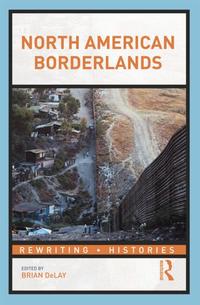
Brian DeLay is a Professor and the Preston Hotchkis Chair in the History of the United States at the University of California, Berkeley . His work centers on 18 th - and 19 th -century North America, with a focus on transnational, borderlands, and Native American histories. He examines power dynamics and inequality through the lens of Indigenous, U.S., and Latin American interactions, particularly during the U.S.-Mexican War era. Education: BA, University of Colorado, Boulder (1994) MA, Harvard University (1998) PhD, Harvard University (2004) Research Interests span the Age of Revolutions , U.S. Empire , Indigenous History , American West , and International Arms Trade . His scholarship highlights the role of Indigenous polities in shaping hemispheric power structures and critiques modern gun-policy myths through historical frameworks. Grants & Fellowships include Guggenheim (2019-2020), Stanford Humanities Center (2019-2020), and ACLS (2017-2018). He serves as a scientific advisor in gun-safety litigation and co-directs Berkeley West , a dissertation group for North American West history. Scientific Awards include the Vandervort Prize (2024), Bryce Wood Book Award (2010), and W. Turrentine Jackson Prize (2009). His first book, War of a Thousand Deserts , won multiple accolades, including the James Broussard Best First Book Prize (2008).
Professor Sam Spiegel is a Professor and Chair of Global Studies and International Development at the Centre of African Studies , School of Social and Political Science , University of Edinburgh. His work bridges socio-environmental injustice , political ecology , and anti-colonial praxis , with regional focus on Zimbabwe , Indonesia , and Indigenous territories in Canada . PhD in Geography, University of Cambridge (Trudeau Scholar, Cambridge Commonwealth Scholar) MSc in Interdisciplinary Studies, University of British Columbia BA (Hons) in Politics, Whitman College Research interests center on displacement , extractive injustices , and community-driven methodologies . He examines resource extraction (coal, oil, gold), climate disaster impacts , and activism through ethnographic and visual storytelling approaches. His projects often involve UN agencies , Indigenous organizations , and post-colonial policy frameworks . Recent publications address climate displacement , mercury pollution , and visual methods in extractive zones. Articles span Political Geography , Geoforum , and Third World Quarterly , reflecting interdisciplinary engagement with resource governance , environmental racism , and anti-colonial resistance . ESRC Future Research Leader Award (2016) Principal's Teaching Award (2020) for anti-racist pedagogy Chancellor's Rising Star Award (2016) recognizing research impact He supervises PhD projects on pipeline infrastructure , Indigenous sovereignty , and coal politics , while collaborating with UNDP , UNEP , and UNIDO on global mercury reduction strategies. His Principal's Teaching Award projects explore decolonial curricula and global solidarity in education.
Dr. Heiko Gerlach is an Associate Professor in the School of Economics at The University of Queensland, within the Faculty of Business, Economics and Law. His research focuses on Industrial Organization, Competition Policy, Law and Economics, the Digital Economy, and Experimental Economics. He holds a Doctoral Diploma from the University of Mannheim and has held academic positions at institutions including the University of Auckland and IAE-CSIC Barcelona as a Ramon y Cajal Fellow. His current research includes a ARC Grant (DP240102584) exploring Privacy, Data Protection, and Market Structure in the Digital Economy. Dr. Gerlach’s work examines collusion dynamics, antitrust enforcement, and patent-related market behaviors. Notable studies include experimental analyses of collusion persistence under prosecution risks and theoretical models of patent trolls and licensing strategies. He has published extensively in top journals like the Journal of Law and Economics, Journal of Economic Behavior and Organization, and the RAND Journal of Economics. His grants include significant funding for digital economy research, reflecting his expertise in modern market structures. Dr. Gerlach is available for academic supervision and is recognized as a media expert in his fields. He contributes editorial work to journals such as Games and maintains active collaborations across international institutions.
Elisa Arcioni is a Professor of Public and Constitutional Law at the University of Sydney Law School. Her research focuses on constitutional identity, inclusion/exclusion dynamics under the Australian Constitution, and Indigenous constitutional recognition. She is a member of the Vere Gordon Childe Centre and leads the Claims of Belonging ARC project . Her work bridges legal theory and practice, engaging with comparative constitutionalism and sociological jurisprudence. Education: BA (Italian) from University of Wollongong, LLB (Hons I) from University of Wollongong, PhD from University of Sydney. She also holds a Graduate Diploma in Legal Practice. Research emphasizes the intersection of law and identity, particularly regarding First Nations peoples and the evolving concept of 'the people' in constitutional frameworks. Recent projects include analysis of the failed 2023 Voice to Parliament referendum and its implications for reconciliation. Key Grants: 2021 Australian Research Council grant for Citizenship and Claims of Belonging in Australian Law and History . Her work has been cited in media and policy debates, including submissions to parliamentary inquiries on Indigenous Voice mechanisms. Public Engagement: Co-authored submissions for the Inquiry into Civics Education and participated in the Australasian Law Academics Annual conference on curriculum reform. Podcast appearances include discussions on post-referendum pathways for constitutional reform. Labs/Teams: Active in interdisciplinary research networks exploring constitutional identity, including collaborations with historians and sociologists.
Dr. Frances Hamilton is an Associate Professor in the School of Law at the University of Reading, serving as Academic Lead and Deputy Director of Teaching and Learning. She holds roles including Module Convenor for EU Law and Law and Society. Her research focuses on Gender, Sexuality, and the Law, with emphasis on LGBTQ+ International Mobility, Gender Pay Gaps, and EU/ECHR approaches to same-sex marriage. She co-developed the award-winning LGBTQ+ Travel Tool, used by over 30 universities to improve international policy. Dr. Hamilton has held visiting positions at the University of Pisa and contributed to Horizon Europe-funded gender equality projects. She has authored/co-edited multiple books with Routledge, including Same-Sex Relationships, Law and Social Change (2020) and The Evolution of the Gender Pay Gap (2023). Education: PhD and LLM from Northumbria University, MA Cantab from Cambridge, qualified solicitor (England & Wales), and Fellow of the Higher Education Academy. Her teaching includes core EU Law modules and Gender and Law electives. She pioneered Yuja Lecture Recording and Blackboard Ultra implementation at Reading. Research interests span LGBTQ+ legal protections, gender pay gap analysis, and transnational marriage law. She has published widely in journals like Journal of Homosexuality and International Human Rights Law Review , focusing on ECtHR case law, EU citizenship rights, and comparative legal frameworks. Awards include the 2024 University of Reading Impact Prize and contributions to Northumbria’s Queen’s Anniversary Prize-winning Student Law Office. She serves as External Examiner at the University of Central Lancashire and is a member of the Law Society and Society of Legal Scholars.
Jason J. Czarnezki is the Gilbert and Sarah Kerlin Distinguished Professor of Environmental Law and Associate Dean of Environmental Law Programs and Strategic Initiatives at Pace University's Elisabeth Haub School of Law. He also serves as Faculty Director of the Sustainable Business Law Hub and holds roles such as International Law Faculty Scholar. His academic career spans institutions like Vermont Law School and Marquette University, with global fellowships at Oxford, Uppsala, and Stockholm Universities. Education: BA and JD from the University of Chicago, PhD in Environmental Law from Uppsala University (2019). Research Interests: Environmental Law, Natural Resources Law, Food Systems Policy, Sustainable Procurement, ESG Criteria, Eco-Labeling, and Climate Governance. His work bridges legal frameworks with practical sustainability strategies, emphasizing global comparative perspectives. Awards & Honors: Richard Ottinger Outstanding Service Award (2018) Olof Palme Visiting Professor (Swedish National Research Council, 2020) Uppsala University Visiting Fellow (2011–2019) Fulbright Scholar at Sun Yat-sen University (2009–2010) Grants & Fellowships: Recipient of grants from the National Science Foundation, Formas, and the U.S. Agency for International Development. His research explores green procurement, food systems valuation, and transnational environmental law. Advising & Leadership: Oversees Pace's #1-ranked environmental law program, manages multi-million-dollar budgets, and leads initiatives like the Sustainable Business Law Hub. His strategic roles include improving student recruitment and career placement through data-driven strategies. Labs & Teams: Founded the Sustainable Business Law Hub and co-founded the Pace Food Law Center, fostering interdisciplinary collaboration on sustainability challenges.