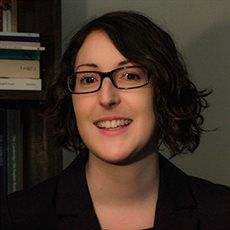
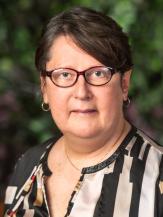
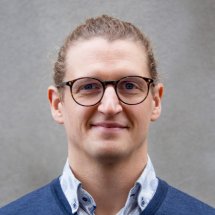
Ann Marie Ade is an Associate Professor in the Department of Humanities & Communication at Embry-Riddle Aeronautical University's College of Arts & Sciences, with over 30 years of academic experience. She serves on the Worldwide Faculty Senate, COAS Faculty Council, and multiple institutional committees. M.A.S. in Aviation Aerospace Management (Embry-Riddle) M.S. in Education (SUNY College at Cortland) B.A. in English (Syracuse University) Her research bridges creative writing and online higher education analysis , evidenced by literary publications in Night Flight: Online Literary Journal (2021–2022) and empirical studies on student evaluations in digital learning environments. Recent publications reveal a dual focus: fictional storytelling with aviation themes and educational research examining assessment methodologies in remote instruction settings. Currently teaching ENGL 123: English Composition and ENGL 106: Introduction to Composition , she has held administrative roles including Center Director and Director of Academics at Embry-Riddle campuses in Maryland.
Michael C. Tinkler is an Associate Professor of Art and Architecture and Chair of European Studies at Hobart and William Smith Colleges, where he has been a faculty member since 1999. He holds a Ph.D. from Emory University and a B.A. from Rice University. His academic home is in the Department of Art and Architecture within the College of Arts and Sciences, where he teaches a wide range of courses spanning from ancient to modern art, with a special focus on the medieval period. Education: Ph.D., Emory University B.A., Rice University His research centers on eighth- to tenth-century Europe, particularly the art and architecture of the Carolingian court, with sustained attention to inscriptions, the interplay between words and images, and sites such as the mosaics of Santa Prassede in Rome. He also investigates medieval badges, pilgrimage culture, Gothic Revival architecture in American colleges, and humor in the Middle Ages. His pedagogical interests include interdisciplinary teaching and the use of digital tools in art history education. The trends in his scholarly articles reflect a deep engagement with material culture, epigraphy, and visual rhetoric of the early medieval period. His work often bridges art history, literature, and religious studies, focusing on how symbols function in both sacred and secular contexts. Recurring themes include authority, literacy, devotion, and the body in medieval art. Michael Tinkler has presented widely at international conferences such as the International Congress on Medieval Studies in Kalamazoo and has organized sessions on medieval humor and pedagogy. He has directed the Rome study-abroad program and collaborates with colleagues on interdisciplinary courses, particularly with Professor Laurence Erussard in English. He maintains digital resources for students, including image databases and virtual bookshelves, and is active in developing teaching tools for medieval studies. Current Research and Projects Include: Early medieval inscriptions and word-image-space interactions Analysis of the mosaics of Santa Prassede, Rome Study of medieval badges, including pilgrimage and carnival badges Investigation of Gothic Revival architecture at Hobart and William Smith Colleges Pedagogical innovations in teaching medieval humor and interdisciplinary humanities Collaborative digital scholarship and online teaching resources
Florentina Gümüş serves as Lecturer in the Department of English Language and Literature at Artvin Coruh University's Faculty of Arts and Sciences, teaching Classical Literature and Contemporary American Literature. Her research examines gender dynamics in theatre, cross-cultural translation, and classical adaptations in modern contexts. Education: PhD in English Language and Literature, Atatürk University (2019-2024) MA in Applied Linguistics, Karadeniz Technical University (2016-2018) Bachelor's degree, University of Ioannina (2010-2015) Veterinary Medicine, Atatürk University (2023-present) Her research centers on feminist reinterpretations of classical narratives (Medea, Phaedra), women's representation in pandemic-era digital theatre, and translation challenges in cross-cultural literary exchange. She investigates how homoerotic content is domesticated in translations and how Eastern/Western female archetypes intersect in global literature. Analysis of her 15 most recent publications reveals consistent focus on National Theatre at Home's pandemic performances, with 40% examining gender representation in digital theatre platforms. Her work bridges translation theory (25%), classical reception (20%), and postcolonial studies (15%), frequently analyzing Hemingway, Cavafy, and Shakespeare adaptations through feminist lenses. Research Funding: Tübitak 3005 Project: "Covid-19 Salgını Döneminde Çevrimiçi Erişime Açılan Tiyatro Oyunlarında Kadın Temsili: 'National Theatre at Home' Örneği" (2022-2023)
Amy George is a Senior Professor of Practice in the Department of Spanish and Portuguese at Tulane University, with affiliation to the Stone Center for Latin American Studies. Her academic journey includes roles from Teaching Assistant (1999–2003) to Senior Lecturer (2006–2012) and her current position since 2012. She holds a Ph.D. in Latin American Studies from Tulane University (2004), an M.A. in Latin American Studies from the University of Arizona (1998), and a B.A. in Spanish and Latin American Studies from Tulane (1995). Her research focuses on Linguistics, Latin American Literature, and Mesoamerican Art History, with notable work on Maya adaptations of European texts and colonial cultural exchanges. She has explored topics such as European medical astrology in Maya manuscripts and medieval astrological influences in Mesoamerican literature. Her pedagogical contributions include advancing service-learning methodologies in foreign language education and directing Tulane’s Basic Language Program (2007–2017). Her publications reflect interdisciplinary interests in ethnohistory, colonial studies, and linguistic adaptation, with key works published in Colonial Latin American Review , Ethnohistory , and Journal of Latin American Lore . She has received grants for curriculum development and field research, including the William J. Griffith Award for Outstanding Teaching (2002–2003) and a Teaching Fellowship (2011–2012). Amy has also contributed to cultural outreach as a docent trainer at the New Orleans Museum of Art and as an ACTFL-certified Spanish OPI rater. Her academic leadership spans roles as Acting Director of Tulane’s Basic Language Program and as a Fulbright Campus Review Committee member. She is fluent in Spanish, Nahuatl, Portuguese, and Maya-Yucatec, reflecting her deep engagement with Mesoamerican linguistic and cultural heritage.
Dr. Paul Russell is a Professor of Philosophy at the University of British Columbia's Faculty of Arts, where he has taught since 1987. His research focuses on the history of philosophy, particularly David Hume, and explores themes like free will, moral responsibility, and philosophical naturalism. He earned his PhD at the University of Cambridge under Bernard Williams, a leading moral philosopher, whose influence shaped his analytical approach. Research Interests Deep engagement with Hume's Treatise of Human Nature and its implications for modern ethics Critical analysis of free will debates, including compatibilism and pessimism Philosophy of religion, particularly Hume's critiques of religious belief Publications & Themes Russell's work emphasizes the relevance of historical philosophy to contemporary moral questions. His books, including The Riddle of Hume’s Treatise and Freedom and Moral Sentiment , are foundational texts in Hume studies. Recent articles (2021–2024) explore intersections between moral responsibility, existential attitudes, and naturalism. His scholarship bridges early modern thought with modern ethical theory. Teaching Philosophy Russell prioritizes fostering a collaborative, respectful classroom environment to encourage critical engagement. He emphasizes the value of philosophical inquiry in cultivating clear thinking, a skill transferable to diverse professional contexts.
Peter Balaam is an Associate Professor of English at Carleton College, specializing in early American literature with a focus on Ralph Waldo Emerson and 19th-century American poetry. His research uniquely integrates insights from divinity studies to analyze the intersection of religion, culture, and literature. He is recognized as Carleton's primary scholar in early Americanist literary studies. Balaam's work emphasizes the subversive and existential dimensions of Emerson's writing, describing it as 'devious and very subversive' with riddle-like qualities that challenge traditional interpretations. His analysis often reveals how literature destabilizes cultural and philosophical norms. Recent scholarly output includes investigations into Emerson's deeper meanings, as highlighted in his 2022 article exploring the ongoing relevance of new critical approaches to his work. No formal awards or grants are documented here. No advisees or laboratory affiliations are listed in the provided materials.
Dr. Megan Cavell is an Associate Professor in the Department of English Literature at the University of Birmingham. Her research focuses on medieval studies, particularly Old and early Middle English literature, Latin texts, riddles, and animal studies. She holds a BA from the University of Western Ontario, an MA from the University of Toronto, and a PhD from the University of Cambridge. Her work explores topics like medieval material culture, gender, and ecocritical approaches to texts. Notable publications include Weaving Words and Binding Bodies (2016) and The Medieval Bestiary in English (2022). She co-edits The Riddle Ages , providing open-access translations of medieval riddles. Dr. Cavell collaborates with scholars like Jennifer Neville on riddle studies and participates in initiatives like the Double Elephant Print Workshop. Her research has been featured on BBC Sounds, University of Oxford podcasts, and academic conferences.
Stéphanie Genand serves as Professor of 18th Century French Literature at the University of Paris-Est Créteil (UPEC) since 2022, following professorships at the University of Burgundy (2019-2022) and University of Rouen-Normandy (2007-2019). She holds significant administrative roles including Vice-president of the external aggregation of Modern Letters since 2021. Her research centers on the anthropological dimensions of Enlightenment literature, examining intersections between passions, politics, morality, and identity. Key themes include gender studies during the long 18th century (1715-1820), literature's relationship with human sciences, and contemporary resonances of Enlightenment thought. She specializes in Germaine de Staël studies, Sadean philosophy, and revolutionary-era writing. Genand actively shapes academic discourse as President of the Society of Staëlian Studies (since 2015), editorial board member of Dix-huitième siècle , and co-facilitator of the '1800' seminar with Jean-Marie Roulin. Her scholarly impact spans critical editions, collective works, and interdisciplinary journal coordination focusing on Enlightenment gender norms, melancholy concepts, and knowledge systems. As a dedicated educator and administrator, she contributes to major academic initiatives while advancing research on literature's role in understanding human experience during transformative historical periods.
Martha Bayless is a Professor in the Department of English at the University of Oregon, with affiliations in the Folklore Program, Food Studies, and Medieval Studies. Her research focuses on medieval popular culture, particularly games, magic, humor, and food, with material drawn from Latin, medieval Welsh, and Old/Middle English sources. PhD in Anglo-Saxon, Norse and Celtic, University of Cambridge MA in Anglo-Saxon, Norse and Celtic, University of Cambridge BA in English, Bryn Mawr College Her research integrates interdisciplinary approaches to medieval material culture, including founding the Early English Bread Project (supported by an ACLS grant) and curating the virtual exhibit 'Magic in Medieval Europe' (2021-2023). She actively bridges historical and contemporary studies through media appearances and public scholarship. Martha's publications span monographs, edited volumes, and peer-reviewed chapters, with a focus on Anglo-Saxon and medieval European traditions. Her work has been recognized with the 2018 Best Essay Prize from the International Society for the Study of Early Medieval England. 2018: Best Essay Prize for 'The Fuller Brooch and Anglo-Saxon Depictions of Dance' She teaches courses like 'Games and Culture,' 'Medieval Magic,' and 'Old English,' while current projects include preparing 'A Cultural History of Myth in the Medieval West' for publication. Her research combines textual analysis with material culture and digital humanities approaches.
Curtis Gruenler serves as Professor of English at Hope College, where he has taught since 1997. His academic work bridges medieval literature, Christian theology, and contemporary literary theory, with particular expertise in fourteenth-century English texts including works by William Langland, Chaucer, and the Pearl poet. He maintains active scholarly engagement through editorial work as editor of the Bulletin of the Colloquium on Violence and Religion and membership in the International Piers Plowman Society. Dr. Gruenler's educational background includes a Ph.D. in English Literature (1998) and M.A. (1993) from the University of California, Los Angeles, and an A.B. with distinction in English Literature (1985) from Stanford University. His academic journey began with Shakespeare readings in high school and deepened through devotional poetry in college, spanning from Old English Exeter Book poems to T.S. Eliot. His research interests center on medieval poetics, particularly the playful obscurity cultivated by medieval Christian authors as explored in his award-winning book on Piers Plowman . He specializes in the relationship between Christian theology and literature across historical periods, from medieval literary theory to modern thinkers like Tolkien, Lewis, Girard, and Berry. His work increasingly focuses on friendship dynamics within higher education and the liberal arts, as evidenced by his Substack publication The Agency of Friendship launched in 2023. Analysis of his 15 most recent publications reveals a consistent thread connecting medieval literature with mimetic theory, particularly René Girard's framework for understanding desire, violence, and scapegoating. His scholarship spans biblical interpretation, digital humanities approaches to medieval texts, and theoretical explorations of friendship, with recent work examining Tolkien's legendarium through Girardian lenses and investigating how friendship functions within educational contexts. Anna Middleton Book Prize for Piers Plowman and the Medieval Poetics of Enigma (2019) Hope College Andrew W. Mellon Scholars Program Mentoring Award (2014) Jacob Nyenhuis summer grants for student-faculty collaborative research (2013, 2015) New Directions Initiative grant, Great Lakes Colleges Association (2011) CrossRoads summer grants for collaborative research (2007, 2009, 2011) Sluyter Fellowship, Hope College (2000-01) Andrew W. Mellon Foundation Grant, The Huntington Library (1999) Charlotte W. Newcombe Doctoral Dissertation Fellowship (1996-97) Dr. Gruenler has demonstrated strong commitment to mentoring through multiple student-faculty research collaborations supported by Hope College grants, including Jacob Nyenhuis and CrossRoads summer grants. His pedagogical interests focus on the art of questioning, dialogue theory, and vocation formation, reflecting his belief in education as a transformative process. He has also pursued innovative digital approaches to literary scholarship, particularly in visualizing complex medieval texts like Pearl and Piers Plowman . While not associated with a formal laboratory setting, Dr. Gruenler participates in scholarly communities including the Colloquium on Violence and Religion and the International Piers Plowman Society. His Substack publication The Agency of Friendship serves as a platform for exploring friendship's role in personal and intellectual development, reflecting his ongoing interest in how relational dynamics shape educational experiences and scholarly communities.
Corinne Blackmer is a Professor of English and Co-Director of the Judaic Studies program at Southern Connecticut State University (SCSU). Her academic work bridges Hebrew Bible studies, 20th-21st century American literature, and Gender and Sexuality Studies, with a focus on Israeli literature and opera. She has published extensively on topics like queer biblical hermeneutics, modernist women writers, and LGBTQ+ activism in academia. PhD, University of California, Los Angeles Co-Director, Judaic Studies at SCSU Lives in a historical New Haven house Yom Kippur War veteran (Sinai front, 1973) Her research explores intersections of: Biblical narratives and contemporary ethical debates Lesbian modernism in Gertrude Stein and Virginia Woolf Israeli secular identity and trauma Gender subversion in opera (e.g., Puccini's Turandot ) Anti-Zionism and homophobia in campus politics Key article themes include: Queer reinterpretations of biblical texts Gender and race in modernist literature Israeli cultural identity crises Opera as a medium for gender performativity Academic free speech and activism LGBTQ+ representation in religious and literary contexts Corinne has received grants such as the Georg Mosse Foundation Grant ($20,000, 2009–present) and presented at conferences including the Society of Biblical Literature and the Association of Jewish Studies. She has contributed to encyclopedic works on topics like Jewish law, rape, and lesbian autobiography.
Iryna Pokrovska is the Head of the Turkology Department and Leading Researcher at Taras Shevchenko National University of Kyiv, Institute of Philology. She holds a Doctorate of Philological Science and has served in various academic roles since 2003, including Acting Head (2013-2015) and Associate Professor (2008-2016). Bachelor of Arts in Philology (2002) Master of Arts in Philology (2003) Ph.D. in Linguistics (2007) Doctorate of Philological Science (2013-present) Her research spans Turkology, Ethnolinguistics, Cognitive Linguistics, Paremiology, Phraseology, Translation Studies, and Religious Lexemes . Current projects focus on Turkish linguistic worldview, comparative literature, Crimean Tatar language in European contexts, and Gagauz literature. Her team explores translation techniques for multigenre texts, religious vocabulary in Turkish and Ukrainian phraseology, and cross-cultural comparisons between Crimean Tatar medieval literature and Gagauz modern literature. Key publication themes include semantic relations, Koranic formulas in media, Sufi terminology, and ethnocultural analysis . Despite no explicit scientific awards listed, her work demonstrates sustained contributions to philological research. She leads a multidisciplinary team comprising 1 Doctor of Science, 6 PhD lecturers, and 8 academic advisers, alongside Master’s and Bachelor’s students.
Laura Gianvittorio-Ungar is an Adjunct Professor at the University of Graz, affiliated with the Institute for Ancient Studies, and associated with the Austrian Academy of Sciences and Austrian Archaeological Institute. Originally from Central Italy, she has spent approximately eighteen years researching and teaching at numerous European universities including Palermo, Berlin Humboldt University, Salzburg, and Eichstätt-Ingolstadt. Her research centers on ancient Greek dance practices, Greek theater and drama theory, and the relationship between orality and literacy in ancient Greece. She has made significant contributions to understanding how dance functioned in ancient theatrical contexts, particularly in Aeschylean tragedy, and how static elements like frozen poses and prolonged immobility enriched dance spectacles. Her work connects literary evidence with archaeological findings to reconstruct ancient performance practices. Professor Gianvittorio-Ungar has edited important volumes on ancient dance, including Choreutika. Performing and Theorising Dance in Ancient Greece (2017), and organized interdisciplinary symposia such as 'Narratives in Motion. The Art of Dancing Stories in Antiquity and Beyond' at the University of Vienna. Her publications demonstrate a consistent focus on the intersection of dance, narrative, and ritual in ancient performance contexts, with particular attention to how movement conveyed meaning in theatrical settings. Her work on Niobe's petrification explores how stage inactivity represented metamorphosis Research on war dances in Aeschylus' Seven against Thebes reveals dual performance layers Studies of mourning rituals connect dance movements with symbolic soul journeys Analysis of prophetic performances examines acoustic dimensions of ancient theater Her scholarly output spans multiple disciplines including Classics, Theatre Studies, Archaeology, and Performance History, contributing significantly to our understanding of ancient Greek culture as a 'song and dance culture' where dance held central importance on civic, ritual, artistic, and pedagogical levels.
Jennifer Neville is a Professor of Early Medieval English Literature at Royal Holloway, University of London. She holds a PhD from the University of Cambridge and has been a faculty member since 1997, advancing from Lecturer to Reader in 2012. Her work focuses on Old English poetry, particularly the Exeter Book Riddles and Beowulf . Education: BA (Honours) in English, University of Alberta (1990) MA in English, University of Toronto (1992) PhD in Anglo-Saxon, Norse, and Celtic, University of Cambridge (1996) Research Interests: Neville explores how Old English texts challenge readers to critically examine language and cultural values. Her current project, Truth is Trickiest: Enigmatic Tropes in the Exeter Book Riddles , argues that these riddles resist definitive interpretations, emphasizing their role in Anglo-Saxon epistemology. She also writes on medieval monsters, law codes, and gender representation in Beowulf . Key Contributions: Her book Representations of the Natural World in Old English Poetry (Cambridge UP, 1999) remains a foundational text. Recent work includes studies on riddles’ social hierarchies and the heroic idiom in Old English poetry. Awards & Teaching: Recipient of the College Teaching Prize (2001) and Team Teaching Commendation (2020), she actively contributes to MA programs in Medieval Studies. Her research has been supported by grants, including the AHRC-funded project Old English Riddles (2007). Professional Engagement: Neville organizes conferences, such as the Old English Reading Group International Summer Conference (2023), and participates in interdisciplinary dialogues on medieval identity and culture.
Matthew Phillip Monger is an Associate Professor of Near Eastern Languages and Literatures at MF, specializing in the languages and texts of the Ancient Near East and Mediterranean. His research focuses on textual transmission, reception history, and material philology, with particular attention to Akkadian, Hebrew, Syriac/Aramaic, Ethiopic, Greek, and Latin texts. He teaches courses such as Akkadian 1, Classical Syriac, and Biblical Exegesis. Education: Ph.D. (2018): MF, thesis on 4Q216 and Jubilees in the First Century BCE MA in Semitic Philology (2012): University of Oslo BA in Linguistics (2009): University of Oslo M.Th. (2008): MF Norwegian School of Theology B.Th. (2006): MF Norwegian School of Theology Research Interests: Dr. Monger’s work bridges philology and historical context, emphasizing the interplay between ancient texts and their transmission across cultures and eras. His current projects include a book on the reception history of pre-Abrahamic patriarchs’ wives in antiquity and a publication of biblical riddles in Syriac manuscripts spanning the 9th to 20th centuries. Publications: His recent work explores Jubilees manuscripts from Qumran, the Gelasian Decree, and the Delphic maxim in early Christian texts. Themes include material philology, textual criticism, and the intersection of ancient religious traditions. His analyses often integrate paleographical, codicological, and historical approaches. Teaching and Service: Responsible for foundational courses in ancient languages and biblical studies, Monger bridges textual scholarship with pedagogical rigor. His academic service includes editorial roles and peer review in journals like Revue de Qumran and Semitica .