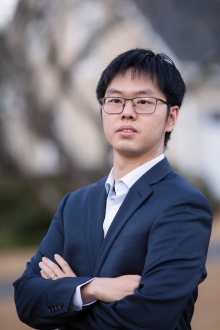
University of North Carolina at CharlotteUnited States
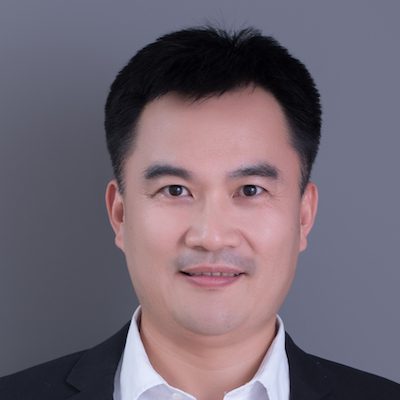
Dr. Shan Yan is a Professor and Associate Chair for Research in the Department of Biological Sciences at the University of North Carolina at Charlotte (UNC Charlotte). He leads the Genome Integrity and Cancer Initiative (GICI) and co-founded the Charlotte Biology and Biotechnology (CBB) Exchange Group. His research focuses on molecular mechanisms of genome integrity and cancer etiology, supported by NIH (NCI/NIEHS/NIGMS) grants and NCBC funding. Key contributions include discoveries about DNA repair pathways, nucleolar DNA damage responses, and biomolecular condensates' role in genome stability. Dr. Yan has mentored 13 graduate students, 26 undergraduates, and 4 postdoctoral fellows while maintaining an active editorial role in journals like Journal of Biological Chemistry and Environmental and Molecular Mutagenesis . Awards include the 2023 EMGS Education Award and 2022 Outstanding Data Science Research Award. His lab uses Xenopus egg extracts and mammalian cell models to study genome stability under oxidative stress and environmental threats, with implications for cancer diagnostics and therapies. Education: Postdoctoral training at Harvard University's Department of Molecular and Cellular Biology Awards: EMGS Education Award (2023), Data Science Research Award (2022) Leadership: Board Director (FASEB), Chair (EMGS Awards Committee), NIH Grant Reviewer Research directions include modulating APE1/PARP1 for BRCA-related cancers and exploring mitochondrial/nucleolar DNA/RNA stability mechanisms. The lab’s work bridges biochemistry, genomics, and computational biology to address unmet clinical needs in oncology and aging.
Veronica Augustyn is an Associate Professor and the Jake & Jennifer Hooks Distinguished Scholar in the Department of Materials Science and Engineering at NC State University's College of Engineering. She holds the title of University Faculty Scholar and serves as an Associate Editor for Journal of Materials Chemistry A and Materials Advances . Her research focuses on synthesizing and characterizing materials for electrochemical energy storage (e.g., batteries, capacitors) and environmental technologies, with particular attention to relationships between material composition, structure, and electrochemical behavior. Her group employs liquid-phase and solid-state synthesis methods, coupled with operando electrochemical techniques, to study mechanisms like proton-coupled electron transfer and hydrogen spillover. Notably, she leads SciBridge, an internationally recognized initiative fostering renewable energy collaborations between African and U.S. universities. Key research themes include aqueous batteries, proton insertion dynamics, and material stability under electrochemical conditions. Recent publications highlight advancements in tungsten oxides, hydrogen titanates, and interlayer pillaring effects on electrochemical performance. Awards include the Hooks Distinguished Scholar designation and University Faculty Scholar recognition. Her work bridges fundamental material science with applied energy solutions, emphasizing sustainability and global collaboration.
Dr. Mark Filiaggi is a Professor affiliated with the Faculty of Dentistry and School of Biomedical Engineering at Dalhousie University. He holds cross-appointments in the Department of Radiology and is an Affiliated Scientist in the Department of Diagnostic Imaging at the QEII Health Sciences Centre. His research focuses on developing novel biomaterials for medical devices, particularly for bone-interfacing and cardiovascular applications, emphasizing materials science principles and clinical collaboration. His work integrates multidisciplinary approaches, including collaborations with basic science (Chemistry, Physics) and clinical communities (orthopaedics, interventional radiology). Key areas include phosphate glass processing for drug delivery systems targeting osteomyelitis and liver cancer, as well as surface modification strategies for metallic implants to enhance osteopromotive and antimicrobial properties. Recent publications highlight advancements in polyphosphate-based materials, drug delivery systems, and biomedical applications. His group’s research has explored hemostatic biomaterials, chemoembolization agents, and imaging-compatible materials for clinical use. Collaborative efforts emphasize translating materials science into clinical solutions, with a focus on translational medicine and patient outcomes. Dr. Filiaggi’s research has been disseminated through journals such as Acta Biomaterialia , Journal of Biomaterials Applications , and Materials Letters . His work bridges fundamental materials science with clinical applications, addressing unmet needs in orthopaedic, dental, and oncological therapies.
University of Massachusetts Chan Medical SchoolUnited States
Steven Adelman, MD is an Associate Professor at UMass Chan Medical School and T.H. Chan School of Medicine, affiliated with the Department of Psychiatry and Behavioral Sciences. His roles include clinical and academic contributions in healthcare quality improvement and interdisciplinary communication. He holds dual affiliations at UMass Chan and the T.H. Chan School of Medicine under the same department. Education: AB Biology from Harvard University, MD from University of Pennsylvania Perelman School of Medicine. Research focuses on patient outcome assessment, mentoring in healthcare, and interdisciplinary communication strategies. His work bridges patient satisfaction metrics with clinical care processes. Earlier research in physical chemistry explored molecular dynamics and chemical reaction rates in noble gas fluids. Publications span health services research (e.g., patient experience interventions) and chemistry (e.g., vibrational energy relaxation dynamics). Networks include collaborations on patient satisfaction, mentoring frameworks, and interdisciplinary team approaches.
Ingo Heilmann is a W3 Professor of Plant Biochemistry at Martin Luther University Halle-Wittenberg, where he serves as Spokesperson of the ERDF network "Value Plant" (since 2025), Member of the Board of Directors of the MLU Biozentrum (since 2024), Spokesperson of the DFG Research Training Group GRK 2498 (since 2017), and Spokesperson of the MLU Research Focus Molecular Biosciences (since 2014). His educational background includes: Biology studies at Free University of Berlin (1991-1996) Diploma in Microbiology, Immunology, and Plant Physiology (1996) DAAD doctoral scholarship (1996) Doctorate from Free University of Berlin and North Carolina State University (1997-2000) Post-Doc at North Carolina State University (2000-2001) Post-Doc at Brookhaven National Laboratory (2001-2004) Emmy Noether Group Leader at University of Göttingen (2004-2010) Professor Heilmann's research focuses on plant phosphoinositide signaling networks and their role in cellular processes. His work investigates how phospholipids, particularly phosphoinositides, regulate membrane dynamics, cell polarity, and growth in plants. He has made significant contributions to understanding the molecular mechanisms of pollen tube growth, plant-pathogen interactions, and organelle communication through lipid signaling pathways. His laboratory employs advanced techniques in plant molecular biology, biochemistry, and imaging to dissect these complex signaling networks. Analysis of his recent publications reveals a consistent focus on plant membrane biology, particularly phosphoinositide signaling. His work spans from fundamental studies on lipid-protein interactions to applied research on plant defense mechanisms against pathogens. A notable trend is the increasing use of advanced imaging and analytical techniques to study membrane nano-organization and lipid dynamics at high resolution. His research bridges basic plant science with potential applications in crop improvement. Professor Heilmann serves as an active reviewer for prestigious journals including Science, Nature, Cell, PNAS, and The Plant Cell. He also reviews grant proposals for major funding agencies worldwide including the German Research Foundation (DFG), National Science Foundation (NSF), and others across multiple countries. He leads several significant research initiatives including the DFG Research Training Group GRK 2498 and the MLU Research Focus Molecular Biosciences. His laboratory is part of the Plant Biochemistry group within the Institute of Biochemistry & Biotechnology at Martin Luther University Halle-Wittenberg, contributing to the university's strong research profile in molecular plant sciences.
Fredrik Lundell is Professor of Fluid Mechanics at KTH Royal Institute of Technology, where he leads research in fluid physics, biopolymer assembly, and experimental mechanics. His work bridges fundamental fluid dynamics with applications in sustainable materials, utilizing techniques including synchrotron imaging, microfluidics, and optical coherence tomography. Research encompasses nanocellulose processing, protein nanofibril assembly, turbulence modulation, and multiphase flows. Recent work emphasizes flow-directed assembly of hierarchical biomaterials and energy-efficient fabrication methods. Experimental approaches combine advanced imaging with microfluidic platforms to study complex fluid-structure interactions. Publications demonstrate innovations in nanofiber alignment control, sustainable material design, and multiphase flow characterization. Recent articles focus on microfluidic assembly strategies, interfacial phenomena, and non-Newtonian fluid dynamics. Advises doctoral students investigating diverse topics from turbulent suspensions to biopolymer physics. Directs laboratory facilities for flow measurements and materials characterization, collaborating extensively through the Wallenberg Wood Science Center.
Dr. Khaled Saoud is a Full Professor of Physics at the Department of Physics, Virginia Commonwealth University (VCU) in Qatar, within the College of Humanities and Sciences. He holds a PhD, MS, and BS in Physics from Virginia Commonwealth University and Yarmouk University, respectively. His research focuses on nanotechnology applications in energy, health, and environmental domains, with a particular emphasis on nanocatalysts, photocatalytic materials, and aerogel-based thermal insulation systems. He has secured over $1M in research funding, holds multiple US patents, and has authored numerous peer-reviewed publications. Dr. Saoud’s academic journey includes industrial roles at Philip Morris USA, Intel, and Nova Measuring Instruments. He chairs international nanotechnology conferences and advises on regional initiatives, such as the Arab League’s nanotechnology program. His awards include the Nanotech Dubai 2015 Distinguished Scientist Award and multiple faculty achievement awards from VCU Qatar. His research interests span nanocatalysts for energy applications (e.g., CO oxidation, Fischer-Tropsch chemistry), photocatalytic water treatment, and cultural heritage preservation using nanomaterials. He collaborates globally and has pioneered industry-academia partnerships. Professional contributions include membership in the American Chemical Society, American Physical Society, and leadership roles in nanotechnology organizations. His work bridges fundamental science with practical solutions for sustainable development.
Ian Bourg is Associate Professor of Civil and Environmental Engineering at Princeton University, with joint appointment at the High Meadows Environmental Institute. He directs the Undergraduate Studies program and researches fundamental properties of water-mineral interfaces. Education includes: Ph.D. Civil and Environmental Engineering, UC Berkeley (2004) M.S. Chemical Engineering, INSA Toulouse (1999) B.Eng. Chemical Engineering, INSA Toulouse (1999) His group investigates clay-water interfaces, CO2 storage, soil carbon dynamics, and contaminant transport using molecular simulations and experiments. Research addresses environmental challenges including geologic carbon sequestration and soil remediation. Honors include NSF CAREER Award (2018). Teaches Introduction to Environmental Engineering (CEE207/ENV207) and The Environmental Nexus (ENV200).
Professor Thomas Adcock is a Professor of Engineering Science at the University of Oxford and Tutorial Fellow at St Peter's College. He currently serves as Senior Proctor for the 2024/25 Proctorial year, with responsibilities spanning University Council, over 50 University committees, OUP delegation, finance committee membership, ceremonial events, and student discipline. Previously, he served as Associate Head (Teaching) during the COVID pandemic and Director of Third Year Studies in the Department of Engineering Science. Professor Adcock received his MEng in Engineering Science from St. Peter's College, Oxford in 2001, followed by a D.Phil. under Paul Taylor at New College, Oxford. After initial post-doctoral work at Oxford, he gained industry experience as a metocean engineer for GL Noble Denton in London before returning to Oxford for research in tidal stream energy, eventually securing a lectureship in 2012 and promotion to Professor in 2022. His research focuses on ocean hydrodynamics for marine energy applications, with expertise in extreme wave statistics (particularly rogue waves in non-equilibrium sea states), wave-structure interactions (especially for offshore wind turbines), tidal stream energy resource assessment, and storm surge analysis. His Environmental Fluid Mechanics group employs analytical, numerical (including machine learning), and experimental methods to analyze ocean data, with strong international collaborations, particularly with the University of Western Australia. The group also explores historical engineering projects like the WWII Mulberry Harbours and innovative applications such as 'flyak' kayaks. Professor Adcock's recent publications reveal a strategic integration of machine learning with traditional fluid dynamics, particularly in tidal prediction (RTide), wave analysis, and offshore structure design. His work bridges fundamental fluid mechanics with practical engineering applications in renewable energy, with numerous publications in top journals spanning from 2006 to the present. 2024 Divisional teaching award for establishing a residential program for underrepresented prospective students Editing the engineering formula book (HLT) Exceptional tutoring and pastoral care recognition Students Tim Tang and Thomas Monahan won the Osborne Reynolds competition Media coverage in The Guardian and The Independent for Pentland Firth research BBC One Show demonstration of Mulberry Harbour engineering As a supervisor, Professor Adcock has mentored numerous doctoral students to completion with a median DPhil time of 40 months (vs. 48 months university-wide). His current research team includes post-doctoral researchers and graduate students working on floating wind turbines, wave-structure interactions, and tidal energy forecasting. He actively seeks students with strong backgrounds in engineering, physics, or mathematics interested in ocean engineering and marine energy. Professor Adcock chairs 'SUTGEF,' a special interest group of the Society for Underwater Technology, and maintains leadership roles in college governance. His Environmental Fluid Mechanics group conducts both fundamental and applied research, maintaining strong industry connections in marine renewable energy and collaborating on tidal and wave energy projects worldwide. The group's recent 'away day' in Wytham Woods exemplifies their collaborative, interdisciplinary approach to ocean engineering challenges.
Jon Blundy is a Royal Society Research Professor at the University of Oxford's University College, affiliated with the Earth Sciences department. His research focuses on the dynamics of magmatic systems, particularly the interplay between magmatic and hydrothermal processes in active volcanic regions. He employs multidisciplinary approaches including petrology, geochemistry, geophysics, and computational modeling to study magma evolution, volatile transport, and crustal differentiation in volcanic arcs like the Andes and Lesser Antilles. Key research interests include: (1) Magmatic-hydrothermal system interactions, (2) Melt evolution in volcanic plumbing systems, (3) Geochemical tracers of magma storage and ascent, and (4) Machine learning applications in thermobarometry. His work integrates field observations, experimental petrology, and geophysical imaging to address questions about eruption mechanisms and arc magmatism. Notable projects include seismic imaging of Uturuncu volcano's hydrothermal systems, analysis of pre-eruption magma mobilization at La Soufrière, and investigations into super-wet arc magmas using zircon-hosted melt inclusions. His recent publications highlight advancements in understanding volatile-rich magma systems, crustal differentiation processes, and the economic potential of metalliferous magmatic fluids. Collaborations span global volcanic regions, with active research in Bolivia, St. Vincent, Ethiopia, and New Zealand. Methodological innovations include developing new analytical techniques for stable isotope analysis and machine learning-based models for interpreting magmatic processes.
Gerald Gold is a researcher and Group Leader of the Microwave Assembly and Interconnects Group at Friedrich-Alexander University Erlangen-Nürnberg (FAU), within the Institute of Microwaves and Photonics (LHFT). His roles include leading research on 3D-printed microwave components, electromagnetic interactions in non-ideal materials, and automation of RF testing. He holds a Dr.Eng. from FAU (2016) and a Diploma in Mechatronics (2009). Research focuses on additive manufacturing techniques for RF components, numerical field simulations, and dielectric material characterization. Key applications include satellite communication systems, automotive radar, and harsh-environment components. He leads the 3D Microwave Assembly & Interconnects Laboratory and Signal Integrity Laboratory , driving innovations in dielectric image lines, phase-shifters, and tunable liquid crystal systems. Recent work emphasizes mmWave and THz technologies, with publications in top conferences like IEEE Radio and Wireless Symposium (RWS) and EuCAP. His research bridges advanced manufacturing (e.g., investment casting, laser direct structuring) with high-frequency engineering, addressing challenges in component miniaturization and reliability.
Dr. Patrick Sears is a Senior Lecturer at the University of Surrey within the School of Chemistry and Chemical Engineering . His work spans analytical chemistry, forensic analysis, and environmental pollutant detection, focusing on improving precision in trace contamination studies (explosives, drugs, PFAS) and novel ionization methods for mass spectrometry. B.Sc. and M.Sc. from University of Durham, Ph.D. from University of Hull Former roles at Dstl (Forensic Explosives Laboratory), Syrris, and Rhodia Research interests include: Trace contamination dynamics (explosives/drugs in healthcare) PFAS and pesticide degradation methods Ambient ionization techniques (ASAP, DART, paper spray) Direct surface analysis systems Secondary ionization processes Forensic material speciation Recent collaborative work emphasizes PFAS electrochemical degradation using BDD electrodes, portable MS applications, and DUID screening methods. Scientific recognition includes Royal Society of Chemistry fellowship and BMSS committee membership. Teaching involves CHE1039 , CHE2033 , and CHE3055 , leveraging flipped learning and SurreyLearn platform. Key publications since 2019 highlight ambient ionization advancements, electrochemical pollutant removal, and forensic detection protocols.
Professor Jianting Ye is affiliated with the University of Groningen's Faculty of Science and Engineering, specifically within the Zernike Institute for Advanced Materials and the Device Physics of Complex Materials department. His research focuses on quantum interfaces, device physics, and condensed matter systems. Notably, he investigates phenomena such as superconductivity in two-dimensional materials, structural relaxation in twisted bilayers, and optoelectronic applications of phase-change materials. Ye serves as an Editorial Board Member of Scientific Reports and holds an Oversea Membership in the International Center for Quantum Design of Functional Materials (ICQD) in Hefei, China. His work spans experimental and theoretical studies of nanostructured materials, leveraging techniques like ARPES, focused ion beam processing, and ionic gating. Key areas include understanding electronic phases in layered systems, tuning correlated states via strain or external fields, and developing functional devices such as plasmonic structures and superconducting junctions. Recent advancements include achieving room-temperature phosphorescence in carbon dot nanocrystals and demonstrating unconventional superconducting states in Ising systems. Ye's contributions bridge fundamental material science with applied nanotechnology, addressing challenges in energy-efficient optoelectronics and quantum device engineering. His group's research emphasizes interdisciplinary approaches, combining advanced characterization tools with innovative material synthesis strategies.
Carsten B. Krauss is a Full Professor of Physics at the University of Alberta, leading research in neutrino physics and dark matter detection. He currently directs the Institute of Particle Physics in Canada and holds positions in the Faculty of Science. His academic journey includes roles as Assistant Professor (2007–2013), Associate Professor (2013–2024), and his current Full Professorship since 2024. He completed his PhD at Heidelberg University (2002) and postdoctoral work at Queen’s University (2003–2007). Education Timeline: PhD, University of Heidelberg, Germany (1999–2002) Postdoctoral Researcher, Heidelberg University (2002–2003) Postdoctoral Fellow, Queen’s University, Kingston, ON (2003–2007) His research focuses on neutrino astrophysics and direct dark matter detection , particularly through experiments like PICO (bubble chambers for dark matter) and P-ONE (Pacific Ocean neutrino telescope). He is involved in the Sudbury Neutrino Observatory (SNO) and SNO+ collaborations. His work emphasizes detector development, low-background techniques, and analysis of high-energy neutrino signals from cosmic sources. Current projects include the PICO-500 experiment at SNOLAB and the P-ONE neutrino observatory in the Pacific Ocean. His team collaborates internationally, with contributions to IceCube-Gen2 and optical module design. He teaches experimental physics courses (e.g., PHYS 295) and mentors students in graduate and undergraduate research, emphasizing detector engineering and data analysis. Lab/Team Affiliations: PICO Collaboration (dark matter search) P-ONE Project (ocean-based neutrino telescope) SNO/SNO+ Experiments (solar and reactor neutrinos)
Pengfei Liu is an Assistant Professor in the School of Earth & Atmospheric Sciences at the Georgia Institute of Technology (Georgia Tech), within the College of Sciences. His research focuses on atmospheric chemistry and aerosols, particularly their roles in climate interactions and air quality. He holds a Ph.D. in Environmental Science and Engineering from Harvard University (2017), an M.S. in Atmospheric Physics and Environment from Peking University (2011), and a B.S. in Atmospheric Sciences from Peking University (2008). Dr. Liu’s research interests span aerosol-climate interactions, organic particulate matter properties, and biomass burning emissions across timescales. He investigates how atmospheric aerosols influence cloud formation, fog microphysics, and long-term environmental changes using laboratory experiments and advanced modeling techniques. His work also addresses mercury emissions in India, regional air quality policies, and the health impacts of air pollution exposure in older populations. His publications highlight innovative approaches to measuring aerosol hygroscopicity, refining emission inventories, and exploring the chemical reactivity of particles under varying environmental conditions. Notably, he has contributed to improving historical biomass burning emission estimates using ice core data and inverse modeling, with implications for global climate forcing. Collaborations involve interdisciplinary projects linking atmospheric chemistry, public health, and machine learning. Though no specific advisees or awards are listed, his research is supported by grants addressing topics such as aerosol optical properties, regional climate dynamics, and environmental health disparities. He actively engages in field studies and model development to advance understanding of anthropogenic and natural aerosol processes.