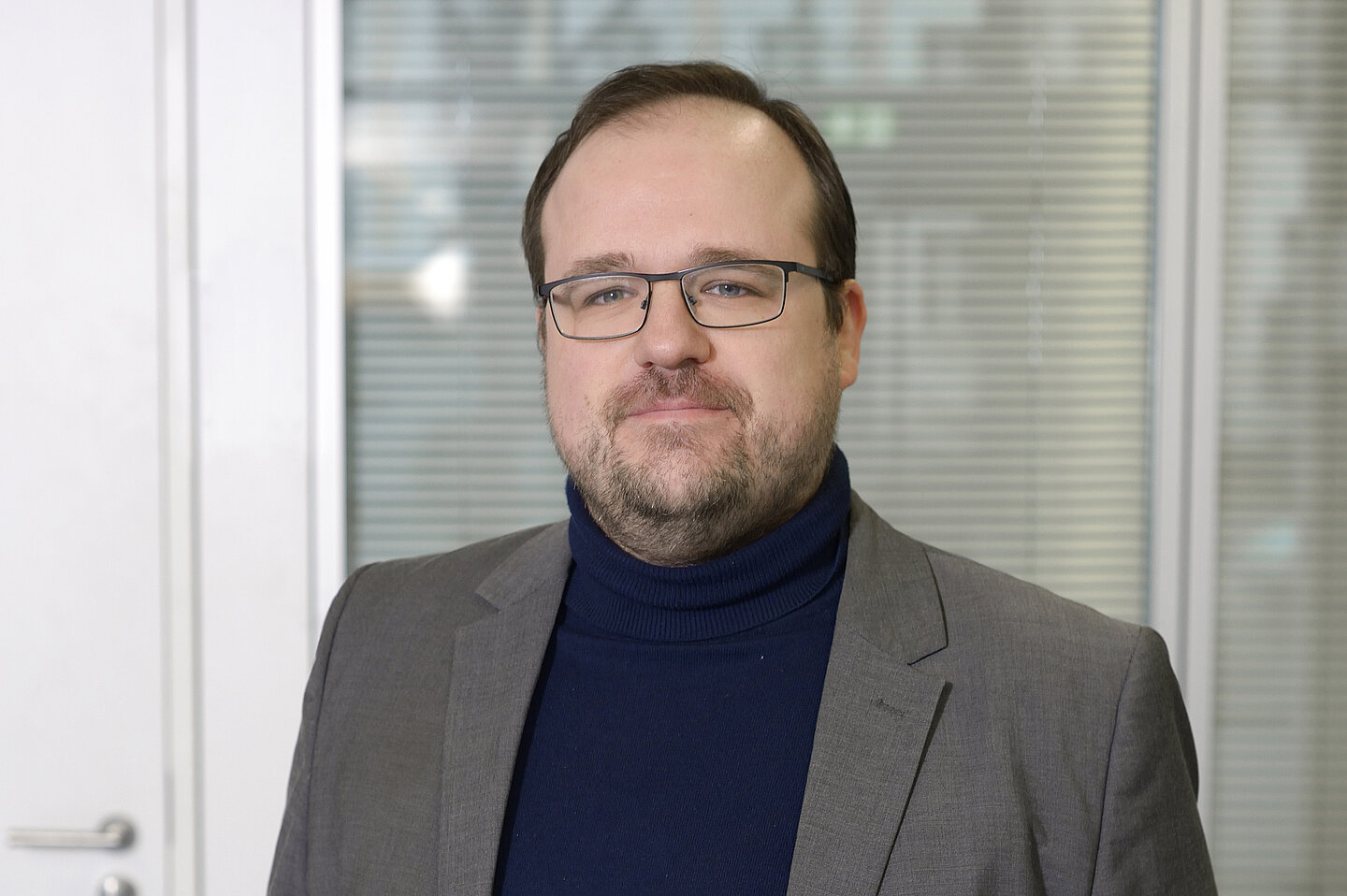
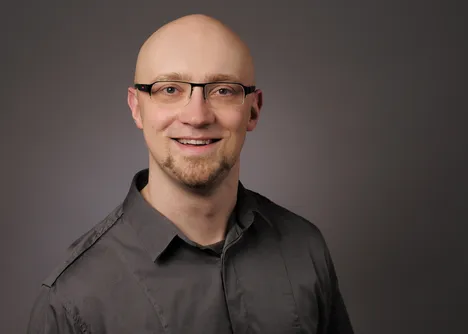
Prof. Richard L. Peters is a Professor and Head of the Chair of Tree Growth and Wood Physiology at the Technische Universität München (TUM) since 2024. His research focuses on tree physiology, wood formation, and climate-forest interactions. He holds a doctorate summa cum laude from the University of Basel (2018) and has conducted postdoctoral research at the Swiss Federal Institute for Forest Science (WSL) and Ghent University. His work integrates forest ecology, dendrochronology, and ecophysiology to address climate change impacts on forests. Education: B.Sc./M.Sc. in Biology at Utrecht University, Ph.D. from University of Basel (2018). Key career steps include a Swiss National Science Foundation (SNSF) fellowship at Ghent University and coordination of the Swiss Canopy Crane II project (2021). Research Interests: Tree water-use strategies, drought tolerance mechanisms, carbon allocation dynamics, and the physiological basis of tree growth. He leads interdisciplinary projects to monitor forest responses to environmental stress using tools like the TreeNet network. Awards: Early Postdoc Mobility Fellowship (SNSF, 2019), Doctorate summa cum laude (2018). Contributions: Authored >180 publications, co-developed the datacleanr R package for ecological data processing, and pioneered methods linking tree-ring data with climate models. His work emphasizes the need for better observational data to improve vegetation models.
Prof. Dr. Oliver Krüger is a behavioral ecologist and evolutionary biologist at Bielefeld University 's Faculty of Biology , where he leads the Department of Animal Behaviour since 2013. His research spans avian and marine mammal systems, focusing on life history strategies, parasite-host interactions, and environmental adaptation. Education: Biology studies at Bielefeld University (1994-1996) MSc in Oxford (1996-1997) PhD at Bielefeld University with Fritz Trillmich and Jan Lindström (1998-2000) Research Themes: Behavioral ecology, evolutionary biology, and population dynamics across tropical and temperate ecosystems. Key projects include NC³ (Niche Choice/Construction) and studies on Galápagos sea lions, common buzzards, and pinniped species. Scientific Leadership: Spokesperson, SFB TRR 212 "NC³" (2018-2025) Advisory Board member: German Ornithologists Union, IUCN SSC pinniped group, German Primate Centre Peer review roles: Humboldt Foundation, DFG, HFSP, NSF Awards: Leopoldina Prize (2001) Niko Tinbergen Award (2008) DFG Heisenberg Professorship (2010-2015)
Elena Simperl is a Professor of Computer Science and Deputy Head of Department for Enterprise and Engagement at King's College London's Department of Informatics. She co-directs the King's Institute for Artificial Intelligence and serves as Director of Research for the Open Data Institute. As a Hans Fischer Senior Fellow at the Technical University of Munich's Institute for Advanced Study, she leads the Trustworthy Knowledge Graphs focus group and contributes to advancing human-centric AI research across European institutions. Professor Simperl obtained her doctoral degree in Computer Science from the Free University of Berlin and her diploma from the Technical University of Munich. Prior to joining King's, she held academic positions in Germany, Austria, and at the University of Southampton, and was a Turing Fellow. Her career trajectory demonstrates consistent leadership in bridging academic research with practical applications in data ecosystems. Her research sits at the critical intersection of AI and social computing, focusing on human-centric approaches to building sociotechnical systems that integrate data, algorithms, and human capabilities. She investigates how to make knowledge engineering more accessible, how to leverage collective intelligence for data quality improvement, and how to design participatory AI systems that address societal challenges like misinformation. Her work spans knowledge graphs, semantic technologies, crowdsourcing, and open data, with particular emphasis on the social dimensions of data-intensive systems and the governance frameworks needed for trustworthy AI deployment. Analysis of her recent publications reveals a strong evolution toward integrating large language models with traditional knowledge engineering practices while maintaining human oversight. There's a clear trajectory from foundational work on knowledge representation toward increasingly applied research addressing real-world challenges in media ecosystems, citizen science, and data governance, with growing attention to policy implications of AI technologies. Fellow of the British Computer Society Fellow of the Royal Society of Arts Hans Fischer Senior Fellow at TUM-IAS (2023) Ranked among top 100 most influential scholars in knowledge engineering of the last decade Included in Women in AI 2000 ranking Professor Simperl has led 14 major European and national research projects totaling millions in funding, including MediaFutures (a Horizon 2020 program tackling online misinformation), QROWD, ODINE, Data Pitch, and ACTION. She currently co-chairs the Croissant working group in ML Commons developing data standards for AI, and serves as president of the Semantic Web Science Association. Her research has directly influenced the development of data ecosystems supporting startups and citizen science initiatives across Europe, demonstrating exceptional ability to translate theoretical advances into practical impact. As Director of Research at the Open Data Institute, she oversees initiatives connecting data entrepreneurs with artists and civic organizations. Her leadership in the MediaFutures project established a data-driven innovation hub that supported 51 startups/SMEs and 43 artists through three open calls, creating a sustainable model for arts-technology collaborations addressing media challenges. Her work with the ODINE project helped create a European ecosystem for data-driven startups, demonstrating her commitment to building practical applications of open data principles.
Prof. Dr. Mona Hess is a Full Professor and Chairholder of the Chair of Digital Heritage Technologies at Otto-Friedrich-Universität Bamberg , Germany. She directs the M.Sc. Digital Technologies in Heritage Conservation program and serves as Vice-Speaker at the Centre for Heritage Conservation Studies and Technologies (KDWT) . Her work bridges digital documentation, 3D imaging, and heritage conservation, with a focus on cultural landscapes, historic timber, and artifact preservation. Education : Dipl.-Ing. in Architecture (TUM), M.A. in Heritage Conservation (University of Bamberg), Ph.D. in 3D Imaging Metrology for Cultural Heritage (University College London, 2015) Her research spans 3D laser scanning, photogrammetry, SLAM-based recording , and digital twin environments , particularly for structural monitoring, museum artifacts, and historic gardens. She leads projects like VirScan3D (virtual laser scanner simulator) and 3DPetrie (UCL Petrie Museum 3D models) and collaborates on international initiatives such as the British Museum War Canoe digital repatriation. Recent publications emphasize automated defect analysis in timber, multi-modal imaging for ceiling art, and linked open data in heritage. She has contributed to CIPA ICOMOS as an expert member and will chair their Education and Dissemination Commission (2024). Scientific Awards : Fellow of the UK Higher Education Academy (2016), Associate Fellow of the Higher Education Academy (2014) She teaches courses in Digital Object Recording , 3D Spatial Data Modeling , and Science Communication , and organizes international summer schools on heritage monitoring. Her lab, the Chair of Digital Heritage Technologies , collaborates with institutions in Italy, Spain, and the UK, focusing on interdisciplinary innovation in heritage conservation.
Prof. Dr. Ingo Scholtes is Chair of Machine Learning for Complex Networks at Julius-Maximilians-Universität Würzburg's Center for Artificial Intelligence and Data Science (CAIDAS). His research spans network science, graph machine learning, and computational social science, with applications in software engineering, ecology, biology, and physics. He received a Juniorfellowship from the German Informatics Society (2014) and an SNSF Professorship (CHF 1.5Mio, 2018). Current affiliations: JMU Würzburg (since 2021), University of Zurich (2018-2024), Bergische Universität Wuppertal (2019-2021) Research focus: Higher-order network modeling, temporal graph analysis, AI for collaborative systems, causality-aware machine learning His recent publications demonstrate strong trends in temporal network analysis , graph neural networks for time-series, and higher-order models across software engineering and social science domains. He co-chairs multiple international workshops on complex networks and serves as associate editor for EPJ Data Science and Advances in Complex Systems. Key scientific contributions: Foundational work on higher-order network models published in Nature Physics Methodological innovations in temporal network visualization (HOTVis) and path-based analysis (pathpy) As both educator and organizer, he leads the Computational Social Science Section at GI e.V., mentors across disciplines, and develops tools like git2net for collaboration analysis. His work bridges theoretical foundations with practical applications in network science.
Anna Levina is an Assistant Professor for Computational Neuroscience at the University of Tübingen , affiliated with the Department of Computer Science under the Faculty of Science. Her research focuses on the self-organization of neuronal activity, critical dynamics in neural networks, and the excitation/inhibition balance in cortical circuits. Current positions: Assistant Professor (since 2018), Group Leader (2017-2018), Equality Officer (Computer Science) Previous roles: IST Fellow (2015-2017), Associated Researcher (2011-2015), Postdoc/PI (2011-2015), Postdoc (2008-2011) Her research integrates mathematical modeling , statistical physics , and computational neuroscience to study criticality phenomena, neural avalanches, and adaptive network dynamics. Key interests include: Self-organized criticality in neural systems Excitation/Inhibition balance mechanisms Network topology and dynamics Timescale analysis in neural processing Stochastic modeling of neural activity Recent publications reveal trends in understanding critical dynamics across biological and artificial networks, with applications to memory systems, sensorimotor integration, and disease modeling. She has received recognition as an IST Fellow .
Thomas Riechert is a Professor at the Leipzig University of Applied Sciences (HTWK Leipzig), specifically within the Faculty of Computer Science and Media. He serves as Dean of Media Informatics, Chairman of the Media Informatics Study Commission, and Academic Advisor for Media Informatics. Additionally, he is a Member of the Faculty Council, Faculty representative in the IT committee, and Library Commission. He also acts as Spokesperson of the Institute of Computer Science at the HTWK. Appointed in 2014 in the field of information systems and data management, Riechert holds a doctorate from the University of Leipzig (2012, magna cum laude) and graduated as a computer scientist from TU Dresden in 2000. Professor Riechert's research focuses on information systems, data management, Semantic Web technologies, knowledge engineering, and Linked Data. His work bridges computer science with digital humanities, particularly in creating knowledge graphs for historical research. He has made significant contributions to RDF vocabulary management, ontology editing tools, and academic history databases. His research demonstrates a strong emphasis on practical applications of semantic technologies in information management systems. Analysis of his recent publications reveals a consistent trajectory in semantic web technologies applied to knowledge representation and historical data. His work shows progression from foundational semantic technologies toward increasingly sophisticated applications in digital humanities, particularly in academic history research. The Heloise project appears to be a major focus, developing common research models for collaborative historical research using Linked Open Data. His publications span both technical aspects of semantic technologies and their application in humanities contexts. Professor Riechert actively contributes to academic community building through conference organization and student engagement. His leadership roles in the Faculty of Computer Science and Media demonstrate his commitment to shaping computer science education. His research integrates practical software development with theoretical advancements in knowledge representation. As Dean of Media Informatics, Riechert oversees academic programs and research initiatives in this field. His work with the Heloise network demonstrates leadership in interdisciplinary research connecting computer science with historical scholarship. His office hours are held on Mondays from 10:00 to 11:00 in room ZU 407 at HTWK Leipzig.
Serkut Ayvasik is a Researcher at the Chair of Communication Networks at Technical University Munich (TUM). He joined TUM in March 2019 as a research and teaching associate, following his M.Sc. in Communications Engineering (2019) and B.Sc. in Electrical and Electronics Engineering (2016) from Middle East Technical University. His research focuses on: Wireless Network Resource Management for heterogeneous latency-critical 5G applications Channel State Information Prediction using depth images Network Slicing and Quality of Service optimization Machine Learning for proactive network configuration Telemedicine Applications in cross-border communication Key article trends include 5G/6G technology , IoT sustainability , digital twins , and haptic feedback systems . He contributes to IEEE and ACM journals, with recent work on Digiot (2025) and OCTOPUS (2024). Collaborations include researchers like Wolfgang Kellerer (Chair), Edwin Babaians , Alba Jano , and Fidan Mehmeti . His work spans projects such as 6G Future Lab Bavaria , DFG GGI QCDE , and ERC FlexNets .
Prof. Dr. Yanjun Ren is a Professor at the College of Economics and Management, Northwest A&F University (NWAFU), China, and has been an IAMO Visiting Research Fellow since May 2024. Prior to his IAMO role, he conducted research at Christian-Albrechts-Universität in Kiel, Germany, from 2012 to 2019. PhD in Agricultural Economics focusing on Food Consumption, Income Inequality, and Health-related Issues in China Former Research Assistant/Associate at Kiel University’s Chair of Agricultural Market Analysis (2012–2019) Dr. Ren’s research spans food chains, consumer behavior, and applied econometrics. His work explores how socioeconomic factors, digital transformation, and policy interventions shape food consumption, nutritional outcomes, and environmental sustainability in China and Central Asia. Key themes include food waste reduction, carbon labeling, internet use in rural economies, and intergenerational health behaviors. His 15 most recent articles (2023–2025) emphasize digital agriculture, sustainable consumption, and health economics. Topics include carbon-labeled products, television/media’s role in nutrition, contract farming sustainability, and the socioeconomic determinants of dietary choices. His methodology integrates econometric modeling, eye-tracking experiments, and spatiotemporal analysis. Email: ren@iamo.de
Prof. Dr. Oliver Crönertz serves as Dean and Professor of Business Administration and IT-Supported Business Processes at the Faculty of Digital Transformation , HTWK Leipzig. His work bridges digital transformation with business management, focusing on interdisciplinary project management, digital business models, and sustainability. Current roles: Dean, supervising professor for HTWK Robots/nao Team Research areas: Digital Transformation, Business Analytics, Industry 4.0, Stoffstrommanagement Research Trends : Recent publications emphasize digital solutions for environmental management, business process optimization, and smart urban logistics. His work connects Industry 4.0 with financial sustainability and societal impacts of digitalization. Projects : Leads Mittelstand-Digital Zentrum Leipzig-Halle, involved in EXIST-Potentiale, Future Parking, and FAssMII (Feedback-based E-Assessment in STEM).
Benjamin Born is a Full Professor of Macroeconomics at Ludwig-Maximilians-Universität München and Research Director at the ifo Center for Macroeconomics and Surveys since 2020 and 2018 respectively. He has held previous academic positions as Associate Professor of Economics at Frankfurt School of Finance & Management (2015-2018) and University of Bonn (2012-2015), and Assistant Professor at University of Mannheim (2011-2012). His educational background includes a PhD in Economics from the University of Bonn (2007-2011), M.Sc. in Econometrics and Economics from the University of York (2006-2007), and B.A./M.A. in Economics from the University of Siegen (2002-2006). Professor Born's research focuses on Fiscal and Monetary Policy, Business Cycles, and Empirical Macroeconomics. His work often combines theoretical modeling with empirical analysis to investigate how economic policies affect business cycles and how uncertainty influences economic decision-making. He frequently employs advanced econometric techniques and structural models to analyze macroeconomic phenomena, with particular attention to the transmission mechanisms of fiscal and monetary policy. His recent publications demonstrate a consistent focus on business cycle analysis, fiscal policy effects, uncertainty dynamics, and the impact of economic shocks. A notable pattern is his extensive collaboration with leading economists such as Christian Bayer, Gernot Müller, and Johannes Pfeifer across multiple research projects spanning different aspects of macroeconomics. Alejandro Justiniano-Best Paper Award (2019) Best Paper Award at Fiscal Policy Seminar (2018) DFG-funded Graduiertenkolleg 'Macroeconomics of Inequality' (1.5 million Euro, 2018-2022) Multiple Fontana Foundation Publication Awards (2012-2014) Research Grant for 'Austerity and Growth: Concepts for Europe' (2014) As Research Director of the ifo Center for Macroeconomics and Surveys, Professor Born leads a significant research team focused on macroeconomic analysis and forecasting. His editorial roles include Associate Editor for Macroeconomic Dynamics (since 2016) and former Panel Member for Economic Policy (2017-2019). He also maintains active research affiliations with the Centre for Economic Policy Research (CEPR) in London and the CESifo Research Network in Munich.
Prof. Morten Hvitfeldt Iversen is a leading researcher in Polar Biological Oceanography at the Alfred Wegener Institute (AWI). He serves as Section Head of the Polar Biological Oceanography department and leads the bridging group 'SeaPump' collaborating with University of Bremen and MARUM. His work focuses on organic matter production, export, and transformation in oceans, linking small-scale microbial processes to large-scale biogeochemical cycles in high-latitude regions. Iversen pioneers optical techniques to study marine aggregates and their role in the biological carbon pump. Research interests include Arctic and Antarctic carbon dynamics, microbial ecology, and the impact of climate change on ocean systems. He leads projects like the 'SeaPump' initiative and contributes to the 6.3 sub-topic 'The future of the biological pump' under POF IV. His work integrates field observations, mooring data, and satellite measurements to understand carbon fluxes and their climate feedbacks. Recent articles highlight his focus on Arctic carbon sinks, microplastic impacts, and zooplankton roles in the biological pump. Iversen actively participates in expeditions aboard the Polarstern and uses advanced optical tools to study particle dynamics. His contributions bridge experimental and observational science to address global climate challenges.
Dr. Janis Nötzel is a senior researcher at the Chair of Theoretical Information Technology (Technische Universität München) and leads his independent Emmy Noether research group. Previously, he held a postdoctoral position at Universitat Autónoma de Barcelona and contributed to 5G practical implementations at TU Dresden's 5G Lab. His research spans quantum information theory, physical layer security, and machine learning applications. Key focuses include Quantum channel capacities under adversarial conditions Entanglement-assisted communication Quantum software frameworks (QuNetSim, QuReed) Interplay between classical and quantum communication Security analysis for 6G networks Resource optimization in quantum systems Recent publications (2023-2025) showcase innovations in Quantum satellite communication architectures Hybrid quantum-classical clustering algorithms Photonic processor instability modeling Covert capacity of compound channels Quantum key distribution resilience Free-space Bessel beam communication He actively collaborates with 6G-life research hub and contributes to quantum network simulation tools. Grants include funding from DFG (Leibniz Program), BMBF (6G-life, Q.Link.X), and StMWi (6G Zukunftslabor Bayern).
Prof. Roland Pail is a full Professor of Astronomical and Physical Geodesy at the Technical University of Munich (TUM). He leads the Chair of Astronomical and Physical Geodesy, part of the TUM School of Engineering and Design. His research focuses on physical and numerical geodesy, global/regional gravity field modeling, and satellite gravity missions like GOCE, GRACE, and future initiatives like MAGIC. He has held leadership roles, including President of IAG Commission 2 (2015–2019) and Vice Dean of TUM's Department of Aerospace and Geodesy. Pail earned his doctorate (sub auspiciis praesidentis) from TU Graz (1999) and habilitation in 2002. He is a Fellow of the International Association of Geodesy and has received numerous awards for his contributions to geodesy. His work integrates satellite data with geophysical modeling to monitor mass transport processes (e.g., ocean circulation, ice melt) and Earth's interior dynamics. He collaborates internationally on missions such as the DFG Research Training Group UPLIFT and the MAGIC constellation. Key publications include gravity field models (e.g., XGM2016, GOCO06s) and studies on future mission design, stochastic modeling, and climate monitoring. Pail’s scientific awards include the IAG Fellowship (2011), Young Authors Award (2006), and the Allmer-Löschner Prize (2000). His research also addresses quantum sensor applications in satellite gravimetry and the development of next-generation gravity field retrieval techniques.
Prof. Dr. Christian Mayer is a Professor in Physical Chemistry at the Faculty of Chemistry, University of Duisburg-Essen. He serves as Head of the working group focusing on origin of life research, nanocapsules, and NMR spectroscopy techniques. His research group is located at Universitätsstraße 5, D-45141 Essen, Germany, with contact information including phone number +49 201 183-2570. Prof. Mayer's research interests primarily focus on the origin of life in deep tectonic fault zones of the first continental fragments, where he collaborates with Prof. Dr. Ulrich Schreiber from the Faculty of Biology and Prof. Dr. Oliver Schmitz from Applied Analytical Chemistry. His work investigates how vesicle formation occurs in tectonic fault systems through cyclic phase transitions of carbon dioxide, creating ideal conditions for molecular evolution. He specializes in pulsed field gradient NMR (PFG-NMR), high-resolution NMR, and solid-state NMR techniques to characterize nanoscale systems including nanocapsules, vesicles, and microemulsions. His recent publication trends reveal a strong interdisciplinary focus spanning physical chemistry, prebiotic chemistry, and astrobiology. The articles demonstrate increasing integration of computational methods with experimental approaches, particularly in analyzing molecular structures and dynamics. His research has evolved from fundamental studies of nanocapsule systems to broader investigations of protocell formation mechanisms under early Earth conditions, with recent work extending to astrobiological contexts including potential life formation on Titan. Prof. Mayer has established significant collaborations across multiple disciplines, particularly with geologists and biologists, to investigate the physical chemical processes that could have led to the emergence of life. His work bridges fundamental physical chemistry with practical applications in nanomedicine, particularly in developing artificial oxygen carriers based on nanocapsule technology. His laboratory utilizes high-pressure facilities to simulate early Earth crust conditions, with a particular focus on supercritical CO 2 environments. The working group combines experimental approaches with theoretical modeling to understand vesicle formation processes and their implications for the origin of cellular life.