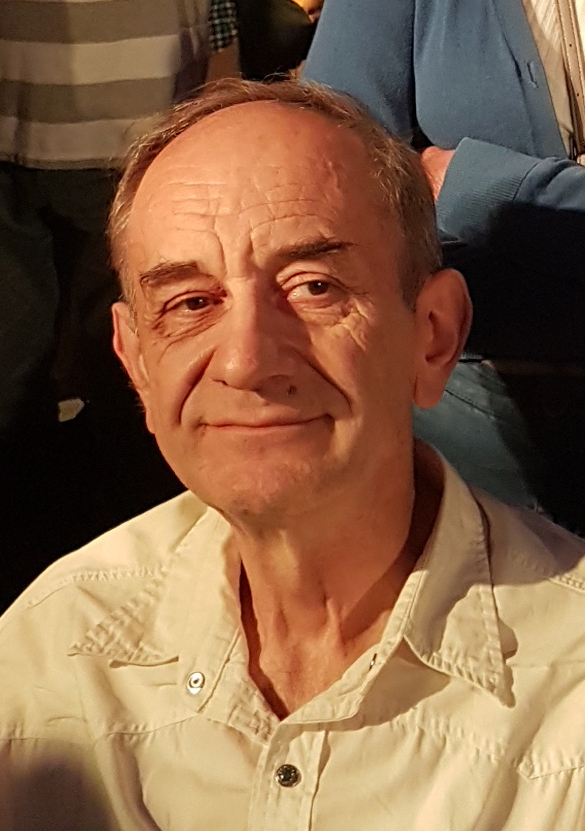
Roman Matuszewski is a retired Associate Professor at the University of Bialystok, affiliated with the Faculty of Philology's Department of Applied Linguistics. His research focuses on automated reasoning, formalized mathematics, and the Mizar Project, which he has been involved with since its inception in 1973. He holds a PhD in Computer Science from Shinshu University (2000) and has held academic positions at multiple institutions, including part-time roles at Bogdan Janski University. Education: PhD in Computer Science (2000), Master of Science in Mechanics (1975), Engineer (1973), all from Polish institutions. His work emphasizes formal proof systems, mathematical knowledge management, and education integration of automated reasoning tools. Research interests include automated deduction, formal proof verification, and the application of these methods to mathematics education. His contributions to the Mizar Mathematical Library and its 50-year history (celebrated in 2023) are foundational for interactive theorem proving. Key awards include the Silver Cross of Merit (2004) and multiple Rector’s prizes. He has organized major conferences like MKM2004 and served on program committees for events such as IJCAR and Tableaux. Grants include leadership roles in EU-funded projects like TYPES and CALCULEMUS. His work bridges computer science and mathematics through formalized systems, impacting both research and education.
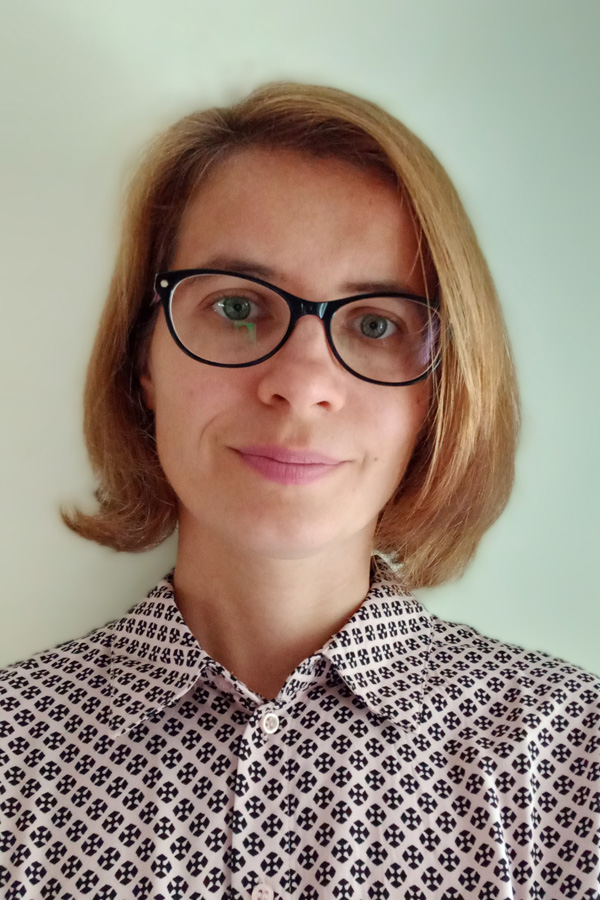
Dr. Katarzyna Jesse-Józefczyk is an Assistant Professor at the Institute of Mathematics, University of Zielona Góra, Poland. She maintains an office in Room 509 A-29 and can be contacted at k.jesse-jozefczyk@im.uz.zgora.pl. Her academic profile combines teaching responsibilities with diverse research activities across theoretical and applied mathematics. Her primary research interests include: Graph Theory (graph coloring, computational complexity of graph algorithms, coalitions and safe sets in graphs) Stochastic Inclusions and Multivalued Stochastic Equations with applications in economics and biological sciences Multivariate Linear Models and Analysis Game Theory (stochastic, multigenerational, and large games) Approximation Theory using Fourier series Preference Models using graded and interval relations Dr. Jesse-Józefczyk's work bridges theoretical mathematics with practical applications in secure data transmission, e-business, and space communication. She actively participates in the Center for Applications of Mathematics and Computer Science (OZMI), contributing to interdisciplinary research projects focused on sustainable energy, healthy society initiatives, and innovative industrial technologies. Her teaching portfolio includes algorithms and data structures, computer programming courses (both introductory and advanced), object-oriented programming, and database systems curriculum.
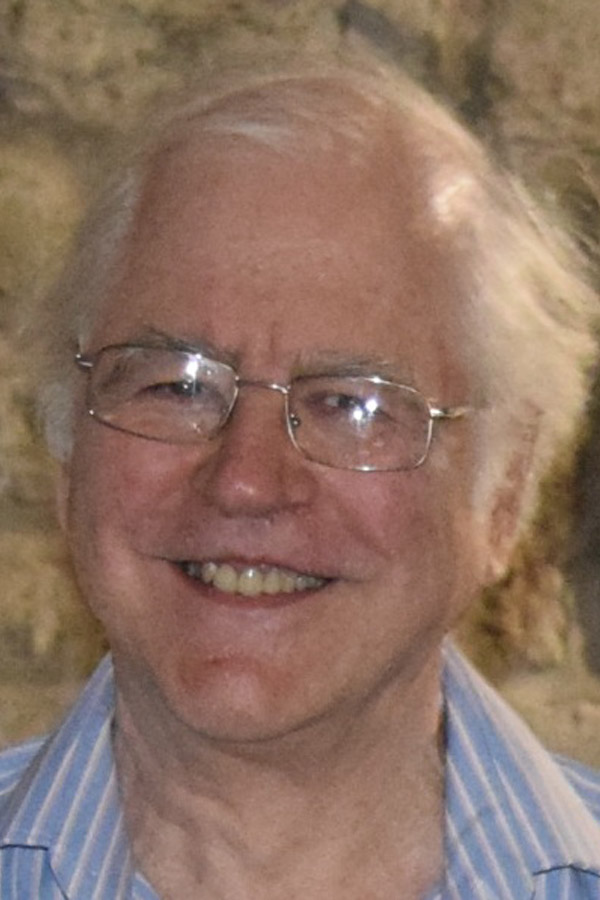
Andrzej Nowak is a Professor at the Institute of Mathematics, University of Zielona Gora, specializing in game theory, mathematical economics, and applied mathematics with significant applications in economics and finance. His academic profile includes: Research on Nash equilibria in non-zero-sum stochastic games with constraints on player strategies Work on Recursive Utilities in Dynamic Economic Models and General Equilibrium Theory Investigations of Risk Measures in Dynamic Programming and Markovian Decision Processes Analysis of multivariate linear models and Inclusions and multivalued stochastic equations Studies of Preference models using graded and interval relations for decision support systems Professor Nowak teaches fundamental courses in game theory, mathematical economics, and mathematical foundations of economics in finance (including portfolio analysis, capital market lines, and time series). He also covers probability theory and stochastic processes with applications to economics and finance, particularly Markov chain theory and discrete-time martingales. His broader research encompasses: Approximation theory using Fourier series and summability methods Combinatorial geometry including partitions of n-dimensional space Mathematical means and their invariance properties Applications of computer science to secure data transmission and privacy standards
Maja Wolińska is an academic professor at the Eugeniusz Geppert Academy of Art and Design in Wrocław , affiliated with the Faculty of Graphics and Media Art and the Media Art Department. She serves as the Coordinator of the Erasmus+ program for her department and leads the Narration and Interaction in New Media Studio. Academic focus on Time-Based Media, including video, sequential photography, sound, and non-linear live action Co-founder of the artistic duo Commonheavens (since 2010) with Joan Leandre Engaged in site-specific installations, observational projects, and memory studies Her recent activities span collective multimedia live concerts, large-format real-time projections, and studio work exploring microphenomena in microecosystems. She has received international recognition, including the 2014 Szczecin European Film Festival award in the Polish competition. Scientific awards: Szczecin European Film Festival, first award in the Polish competition (2014)
Marian Chudy is a full Professor at the Faculty of Cybernetics of the Military University of Technology (WAT) in Warsaw. His academic position includes habilitation, indicating advanced scholarly credentials. He is affiliated with the editorial office of WAT Publishing House and maintains an office in building 100, room 254b. His research focuses on optimization algorithms, mathematical modelling, and their applications in military systems and computational problems. Key areas include weapon target assignment, attrition process control, fuzzy data analysis, and dimensionality reduction techniques. He has authored books such as Selected Optimization Algorithms (2014) and contributed to edited volumes like IT Systems for State Security (2019). His publication trends emphasize discrete optimization problems, algorithm design for 0-1 optimization, and error assessment in computational systems. Notable work includes developing polynomial procedures for specific optimization challenges and creating attrition models incorporating decoy effects. His research bridges theoretical optimization with practical applications in cybernetic systems and military strategy. No scientific awards or major grants are explicitly mentioned in the provided materials. He has advised no doctoral/master’s students listed here, though his publications suggest collaborative research activities. His work contributes to the development of computational tools for decision-making under uncertainty, with implications for national security systems and economic restructuring models.
Dr. Michał Kowalewski serves as an Assistant Professor at the Department of Metrology and Electronic Systems within the Faculty of Electronics, Telecommunications and Informatics at Gdańsk University of Technology. His research bridges theoretical electronics with practical embedded systems applications, focusing on metrological solutions for industrial and sensor networks. His primary research domains include Embedded Systems (specializing in microcontroller programming with ANSI C and AVR Assembler), Wireless Sensor Networks (particularly Z-Wave protocol implementations), Metrology (evaluating accuracy, linearity, and resolution in measurement systems), and Neural Networks for Sensor Applications . He has pioneered methods for random signal generation using DACs/ADCs, developed neural classifiers for corrosion modeling, and engineered Z-Wave-based measurement systems with mesh networking capabilities. Analysis of his 2015-2018 publications reveals a consistent trajectory toward wireless distributed measurement systems, with increasing emphasis on neural network integration for fault diagnosis and sensor classification. His work demonstrates strong interdisciplinary connections between analog circuit design, wireless communication standards, and machine learning applications in industrial metrology. Dr. Kowalewski frequently collaborates with researcher Z. Czaja on projects involving noise generation and analog circuit testing, though specific grant details remain unreported. His technical contributions span both theoretical frameworks (e.g., TCBF classifiers) and practical implementations (e.g., USB Z-Wave controllers using OpenZWave library in C++).
Marcin Hernes is a Lecturer and Head of the Department of Process Management at Wrocław University of Economics. He also serves as Director of the Center for Intelligent Management Systems. His academic career spans undergraduate, graduate, and postgraduate teaching, alongside extensive research collaboration. He is actively involved in national and international conferences, and holds memberships in IEEE, the Polish Association of Artificial Intelligence, and the Scientific Society for Economic Informatics. His research interests include artificial intelligence, cognitive technologies, machine learning, and decision support systems in production and management contexts. Education details are not explicitly stated in the provided text, but his professional trajectory indicates advanced academic qualifications. His research focuses on resolving knowledge conflicts in multi-agent systems, optimizing production processes, and leveraging AI for business sustainability. He has developed dozens of software applications for industrial and public administration use cases, emphasizing practical technological solutions. Hernes supervises doctoral students and maintains active engagement with the socio-economic environment through collaborative projects. His consultations are held on Wednesdays, and master's seminars are conducted remotely via MS Teams with specific schedules for full-time and part-time students. Notably, he has pioneered frameworks integrating cognitive architecture into financial decision support systems and contributed to ERP 4.0 systems aligning with Industry 4.0 standards. His work emphasizes sustainability across domains, from reducing urban carbon footprints through cloud technology to environmental life cycle costing in network organizations. He has also addressed challenges in supply chain management, such as the Forrester effect reduction, and explored blockchain applications in public administration digital transformation.
Piotr Derugo is a researcher at the Department of Electrical Machines, Drives and Measurements within the Faculty of Electrical Engineering at Wrocław University of Science and Technology. His work focuses on advanced control systems for electric drives, integrating fuzzy logic, neural networks, and Petri net methodologies. He maintains an active research program in adaptive control and optimization. Specializes in neuro-fuzzy PID controllers Investigates Petri net applications in drive control Develops low-computational cost fuzzy algorithms Researches torsional vibration damping techniques Recent publications demonstrate his expertise in disturbance observers, hybrid neural networks, and AI-driven control systems for electric drives. While no formal awards are highlighted in this profile, his contributions to nonlinear control systems and adaptive algorithms remain significant. Contact: piotr.derugo@pwr.edu.pl | Office hours: Tuesdays & Fridays 11.00-13.00
Dr. Uday Venkatadri is a Professor and Department Head in the Department of Industrial Engineering at Dalhousie University in Halifax, Nova Scotia, Canada. He has been teaching at Dalhousie University since July 2001, progressing from Assistant Professor (2001-2006) to Associate Professor (2006-2019) and finally to Professor (2019-present). His extensive experience includes prior roles as a Lead Architect for supply chain planning products at Baan and as a Research Associate at Université Laval in Québec City. Dr. Venkatadri's educational background includes: Ph.D. in Industrial Engineering from Purdue University M.S. in Industrial Engineering from Clemson University B.Tech in Mechanical Engineering from Indian Institute of Technology, Banaras Hindu University His research focuses on addressing design, planning, and control issues in production and distribution systems in the era of Industry 5.0 and Hyperconnected Logistics. He employs Mixed Integer Linear Programming as the cornerstone of his methodological approach, while incorporating trends in big data analytics, machine learning, and artificial intelligence. Dr. Venkatadri's work spans several critical areas including facilities planning and design, supply chain management, production planning and control, and sustainable manufacturing systems. He has developed frameworks for perishable food supply chains, healthcare logistics during pandemics, offshore wind energy maintenance, and cellular manufacturing systems. Dr. Venkatadri's recent publications demonstrate a strong emphasis on sustainable and resilient supply chains, maintenance optimization, and the application of advanced analytics to logistics problems. His work addresses contemporary challenges such as pandemic response in healthcare supply chains, optimization of renewable energy systems, and management of perishable goods in food supply chains. He frequently collaborates with researchers across disciplines, particularly with Claver Diallo, Abdelhakim Khatab, and other colleagues in the field of industrial engineering. Dr. Venkatadri has received numerous awards and honors throughout his career: 2021: Teaching award by the Logistics and Supply Chain Division of the Institute of Industrial and Systems Engineers 2016: Best Teacher of the Year award, Department of Industrial Engineering, Dalhousie University 2004: Best Teacher of the Year award, Department of Industrial Engineering, Dalhousie University 1991-1993: Summer David Ross Fellowship from Purdue University for excellence in teaching 1987-1990: David Ross Fellowship from Purdue University for Ph.D. work 1988: Institute of Industrial Engineer's General Motors First Place Master's thesis award Dr. Venkatadri has advised numerous graduate students, with many co-authoring publications with him. His research has been supported by various grants focusing on supply chain optimization, maintenance systems, and sustainable manufacturing. He is actively involved in the academic community as a Senior Member of IIE (Institute of Industrial Engineers), a Member of Engineers Nova Scotia, and a Member of the Canadian Operational Research Society (CORS). His teaching portfolio includes undergraduate and graduate courses in computational methods, operations research, supply chain management, facilities design, and quality control.
Slawek Lasota is a Professor in the Automata Theory group at the Faculty of Mathematics, Informatics and Mechanics, University of Warsaw. His research focuses on automata theory, concurrency theory, and formal verification, with contributions to Petri nets, vector addition systems, and algorithmic verification. He teaches courses such as Languages, Automata and Computation, and Infinite Automata. Research Interests: Automata Theory, Concurrency Theory, Formal Verification, Algorithmic Verification, Petri Nets, Vector Addition Systems. Awards: LICS Distinguished Paper Award (2023), FOSSACS Best Paper Award (2021), STOC Best Paper Award (2019). Current Projects: Formal verification in data-enriched models, ERC project INFSYS participant. Community Roles: Member of LIPIcs Editorial Board, Jury of Ackermann Award, EATCS Council member. Lasota has advised numerous PhD students and contributed to over 150 publications. His work bridges theoretical foundations with practical verification challenges in concurrent systems.
Juliusz Schauder was a mathematician and educator at the Jan Kazimierz University of Lwów, serving as a Senior Lecturer in the Department of Mathematics within the Physico-Mathematical Faculty. He taught at both secondary schools and the university, balancing heavy teaching duties with groundbreaking research. His academic career began with a Ph.D. in 1923 and habilitation as a private docent in 1928. Schauder collaborated internationally, notably with Jean Leray on topological methods in functional analysis, earning them the Metaxas Prize (1938). His work spanned partial differential equations, functional analysis, and topology, contributing foundational theories like the Schauder fixed-point principle and methods for elliptic equations. During WWII, he faced persecution due to his Jewish heritage, leading to his tragic death in 1943. His legacy includes pioneering interdisciplinary approaches and mentoring students like R. S. Ingarden. Education & Career: Studied mathematics and physics at Lwów University, obtained Rockefeller Foundation support for studies in Leipzig and Paris. Held roles as a secondary school teacher, senior assistant under Hugo Steinhaus, and docent. During the Soviet occupation (1939–1941), he contributed to restructured academic programs and clandestine research efforts. Research & Recognition: Pioneered methods in boundary value problems and nonlinear PDEs. His fixed-point theorem remains influential. Collaborations with Leray and Banach solidified his reputation. Awards include the Metaxas Prize for contributions to mathematical analysis. Legacy: His interdisciplinary work bridged multiple mathematical fields. Despite his early death, his methods shaped modern analysis. His tragic fate underscores the horrors of WWII on intellectual communities.
Professor Gabriel Wlazłowski is a University Professor at the Department of Physics, Warsaw University of Technology. His primary affiliation is with the Physics School/College, where he leads research into strongly correlated Fermi systems. He is actively involved in high-performance computing (HPC) projects utilizing supercomputers like Summit (USA) and Piz Daint (Switzerland). Research focuses on superconductivity/superfluidity in nuclear systems and ultra-cold atoms, including studies of phase transitions, quantum turbulence, and vortex dynamics. His work bridges nuclear astrophysics (neutron star crust dynamics) with cold atom physics, leveraging cutting-edge numerical methods like auxiliary-field quantum Monte Carlo simulations. Grant leadership includes PRACE Tier-0 grants (2017-2020) and multiple National Science Center grants in Poland (2005-present). Current research (2023-2025) explores quantum turbulence in strongly correlated systems and vortex dynamics in fermionic superfluids. Key contributions include discoveries of solitonic excitations in nuclear collisions, vortex pinning mechanisms in neutron stars, and computational models explaining superfluid behavior near unitary limits. His work frequently intersects nuclear physics, condensed matter theory, and computational science.
Dr hab. Dariusz Siudak is an Associate Professor at the Institute of Management , part of the Faculty of Organization and Management at Lodz University of Technology . He serves as Head of the Division of Economics and Finance and is a member of the Management and Quality Studies Discipline Council , IFE Study Program Council , and IDS Scholarship Committee . His work spans interdisciplinary research at the intersection of finance, network science, and artificial intelligence. Research Interests : Relational organizational theory, complex financial networks, AI-driven management systems, system dynamics in enterprise governance, and value migration analytics. Scientific Contributions focus on: Financial multiplex networks and cross-correlation dynamics AI applications in value migration modeling Network topology impacts on stock returns Corporate governance and board interlock analysis Markov chain modeling of network transitions Scientific Recognition : First place, NetMiner 20th Event (2022) Lecture of Marek Siudak award (2018) Dean’s award for scientific achievements (2018) Beta 2014 award nomination (2014)
Jacek Rokosz is a Professor at the National Film School in Łódź, working within the Cinematography and Television Production Department, specializing in the Animation Department. With over two decades of experience since his 2002 graduation from the same institution's Animated Film and Special Effects program, he has established himself as a leading educator in Polish animation. Professor Rokosz's research and teaching interests focus on animation techniques, film direction, special effects, and character design. His work demonstrates a commitment to both traditional animation methods and contemporary digital approaches, with particular emphasis on visual storytelling and experimental techniques. His supervision of student films shows diversity across narrative styles, from social commentary to surrealism and abstract animation. His recent filmography as a supervisor reveals significant activity through 2025, with numerous student etudes across various animation styles. The consistent output demonstrates his active engagement in mentoring the next generation of Polish animators, with particular focus on experimental approaches and narrative innovation in student works. Decoration Medal of the National Education Commission (2024) Professor Rokosz has supervised an extensive portfolio of student films, demonstrating his commitment to nurturing emerging talent in Polish animation. His supervision spans various animation techniques and narrative approaches, from traditional hand-drawn animation to contemporary digital methods. While specific grant information isn't provided in the source material, his continued active supervision through 2025 suggests ongoing institutional support for his educational work.
Dr. Miron Kłosowski serves as an Assistant Professor at the Department of Microelectronic Systems within the Faculty of Electronics Telecommunications and Informatics at Gdańsk University of Technology. His primary workplace is located in Building A of the Faculty, room 309, where he conducts research and teaching activities in microelectronic systems and image sensor technologies. Dr. Kłosowski obtained his "dr inż." (Doctor of Engineering) degree on January 23, 2001, in the field of Electronics (Technology) from the Faculty of Electronics Telecommunications and Informatics. His academic journey has focused on the intersection of analog circuit design and digital image processing. His research program centers on advanced microelectronic systems with particular emphasis on image sensors and analog-to-digital conversion architectures. Dr. Kłosowski's work bridges theoretical circuit design with practical applications in imaging technology through: CMOS image sensor architecture and optimization for reduced noise Innovative analog-to-digital converters with embedded processing capabilities Low-power circuit design techniques for sensor interfaces Digital correction methods for image sensor non-uniformities Field-programmable gate array implementations for real-time signal processing Massively parallel imaging array architectures Analysis of Dr. Kłosowski's publication record (2017-2024) reveals a consistent research trajectory toward more integrated, efficient solutions for digital pixel sensors. His most recent work demonstrates significant advancements in on-the-ramp processing techniques that enable simultaneous image acquisition and filtering. The research spans both theoretical circuit innovations and practical implementations with applications in biomedical imaging and general-purpose camera technology. His educational contributions include adapting hardware teaching methodologies to remote environments during the pandemic, as documented in his IEEE Transactions on Education publication. Dr. Kłosowski maintains an extensive teaching portfolio across multiple engineering disciplines, regularly instructing courses in programmable circuits, FPGA applications, and digital signal processing. His teaching responsibilities span undergraduate and graduate programs in Electronics and Telecommunications, Informatics, and Biomedical Engineering, with consistent course offerings through the 2024/25 academic year. He participates in research initiatives including the HAPADS project (Highly Accurate and Autonomous Programmable Platform for Providing Air Pollution Data Services to Drivers and Public), which is funded through Norwegian and EEA funds under the Applied Research Program. This project is realized through the Department of Microelectronic Systems under agreement NOR/POLNOR/HAPADS/0049/2019-00.