Dr. Daniel O'Shea is a Lecturer in the School of Civil and Environmental Engineering at UNSW Sydney. His primary roles include teaching courses such as ENGG2400 Mechanics of Solids, CVEN4309 Sustainable Timber Engineering, and CVEN2303 Structural Analysis and Modelling. He currently supervises Honours and Masters students in hyperelastic modeling of biological tissues. His research focuses on computational mechanics, biomechanics, continuum mechanics, and advanced finite element methods, with a specialization in anisotropic materials and fibre-reinforced composites. He earned his PhD in 2019 with a thesis on hyperelasticity for biological tissues and composites using fourth-order tensors. Dr. O'Shea’s research activities span hyperelasticity, shell analysis, and structural engineering applications. His work bridges theoretical continuum mechanics with practical engineering challenges, particularly in composite materials and biological tissue modeling. He maintains active collaborations through platforms like LinkedIn, ResearchGate, and Google Scholar, and his publications emphasize innovative solutions for material behavior analysis and computational methods.
Ann Christine Sychterz serves as an Assistant Professor with primary appointments in the Department of Civil and Environmental Engineering and the Department of Mechanical Science and Engineering at the University of Illinois Urbana-Champaign's Grainger College of Engineering. She additionally holds joint appointments at the National Center for Supercomputing Applications (NCSA) and the Beckman Institute for Advanced Science and Technology, while serving as a Keen Consultant within the Grainger College. Her research expertise centers on deployable structural systems with emphasis on: Tensegrity engineering and origami-inspired deployable structures Full-scale structural behavior and stability analysis Integration of machine learning with non-linear modeling Applications in coastal erosion prevention and footbridge design Scholarly output demonstrates consistent innovation in scaling deployable structures from laboratory prototypes to real-world implementations, particularly through dynamic relaxation techniques and multi-objective optimization of structural components. Her work bridges computational modeling with experimental validation across microscale material design and macroscale structural behavior. Honors include: SEAOI Outstanding Young Engineer Award (2024) Available information does not specify graduate student advising activities, external research funding details, or dedicated laboratory facilities.
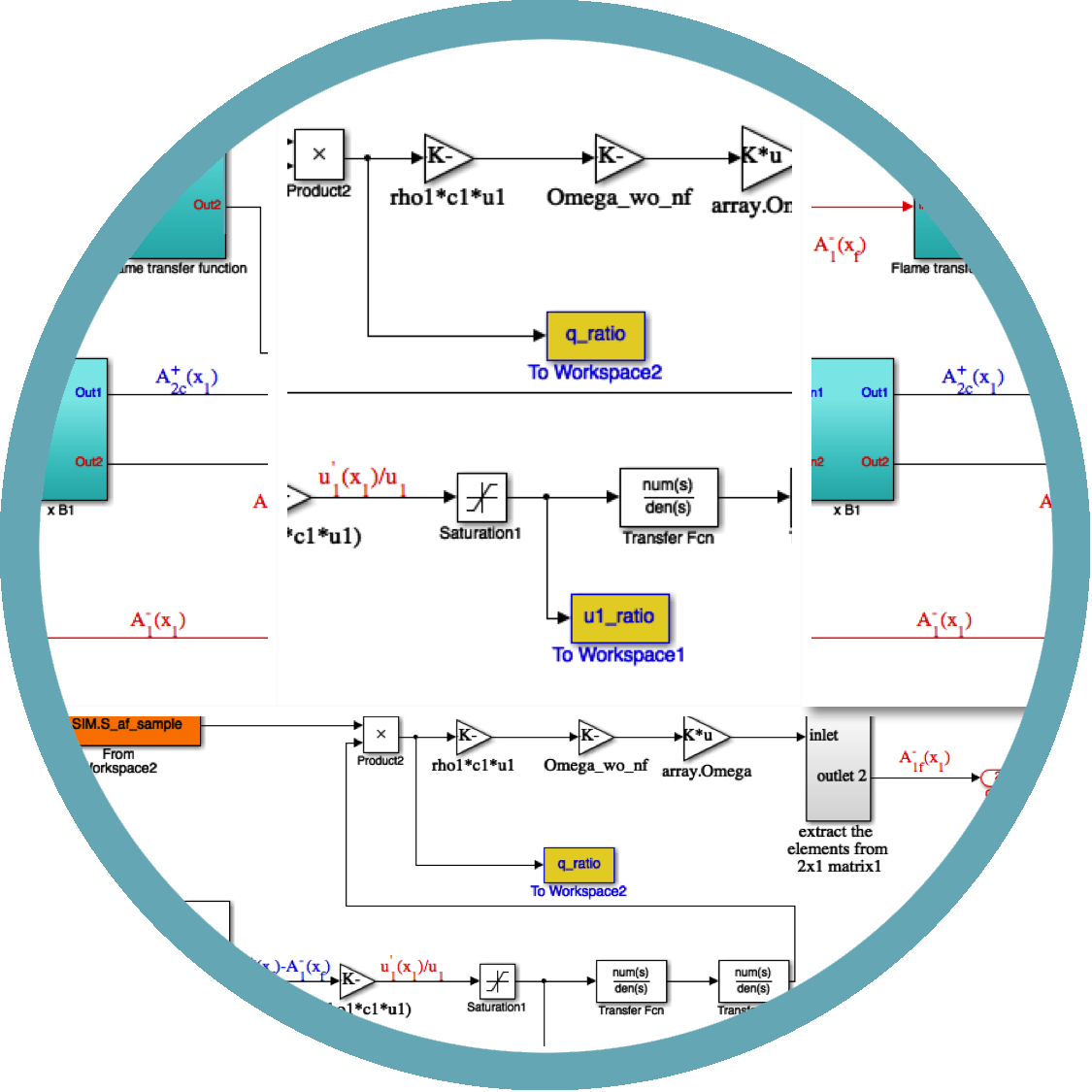
Professor Aimee Morgans is a leading academic in thermofluids engineering at Imperial College London's Department of Mechanical Engineering, part of the Faculty of Engineering. She holds a Professorial rank since 2017, progressing from Lecturer (2007), Senior Lecturer (2011), and Reader (2014). Her research focuses on mitigating environmental impacts of energy systems through fluid dynamics and aeroacoustics innovations. Key projects include ERC-funded grants AFIRMATIVE (2018-23) and ACOULOMODE (2013-18), and she leads the OSCILOS open-source combustion instability simulator. Educated at the University of Cambridge with a PhD, MEng, and MA in Engineering, Morgans has been recognized with prestigious awards: Royal Academy of Engineering Fellowship (2021), Learned Society of Wales Fellowship (2024), and the Menelaus Medal (2023). Her research group explores thermoacoustic instabilities, aerodynamic drag reduction, and combustion system optimization, collaborating with Siemens, Renault, and Nissan. Notable contributions include predictive models for low-emission combustors, acoustic damping innovations, and feedback control strategies for wakes and building vibrations. She co-leads the UK's Women in Fluid Dynamics group and serves on editorial boards for Applied Acoustics . Current projects like AFIRMATIVE address advanced combustion instability challenges, while OSCILOS advances low-order simulation tools for industrial applications.
Laurent O. Jay is a Professor in the Department of Mathematics at The University of Iowa, where he also serves as Director of the Interdisciplinary Graduate PhD Program in Applied Mathematical and Computational Sciences (AMCS). He is a faculty member of the College of Liberal Arts and Sciences, with research affiliations in numerical analysis and dynamical systems and differential equations. Department: Department of Mathematics School: College of Liberal Arts and Sciences University: The University of Iowa Position: Professor and Director of AMCS PhD Program His research focuses on numerical methods for differential equations, particularly Runge-Kutta and symplectic methods for ODEs and DAEs, with applications in mechanics and computational science. He has been actively publishing in top journals such as SIAM Journal on Numerical Analysis, BIT Numerical Mathematics, and Numerical Algorithms, with recent work on predictors for implicit methods, convergence analysis, and specialized integrators for constrained systems. His publications reveal a strong emphasis on structure-preserving algorithms, stiffness, and efficient implementations. Laurent O. Jay has received the Leslie Fox Prize in Numerical Analysis (Second Prize, 1995), a prestigious early-career award in the field. His research has been supported by the National Science Foundation under multiple grants. He advises several PhD students in the AMCS program and has mentored numerous former students who have pursued academic and industry careers. His teaching includes graduate courses such as Ordinary Differential Equations I and Introduction to Numerical Methods. He is also a proud member of the Runge-Kutta Club, reflecting his deep expertise in numerical integration methods.
Gonzalo Castiñeira Veiga is a Professor at the Applied Didactics Department , part of the Faculty of Education Sciences at the University of Santiago de Compostela. He holds a Ph.D. in Mathematics from the same institution (2018), with a thesis titled Modeling the flow of a viscous fluid in a curvilinear tube with viscoelastic walls , supervised by Dr. José Manuel Rodríguez Seijo and Dr. Ángel Arós Rodríguez. His research focuses on the intersection of applied mathematics and fluid dynamics , with a particular emphasis on viscoelastic materials, asymptotic analysis, and mathematical modeling of complex fluid flows. He has contributed to studies on viscoelastic shells, curved-pipe flows, and thermal-elastic dynamics, published in journals like Journal of Elasticity and Zeitschrift für Angewandte Mathematik und Mechanik . Castiñeira collaborates with researchers such as Ángel D. Rodríguez-Arós and José M. Rodríguez, addressing problems in mechanics of deformable solids and partial differential equations. His work often employs asymptotic methods to justify theoretical models of fluid-structure interactions in time-dependent domains. Education: Ph.D. in Mathematics, University of Santiago de Compostela (2018) Thesis: Modeling viscous fluid flow in curvilinear tubes with viscoelastic walls Research interests span fluid mechanics, viscoelastic materials, and mathematical modeling, bridging applied mathematics with engineering applications.
Farzad S. Dizaji is a Teaching Professor in Applied Mathematics at the Department of Engineering and Society, University of Virginia. He specializes in structural engineering, computational mechanics, and innovative teaching methodologies. His academic journey includes a B.Sc. in Civil Engineering from the University of Tabriz (2005), an M.Sc. in Earthquake Engineering from Iran University of Science & Technology (2008), and an M.Sc. in Structural Engineering from the University of Virginia (2019). His research interests span structural applications of smart materials, energy dissipation systems, computational mechanics, and machine learning in education. He emphasizes effective knowledge transfer in courses like Calculus II, Ordinary Differential Equations, and Linear Algebra. Notable contributions include developing graph-theoretical algorithms for structural optimization and pioneering work with shape memory alloys for seismic protection. Dr. Dizaji has received prestigious awards such as the University of Virginia M.Sc. Scholarship (2016–2019) and recognition from Iran’s National Elites Foundation (2010). His recent publications explore mastery grading in mathematics education and seismic retrofitting of steel frames using advanced materials. He actively promotes interdisciplinary approaches to teaching and research, bridging theoretical mathematics with practical engineering challenges.
Roland Böhmer is a Professor in the Department of Physics at the Technical University of Dortmund, where he conducts research in the field of Condensed Matter Physics. His work focuses on the characterization of technologically relevant solids and soft-matter systems with disordered structures. Institution: Technical University of Dortmund School: Faculty of Physics Department: Department of Physics Academic Rank: Professor His research investigates atomic motion processes in materials lacking crystalline order, employing advanced experimental techniques such as nuclear magnetic resonance, linear and nonlinear shear rheology, and electrical impedance spectroscopy, complemented by computer simulations. The key areas of his current research include charge transport in lithium-containing solid-state electrolytes, mechanical stability, atomic hopping dynamics, and the behavior of ionic and molecular liquids, polymer melts, glass-forming pharmaceuticals, and exotic ice phases. These studies are crucial for advancing materials used in energy storage, pharmaceuticals, and soft functional materials. No scientific awards or specific publications were mentioned in the source text. Roland Böhmer advises students and leads a research group at TU Dortmund, though no names of advisees are listed. There is no mention of external grants or funding sources in the provided material. His research group operates within the Department of Physics at TU Dortmund, utilizing specialized laboratories for magnetic resonance, rheology, and impedance measurements, supported by computational modeling infrastructure.
FERNANDO ADRIAN FERNANDEZ TOJO is a Professor at the University of Santiago de Compostela (USC), affiliated with the Department of Statistics, Mathematical Analysis and Optimization within the Faculty of Mathematics. His research focuses on differential equations, mathematical analysis, and nonlinear systems, particularly involving Stieltjes derivatives and functional differential equations. He is part of the EDNL research group (Nonlinear differential equations) and the Galician Mathematical Research and Technology Center (CITMAga). He earned his Doctorate from USC in 2015 with a thesis titled Existence and multiplicity of solutions of functional differential equations , supervised by Dr. Alberto Cabada Fernandez. His publications span topics like Stieltjes differential equations, Green’s functions, and applications to digital twin modeling. His work bridges pure mathematical analysis with applied problems in engineering and technology. Education: PhD in Mathematics, USC (2015) Affiliations: Faculty of Mathematics, CITMAga Interuniversity Center Research Themes: Differential equations with involutions, Stieltjes calculus, nonlinear boundary value problems, functional analysis. His research trends emphasize generalizing classical differential equation theories to broader Stieltjes frameworks, with applications in numerical methods and real-world modeling. Despite no awards listed here, his extensive publication record highlights sustained academic contribution.
Paul Scott is an Assistant Professor of Economics at the Leonard N. Stern School of Business, New York University, a position he has held since 2016. Prior to joining NYU, he was an Assistant Professor at the Toulouse School of Economics. Education: Ph.D. in Economics, Princeton University B.A. in Philosophy and Mathematics, University of California, San Diego Professor Scott's research focuses on empirical industrial organization, agricultural economics, and microeconometrics . His work often involves structural modeling, identification in dynamic models, and the application of advanced econometric techniques to real-world economic problems. He has made significant contributions to the understanding of market structure, agricultural land use, and dynamic discrete choice models. His publication record shows a consistent focus on methodological rigor and empirical application, spanning industries such as agriculture, brewing, telecommunications, and environmental resource management. Recent work emphasizes estimation techniques using production and demand data, hidden Markov models for satellite data, and identification in dynamic settings. Although no specific scientific awards are listed in the available text, his publications in top-tier journals such as the Journal of Political Economy , Review of Economic Studies , and Quantitative Economics reflect high scholarly impact. Professor Scott actively collaborates with leading economists including Eduardo Souza-Rodrigues, Myrto Kalouptsidi, and Jan De Loecker. While no formal advising or grant information is provided, his research trajectory suggests active engagement in the academic economics community. He maintains a current academic profile with an active email and personal website, indicating ongoing scholarly activity.
Eric Lanteigne is an Associate Professor in the Department of Mechanical Engineering at the University of Ottawa, serving as Associate Chair for Undergraduate Studies. He holds a PhD from the Royal Military College of Canada (2011), and B.A.Sc. and M.A.Sc. degrees from the University of Ottawa (2003, 2006). His research focuses on mechanisms design, uninhabited aerial vehicles (UAVs), airship systems, slung payload control, and non-linear control strategies. Education: Ph.D. Mechanical Engineering, Royal Military College of Canada (2011) M.A.Sc. Mechanical Engineering, University of Ottawa (2006) B.A.Sc. Mechanical Engineering, University of Ottawa (2003) Research interests include: - Uninhabited aerial vehicle (UAV) design and control - Airship dynamics and structural optimization - Path planning and non-linear control systems - Robotics applications in agriculture and environmental monitoring - Multi-body dynamic modeling - Energy harvesting for transportation systems Recent work emphasizes lighter-than-air UAVs, multibody aerial systems, and reinforcement learning for payload stabilization. His projects address challenges in autonomous systems coordination and environmental sensor deployment. He currently teaches the capstone design course for mechanical engineering students. Advising and grants involve mentoring students in advanced mechanical design and collaborating on industrial projects such as agricultural robotics and energy-efficient UAV systems. His lab focuses on experimental validation of control algorithms and aerodynamic performance optimization.
Raymond de Callafon is a Professor in the Department of Mechanical and Aerospace Engineering (MAE) at the University of California, San Diego (UCSD). He is a key faculty member in the Dynamic Systems & Control (DS&C) group, where he conducts research and teaches in system identification, adaptive control, and modeling of mechatronic systems. He directs the System Identification and Control Laboratory (SICL) and manages the CMRR Servo Laboratory, both at UCSD. His work bridges theoretical control with practical applications in data storage, aerospace, and vibration control systems. M.Sc., Mechanical Engineering, Delft University of Technology, 1992 Ph.D., Mechanical Engineering, Delft University of Technology, 1998 Raymond de Callafon's research centers on experiment-based modeling, control-relevant system identification, and recursive/adaptive control. His interests extend to nonlinear and linear parameter varying (LPV) systems, with applications in hard disk drives, tape storage systems, active noise and vibration control, and aeroelastic flutter prediction. He has developed modeling techniques applied to structural damage detection and controller tuning for high-precision systems. His recent publications reflect a strong trend in closed-loop system identification, Hammerstein models, adaptive disturbance rejection, and high-precision motion control in data storage devices. The articles span both theoretical advances and experimental validations, often involving dual-stage actuators and real-time control implementations. Co-authored book: Realtime Controller Tuning for Periodic Disturbance Rejection Developed MATLAB toolboxes: LTSfit, CLOSID, FREQID NASA-funded research on flutter control and aeroservoelastic systems Active collaboration with CMRR and industry partners in data storage Raymond de Callafon has advised multiple graduate students and contributed to significant research projects involving adaptive control, robotic systems, and coordinated ocean sensing networks. His teaching includes both graduate and undergraduate courses in system identification, control theory, and laboratory-based engineering education. He has also established the Undergraduate Control Laboratory (UGCL) and taught in the COSMOS summer program on kinetic sculptures. His laboratories, SICL and CMRR Servo Lab, are equipped with advanced facilities for sound and vibration control, real-time prototyping, and high-precision motion experiments, supporting both academic and industrial research in control engineering.
Jesús Cardenal Carro is a Professor in the Department of Applied Mathematics at the Ferrol Engineering Polytechnic University College, part of the University of A Coruña (UDC). He teaches a wide range of courses across engineering disciplines, including Numerical Methods, Differential Equations, Linear Algebra, and specialized topics in mobility and industrial design. He is actively engaged in research through the Observatorio para el diseño e innovación en movilidad, medios de transporte y automoción, contributing to both academic and applied engineering projects. His research interests span Applied Mathematics , Computational Mechanics , Multibody System Dynamics , and Automotive and Mobility Engineering . He focuses on numerical methods, inertial data filtering, vehicle dynamics, and the development of test benches for simulating mechanical motion. His work bridges theoretical mathematics with practical engineering applications in automotive and industrial systems. The recent articles highlight a strong trend in applied computational mechanics, particularly in vehicle dynamics, numerical simulation, and sensor data processing. Many publications focus on the development and validation of algorithms for orientation estimation from inertial sensors, simulation of mechanical systems, and practical engineering solutions such as vehicle conversions and test bench design. Collaborations with researchers like Javier Cuadrado and Eduardo Bayo Pérez are frequent and long-standing. No scientific awards were explicitly mentioned in the provided text. Jesús Cardenal Carro has directed multiple final degree and master’s theses in Industrial Engineering, including those of José Augusto Antón Nacimiento and Alvaro Deibe Díaz. He has participated in numerous research projects funded by national programs such as the Programa Nacional de Investigación del Transporte, the Secretaria Xeral de Investigación e Desenvolvemento Tecnolóxico, and international entities like the U.S. Army Research Office. These projects span areas of multibody dynamics, vehicle systems, and applied mechanics. He is affiliated with the research group Observatorio para el diseño e innovación en movilidad, medios de transporte y automoción, which focuses on innovation in transportation and automotive design. His work involves close collaboration with industry partners such as NAVANTIA and LABORATORIO OFICIAL DE VEHÍCULOS HISTÓRICOS, as well as academic networks including the Asociación Española de Ingeniería Mecánica (AEIM) and IFToMM.
Bart De Schutter is a Full Professor and Head of the Delft Center for Systems and Control (DCSC) at Delft University of Technology , The Netherlands. He leads a research group focused on advanced control methodologies with applications in transportation, energy, and environmental systems. His research interests span model predictive control (MPC) , hybrid and piecewise-affine systems , multi-agent and distributed control , reinforcement learning , and discrete event systems with applications in intelligent transportation, smart grids, and underwater robotics. His work integrates model-based and data-driven approaches to enable robust, scalable, and intelligent control of large-scale networks. His recent publications reflect a strong trend toward integrating learning with formal control methods, ensuring safety and performance in complex hybrid systems. Research themes include learning-based MPC, scenario reduction for stochastic control, stability analysis of max-plus systems, and applications in railway scheduling and marine monitoring. Notable scientific awards include: ERC Advanced Grant (CLariNet, 2021–2026) Richard C. DiPrima Prize for PhD thesis Robert Stock Prize for PhD theses in Exact Sciences VIDI grant from STW IEEE Fellow IFAC Fellow Bart De Schutter has coordinated major EU projects such as HD-MPC , SeaClear , and SeaClear2.0 , demonstrating leadership in both theoretical innovation and real-world applications. He serves as a senior editor for IEEE Transactions on Intelligent Transportation Systems and associate editor for IEEE Transactions on Automatic Control . He leads a research team working on next-generation control solutions for autonomous systems and infrastructure, with ongoing projects in intelligent traffic control, smart energy systems, and underwater robotics. The group actively recruits PhD and postdoctoral researchers, indicating a vibrant and expanding lab environment.
Jan H. Mikkelsen is an Associate Professor at Aalborg University's Department of Electronic Systems, part of the Technical Faculty of IT and Design. His research focuses on antennas, propagation, millimeter-wave systems, RF sensors, and biomedical engineering applications such as bone fracture monitoring. He has contributed to projects like the MARS2 satellite service system and the SOFT transceiver initiative, emphasizing software-defined radio and satellite communication. Key technical areas include power amplifiers, UWB technologies, RFID systems for cryogenic environments, and adaptive antenna designs using liquid metal. His work bridges theoretical research with practical applications, addressing challenges in mixed-signal circuit design, noise suppression, and 5G systems. Research interests span from fundamental material characterization (e.g., ferromagnetic resonance in hexaferrite crystals) to applied technologies like wearable Bluetooth earbud optimization and cryogenic RFID systems. His projects often involve collaboration with industry and government grants, such as the Danish Council for Independent Research. He has published extensively on topics ranging from spin-wave RF applications to biomedical impedance measurement techniques, reflecting his interdisciplinary expertise in RF engineering and biomedical systems. Notable contributions include reconfigurable Yagi-Uda antennas using liquid metal and advancements in nonlinear amplifier characterization. Despite no listed awards, his work has been cited in fields like wireless sensor networks and satellite communication. He advises on projects involving UWB localization and has a lab focus on antenna design and millimeter-wave systems.
Angel Calsina Ballesta is a Professor in the Department of Mathematics at Universitat Autònoma de Barcelona (UAB). He has held multiple academic roles, including Catedràtic d'Universitat at the University of Girona (2001–2005) and various teaching/research positions at UAB since 1979. His research focuses on mathematical biology, population dynamics, and partial differential equations, with applications to biosciences and theoretical ecology. Education: PhD in Mathematics (UAB, 1984), earlier degrees in Mathematical Sciences (UAB, 1979–1980). Projects: Lead roles in projects like 'Dinámica de poblaciones y modelización matemática de la evolución biológica' (2015–2018) and 'Modelización matemática, biología teórica y dinámica de poblaciones' (2018–2022). Research interests include size-structured populations, stochastic modeling, PDE analysis, and transient dynamics in continuous media. His work contributes to UN Sustainable Development Goals related to education and environmental sustainability.