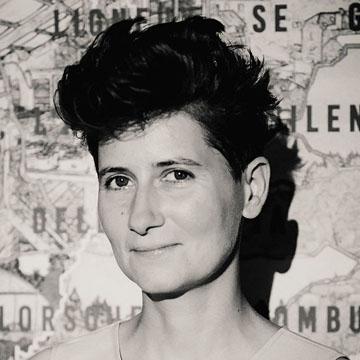
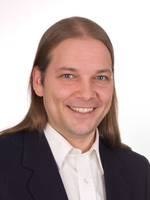
Umberto Michelucci is a Professor of Scientific Machine Learning at Lucerne University of Applied Sciences and Arts (HSLU), Switzerland. He holds a PhD in Machine Learning applied to Physics and has over 20 years of industry experience. He is the Subject Head of Applied Data Intelligence in Continuing and Executive Education, Head of Certificates in Machine Learning/Data Engineering, and founder of TOELT LLC and the AI Center of Excellence at Helsana Versicherung AG. His research focuses on machine learning applications in science, astrophysics, uncertainty quantification, and sensor technology. Education PhD in Machine Learning applied to Physics (Portsmouth University) Master in Theoretical Physics (University of Florence) Postgraduate Certificate in Higher Education (Open University, UK) Research Interests Michelucci’s work bridges machine learning and scientific disciplines. Key areas include: Machine learning for astrophysics (INAF collaborations) Uncertainty analysis in high-stakes ML systems Deep learning for optical sensing (e.g., olive oil quality analysis) Foundational mathematical concepts for ML in science Awards & Recognition World’s Top 2% Scientists (Stanford List) Google Developer Expert in Machine Learning AI Global Ambassador (2022) TOP AI Influencer in Switzerland (2021) Grants & Collaborations He collaborates with institutions like INAF (Italy) and NVIDIA/Google, leading projects on AI for agrifood, medical imaging, and astrophysics. His work includes $multi-million industry partnerships and EU-funded research. Labs & Teams Director of the TOELT AI Lab and oversees HSLU’s Applied Data Intelligence programs. Active in open-source initiatives and global AI standardization efforts.
Feiran Zhao is a Researcher at the Institute of Automatic Control, part of the Department of Mechanical and Process Engineering at ETH Zürich. He holds a B.S. in Control Science and Engineering from Harbin Institute of Technology (2018) and a Ph.D. from Tsinghua University (2024). His research focuses on data-driven control, adaptive control, reinforcement learning, and their applications in engineering systems. Zhao is currently a postdoc under Prof. Florian Dorfler at ETH's Automatic Control Lab. Research interests span topics like policy optimization for LQR systems, quantized feedback control, and model predictive control acceleration. His work bridges machine learning and classical control theory, with applications in robotics, power systems, and aerospace engineering. His publications (2019–2025) explore theoretical foundations of policy gradient methods, convergence analysis, and practical implementations in autonomous systems. Though no awards are explicitly listed, his active research in high-impact areas suggests potential recognition. As part of the Automatic Control Lab, Zhao collaborates on projects involving data-enabled control strategies and real-world system applications. No student advisees are currently listed.
Franceschiello Benedetta is an Associate Professor at HES-SO Valais-Wallis School of Engineering, specializing in Technical and IT disciplines. She holds a PhD in Mathematical Neuroscience from Université Pierre et Marie Curie (Paris). Her work bridges applied mathematics, computational neuroscience, and neuroimaging, with a focus on visual perception modeling, MRI techniques, and neural dynamics. Teaching: Linear Algebra courses across multiple engineering bachelor programs Expertise: Combines mathematical modeling with neuroscientific applications to study optical illusions, brain connectivity, and ophthalmic diagnostics Key Affiliations: ISMRM, Organization for Human Brain Mapping (OHBM), Association for Research in Vision and Ophthalmology (ARVO) Research Interests: Computational modeling of visual cortex mechanisms underlying geometric optical illusions Development of MRI-based methods for eye structure segmentation and axial length estimation Analysis of brain network reliability through standardized MRI protocols Optimization techniques for medical imaging reconstruction (e.g., weighted LASSO problems) Recent Work Trends: Focus on integrating psychophysical experiments with computational models to elucidate perceptual mechanisms, emphasizing synergistic interactions between physical stimulus parameters. Active in advancing MRI applications for both clinical diagnostics and fundamental neuroscience research.
Dr. Anna Colin is Programme Director of the MFA Curating program at Goldsmiths, University of London, where she serves as a Lecturer in the Department of Art. With over twenty years of experience as a curator working both freelance and institutionally, her practice spans curatorial, pedagogical, social, and ecological fields. She has held significant positions including associate curator at Lafayette Anticipations in Paris (2014-2020), associate director of Bétonsalon – Centre for art and research in Paris (2011-2012), and curator at Gasworks, London (2007-2010). She co-curated British Art Show 8 (2015-2016) and has worked with numerous international institutions including CA2M in Madrid, Whitechapel Gallery in London, and Contemporary Image Collective in Cairo. PhD, School of Geography, University of Nottingham (2022) Permaculture Design Certificate, Permaculture Association UK (2024) Level 2 Practical Horticulture Certificate, Royal Horticultural Society (2022) MA Curating Contemporary Art, Royal College of Art (2005) BA Arts Management, London Southbank University (2003) Dr. Colin's research interests focus on the intersection of art, ecology, and alternative educational models. Her work explores how cultural practitioners can engage with human and non-human ecosystems, examining holistic and intersectional organizational models that resist chrononormativity. She investigates sustainability as a dynamic, cyclical process rather than a product-oriented goal, drawing inspiration from ecology, agroecology, and arboriculture to reconceptualize art institutions' relationship to waiting, slowness, rest, and longevity. Her current research examines regenerative artistic, curatorial, and institutional practices that serve ecosystems, with particular attention to the Black Atlantic, agricultural and digital commons, and colonialism's impact on the natural environment. Analysis of Dr. Colin's recent publications reveals a consistent thematic focus on ecological approaches to art and institutions, with increasing emphasis on practical applications of ecological principles. Her work demonstrates a clear trajectory from examining alternative educational spaces (as in her PhD research on multi-public educational and cultural spaces) toward developing concrete ecological frameworks for cultural institutions. The publications show growing integration of horticultural knowledge with curatorial practice, particularly evident in projects like 'Chaleur Humaine' and 'ĝardeno paradizo' which combine energy studies with landscape design and community engagement. Dr. Colin welcomes doctoral applicants seeking to work in cultural production at the service of ecosystems, regenerative artistic practices, alternative institutional models, and critical pedagogies. She has supervised numerous curatorial projects and community-based initiatives through Open School East, which she co-founded in 2013 as an alternative art school and community space in London and later Margate. Her collaborative approach extends to working with artists, horticulturalists, and community groups on projects that integrate art with practical ecological interventions. Dr. Colin has established several significant collaborative spaces and research groups, most notably Open School East which operated for eight years under her directorship. Her work with the Centre for Art and Ecology at Goldsmiths demonstrates her commitment to developing institutional frameworks that support ecological thinking in the arts. Current projects include 'The Ecosystemic Clock' research initiative exploring non-linear time in ecological contexts and 'ĝardeno paradizo,' a pedagogical and landscaping project in Sète, France that rehabilitates outdoor spaces to accommodate biodiversity and community needs.
Peter Scheiblechner is a Lecturer at Lucerne University of Applied Sciences and Arts' School of Engineering and Architecture, within the Department of Natural and Humanities Sciences (ING). He holds a PhD in Mathematics from the University of Paderborn (2007) and has held academic positions including Visiting Assistant Professor at Purdue University (2010-2011) and Postdoc at the Hausdorff Center for Mathematics (2011-2012). His business experience includes software development roles at companies like ClassWare GmbH and UBS in Switzerland. Education: PhD in Mathematics, University of Paderborn (2007) Master's in Mathematics (minor: Physics), Albert-Ludwigs University Freiburg (1997) Bachelor's in Mathematics (minor: Physics), Philipps-University Marburg (1993) High School Diploma, Martin-Luther-Schule Marburg (1991) Research Interests: Focus on applying statistics, data analysis, and machine learning to real-world problems; computational algebra/geometry/topology with complexity theory; algebraic and classical complexity theory. Active in projects like ENFLATE (flexibility markets), COSMOS Data Cockpit (personalized medicine), and topological data analysis. Publications: Over 10 peer-reviewed articles in journals like Journal of Symbolic Computation , Foundations of Computational Mathematics , and Communications in Contemporary Mathematics , with focuses on algorithmic algebraic geometry, complexity analysis, and topological computations. Awards: DFG fellowship (2008-2010), 3rd place in German Mathematics Competition (1991), and regional championship in Hessen (1985/86). Teaching: Teaches mathematics, physics, statistics, and numerical methods at bachelor and master levels, including courses on differential equations, linear algebra, stochastic processes, and engineering applications.
Ilija Bogunovic is an Assistant Professor (UK Lecturer) in the Department of Electronic and Electrical Engineering at University College London (UCL), Faculty of Engineering Sciences. His research focuses on algorithmic sequential decision-making for robust, reliable, and safe artificial intelligence, with applications in large language model alignment, reinforcement learning, and human feedback integration. His research interests lie at the intersection of machine learning, optimization, and decision theory. He investigates robustness in Bayesian optimization, bandits, and reinforcement learning under adversarial attacks, model misspecification, and distributional shifts. His work spans both theoretical foundations and real-world applications in energy systems, mobility, and AI safety. A central theme is developing algorithms that are provably robust and efficient in uncertain and potentially corrupted environments. The recent publications highlight a strong trend in robust decision-making, particularly in reinforcement learning and preference optimization. Key themes include adversarial robustness in large models, distributional robustness in RL, safe multi-agent systems, and robust Bayesian optimization. The work frequently involves theoretical analysis of regret and sample complexity, combined with practical algorithm design for high-impact applications. Scientific Awards: Google Research Scholar Program Award (Machine Learning & Data Mining), 2023 EPSRC New Investigator Award, 2023 Ilija Bogunovic actively supervises PhD and MSc students, with several of his advisees leading papers accepted to top venues like NeurIPS and ICLR. He has secured competitive research grants, including the EPSRC New Investigator Award, to support his work on robust decision-making. He is building a research team focused on robust and safe AI. He leads a research team and has initiated an online reading group on modern adaptive experimental design and active learning, fostering a collaborative research environment.
Ivo Furno is an Adjunct Professor at the École Polytechnique Fédérale de Lausanne (EPFL) within the School of Basic Sciences ( SB ) and affiliated with the Swiss Plasma Center ( SPC ). He holds a joint appointment with the SPH-ENS unit and previously contributed to EDPY-ENS teaching initiatives. His research spans fundamental plasma physics, tokamak experiments (TCV program), and applied plasma technologies including plasma agriculture. Key Collaborations: AWAKE Run 2, DEMO Neutral Beam Injectors, SPIDER, RAID linear device Teaching: General Physics (Thermodynamics), Plasma Diagnostics in Tokamaks Research focuses on plasma turbulence , negative ion sources , self-modulation of relativistic proton bunches , and plasma-seed treatments . His work includes experimental validation of edge turbulence codes , microwave interferometer design , and helicon plasma characterization for fusion applications. Publications highlight 3D plasma dynamics , Langmuir probe analysis , and ion transport phenomena . He has supervised numerous PhD students, including those working on fast ion transport , negative hydrogen ion dynamics , and millimeter-wave diagnostics . Scientific Awards: No explicit awards listed in the data. Students & Collaborations: Mentored PhD candidates such as Riccardo Agnello (helicon plasmas), Rita Agus (plasma diagnostics), and Fabio Avino (dielectric barrier discharges). Past advisees include researchers in plasma agriculture (e.g., Alexandra Waskow) and tokamak experiments (e.g., Federico Nespoli).
Maryam Kamgarpour is a Tenure Track Assistant Professor at École Polytechnique Fédérale de Lausanne (EPFL), School of Engineering. She previously held faculty positions at the University of British Columbia and ETH Zürich. Her work bridges stochastic control , multiagent learning , and game theory , focusing on safety-critical systems. Education: PhD in Engineering from UC Berkeley, BSc in Applied Science from University of Waterloo. Research Interests: Control under uncertainty, game theory, mechanism design, mixed-integer optimization, and applications to transportation, robotics, power grids, and healthcare. Her recent publications emphasize safe reinforcement learning , multirobot coordination , and stochastic trajectory planning , with applications to aircraft navigation and energy systems. She has received the European Union ERC Starting Grant, NASA High Potential Individual Award, and IEEE Transactions on Control of Network Systems Outstanding Paper Award. Scientific Awards: ERC Starting Grant (2016-2021) NASA High Potential Individual Award (2010) NASA Excellence in Publication Award IEEE Outstanding Paper Award (2022) PhD Students: Jordan Philip Christopher Maddux Anna Maria Ni Tingting Ren Kai Salizzoni Giulio Schlaginhaufen Andreas Vaishampayan Saurabh Dilip Vallat Gabriel Rémi Former EPFL student: Guo Baiwei
Mathieu Huruguen is a Lecturer at EPFL, specializing in foundational mathematics education. He delivers preparatory courses focusing on geometry, linear algebra, and analysis, emphasizing visualization and geometric contexts in dimensions 2 and 3. His teaching includes: Euclidean and hyperbolic geometries (historical foundations to modern acceptance) Linear Algebra (set theory, logic, and geometric applications) Analysis II (special functions: trigonometric, logarithmic, exponential) Mathematical education for engineering and science preparatory programs
Malte Helmert is a Professor at the University of Basel in the Department of Mathematics and Computer Science. He previously worked at the University of Freiburg's Research Group on the Foundations of Artificial Intelligence from 2001 to 2011. His research focuses on intelligent problem-solving , particularly in automated planning , combinatorial search , constraint satisfaction , and NP-hard graph problems . Helmert has made significant contributions to classical planning, including the development of the Fast Downward planning system and its derivatives. Education : Diploma in Computer Science (M.Sc.) from the University of Freiburg (2001) Ph.D. in Computer Science from the University of Freiburg (2006) Research interests encompass the theoretical and practical aspects of automated planning, including heuristic search , optimal planning , abstraction techniques , and domain-independent planning . His work explores merge-and-shrink abstractions , landmark progression , and cost partitioning algorithms for classical planning systems. Recent publications analyze advancements in pseudo-Boolean proof logging , higher-dimensional potential heuristics , and correlation complexity in planning domains. These works often integrate mathematical modeling, algorithm design, and empirical benchmarking. Scientific awards include the AAAI Fellow (2021), EurAI Fellow (2020), multiple Best Paper Awards at ICAPS and SoCS conferences, and the Computers and Thought Award (2011). He also received the VDI-Förderpreis for his Master’s thesis. Software contributions include the Fast Downward planning system, MIPS (now maintained by Stefan Edelkamp), and COVER (a vertex cover solver). Helmert has organized tutorials at ICAPS and AAAI conferences on topics like landmark progression , abstraction heuristics , and LP-based heuristics .
Emmanuel Fragniere is a Professor at the HES-SO Valais-Wallis Higher School of Management within the Economics and Services School . His research focuses on sustainability in tourism , transdisciplinary innovation , and human risk management . He leads projects on climate change impacts on alpine tourism, inclusive technology design for persons with disabilities, and digitalization challenges in workplaces and healthcare. Key affiliations include the ArODES research group and collaborations with institutions like SWISSPEAK Resorts and the Innovation Booster Technologie et Handicap initiative. His work bridges technical and social sciences, emphasizing participatory methods and systems resilience. Recent studies explore blockchain in tourism, chatbot interactions in service design, and the ethical implications of AI in wealth management. He has published over 50 peer-reviewed articles, with a focus on empirical case studies in Switzerland and international contexts. Education: Advanced qualifications in economics and service systems (details not explicitly stated in text). Labs/Teams: Active in Living Lab methods, service blueprinting, and transdisciplinary innovation networks.
Ethan Monaghan Ackelsberg is a postdoctoral researcher at the Institute of Mathematics, École Polytechnique Fédérale de Lausanne (EPFL), affiliated with the School of Basic Sciences (SB) and the Ergodic Theory group (ERG). He also holds a lecturing position in the SMA-ENS program within the SB-SMA department at EPFL, focusing on teaching mathematics. His research bridges ergodic theory, Ramsey theory, and combinatorial number theory, with a focus on recurrence properties and polynomial configurations. Education: PhD in Mathematics from Ohio State University (2022), MS in Mathematics (2019), BA in Mathematics and Physics from Bard College at Simon's Rock (2016). Ethan's research explores measure-preserving actions of abelian groups, polynomial patterns in large subsets, and connections to number theory. His recent work includes advancements in equidistribution in nilpotent groups and counterexamples to Erdős-type problems. He has received academic honors including summa cum laude at Bard College and highest honors from Budapest Semesters in Mathematics. Ethan actively contributes to teaching, including courses on measure theory.
Dr. Florian Pommerening is a Professor at the Department of Mathematics and Computer Science within the Faculty of Science at the University of Basel, Switzerland. He holds an email address of florian.pommerening@unibas.ch and can be reached via +41 61 207 05 37. His academic career is deeply rooted in classical domain-independent planning, with a focus on optimal planning through heuristic search and the application of linear and mixed integer programming in planning domains. University of Basel, Switzerland Faculty of Science Department of Mathematics and Computer Science Professor Rank Florian completed his PhD at the University of Basel in 2017 under the supervision of Malte Helmert. He also holds a Master's degree in Computer Science from the University of Freiburg (2012) and a Master's in Information Technology from Monash University (2010). His research spans topics such as classical planning, heuristic search, linear programming, mixed integer programming, and automated planning systems. His publication record from 2012 to 2025 demonstrates sustained contributions to planning algorithms, including cost partitioning heuristics, Lagrangian decomposition, and transition landmark generation. His work has been recognized with multiple awards, including the ICAPS 2024 Influential Paper Award, ECAI 2023 Quality Champion PC award, and the Dux of the Master of Information Technology at Monash University. ICAPS 2024 Influential Paper Award Quality Champion PC award (ECAI 2023) Runner Up, Best Student Paper Award (ICAPS 2023) CoRe Challenge 2022 Awards Best Student Paper Runner-Up (ICAPS 2022) Best System Demonstration (ICAPS 2022) Outstanding Senior Program Committee Award (AAAI 2021) ICAPS 2019 Best Paper Award Faculty Award 2018 (University of Basel) EurAI Artificial Intelligence Dissertation Award 2017 ICAPS 2018 Best Dissertation Award Outstanding PC Member Award (SoCS 2016) Winner, Unsolvability IPC 2016 AAAI 2015 Outstanding Paper Award ICAPS 2014 Outstanding Paper Award Dux of the Master of Information Technology 2010 (Monash University) Florian actively contributes to the planning community through tutorials at AAAI 2019 and ICAPS 2015, and through software development such as the Fast Downward planner and Planutils framework. His notable side project includes creating a quine in the Shakespeare Programming Language (SPL) with Thomas Mayer, showcasing technical creativity beyond core research.
Dr. Francesco Paolo Casale serves as Principal Investigator in Machine Learning in Biomedicine at the Helmholtz Munich Institute AI for Health, part of Helmholtz Zentrum München and affiliated with Ludwig-Maximilians-Universität München's Biomedical Center. His research develops machine learning and statistical tools to analyze genetic cohorts with deep molecular and phenotypic data, addressing fundamental biomedical questions about disease mechanisms and progression. His academic foundation includes: PhD in Statistical Genetics from University of Cambridge & EMBL-EBI (2012-2016) M.Sc. in Physics of Complex Systems from Università di Napoli Federico II (2009-2012) B.Sc. in Physics from Università di Napoli Federico II (2009) Casale's research integrates machine learning, statistical inference, and systems genetics to develop scalable tools for genetic association studies, deep learning models for imaging genetics, and computational methods examining gene-environment interactions. His work emphasizes model robustness and interpretability while investigating molecular and cellular traits associated with disease severity. Current projects focus on rare variant analysis, aberrant gene expression prediction, and longitudinal omics data integration. His publication record shows a clear progression from foundational statistical genetics methods toward increasingly sophisticated integration of machine learning with multi-omics data. Recent work emphasizes practical biomedical applications including disease risk prediction through Mendelian randomization frameworks, advanced single-cell analysis techniques, and histopathology image classification. The research demonstrates consistent methodology development focused on scalability for large datasets while maintaining biological interpretability. Key recognitions include: Highly Recognized article in PloS Genetics Research Prize (2018) Microsoft Research New England Postdoctoral Fellowship (2017) EMBL studentship (2012) Honors for MSc and BSc degrees from Università di Napoli Federico II Throughout his career at Microsoft Research, Insitro, and Helmholtz Munich, Casale has led research teams developing computational approaches at the intersection of human genetics and machine learning. His work contributes to landmark projects including the 1000 Genomes Project and Blueprint initiative, with conference presentations at major venues including NeurIPS, ASHG, and EASL. Current grant support likely stems from Helmholtz Association funding mechanisms and collaborative biomedical research programs. He directs the Systems Genetics and Machine Learning Research team at Helmholtz Munich, which operates within the Biomedical Center ecosystem of LMU Munich. The team focuses on leveraging large-scale genetic datasets with machine learning to understand disease biology, with particular emphasis on target identification and characterization for therapeutic development. Current research directions include multi-timepoint omics analysis, disease subtyping, and developing interpretable models for clinical translation.
Backhausz Ágnes is a Assistant Professor at Eötvös Loránd University's Faculty of Science , specifically in the Department of Probability Theory and Statistics . She also holds a part-time Researcher position at the Alfréd Rényi Institute of Mathematics . Her academic journey includes habilitation and a PhD in Mathematics, focusing on random graph models and their asymptotic properties. Research Group: Struktúrák limeszei (since 2013, part-time since 2015) Grants: ERC Grant on 'Limits of Discrete Structures' (2014–2019) Ágnes specializes in Probability Theory and Random Graphs , with emphasis on graph limits , factor of i.i.d. processes , and spectral theory . Recent publications analyze epidemic spread on multilayer networks, entropy inequalities, and action convergence in graph operators. Her work bridges theoretical mathematics with applications in network science and stochastic processes. Notable awards include the Grünwald Géza Memorial Medal (2014) from the Bolyai János Matematikai Társulat. She actively contributes to academic service as a Supervisor and Training Lead for the Beyond The Edge Marie Curie Doctoral Network (2024–2027) and serves on program committees for conferences like Eurocomb and the European Girls' Mathematical Olympiad . Her teaching portfolio spans Probability Theory, Stochastic Processes, and Mathematical Statistics at both undergraduate and graduate levels.