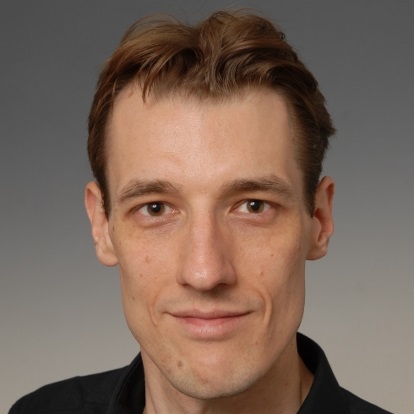
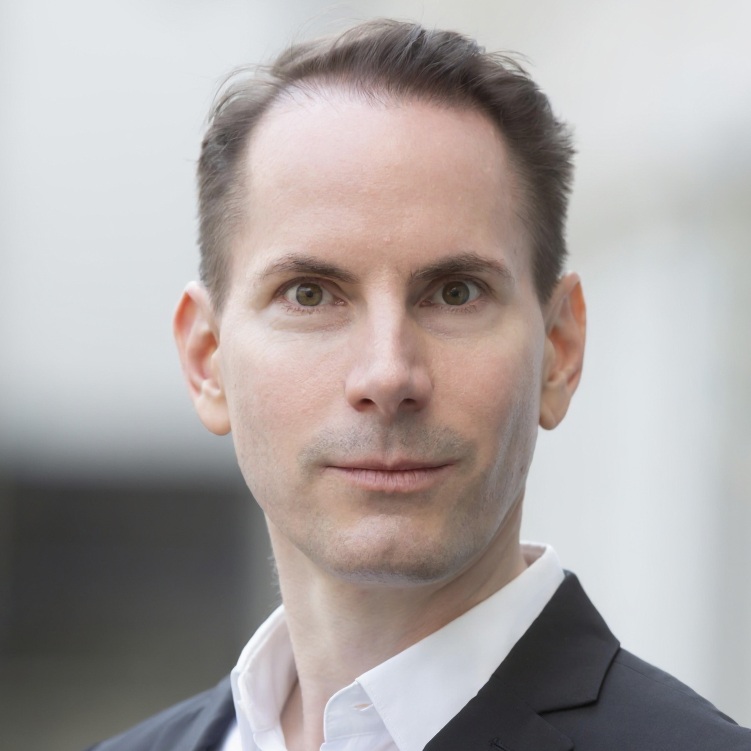
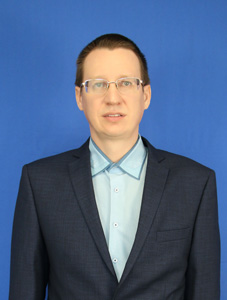
Amey Bhangale is an Assistant Professor in the Department of Computer Science and Engineering at the University of California, Riverside. Prior to this, he held positions as a post-doctoral fellow at the Weizmann Institute of Science under Irit Dinur and a research fellowship at the Simons Institute. His research focuses on Approximation Algorithms , Probabilistically Checkable Proofs , Hardness of Approximation , and Analysis of Boolean Functions . Research Trends His recent work explores inapproximability bounds for constraint satisfaction problems, parallel repetition theorems, and additive combinatorics in finite fields. Notable collaborations include Subhash Khot, Dor Minzer, and Yang P. Liu. Teaching CS219: Advanced Algorithms (2025) CS141: Intermediate Data Structures and Algorithms (2024) CS218: Design and Analysis of Algorithms (2023) CS215: Theory of Computations (2021-2023)
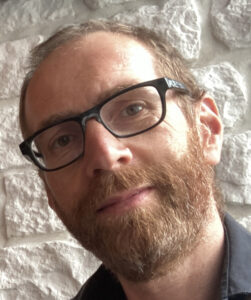
Jens Claßen is an Associate Professor in the Department of People and Technology at Roskilde University, Denmark, where he is a member of the Programming, Logic and Intelligent Systems research group. His academic career includes prior positions as Assistant Professor at the same institution, postdoctoral researcher at Simon Fraser University, and Ph.D. candidate and teaching assistant at RWTH Aachen University. His research lies in Knowledge Representation and Reasoning, a core area of Artificial Intelligence, with a focus on symbolic approaches to agent cognition. Key interests include reasoning about action and change, beliefs, planning, agent program verification, synthesis, and machine ethics. He applies formal logic and automated reasoning techniques to model intelligent behavior in dynamic environments. The recent publications highlight a strong trend in formal methods for agent systems, particularly in first-order logic frameworks, linear temporal logic synthesis, and progression in action theories. His work bridges theoretical AI with practical verification and synthesis techniques for intelligent agents. Scientific Awards: No awards listed in the provided text. Jens Claßen has served as a sessional instructor and visiting lecturer at Simon Fraser University and FH Aachen University of Applied Sciences, teaching courses in artificial intelligence and knowledge representation. He has advised students at various levels, though specific names are not listed. His research is supported through institutional affiliations and active participation in major AI conferences like AAAI. He has contributed to open-source tools such as a PDDL parser, belief projection system, and GOLOG verification framework, indicating engagement in both theoretical and implementational aspects of AI. He leads and contributes to research in the Programming, Logic and Intelligent Systems group at Roskilde University, focusing on foundational aspects of intelligent agents. His open-source projects suggest active involvement in tools that support reasoning and planning research, fostering reproducibility and collaboration in the AI community.
Frank Vallentin is a full professor of applied mathematics (computer science) at the Mathematical Institute of the University of Cologne, Germany. He has held academic positions at Technische Universiteit Delft, Centrum Wiskunde & Informatica (CWI), and the Hebrew University of Jerusalem. His research spans optimization, discrete geometry, harmonic analysis, and computational mathematics. Research Interests: His primary mathematical interests include semidefinite programming, combinatorial optimization, harmonic analysis, discrete geometry, combinatorics, geometry of numbers, special functions, computational complexity, and coding and information theory. These areas reflect a deep integration of theoretical mathematics with algorithmic and computational techniques. The 15 most recent publications reveal a strong focus on geometric optimization, lattice problems, energy minimization, and semidefinite programming bounds. Key themes include chromatic numbers of lattices, symplectic capacities, polarization phenomena, and algorithmic solutions to geometric problems. His work often involves recursive SDP hierarchies, extremal configurations, and computational verification of theoretical bounds. Scientific Awards and Grants: SIAG/Optimization Prize (2011, with Christine Bachoc) NWO VIDI Grant (2010–2015): Semidefinite programming and harmonic analysis DFG Project: Symplectic capacities of polytopes (2017–) EU Horizon 2020 MINOA Project: Optimization with limited quantum resources (2017–) DFG Project: Spectral bounds in extremal discrete geometry (2019–) Advising and Grants: Vallentin has advised numerous PhD and master’s students at TU Delft and the University of Cologne, covering topics in discrete geometry, optimization, coding theory, and quantum information. He has secured major research funding from NWO, DFG, and the EU, supporting interdisciplinary projects in algorithmic optimization and mathematical physics. He is actively involved in organizing workshops and summer schools. Labs and Teams: He leads a research group at the University of Cologne focusing on optimization and discrete geometry, with strong collaborations with CWI Amsterdam, TU Delft, and international institutes. His team works on theoretical and computational aspects of geometric optimization, often using symmetry reduction and harmonic analysis.
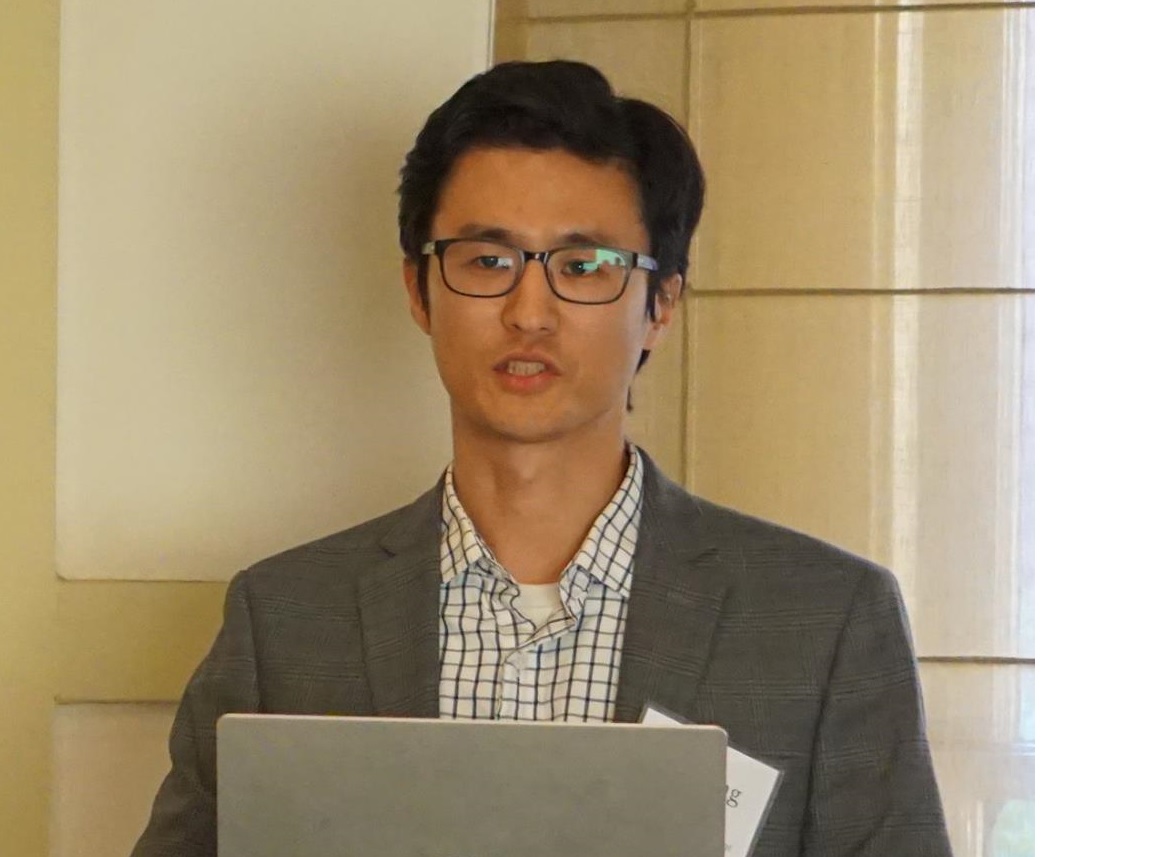
In Young Min is a Lecturer in Korean studies at the Centre for East Asian Studies, Heidelberg University. He holds a B.A. and M.A. in Political Science from Yonsei University (South Korea), and a Ph.D. in Political Science and International Relations from the University of Southern California. His research focuses on international relations and security in East Asia, particularly the dynamics of power asymmetry and smaller states' agency in shaping these dynamics, with a regional focus on Korea. Recent work examines historical and contemporary issues surrounding the Korean Peninsula, including nuclear policy and unification treaties. His interdisciplinary contributions span political theory and historical analysis. Education History: B.A. and M.A. in Political Science, Yonsei University, South Korea Ph.D. in Political Science and International Relations, University of Southern California Research Interests: Power asymmetry dynamics in international relations Ontological security and identity in hierarchical systems Korean Peninsula security and unification South Korea's nuclear policy and non-proliferation challenges Publications Trends: His work bridges historical and contemporary analyses, with contributions to journals like the International Relations of the Asia-Pacific and Journal of Asian Security and International Affairs . Earlier technical articles in mathematics and computational methods reflect interdisciplinary engagement, though recent focus is on political science and international relations.
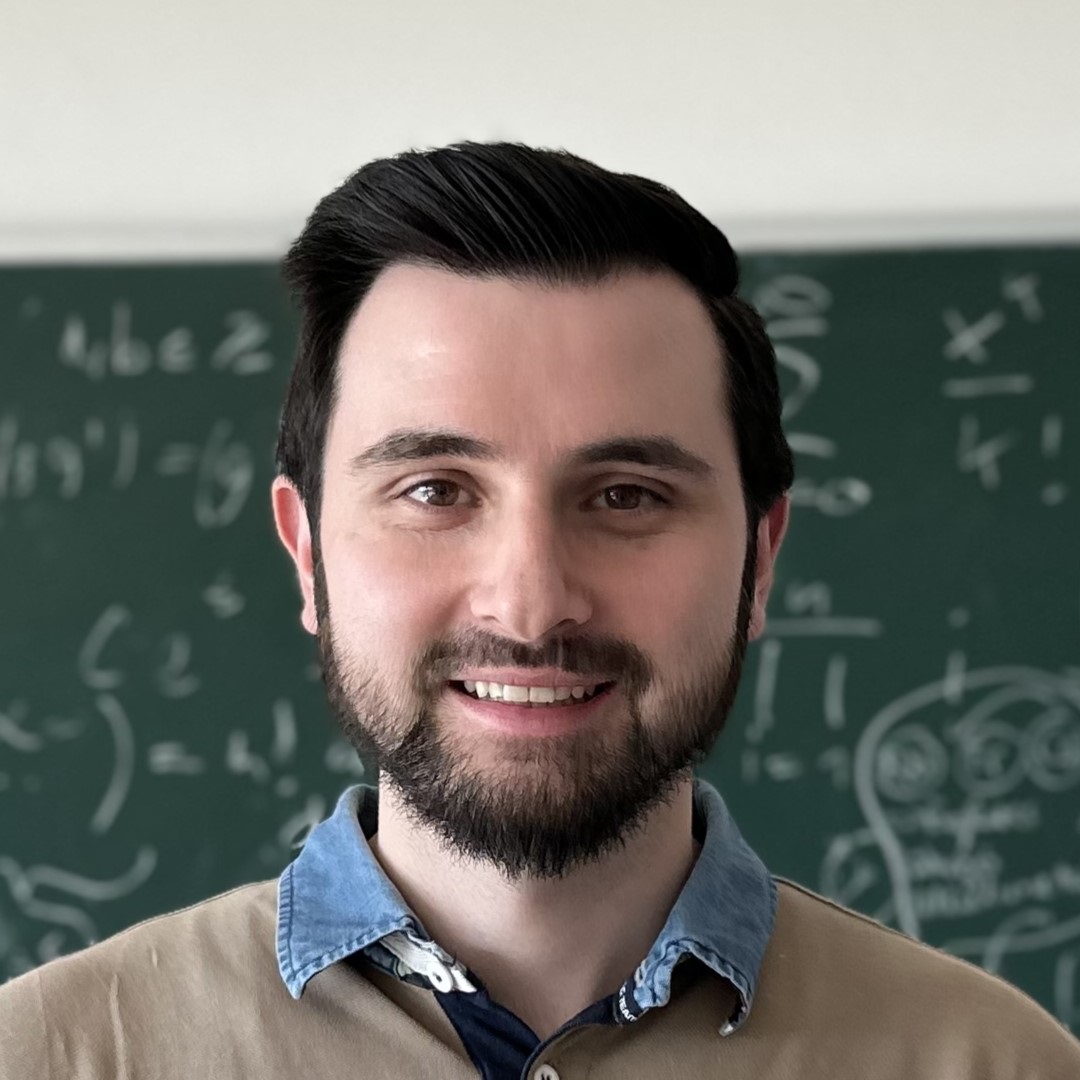
Dr. Cengiz Aydin is a Researcher at Heidelberg University's Department of Mathematics, affiliated with the Research Station Geometry + Dynamics. He holds a postdoctoral fellowship from the DFG Walter Benjamin Program, hosted by Professors Peter Albers and Agustin Moreno. His research focuses on symplectic geometry, Hamiltonian dynamical systems, and celestial mechanics, particularly the restricted three/four-body problems. He employs analytical and numerical methods to study periodic orbits and bifurcations, with applications to space mission design. Education : PhD in Mathematics (2023), Université de Neuchâtel (advisors: Felix Schlenk & Urs Frauenfelder) M.Sc. in Mathematics (2019), Universität Augsburg His research interests bridge pure mathematics and applied physics, including symplectic embedding problems, Floquet multipliers, and Conley-Zehnder indices. Publications are listed on ORCID and ResearchGate, emphasizing interdisciplinary approaches to celestial mechanics and dynamical systems. Dr. Aydin collaborates with the Heidelberg Experimental Geometry Lab and actively contributes to symplectic geometry's role in space mission trajectory optimization. His work integrates historical astronomical insights with modern computational techniques.
Torbjørn Cunis is a Temporary Academic Councillor / Group Leader at the Institute of Flight Mechanics and Flight Control of the University of Stuttgart. He concurrently serves as an Adjunct Assistant Research Scientist at the University of Michigan and is a member of the Young ZiF at Bielefeld University's Center for Interdisciplinary Research. His expertise lies in nonlinear systems theory, mathematical optimization, and aerospace engineering applications. Education : B.Sc. Computer Science (2013) & Aerospace Computer Engineering (2014), University of Würzburg M.Sc. Automation Engineering (2016), RWTH Aachen University Ph.D. in Systems & Control (2019), ISAE-Supaéro, Toulouse Research Interests focus on optimization-based control strategies, nonlinear system analysis, and their application to aerospace systems. Key areas include upset recovery in aircraft, model-predictive control, and sum-of-squares optimization techniques. His work bridges theoretical systems theory with practical implementations in unmanned aerial systems and flight dynamics. Teaching includes courses on multi-variable control, nonlinear optimization, and systems-theoretical methods for flight control. Professional Affiliations include AIAA, IEEE, and VDI. Research Contributions span over 50 publications, with recent trends emphasizing real-time control algorithms, stability analysis of optimization methods, and cooperative target allocation in aerospace systems. His work often integrates multidisciplinary approaches to solve complex control challenges in aviation and robotics. Lab Affiliations include the Vehicle Optimization Lab (University of Michigan), Automation & Control Group (Aalborg University), and Micro Air Vehicle Lab (Delft University of Technology).
Prof. Moritz Diehl is a Professor at the University of Freiburg, leading the Systems Control and Optimization Laboratory within the Department of Microsystems Engineering (IMTEK) and affiliated with the Department of Mathematics. Born in Hamburg, Germany, he holds a Ph.D. from Heidelberg University (2001) and previously served as a professor at KU Leuven (2006–2013), where he directed the Optimization in Engineering Center (OPTEC). His research focuses on optimization and control, emphasizing numerical methods for engineering applications, particularly embedded systems and renewable energy. Key areas include model predictive control (MPC), nonlinear optimization, and real-time control systems. Education: He studied physics and mathematics at Heidelberg University and the University of Cambridge (1993–1999), culminating in a Ph.D. in Scientific Computing. His academic journey includes roles at KU Leuven and Freiburg, where he has developed influential tools like the AWEbox framework for airborne wind energy systems and the acados optimization library. Research Interests: His work spans numerical optimal control, MPC algorithms, and their applications in robotics, energy systems, and automotive engineering. Recent advancements include collision-free motion planning, real-time NMPC with convex-concave constraints, and stochastic control methods for mobile robots. He also explores optimization for hybrid systems, leveraging finite elements and switch detection for nonsmooth dynamics. Publications: His 2023–2025 work highlights contributions to MPC stability, energy-efficient control systems, and software tools like LCQPow for quadratic programming. His research bridges theory and practice, addressing challenges in industrial processes, renewable energy integration, and autonomous systems. Labs & Teams: He leads the Systems Control and Optimization Lab, fostering interdisciplinary projects in optimal control, robotics, and sustainable energy. His group collaborates on tools like acados, emphasizing real-time feasibility and scalability for complex systems.
George Vossen serves as Professor of Applied Mathematics and Computer-Aided Simulation at the Department of Engineering and Computer Science, Niederrhein University of Applied Sciences. He holds the administrative position of Chairman of the University Examination Board and teaches core mathematics courses including Mathematik 1 and 2 for bachelor programs, Numerische Methoden for master programs, and Angewandte Mathematik - Optimierung as an elective. His office is located in room B 410 with consultation hours by email appointment. Professor Vossen's research focuses on optimal control theory for partial differential equations with industrial applications. His work develops mathematical models for laser cutting processes to minimize surface roughness and stabilize melt flow boundaries, optimizes charging protocols for lithium-ion batteries using electro-chemical models, and advances model reduction techniques for complex systems. He has made significant contributions to switching time optimization in bang-bang control and proper orthogonal decomposition methods for parabolic control problems. His publication record from 2010-2018 demonstrates consistent interdisciplinary work bridging mathematics with engineering challenges. The research shows strong thematic continuity in developing numerical methods for real-world optimal control problems, with applications spanning laser technology, energy systems, and biomedical engineering. His collaborative approach is evident through numerous co-authored publications addressing practical industrial constraints.
Prof. Dr.-Ing. Steffen Greiser is a Professor of Automation Technology at the Faculty of Management, Culture and Technology, Osnabrück University of Applied Sciences. He has been serving in this role since 2020 and leads the Laboratory for Digitized Value Creation Processes as its spokesperson since 2023. His academic journey began with a Mechatronics degree at TU Ilmenau, followed by a distinguished research career at the German Aerospace Center (DLR), where he earned his doctorate in 2016 and received the DLR Dissertation Award in 2017. Prior to academia, he also held a position at Volkswagen in chassis control systems. His research interests include Robotics, Sensor Technology, Internet of Things, 5G/6G Network Technology, and Sustainability , applied across domains such as mobility, production, and drones. He is actively engaged in research projects like BiCoNet, TIDA5G, InnoNT, CARLA, and EDNA, focusing on digitalization and sustainable automation. The most recent publications reflect a strong trend toward smart manufacturing, digital learning factories, sensor-based environmental monitoring, and advanced control systems . His work bridges engineering fundamentals with real-world industrial applications, particularly in Industry 4.0 and sustainable logistics. Scientific Awards: DLR Dissertation Award (2017) Advising and Grants: While specific student advisees are not listed, Prof. Greiser leads significant research initiatives funded by national and international programs (e.g., Interreg, BMWI). His leadership in projects like EDNA and BiCoNet demonstrates active mentorship and grant acquisition in applied automation and digital transformation. Labs and Teams: He is the spokesperson for the Laboratory for Digitized Value Creation Processes, which supports research in smart production, data analytics, and Industry 4.0 applications. His collaborations span academic, industrial, and cross-border innovation networks.
Prof. Dr.-Ing. Alexander Verl is a leading academic at the University of Stuttgart , serving as Principal Investigator at the Institute for Control Engineering of Machine Tools and Manufacturing Units (ISW) . His work bridges control engineering , industrial robotics , and digital twin technologies to enhance precision in manufacturing systems. Research Interests : Improving positioning accuracy of industrial robots through transmission error modeling and compliance compensation. Developing adaptive preload control mechanisms for cable-driven parallel robots and rack-and-pinion systems. Advancing IT/OT convergence via Time-Sensitive Networking (TSN) and cloud-edge integration. Creating digital twin platforms for real-time simulation and quality monitoring in CNC machining. Exploring deep learning applications for perception of deformable linear objects in automation. Recent Work Trends show expertise in: smart manufacturing , Industry 4.0 , and data-driven control systems . Publications emphasize practical validation through industrial testbeds (e.g., KUKA KR210–2 robotics, CNC machine simulations) and theoretical contributions to elastokinematic models and nonlinear dynamics . Advising & Grants : Collaborates extensively with researchers like Armin Lechler and Michael Neubauer. Projects funded through academic-industry partnerships in automotive production, precision engineering, and Gaia-X-based data ecosystems.
Ivan B. Penkov is an Adjunct Professor of Mathematics at Constructor University Bremen, Germany, with a distinguished career in Lie theory, representation theory, and algebraic geometry. He earned his Master's degree from Moscow State University (1982) and Ph.D. from Steklov Mathematical Institute (1987). His academic journey includes tenured professorships at the University of California at Riverside (1991-2004) and a long-standing professorship at Jacobs University Bremen (2004-2023), followed by his current adjunct role. Education: Master in Mathematics, Moscow State University (1982) Candidate of Physical and Mathematical Sciences (PhD), Steklov Mathematical Institute (1987) Penkov's research focuses on representations of finite and infinite-dimensional Lie algebras and superalgebras, generalized Harish-Chandra modules, geometry of supermanifolds, and homogeneous ind-spaces. His work bridges pure mathematics with mathematical physics, emphasizing infinite-dimensional structures and their applications. Recent publications highlight advancements in bounded weight modules for Lie superalgebras at infinity, topological tensor representations, and automorphism groups of ind-varieties of generalized flags. These works reflect his deep engagement with categorification, geometric methods, and infinite-dimensional algebraic structures. Scientific awards and grants include multiple NSF and DFG grants, a Volkswagen Foundation grant, and the Batsheva de Rothschild Fellowship (2023). He has coorganized significant conferences and programs, such as the California Lie Theory Program and the German-Israeli workshop on symplectic geometry and representation theory. Penkov's advisees include PhD and MSc students like Aleksandr Fadeev, Elitza Hristova, Siarhei Markouski, and Todor Milev, many of whom have contributed to Lie theory and algebraic geometry. He has also mentored postdocs and collaborated with institutions worldwide, including Yale University, UC Berkeley, and the Max Planck Institute of Mathematics in Bonn.
Prof. Dr. Bastian von Harrach-Sammet is a W3 Professor for Numerics of Partial Differential Equations at Goethe University Frankfurt, where he has served as Dean of the Department of Computer Science and Mathematics since January 2024. He studied mathematics and physics at the University of Mainz as a scholarship holder of the German National Academic Foundation, earned his doctorate in 2006, and held postdoctoral positions at the Johann Radon Institute (Austria) and Yonsei University (South Korea). His academic trajectory includes professorships at TU Munich (2010–2011), University of Würzburg (2011–2013), and University of Stuttgart (2013–2015) before joining Goethe University. His research focuses on inverse problems , numerical analysis of PDEs , and optimization , with applications in medical imaging (e.g., electrical impedance tomography) and computational mechanics. Key themes include monotonicity-based reconstruction, convex optimization for inverse coefficient problems, and stability analysis. Publications emphasize theoretical rigor in inverse problems, featuring advances in Calderón-type problems, fractional Schrödinger equations, and stochastic inclusion detection. Recent work (2023–2025) explores convex reformulations of inverse problems and computational methods for elasticity/tomography. Awards & Honors: Robert Bartnik Visiting Fellowship (2017) MediaV Young Researcher Award (2016) Dissertationspreis der Freunde der Universität Mainz e.V. (2007) General Membership, Institute for Mathematics and Its Applications (2006) He is a liaison lecturer for the German Academic Scholarship Foundation, co-editor of journals ( Inverse Problems , Communications on Analysis and Computation ), and co-founder/treasurer of the Inverse Problems International Association. No specific grants, labs, or student advisees are detailed in the source text.
Peter Münch is a postdoctoral researcher at the Chair of Numerical Methods for Partial Differential Equations within the Institute of Mathematics at Technical University of Berlin (TU Berlin), Faculty II - Mathematics and Natural Sciences. He has held research positions at Uppsala University, University of Augsburg, Helmholtz-Zentrum Hereon, and Technical University of Munich. Dr. Münch's research focuses on high-performance scientific computing with expertise in matrix-free computations, dynamic sparse communication patterns, node-level optimization, iterative solvers including multigrid and block preconditioners, and efficient algorithms for high-dimensional partial differential equations. His work spans discontinuous Galerkin methods, computational fluid dynamics, and simulation of additive manufacturing processes including solid-state sintering and melt-pool modeling. He is one of the principal developers of the deal.II finite-element library, which won the SIAM/ACM Prize in Computational Science and Engineering in 2025. His recent publications demonstrate significant contributions to matrix-free finite element methods, multigrid solvers, and applications in computational fluid dynamics and materials science. The research shows a strong trend toward high-performance implementations of numerical methods for extreme-scale computing, with particular emphasis on matrix-free approaches that avoid explicit storage of large sparse matrices. SIAM/ACM Prize in Computational Science and Engineering 2025 (for deal.II) Dr. Münch has supervised numerous student projects including Master's theses, Bachelor's theses, and term papers on topics ranging from immersed boundary methods to high-order discontinuous Galerkin methods. His teaching activities include courses on Numerical Methods for ODEs, PDEs, and High-Performance Parallel Computing. He has contributed to multiple deal.II tutorial programs (steps 19, 68, 75, 76, 87) demonstrating advanced finite element techniques. As a principal developer of the deal.II finite element library, Dr. Münch is actively involved in the open-source scientific computing community, contributing to one of the most widely used finite element frameworks in computational science and engineering. His GitHub profile shows consistent contributions to deal.II and related projects, with significant activity in 2025.
Florent Nacry is a Senior Lecturer in Mathematics (Section CNU 26) at the University of Perpignan Via Domitia (UPVD), affiliated with the Laboratory of Mathematics and Physics (LAMPS). He currently serves as Deputy Director of the Mathematics-Computer Science Department (2023-2025) and Head of the Master MEEF Mathematics 2nd degree program since 2020. His research expertise spans advanced mathematical domains: Unilateral variational analysis Differential inclusions Geometry of Banach spaces Optimal control As an educator, he teaches across all academic levels (L1-M2) in diverse mathematical disciplines including linear algebra, algebra, geometry, integration, probabilities, series, topology, numerical analysis, and optimization through lectures, tutorials, practical work, and projects. Dr. Nacry holds prominent leadership positions: Vice-president of SMAI (Society of Applied and Industrial Mathematics) for public actions and communication Elected member of SMAI-MODE liaison committee (2020-2023, re-elected 2023-2026) Webmaster of the SMAI-MODE website Steering committee member of GdR MOA (2022-2026)
Alexey Vladimirovich Kolovsky is an Associate Professor and Head of the Department of Electric Power Engineering, Mechanical Engineering and Automobile Transport at the Khakass Technical Institute (branch of Siberian Federal University). He has 17 years of professional experience and holds a Candidate of Technical Sciences degree in Electric Power and Electrical Engineering (13.03.02). His teaching includes theory of automatic control, electric machines, and transient processes in power systems. Education: Khakass Technical Institute (2006), qualification: Engineer Advanced Training: Inclusive Education (2023), Mentoring Programs (2022), E-learning Technologies (2021-2020) Research Focus: Control systems for electric drives using sliding modes, transient processes in power systems, renewable energy integration, and power quality improvement. His work connects theoretical control methods with practical applications in mining and rural electrification. Recent Publications: Address non-linear load modeling, voltage quality optimization in coal mines, 35 kV network capacity enhancement, and small-scale solar power implementation in Khakassia. Scientific Awards: 8 recognitions from 2016-2024, including Ministry of Energy and Public Chamber honors Grants: Participated in 4 research projects (2008-2009) focused on stochastic electrical systems and predictive control Labs: Leads Scientific and Research Laboratory 'Dendroecology and Environmental Monitoring'