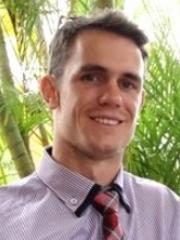
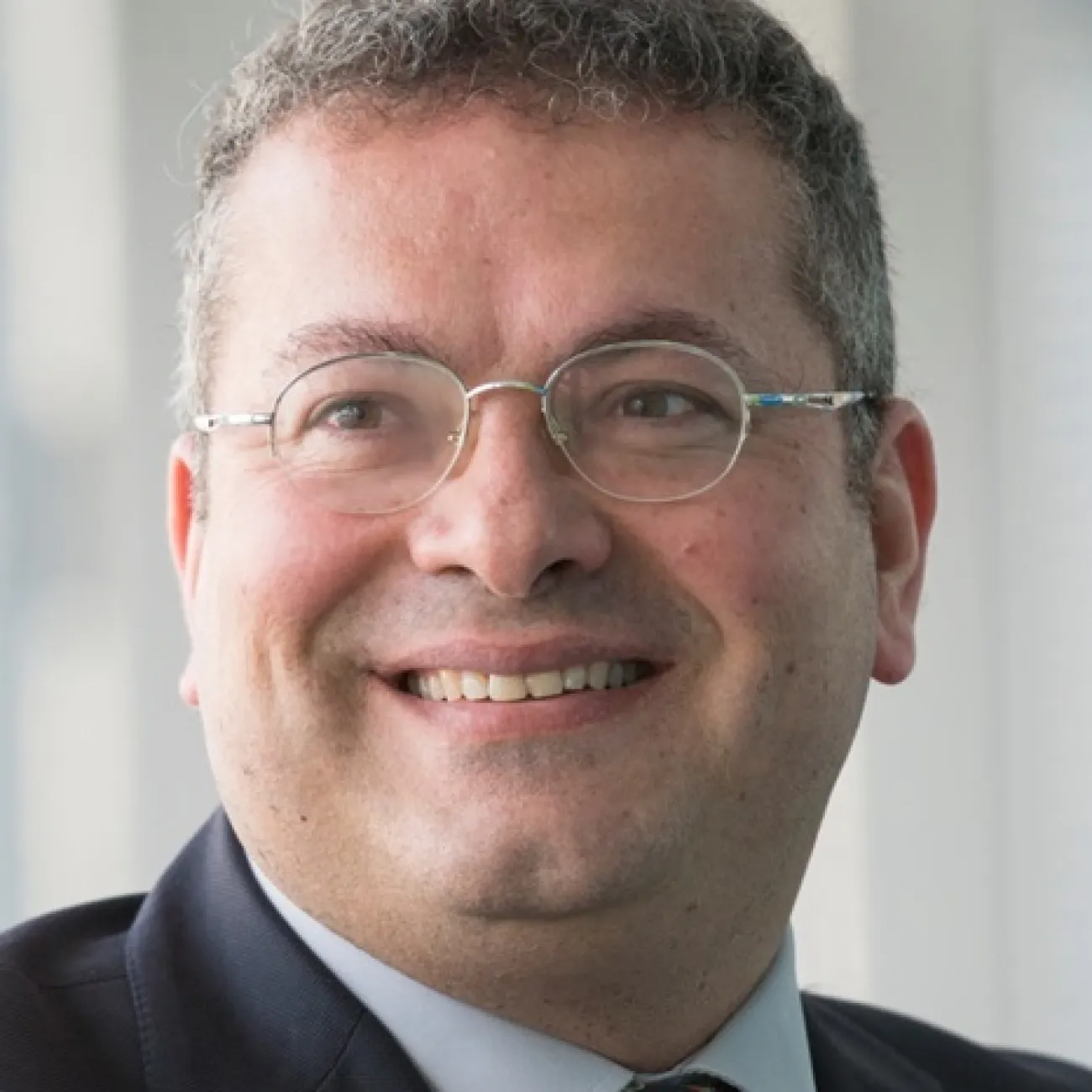
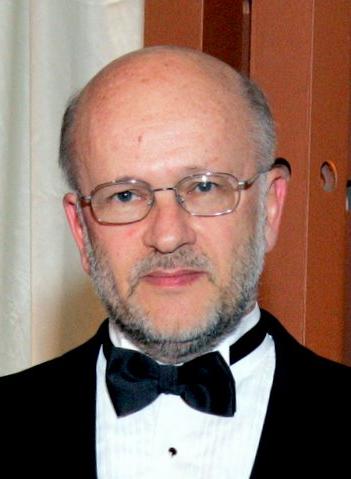
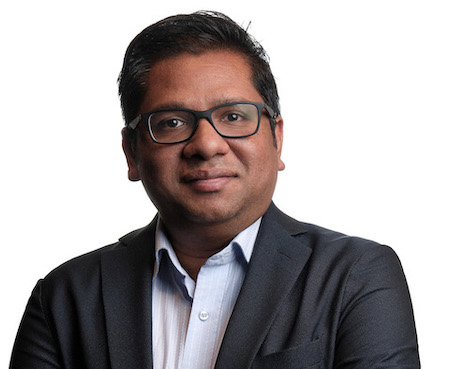
Muhammad Usman Hanif is an Assistant Professor at the Department of Technology and Innovation within the Faculty of Engineering at the University of Southern Denmark (SDU). His research focuses on structural health monitoring , concrete durability , and damage assessment in civil engineering systems. Research Highlights Advanced signal processing for bridge damage detection Acoustic Emission techniques in CFRP-concrete debonding Machine learning applications in concrete durability prediction Augmented Reality integration with bridge monitoring systems Recent Publications (2023-2025) 2025: Machine learning in concrete durability 2024: Novel ΔT mapping for debonding detection 2023: FBG sensors in CFRP retrofitted beams 2022: MEMS accelerometers for damage assessment Teaching Activities Finite Element Method (2025) Non-linear Finite Element Method (2025) Advanced Finite Element Analysis (2024)
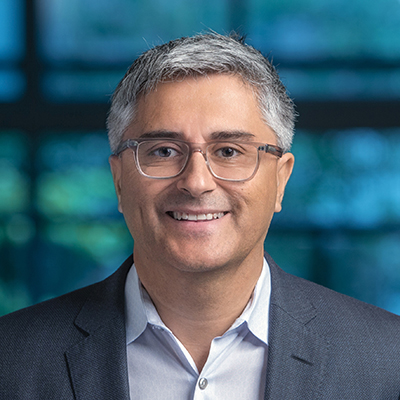
Artur Rusowicz is a Professor at the Faculty of Power and Aeronautical Engineering , Warsaw University of Technology , specializing in the Department of Refrigeration and Building Energy . His research focuses on heat and mass transfer in refrigeration systems, free cooling technologies, plasma coatings, and entropy generation minimization in thermal systems. Key Roles: Prodziekan ds. ogólnych (since 2016), former advisor for the Student Scientific Association of Refrigeration Engineers (until 2017), Editor-in-Chief of Chłodnictwo magazine, and expert for the International Institute of Refrigeration (IIR) in Paris. Projects: Led national and international research on refrigeration, heat recovery, and plasma waste destruction, including grants from KBN, MNiSW, and Warsaw Technology Incubator. Scientific Contributions: Authored 15+ publications in leading journals like Energy , Thermal Science , and Przemysł Chemiczny , addressing thermal optimization, refrigeration cycles, and sustainable energy systems. 2020: Optimized microjet cooling systems for data centers using CFD. 2019: Refrigerant selection for Organic Rankine Cycles with environmental impact analysis. 2017: Thermoacoustic refrigeration performance evaluation. Awards: Recipient of the Rector's Award (II Class) for scientific achievements (2017, 2012) , Golden SIMP Medal (2014) , and Bronze Medal for Long Service (2012) . Also recognized for mentorship in student thesis competitions. Editorial & Organizational Roles: Served as Editor-in-Chief of Chłodnictwo , head of Warsaw SIMP Refrigeration and Air Conditioning Section, and expert in numerous scientific committees.
Claudia Steluta Martis is an Associate Professor at the Department of Electrical Machines, Marketing & Management , Technical University of Cluj-Napoca, Romania. Her expertise spans electrical machine design, electromagnetic compatibility, and motor control systems. Date of birth: 19 August 1967, Măcin, Tulcea, Romania Education Industrial High School, Măcin (1981-1985) Technical University of Cluj-Napoca, Electrical Engineering (1985-1990) Research interests focus on design and modeling of electrical machines , particularly doubly-salient permanent magnet motors and electric traction drives. She has contributed to electronically commutated small motor development and electromagnetic compatibility in electromechanical systems. Research projects include National Science Foundation collaborations on doubly-salient motor design, bilateral programs with Italy (University of Cassino), and grants from Romania's National Education Ministry for energy-efficient drives and real-time control systems. Professional experience includes engineering roles at SINTEROM SA and Dania Comprod SRL (1990-1996), followed by academic positions. International mobility includes Erasmus-Socrates stays at Helsinki University of Technology (1999) and University of Cassino (2000).
Dr. Ian Levett is a Research Fellow at the School of Chemical Engineering, The University of Queensland (UQ), affiliated with the ARC Training Centre for Bioplastics and Biocomposites. Since 2023, he has focused on transitioning from linear plastics to circular economy models through halophilic biotechnology-based PHA (polyhydroxyalkanoate) production. His expertise spans bioplastics lifecycle assessments, controlled release fertilizer development, and techno-economic evaluations of sustainable processes. PhD : Chemical Engineering (UQ, 2020) with thesis on PHA-based fertilizer delivery systems Industry Experience : 2016-2023 - Process consulting for high-purity aluminum products in batteries and semiconductor manufacturing His research explores biopolymer extrusion processing , biodegradation kinetics , and polymer-active agent interactions . The 2016-2025 publication record shows consistent innovation in controlled release mechanisms , agricultural sustainability , and industrial biotechnology . Notably, 2025 work introduces a commercial viability screening tool for biodegradable polymer coatings in fertilizers. Current funding includes: 2025-2028: ARC Discovery Project for biodegradable fertilizer coatings 2023: Lihua Starch Pty Ltd grant for PHA production evaluation 2023-2024: Queensland Government pilot plant development for PHA from sugar Within the ARC Centre, he supervises PhD candidates in: Advanced bioplastic materials Novel halophilic PHA production PHA-based material development
René Vidal is the Rachleff & Penn Integrates Knowledge (PIK) University Professor at the University of Pennsylvania, with appointments in the Departments of Electrical and Systems Engineering, Radiology, Computer and Information Science, and Statistics and Data Science. He also serves as Director of the Center for Innovation in Data Engineering and Science (IDEAS) and the NSF-Simons Collaboration on the Mathematical Foundations of Deep Learning (THEORINET). A dual faculty member at Johns Hopkins University in Biomedical Engineering, Computer Science, and other departments, Vidal is an Amazon Scholar and Affiliated Chief Scientist at NORCE. PhD, Electrical Engineering and Computer Sciences, University of California, Berkeley (2003) M.S., Electrical Engineering, University of California, Berkeley (2000) B.S. (valedictorian), Electrical Engineering, Pontificia Universidad Catolica de Chile (1997) His research spans the mathematical foundations of deep learning, focusing on non-convex optimization , learning dynamics , and overparametrization . Key contributions include Sparse Subspace Clustering , Kernel GPCA , and Low-Rank Matrix Factorization , with applications in autism diagnosis , robotic surgery , and cardiac imaging . Recent work explores continual learning , adversarial robustness , and trustworthy AI in biomedical contexts. His 15 most recent publications highlight advances in medical imaging , language models , and robust computer vision , spanning topics from chest X-ray analysis to motor imitation tasks in autism . Articles like Geometric Analysis of Nonlinear Manifold Clustering underscore his theoretical contributions, while works on KDA: Knowledge-Distilled Attacker and Conformal Information Pursuit address practical AI safety and interpretability. Scientific accolades include: 2022 ACM Fellow 2021 IEEE McCluskey Technical Achievement Award 2017 Jean D’Alembert Fellowship 2012 J.K. Aggarwal Prize 2009 Sloan Research Fellow 2005 NSF CAREER Award His lab mentors 11 current PhD students across Johns Hopkins and University of Pennsylvania , with alumni contributing to institutions like Meta , Amazon , and GE Research . Vidal’s interdisciplinary work bridges mathematics , engineering , and healthcare , supported by grants from the DoD , NSF , and ONR .
Dr. Andrés Modesto Alonso is an Associate Professor in the Department of Statistics at Universidad Carlos III de Madrid, affiliated with the Energy Analytics research group and Flores de Lemus Institute. His work spans computer science, economics, and statistics through advanced time series analysis and energy forecasting methodologies. Primary affiliation: Department of Statistics, UC3M Research groups: Energy Analytics, Flores de Lemus Institute His research focuses on time series analysis , energy forecasting , and statistical clustering with applications in electricity markets, smart grids, and environmental data. Recent publications emphasize deep learning models for energy prediction, dynamic factor models, and market-based distance metrics. Scientific output trends show 15 recent articles (2018-2024) covering topics like: Electricity market price forecasting Smart grid optimization through clustering Adaptive control charts for industrial processes Precision matrix estimation in high-dimensional statistics Extreme value analysis for environmental monitoring Dr. Alonso has supervised multiple theses on time series modeling and classification techniques, while collaborating on grants related to stochastic optimization and responsible AI applications in economic forecasting.
Claudio Gaz is a Senior Lecturer in Mechatronics, Control, and Autonomous Systems at the Department of Mechanical Engineering, Faculty of Engineering, Computing and the Environment, Kingston University London. He holds a PhD in Automation and Operational Research (2016) and a Master's in Control Engineering with top marks (2011) from Sapienza Università di Roma, and was awarded the French national qualification as maître de conférences (class 61) in 2019. His research spans control systems, robotics, and mathematical modeling, with a focus on industrial manipulators (e.g., KUKA LWR, Universal Robots UR10) and biological processes like glucose homeostasis. Recent work involves dynamic parameter identification for collaborative robots and sensorless force feedback in medical robotics. He has collaborated with institutions such as Sapienza Università di Roma, CNR-IASI (Italian National Research Council), and Airbus Group. His scientific awards include: Fellowship of the Higher Education Academy (FHEA) . Gaz has contributed to journals and conferences in robotics, control theory, and biomedical modeling, with a strong emphasis on real-time adaptive algorithms and safety in physical human-robot interaction.
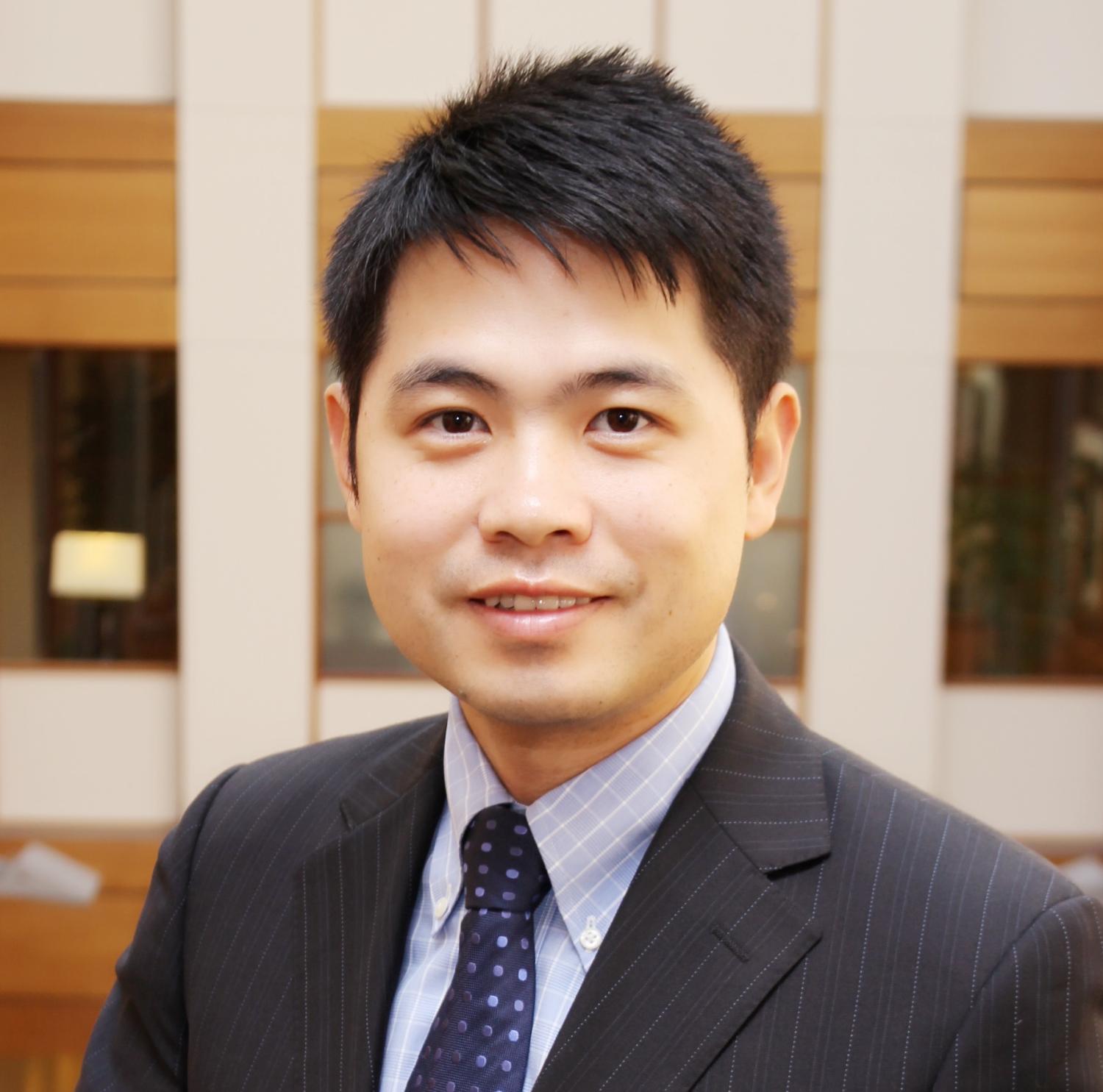
Rui Zhang is an Associate Professor in the Strategy, Entrepreneurship, and Operations division at Leeds School of Business, University of Colorado Boulder. He currently serves as the Faculty Director of the Master's Program in Business Analytics and previously directed the Ph.D. Program in Operations. He is also an Associate Editor for INFORMS Journal on Computing and Networks . Dr. Zhang's research focuses on quantitative methods, particularly prescriptive analytics techniques. His work spans three main application areas: revenue management problems, last-mile delivery optimization, and influence maximization on social networks. Methodologically, he employs integer programming, network optimization, and approximate dynamic programming to develop innovative solutions to complex operational challenges. His research portfolio shows a clear progression from fundamental network optimization problems to increasingly complex applications in business analytics. Recent work emphasizes autonomous vehicle-assisted delivery systems and sophisticated influence maximization models with practical constraints like latency requirements. His publications consistently appear in top-tier operations research journals including Operations Research , Manufacturing & Service Operations Management , and multiple INFORMS publications. Runner-up for the 2022 INFORMS Computing Society (ICS) Prize Multiple Best Paper awards As Faculty Director of the MS in Business Analytics program, Dr. Zhang oversees curriculum development and student mentorship in this rapidly growing field. His Erdős number is 3 (Paul Erdős → Daniel J. Kleitman → Bruce L. Golden → Rui Zhang), reflecting connections to foundational mathematical research. His work bridges theoretical optimization with practical business applications across multiple domains including e-commerce logistics, social media marketing, and revenue management systems.
Dr. Ye Zhao is an Associate Professor and Woodruff Faculty Fellow at the Georgia Institute of Technology's Woodruff School of Mechanical Engineering, where he directs the Laboratory for Intelligent Decision and Autonomous Robots (LIDAR). He holds affiliations with the Institute for Robotics and Intelligent Machines, Machine Learning Center, and Supply Chain and Logistics Institute. Dr. Zhao received his Ph.D. from UT Austin (2016) and completed postdoctoral training at Harvard University. Research Focus: His work integrates planning, control, and learning for contact-rich robots, emphasizing computationally efficient algorithms with formal safety guarantees. Key research thrusts include: Reactive synthesis for terrain-adaptive locomotion and manipulation Vision-tactile perception for deformable object grasping Social navigation of bipedal robots in human environments Distributed optimization for multi-robot coordination His lab utilizes platforms including Mini Cheetah quadruped, Cassie biped, and custom manipulators. Publication Trends: Recent articles demonstrate a strong focus on bridging formal methods (temporal logic, reactive synthesis) with learning-based approaches (RL, transformers) to enhance robustness in locomotion and manipulation. Key themes include terrain adaptation, human-robot interaction, and real-time model predictive control. Awards & Honors: ONR Young Investigator (2023) NSF CAREER Award (2022) IEEE ICRA Best Automation Paper Finalist (2021) IEEE Senior Member (2022) Woodruff Faculty Research Award (2023) Educational Initiatives: Leads the Vertically Integrated Program (VIP) for Agile Locomotion & Manipulation, engaging 80+ undergraduates in robotics research. The team won 1st place in Georgia Tech's VIP Innovation Competition (2021, 2022).
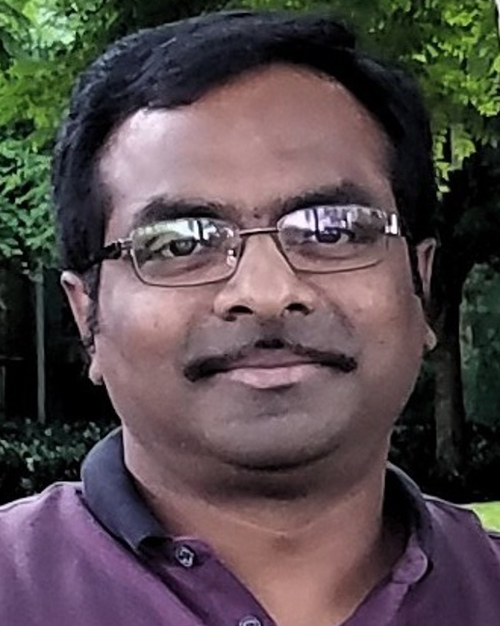
Gurunath Gurrala serves as an Associate Professor in the Department of Electrical Engineering at the Indian Institute of Science (IISc), Bangalore. His research focuses on power systems dynamics, high-performance computing applications, and renewable energy integration. He maintains active collaborations with international institutions including Oak Ridge National Lab and Texas A&M University. His research interests center on Power Systems Analysis and Control , with specialization in High Performance Computing Applications, Nonlinear and Intelligent Control, Weak Grid Integration of Renewables, Microgrid Protection, and Smart Grid Stability. His work bridges theoretical control systems with practical power grid challenges, particularly for renewable-rich grids. His recent publications demonstrate a strong interdisciplinary trend, spanning power systems (35%), control theory (25%), renewable integration (20%), and emerging applications in biomedical engineering and environmental systems (20%). Key recurring themes include grid stability under high renewable penetration, advanced protection schemes for microgrids, and computational methods for power system analysis. IEEE Power and Energy Society (PES) Outstanding Engineer Award 2018 Young Engineer Award 2015, Indian National Academy Engineers Best Conference Paper, IEEE PES General Meeting 2015 Best Ph.D Thesis Award (Prof.D.J.Badkas Medal) 2010 Elevated to Senior Member IEEE (2016) Professor Gurrala has secured competitive research funding including the Young Scientist Grant from DST (2015) and International Travel Support from SERB (2017). He actively mentors students through PhD and Master's programs while teaching advanced courses including Power System Dynamics and Control (E4 231), Computer Control of Power Systems (E4 233), and Selected Topics in Integrated Power Systems (E4 237). His research group collaborates with power utilities and international research labs on grid modernization challenges.
Suleiman Sharkh is Professor of Electrical Machines and Drives at the University of Southampton within the Faculty of Engineering and Physical Sciences. His primary affiliation is with the Department of Electrical and Electronic Engineering, where he leads research in critical energy technologies. His work spans multiple interdisciplinary groups including Mechatronics Southampton, the Southampton Marine and Maritime Institute, Ocean Energy research, and Maritime Decarbonisation initiatives. Professor Sharkh's research focuses on electric machines, power electronics, and microgrids , with specialized expertise in battery management systems, energy harvesting, and electromagnetic field effects on aquatic life. His current projects investigate novel power electronic converters for grid-battery interfaces, hybrid dual-chemistry battery characterization, multi-degree-of-freedom actuators for vibration control, and electromagnetic guidance systems for fish migration. His work bridges theoretical innovation with commercial applications in marine propulsion, renewable energy integration, and electric vehicle infrastructure. Analysis of his recent publications reveals strong trends in electrification of marine systems (rim-driven thrusters, tidal turbines), advanced battery-grid interfaces (electrochemical impedance spectroscopy, hybrid chemistries), and bioelectromagnetic applications (fish behavior studies). His work consistently addresses real-world challenges in energy security, system reliability, and environmental sustainability through rigorous experimental validation. Scientific Awards The Engineer Energy Innovation and Technology Award (2008) for rim-driven marine thrusters Royal Academy of Engineering ExxonMobil Teaching Excellence Award (2013) Professor Sharkh actively supervises five PhD students while leading major research projects funded by EPSRC, Innovate UK, and industry partners. His current grants include the FEVER project on electric vehicle networks, Shark S research exchanges with China/India, and investigations into electromagnetic effects on eel migration. His laboratory work focuses on high-speed electrical machines, battery characterization rigs, and electromagnetic field exposure systems for biological studies. Future work emphasizes maritime decarbonization through integrated power electronics and machine design for zero-emission vessels.
Kevin Hughes is a Senior Lecturer in the Energy Engineering Group at the Department of Mechanical Engineering, School of Mechanical, Aerospace and Civil Engineering, University of Sheffield. He holds a PhD and first degree in Chemistry from the University of Leicester (1987) and focuses on fuel combustion, fuel cells, and process modelling in carbon capture and storage (CCS) systems. His research combines experimental and theoretical approaches, including planar laser diagnostics, quantum chemistry, and CFD simulations. Education: PhD and BSc in Chemistry from University of Leicester. Research Interests: Fuel combustion, pollutant chemistry, PEM fuel cells, CCS process modelling, catalyst development, and combustion in supercritical CO2. Grant Projects: FP7-ENERGY-2010-2 (RELCOM), Gas-FACTS (EPSRC), EP/J020788/1, EP/M001482/1 (Selective EGR), TEABPP (Energy Technology Institute). Scientific Contributions Publications: Over 50 papers on fuel combustion mechanisms, fuel cell optimization, CCS systems, and alternative fuels. Collaborations: Regular work with M. Pourkashanian, D.B. Ingham, S. Michailos, and M.S. Ismail. Technical Expertise Chemical Kinetics Validation Quantum Chemistry Applications Gas Diffusion Layer Analysis Surrogate Fuel Development Supercritical Combustion
Alexander Shapiro is the A. Russell Chandler III Chair and Professor at the H. Milton Stewart School of Industrial and Systems Engineering , Georgia Institute of Technology. His work bridges optimization and statistics, focusing on stochastic programming, risk analysis, and simulation-based optimization. He has received numerous accolades, including the Khachiyan Prize (2013) , Dantzig Prize (2018) , and John von Neumann Theory Prize (2021) . Education: Ph.D. in Applied Mathematics-Statistics (Ben-Gurion University, 1981), M.Sc. in Mathematics (Moscow University, 1971) His research explores stochastic programming , risk-averse optimization , and multivariate statistical analysis , with recent work on distributionally robust control, Bayesian stochastic methods, and convex multistage optimization. Publications highlight theoretical advancements and computational frameworks for uncertainty modeling. Recent articles focus on asymptotics (2025), duality in MDPs (2023-2024), and statistical inference (2014-2024). These span stochastic control , robustness , and time consistency , reflecting his expertise in bridging probability theory with large-scale optimization. Scientific awards : Khachiyan Prize of INFORMS (2013) Dantzig Prize (2018) John von Neumann Theory Prize (2021) Election to National Academy of Engineering (2020) Dr. Shapiro has served as Area Editor (Optimization) for the Operations Research Journal and Editor-in-Chief of Mathematical Programming, Series A , demonstrating sustained leadership in his field.
Abhishek Halder is an Associate Professor in the Department of Aerospace Engineering at Iowa State University and an Associate Adjunct Professor in the Department of Applied Mathematics at the University of California, Santa Cruz. He is also a member of the Translational AI Center at Iowa State University. His academic journey includes joining Iowa State University as an Assistant Professor in July 2023 and previously serving as faculty at UC Santa Cruz starting from October 2017. Dr. Halder's educational background includes studies at IIT Kharagpur and Texas A&M University, where he developed expertise in systems and control theory with applications to matrix analysis, probability, and optimization. His research has been recognized with prestigious awards including the O. Hugo Schuck Best Application Paper Award from the American Automatic Control Council, Applied Mathematics Research Award from UC Santa Cruz, Outstanding Doctoral Student Award from Texas A&M, and Best Dual Degree Thesis Award from IIT Kharagpur. His research focuses on stochastic systems, control and optimization with applications to large scale cyber-physical systems. Dr. Halder has made significant contributions to the fields of optimal transport, Schrödinger Bridge theory, distributional control, and uncertainty propagation in dynamical systems. His work bridges theoretical developments with practical applications in power systems, aerospace engineering, and machine learning. He has secured multiple research grants from NSF, including a CPS Frontier project on Computation-Aware Algorithmic Design for Cyber-Physical Systems. Dr. Halder has demonstrated leadership in the control systems community through editorial roles including Associate Editor for IEEE Transactions on Automatic Control (2025-present), ASME Journal of Dynamic Systems, Measurement, and Control (2025-present), Systems & Control Letters (2022-present), and previously for IEEE Control Systems Society Conference Editorial Board (2019-2025) and IEEE Transactions on Aerospace and Electronic Systems (2019-2022). He is a Senior Member of IEEE and a member of IFAC, SIAM and ASME. His research group has produced numerous publications in top-tier journals and conferences, with recent work focusing on connections between optimal transport theory, stochastic control, and machine learning. The publication trends show increasing integration of Schrödinger Bridge formulations with machine learning techniques for distributional control problems across various domains including power systems, aerospace applications, and resource allocation. O. Hugo Schuck Best Application Paper Award (2024) Applied Mathematics Research Award from UC Santa Cruz (2022) IEEE Senior Member (2021) Outstanding Doctoral Student Award from Texas A&M Best Dual Degree Thesis Award from IIT Kharagpur Dr. Halder has mentored numerous PhD students including Alexis, Georgiy, Iman, Shadi, and Kenneth, many of whom have received prestigious fellowships. His research group maintains strong collaborations with national laboratories including Lawrence Livermore National Lab and Los Alamos National Lab, as well as industry partners. Dr. Halder is also committed to education and outreach, having created and taught the 'Feedback Control' course for high school students in the California State Summer School for Mathematics and Science (COSMOS), introducing complex control theory concepts without calculus or linear algebra.
Dr. Paola Falugi is a Senior Lecturer in Electro-Mechanical Engineering at the University of East London and holds an honorary visiting researcher position at Imperial College London. Her expertise spans predictive control systems, data-driven modeling, and energy network optimization under uncertainty. Senior Lecturer, Department of Engineering & Construction, School of Architecture, Computing and Engineering, University of East London Honorary Visiting Researcher, Imperial College London Research focuses on: Predictive control strategies for uncertain systems Data-driven modeling for control applications Optimization methods in energy network expansion Energy management under stochastic conditions Control systems for robotics and mechatronics Recent publications highlight her contributions to: Robust co-design frameworks for building energy systems Machine learning integration in transmission expansion planning Automated scenario generation for optimal control Control strategies for residential buildings with energy storage Her work bridges theoretical advancements in control theory with practical applications in energy systems and building automation.