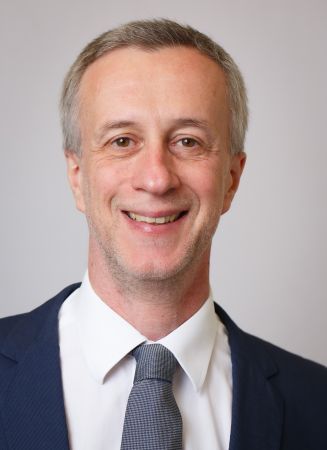
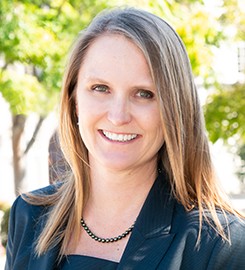
Nikolaus Hautsch is a full Professor at the Faculty of Economics, Institute of Statistics and Operations Research. His work focuses on econometrics, finance, and high-frequency data analysis. Research Interests : Market microstructure, volatility modeling, transaction costs, systemic risk, and machine learning applications in finance. Publication Trends (2025–2018): 2025: High-dimensional portfolio optimization, dynamic systemic risk 2024: Blockchain asset arbitrage, DeFi, polarization metrics, jump detection 2023–2022: Microstructural noise, volatility forecasting, neural networks Scientific Awards : Fellow of the Society for Financial Econometrics (2014) Projects : Artificial Intelligence in Rowing (2022–2025) Vienna Graduate School of Finance (2018–2022) Risk management of CCPs
Timothy Williamson is a prominent Professor of Philosophy at the University of Oxford, holding the prestigious Wykeham Professorship of Logic. His academic career spans several decades with continuous contributions to analytic philosophy, particularly in epistemology, metaphysics, and philosophical logic. His work has positioned him as one of the leading philosophers of his generation. Williamson's research interests concentrate on epistemology (particularly his influential knowledge-first approach), metaphysics, philosophy of language, and philosophical logic. His work on vagueness champions epistemicism—the view that vague predicates have sharp boundaries that we cannot know. His book Knowledge and its Limits revolutionized epistemological thinking by placing knowledge rather than belief at the center of epistemological theory. Williamson has also made significant contributions to modal metaphysics, higher-order thought, and the philosophy of logic. His publication record reveals consistent engagement with foundational philosophical problems across several decades. His most recent work continues his exploration of knowledge-first epistemology while expanding into moral epistemology and methodological questions in philosophy. Williamson's articles demonstrate a distinctive blend of logical precision and philosophical depth, often using formal methods to address traditional philosophical problems. His work frequently intersects with debates in philosophy of language, metaphysics, and philosophical methodology. Williamson has been actively engaged in scholarly debate through numerous replies to critics, demonstrating his commitment to rigorous philosophical dialogue. His publications span major philosophy journals including Synthese , Canadian Journal of Philosophy , Analysis , and Philosophy and Phenomenological Research . Throughout his career, Williamson has mentored numerous graduate students and collaborated with leading philosophers across the globe. His methodological approach emphasizes the value of formal modeling in philosophical inquiry, arguing that philosophy can benefit from the model-building approaches common in natural sciences.
Luis Nunes Vicente is the Timothy J. Wilmott '80 Endowed Faculty Professor and Chair of Lehigh University's Department of Industrial and Systems Engineering since August 2018. He previously served as a faculty member at the University of Coimbra's Department of Mathematics. His research focuses on Continuous Optimization, Computational Science and Engineering, and Machine Learning/Data Science. Education: Ph.D. in Applied Mathematics (Rice University, 1996), M.A. in Applied Mathematics (Rice University, 1994), B.S. in Mathematics and Operations Research (University of Coimbra, 1990). Honors include the Lagrange Prize (2015), SIAM Fellowship (2024), and Fulbright Scholarship (1996). He co-authored the influential book Introduction to Derivative-Free Optimization (2009). Research Interests: Development of optimization algorithms for derivative-free and stochastic scenarios, multi-objective optimization, machine learning applications, and computational methods for engineering problems. Key contributions include trust-region methods, bilevel optimization frameworks, and fairness-aware machine learning models. Grants and Leadership: Secured over $1M from the Office of Naval Research (2024) and the Air Force Office of Scientific Research (2023). Served as Editor-in-Chief of Portugaliae Mathematica (2013–2018) and on editorial boards of top journals like SIAM Journal on Optimization . Elected President of the Operations Research Association of Chairs (2024). Visiting Positions: IBM T.J. Watson Research Center (2002/2003), Courant Institute/NYU (2009/2010), and CERFACS/Toulouse (2010–2015). Active in international conferences, delivering plenary lectures at 13th French-German Conference on Optimization, ICCOPT III, and ISMP 2018.
Seok-Won Lee is an Associate Professor of History at Rhodes College, specializing in East Asian intellectual and cultural history with emphases on Chinese and Japanese history. He teaches courses on traditional and modern China while incorporating transnational perspectives that highlight underrepresented voices, borderlands, minorities, and outlaws through critical thinking frameworks developed during his training at Cornell University. Dr. Lee's academic background includes: Ph.D. in History, Cornell University (2010) M.Phil. in History, Cornell University (2007) M.A. in Interdisciplinary Program in Area Studies, Yonsei University (2003) B.A. in History, Yonsei University (2001) His research centers on intellectual history during East Asia's wartime period (1931-1945), examining how imperial intellectuals redefined concepts of nation, space, and community to justify colonial aggression while challenging Western social sciences' universality. Current projects include revising his dissertation into a book manuscript and conducting archival research on Japanese intellectuals' writings about Chinese and Korean history from the 1920s-1940s, with particular focus on Pan-Asianism and China studies in wartime Japan. Analysis of his twelve publications (2008-2021) reveals consistent engagement with wartime intellectual history, racial discourse, and empire-colony dynamics. Key thematic clusters include: Pan-Asianism's evolution across wartime/postwar contexts; intersections of race, empire, and social sciences; and critical examinations of colonial knowledge production. His work bridges history, Asian studies, and postcolonial theory through transnational methodologies. No scientific awards are documented in available materials. While active in teaching and research, no student advisement details or grant information are provided. Dr. Lee maintains affiliations with Rhodes College's Asian and Asian American Studies program and Chinese studies initiatives, though no dedicated labs or research teams are mentioned.
Brooke Foucault Welles is a Professor in the College of Arts, Media and Design at Northeastern University, where she also serves as Interim Dean and Director of the Network Science PhD program. Her research focuses on how social networks and communication technologies shape power dynamics, particularly in contexts of marginalization and social justice. PhD in Media, Technology and Society from Northwestern University MS and BS in Communication from Cornell University Her research spans multiple domains including: Network science of AI and social systems Digital activism and social movement dynamics Health information and (mis)information flows Open source community structures Race/ethnicity in digital contexts Computational social science methodologies Recent publications focus on attention dynamics in social networks, hate speech protection mechanisms, and open-source software sustainability. Her work has been supported by grants from the NSF, NULab, and Chan Zuckerberg Initiative. Awards include: McGannon Book Award (2021) for #HashtagActivism Best Paper Honorable Mention at CSCW 2019 She leads the Communication Media and Marginalization Lab (CoMM Lab) which includes PhD students and postdocs from diverse disciplines. Her advising approach emphasizes interdisciplinary collaboration and methodological training in both quantitative and qualitative approaches.
Prof. Dr. Erik Theissen is a full-time faculty member at the University of Mannheim, holding the Chair in Business Administration and Finance. His research focuses on market microstructure, corporate governance, and information-based trading in equity markets. University of Mannheim, Department of Business Administration Research areas: Finance, Market Microstructure, Corporate Governance His work compares auction and dealer markets, analyzes insider trading regulations, and evaluates the impact of trader anonymity on market liquidity. He has explored competition between exchanges (e.g., Euronext vs. Xetra) and the role of internalized trading under MiFID. His publications include Organizational Forms of Securities Trading (1998), with over 15 major peer-reviewed articles since 2001. Key journals include the Review of Financial Studies, European Financial Management, and Journal of Corporate Finance. 2001 Financial Innovation Award of Bethmann Bank 2001 Best Paper Award (Association of University Professors of Business Administration) 1998 Dissertation Award of the German Stock Institute His research spans experimental economics (e.g., market design, risk attitude estimation) and empirical analysis of German capital markets, including IPO pricing and mutual fund performance.
Richard Payne is a Professor of Finance at Bayes Business School, City University London. His research focuses on empirical market microstructure and asset pricing, with emphasis on exchange rate determination, algorithmic trading, and liquidity dynamics. He holds a PhD in Economics from the London School of Economics and has held academic roles at leading institutions including LSE, University of Bristol, and Warwick Business School. Payne has extensive industry experience, consulting for financial regulators and institutions. His work explores topics like short selling impacts, high-frequency trading, and cross-market linkages between equities and forex markets. Education: PhD in Economics, London School of Economics and Political Science MSc in Econometrics and Mathematical Economics, LSE BSc in Economics, University of Bristol Research Interests: Equity and FX market microstructure Algorithmic trading effects Regulatory policy impacts (e.g., Dodd-Frank, short sale bans) Liquidity measurement and provision High-frequency trading dynamics Publications Trends: His work spans over 31 journal articles and 2 books, with recent focus on long-horizon market skewness, centralized trading transparency, and ultra-fast trading impacts. Key themes include liquidity analysis across asset classes and regulatory interventions' empirical effects. Professional Activities: Directed MSc in Finance programs Organized EMG microstructure conferences Consulted for UK regulators and financial firms Media commentator on market manipulation and high-frequency trading Labs/Teams: Active in cross-disciplinary research groups exploring algorithmic trading, financial regulation, and market quality metrics.
Lisa P. Ramsey is a Professor of Law at the University of San Diego School of Law, where she teaches Trademark Law, International Intellectual Property, Civil Procedure, Trademark Litigation, Intellectual Property Survey, and Intellectual Property Seminar. She joined the USD law faculty in 2004, progressing from Assistant Professor (2004-2006) to Associate Professor (2006-2009) and then to full Professor (2009-present). Professor Ramsey's research focuses on the intersection of trademark law and free speech rights, examining how trademark protection can conflict with First Amendment protections. Her scholarship addresses potential conflicts between trademark laws and free expression, explaining how trademark protection of certain inherently valuable words, symbols, and product features can harm fair competition and freedom of expression. She has written extensively on non-traditional trademarks, the impact of Supreme Court decisions like Matal v. Tam on trademark registration, and the application of First Amendment principles to trademark enforcement. Her publications reveal a consistent focus on balancing trademark rights with free expression, with particular attention to how trademark law affects artistic expression, political speech, and competition. Recent work examines the implications of the Supreme Court's decisions in cases like Jack Daniel's v. VIP Products and Vidal v. Elster for trademark enforcement and registration. Thorsnes Prize for Outstanding Legal Scholarship (2020-2021) Class of 1975 Endowed Professorship (2017-2018) Order of the Coif Women of Influence in Law 2025 Honoree (San Diego Business Journal) Professor Ramsey actively participates in professional organizations, serving on the Trademark Law Committee of the American Intellectual Property Law Association and contributing to the International Trademark Association's Model Trademark Law Guidelines. She has testified before the U.S. Senate Judiciary Committee's Intellectual Property Subcommittee regarding the First Amendment implications of the proposed No FAKES Act. Her upcoming book, 'Trademarks and Free Speech: Conflicts and Resolutions,' is scheduled for publication by Cambridge University Press in December 2025.
Hiroshi Toyoizumi is a Professor at Waseda University's Faculty of Commerce and Graduate School of Accountancy, with a Ph.D. in Mathematical Physics from Waseda University. His work bridges Applied Probability , Operations Research , and Computational Biology , focusing on stochastic modeling across biological and network systems. Research Interests Stochastic Models in Biology : Analyzing social queues in hover wasps and meiotic DSB regulation using quasi-birth-death processes and survival analysis. Network Security : Modeling computer virus spread on scale-free networks and proposing active defense strategies. Queueing Theory : Developing analytical frameworks for on-demand streaming, quantum merging, and blockchain-based systems. Article Trends Recent work (2020-2024) explores nonlocal diffusion , quantum queueing , and swarm behavior in financial markets . Mid-2010s studies focus on cooperative breeding and DNA recombination dynamics . Early papers (pre-2010) examine computer virus ecology , secure group communication , and deterministic queue analysis . Scientific Awards Biotechno 2013 Best Paper Award IEICE Switching Workshop SSE Research Award (1999) IEICE Young Research Engineer Award (1997) Teaching Activities Graduate-level courses in Operations Research and Financial Engineering . Undergraduate and graduate seminars in Applied Mathematics and Probabilistic Models .
Csaba Szepesvári is a Professor and Canada CIFAR AI Chair in the Department of Computing Science at the University of Alberta, affiliated with Amii. Since 2017, he has been on partial leave, leading the Foundations team at DeepMind in Edmonton. His work bridges theoretical machine learning and practical reinforcement learning systems. His research interests lie at the intersection of reinforcement learning, sequential decision making, bandit algorithms, and theoretical machine learning . He develops and analyzes algorithms for efficient learning in complex environments, focusing on sample efficiency, function approximation, and optimization. His recent work explores policy gradient methods, offline and online RL, uncertainty estimation, and foundational limits of learning algorithms. The trends in his recent publications (2023–2024) emphasize theoretical advances in RL and bandits , particularly in q π -realizability, natural policy gradient, ensemble sampling, and lower bounds. The work spans NeurIPS, ICML, COLT, and AISTATS, reflecting deep theoretical engagement with practical implications. He is recognized as a Canada CIFAR AI Chair , a prestigious award supporting leading researchers in artificial intelligence. Csaba Szepesvári mentors students and collaborates extensively, often with researchers like András György, Tor Lattimore, Gellért Weisz, and Dale Schuurmans. He has co-organized RL theory seminars and workshops and co-authored the influential book Bandit Algorithms (2020). His leadership in both academic and industrial research (DeepMind) underscores his impact on the field. He is actively involved in the machine learning community through research, mentorship, and event organization, contributing to both foundational theory and real-world applications.
Filiz Kahraman is an Assistant Professor in Political Science at the University of Toronto, affiliated with the Centre for European and Eurasian Studies and Trinity College. Her research focuses on law, social movements, and international institutions, particularly examining labor activism’s use of human rights frameworks and the impact of international law on marginalized groups. She holds a PhD in Political Science and previously served as a Postdoctoral Fellow at Georgetown University’s Mortara Center for International Studies. Her work bridges comparative law, European politics, and transnational advocacy, with notable contributions analyzing Turkey’s democratic backsliding, the role of the European Court of Human Rights, and labor rights mobilization. Kahraman’s commentary on human rights and political crises in Europe and Turkey appears in The Washington Post , openDemocracy , and other outlets. She has received grants from the National Science Foundation and SSHRC, and her book manuscript explores labor activists’ strategic engagement with human rights law in Europe. Awards include the Lynne Rienner Publishers Award for Best Dissertation (2019). Her research highlights intersections between legal systems, political power, and grassroots movements, emphasizing the transformative potential—and limitations—of international institutions in safeguarding rights amid authoritarian challenges.
S. Vish Viswanathan is the F.M. Kirby Professor of Investment Banking at the Fuqua School of Business, Duke University. He holds academic roles such as Research Associate at the National Bureau of Economic Research and served as President of the Financial Intermediation Research Society (2015-2016). His research focuses on financial intermediation, risk management, and collateral dynamics, with publications in top journals like the Journal of Finance and Review of Financial Studies . Education includes a Ph.D. in Finance from Northwestern University’s Kellogg School (1987), Master of Management Studies from Jamnalal Bajaj Institute (1979), and B.Sc. (Chemistry) from St. Xavier’s College, Mumbai (1977). Research interests span financial market regulation, liquidity crises, merger waves, and non-cash auctions. His work bridges theory and practice, addressing topics like collateral’s role in capital structure and systemic risk management. Teaching spans advanced corporate finance, project finance, and executive education programs globally. Awards include the Duke Fuqua Outstanding Faculty Award (1994), Four Star Teacher Rating (Business Week, 1995), and NYSE Best Paper Award (1997). He has advised over 25 doctoral students, many securing academic and industry roles. Professional service includes editorial roles at Journal of Financial Intermediation and Journal of Financial Markets , and leadership in finance associations like the Western Finance Association and American Finance Association. His work frequently addresses policy-relevant issues in capital markets and banking systems.
Dr. Aris Dimeas is a Researcher at the National Technical University of Athens in the Department of Electric Power and Industrial Applications . He holds a diploma and PhD in Electrical and Computer Engineering from NTUA and has extensive experience in power systems operations, renewable energy integration, and smart grid technologies. Specialized in AI applications for power systems Developed control software for demand side management Consultant for PPC (2007-2012) Research Focus : Smart grids and digital twin implementations Renewable energy market dynamics Microgrid optimization and control algorithms Collaborations : Active participant in EU research projects, collaborating with HEDNO and other energy grid operators on electronic meters and intelligent network deployments. Teaching : Instructs courses on electric energy systems, power system analysis, and energy management.
Manuel Morales is an Associate Professor in the Department of Mathematics and Statistics at the University of Montreal since 2005. He holds a Ph.D. in Mathematics (2003) from Concordia University, an M.Sc. in Statistics (2000) from Concordia, and a B.Sc. in Mathematics (1996) from the National Autonomous University of Mexico. His research focuses on Financial and Actuarial Mathematics, particularly in Ruin Theory, Lévy processes, and High-Frequency Finance. He leads applied projects integrating Machine Learning in Banking and ESG Investment, and has pioneered AI governance frameworks at the National Bank of Canada as their Chief AI Scientist. Education: Ph.D. Mathematics, Concordia University, 2003 M.Sc. Statistics, Concordia University, 2000 B.Sc. Mathematics, National Autonomous University of Mexico, 1996 Research Interests: His work spans theoretical and applied directions, including non-Gaussian option pricing, regime-switching models, Limit Order Book dynamics simulation, and AI applications in finance. He emphasizes responsible investment and ESG factors through alternative data analysis. Advising & Partnerships: Supervises Master’s/Ph.D. students in Insurance and Financial Mathematics. Leads the FinML Network (since 2018) and collaborates with industry partners like the National Bank of Canada on AI-driven financial projects. His grants and contracts enable applied research in high-frequency market surveillance and model governance. Labs & Teams: Directs the FinML Network and oversees the National Bank’s AI initiatives, focusing on AI governance and algorithmic trading strategies.
Ivette Perfecto is the Bunyan Bryant Collegiate Professor of Environmental Justice at the University of Michigan. Her work focuses on agroecology, examining biodiversity, agriculture, and food sovereignty, particularly in Latin America. She investigates ecosystem services in coffee agroecosystems and the impacts of agricultural practices on biodiversity. A member of the National Academy of Sciences and a Senior Fellow of the Ecological Society of America, her research bridges ecology, policy, and social justice. Education: Honorary Doctorate from Universidad Sagrado Corazón (Puerto Rico), alma mater. Research locations include Mexico and Puerto Rico, with a lab emphasizing agroecology's role in sustaining biodiversity and food systems. Key contributions include co-authoring influential books like Nature’s Matrix and Coffee Agroecology . Scientific Awards: Member of the National Academy of Sciences, Fellowships with the American Academy of Arts and Sciences, AAAS, and ESA. Active in Science for the People and the New World Agriculture and Ecology Group. Advising/Grants: Leads a lab conducting interdisciplinary research in the Neotropics and North America, focusing on agroecosystem dynamics. Grants and collaborations emphasize sustainable agriculture and ecological resilience. Labs/Teams: Director of the Perfecto Lab, which explores agroecological solutions to global food challenges while preserving biodiversity.