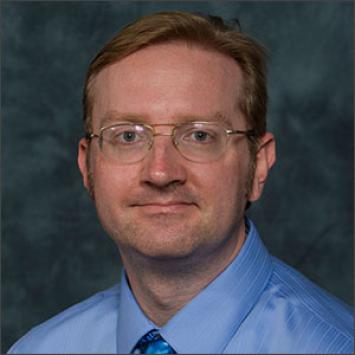
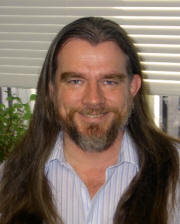
Dr. Richard Charnigo is a Professor of Biostatistics at the University of Kentucky's College of Public Health, with a secondary appointment in the Department of Statistics (College of Arts and Sciences). He holds a PhD in Statistics from Case Western Reserve University (2003), alongside an MS (1999) and BS (1997). His primary research focuses on statistical methodology, including nonparametric regression and mixture modeling, with applications in cardiovascular health, Alzheimer’s disease, and nephrology. He has been actively involved in over 70 grants and projects, such as the NIH-funded Functional and Genomic Signatures of Escalated Fentanyl Use (2021–2025). Dr. Charnigo is a recipient of the University Research Professor award (2014) and has published extensively in high-impact journals. He also contributes to institutional roles, including membership in the Center for Computational Sciences and Neuroscience Research Priority Area. Education: PhD in Statistics, Case Western Reserve University (2003) Research Interests: Statistical theory/methodology, cardiovascular studies, Alzheimer’s biomarkers. His grants include projects on drug escalation mechanisms, atherosclerosis, and diabetes outcomes. He emphasizes interdisciplinary collaboration, demonstrated through contributions to the American Heart Association and NIH initiatives.
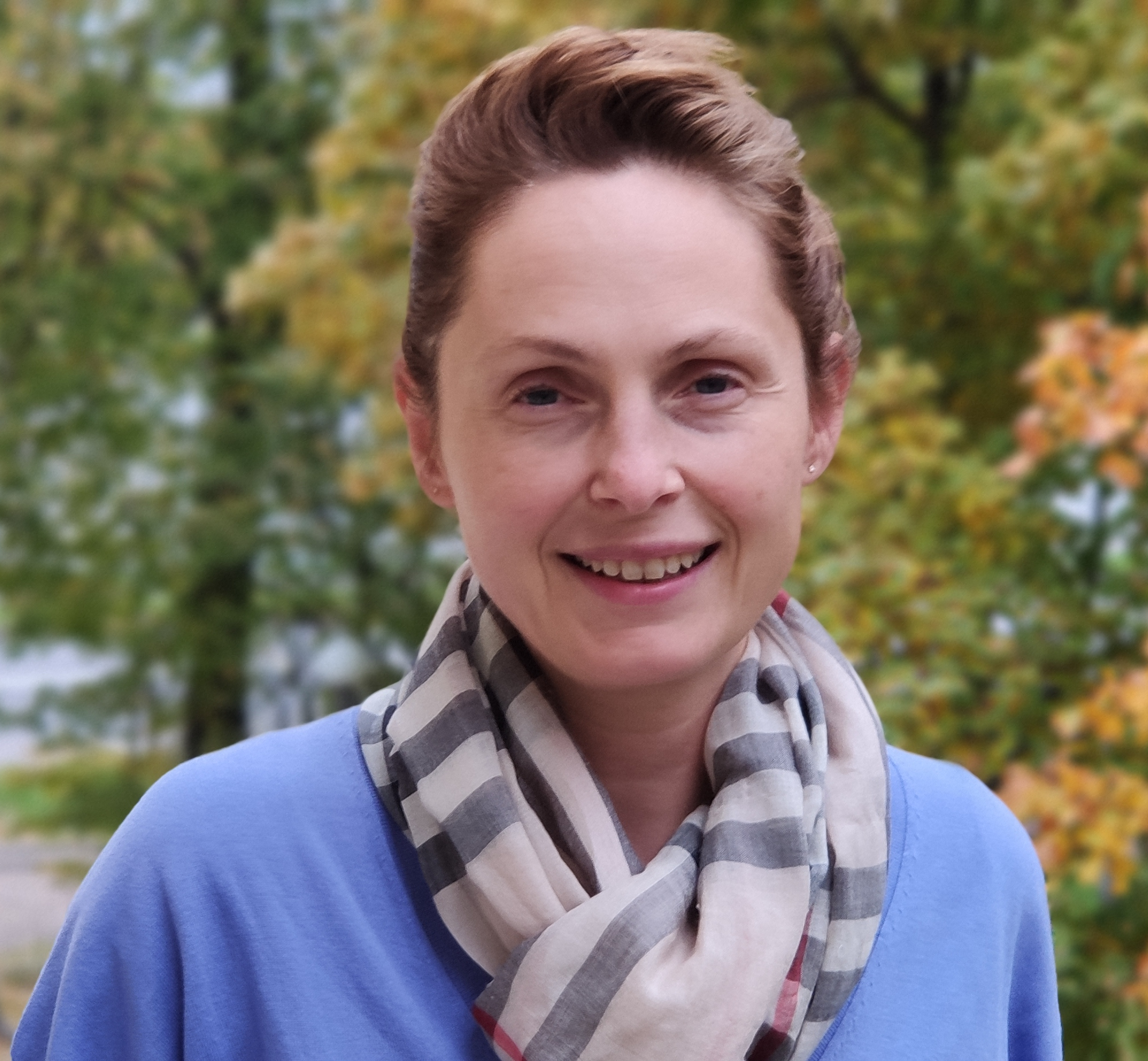
Professor Rebecca Monk is a Professor of Psychology and Associate Head of Department (Research) at Edge Hill University. Her research focuses on social health psychology, particularly how social and environmental contexts influence alcohol-related cognitions and behaviors. She employs innovative methodologies, including smartphone-based experience sampling and eye-tracking. Research Interests: Her work spans alcohol consumption behavior, inhibitory control, contextual effects, and digital methodologies. Key areas include the impact of olfactory cues on alcohol-related decisions, emotional contagion processes, and stigma associated with substance use. Grants & Funding: Monk has secured grants from Alcohol Change UK, including projects on alcohol expectancy tasks (£8,000) and crisis intervention services (£20,000). She has also led studies on contextual influences on alcohol consumption and smartphone-based research methodologies. Lab/Teams: Coordinates interdisciplinary teams examining alcohol use through psychological, technological, and sociocultural lenses. Collaborates extensively with researchers in neuroscience, public health, and digital innovation.
Louis Theran is a Lecturer in the School of Mathematics and Statistics at the University of St Andrews, where he has been a faculty member since 2016. His academic journey includes postdoctoral positions at Aalto University, Freie Universität Berlin, and Temple University, supported by grants from the NSF, ERC, and AKA. He holds a PhD in Computer Science from the University of Massachusetts, Amherst, advised by Ileana Streinu. PhD, Computer Science, University of Massachusetts, Amherst (2010) MS, Computer Science, University of Massachusetts, Amherst (2007) BS, Computer Science and Mathematics, University of Massachusetts, Amherst (2006, cum laude) Theran's research centers on discrete geometry and combinatorial rigidity, particularly the rigidity of frameworks with symmetry, periodicity, and sparsity constraints. He explores theoretical foundations and applications in materials science, machine learning, and geometric constraint systems. His work often bridges pure mathematics and computational methods. His recent publications reveal a strong trend in unlabeled rigidity problems, maximum likelihood thresholds in graphical models using rigidity theory, and the combinatorial analysis of symmetric and periodic frameworks. These works appear in top journals across mathematics, statistics, and applied sciences, indicating interdisciplinary impact. Key themes include graph sparsity, matroid theory, and algorithmic implementations like pebble games. NSF/KOSEF East Asia and Pacific Summer Institutes Fellowship (2006) PI, Heilbronn Small Grant: Discrete structures (2021) Coordinator, AScI Thematic Program on Large Geometric Structures (2014–2017) Theran has advised numerous PhD, MMath, and BSc students at the University of St Andrews, Lancaster, and Temple University, with projects ranging from rigidity theory to surreal numbers and zero-knowledge proofs. He has secured research funding and supervised student theses on topics in discrete geometry, combinatorics, and computational mathematics. His service includes organizing workshops and conferences such as the SIAM AG2017 mini-symposium and the Fields Institute workshop on rigidity. He is actively involved in the academic community as an organizer of the Pure Colloquium at St Andrews and has held leadership roles in admissions. He serves on research committees and referees for top journals including Discrete & Computational Geometry , SIAM Journal on Discrete Mathematics , and Advances in Mathematics .
Timothy R. Johnson is Professor and Department Chair in the Department of Mathematics and Statistical Science at the University of Idaho, College of Science. He holds a Ph.D. in Quantitative Psychology and an M.S. in Statistics from the University of Illinois at Urbana-Champaign, and earlier degrees in Psychology from Western Washington University. His research focuses on advanced statistical methodologies, particularly in Bayesian inference, response style modeling, and handling coarsened or aggregated data. He develops simulation-based inferential methods and employs specialized Monte Carlo techniques to address intractable likelihoods in data affected by statistical disclosure control. His work addresses fundamental issues in how human response behaviors and data processing affect statistical validity. Johnson teaches core statistics courses including Statistical Methods (Stat 251), Survey Sampling (Stat 422), and Applied Regression Modeling (Stat 436/516). His research has interdisciplinary reach, with collaborations in psychology, business, economics, and natural resources. Though specific publications and advisees are not listed, his methodological focus supports a wide range of empirical research across social and natural sciences. He leads the department and contributes to graduate and undergraduate programs in statistics and data science. His work with the Statistical Consulting Center and involvement in collaborative research projects highlight his engagement with real-world data challenges. He maintains a curriculum vitae and Google Scholar profile for scholarly dissemination. Education: Ph.D., Quantitative Psychology, University of Illinois at Urbana-Champaign, 2001 M.S., Statistics, University of Illinois at Urbana-Champaign, 1999 M.S., Psychology, Western Washington University, 1994 B.A., Psychology, Western Washington University, 1993 Scientific Awards: No awards listed in the provided text. Advising and Grants: Dr. Johnson mentors students through graduate programs in statistics and data science, though specific advisees are not named. He is involved in collaborative research projects across disciplines, indicating active grant and research funding engagement, particularly in applied statistical methodology. His work on response styles and data coarsening likely involves external funding, though specific grants are not detailed. Labs and Teams: He is affiliated with the Statistical Consulting Center and contributes to the research ecosystem within the Department of Mathematics and Statistical Science. His involvement in collaborative projects suggests integration with interdisciplinary research teams in psychology, ecology, and social sciences.
Dr. Klaus Th. Hess is a faculty member at the Institute of Mathematics, University of Rostock, where he specializes in actuarial mathematics. He is actively involved in teaching, research, and publication, with a strong focus on insurance mathematics, risk theory, and statistical modeling in actuarial science. His affiliation includes roles in course instruction, supervision of academic projects, and ongoing scholarly contributions. University: University of Rostock School: Institute of Mathematics Department: Department of Mathematics Email: klaus-thomas.hess@uni-rostock.de Office: Building 3, Room 330, Ulmenstraße 69, 18057 Rostock His research interests center on actuarial and insurance mathematics, with emphasis on credibility models, loss reserving techniques, risk theory, and statistical methods in insurance. He has made significant contributions to the understanding of collective models, chain-ladder methods, multinomial models, and reinsurance optimization. His work bridges theoretical probability with practical applications in non-life insurance. The analysis of his recent publications reveals a consistent focus on statistical and probabilistic modeling in insurance contexts. Key themes include loss reserving methodologies (e.g., chain-ladder, credibility models), estimation techniques (maximum likelihood, marginal sum), and structural models for claims and risk processes. His work often involves collaborative research, particularly with Klaus D. Schmidt, and appears in leading actuarial journals and authoritative handbooks. Dr. Hess has co-authored influential textbooks and contributed chapters to major reference works in loss reserving and insurance mathematics. Notable among these is the 2016 textbook Schadenversicherungsmathematik and multiple editions of the Handbook on Loss Reserving . These contributions reflect his standing as a key figure in German-speaking actuarial academia. He advises bachelor’s and teaching-track mathematics students through seminars and practical courses. While specific grant funding is not mentioned, his sustained research output and textbook authorship indicate active engagement in academic projects. He teaches core courses such as Mathematics 1 and 2 for Chemistry, Statistics for Biology, and specialized topics like Damage Insurance and Demographic Models. Dr. Hess is associated with the Dresdner Schriften zur Versicherungsmathematik, a preprint series reflecting his long-standing research collaboration with scholars at TU Dresden. His work environment supports both independent and collaborative research in actuarial science, with a strong emphasis on mathematical rigor and practical applicability in insurance.
Eric Thrane is a Professor at Monash University's School of Physics and Astronomy, specializing in gravitational wave astronomy, astrophysics, and cosmology. His work combines data from gravitational wave observatories like LIGO with electromagnetic telescope observations to study compact binaries, neutron stars, and black holes. Institution: Monash University (School of Physics and Astronomy) Research Themes: Gravitational waves, cosmology, Bayesian inference, dark matter detection Thrane's recent research focuses on gravitational wave transient analysis, including GW231123 , black hole mass-spin correlations, and nanohertz gravitational wave detection via pulsar timing arrays. He develops advanced Bayesian frameworks like GammaBayes for dark matter searches and Bilby for gravitational wave inference. His group publishes extensively in journals like Physical Review D , Monthly Notices of the RAS , and Nature Astronomy . Collaborations span LIGO, Virgo, OzGrav, and the Cherenkov Telescope Array. Thrane leads major grants including a $460K ARC Discovery Project and contributes to $37M OzGrav 2 center. Awards: Special Breakthrough Prize in Fundamental Physics (2016), ARC Future Fellowship (2015) Outreach: Featured in ABC National Breakfast, Catalyst, and The Conversation
Louise Helen Crockett is a Senior Lecturer in the Department of Electronic and Electrical Engineering at the University of Strathclyde, Faculty of Engineering. She completed both her undergraduate and postgraduate studies at the same institution and has been a member of the academic staff since 2007, progressing from Research Fellow to Senior Lecturer in 2025. She is an active member of the Strathclyde Software Defined Radio (StrathSDR) research group, where she leads a team of researchers and PhD students, and contributes to multiple industry-facing research projects. Her educational background includes a Doctor of Philosophy (PhD) in Code Division Multiple Access Applied to SpeckNets and a Master of Engineering (MEng) in Electronic & Electrical Engineering with Business Studies (with distinction), both from the University of Strathclyde. Louise's research is centered on the hardware implementation of Digital Signal Processing (DSP) systems for wireless communications, with a focus on Field Programmable Gate Arrays (FPGAs), System on Chip (SoC) devices, and AMD/Xilinx RFSoC technologies. She also works on design methodologies and tools for FPGA-based systems. Her teaching encompasses Hardware Description Language (HDL) design, Simulink-based workflows, and FPGA programming, with an emphasis on practical industry-relevant skills. She has co-authored several books, including Software Defined Radio with Zynq UltraScale+ RFSoC (2023), and develops training materials for broader academic and professional use. Her recent publications reflect a strong trend in FPGA-accelerated signal processing, 5G/6G physical layer implementation, RFSoC applications, and machine learning for modulation classification. These works demonstrate a consistent focus on bridging theoretical algorithms with real-world hardware deployment, particularly in advanced wireless systems and spectrum utilization. She has received the Best Student Paper Award on 29 May 2018. This award was shared with her advisees, highlighting her role in mentoring high-impact research. Louise supervises final-year undergraduate, MSc, and PhD students, and is actively involved in research projects funded by EPSRC, including the Industrial CASE Account and initiatives on spectrum sharing for 5G/6G. She also leads professional training activities, such as short courses on RFSoC and PYNQ, further extending her impact beyond the university. She leads a research team within the StrathSDR group, which focuses on SDR, FPGA-based DSP, and next-generation wireless systems. Her team collaborates on open innovation platforms and contributes datasets and codebases to support reproducible research.
Prof. Dr. Angelika Rohde is a Full Professor for Mathematical Stochastics at the Albert-Ludwigs-University Freiburg , where she has been since 2016. Her research focuses on Mathematical Statistics and Probability Theory , with current projects supported by the DFG (e.g., SFB 1597 'Small Data' and FOR 5381 'Mathematical Statistics in the Information Age'). Education : Binational Ph.D. (2006) from University of Heidelberg and University of Bern; Diploma in Mathematics (2003) from University of Heidelberg. Rohde’s work addresses adaptive uncertainty quantification , nonparametric statistical inference , and phase transitions in stochastic processes. She has developed methods for high-dimensional data , empirical processes , and random matrices , with applications in classification and differential privacy. Her recent publications focus on bootstrap techniques for high-dimensional covariance matrices , Edgeworth expansions , and adaptive similarity testing . She actively supervises PhD students like Gabriele Bellerino, Sebastian Hahn, and Dario Kieffer, with former students Pascal Beckedorf and Johannes Brutsche now as research assistants. Grants include leadership roles in DFG projects SFB 1597 and FOR 5381, emphasizing small data and high-dimensional statistics. Her team collaborates on problems like support recovery and classification under privacy constraints .
Olga Klopp is a Professor of Statistics at ESSEC Business School and a member of the CREST Statistics Department. Her research focuses on nonparametric estimation, high-dimensional inference and sparsity, network models, and matrix completion. She has made significant contributions to statistical theory in low-rank modeling and missing data problems, with applications to networks, epidemiology, and machine learning. Nonparametric Estimation and High-Dimensional Inference : Key areas in her work, including theoretical guarantees and adaptive methods. Network Models and Graphons : Addressing dynamic networks, change-point detection, and graphon games with missing links. Matrix Completion : Pioneering work on robust and collective matrix completion with low-rank constraints. Her recent publications highlight advancements in tensor decomposition, topic modeling via projections, and sparse network estimation. She advises PhD students in statistics and network analysis.
Dr. Linh H. Nghiem is a Lecturer in Statistics at the School of Mathematics and Statistics, University of Sydney. He specializes in methodological and applied statistics, with a focus on measurement error modeling, dimension reduction, and graphical models. His applied research includes collaborations on the psychology of music and its role in enhancing social empathy. Linh’s methodological work addresses challenges in high-dimensional data analysis, longitudinal modeling, and privacy-preserving statistical techniques. His publications reflect interdisciplinary research, including crossmodal interactions between auditory and visual perception, and applications in behavioral studies. Recent trends in his work include advancements in heteroscedastic measurement error models and their applications in biomedical statistics, computational methods, and music psychology. He is also affiliated with the Sydney Southeast Asia Centre, contributing to collaborative research initiatives. Dr. Nghiem supervises research students such as Nia, who is exploring financial risk through semi-metric machine learning. He was awarded the 2023 Faculty Startup Scheme grant for Methodologies for complex datasets, supporting his dual focus on statistical innovation and applied behavioral research.
Ivona Bezáková is a Professor in the Department of Computer Science at the B. Thomas Golisano College of Computing and Information Sciences, Rochester Institute of Technology. With a research career spanning nearly two decades, she has established herself as a prominent figure in theoretical computer science and computer science education, with over 70 publications from 2005 to 2025. Her academic journey shows progression from foundational work in theoretical algorithms to broader educational applications. Early research focused on sampling methods and counting problems in graphs, while recent work emphasizes innovative educational approaches using pencil puzzles and board games as teaching contexts. Bezáková's research spans algorithms , graph theory , and computational complexity , with particular contributions to sampling methods and counting problems. Her educational work has significantly influenced computer science pedagogy, especially through puzzle-based learning approaches. The evolution of her publications shows a strategic integration of theoretical foundations with practical educational applications. Her publication record demonstrates consistent productivity across top venues including SIAM Journal of Computing, ACM Transactions, and leading conferences such as STOC and SIGCSE. Recent work shows increasing focus on the intersection of theoretical computer science with educational applications and AI-enhanced learning tools. Over 20 publications in SIGCSE (computer science education conference) Multiple publications in top theoretical venues (SIAM, STOC, SODA) Long-standing collaborations with researchers like Daniel Stefankovic (19 papers), Leslie Ann Goldberg (13 papers), and Zack Butler (10 papers) As an educator and mentor, Bezáková has guided several students including Angelina Brilliantova, Hannah Miller, and Wenbo Sun. Her work on feedback tools for theoretical CS courses demonstrates commitment to improving student learning experiences. She leads research at the intersection of theoretical computer science and educational innovation, developing methods that help students grasp complex concepts through engaging activities.
Prof. Dr. Natalie Neumeyer is a Professor of Mathematical Statistics and its Applications at the Department of Mathematics, Faculty of Mathematics, Computer Science and Natural Sciences, University of Hamburg. Her research focuses on nonparametric and semiparametric statistics, model testing, curve estimation, bootstrap methods, and time series analysis. 2007–present: Professor (W3) at University of Hamburg 2006–2007: Junior Professor (W1) at University of Hamburg 1999–2006: Research Assistant at Ruhr-University Bochum Her academic activities include chairing examination committees for Master's and Diplom programs in Business Mathematics, editorial roles in journals like Annals of the Institute of Statistical Mathematics and Scandinavian Journal of Statistics , and leadership in the DMV Stochastics Section (2018–2023). Recent research involves generalized Hadamard differentiability in copula models, volatility change detection in time series, and specification testing in transformation models. Publications span top journals including Biometrika , Scandinavian Journal of Statistics , and Annals of the Institute of Statistical Mathematics . Her work combines theoretical advancements in empirical processes with practical applications in functional data analysis and financial modeling, demonstrated through a robust portfolio of 54 publications and collaborative projects.
Chao Zhang is a tenured Researcher at the Physics Department of Brookhaven National Laboratory , specializing in neutrino oscillation experiments. His work spans reactor and accelerator-based neutrino studies, focusing on fundamental parameters like mass ordering and CP-violation. Education: Ph.D. from California Institute of Technology (2010), B.S. from University of Science and Technology of China (2002). Research Interests include neutrino physics, detector R&D (liquid argon time projection chambers, water-based liquid scintillators), and statistical methods for oscillation analysis. He leads efforts in the DUNE , MicroBooNE , SBND , Daya Bay , and PROSPECT projects. Scientific Awards DOE Office of Science Early Career Research Program Award (2017) Breakthrough Prize in Fundamental Physics (2015, Daya Bay collaboration) Email: czhang@bnl.gov
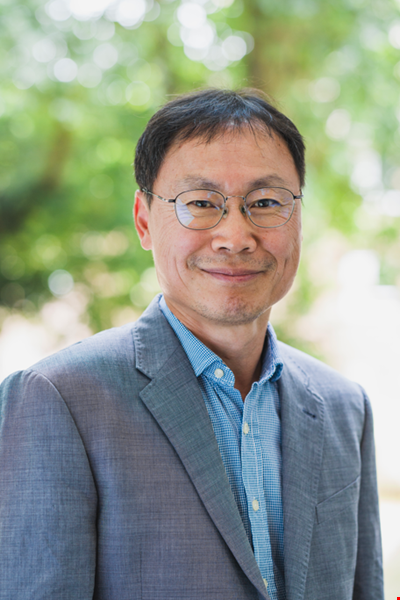
Professor Habin Lee is a Chair in Digital Business Analytics at Brunel Business School, Brunel University London, where he also serves as Head of the Department of Business Analytics and Marketing. He holds a PhD in Management Engineering from KAIST and has over two decades of academic and industrial experience, including six years at BT Group CTO. He has secured over £3 million in research funding from major international bodies such as MRC, ESRC, EU FP7, and H2020, and has led large-scale international research consortia including UbiPOL, MINI-CHIP, and GREENDC. His research spans digital business analytics, governance in online communities, sustainable supply chains, and green information systems. He applies computational big data analytics and process theories to public and private sector challenges. He has published extensively in top journals such as Management Science , Journal of AIS , European Journal of Operational Research , and Government Information Quarterly . His recent work focuses on public policy modeling using fuzzy cognitive maps, energy-efficient data centers, and social media analytics for public service quality assessment. Chair in Digital Business Analytics, Brunel Business School Head of Department, Business Analytics and Marketing PhD, KAIST; MEng, KAIST; BS, Korea Aerospace University Funding: MRC, ESRC, EU FP7, H2020, BT Group The trend in his recent publications shows a strong focus on computational methods applied to digital governance, sustainability, and public policy. He integrates big data analytics, fuzzy cognitive modeling, and social network analysis to address complex societal and organizational challenges. His work bridges information systems, operations research, and public administration. His scientific awards include: Best Paper (2nd runner-up), ICIS 2018 IET Innovation Award (Emerging Technologies), 2006 BT Short Term Research Fellowship, 2008 Giga Excellence Awards, 1998 Gordon Radley Papers Premium (Highly Commended), BT Group, 2004 He has supervised numerous PhD students to completion and currently mentors several doctoral candidates. He has led major research grants such as GREENDC (€247,500), CLOUD-VAS (€300,000), and PolicyCompass (€460,000). He is actively involved in editorial roles, conference organization, and external advisory positions, including as European Climate Pact Ambassador and Co-President of the Korean Chapter of the Association for Information Systems (KrAIS). He also provides paid consulting to organizations such as BT, Turksat, and Qatar University. He leads the Centre for Digital Governance and Sustainable Operations Management (DG-SOM) and has directed research centers such as ISEing and OISM. His work emphasizes interdisciplinary collaboration, industry engagement, and policy impact.
Lenny Smith is a distinguished Professor of Statistics at the London School of Economics and Political Science (LSE) , where he also directs the Centre for the Analysis of Time Series (CATS) . Additionally, he serves as a Senior Research Fellow at Pembroke College, Oxford . With a PhD in Physics from Columbia University (1987), his career spans prestigious institutions including École Normale Supérieure, Warwick, and Potsdam University. Academic Roles: LSE Professor of Statistics, CATS Director, Pembroke College Senior Research Fellow Education: PhD in Physics (Columbia University, 1987); Undergraduate in Physics, Mathematics, and Computer Science (University of Florida) Research Focus: Climate modeling, ensemble forecasting, uncertainty quantification, chaos theory, and applications to disaster risk reduction Grants: Funded by ONR, NOAA, EPSRC, NERC, European Commission, and UK Research Councils Key Projects: NAPSTER (NERC), DIME and REMIND (EPSRC), THORPEX strategic planning Scientific Recognition: Royal Meteorological Society Fitzroy Prize (2003), Selby Fellowship (Australian Academy of Sciences) Students Supervised: Roman Frigg, David Stainforth, Emma Suckling, Falk Niehörster, H. Du, T. Maynard, S. Higgins, A. Jarman Media Presence: Quoted in Nature, New Scientist, BBC, Financial Times, and The Daily Telegraph Smith's work bridges rigorous mathematical analysis with practical applications, notably in climate change economics and weather risk management . His research on ensemble forecasting and probabilistic skill has shaped methodologies for evaluating climate models. He actively contributes to public science through his book A Very Short Introduction to Chaos and media appearances, emphasizing the importance of scientific uncertainty in policy decisions. His publications reveal a consistent focus on dynamical coherence , model error analysis , and weather derivatives , with recent work exploring multi-model cross-pollination and predictability limits . Smith's interdisciplinary approach combines nonlinear dynamics , statistical physics , and hydrological modeling to address real-world climate challenges.